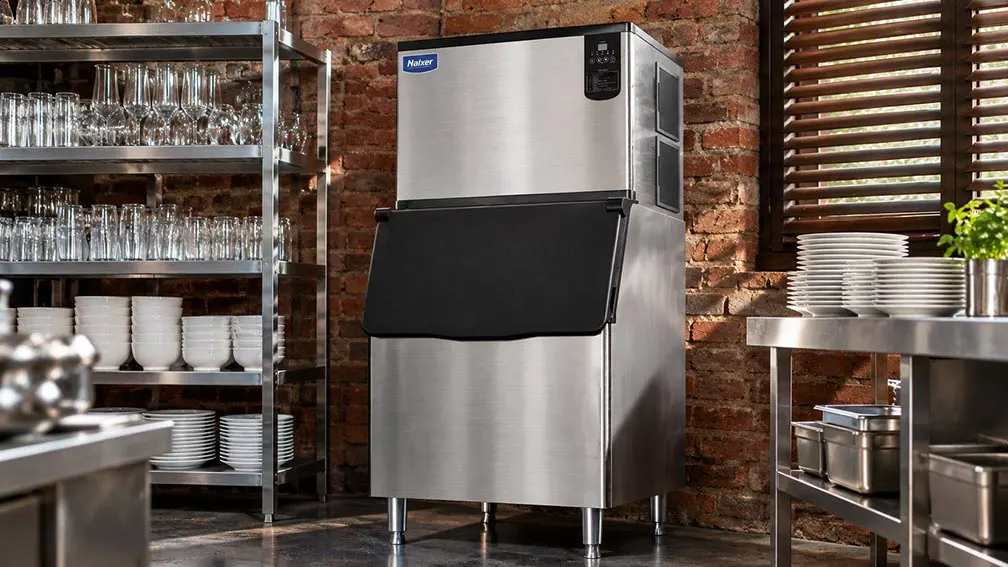
Barbecue is one of the most beverage-driven restaurant categories anywhere. Sweet tea, lemonade, fountain soda, cold beer — guests at a BBQ joint drink nonstop, and every one of those drinks needs ice. On a busy weekend, a mid-size barbecue restaurant can burn through 500 pounds of ice in a single day. If the machine can’t keep up, the rush dies at the ice bin.
What makes choosing ice machines for barbecue restaurants different from a standard equipment purchase? Two things: volume and environment. BBQ menus push drink sales higher than almost any other format — and smoking, grilling, and frying fill the air with heat and grease, two things ice machines hate.
This guide covers what actually matters for BBQ: how much ice to plan for, which ice types fit your menu, how heat and grease shrink machine output, recommended configurations by size, and what it all costs.
In this guide, you will learn:
The Quick Answer: What Ice Machine Does a Barbecue Restaurant Need?
Three factors decide everything:
- Size to your peak days, not your average days. Calculate demand from daily covers (formula below), then add a 30–50% buffer for Friday and Saturday rushes.
- Match ice types to your menu. Sweet-tea culture calls for nugget ice; cocktails and soda service want full cubes; flake ice belongs on displays, not in glasses.
- Plan around heat and grease. Constant-duty machines can lose 20–30% of rated output in 100°F+ kitchens, and airborne grease quietly destroys condensers. Placement is a design decision, not an afterthought.
Quick rule of thumb: most BBQ restaurants land between 300 and 600 lbs of ice per day. For the broader sizing framework, see our best restaurant ice maker guide.
How Much Ice Does a Barbecue Restaurant Need?
The standard restaurant planning formula is 1.5–2.5 lbs of ice per guest per day. Barbecue restaurants sit at the high end of that range, and here’s why:
- Iced tea and soda refills flow from open to close, not just at meals.
- Beer and cocktail service adds a second, heavier ice consumer on the bar side.
- Side displays, salad bars, and quick-chill trays quietly draw from the same supply.
- Warmer climates and patio service push consumption up again.
Worked example: a neighborhood BBQ restaurant serving 200 covers a day, at 2 lbs per guest, needs about 400 lbs — plus a 35% weekend buffer, that’s roughly 540 lbs of production per day.
| Restaurant Profile | Daily Covers | Peak-Day Ice Demand | Recommended Capacity | Example Setup |
|---|---|---|---|---|
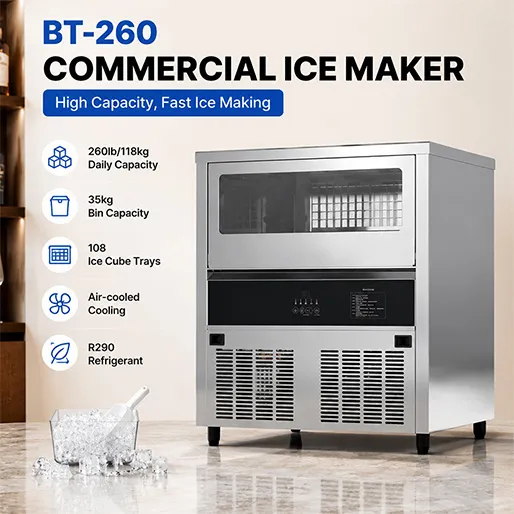
| Small BBQ joint / food truck | 80–150 | 200–350 lb | 250–400 lb / day | Example Setup One undercounter or compact unit (BT-260 class) |
| Neighborhood BBQ restaurant | 150–300 | 350–600 lb | ~500 lb / day | Example Setup 500 lb production unit (TH-DF500 class) + undercounter for the bar |
| High-volume BBQ + full bar | 300–600+ | 600–1,200 lb | Dual-unit, 1,000+ lb / day | Example Setup Two 500 lb units or an industrial system |
Based on 1.5–2.5 lb of ice per guest plus a 30–50% peak-day buffer. Adjust upward for hot climates, patio service, and beverage-heavy menus.
If you’re also weighing machine types and brands, our complete guide to choosing the best ice machine for your restaurant walks through the same decision from a different angle.
Which Ice Type Is Best for a Barbecue Restaurant?

There’s no single “best” ice — there’s a best ice for each part of your operation. Most successful BBQ restaurants run two types.
Nugget Ice: The Sweet-Tea Powerhouse
If your beverage program leans on iced tea or fountain drinks — or you want the “chewy ice” reputation guests associate with certain regional chains — nugget ice is the answer. It’s soft, chewable, drains slowly, and keeps sweet tea cold without turning it watery. Dedicate a nugget machine to the front-of-house beverage station, and let your production machine handle everything else. For a full comparison of the five formats, see what kind of ice restaurants actually use.
Full Cube Ice: The All-Purpose Workhorse
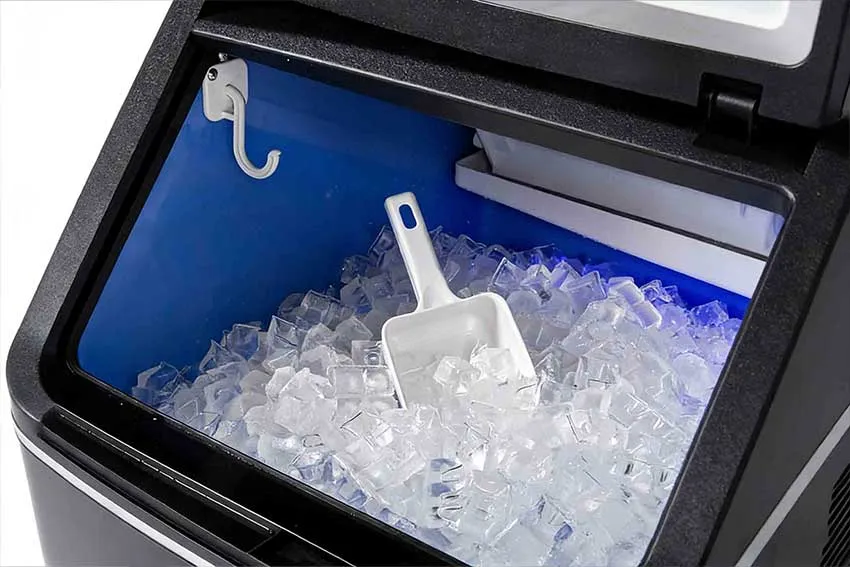
Full cube — like the 22×22×22 mm cubes Naixer’s BT and TH-DF series produce — is the default for cocktails, whiskey, soda, and iced tea. Slow melt, low surface area, clean taste. It’s also the safest volume bet for the back of house. Compare different cube formats in our full cube ice machine guide.
Crescent Ice: The Quiet Refill Specialist
Crescent-shaped ice fits cups neatly and splashes less during fast refill service — ideal for iced tea and soft-drink stations where speed matters more than showmanship.
Flake Ice: For Displays, Not Drinks
Flake ice melts too fast for drinks, but it’s perfect where you need surface contact and quick chilling: seafood and side displays, salad bars, and rapid-cool stations. See how operators use it in how a flake ice machine benefits your business.
| Ice Type | Best For | Melt Speed | Why It Works in BBQ |
|---|---|---|---|
| Nugget (chewable) | Sweet tea, fountain soda | Slow | The signature "chewy ice" guests remember — dedicate a front-of-house machine |
| Full cube (22 mm) | Cocktails, whiskey, soda, iced tea | Slow | All-purpose workhorse; premium look, clean taste, less dilution |
| Crescent | Iced tea, soft drinks | Medium | Fits cups neatly and splashes less during fast refill service |
| Flake | Seafood & side displays, quick chilling | Fast | Not for drinks — melts quickly; ideal for presentation and quick-chill stations |
Most BBQ restaurants run two types: a cube or crescent machine for general service, plus nugget (beverages) or flake (display).
The BBQ Challenge: Heat, Smoke & Grease
This is the section most buying guides skip — and it’s the one that saves you from expensive mistakes.
Heat Derating: A "500 lb" Machine Isn't Always 500 lbs
Ice machine capacity ratings assume 90°F ambient air and 70°F water (the AHRI standard). In a kitchen corner near the pit — or a sun-exposed patio enclosure — ambient air can reach 105–110°F. Under those conditions, real-world output typically drops 20–30%. That “500 lb” machine may only produce 370–400 lbs on a summer Saturday.
The fix: oversize production capacity by 25–30% in hot installs, keep the machine out of direct heat, and give it room to breathe. Water-cooled or remotely located machines are options for extreme cases — here’s how air-cooled machines handle real kitchens.
Grease and Smoke: The Silent Condenser Killer
Airborne grease from smokers, grills, and fryers coats condenser coils like a blanket. A coated coil can’t shed heat, so the compressor runs hotter and longer: output falls, energy use climbs, and lifespan shortens.
The rules:
- Keep the machine as far as practical from active cooking equipment — 10–15 feet minimum, or behind a partition.
- Never place it in the direct path of a smoker or exhaust hood.
- Clean condenser coils monthly instead of quarterly (see the maintenance table below).
Ventilation Clearance
Naixer specifies a minimum 5 cm (2 in) gap between air inlets/outlets and any wall or equipment — and in greasy kitchens, more clearance, not less. Don’t box the machine in behind shelving or tuck it into a dead corner.
Best Ice Machine Configurations for a Barbecue Restaurant
Here’s how we’d configure a BBQ restaurant by zone.
Zone 1: Back-of-House Production (The Workhorse)
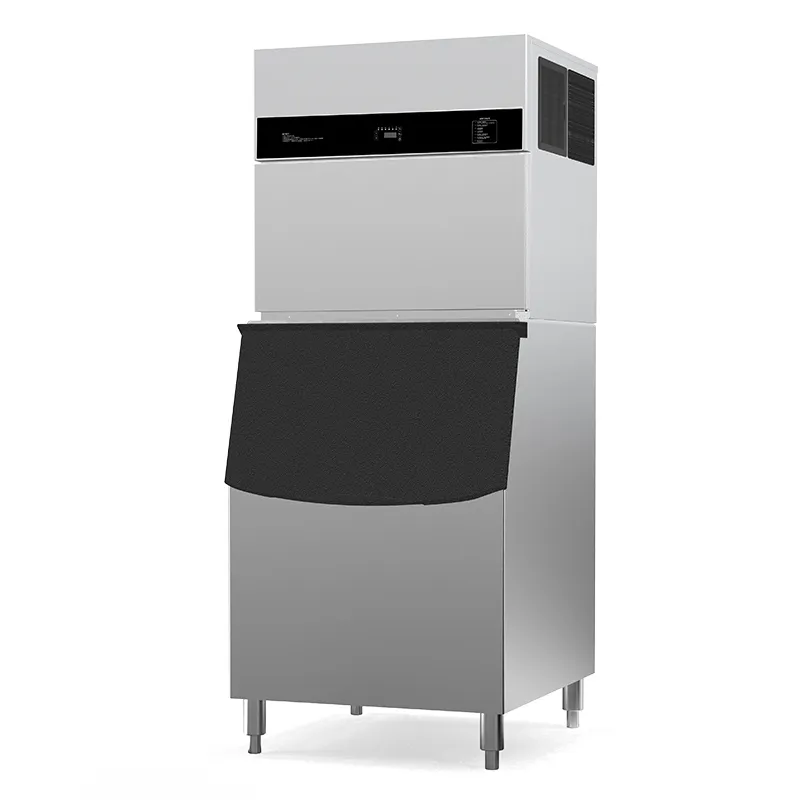
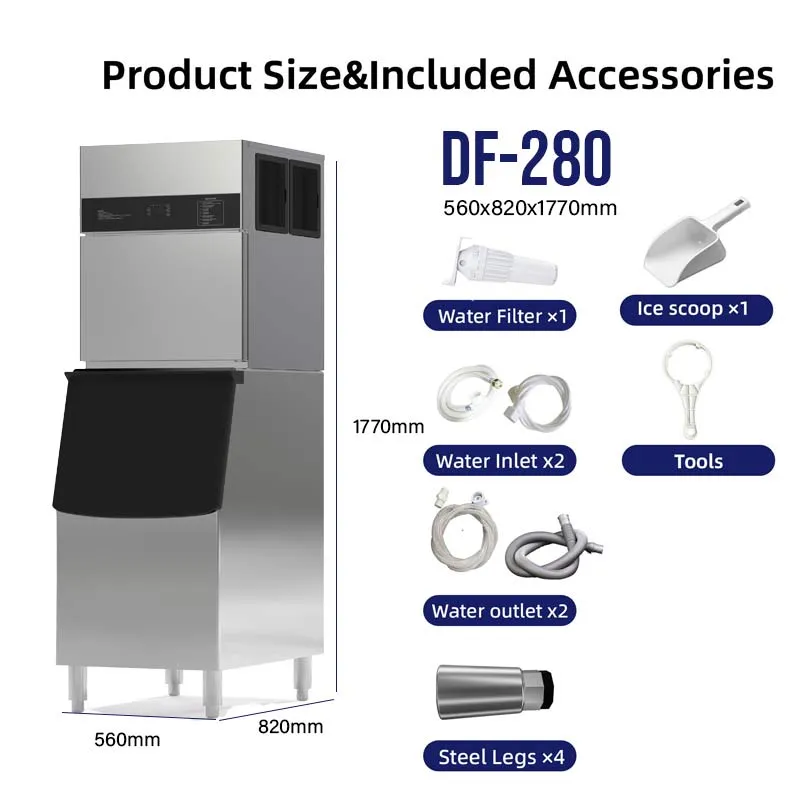
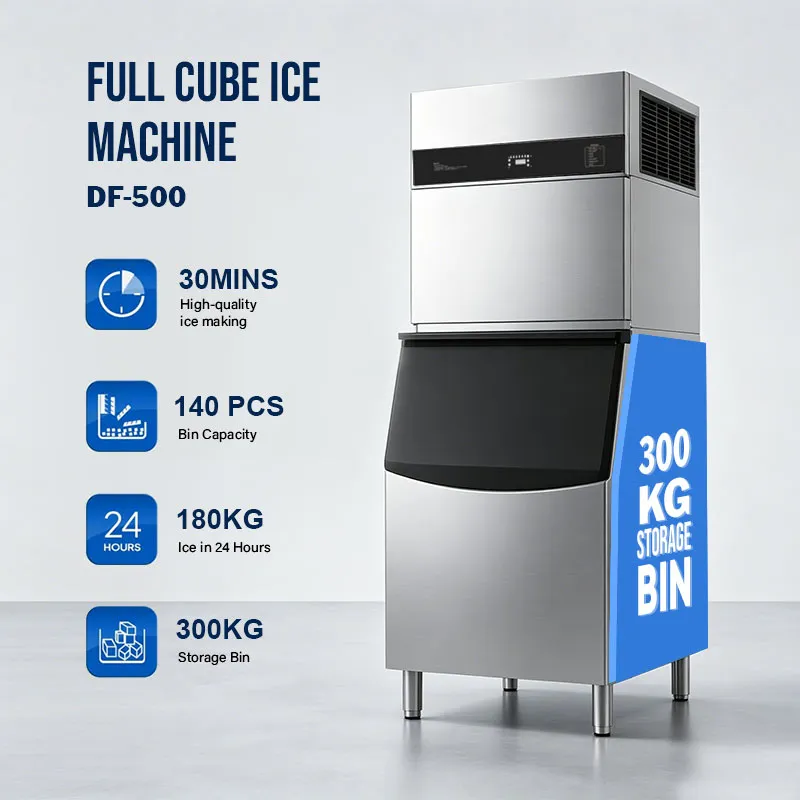
Your main production unit should carry the weekend. A 500 lb modular machine like the TH-DF500 produces large square cubes continuously and pairs with your kitchen or service bins. For high-volume or multi-station builds, many operators choose two mid-size machines instead of one oversized machine — redundancy on a Saturday night is worth more than a lower unit price. More configuration ideas in our commercial ice machine for restaurant guide.
Zone 2: The Front Bar (Undercounter)
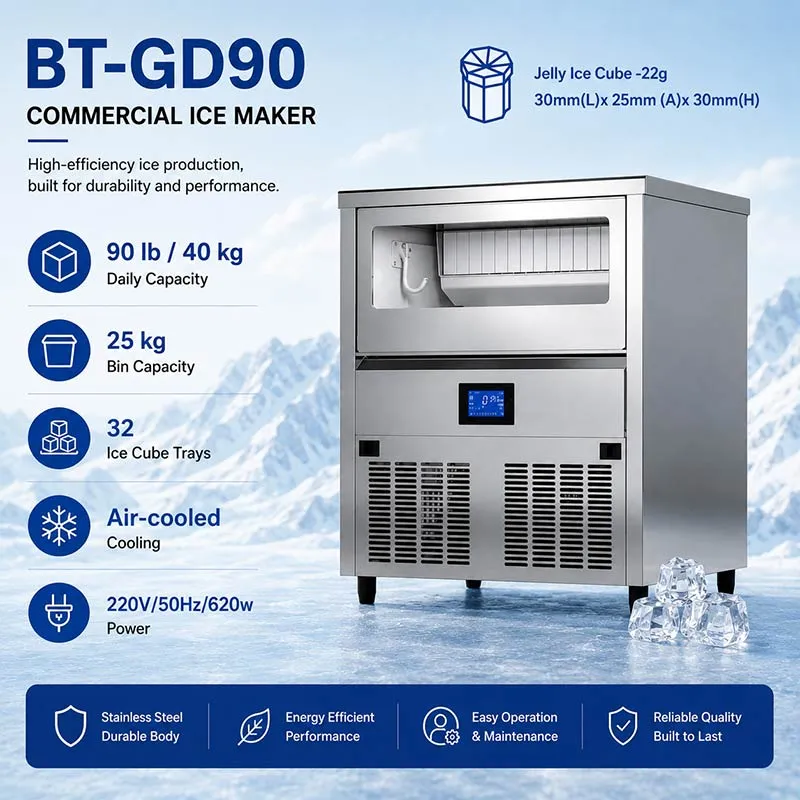
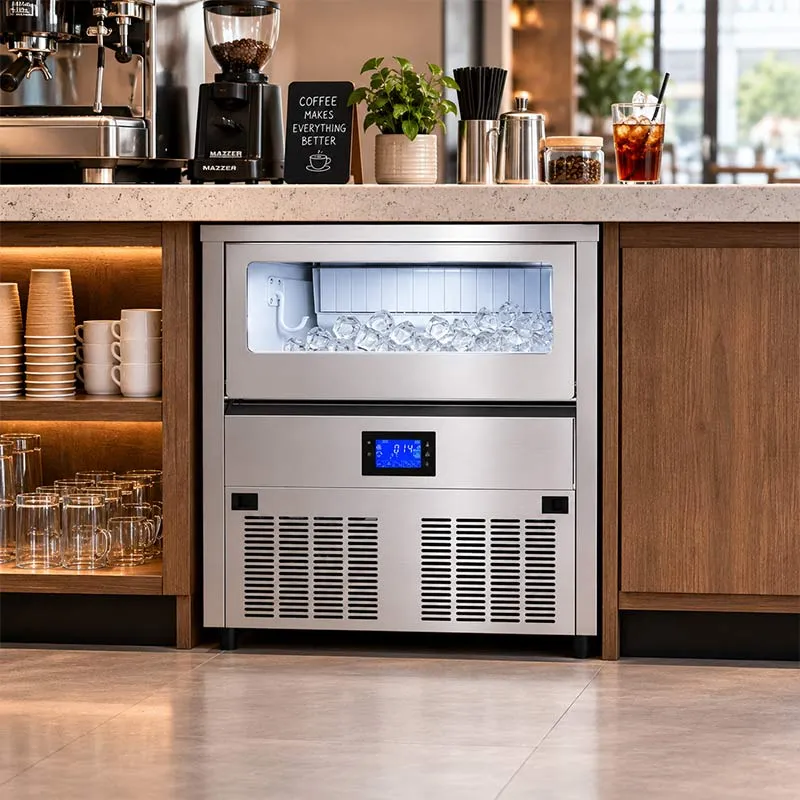
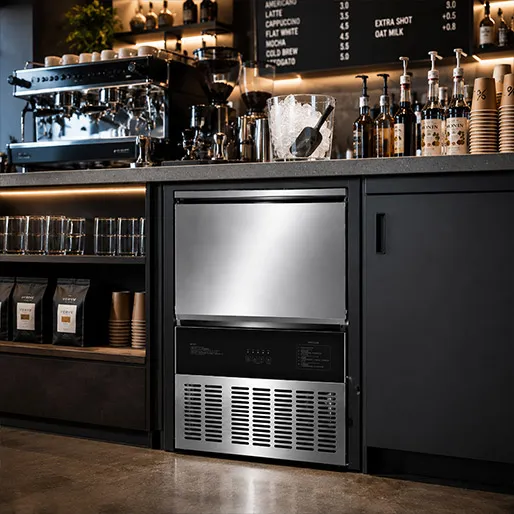
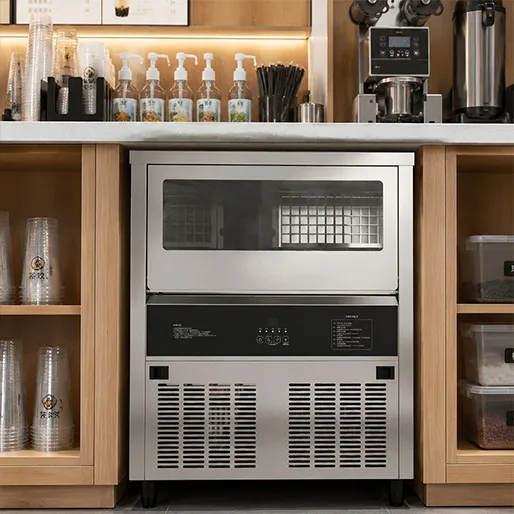
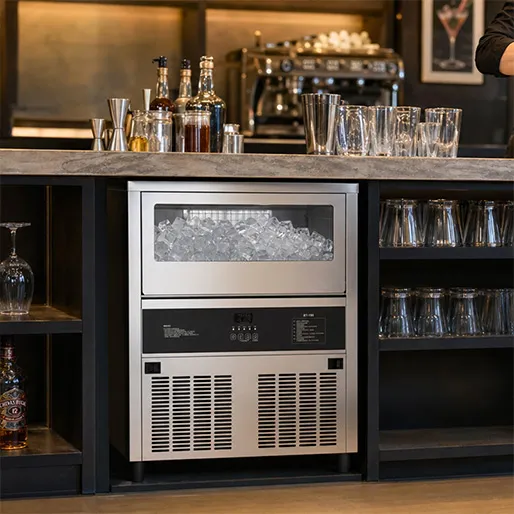
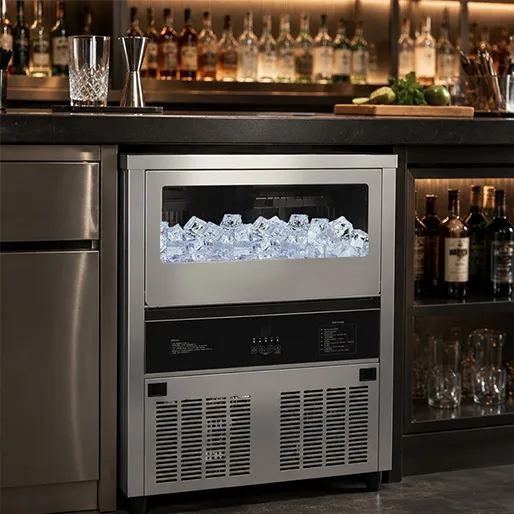
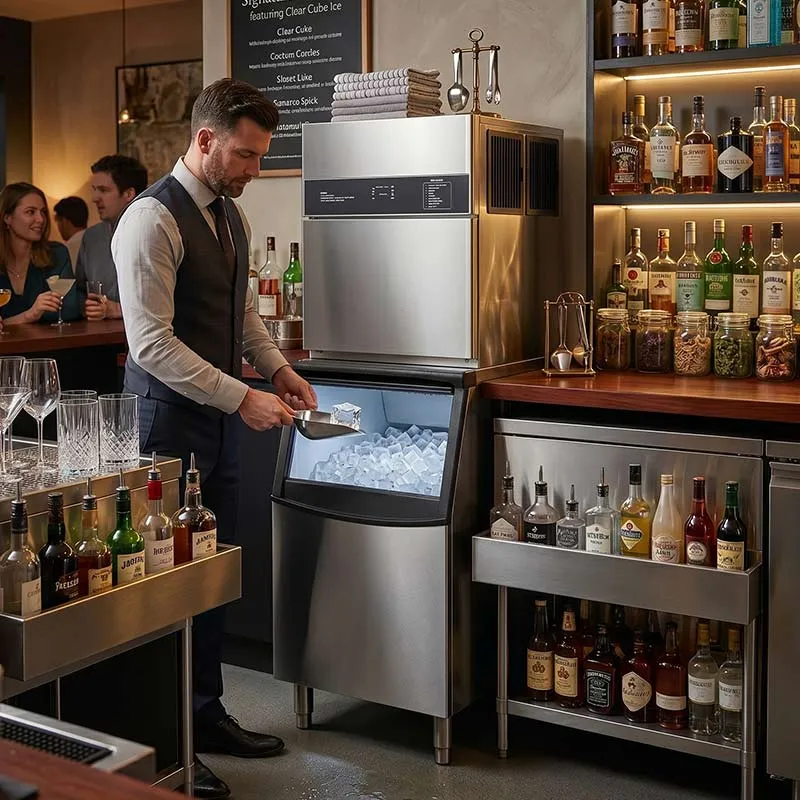
Bartenders need ice at arm’s length, not across the kitchen. An undercounter machine under the bar keeps service flowing. The BT-260 produces 260 lbs/day with a 112 lb insulated bin, self-cleaning cycle, and R290 refrigerant — enough for a busy BBQ bar without touching kitchen floor space. See all options in our best undercounter ice machine for bars and restaurants guide.
Zone 3: Sweet Tea & Self-Serve Stations (Nugget)
A dedicated nugget machine at the beverage station turns sweet tea and soda into an experience. The Nugget Ice Series is built for exactly this — front-of-house, high-traffic, low-maintenance.
Zone 4: Display & Prep (Flake)
A PB-300 or PB-500 flake machine handles seafood and side displays and quick-chill tasks — keeping your cube machines free for drinks.
| Zone | Role | Recommended Type | Naixer Option |
|---|---|---|---|
| Back of House | Main production for kitchen & service bins | 500 lb modular | TH-DF500 / TH-500C |
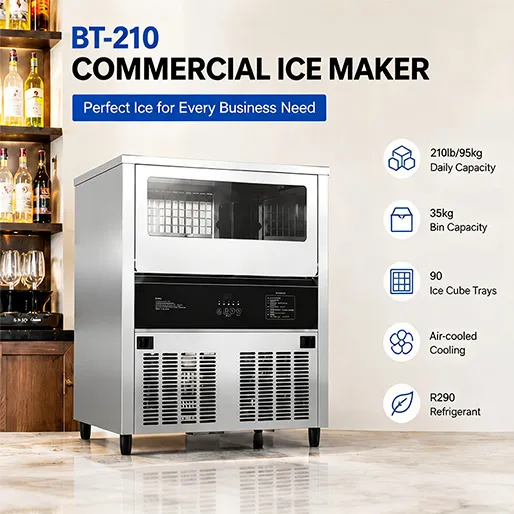
| Front Bar | Bartender-side ice service | Undercounter, 210–260 lb | BT-260 / BT-210 |
| Beverage Station | Sweet tea & self-serve soda | Nugget machine | Nugget Ice Series |
| Display & Prep | Seafood & sides, quick chilling | Flake | PB-300 / PB-500 |
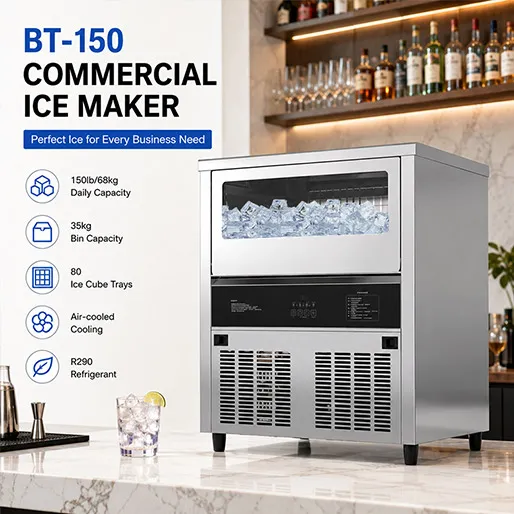
| Patio Bar (Sheltered) | Remote service point | Undercounter, 150 lb | BT-150 |
All Naixer machines: food-grade stainless steel, R290 refrigerant (EPA-compliant since January 1, 2026), 3-year comprehensive warranty.
All Naixer machines share the same fundamentals: food-grade stainless steel, R290 refrigerant fully compliant with the EPA’s January 1, 2026 transition rule for machines up to 1,000 lbs, and a 3-year comprehensive warranty.
What Do Ice Machines for Barbecue Restaurants Cost?
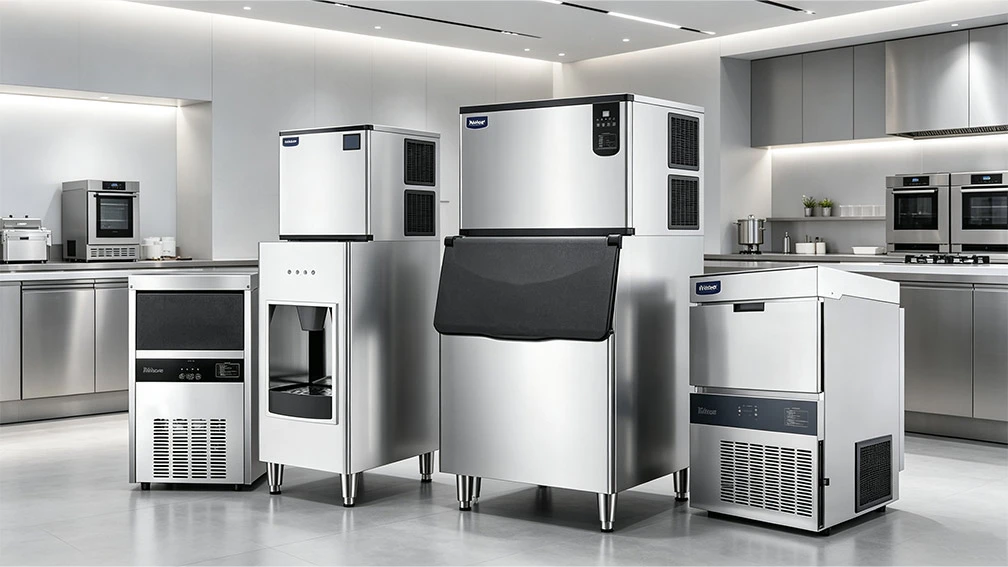
Realistic 2026 ranges:
- Compact / undercounter (100–260 lb): $400–$1,500
- Modular production (300–500 lb): $1,500–$4,000
- High-volume (1,000+ lb): $4,000–$10,000+
- Installation (water line, drain, electrical): $300–$800 typical
- Running costs: roughly $50–$120 per month in electricity, water, filters, and a maintenance reserve
Compare that to buying ice. A BBQ restaurant buying 15 bags a day at $3 per bag spends about $1,350 a month — $16,200 a year. A $2,800 machine plus $600 install typically pays for itself in under 3 months at that volume, and saves roughly $40,000 over three years.
For a line-by-line breakdown, see our restaurant ice machine cost guide.
Placement & Installation Checklist
Before you buy, confirm these eight points:
- Water: dedicated supply line with filtration ahead of the machine.
- Drain: gravity drain preferred; a condensate pump if the site sits below the drain line.
- Power: dedicated circuit for larger units.
- Clearance: 2-inch minimum on all sides — more in greasy or hot environments.
- Distance from cooking: away from smokers, grills, fryers, and dish exhaust; partition if needed.
- Ambient temperature: shade and ventilate patio or outdoor installs.
- Sanitation context: ice is a food — never beside raw-meat prep or under waste lines.
- Service access: leave room for cleaning and service visits; don’t seal the machine in.
Maintenance for BBQ Kitchens
The grease load in BBQ kitchens means you should treat standard maintenance intervals as maximums, not suggestions:
| Task | Standard Frequency | BBQ-Kitchen Frequency | Why It Matters |
|---|---|---|---|
| Condenser coil cleaning | Quarterly | Monthly | Grease-laden air clogs coils fast; clogged coils cut output and shorten life |
| Water filter replacement | Every 6 months | Every 3–6 months | High volume and hard water deplete filters faster |
| Bin & ice scoop sanitation | Weekly | Weekly | Food-safety basics — ice is food |
| Deep clean & descale | Every 6 months | Every 6 months (professional) | Restores efficiency; removes scale and biofilm |
| Ventilation & clearance check | Quarterly | Monthly | Crowded kitchens lose airflow; grease builds faster than you think |
Treat standard intervals as maximums in BBQ environments — grease accelerates everything.
Self-cleaning models (standard across Naixer’s BT series and many TH models) automate the descaling and sanitizing cycle — one button press instead of a service call. The rest is discipline: here’s the full cleaning routine for Naixer machines.
Frequently Asked Questions
How much does it cost to buy a commercial ice machine?
Budget $400–$1,500 for compact and undercounter machines (100–260 lbs), $1,500–$4,000 for 300–500 lb production units, and $4,000+ for high-volume systems. Installation adds $300–$800. Factory-direct purchasing — buying from the manufacturer instead of through distribution — removes a markup layer that often runs 20–40%.
What kind of ice do restaurants use?
Full cube is the most common all-purpose format, followed by crescent and nugget for beverage service, with flake reserved for displays and rapid chilling. Most BBQ restaurants run two types: a cube or crescent machine for general service, and either nugget (sweet tea) or flake (display) as the second unit. Compare all five formats here.
What is the best undercounter ice machine for a barbecue restaurant?
For most BBQ bars, the sweet spot is 200–260 lbs/day with a bin that carries through dinner service. The Naixer BT-260 hits that mark: 260 lbs/day, a 112 lb insulated bin, 22×22×22 mm cubes, self-cleaning, and R290 refrigerant. Undercounter placement under the service bar keeps drinks moving without sacrificing floor space.
How much does it cost to run a commercial ice maker?
For BBQ volumes, expect roughly $50–$120 per month across electricity, water, filter cartridges, and a maintenance reserve — with electricity the largest slice. Efficiency varies with ambient temperature and duty cycle; our guide to how much electricity an ice machine uses breaks down the math.
How much ice does a barbecue restaurant need per day?
Use 1.5–2.5 lbs per guest per day, then add a 30–50% peak buffer. A 200-cover restaurant typically needs 500–600 lbs of production capacity per day; a 400-cover operation with bar service can reach 1,000+ lbs.
Can ice machines keep up in a hot kitchen?
Yes — if you plan for derating. Capacity ratings assume 90°F air; in 100°F+ conditions, real output drops 20–30%. Oversize by 25–30% for hot installs, keep the machine away from heat sources and grease, and clean condenser coils monthly. That combination is usually enough for even the busiest pit rooms.