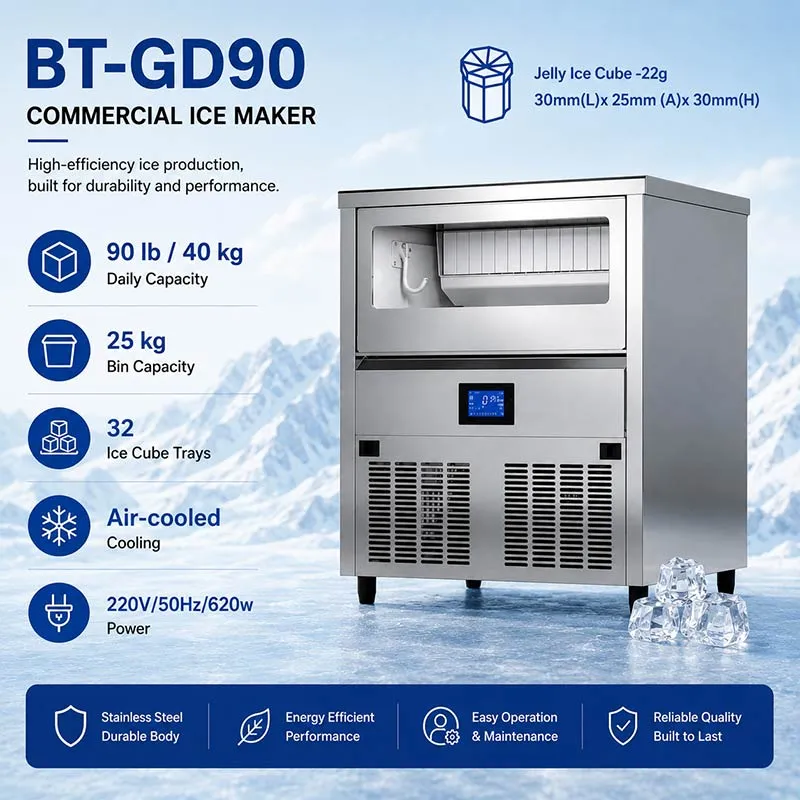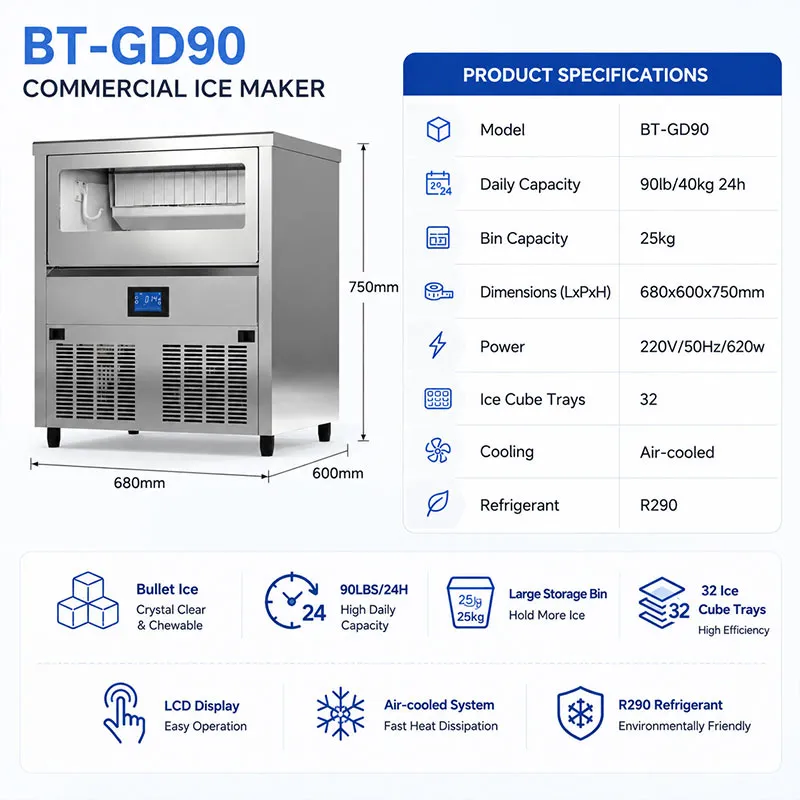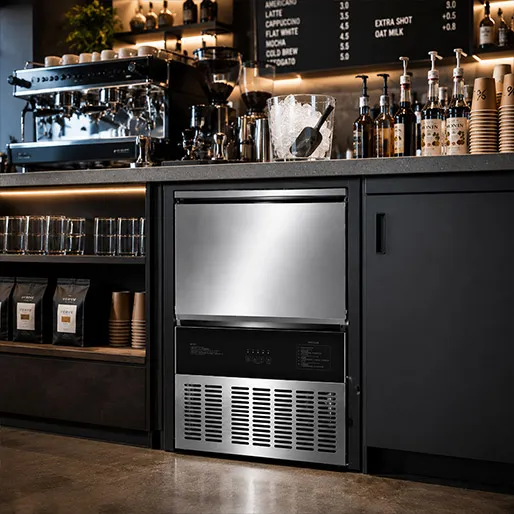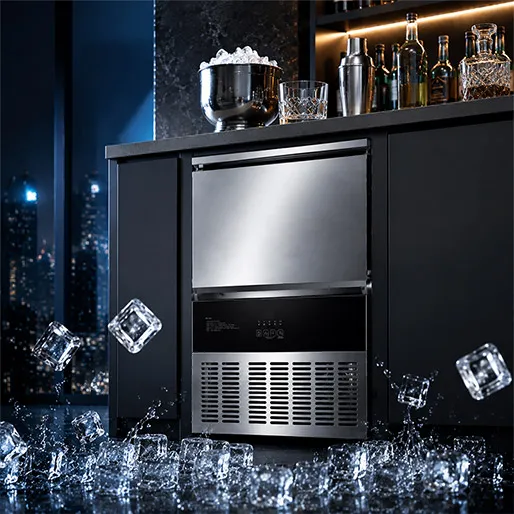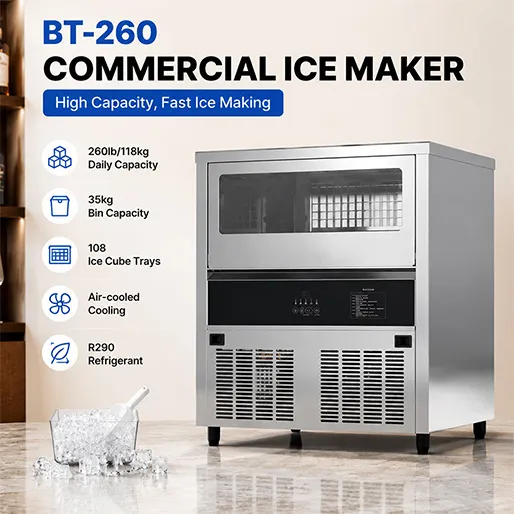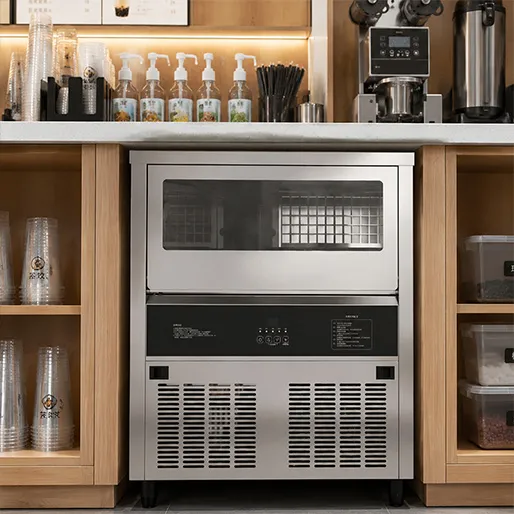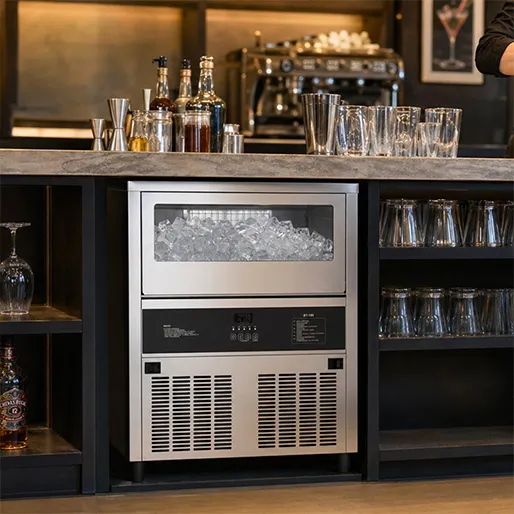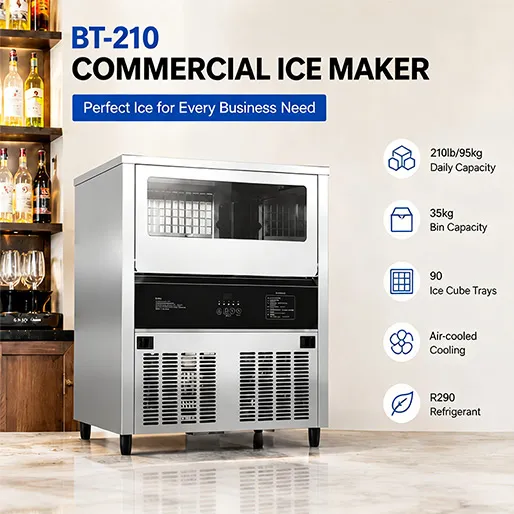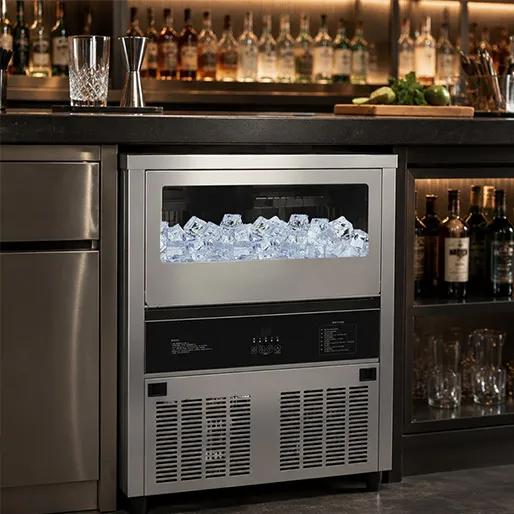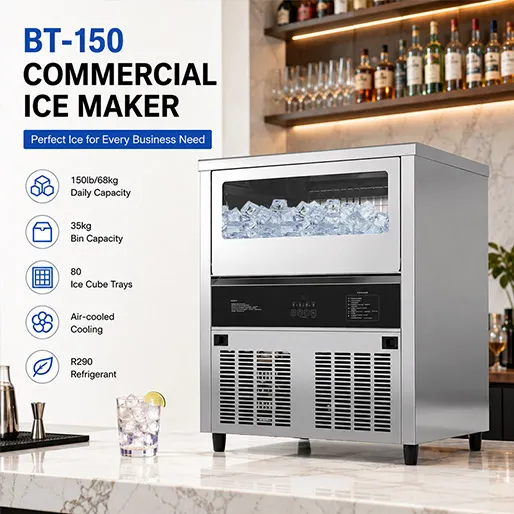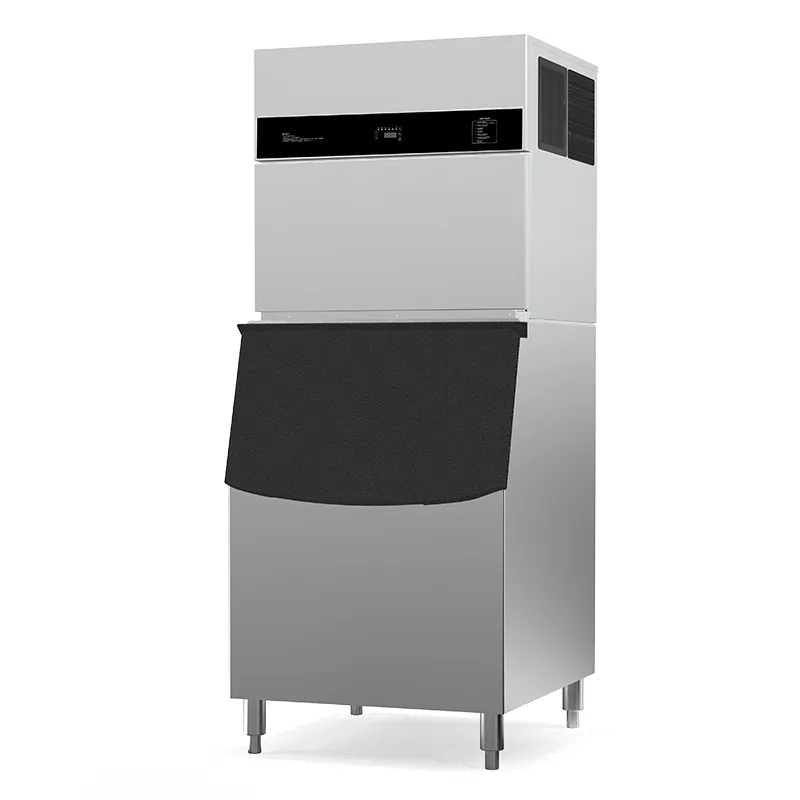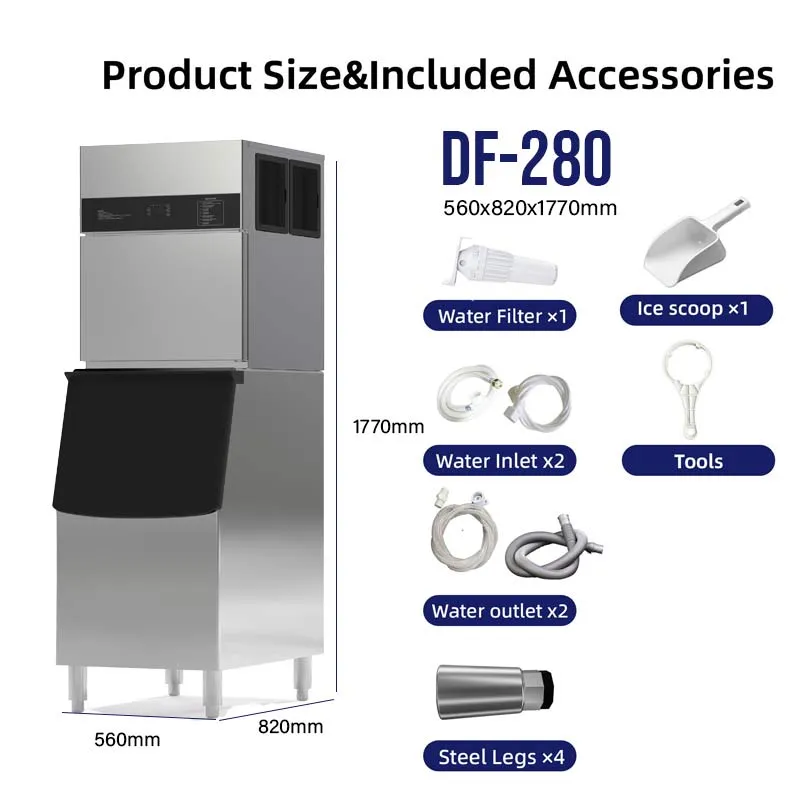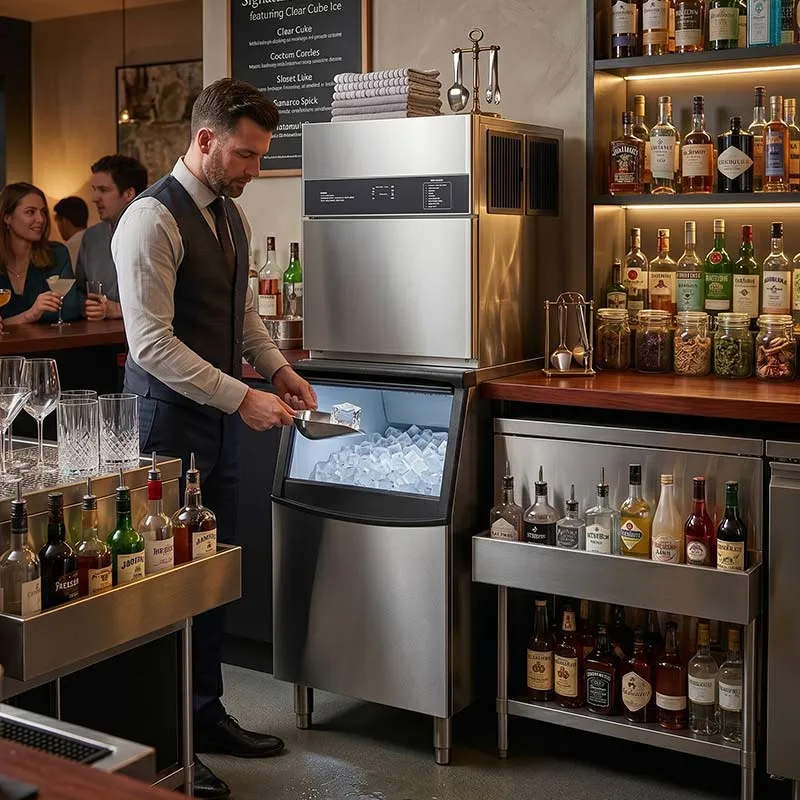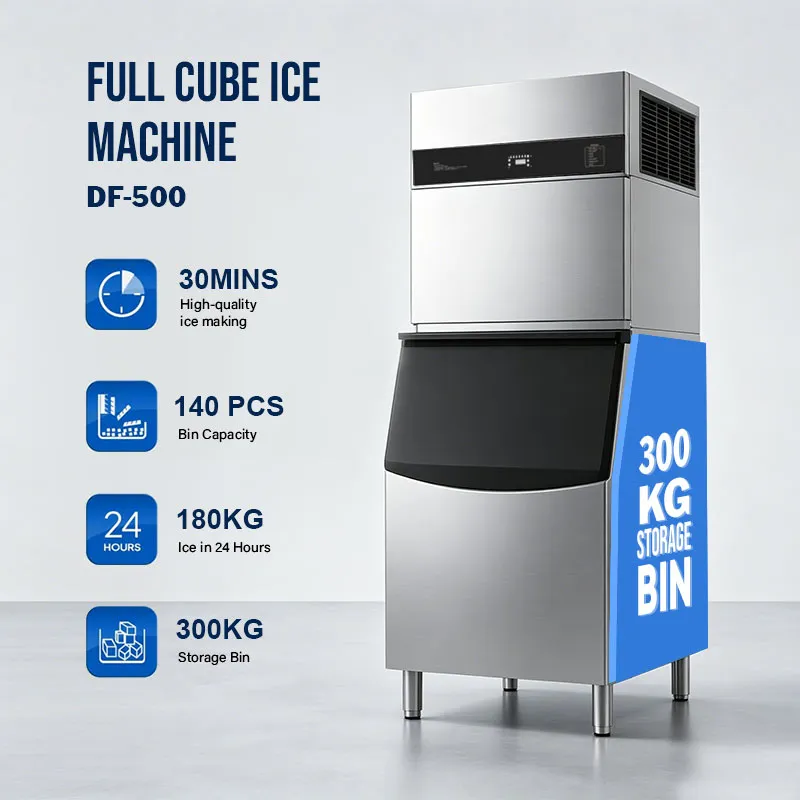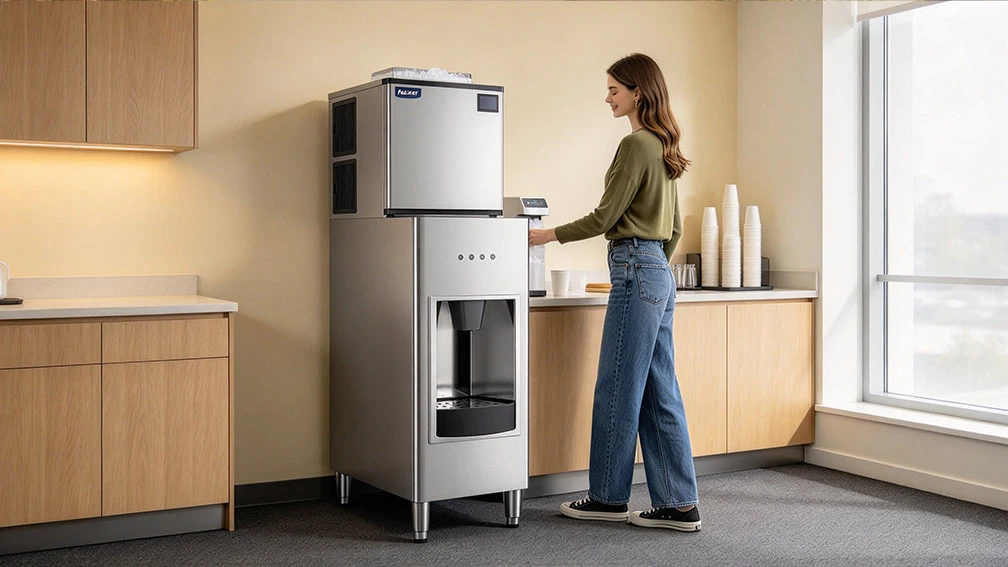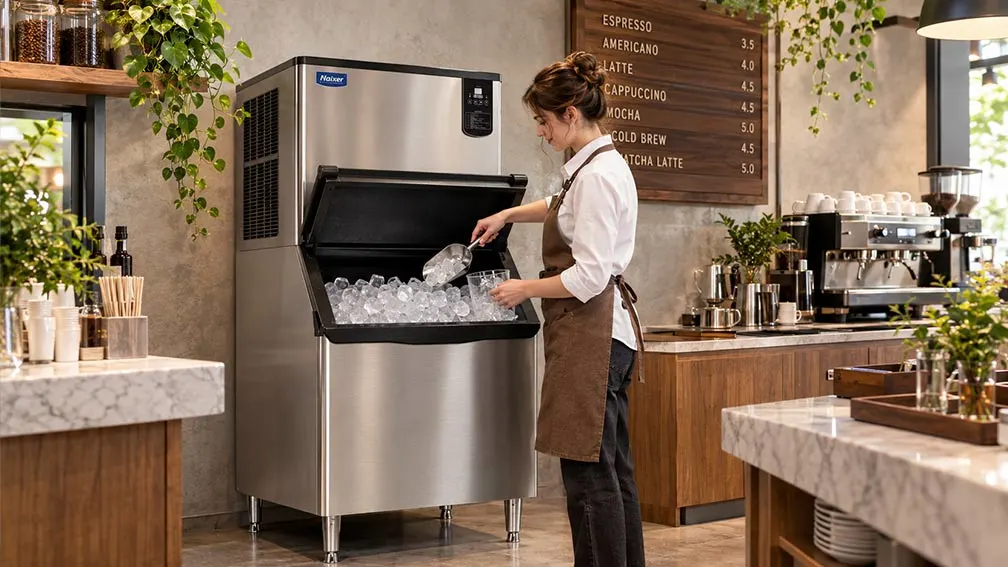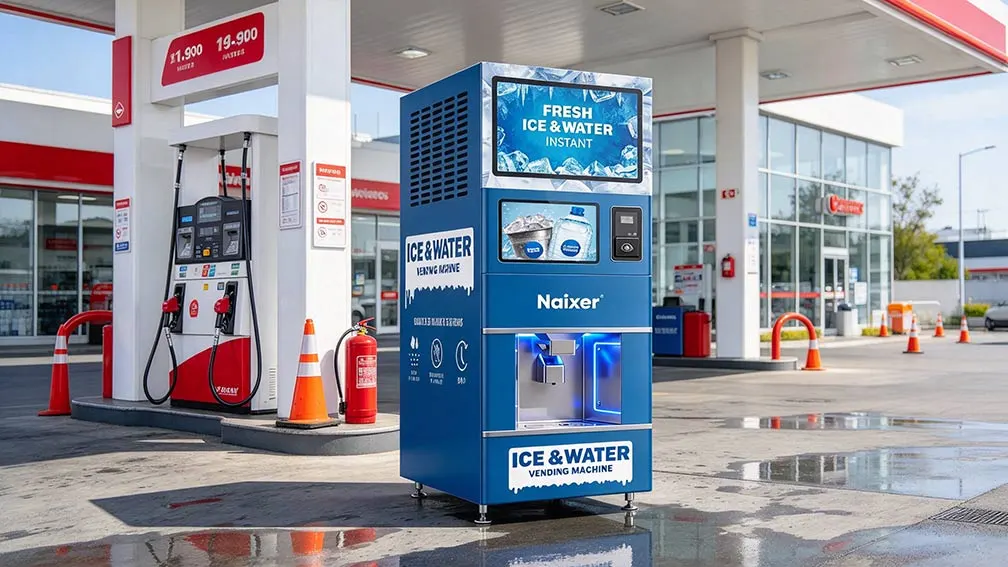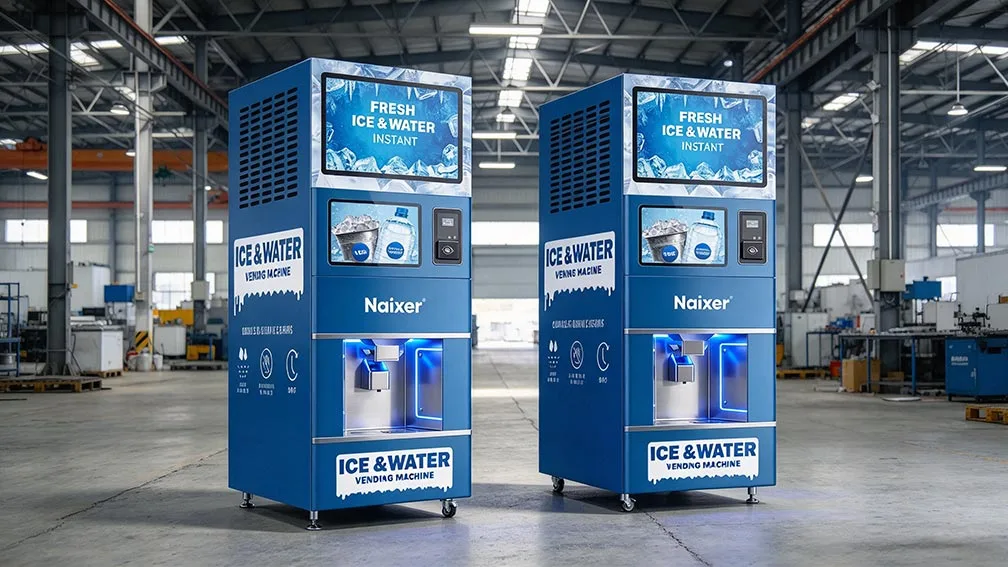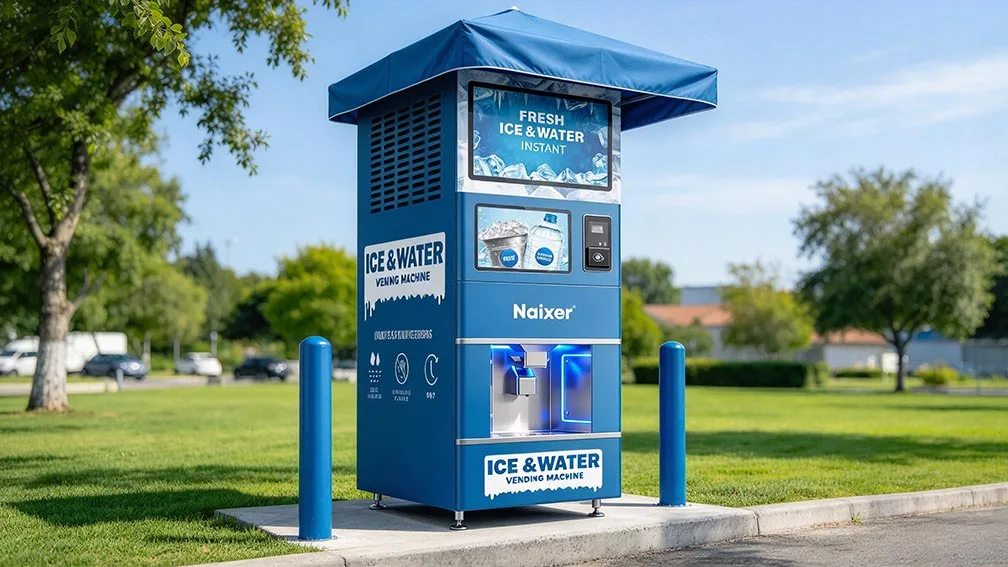
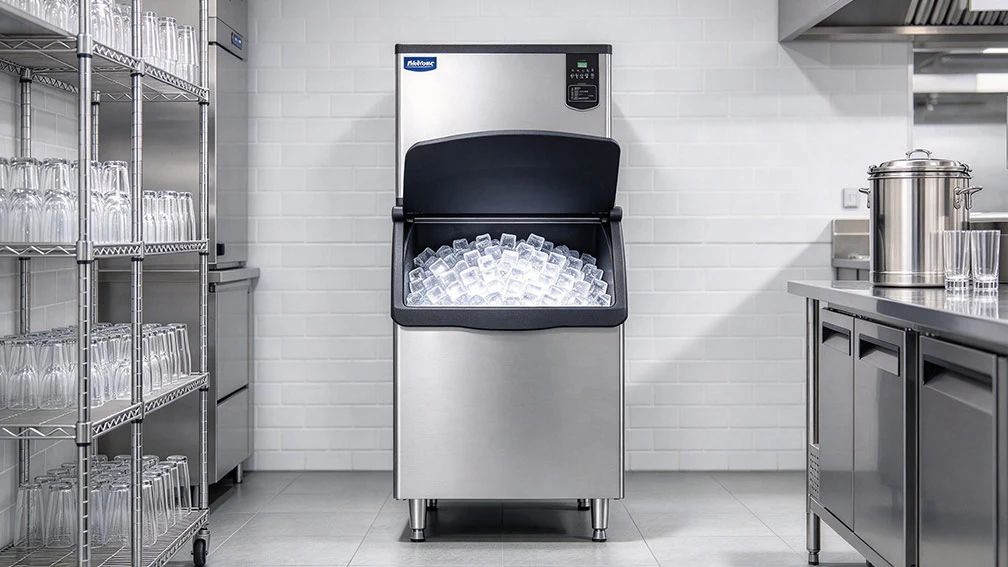
Naixer manufactures commercial ice machines in Guangzhou, China and supplies them to Saudi Arabia from 30 kg to 550 kg of ice per 24 hours. The Kingdom runs a 230V/60Hz supply — the only 60Hz grid in the GCC — so the frequency specification matters as much as the capacity. Naixer’s standard range is built at 220V/50Hz; a 60Hz build must be specified at order and confirmed in writing before shipment. Units carry CE and ISO 9001 certification, held since 2011.
Why the Saudi Market Asks Different Questions
Saudi Arabia is not a “one machine per restaurant” market. It is a market of distributors, project contractors and central kitchens buying in multiples.
Three things drive that. Hospitality capacity is being built at a pace the Kingdom has not seen before — NEOM, the Red Sea Project, Qiddiya and Diriyah Gate each pull in hotel, restaurant and catering fit-out at a scale a single retail purchase cannot serve. The supply chain runs through importers, so the buying decision usually involves a Saudi trading company rather than the end user. And the electrical supply is genuinely unusual: 230V at 60Hz, which is not what most of the world builds for, and not even what Saudi Arabia’s neighbours use.
That last point is worth more attention than it usually gets, and we will come back to it.
If you are still working through how capacity maps to price, our how commercial ice machine cost scales with capacity walks through it band by band.
What Ice Machines Cost in Saudi Arabia Today
Saudi retail prices for small commercial units are public and easy to check. As of 28 October 2026:
| Product | Daily Capacity | Price (SAR) | SAR per kg/day | Sales Channel |
|---|---|---|---|---|
| Water Bottle Ice Maker | 30 kg | 4,000 | 133 | Riyadh Retailer |
| Water Bottle Ice Maker | 60 kg | 4,900 | 82 | Riyadh Retailer |
| Prima Ice Maker (Discounted) | 67 kg | 9,300 | 139 | Jeddah Retailer |
| Prima Ice Maker (List Price) | 67 kg | 13,290 | 198 | Jeddah Retailer |
Price comparison note: Listed asking prices observed on Saudi retail websites on 28 October 2026. These are advertised prices, not confirmed transaction prices, and are shown to illustrate the observed market spread rather than recommend specific products. SAR per kg/day is a simple price-to-rated- daily-capacity calculation, not a measure of energy efficiency, equipment quality or total cost of ownership. Naixer does not sell through these channels.
Two observations worth carrying into your own shortlist.
First, price per kilogram of daily capacity is not consistent. The 60 kg/24h unit at 4,900 SAR works out to about 82 SAR per kg of daily capacity. The 67 kg/day Prima unit, even at its discounted 9,300 SAR, works out to about 139 SAR per kg — nearly 70% more for a machine of essentially the same output. Brand name, cabinet construction, warranty and sales channel account for the difference, not capacity.
Second, these are single-unit retail prices. They bundle the importer’s freight, duty, VAT, warehousing, warranty reserve and margin into one number. When you buy factory-direct in volume, you buy at FOB and assemble those costs yourself — which is either cheaper or not, depending on order size and how you clear customs.
The honest version: below roughly ten units, local stock often wins on landed cost and definitely wins on lead time. Above that, direct sourcing starts to make sense, and the gap widens with volume.

For a side-by-side of how Chinese factories differ on capacity, MOQ and OEM terms, see Chinese ice machine manufacturers compared by capacity and MOQ.
Power Supply: 230V/60Hz — and Why It Changes What You Order
This is the section most buyers skip, and it is the one that most often decides whether a machine survives its warranty period.
Saudi Arabia runs at 60Hz. Every other GCC country — the UAE, Qatar, Kuwait, Oman, Bahrain — runs at 50Hz. Saudi Arabia is the outlier, which is precisely why the specification gets missed: a supplier used to shipping to Dubai will quote you the same 50Hz machine for Riyadh without a second thought.
Naixer’s standard production range is built at 220V/50Hz. The voltage difference between 220V and 230V is unremarkable — it sits inside the ±10% band that commercial refrigeration equipment is engineered for. The frequency difference is a different matter entirely.
Why frequency is not a formality
The compressor and the condenser fan are induction motors. Their running speed is tied directly to supply frequency. A motor wound and rated for 50Hz, energised at 60Hz, runs roughly 20% faster.
In practice that produces a chain of effects:
- Cooling capacity rises. The compressor pumps more refrigerant per hour, so a machine often out-produces its nameplate figure.
- Running current rises with it — and running current is what trips overload protectors. A unit already close to its protection threshold can nuisance-trip in a Riyadh summer.
- Discharge temperature climbs, which shortens compressor life in an ambient that is already working against you.
- Fan motors overspeed, adding noise and bearing wear on a machine expected to run continuously.
- Control-board timing drifts. Defrost cycles, harvest timing and fault delays are written against a clock. On a different frequency they no longer run at the intervals they were designed for.
This is not a Naixer-specific issue. It applies to any 50Hz-built machine installed on a 60Hz supply. It is also why “will it work?” is the wrong question, and “what build is this?” is the right one.
What a 60Hz build actually means
A machine genuinely specified for 60Hz differs from the 50Hz version in more than a label.
| Component | 50Hz Build | 60Hz Build |
|---|---|---|
| Compressor | 50Hz-rated motor winding | 60Hz-rated winding |
| Condenser Fan Motor | 50Hz-rated | 60Hz-rated |
| Control Board | 50Hz timing | 60Hz timing, or 50/60Hz auto-detect |
| Nameplate Capacity | Rated at 50Hz | Rated at 60Hz |
| Plug | Type I (China) or bare cable | Type G, or hardwired |
Technical note: Naixer's published specification sheets describe a 220V/50Hz configuration. A 60Hz variant must be specified at the time of ordering and confirmed by the factory for the exact model. Actual component configurations may vary by model. Voltage, frequency, electrical ratings and plug requirements should all be verified before shipment.

Ordering the correct build costs nothing extra at the factory. Discovering the wrong one has been shipped costs a compressor.
Five questions to ask before you commit
- Is this machine built for 60Hz, or is it the 50Hz export model?
- Is the compressor nameplate rated at 60Hz?
- Does the control board auto-detect 50/60Hz, or does it require 60Hz firmware?
- What is the rated running current at 60Hz? This is the number your electrician needs.
- Can you supply a Type G plug, or is the unit hardwired?
The heat decision that matters just as much
One related choice matters more in Saudi Arabia than almost anywhere: air-cooled or water-cooled. Water-cooled units reject heat into water rather than into the surrounding air, which keeps output far more stable when ambient is already at 45 °C — at the cost of water consumption and a permanent drain connection.
The trade-off is set out in air-cooled vs water-cooled ice machines for high-ambient installations. Clearance distances are in ventilation and clearance requirements for commercial ice machines.
The Naixer Range
The regular ice cube range runs from a 30 kg/24h countertop unit to a 550 kg/24h floor-standing machine, all producing the same 22 × 22 × 22 mm cube.
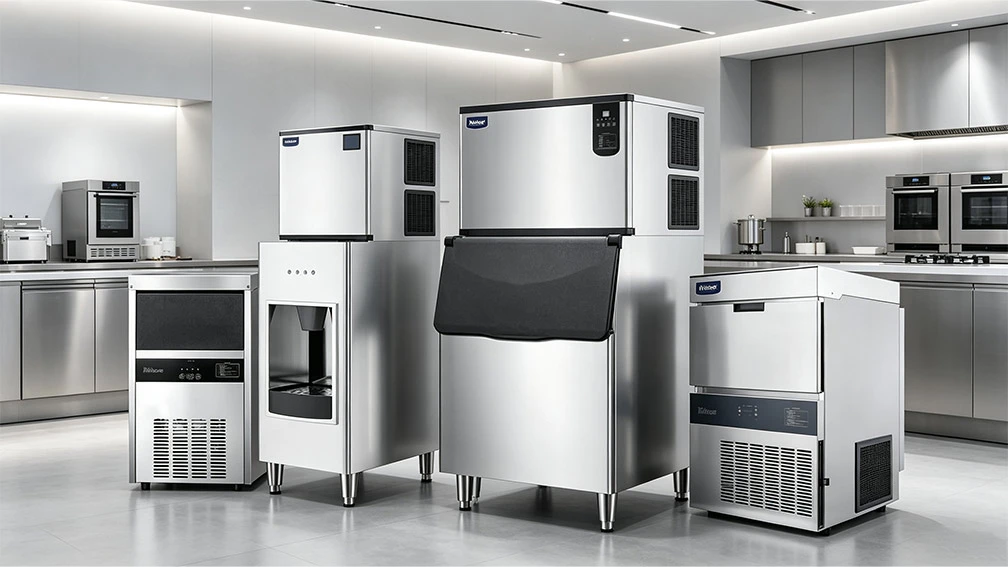
| Model | Daily Capacity | Bin Capacity | Power | Dimensions (mm) | Refrigerant |
|---|---|---|---|---|---|
| TH50 | 30 kg/24h | 12 kg | 220V / 330 W | 423 × 500 × 760 | R290 |
| TH80B | 38 kg/24h | 12 kg | 220V / 330 W | 425 × 496 × 765 | R290 |
| TH120B | 55 kg/24h | 20 kg | 220V / 370 W | 530 × 550 × 850 | R290 |
| TH150B | 75 kg/24h | 45 kg | 220V / 750 W | 660 × 690 × 920 | R290 |
| TH210B | 95 kg/24h | 45 kg | 220V / 750 W | 660 × 690 × 920 | R290 |
| TH260B | 120 kg/24h | 45 kg | 220V / 950 W | 660 × 690 × 920 | R290 |
| TH280B | 120 kg/24h | 130 kg | 220V / 950 W | 560 × 820 × 1490 | R290 |
| TH320B | 160 kg/24h | 130 kg | 220V / 1050 W | 560 × 820 × 1630 | R404A |
| TH420B | 190 kg/24h | 130 kg | 220V / 1100 W | 560 × 820 × 1630 | R404A |
| TH500B | 225 kg/24h | 180 kg | 220V / 1200 W | 760 × 820 × 1700 | R404A |
| TH700B | 320 kg/24h | 180 kg | 220V / 1500 W | 760 × 820 × 1700 | R404A |
| TH1000B | 460 kg/24h | 180 kg | 220V / 2680 W | 760 × 820 × 1935 | R404A |
| TH1200B | 550 kg/24h | 180 kg | 220V / 2680 W | 760 × 820 × 1935 | R404A |
Performance and electrical selection note: Published production ratings are based on an ambient temperature of 21°C and an inlet water temperature of 10°C. Actual production may vary under Saudi operating conditions due to ambient temperature, inlet water temperature, ventilation and installation conditions. Saudi Arabia's electricity system operates at a nominal frequency of 60Hz. The specifications shown above list a 220V/50Hz configuration. Confirm the factory-approved 60Hz version, rated voltage, phase and electrical nameplate for each model before ordering. Contact Naixer to verify expected production under your actual installation conditions. Undercounter, crescent, flake and nugget ice machine options are also available; specifications vary by model.
Beyond the TH range there are dedicated formats: undercounter machines from 35 kg/24h for bars and small cafés, crescent machines from 65 kg/24h upward, PB-series flake machines for fish counters and bakeries, and nugget machines at 60 kg/24h.
The two models most often specified for Saudi projects are the Naixer TH320B, 160 kg/24h for mid-size restaurants and the Naixer TH1000B, 460 kg/24h for central kitchens and hotel back-of-house.
Real Output in Saudi Heat
Every capacity figure in this article — and in every brochure you will be shown by any manufacturer — is measured under a specific test condition. Naixer’s is stated plainly on the specification sheets: room temperature 21 °C, water temperature 10 °C.
Riyadh and Jeddah summer conditions are nothing like that. Ambient air routinely passes 43 °C, and inlet water from an exposed rooftop tank can arrive at 30 °C or higher. An air-cooled ice machine rejects heat to the surrounding air, so when the surrounding air is already hot, the condenser has less headroom, the freeze cycle lengthens, and daily output falls below the rated figure.
This applies to every air-cooled machine from every manufacturer. The difference is that almost nobody selling into Saudi Arabia mentions it.

What to do about it:
- Specify one frame size above your calculated requirement. If your demand calculation lands on 120 kg, quote the 160 kg model.
- Give the machine air, not a cupboard. Rear and side clearance is not optional in a 45 °C plant room.
- Consider water-cooled above roughly 300 kg/24h in an unconditioned space.
- Put the machine in the coolest available room. A 5 °C ambient reduction is worth more than a size increase.
SASO and SABER: What Actually Has to Happen
Electrical appliances entering Saudi Arabia require conformity assessment through SASO, and the paperwork runs on the SABER platform. Two certificates are involved: a Product Certificate of Conformity (PCoC), registered per product model and valid for a period, and a Shipment Certificate of Conformity (SCoC) issued per consignment against that product certificate.
The split of responsibility matters:
- Naixer provides the technical file — test reports, ratings, drawings and CE documentation. CE and ISO 9001 have been held since 2011.
- Your importing entity registers in SABER, obtains the PCoC for the model, and draws the SCoC for each shipment.
- A Saudi-registered conformity body issues the certificates.
Two things to confirm before a first order. Ask whether the specific model you want has current test reports on file, and confirm which conformity body your importer works with. The process is routine, but it is not instant, and it should not be the thing that delays your first container.
Landed Cost: What Sits Between FOB and Your Warehouse
A factory quote is FOB Guangzhou. What you actually pay includes several layers on top:
Ocean freight. Guangzhou to Jeddah or Dammam. Rates move constantly and depend on container type and season — get a current quote rather than budgeting from an old figure.
Import duty. Set by HS code. Your customs broker confirms the rate for the specific classification.
VAT. Saudi Arabia applies 15% VAT at import.
SASO/SABER fees. Per shipment, paid through the conformity process.
Inland delivery and installation. Jeddah or Dammam port to site, plus commissioning.
The reason this matters is that FOB comparisons alone are almost meaningless. Two quotes 10% apart on FOB can invert entirely once freight and duty are applied, because volume, packing density and container loading all differ. Ask every supplier for the same three numbers: units per 40HQ, gross weight, and packing dimensions. Then the comparison is real.
Sizing by Application
Half the sizing questions that reach us are really one question: how much ice does this operation use? Our how to size a commercial ice maker by covers per day covers the arithmetic. The short version by application is below.
| Application | Peak Demand Driver | Typical Production Range | Preferred Ice Format |
|---|---|---|---|
| Café / Specialty Coffee | Cups per day | 55–95 kg/24h | 22–30 mm cube |
| Bar / Cocktail | Peak-hour covers | 35–75 kg/24h | Large cube, clear ice |
| Restaurant, 100–200 Seats | Peak service plus display | 120–225 kg/24h | 22 mm cube |
| Hotel, Guest Floors | Rooms per floor | Per-floor dispensers | Ice dispenser |
| Hotel Banquet / Central Kitchen | Banquet covers per sitting | 320–460 kg/24h and above | Modular cube |
| Fish Counter / Bakery | Display turnover | 150–300 kg/24h | Flake ice |
| Bagged Ice Production | Bags per day | 460 kg/24h and above | Cube plus bagger |
Ice machine sizing note: These ranges are preliminary planning estimates, not guaranteed production requirements or universal industry standards. Final sizing depends on bin capacity, ambient and inlet water temperatures, peak demand profile, ventilation and installation conditions. Contact Naixer to confirm the appropriate model and expected production under your actual operating conditions before ordering.
Hotels and banquet halls
Guest floors, breakfast buffets and banquet kitchens have three separate ice demands and should not be served by one machine. Corridor dispensers serve guests; the banquet kitchen needs volume; the bar needs a slower-melting format. Specifying one central unit for all three is the most common design error we see in hotel projects.
Layout guidance is in ice machines for hotel guest floors and banquet kitchens.
Cafés and specialty coffee
Saudi coffee culture is specific and demanding. Iced coffee and specialty drinks want a cube that melts slowly enough not to dilute the drink before it is finished, which is why 22 mm cubes and larger formats dominate. Nugget ice is the opposite choice — fast-melting, chewable, used in blended drinks.
The trade-offs between formats are set out in ice cube shapes and the drinks each one suits. For most cafés under 100 cups a day, a 55–95 kg/24h machine with a 20–45 kg bin is the practical answer.
Restaurants and central kitchens
Restaurants are driven by peak service, not daily average. A 200-seat restaurant in Riyadh typically lands on 160–225 kg/24h once beverage service, buffet displays and any seafood counter are counted. Central kitchens producing for multiple outlets should be looking at 460 kg/24h and above — and should consider two machines rather than one, because redundancy matters more than unit economy when a single failure stops production.
Fish counters and bakeries
These need flake ice, not cube. Flake moulds to the product, cools faster per unit of contact and does not bruise. The PB series is built for this, and the same machines serve supermarket fish counters and bakery dough-temperature control.
Sourcing Direct vs Buying Local Stock
There is a real argument for buying from a Riyadh or Jeddah distributor: next-week delivery, local warranty, and a technician who can be on site in a day. For a single machine in a working kitchen, that is often the right call.
The argument for direct sourcing is different and narrower. It works when you are the importer, when you can carry spare-parts stock, and when you need something the local catalogue does not hold — a specific capacity, a private label, a 60Hz build, or a format the local distributor does not stock.
If you are benchmarking who else is in this space, top commercial ice machine manufacturers ranked lists the major global names with their positioning.
OEM and Distribution in the Gulf
Naixer’s Guangzhou base has an annual output capacity of 100,000 units and runs on an OEM + ODM model — private label, custom control panels, custom packaging and model numbering under your own brand.

For Gulf distributors the practical questions are MOQ, exclusivity and spare-parts support. The Naixer distributor and OEM programme for the Gulf sets out the terms. In short: MOQ is agreed per model mix, and territory discussion starts once there is a committed first order.
Talking to Us
Naixer exhibited at Naixer at Arabia Host 2026 in Riyadh, and the Gulf is an active region for us. If you are evaluating Saudi supply, the fastest route is to send the application, the required capacity, the required frequency and the destination port. We will come back with a model recommendation, an FOB price and a packing list you can hand to a freight forwarder.
For SASO questions, tell us the model and we will confirm what test documentation is on file before you commit.
Browse the full Naixer ice machine catalogue for specifications on every model.
Frequently Asked Questions
What certification is required to import an ice machine into Saudi Arabia?
Electrical appliances require SASO conformity, processed through the SABER platform — a Product Certificate of Conformity for the model and a Shipment Certificate of Conformity for each consignment.
Do Naixer ice machines work in Saudi Arabia’s 60Hz supply?
Saudi Arabia runs a 230V/60Hz supply, while Naixer’s standard build is 220V/50Hz. A 60Hz specification must be requested at order — compressor, fan motors and control board are rated accordingly. Confirm the build in writing before shipping rather than assuming compatibility.
Why is 60Hz a problem if the voltage matches?
Voltage and frequency are separate specifications. A motor rated for 50Hz runs roughly 20% faster on 60Hz, which raises running current, discharge temperature and wear, and shifts control-board timing. Matching voltage does not solve a frequency mismatch.
What does a commercial ice machine cost in Saudi Arabia?
Retail prices for small units run from about 4,000 SAR for 30 kg/24h to roughly 9,300 SAR for 60–67 kg/24h. Factory-direct FOB pricing is a different structure and depends on capacity, configuration and order volume.
How much does it cost to ship an ice machine from China to Jeddah?
Freight depends on container type and current market rates. Ask for units per 40HQ and gross weight from each supplier so freight can be compared on a like-for-like basis rather than on FOB alone.
What is the lead time for commercial ice machines to Saudi Arabia?
Production lead time is quoted per order; ocean transit from Guangzhou to Jeddah or Dammam and SASO clearance sit on top of that. Confirm both before committing to an installation date.
Why does my ice machine produce less than its rated capacity in summer?
Rated capacity is measured at 21 °C ambient and 10 °C water. Saudi summer conditions are far above that, and air-cooled machines lose output as ambient temperature rises. Specify one size above your calculated requirement and ensure adequate ventilation.
What is the MOQ for OEM ice machine production?
MOQ is agreed per model mix rather than as a single number. It is lower for models already in production and higher when a custom control panel or housing change is required.
Which capacity do I need for a 200-seat restaurant in Riyadh?
Typically 160–225 kg/24h once beverage service, buffet display and any seafood counter are included — and one frame size above that if the machine sits in an unconditioned space.
Do you have a distributor in Saudi Arabia?
We are actively developing Gulf distribution. If you are an established equipment importer, the conversation usually starts with Naixer distributor and OEM programme for the Gulf.