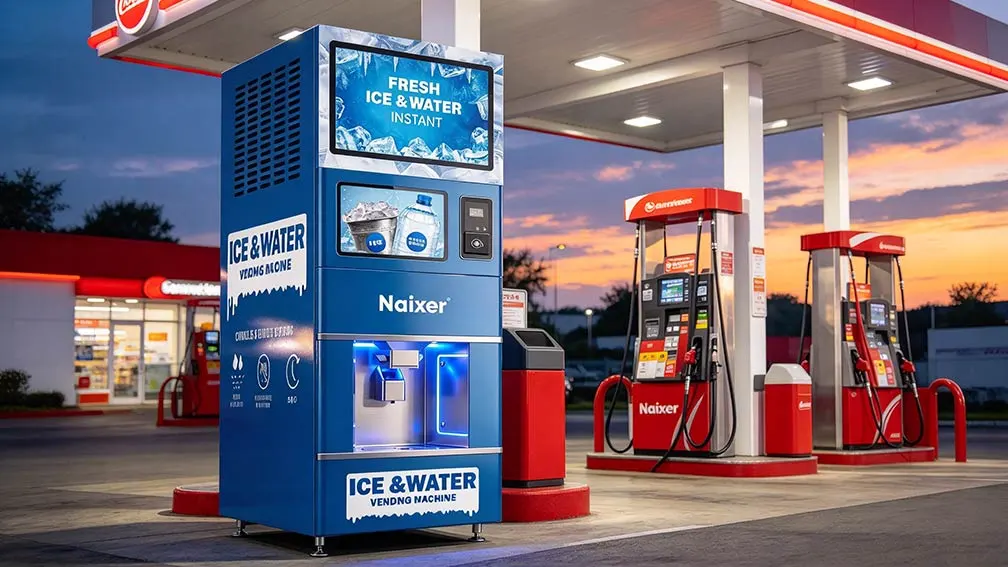
Fuel margins are thin — often just a few cents per gallon — so gas station owners earn their profit inside the store and on the forecourt. That’s why bagged ice has become one of the most reliable add-on products in the convenience industry: it’s an impulse purchase, it sells year-round in warm climates, and customers buy it again and again.
A gas station ice machine turns that demand into revenue. Whether you’re bagging ice at the back of the store or running a self-service kiosk that sells ice and water around the clock, the right machine can add thousands of dollars in monthly profit with almost no extra labor. (If you’re new to this market, start by studying how customers buy ice at a gas station today — buyer habits tell you exactly what to stock and how to price it.)
This guide covers what station owners actually need in 2026: how these machines work, what they cost, the ROI math, how to choose the right capacity, and how to place and maintain it.
In this guide, you will learn:
Quick Answer: What Is a Gas Station Ice Machine?
A gas station ice machine is any machine at a fuel station that makes or sells ice. In practice, the term covers three very different setups:
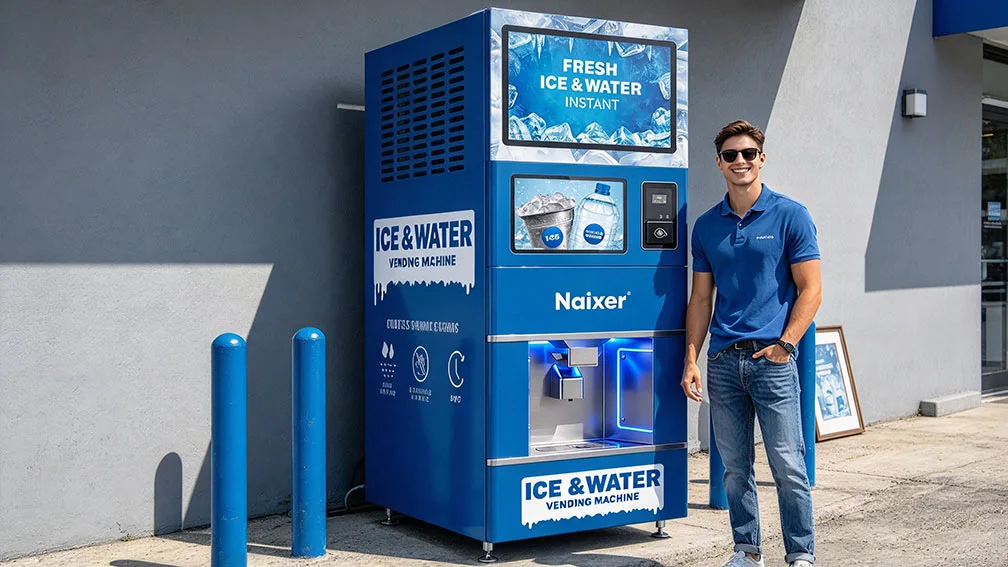
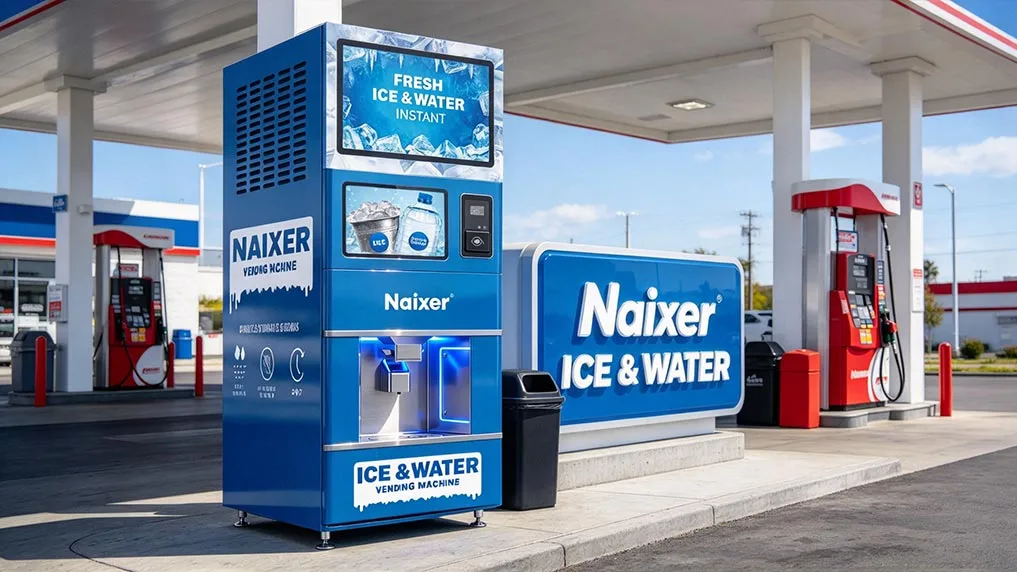
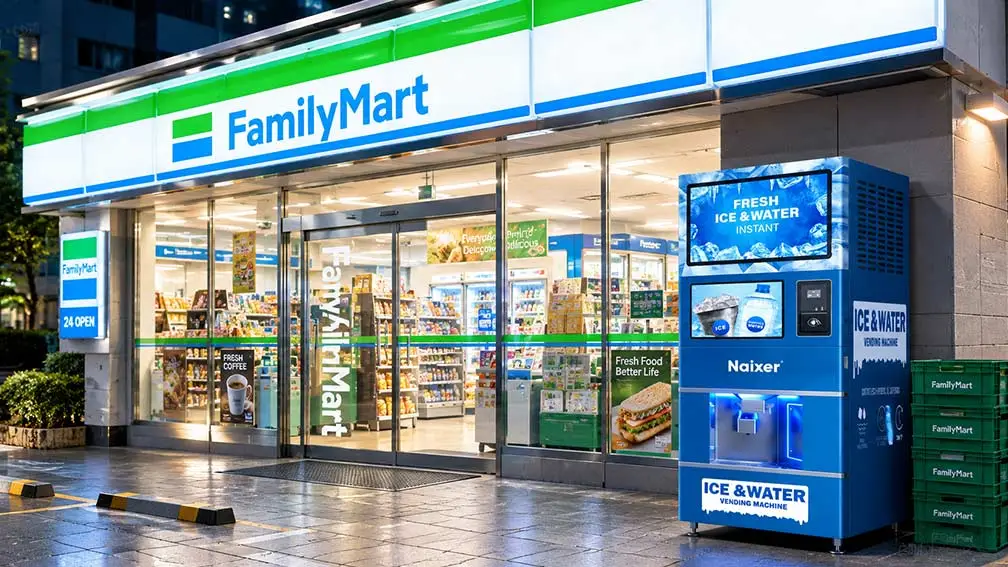
- Ice vending kiosks — outdoor, self-service machines that make ice on site and sell it in 10-lb bags (and often drinking water), unattended, 24/7.
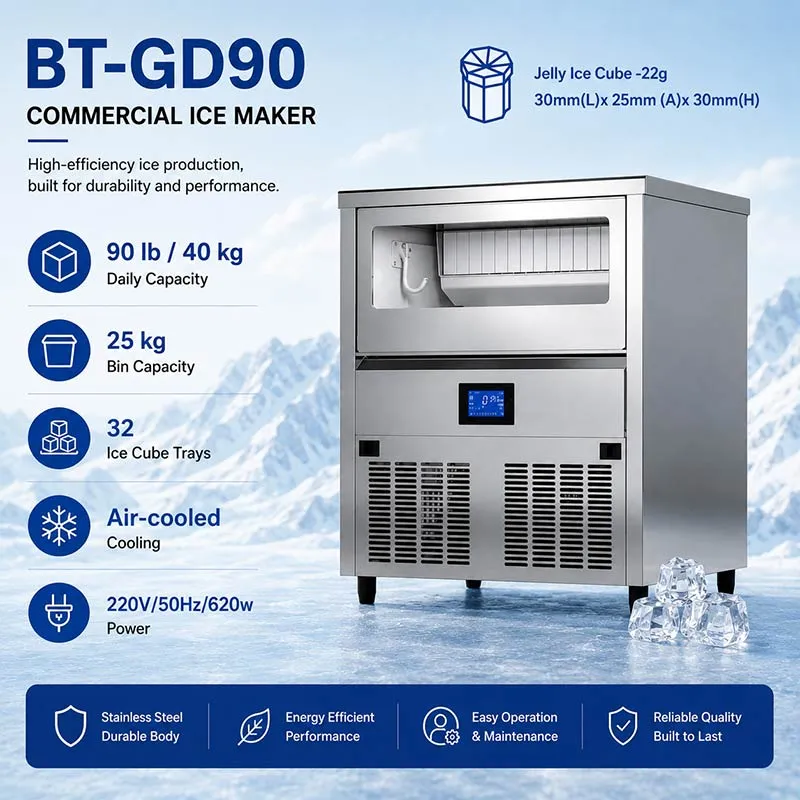
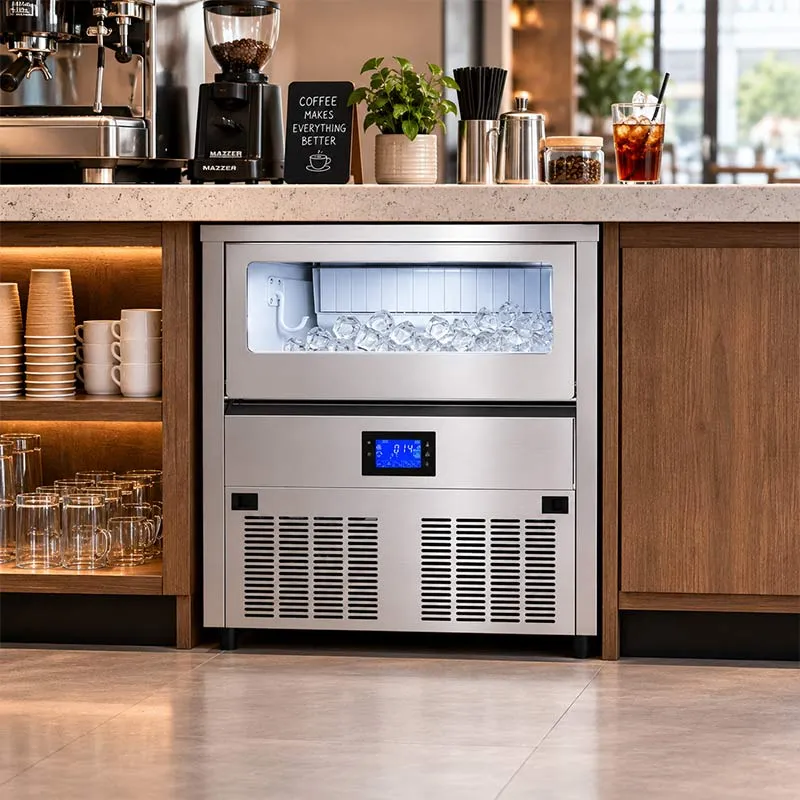
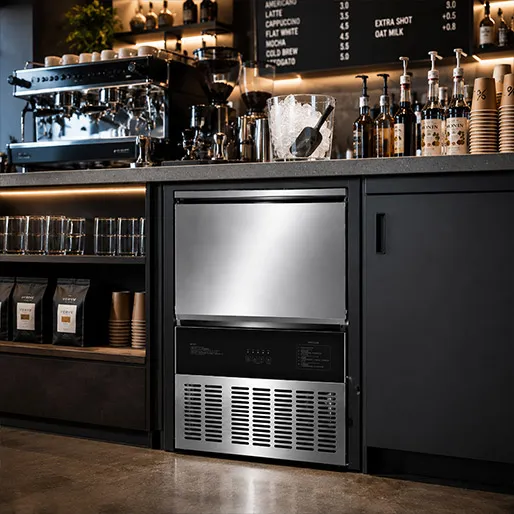
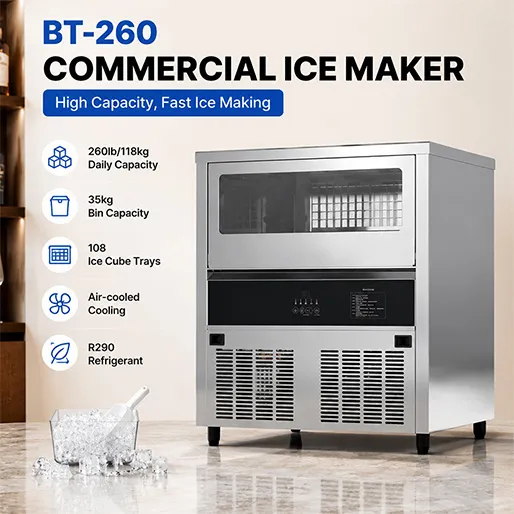
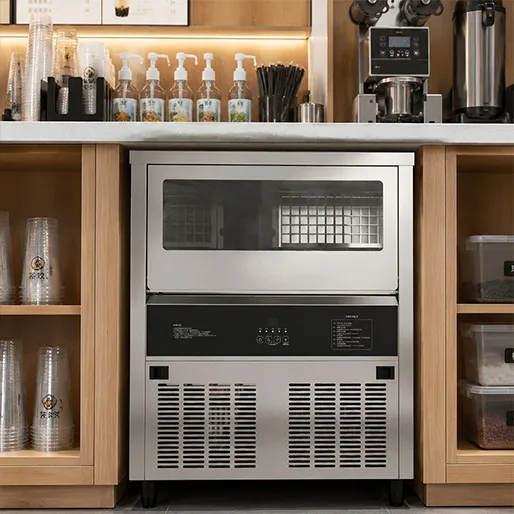
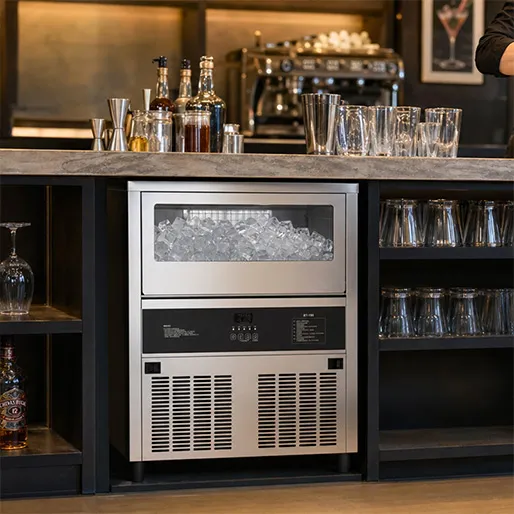
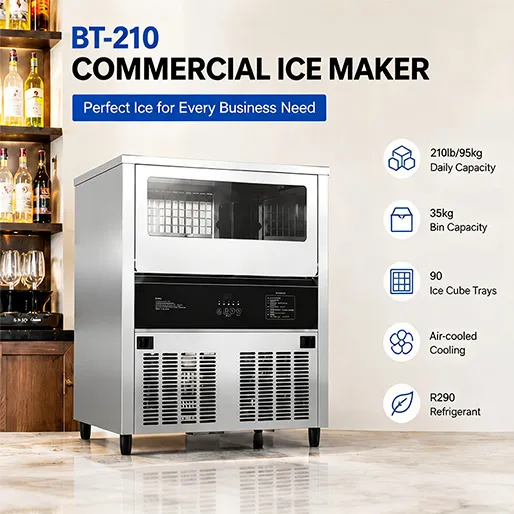
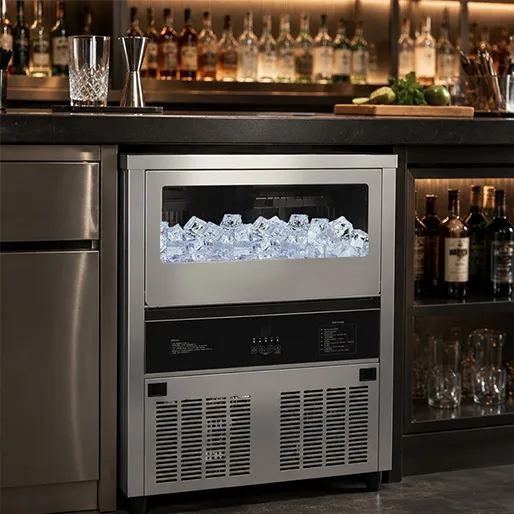
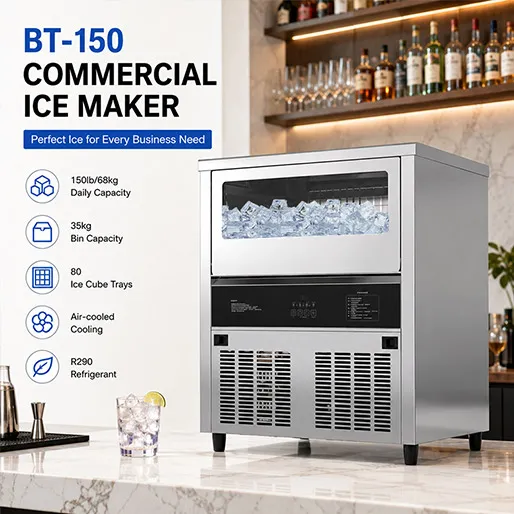
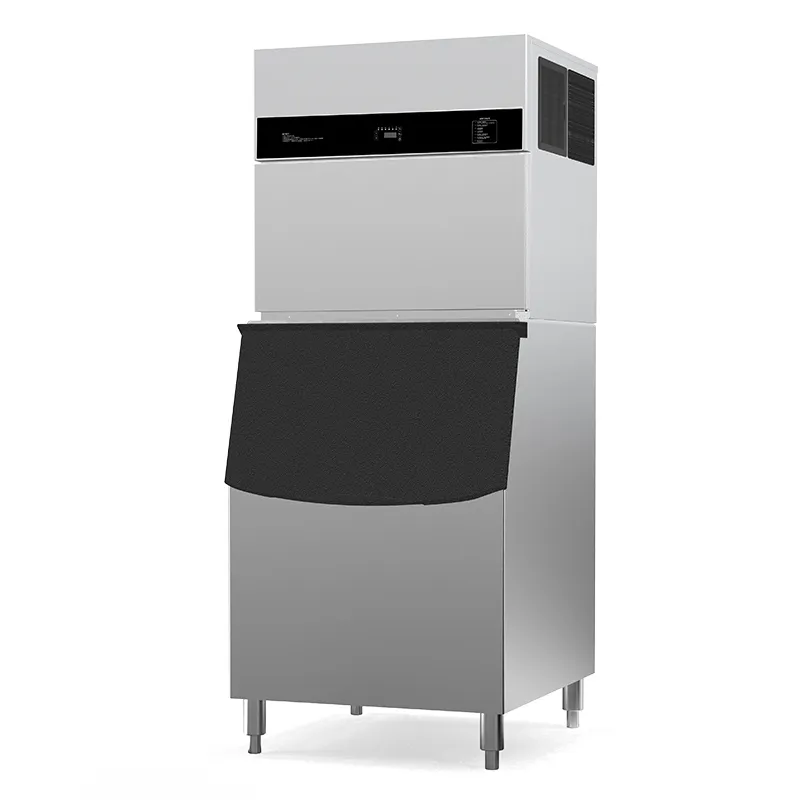
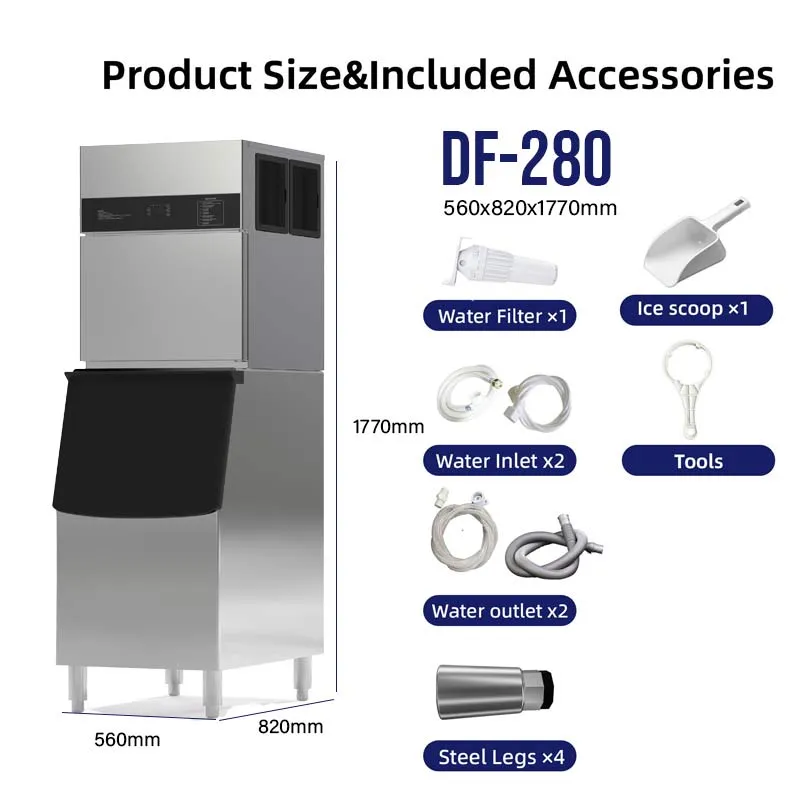
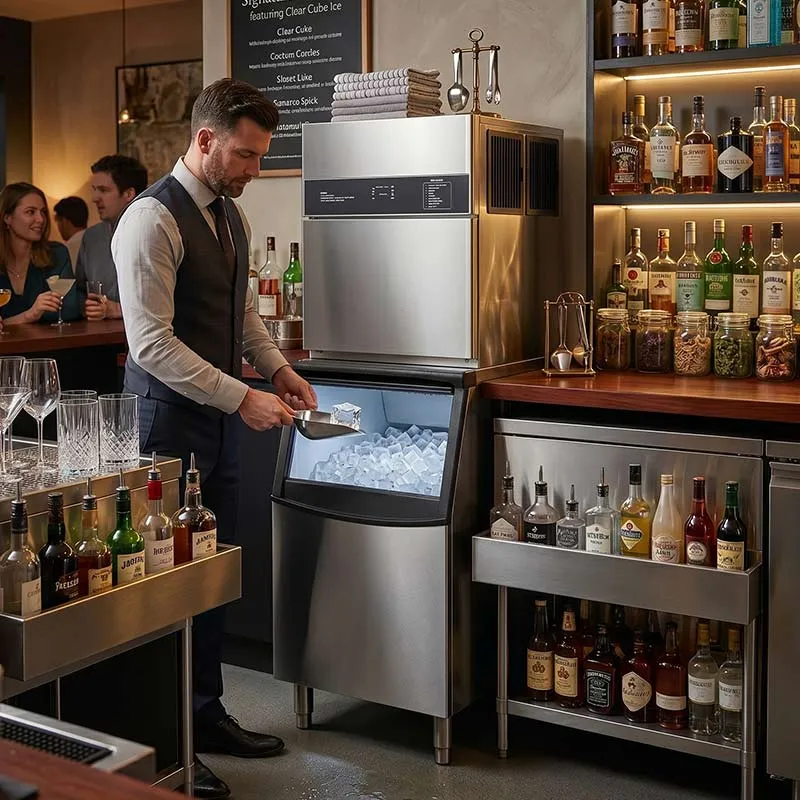
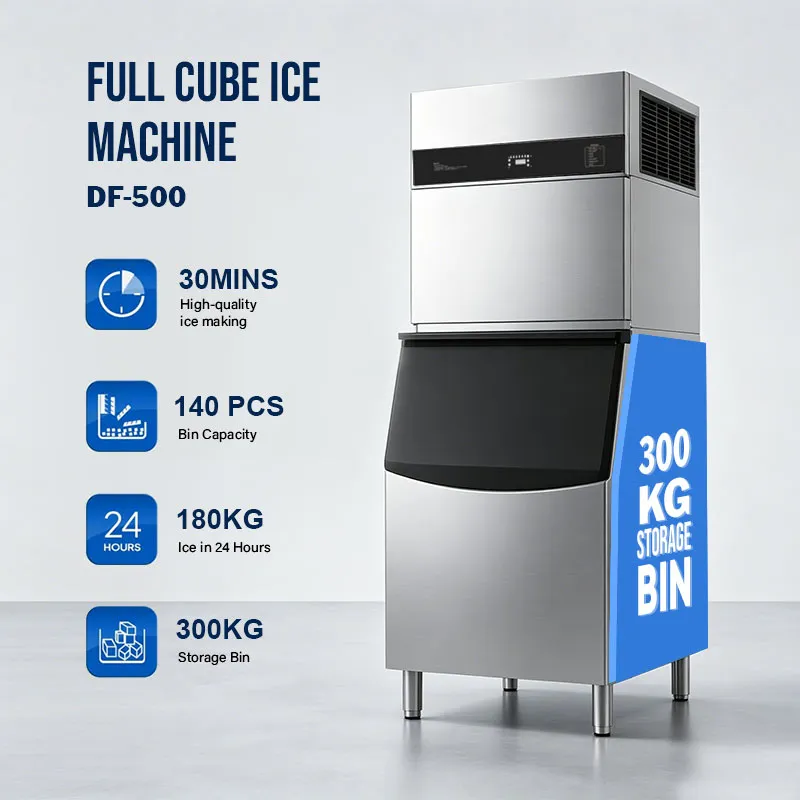
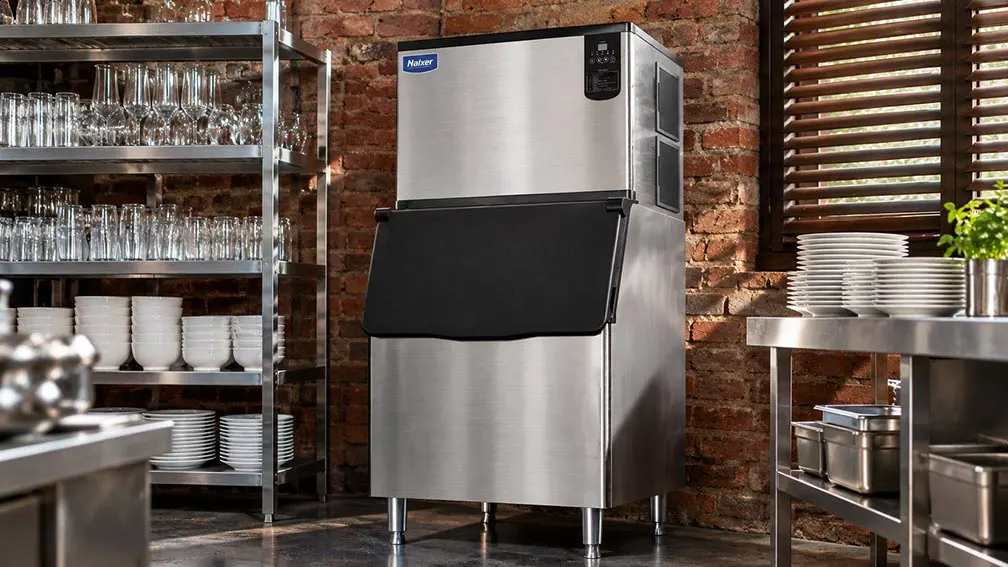
- In-store commercial ice makers — machines inside the store that produce ice for fountain drinks and for bagging and selling at the counter.
- Ice merchandisers — freezers that store and display pre-bagged ice for retail sale.
One clarification before we go further: if you searched for a “gas station ice maker” and found slushie results, ignore them. Icee and slushie machines make frozen carbonated drinks — a completely different product. Ice machines make cube, nugget, or flake ice for bags and beverages.
In short: if you want a machine that turns water into sellable bagged ice, you’re choosing between an in-store commercial ice maker and a self-service ice vending machine on your forecourt. This guide helps you decide.
How Gas Station Ice Machines Work
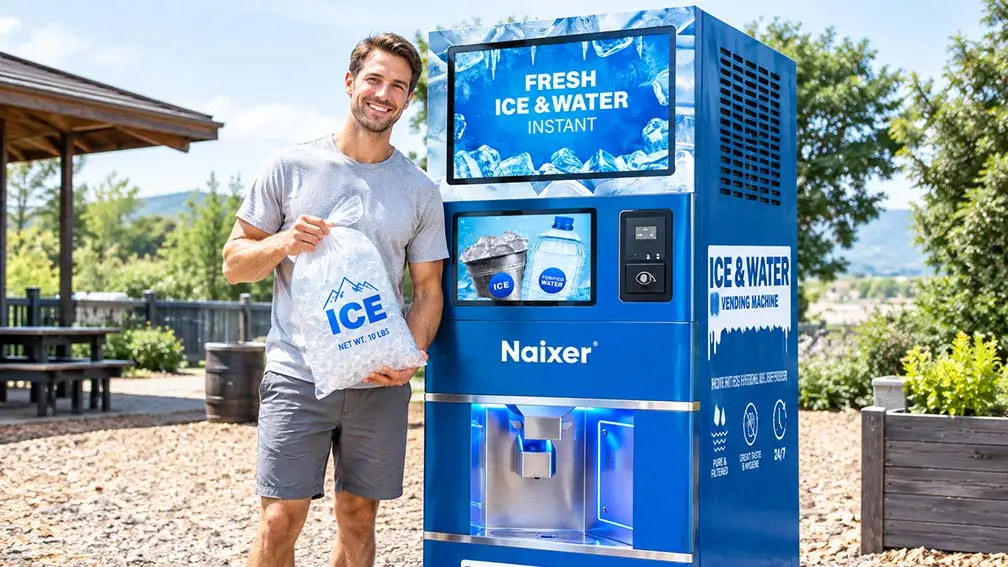
Every machine — kiosk or in-store — follows the same basic chain. Here’s what happens between the water line and the customer walking away with a bag of ice:
- Water and power in. The unit connects to a potable water line and a dedicated electrical circuit. Air-cooled refrigeration is the standard at fuel stations; water-cooled systems exist but are rarely practical outdoors.
- Filtration. A carbon or sediment filter cleans the water before it freezes. This step is critical: filtered water means clear, tasteless ice, fewer scale problems, and a longer machine life.
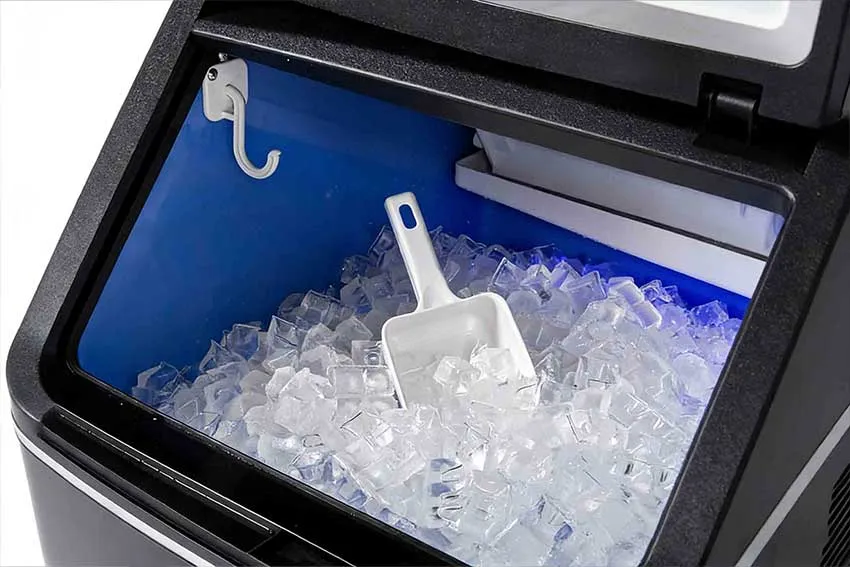
- Freezing. Water freezes into cubes (or nugget / flake ice) on a refrigerated evaporator, then drops into an insulated storage bin.
- Storage and agitation. The bin keeps ice frozen between production cycles. Vending kiosks add a slow agitation system so the ice never freezes into one solid block.
- Dispensing and payment. In a kiosk, a customer selects “10-lb bag” (or water), pays by card or phone, and the machine bags and dispenses it in under a minute — fully self-service.
- Remote monitoring. Modern kiosks include IoT modules that report sales, temperatures, water use, and faults to your phone, so you know about a problem before it becomes lost sales.
The practical difference between machine types: in-store makers need staff to bag and restock, while kiosks run themselves. A high-capacity reference point: the Naixer ice & water vending machine produces up to 3,200 lbs (about 1.45 tons) of ice per day and vends both ice and drinking water. It accepts card and contactless payments, and IoT remote management is standard.
The 3 Types Compared: Which Fits Your Station?
Choosing starts with two questions: how much traffic do you have, and how much staff time can you spare?
- Ice vending kiosk. Best for medium-to-high traffic stations that want unattended income and can spare a small concrete pad. Zero staff involvement, the highest revenue ceiling, and it keeps selling while you sleep.
- In-store commercial ice maker. Best for stations that already sell fountain drinks and want to add bagged ice incrementally. Cheap to start, but every bag takes a few minutes of staff time — which caps your daily volume.
- Ice merchandiser. Best only as a companion: buying pre-bagged ice from a supplier and reselling it leaves you the thinnest margin of the three.
The pattern is simple: the more traffic you have, the further a self-service kiosk pulls ahead — at busy highway sites it can out-earn an in-store setup by an order of magnitude.
| Feature | Ice Vending Kiosk | In-Store Ice Maker | Ice Merchandiser |
|---|---|---|---|
| What it is | Self-service machine that makes and sells bagged ice — and often drinking water — unattended | Commercial maker inside the store that produces ice for drinks and bagging | Freezer that stores and displays pre-bagged ice for retail sale |
| Best for | Medium–high traffic stations that want 24/7 passive income | Stations adding bagged ice to an existing drink program | Stores reselling supplier-bought ice |
| Daily ice production | Up to 3,200 lbs Naixer ZD-160-A320 | 150–500 lbs typical | Storage only |
| Staff time | None — fully self-service | Bagging and restocking shifts | Restocking only |
| Payment | Built-in card & contactless reader | Store POS | Store POS |
| Reported monthly sales |
$2,000–$10,000
at good locations |
$300–$1,500 (ice only) | $200–$800 |
| Typical 2026 cost |
$3,000–$10,000 entry
$20,000–$50,000+ high-capacity |
$1,500–$8,000 | $800–$4,000 |
Industry estimates for U.S. fuel stations; results vary with traffic, climate, and pricing.
What Does a Gas Station Ice Machine Cost in 2026?
Budget in two buckets: one-time costs and ongoing costs. For an ice vending kiosk, equipment runs $3,000–$10,000 for entry models and $20,000–$50,000+ for high-capacity units that sell both ice and water. Add site preparation of $1,000–$5,000 (concrete pad, dedicated circuit, water line, drainage) and permits of roughly $100–$1,000 depending on your county.
In-store makers cost far less up front — $1,500–$8,000 — but they also sell less ice per day, because every bag takes staff time.
Ongoing costs are modest: electricity runs $40–$250 per month depending on production and climate, water and bags add $20–$80, maintenance and filters average $300–$800 per year, and card processing takes about 2–4% of each sale.
| Cost Item | Typical Range | Notes |
|---|---|---|
| Entry-level ice vending kiosk | $3,000–$10,000 | One-time equipment; basic bagged-ice capacity |
| High-capacity ice + water kiosk | $20,000–$50,000+ | One-time; busy locations, ice + water vending |
| In-store commercial ice maker | $1,500–$8,000 | One-time; 150–500+ lbs/day by model |
| Ice merchandiser / display freezer | $800–$4,000 | Storage and retail display |
| Site preparation | $1,000–$5,000 | Concrete pad, dedicated power, water line, drainage |
| Permits & licensing | $100–$1,000 | Varies by state and county |
| Electricity | $40–$250 / month | Rises with output and climate |
| Water & bags | $20–$80 / month | Consumables scale with sales |
| Maintenance & filters | $300–$800 / year | Filter changes, servicing, wear parts |
| Card processing | 2–4% of sales | Per transaction |
The biggest variable isn’t brand — it’s capacity. A machine that’s too small for your summer peak costs you sales every hot afternoon; one that’s oversized wastes money on idle capacity. For a full line-by-line breakdown by machine type, see our complete 2026 ice vending machine cost breakdown.
ROI: How Much Can a Gas Station Ice Machine Earn?

Short answer: a well-placed machine typically pays for itself in under a year, then keeps producing for 15+ years.
The margins are the reason. A 10-lb bag of ice costs roughly $0.25–$0.55 to produce — water, power, bag, and payment fees included. At a typical retail price of $2.00–$3.50, that’s a gross margin above 80%: power, bags, and card fees consume only about 10–20% of revenue. Almost nothing else on a gas station forecourt comes close.
Here’s what that looks like month to month: a moderate-volume station selling 40 bags a day grosses about $3,000 and nets roughly $2,450 after operating costs; a strong highway location can pass $52,000 net per year. For a full walkthrough of every variable — traffic, climate, pricing, seasonality — read our ice vending machine ROI guide.
| Metric | Conservative | Moderate | Strong |
|---|---|---|---|
| Cars per day (typical) | 150–400 | 400–1,000 | 1,000+ |
| 10-lb bags sold per day | 15 | 40 | 70 |
| Monthly revenue at $2.50/bag | $1,125 | $3,000 | $5,250 |
| Monthly operating costs | ~$320 | ~$560 | ~$900 |
| Estimated monthly net | ~$800 | ~$2,450 | ~$4,350 |
| Estimated annual net | ~$9,600 | ~$29,400 | ~$52,200 |
| Payback on an $8,000 machine | ~10 months | ~3 months | ~2 months |
Illustrative estimates. Operating costs include power, water, bags, card fees, connectivity, and a maintenance reserve; machine purchase and site prep excluded. Water vending and summer peaks may add upside.
Cross-check against the industry: operators commonly report gas-station vending machines generating $2,000–$10,000 per month in sales, with strong locations netting $50,000+ per year. Whether your machine lands at the bottom or the top of that range comes down to location quality — which is why our analysis of how profitable ice vending machines really are starts with traffic thresholds.
How to Choose: 8 Checks Before You Buy
Two machines with the same price can perform very differently. Run these eight checks before you commit to an ice vending machine for a gas station:
- Capacity vs. demand. Size for your hottest month, not your average. A station seeing 1,000+ cars a day in summer will drain an entry-level 150-lb/day maker by noon.
- Storage autonomy. The bin should hold at least one full day of peak sales, so the machine keeps vending while it freezes the next batch.
- Ice type. Cube ice is the default for drinks and bags; nugget (chewable) ice is a growing premium; flake ice serves specialty uses.
- Payment. Contactless and EMV card readers are expected in 2026. Coin and bill options are increasingly optional — most buyers tap to pay.
- Remote monitoring. IoT alerts for temperature, sales, and faults cut downtime, and downtime is pure lost revenue.
- Water vending. Adding drinking water to the same kiosk raises average transaction value and doubles your use case — in hot states, water can account for a large share of sales.
- Build quality. Look for food-grade stainless steel (SUS304), weatherproof housing, sealed dispensing, and filtration matched to your local water hardness.
- Service and warranty. Ask about parts availability, local service partners, and warranty length. A three-year comprehensive warranty materially changes your true ownership cost.
| Station Profile | Daily Traffic | Recommended Setup | Daily Ice Sales | Budget |
|---|---|---|---|---|
| Rural / Low-Traffic Station | 150–400 cars | 150–260 lb in-store ice maker + manual bagging | 10–20 bags | $2,000–$6,000 |
| Suburban Convenience Store | 400–1,000 cars | 300–500 lb ice maker, or an entry ice vending kiosk | 20–45 bags | $6,000–$15,000 |
| Highway / Truck Stop | 1,000+ cars | High-capacity ice & water vending kiosk (3,000+ lbs/day) | 60–100+ bags | $15,000–$50,000+ |
If your ambition reaches beyond one machine — a route of kiosks across multiple locations — see how operators scale to make $100K a year with an ice & water vending fleet.
Features That Pay You Back

Some specs are marketing; others show up directly in your bank account. The difference is whether a feature saves you energy, saves you labor, or sells more ice:
- Energy efficiency. Every kWh saved is net profit. Choose R290 (propane) refrigerant models where available — far lower global-warming potential than older HFCs and now the EPA-preferred choice for new equipment. A machine that runs on $80 of electricity a month instead of $160 is worth $960 a year.
- Anti-clog agitation and sealed dispensing. Fewer jams, no manual scooping, cleaner ice — customers notice, and health inspectors do too.
- Vandal-resistant construction. Forecourt machines live outdoors. Locked panels, steel housings, and shatter-resistant interfaces keep them running.
- IoT remote management. Know what sold, what’s running low, and what’s failing — without walking out to the machine.
- Certifications and track record. CE, RoHS, and CB certification, ISO 9001 manufacturing, and a manufacturer with real history matter when you’re spending five figures. Naixer has been building ice machines since 2010 and supplies more than 3,000 operators in 130+ countries.
Placement, Setup & Maintenance
Placement drives sales. Put the kiosk where drivers can see it from the pump and reach it on the way to the door — end of the forecourt, well lit, never blocking fuel sightlines. The best locations for an ice & water vending machine follow the same logic as ATMs and propane cages: visibility, access, impulse.
Site prep is straightforward but must be done right: a level concrete pad, a dedicated electrical circuit, a potable water line, and drainage (or a sealed system for water vending). Check zoning and vending permits with your county before pouring concrete — rules vary widely. And once it’s installed, make your ice vending machine stand out with signage, lighting, and a clear price display: visibility is one of the cheapest sales levers you have.
Maintenance is simple but not optional. Replace water filters every 3–6 months. Sanitize the bin, bagger, and dispenser on a monthly schedule — our step-by-step cleaning guide covers the full process. Descale the evaporator as your water hardness demands, inspect payments and seals quarterly, and winterize (or choose a heated model) in cold climates — a frozen dispenser sells nothing.
Keep an eye on energy too. A commercial machine’s electricity use is predictable once you know daily production — see how much electricity an ice machine uses — plan on $50–$250 per month for most gas-station setups.
Two Ways to Run It: Buy the Machine or Host One
You don’t have to own the machine to earn from it. Operator-owned means you buy it ($3K–$50K+), keep 100% of the profit, and control pricing and service; payback typically runs 4–24 months depending on volume. Third-party hosted means a vending company installs and services the machine while you provide the space and take a commission or fixed rent — lower risk, lower ceiling.
Many owners start hosted and switch to buying once they see the real numbers. If you’re planning beyond your own forecourt, our guide to starting an ice & water vending business covers equipment, permits, and routes step by step.
FAQ
How do gas station ice machines work?
Water flows through a filter into a refrigerated evaporator that freezes it into cubes. The cubes drop into an insulated bin, and in a vending kiosk, a bagging mechanism fills a bag and dispenses it after the customer pays by card. Production, storage, and vending all happen on site, automatically.
Can you get ice from a gas station?
Yes — thousands of U.S. stations sell bagged ice, and self-service kiosks sell it 24/7, typically for $2–$4 per 10-lb bag. It’s the same filtered ice sold in grocery stores. For buying tips and etiquette, see how to buy ice at a gas station.
How much does it cost to buy an ice vending machine?
Entry-level bagged-ice kiosks run $3,000–$10,000. High-capacity machines that vend both ice and water — the kind busy truck stops use — run $20,000–$50,000+, plus $1,000–$5,000 for site preparation. In-store commercial ice makers cost less, from about $1,500.
What is an ice-making machine called?
Depending on the type: a commercial ice maker or ice machine (in-store), an ice vending machine or ice kiosk (self-service sales), or style-specific names like cuber, nugget maker, or flake ice machine. Note that a slushie or Icee machine is not an ice machine — it dispenses frozen drinks.
Is a gas station ice machine profitable?
At the right location, yes. With gross margins above 80% on bagged ice, payback on the machine usually runs 6–18 months, and busy sites pay it back in under a year. Low-traffic stations are often better served by starting with an in-store maker.
How long does a gas station ice machine last?
Well-maintained machines commonly last 15–20 years. Kiosks face outdoor conditions, so expect to replace wear parts — filters, bagger components, card readers — along the way. A three-year warranty and reliable parts availability matter more than a rock-bottom purchase price.