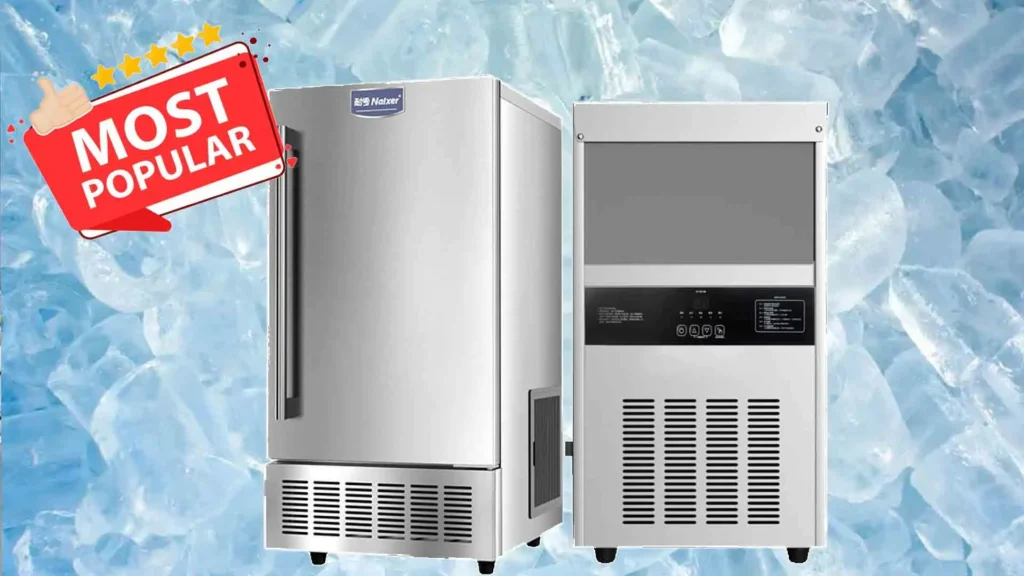
Do Ice Maker Machines Use a Lot of Electricity?
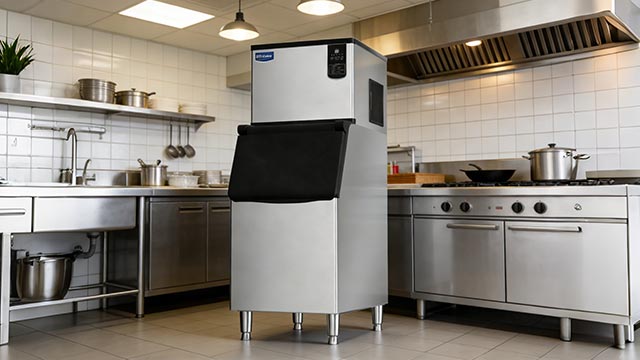
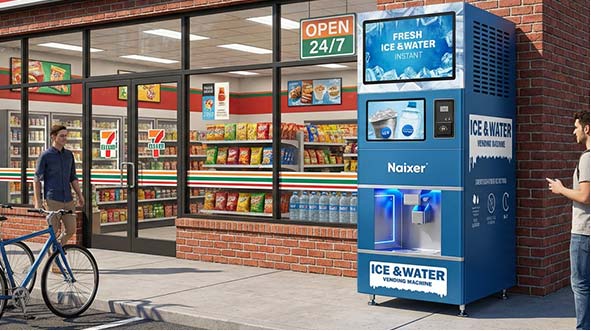
If you‘re considering buying a commercial ice machine for your business, you’ve probably asked yourself this question: Do ice maker machines use a lot of electricity?
It‘s a fair concern. Electric bills already feel heavy for most restaurant, café, and convenience store owners. Adding one more piece of equipment—especially one that runs all day—can make anyone nervous.
The honest answer is more relaxed than many people expect. No, modern commercial ice makers don’t use as much electricity as you might think. When you choose the right machine, install it properly, and maintain it regularly, the monthly electricity cost is surprisingly reasonable—often less than a few cups of specialty coffee per day.
In this guide, we’ll break down:
How many watts different ice makers actually use
Real-world electricity cost estimates (with a simple formula you can use)
5 key factors that affect energy consumption
7 actionable tips to lower your ice machine‘s electricity bill
Let’s dive in.
Use our ice calculator to find the perfect commercial ice maker for your restaurant, bar, or hotel. Learn how to calculate daily ice needs and choose the right machine.
How Much Electricity Does a Commercial Ice Machine Actually Use?

Wattage Ranges by Machine Size
The power consumption of an ice maker depends primarily on its size and ice production capacity. Small household units typically consume 100–200 watts, while commercial machines range from 300 watts to over 7,000 watts for high-output industrial models.
Here’s a breakdown based on real-world data from Naixer product specifications and industry benchmarks:
| Machine Size | Daily Ice Production | Typical Power (Watts) | Representative Naixer Model |
|---|---|---|---|
| Small | 80–200 lb (36–90 kg) | 300–600 W | TH-80B (330W), TH-120B (370W) |
| Medium | 300–700 lb (136–318 kg) | 700–1,500 W | TH-500C (1,200W), TH-700C (1,500W) |
| Large | 1,000–4,000 lb (450–1,800 kg) | 1,500–7,400 W | TH-2000B (3,700W), TH-4000B (7,400W) |
Note: Data tested at ambient temperature 25°C (77°F) and water supply temperature 20°C (68°F), per Naixer product specifications.
A medium-sized commercial ice maker producing around 250 lbs of ice per day typically consumes about 500 kWh per month. That‘s roughly equivalent to running a standard home refrigerator for two to three months.
What Does That Mean in Dollars?
Let’s do the math. Assuming a commercial electricity rate of $0.14 per kWh (the U.S. average for businesses in 2025):
Small machine (TH-80B, 330W) running 8 hours/day:
(330 ÷ 1000) × 8 × $0.14 = $0.37 per day → ~$11 per monthMedium machine (TH-500C, 1,200W) running 12 hours/day:
(1,200 ÷ 1000) × 12 × $0.14 = $2.02 per day → ~$60 per monthLarge machine (TH-2000B, 3,700W) running 12 hours/day:
(3,700 ÷ 1000) × 12 × $0.14 = $6.22 per day → ~$187 per month
For most food service businesses, the electricity cost of running a commercial ice maker is less than 1–3% of monthly revenue—a small price for a reliable ice supply.
Industry benchmarks confirm this range: a medium-sized commercial ice maker typically costs $50 to $75 per month to run in electricity. Portable and countertop units cost even less—often $3 to $7 per month.
Still struggling to choose the right under-counter ice maker for your restaurant or bar? Learn how Naixer can help you easily select the right under-counter ice maker.
How to Calculate Your Ice Maker‘s Electricity Cost (Simple Formula)
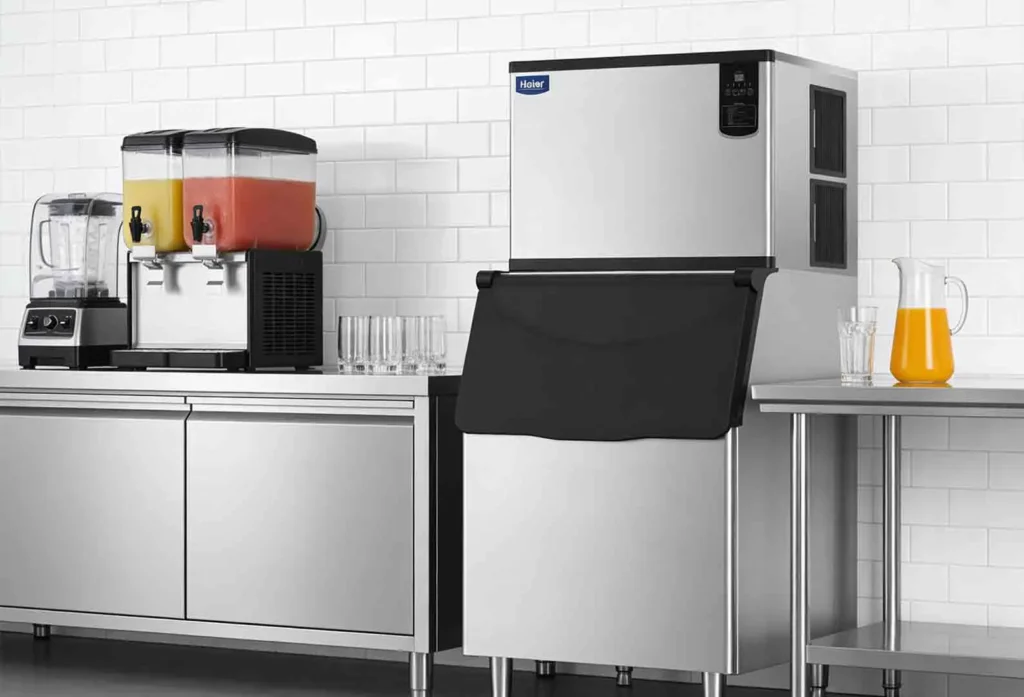
Want to know exactly what your machine will cost to run? Here’s the formula used by equipment suppliers and energy auditors:
Daily Electricity Cost = (Watts ÷ 1000) × Daily Operating Hours × Electricity Rate ($/kWh)
Step-by-step example:
Find your machine‘s wattage – Check the specification label on the back of the unit or the user manual. For a Naixer TH-500C, rated power is 1,200W.
Estimate daily operating hours – A busy restaurant might run its ice maker 12 hours/day. (Note: The machine doesn’t run continuously—it cycles on and off as ice is produced and the bin fills.)
Get your electricity rate – Check your latest utility bill. U.S. commercial rates average $0.14/kWh in 2025.
Calculation:
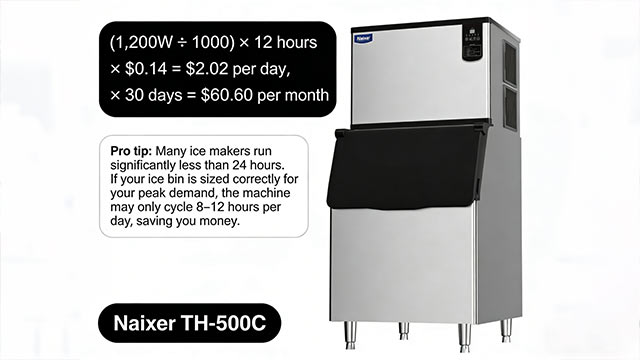
(1,200W ÷ 1000) × 12 hours × $0.14 = $2.02 per day
× 30 days = $60.60 per month
Pro tip: Many ice makers run significantly less than 24 hours. If your ice bin is sized correctly for your peak demand, the machine may only cycle 8–12 hours per day, saving you money.
5 Key Factors That Affect Ice Machine Energy Consumption
Not all ice makers are created equal. Here are the five biggest factors that determine how much electricity your machine will actually use.
1. Refrigerant Type: R290 vs. R404A
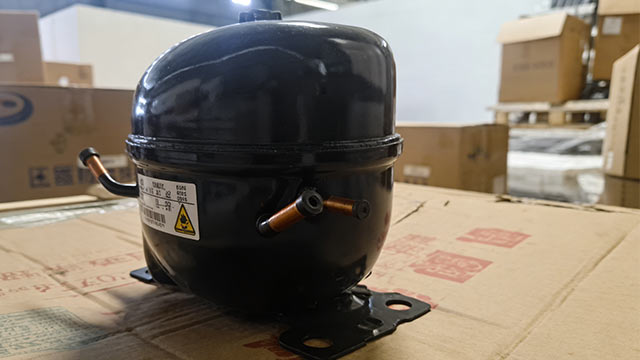
The refrigerant in your ice maker directly impacts energy efficiency. R290 (propane-based) is significantly more efficient than older refrigerants like R404A. Naixer offers multiple models with R290 compressors, delivering 15–20% lower energy consumption compared to traditional systems. R290 is also more environmentally friendly with near-zero ozone depletion potential (ODP) and very low global warming potential (GWP).
2. Cooling System: Air-Cooled vs. Water-Cooled
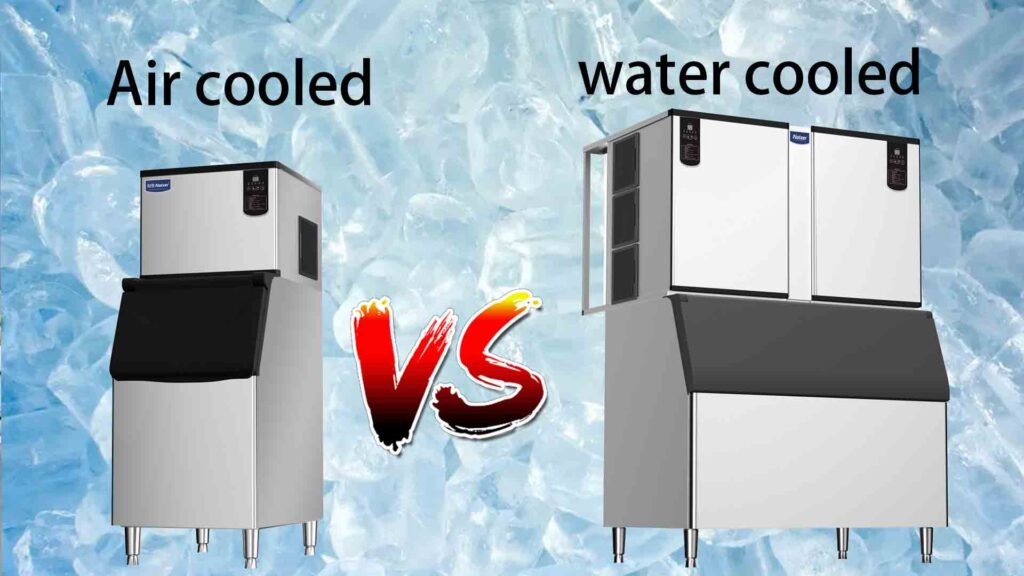
Air-cooled: Uses fans to dissipate heat. Generally more energy-efficient overall and uses no water for cooling. Most ENERGY STAR certified ice makers are air-cooled. However, air-cooled units may work harder in hot environments (above 90°F / 32°C).
Water-cooled: Uses less electricity for the compressor (roughly 15% less) but consumes 100+ gallons of water per 100 lbs of ice for cooling. That water cost often outweighs the electricity savings. Many regions restrict water-cooled machines due to conservation concerns.
Bottom line: For most businesses, air-cooled is the smarter choice unless your kitchen regularly exceeds 100°F (38°C).
3. Ambient Temperature and Ventilation
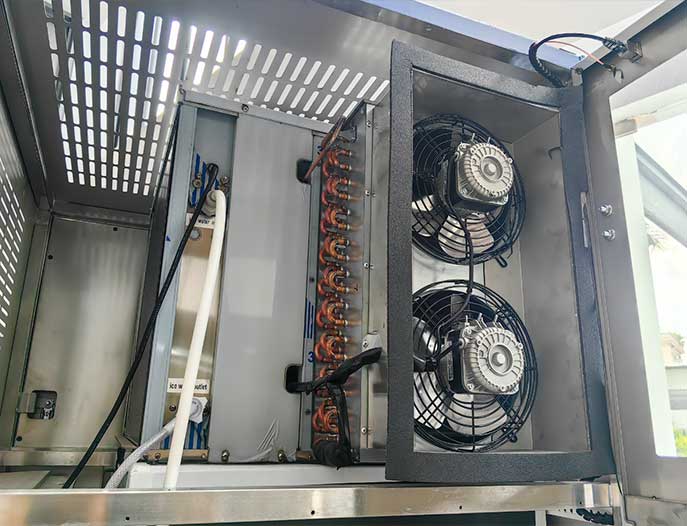
Your ice maker works much harder in hot environments. According to Naixer‘s installation manual, the normal working environment temperature should be between 5°C and 38°C (41°F–100°F). For every 5°C (9°F) rise above optimal conditions, compressor load increases by approximately 10%.
Proper ventilation is critical. The manual requires at least 5 cm (2 inches) of clearance between the air intake/exhaust and walls or other equipment. Insufficient clearance can increase energy consumption by 20% or more.
4. Maintenance and Cleanliness
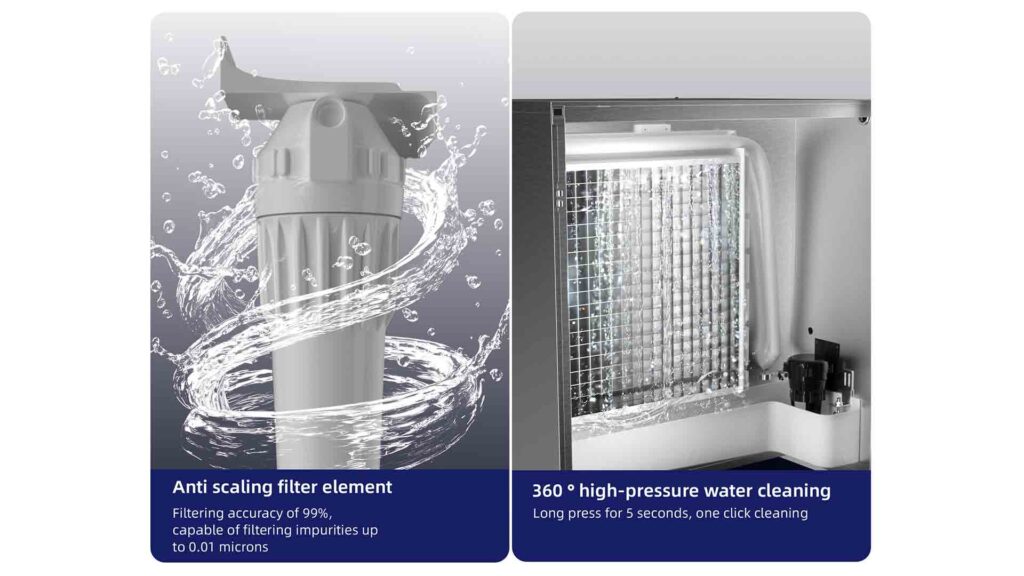
This is the most overlooked factor. A dirty condenser forces the compressor to run longer and harder. According to Naixer‘s instruction manual, the condenser should be cleaned every three months using a soft brush along the fin direction. Scale buildup in the water system also reduces heat exchange efficiency.
Industry data shows that poorly maintained ice makers can consume 30% more electricity than well-maintained units.
5. Right-Sizing Your Machine

The most common mistake? Buying a machine that‘s too large. An oversized ice maker:
Wastes energy through frequent on/off cycling
Has higher standby losses from a larger storage bin
Costs more upfront and more to run
Conversely, an undersized machine runs continuously, never cycles off, and wears out faster.
The rule: Match your machine to your peak-hour demand, not your average daily need. If your busiest hour requires 50 lbs of ice, a 500 lb/day machine is overkill.
7 Tips to Reduce Your Commercial Ice Machine’s Electricity Bill
Here are practical, actionable tips—many drawn directly from Naixer‘s product manual and industry best practices—to keep your electricity costs as low as possible.
1. Choose an ENERGY STAR certified model
ENERGY STAR certified commercial ice makers are, on average, 10% to 16% more energy efficient than standard units. Look for the blue label when shopping.
2. Optimize installation location
Place your ice maker away from heat sources (ovens, grills, dishwashers) and out of direct sunlight. Ensure at least 5–10 cm (2–4 inches) of clearance around all vents. A cooler room means a happier compressor.
3. Clean the condenser every 3 months
According to Naixer‘s maintenance guide: “Use a soft brush along the texture direction of the heat sink, and gently brush up and down to remove dust on the surface. Do not use rags or other hard objects to avoid deformation of the heat sink.”
4. Replace water filters on schedule
A clogged filter reduces water flow and forces the machine to work harder. Most standard filters should be replaced every 6 months; advanced filtration systems follow manufacturer guidelines.
5. Use a timer or schedule ice production
Program your ice maker to produce ice during off-peak hours (overnight or early morning) when:
Ambient temperatures are lower (less work for the compressor)
Electricity rates may be cheaper if your utility offers time-of-use pricing
6. Don’t oversize your machine
Calculate your actual peak ice demand before purchasing. A properly sized machine pays for itself faster and costs less to operate every single day.
7. Turn it off when not needed
If your business closes for one or two days a week, turn the machine off. Ice makers consume electricity even when not actively producing ice (standby losses). Every bit saved adds up.
Need help finding the right ice machine for your business? Naixer Ice has the right machine for you.
Why Naixer Ice Machines Are Built for Energy Efficiency
At Naixer, we’ve engineered energy efficiency into every machine we build.
Premium refrigerants: Multiple models feature R290 refrigerant, reducing energy consumption by 15–20% compared to conventional systems.
Smart factory precision: Our 30,000㎡ smart facility with automated production lines and IoT-driven quality control ensures every unit meets strict efficiency standards.
300+ technical patents: Our R&D team of 20+ engineers holds over 300 patents covering energy-efficient heat exchange, intelligent control algorithms, and durable compressor design.
3-year comprehensive warranty: We stand behind our efficiency claims. Lower energy use + longer lifespan = lower total cost of ownership.
Real-world result: A bubble tea chain in Hangzhou replaced its old ice maker with a Naixer TH-320C and saw its monthly electricity bill drop from $135 to $105—a 22% reduction—while producing more consistent ice quality.