Best Ice Machine for Restaurant: The Complete Commercial Buyer’s Guide
Choosing the best ice machine for restaurant operations requires matching your venue’s peak traffic with the correct daily harvest volume. As an industry benchmark, traditional dine-in restaurants require 1.5 lbs of ice per seat daily, while high-volume bars demand 3.0 lbs per patron. For optimal performance in a hot kitchen environment, prioritize a restaurant ice machine built with a tier-1 global compressor, heavy-duty nickel-plated copper evaporators, and front-breathing ventilation.
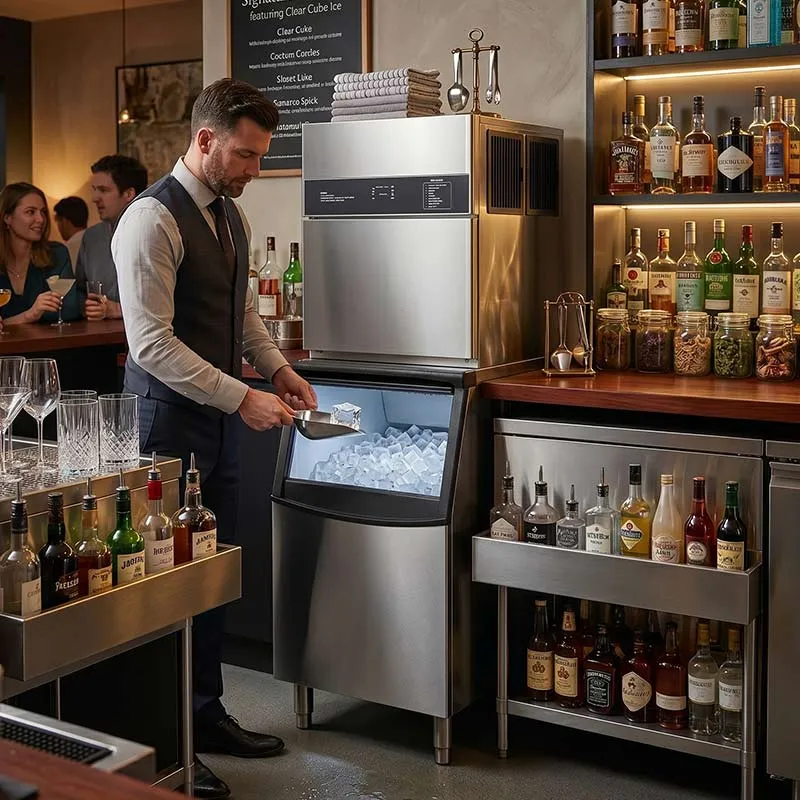
Behind the scenes of every successful food service establishment, a reliable cooling system acts as an unsung hero. From chilling fresh seafood displays to serving crisp, slow-melting cubes in signature craft cocktails, ice is an indispensable resource.
This guide breaks down how to find that match. We will walk through the four factors that determine the right machine for your kitchen, recommend specific Naixer models for different restaurant types, and cover the installation, maintenance, and compliance details that keep your machine running for years. If you want to understand the costs involved alongside picking the right model, our guide on how much does a restaurant ice machine cost is a useful companion.
In this guide, you will learn:
Four Factors That Determine the Right Ice Machine
Before you look at a single machine specification, you need to understand your restaurant’s requirements. These four factors will guide every decision you make.
1. Your Restaurant Type and Menu
Your menu dictates your ice type, and your ice type dictates your machine. A cocktail bar needs large, slow-melting cubes or crescent ice that cools spirits without shattering. A fast-food restaurant needs half-cube ice that chills soda instantly and packs efficiently into paper cups. A seafood restaurant or a hot pot buffet needs flake ice—soft, moldable shavings that cradle fresh fish and shellfish on display without bruising them.
Understanding what type of ice your restaurant needs is the first step. Cube ice is the most versatile and common. Crescent ice is the premium choice for coffee shops and craft cocktail bars because it cools liquids fast and melts slowly. Nugget ice—the soft, chewable kind made famous by Sonic and Chick-fil-A—is a proven sales driver for fountain drinks. Flake ice is irreplaceable for food displays.
For a complete breakdown of ice types and which one fits your specific concept, our guide on what type of ice do restaurants use covers each one in detail.
2. Your Daily Ice Demand
Once you know your ice type, you need to know how much of it you use. A full-service restaurant typically requires about 1.5 to 2 pounds of ice per customer per day. A bar needs closer to 3 pounds per seat. These are daily averages, but the number that really matters is your peak-hour demand—that 7 p.m. to 9 p.m. window on a Saturday when every table is full and every ticket has an iced drink on it.
Take your average daily demand and add a 20 to 25 percent buffer for peak periods. A 100-seat restaurant that serves 200 customers a day would need roughly 300 to 400 pounds of ice as a baseline, and closer to 375 to 500 pounds with the peak buffer factored in. Always size for the busiest shift, not the quietest one. If you need help with the exact calculation, our commercial ice maker sizing guide walks through the math step by step.
3. Your Available Space and Installation Setup
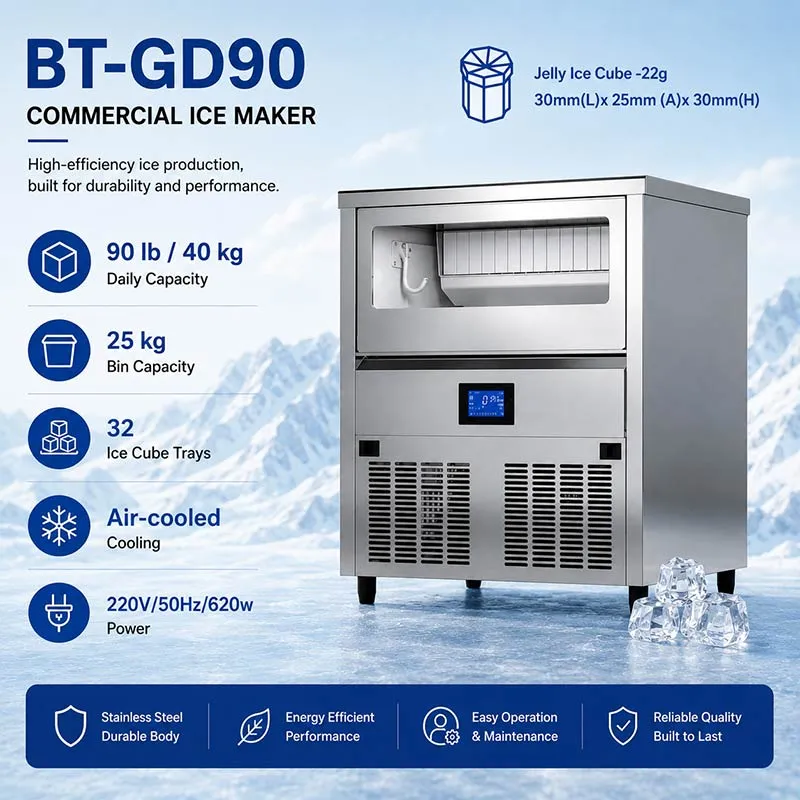
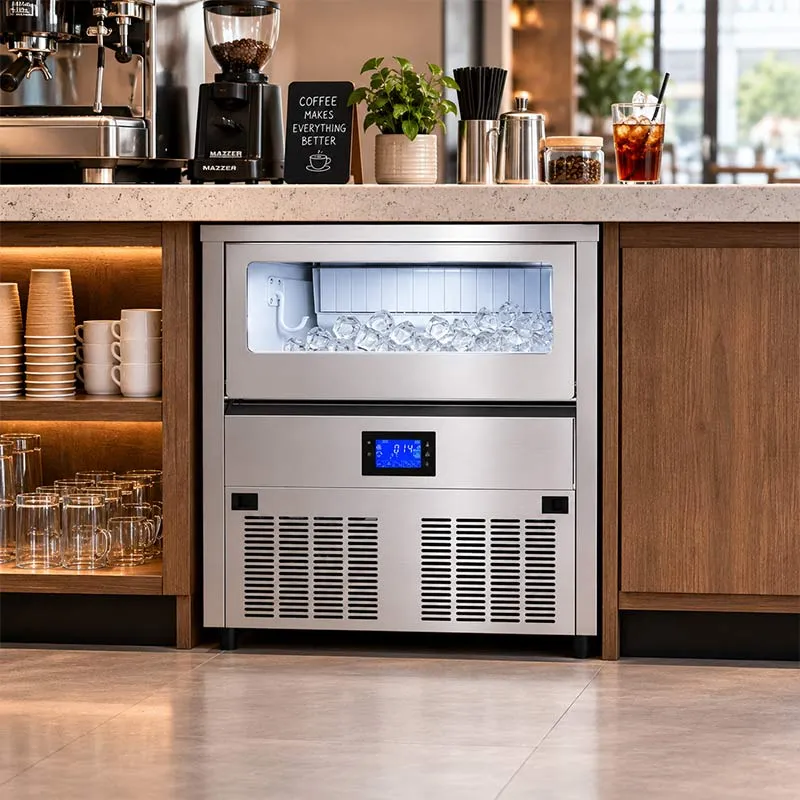
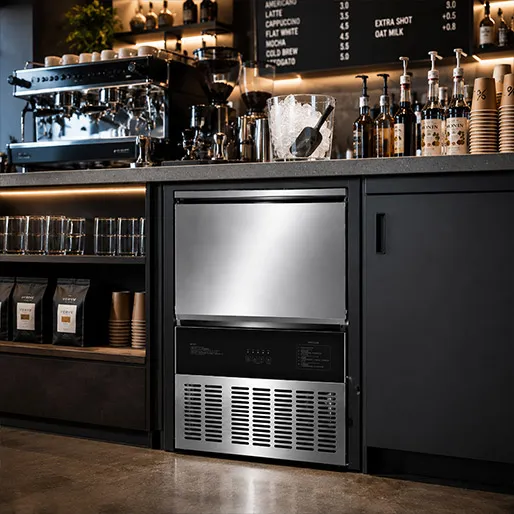
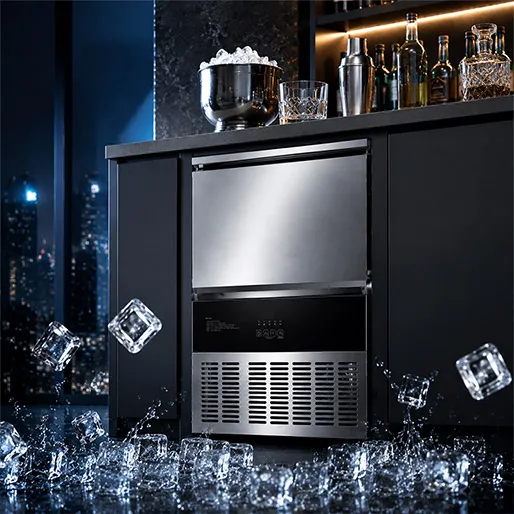
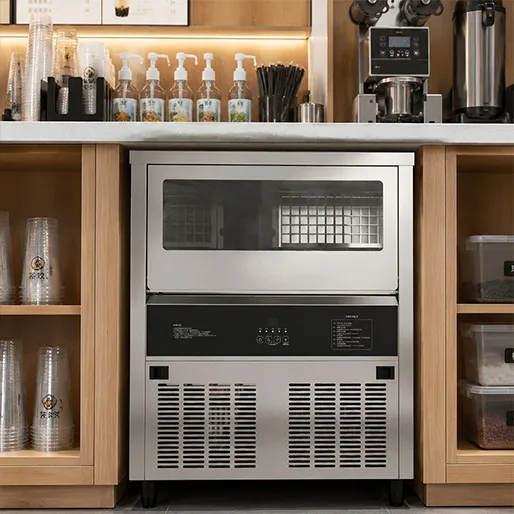
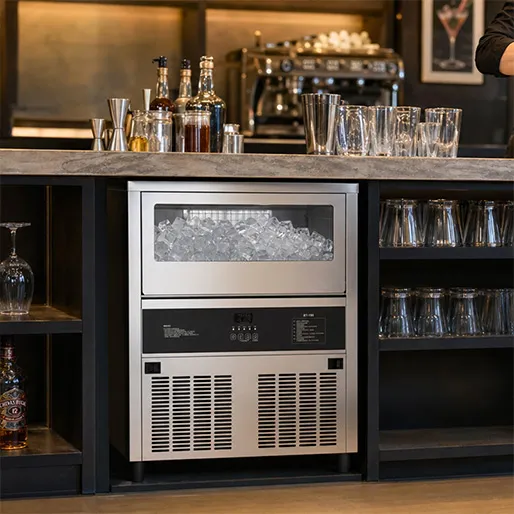
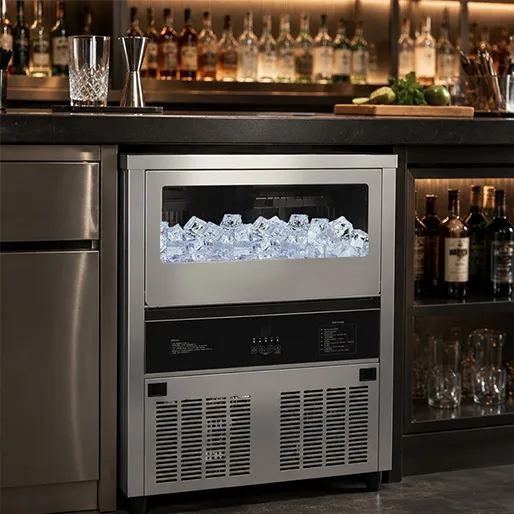
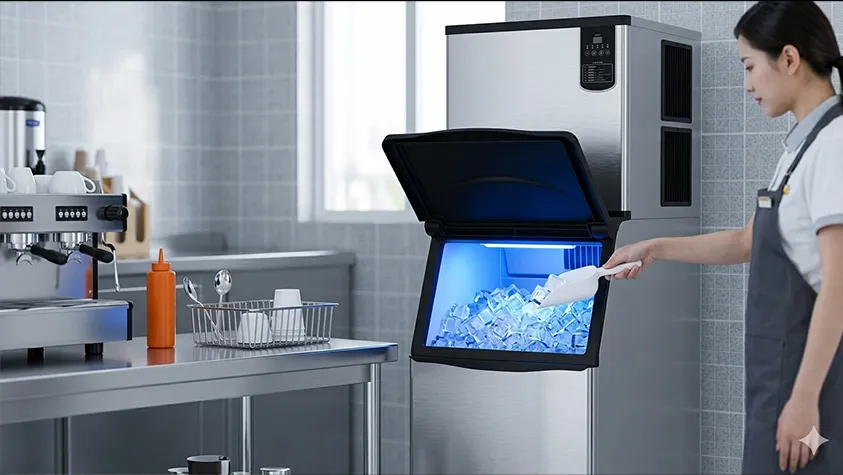
Ice machines come in two main configurations: undercounter and modular. Undercounter units combine the ice maker and storage bin into a single cabinet that slides under a standard counter. They are ideal for small kitchens, bars, and cafes where floor space is tight, and they typically produce 80 to 350 pounds of ice per day.
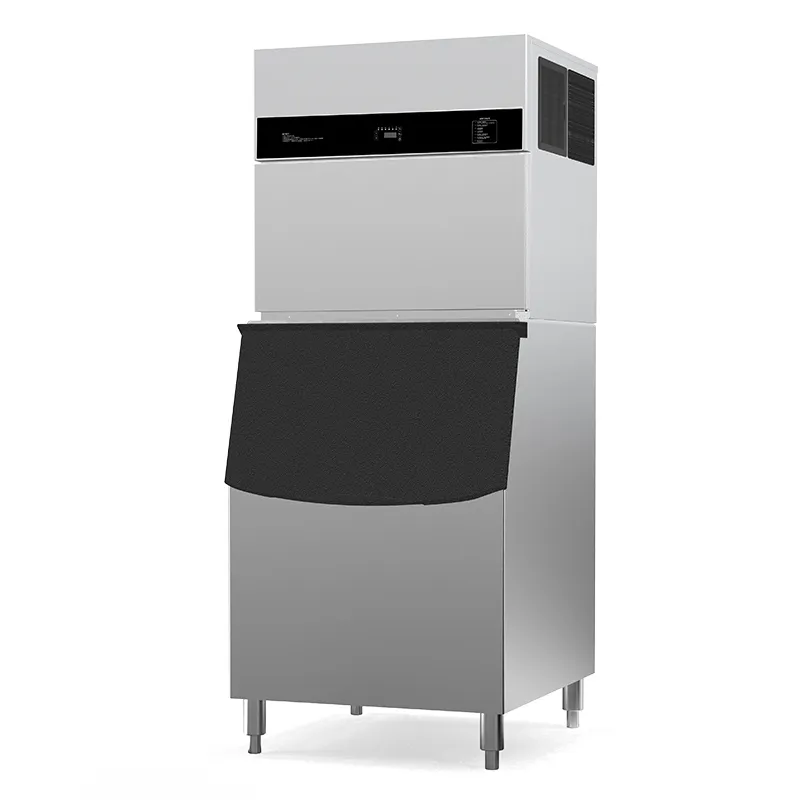
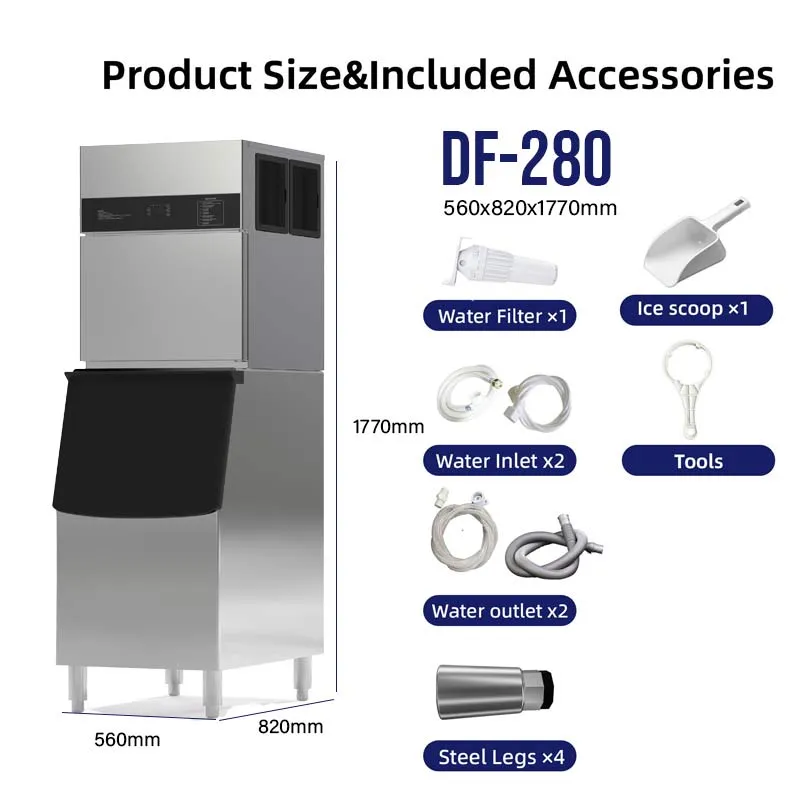
Modular systems separate the ice-making head from a larger storage bin. They offer much higher capacity—500 to 2,000 pounds per day and beyond—and give you the flexibility to place the bin in a different location or upgrade capacity later. The trade-off is that they take up more floor space and cost more upfront.
Before you buy, measure the space where the machine will go, including the ventilation clearance required around it. Air-cooled machines need at least 5 to 15 centimeters of clearance on all sides to vent heat properly. Placing a machine too close to a wall or in an enclosed cabinet will choke its airflow, reduce its efficiency, and shorten its lifespan.
4. Your Ice Type Decision
Different ice machines produce different ice. You cannot make nugget ice in a cube ice machine, and you cannot make flake ice in a crescent ice machine. The ice type is built into the evaporator and harvest mechanism. So your decision on ice type locks you into a specific category of machine.
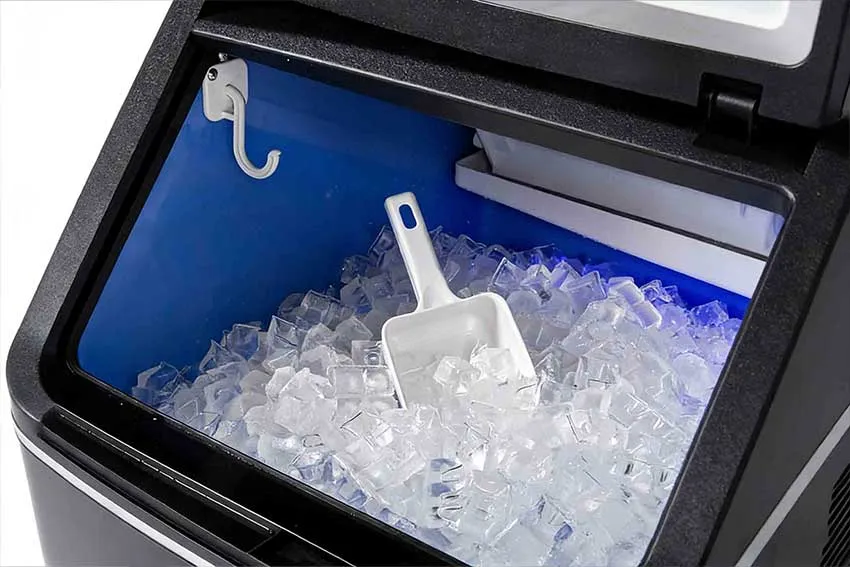
Full cube ice, usually 22 by 22 by 22 millimeters, is the standard across the restaurant industry. Crescent ice is produced by machines like the Naixer TH-SE series, with each piece measuring roughly 30 by 38 by 13 millimeters and carrying the distinctive half-moon shape. Nugget ice comes from an auger-style machine that compresses flake ice into soft pellets. Flake ice is produced by a similar auger mechanism but without the compression step, leaving the ice in thin, irregular shavings. Gourmet large cubes—typically 28 by 28 by 32 millimeters or larger—come from dedicated large-cube machines that freeze water directionally to achieve perfect clarity. For bars and venues that focus on premium drinks, knowing what type of ice is best for a bar can help you narrow down your options even further.
The Best Naixer Ice Machines by Restaurant Type
Now that we have covered the decision framework, here is how it translates into specific machines for specific operations. These recommendations pair Naixer models with the restaurant types they are built to serve.
For Small Cafes, Bistros, and Neighborhood Bars

These operations share a few common traits. Space is limited. Ice demand rarely exceeds 150 to 200 pounds per day. The menu is manageable, and the ice machine needs to be compact, reliable, and simple to maintain.
The Naixer TH-80B is purpose-built for this category. It produces 80 pounds of 22 by 22 by 22 millimeter full cube ice per day and stores 12 kilograms on standby. At just 425 by 495 by 760 millimeters, it fits under virtually any standard counter. The TH-80B runs on R290 refrigerant, which means it is compliant with the EPA rule that took effect on January 1, 2026, requiring all new self-contained ice machines under 1,000 pounds of daily capacity to use refrigerants with low global warming potential. For a small café that sells iced coffee and a handful of cocktails, this is the machine that keeps the morning rush moving.
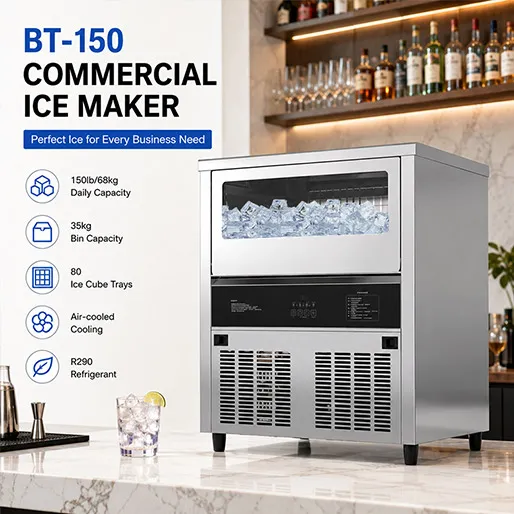
If your operation is slightly larger—a busy neighborhood bar, a mid-volume café, or a small bistro—the Naixer TH-150B steps up the output to 150 pounds of the same clear cube ice per day, with a 45-kilogram built-in storage bin. It is still a compact undercounter unit that fits under most counters, but the extra capacity means you are not running out of ice on a Friday night. Both the TH-80B and TH-150B are among the most popular models in Naixer’s undercounter line because they balance price, footprint, and output for the majority of independent restaurants.
For Mid-Size Restaurants, Gastro-Pubs, and Pizzerias

When you move into the mid-size category, two things change. First, your daily ice demand climbs to the 250 to 500 pound range. Second, the consequences of running out of ice during a dinner rush become serious enough that you need a machine with more storage capacity and faster recovery between scoops.
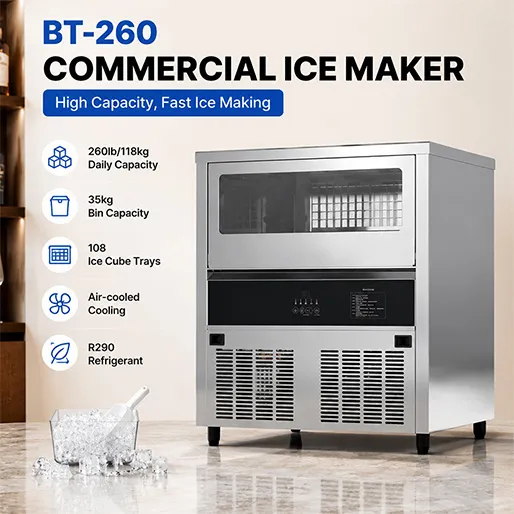
The Naixer BT-260 sits right at the upper end of what an undercounter unit can do. It produces 260 pounds of full cube ice per day and holds 51 kilograms in its bin—enough to keep several service wells stocked through a long dinner shift. At 680 by 600 by 750 millimeters, it still fits under a counter, but the bin capacity makes a real difference during peak hours. Fewer interruptions. Fewer moments where a bartender is waiting for the machine to catch up.
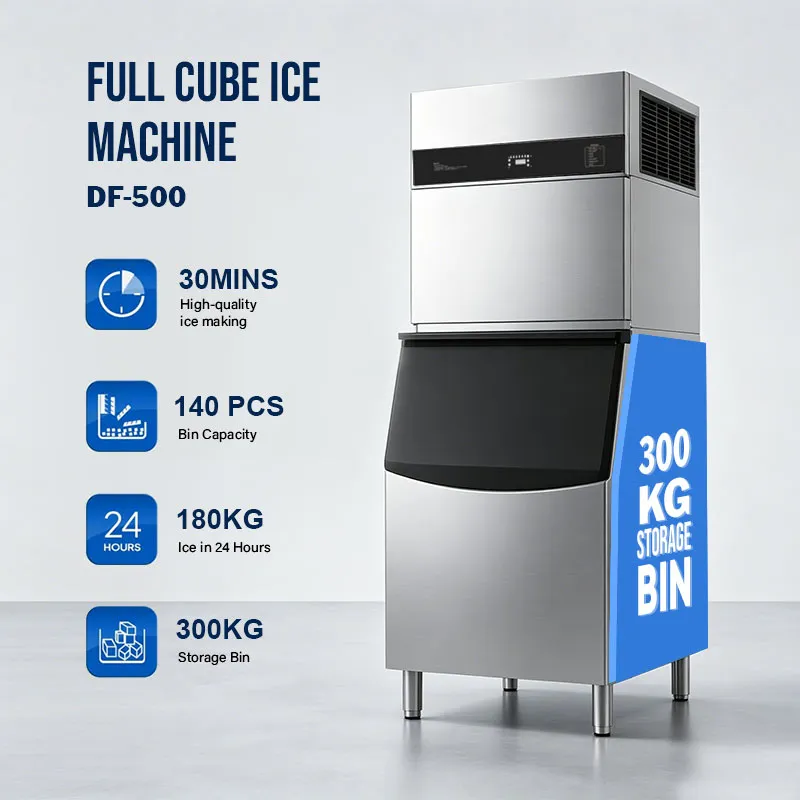
If your operation is pushing past 400 pounds of daily demand, or if you simply want more headroom, the Naixer TH-500C moves you into modular territory. This is a modular system where the ice-making head sits on top of a separate 300-kilogram storage bin. It produces 500 pounds of cube ice per day and gives you the flexibility to pair different bin sizes with the same head. For a gastro-pub, a pizzeria, or any mid-size restaurant with a high ratio of iced drinks to food, this setup provides the kind of production buffer that eliminates ice anxiety during the busiest shifts.
For Large Restaurants, Banquet Halls, and Hotels

At this scale, ice is a utility. A large restaurant or a hotel banquet kitchen might go through 800 to 2,000 pounds of ice in a single event. The machine needs to produce ice continuously and store enough of it that a banquet bar serving 300 guests never runs dry.
The Naixer TH-1000C is the entry point into this category. It produces 1,000 pounds of cube ice per day and pairs with a 300-kilogram bin. The TH-2000B doubles that output to 2,000 pounds per day with a 500-kilogram bin. Both are modular systems designed for continuous commercial duty. The cooling system—either air-cooled or water-cooled depending on the configuration—is built to handle the ambient heat of a busy kitchen without losing efficiency.
For Specialty Restaurants: Seafood, Hot Pot, and Healthcare

Some restaurants do not use cube ice at all. A seafood display case or a hot pot buffet needs flake ice—soft, moldable shavings that surround fresh seafood and keep it at a safe temperature without crushing or bruising delicate product. A healthcare facility or a fast-casual chain might want nugget ice—the soft, chewable pellets that increase fountain drink sales and are safe for patients who have difficulty swallowing.
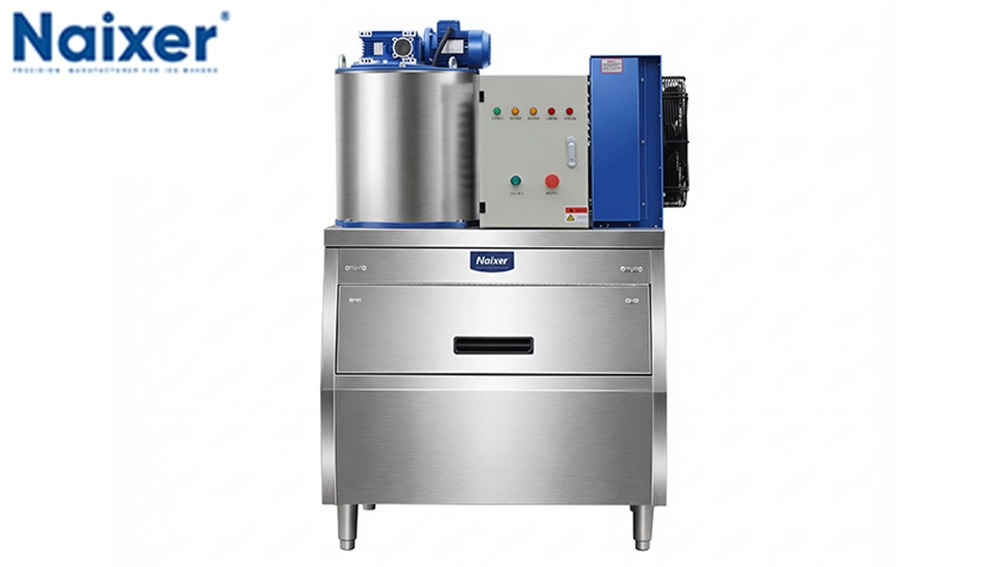
The Naixer PB-500 handles both use cases. Configured as a flake ice machine, it produces 500 kilograms of flake ice per day with a 300-kilogram bin. Configured as a nugget ice machine, it delivers the same output in soft, chewable pellets. For smaller operations, the Naixer ZD-KL60 is a compact countertop nugget ice maker that produces 132 pounds per day—perfect as a secondary machine for a dessert station, a beverage bar, or a small clinic.
What to Look for in a 2026 Restaurant Ice Machine
The ice machine you buy in 2026 will likely still be running in 2036. The decisions you make now—about refrigerant, certification, and maintenance—will affect your operating costs and compliance status for the next decade.
NSF Certification and Build Quality
Health inspectors look for NSF certification on commercial ice machines. It is not optional in most jurisdictions. Beyond the sticker, the materials matter. Naixer uses 304 food-grade stainless steel for the cabinet and evaporator because it resists corrosion, does not harbor bacteria, and cleans easily. The industry standard warranty for a commercial ice machine is 3 years parts and labor on the entire machine—Naixer backs its equipment with exactly that.
Maintenance Features
Every ice machine needs to be deep cleaned and sanitized at least every six months, more often in hard-water areas. The difference between machines is how much friction that adds to your operation. Naixer’s One-Touch Cleaning function automates the descaling cycle. Press a button and the machine circulates the solution, drains, and rinses without disassembly or a service call. For a detailed walkthrough of the cleaning process, see our guide on how to clean a Naixer ice machine .
Installation and Maintenance: What to Plan For
Before your machine arrives, confirm that the installation site has a dedicated cold-water line, a gravity drain with sufficient slope, and a dedicated electrical circuit. Air-cooled machines need ventilation clearance on all sides—check the manufacturer’s specifications for the exact measurements. Placing the machine near an oven, grill, or direct sunlight will force the compressor to work harder, reduce ice production, and shorten the machine’s life.
Once the machine is running, stick to a maintenance schedule. Clean the condenser coils every three months with a soft brush to remove dust and grease buildup. Replace the water filter every six months to prevent scale from accumulating on the evaporator. Run the full descaling and sanitizing cycle at least twice a year. These three habits are the difference between a machine that lasts 7 to 10 years and one that fails in 3. For more on how long a well-maintained machine should last, read our commercial ice maker lifespan guide .
Restaurant Ice Machine — Quick Answers
What is the best ice machine for a small restaurant?
For most small restaurants and cafes, a compact undercounter cube ice machine like the Naixer TH-80B or TH-150B is the best choice. They produce 80 to 150 pounds of clear, slow-melting cube ice per day and fit under standard counters.
How much ice does a restaurant need per day?
A full-service restaurant typically needs 1.5 to 2 pounds of ice per customer. A 100-seat restaurant serving 200 customers a day would need roughly 300 to 400 pounds of ice, plus a 20 to 25 percent buffer for peak hours.
What type of ice is best for a bar?
Full cube ice is the standard for most bars—slow-melting and versatile. Crescent ice is the premium choice for craft cocktail bars, cooling spirits rapidly without shattering.
What is the difference between an undercounter and a modular ice machine?
Undercounter machines combine the ice maker and storage bin in one cabinet that fits under a counter. Modular machines separate the ice-making head from a larger storage bin, offering higher capacity and flexible installation.
How long does a commercial ice machine last?
With proper maintenance, 7 to 10 years. Premium commercial units can exceed 15 years. Regular cleaning and water filtration are the key factors.
What is R290 refrigerant and why does it matter?
R290 is an environmentally friendly hydrocarbon refrigerant with ultra-low global warming potential. As of January 1, 2026, the EPA requires all new self-contained ice machines under 1,000 pounds of daily capacity to use R290. Naixer machines are fully compliant.