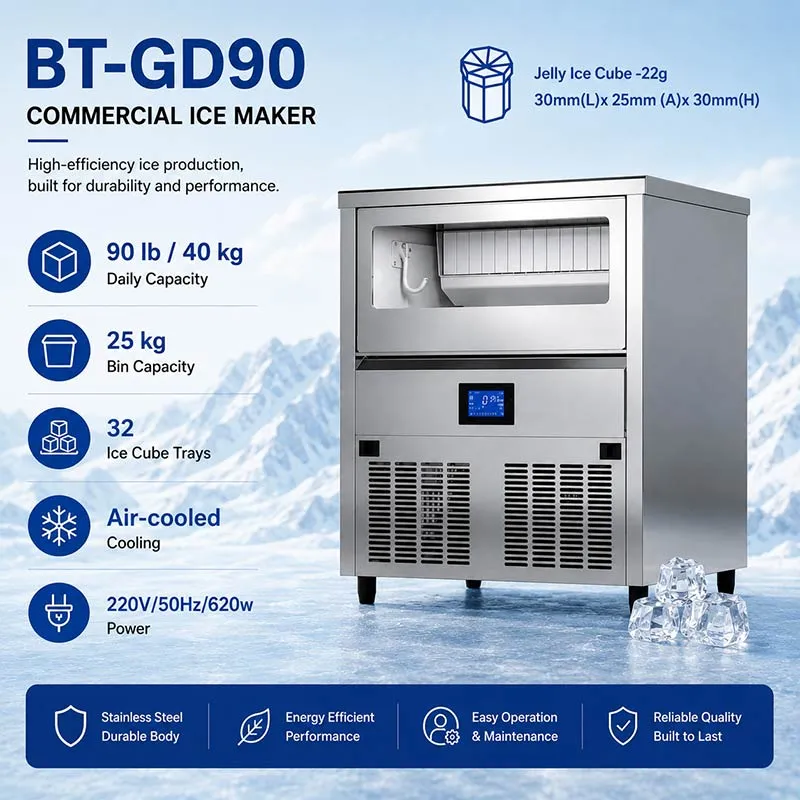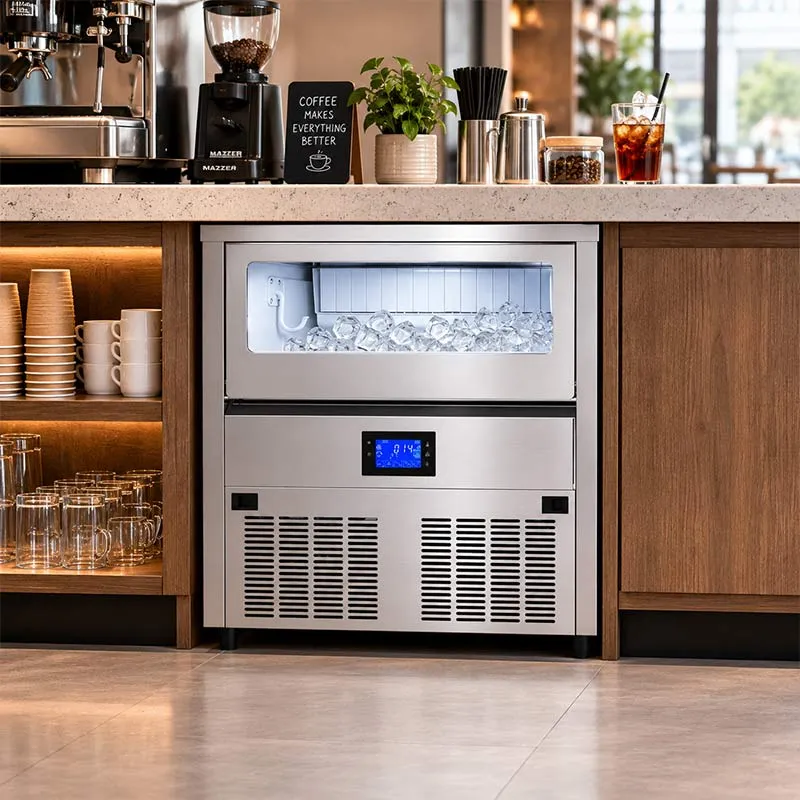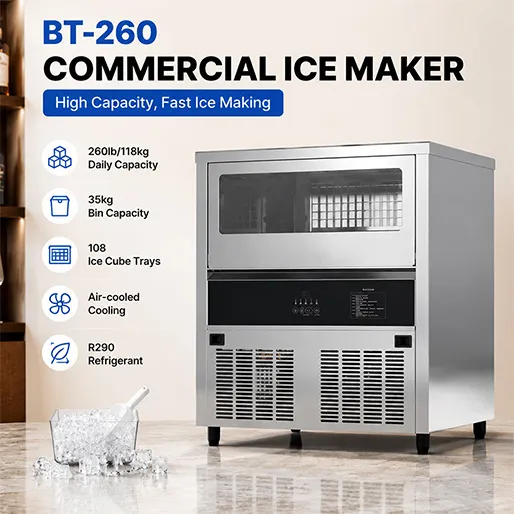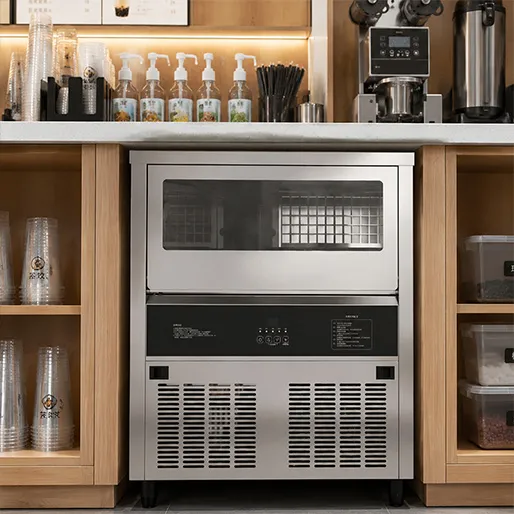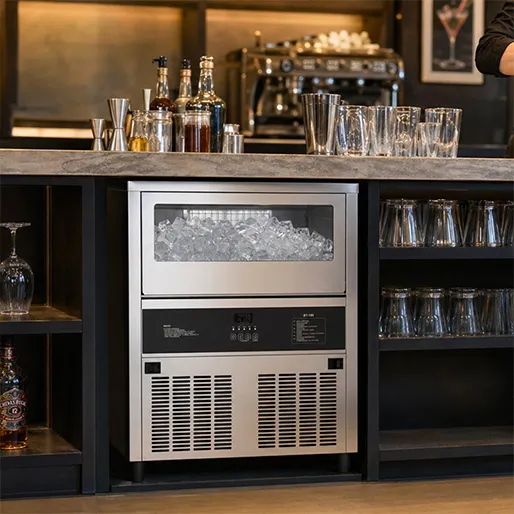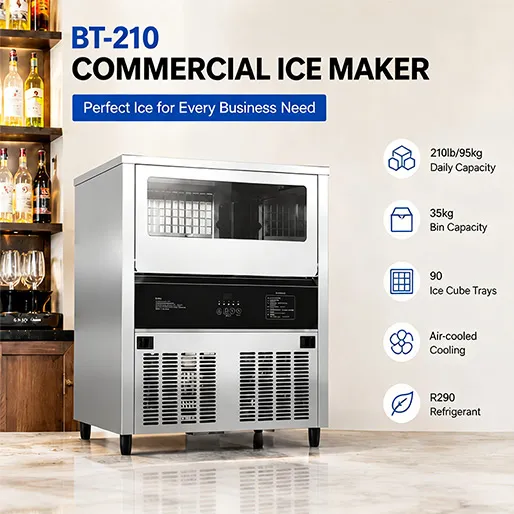
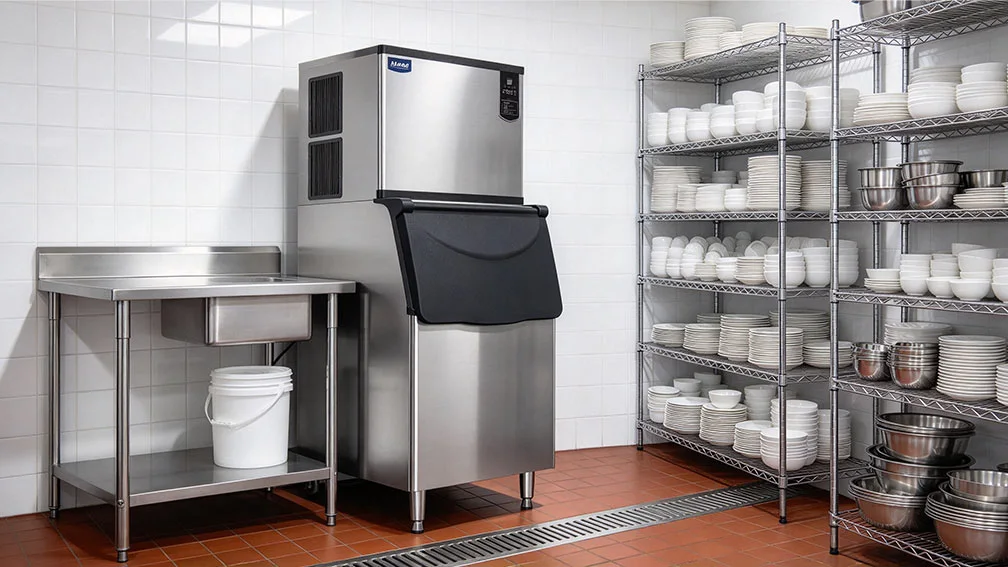
Buying an ice machine in Jamaica is not the same as buying one in Miami. The voltage is different, the ambient temperature is higher, the salt air eats stainless steel for breakfast, and almost every high-capacity unit on the island arrives by container.
This guide covers what machines actually cost here, which voltage you need, how much ice your business really uses, and what changes when you import instead of buying from a Kingston dealer.
Quick answer: Commercial ice machines advertised in Jamaica in 2026 range from about JMD 15,000 for a small countertop unit to JMD 900,000 for a 1,000 lb/day machine. Most commercial buildings run 110–115 V at 50 Hz, though hotels often have 220–240 V circuits. GCT is 15% on top of any import duty.
In this guide, you will learn:
What Commercial Ice Machines Cost in Jamaica
Asking prices in Jamaica cluster into two very different groups: small countertop units sold through appliance retail, and large commercial units sold through social media and private importers. There is surprisingly little in between.
| Listing | Output | Asking Price |
|---|---|---|
| Small ice maker, downtown Kingston | Small / countertop | JMD 15,000 |
| D.World DW-Z6 (JAdeals listing) | 26 lb / day | JMD 17,900 |
| ICEMAN nugget ice maker (PriceSmart) | 1.5 L countertop | JMD 24,997 |
| Unbranded 500 lb commercial unit | 500 lb / day | JMD 450,000 |
| Hisense commercial unit | 45 kg / day | JMD 465,000 |
| Unbranded 1,000 lb commercial unit | 1,000 lb / day | JMD 900,000 |
A few things worth noticing in that table:
- The jump from a 26 lb unit at JMD 17,900 to a 45 kg unit at JMD 465,000 is roughly 26× the price for about 4× the output. Small machines are cheap because they are consumer appliances. Commercial machines are expensive because they are built to run continuously.
- The 500 lb and 1,000 lb listings are social-media advertisements, not audited retail prices. Treat them as a negotiating benchmark, not a fixed market rate.
- For reference, the same class of machine lists in the United States at roughly US$1,439–3,098 for 200–520 lb units, and US$3,850–5,032 for brand-name 300–365 lb units. Jamaica’s pricing sits above US retail once freight, duty and margin are added — which is exactly why some buyers import directly.
If a quote you receive sits far outside these bands in either direction, ask what is missing: bin, drain pump, water filter, installation, or warranty.
Check the Voltage Before Anything Else
This is the single most expensive mistake buyers make here.
| Factor | 110–115 V / 50 Hz | 220–240 V / 50 Hz |
|---|---|---|
| Where you find it | Most homes, small shops, older buildings | Hotels, larger commercial kitchens, some newer builds |
| What to buy | 115 V / 50 Hz model | 220–240 V / 50 Hz model |
| Do not substitute | A 115 V 60 Hz US model | A 220 V 60 Hz export model |
| Typical use | Undercounter, up to ~210 lb/day | Modular heads, 300–1,000+ lb/day |
Jamaica runs on 50 Hz, not 60 Hz. That matters more than most buyers realise.
A compressor motor rated for 60 Hz will run roughly one-sixth slower on a 50 Hz supply. Output drops, the motor runs with less cooling airflow over it, and on a hot day that is a recipe for a shortened compressor life. The reverse — running a 50 Hz machine on a 60 Hz supply — spins it faster than designed and can trip overloads.
So when you compare models, the frequency on the nameplate matters as much as the voltage. A “115 V” machine built for the US market is usually 60 Hz and is not a straight substitute.
Two practical rules:
- Match the nameplate to the building, not to the plug. A 115 V, 50 Hz machine for a small shop; a 220–240 V, 50 Hz machine for a hotel kitchen.
- Size the circuit, don’t share it. A commercial ice machine should be on its own circuit. If the electrical draw is a concern, our breakdown of how much electricity an ice maker actually uses gives real wattage figures by capacity class.

How Much Ice Does Your Business Actually Need?
Most buyers overestimate by guessing at “a big machine.” A better approach: start from covers, then add a safety margin.
| Business Type | Rule of Thumb | Typical Machine |
|---|---|---|
| Café / small bar | 1–1.5 lb per cover per day | 100–210 lb / 24 h |
| Restaurant | 1.5 lb per diner per day | 210–400 lb / 24 h |
| Hotel | 5 lb per room per day | 400–700 lb / 24 h |
| Resort, multiple outlets | 6–8 lb per room plus outlets | 700–1,000+ lb / 24 h |
| Supermarket / bagged ice | Driven by bag volume, not covers | 500–1,000+ lb / 24 h |
| Fish / seafood vendor | High volume, fast melt | Flake ice machine |
These are industry rules of thumb, not specifications. Three adjustments matter in Jamaica:
- Add 25–30% as a buffer for weekends, holidays and cruise-ship days.
- Derate for heat. Ice machine capacity is rated at a stated ambient temperature. In a Jamaican kitchen running 32–35 °C, output falls below the brochure number. Ask every supplier for the capacity rating at 32 °C and, if the machine sits near a fryer or in a coastal back room, at 43 °C.
- Check the bin, not just the head. A 500 lb/day machine with a 200 lb bin and a 500 lb/day machine with a 350 lb bin are different products for a Friday night.
If you are still deciding between cube, crescent, nugget and flake, our comparison of the main types of commercial ice makers explains which ice shape suits which drink and which kitchen. For hotels specifically, the sizing logic is different again — ice machines for hotels covers floor-by-floor placement and room-count ratios.
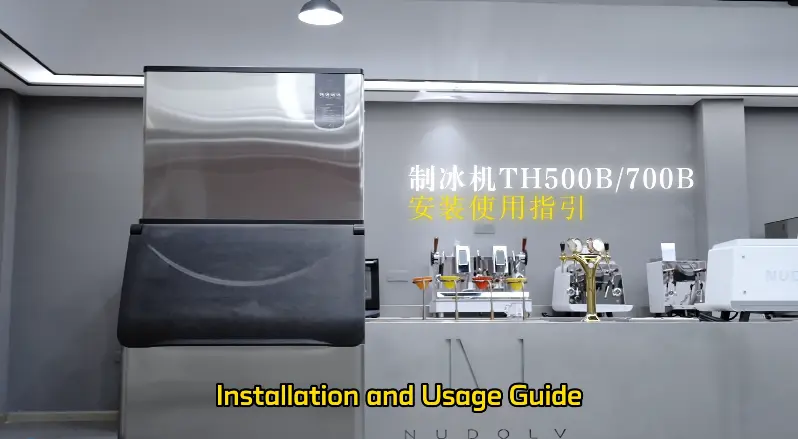
If your calculation lands above 400 lb/day, our 1,000 lb ice machine guide walks through bin pairing and airflow; for the 300–500 lb band, the TH-500B 500 lb machine breakdown shows what the spec sheet should contain.

Heat, Humidity and Salt Air: What Changes in Jamaica
Three environmental factors shorten equipment life here more than anywhere in North America.
Ambient heat. Air-cooled machines reject heat into the room. In a closed back bar at 34 °C, a machine rated at 21 °C ambient may produce materially less ice and run much longer cycles. Water-cooled units handle heat better but need a reliable water supply and a drain — our air-cooled vs water-cooled comparison covers the trade-off honestly.
Salt air. Within a few kilometres of the coast, airborne chloride attacks stainless steel. Standard 304 stainless will show pitting; 316-grade panels and fasteners last considerably longer. Ask what grade the evaporator housing and exterior panels use — this is a fair question and most suppliers cannot answer it.
Dust and grease. A condenser coil that would be cleaned twice a year in a temperate kitchen may need monthly cleaning here. Coil fouling is the most common cause of “the machine stopped making ice” in hot climates. Our ice machine cleaning guide gives a schedule you can hand to staff.

Buying Locally vs Importing Direct
Both routes are legitimate. They suit different buyers.
| Factor | Jamaican Dealer | Direct Import |
|---|---|---|
| Unit price | Higher — includes duty, margin and service | Lower |
| Lead time | Days | 30–45 days by sea, plus clearance |
| Payment | Local currency; terms may be possible | Usually T/T before shipment |
| Duty & GCT | Bundled into the price | Your responsibility — GCT 15% |
| Service | Local technician | Remote support; arrange your own technician |
| Spare parts | Local stock | Order ahead with the shipment |
| Best for | Single unit, urgent needs and buyers without a technical team | Multi-unit projects, distributors and specific specifications |
Notes on the import route:
- Duty is not a fixed number. It depends on the tariff classification and origin. Confirm the current rate with a licensed Jamaican customs broker before you commit — do not rely on a forum post or a supplier’s estimate.
- GCT is 15%, applied on the customs value plus duty.
- Freight to Kingston from South China typically runs 30–45 days port to port. Add clearance and inland delivery. Confirm current transit times with your forwarder; schedules change.
- Who is the importer of record? If you have never imported before, this is the step that trips people up. You need a broker, a tax compliance letter and a clear HS classification.
If you are evaluating factory-direct supply, our overview of ice machine manufacturers in China explains how to tell an actual factory from a trading company — which matters far more than price when you are 15,000 km away.

Used or New?
A large share of Jamaican searches for ice machines include the word “used,” so it deserves an honest answer rather than a sales pitch.
A used commercial machine can be a good buy if three things are true: the compressor has documented hours, the evaporator has no scale damage, and spare parts are still available for that model. Without those three, you are buying someone else’s maintenance backlog.
What tends to fail first on a used unit in a hot climate is exactly what is expensive to replace — the compressor and the evaporator. A remanufactured or rebuilt machine with a written warranty is a different proposition from a used one sold as-is.
If you are weighing a used unit against a new one, our guide to commercial ice maker life expectancy gives realistic service-life ranges by machine class, which is the number you actually need for the comparison.
Where to Buy in Jamaica
Three channels exist, and they are not interchangeable.
Local commercial equipment dealers — Kingston-based suppliers that carry heavy-duty kitchen and refrigeration equipment. They can show you a unit, deliver it, and send a technician. Expect to pay for that convenience, and expect limited depth in any single category.
Appliance retail and warehouse clubs — good for small countertop and nugget units, usually not for anything that runs continuously in a commercial kitchen. Stock is inconsistent and models rotate.
Cross-border marketplaces and direct import — the only realistic route for 500 lb/day and above, and often the only route for a specific voltage or configuration. Cross-border listings go out of stock frequently, which is a signal about how thin this supply chain is.
A practical approach: get a local quote first, even if you intend to import. It gives you a landed-cost benchmark and tells you what after-sales support is actually available on the island.
Installation Checklist
Four things cause almost every installation problem.
Power. Dedicated circuit, correct voltage, correct frequency, correctly sized breaker. No extension leads, ever.
Water. A potable supply with an inline filter. Scale is the enemy of every ice machine; our guide to how much water a commercial ice machine uses also covers filtration and why it protects the warranty.
Drain. Either gravity to a floor drain or a condensate pump. A pump is not a downgrade — in a building without a floor drain, it is the only option.
Airflow. Respect the clearance in the manual. A machine pushed flush into a cabinet in a 34 °C room will underperform no matter how good the machine is.
Our full commercial ice machine installation guide covers clearances, drainage slope and the commissioning checks to run on day one.

Warranty, Spare Parts and Service
The most important question is not “what is the warranty period” but “who performs the repair, and how long do parts take to arrive?”
A two-year warranty that requires shipping a compressor back to Asia is worth less than a one-year warranty with a parts kit on the island. Before you buy, ask for:
- The specific components covered, and the exclusions (labour is almost always excluded)
- A spare-parts list with part numbers, so your technician can order ahead
- The refrigerant type and charge weight, printed on the nameplate
- A wiring diagram and a service manual in English

FAQ
How much does a commercial ice machine cost in Jamaica?
Advertised prices in 2026 range from about JMD 15,000 for a small countertop unit to JMD 900,000 for a 1,000 lb/day machine. A 500 lb/day unit is commonly advertised around JMD 450,000. Add 15% GCT and any applicable import duty on top of these figures.
Can I use a 220 V ice machine in Jamaica?
Yes, if the building has a 220–240 V circuit — many hotels and larger commercial kitchens do. Check the nameplate on your distribution board before ordering. What you cannot safely do is run a 220 V, 60 Hz machine on a 50 Hz supply without confirming the compressor is rated for it.
Do I need a special machine because of the heat?
You need a machine whose capacity is rated at a realistic ambient temperature. Ask for the output rating at 32 °C and 43 °C, not just the headline number. In a 34 °C back bar, an unrated unit will produce noticeably less ice than advertised.
Where can I buy a commercial ice machine in Kingston?
Kingston has several commercial kitchen and refrigeration equipment suppliers, plus appliance retailers and warehouse clubs for smaller units. For 500 lb/day and above, most buyers either import directly or work through a supplier who imports to order.
Is a used ice machine worth buying in Jamaica?
Only with documented compressor hours, a clean evaporator, and available spare parts. Compressor and evaporator failures are the two most expensive repairs, and both are common in used units from hot climates. A rebuilt machine with a written warranty is a different risk profile from as-is.
What import costs apply on top of the machine price?
Import duty depends on the tariff classification and origin, and must be confirmed with a licensed customs broker. GCT is 15%, charged on the customs value plus duty. Freight, clearance and inland delivery are additional.
How long does shipping from China to Kingston take?
Typically 30–45 days port to port from South China to Kingston, plus clearance and delivery. Transit times vary with carrier and season, so confirm with your forwarder before committing to an installation date.
Will a machine last as long in Jamaica as in a temperate country?
Generally not quite as long, because it runs more hours per day and fights higher ambient temperatures. Regular condenser cleaning and a water filter are the two things that most reliably close that gap.
Next Step
If you are sizing a project for a hotel, a restaurant group, or a distribution business in Jamaica, send us the daily output you need, the voltage available at the site, and the port you will ship into. We will come back with a model recommendation and a specification sheet you can take to your customs broker.