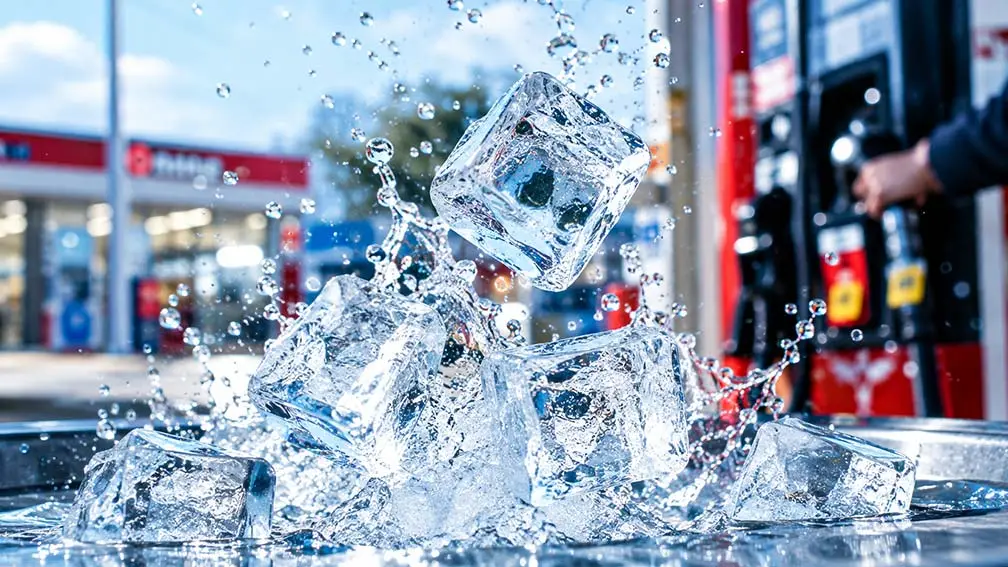
It’s 95°F, the road is long, and the gas station cooler is right there. Or maybe you’re grabbing a bag of ice for tonight’s party — and a small voice asks: is this stuff actually safe? The answer is usually yes. But “usually” is doing a lot of work in that sentence, because gas station ice safety comes down to three things: how the ice was made, how it was stored, and how many hands touched it on the way to you.
In this guide, you will learn:
Quick Answer: Is Gas Station Ice Safe to Drink?
Gas station ice is generally safe to drink when it is produced and handled properly. Sealed bags from certified packaged-ice brands and fresh ice from a well-maintained vending machine are the safest options. The risk rises with loose ice from open bins, ice bagged by hand in a back room, and any ice that looks cloudy, smells odd, or has melted and refrozen. And one fact most people get wrong: freezing does not kill germs — so safe ice always starts with clean, filtered water and a clean machine.
Safe or Not? A Quick Verdict
Not all gas station ice is equal. The table below sorts the most common situations you’ll meet at the cooler into three simple verdicts. Use it as a fast filter the next time you’re standing in front of the ice machine with the door open.
| Situation | Verdict | Why |
|---|---|---|
| Sealed bag from a certified packaged-ice brand | Safe | Made under FDA rules for packaged ice; IPIA-certified brands use touch-free processing. |
| Fresh ice from a clean, well-maintained vending machine | Safe | Frozen on-site in a closed loop, multi-stage filtered, dispensed fresh. |
| Loose ice from an open chest or fountain bin | Risky | Open bins, shared scoops and meltwater can increase the risk of contamination. |
| Ice bagged by hand in a store back room | Depends | Manual bagging adds opportunities for hand contact and improper storage; hygiene varies by location. |
| Ice frozen into a solid block, or a bag with tears | Avoid | A damaged bag can expose ice to dirt and odors. A solid block may indicate storage or temperature fluctuations. |
| Cloudy ice with an unusual smell | Avoid | An unusual smell is a reason for caution. Cloudiness alone does not prove microbial contamination. |
The pattern behind the table is simple: closed systems are safer than open ones, and fewer hands mean less risk. Ice sealed by a certified producer or dispensed straight from a machine beats ice that has been scooped, bagged, and stacked by people you’ll never meet.
Who Regulates Gas Station Ice in the US?
More than you’d think — and less than you’d hope.
- The FDA treats packaged ice as food. Any ice sold in sealed bags falls under the same food-safety framework as the snacks on the shelf — including rules for the water used and conditions of production (FDA: FDA Regulates the Safety of Packaged Ice).
- Certified brands follow stricter standards. Members of the International Packaged Ice Association (IPIA) — the folks behind the seal on premium ice bags — commit to filtration and touch-free processing.
- But there’s a gap. There are no ice-specific federal regulations, and small on-site producers — like the store that bags its own ice in back — are often exempt from direct FDA inspection. They still answer to state and local health codes, but enforcement varies (CSP Daily News).
That gap is not theoretical. In one round of industry testing covered by CSP Daily News, more than 25% of unpackaged ice samples showed contamination levels that failed safety checks, while packaged ice from IPIA members tested clean. Translation: when it comes to gas station ice, the seal on the bag is not decoration — it’s the single best safety signal you can check in five seconds.
5 Ways Gas Station Ice Gets Contaminated
Ice looks innocent: it’s clear, cold, and made of nothing but water. But anything the water touches — or anything that touches the ice — carries into your drink. Here are the five pathways that matter most:
- The water itself. If the ice machine runs on unfiltered or poorly filtered water, whatever is in the water (sediment, bacteria, chemical traces) ends up frozen in the cube.
- Manual bagging. Every time someone bags ice by hand, there’s a chance of hand contact, a dirty scoop, or an unwashed bin. This is the classic risk in stores that bag their own.
- A dirty machine. Evaporators, chutes, and storage bins build up slime and biofilm over time. Machines that aren’t cleaned on a schedule become germ factories that quietly add contamination to otherwise clean water.
Meltwater and refreezing. When ice partially melts and refreezes, the melt pool at the bottom of the bin becomes a bacterial breeding ground — and that juice climbs back onto the ice. - Storage and display. Ice bags with small tears absorb dirt, odors, and whatever shares the freezer. Ice stored too warm or stacked in dirty displays picks up the environment around it.
If you want the full science of how germs get in, spread, and survive in ice — including why freezing doesn’t sterilize anything — we broke it down in our guide on how germs get into ice and survive freezing.
Does Freezing Kill Germs? (No — and This Matters)
Freezing pauses bacteria; it doesn’t kill them. When water turns to ice, pathogens like E. coli, coliform bacteria, and mold spores simply go dormant — and they wake up happy the moment the ice melts in your drink. That’s why “it’s frozen, so it’s fine” is one of the most common ice-safety myths. Cold keeps ice fresh. Clean water and a clean machine are what make it safe.
How to Tell If Gas Station Ice Is Safe: 6 Checks

You can’t see bacteria. But you can check the environment that produces and protects your ice. Run through these six steps — it takes under a minute:
- Look for the IPIA seal on packaged ice. Certified brands use stricter filtration and touch-free processing.
- Inspect the bag. It should be fully sealed, clean, and free of tears, dirt, or moisture on the outside.
- Check the ice itself. Clear and free-flowing is good. Cloudy, yellowish, fused into a solid block, or smelling off are all reasons to walk away.
- Look at the freezer or ice display. Clean walls, no standing water, no sticky residue, and a solid frost line mean it’s being maintained.
- Watch the serving habit. If loose ice is served with a shared scoop that lives in the bin — or worse, handled with bare hands — that’s contamination in progress.
- Read the store. If the front of the shop is visibly dirty, odds are the back room — where ice may be produced or stored — is worse.
For a deeper walkthrough of choosing and buying ice at a station — including cost, bag sizes, and how to store it after you buy — see our full guide to buying ice at a gas station.
Ice Freezer vs Ice Vending Machine: Why Machines Are Safer
Walk into a modern gas station and you’ll often see two ice options side by side: a classic freezer stacked with pre-bagged ice, and a vending machine that freezes ice on-site, on demand. They’re not equivalent from a safety standpoint.
| Factor | Bagged Ice from a Freezer | Ice Vending Machine |
|---|---|---|
| Where the ice is made | Off-site plant or the store's back room | On-site, inside a closed freezing loop |
| Human handling | Bagged, shipped and stacked by hand | No direct handling of loose ice during dispensing when operated as designed |
| Filtration | Depends on the producer's water treatment and quality-control processes | Built-in multi-stage filtration; verify the number of stages for the specific Naixer model |
| Time in storage | May remain in freezer storage for days or weeks | Can be dispensed soon after production, depending on machine design and demand |
| Meltwater & Refreezing Risk | Poor temperature control or drainage can increase handling and storage risks | A controlled production and dispensing path can reduce some handling and storage risks |
| Cost per Bag for the Store | Ongoing wholesale purchases for every bag sold | May reduce recurring ice-purchasing costs, but total cost depends on equipment, utilities, maintenance and site fees |
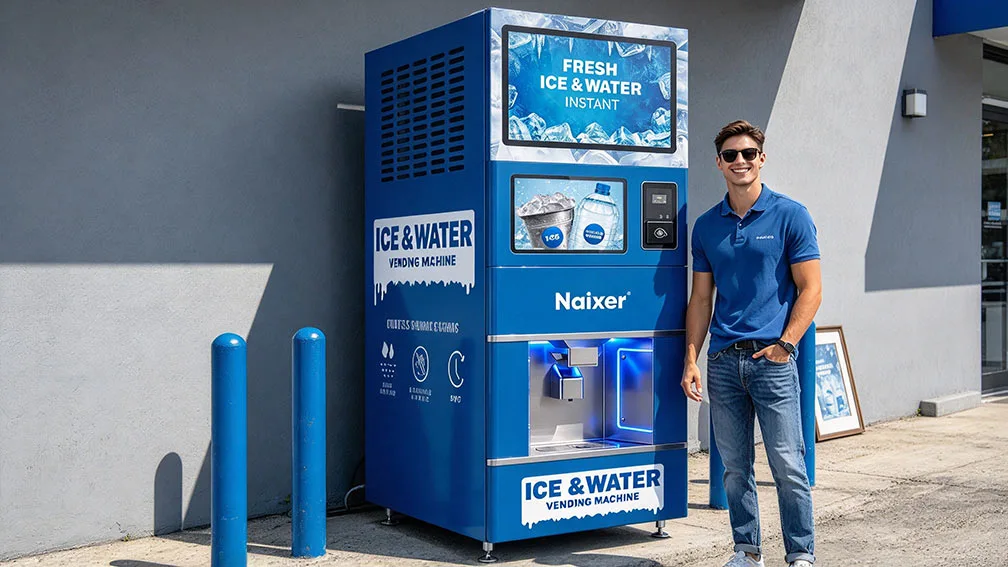
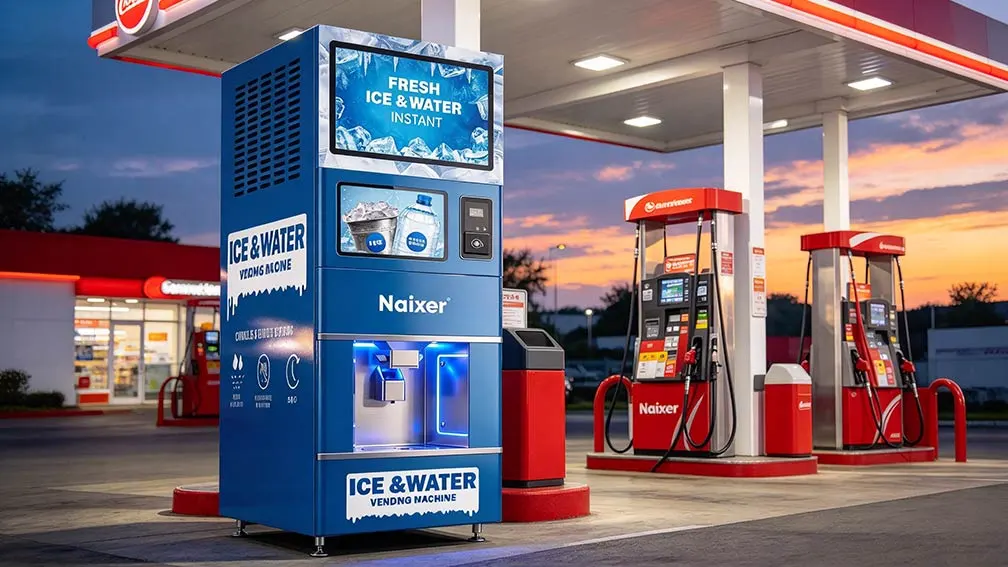
The core difference: a bagged-ice freezer is a storage solution — it depends entirely on how the ice was made and handled before it arrived. An ice vending machine is a production solution — it filters water, freezes it in a closed loop, and dispenses it fresh into your container with almost no human touchpoints. That’s why vended ice is the format health-conscious buyers increasingly prefer, and why machines carry features like multi-stage filtration and antimicrobial protection. We covered the technology in detail in our article on how ice and water vending machines keep water safe.

For Gas Station Owners: How to Serve Ice You'd Drink Yourself
Here’s the business side of ice safety: customers notice. A cloudy bag or a smelly ice bin doesn’t just lose you one sale — it quietly teaches people to buy their ice somewhere else. The good news is that ice safety is an operations problem, and operations problems have checklists:
- Upgrade the source. An on-site vending machine eliminates the two riskiest links in the chain: off-site production and manual bagging. If you’re comparing options and costs, our guide to gas station ice machine costs, ROI and choosing the right model walks through the math.
- Clean on a schedule, not on memory. Evaporators, bins, and chutes should be cleaned and sanitized at fixed intervals — most manufacturers recommend more often than operators think. Our step-by-step cleaning guide for commercial ice machines covers the full routine.
- Hold the cold. Ice should be kept at 0°F (-18°C) or lower. A freezer that cycles warm creates meltwater, and meltwater is where bacteria bloom.
- Train the team. No bare hands, no scoop handles in the ice, no refilling a dirty bin with fresh ice. Five minutes of training prevents the most common failure.
- Make safety visible. Post your cleaning log. Show the filtration. Customers can’t inspect your machine, so give them reasons to trust it.
And if you’re thinking bigger than a single station — ice vending is one of the few categories still growing as a small-operator business. We outlined what it takes to start an ice vending business for owners who want to turn safe ice into a revenue line.

FAQ: Gas Station Ice Questions, Answered
Is gas station ice safe to eat?
In most cases, yes. Ice from certified packaged-ice brands or a well-maintained vending machine is safe to eat or drink. Avoid ice from open bins with visible meltwater, hand-bagged ice of unknown origin, and any bag that looks cloudy, torn, or refrozen.
Is gas station ice filtered?
It depends on the source. Certified packaged-ice brands and ice vending machines use multi-stage filtration as part of production. Ice made with raw tap water and no filtration is only as clean as the local water supply — and the machine it froze in.
Does freezing kill bacteria?
No. Freezing makes bacteria dormant, not dead. They reactivate when the ice melts. Safe ice depends on clean water, filtration, and sanitary production — not on the cold itself.
Are there chemicals in bagged ice?
Reputable producers use filtered water and food-grade equipment, so the ice itself is just water. Problems come from contamination — chemical residues, cleaning agents, or storage odors — when production and storage standards slip. The IPIA seal is the simplest way to know a brand meets the stricter standard.
Is it safe to drink store-bought ice?
Generally yes — packaged ice is regulated as food by the FDA, and certified brands follow IPIA production standards. Check the seal, inspect the bag, and skip ice with visible melt-refreeze signs.
Can old ice make you sick?
It can contribute. Ice that sits for days, partially melts, and refreezes can carry bacteria that multiplied in the meltwater. Old ice of unknown age — especially from an open bin — is worth avoiding.
How often should a gas station ice machine be cleaned?
Manufacturers typically recommend cleaning and sanitizing at fixed intervals (often every few weeks, with deeper service quarterly), plus filter changes on schedule. High-traffic units need more frequent attention, and any machine showing slime or odor needs immediate service.
What temperature should ice be stored at?
For consumable ice, 0°F (-18°C) or lower. Colder temperatures slow meltwater formation and inhibit pathogen growth, which is why a properly maintained freezer is part of ice safety, not just ice quality.