Buying Guide - Updated 2026
Air Cooled vs Water Cooled Ice Maker: The Complete Comparison Guide (2026)
Choosing between an air-cooled and a water-cooled ice maker is one of the first technical decisions you will make when buying commercial ice equipment. Both produce the same ice; they differ in how they get rid of the heat the refrigeration cycle creates. That difference changes installation, utility bills, maintenance and even whether the machine is legal to install in your city.
This guide compares how each system works, what each one really costs to run, and which environments each suits - using figures you can take straight into a budget. If you need the full picture first, start with our guide to commercial ice machines.
| Factor | Air-cooled | Water-cooled |
|---|---|---|
| Water used for cooling | None | 80-100+ gallons per 100 lb of ice |
| Electricity used | Higher | About 10-15% lower |
| Heat released into room | Yes | No |
| Installation | Simple | Needs water line and drain |
| Best environment | Cool, clean, ventilated | Hot, poorly ventilated, outdoor |
1. How an Ice Maker Removes Heat
An ice maker works like a refrigerator: the compressor squeezes refrigerant, the condenser releases heat, and the evaporator freezes water. The condenser is the part that decides whether your machine is air-cooled or water-cooled.
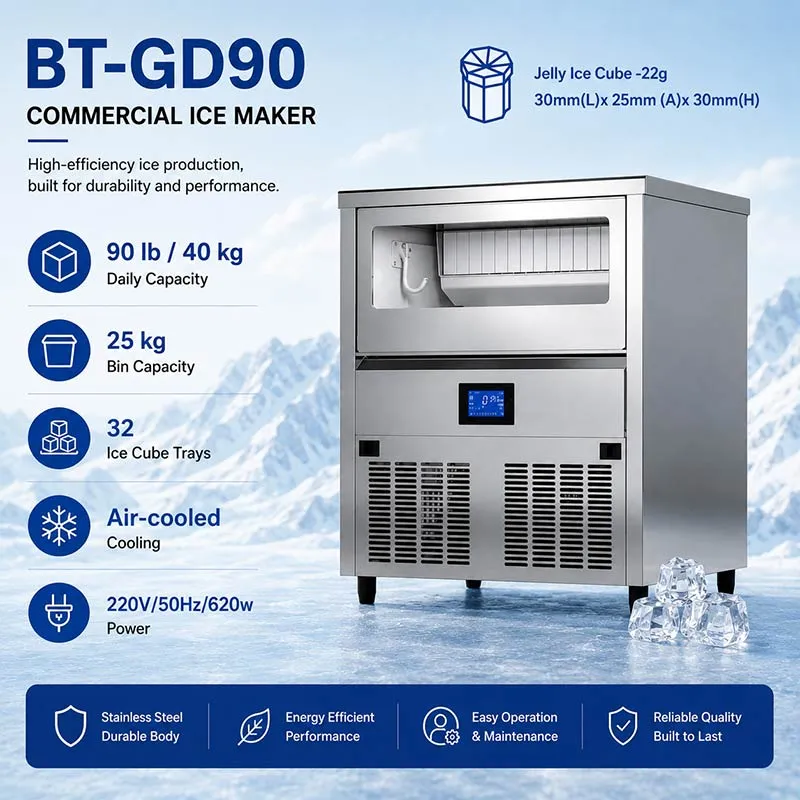
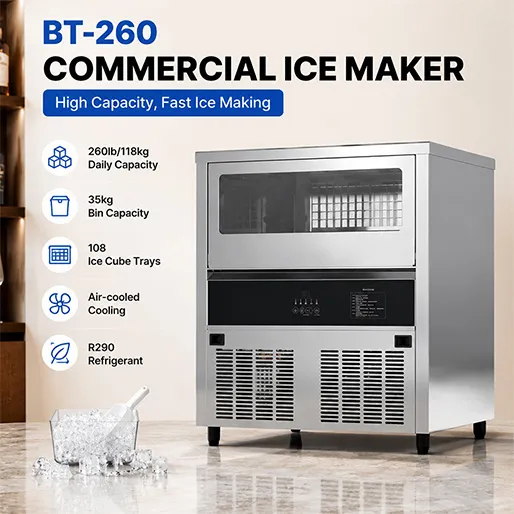
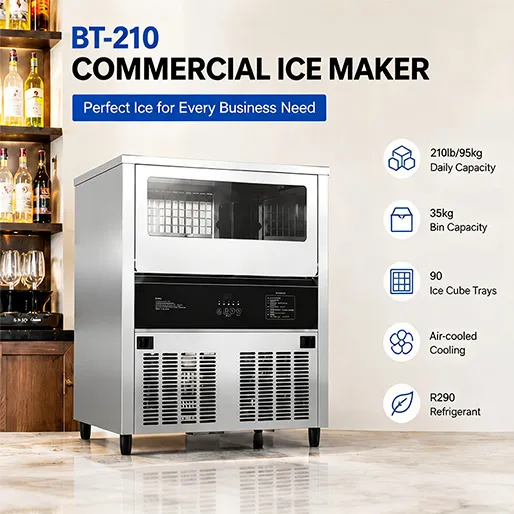
- An air-cooled condenser uses a fan to pull room air across metal coils, then vents the hot air back into the space.
- A water-cooled condenser runs water over the coils; the water absorbs the heat and carries it away down a drain (or to a cooling tower for reuse).
Everything else - ice shape, production capacity and storage - is independent of the cooling type. That is why the choice comes down to your building, your climate and your utility rates.
2. Air-Cooled Ice Makers
Air-cooled machines are the industry default and the type most manufacturers sell today.
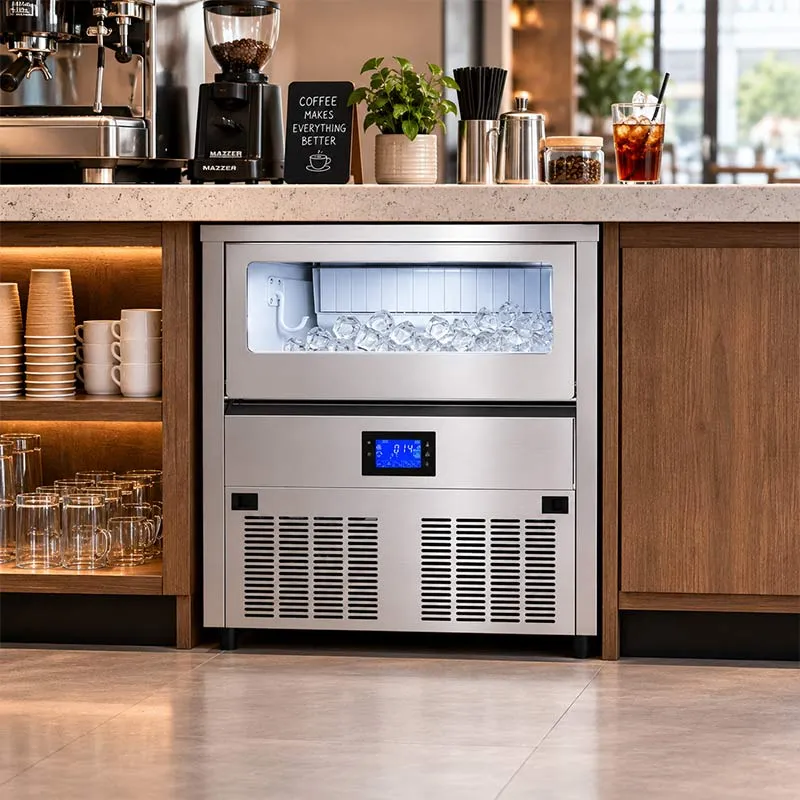
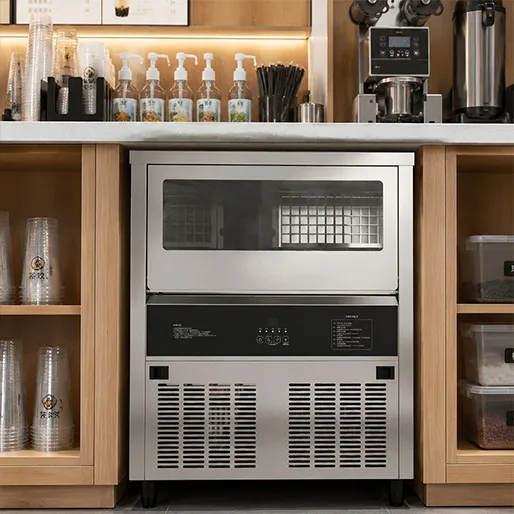
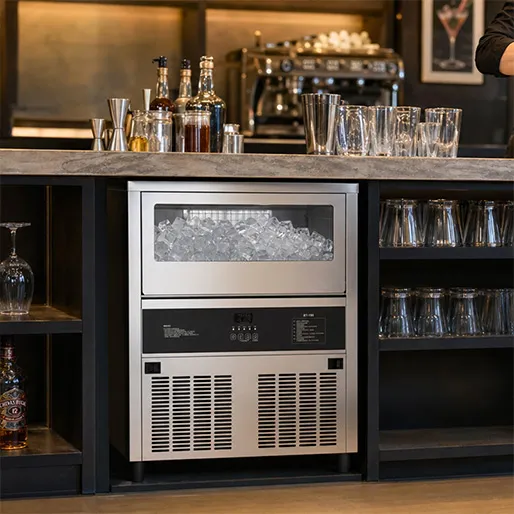
How it works: a fan draws ambient air over the condenser coils. The air picks up heat and is expelled through vents on the back or sides of the machine. No extra water connection is needed beyond the water supply used to make ice.

Pros
- Lower purchase and installation cost - no water line, pump or extra drain work
- Far lower water and sewer bills - no condenser water
- Widely permitted everywhere; many models carry ENERGY STAR certification
- Simple daily maintenance: keep coils and filters free of dust and grease
Cons
- Output drops when ambient temperature rises
- Needs about 12 inches (30 cm) of clearance for hot exhaust air
- Exhaust heat warms the room and raises air-conditioning load
- Airborne grease and dust coat the coils over time
- Fan noise is audible in quiet environments
Best for: air-conditioned kitchens, bars, hotels, offices and retail spaces with clean air and reasonable ventilation.

3. Water-Cooled Ice Makers
Water-cooled machines were the standard for high-volume kitchens before air-cooled efficiency improved. They still solve one problem no air-cooled unit can: high ambient temperature.
How it works: a dedicated water line feeds the condenser. Water passes over the hot coils, absorbs the heat, and drains away. In buildings with a cooling tower, the water recirculates instead of being dumped.

Pros
- Output stays stable in hot kitchens and outdoor installations
- Releases almost no heat into the room
- Uses about 10-15% less electricity than a comparable air-cooled machine
- Quieter - no condenser fan
- Less affected by airborne dust and grease
Cons
- Consumes 80-100+ gallons of water per 100 lb of ice just for cooling
- Requires a dedicated water line and a floor drain
- Higher combined water and sewer bills
- Hard water causes scale buildup on condenser coils
- Increasingly restricted by municipalities concerned about water consumption
Best for: hot, poorly ventilated kitchens, non-air-conditioned spaces, outdoor installations, and buildings that already have a recirculating water system.

4. Air Cooled vs Water Cooled: Side-by-Side Comparison
| Comparison point | Air-cooled | Water-cooled |
|---|---|---|
| Cooling method | Fan + ambient air | Water flow over condenser coils |
| Total water use | About 15-25 gallons per 100 lb of ice (production only) | 80-100+ gallons per 100 lb (cooling only) |
| Electricity use | 5.4-22.5 kWh per 100 lb of ice | 4.7-14.2 kWh per 100 lb of ice |
| Heat output into room | High | Low |
| Installation | Simple; no cooling water line | Needs water supply and drain |
| Maintenance | Coil and filter cleaning | Scale control, descaling, water treatment |
| Sensitivity to ambient temperature | High | Low |
| Noise | Fan noise | Quieter |
| Municipal restrictions | Widely permitted | Restricted or banned in some areas |
| Typical total running cost | Lower in most locations | Lower only with cooling tower or very low water rates |
5. What It Really Costs to Run Each Type
Running cost has two parts: electricity and water.
A water-cooled machine uses about 10-15% less electricity. Depending on output, that can save a few hundred dollars a year. The Focus on Energy commercial ice maker data sheet puts air-cooled machines at 5.4-22.5 kWh per 100 lb of ice and water-cooled machines at 4.7-14.2 kWh per 100 lb.
The water side is where the difference becomes dramatic. A modern air-cooled machine uses roughly 15-25 gallons of water to produce 100 lb of ice. A water-cooled machine adds 80-100+ gallons of condenser water for the same 100 lb - before the ice is even made. Water utilities also charge for sewer on top of the water itself, which roughly doubles the cost of every gallon.
For this reason, the combined water and sewer bill on an air-cooled machine is often about 90% lower than on a water-cooled machine, as utilities such as LADWP point out in their water-saving guidance. Unless your building has a cooling tower, or your water rates are exceptionally low, air-cooled wins on total operating cost.
6. Which Ice Maker Should You Choose?
Use your room conditions, not habit, to decide.
- Air-conditioned kitchen, bar or hotel floor - choose air-cooled. It is cheaper to buy, install and run.
- Hot kitchen above 90°F (32°C) or poor ventilation - consider water-cooled, or improve ventilation and stay with air-cooled.
- Outdoor or non-climate-controlled installation - water-cooled keeps full output when air cooling cannot.
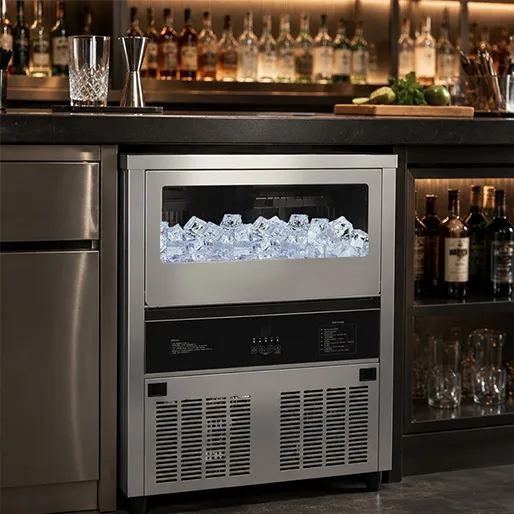
- Retrofit with no floor drain nearby - air-cooled, ideally a no-drain built-in bin model. Naixer's built-in bin cube ice machines (55-190 kg/24h) need no drain line, which dramatically simplifies installation.
- High water rates or water-shortage region - air-cooled without question.
- Building with a cooling tower or recirculating system - water-cooled is the efficient choice.
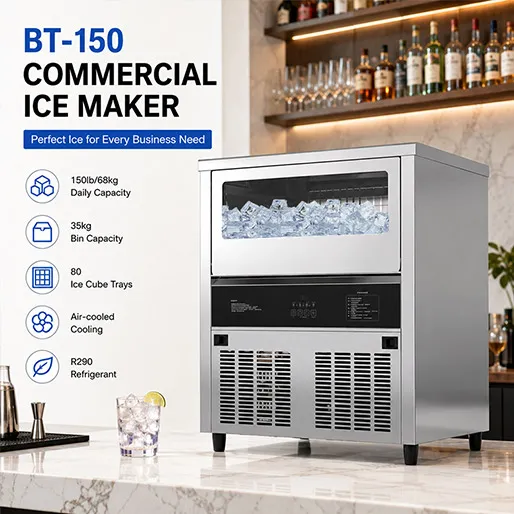
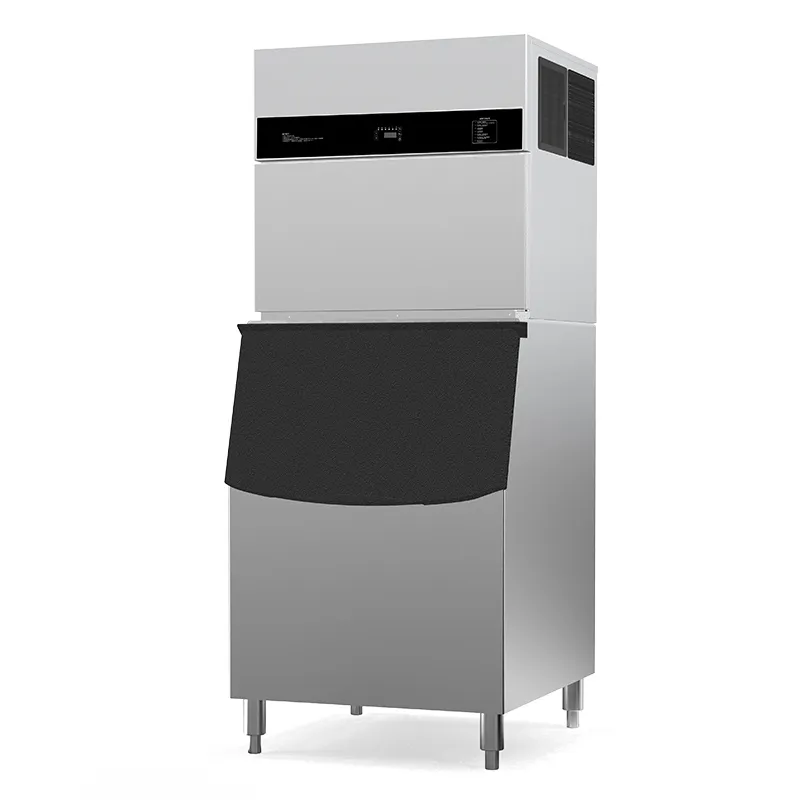
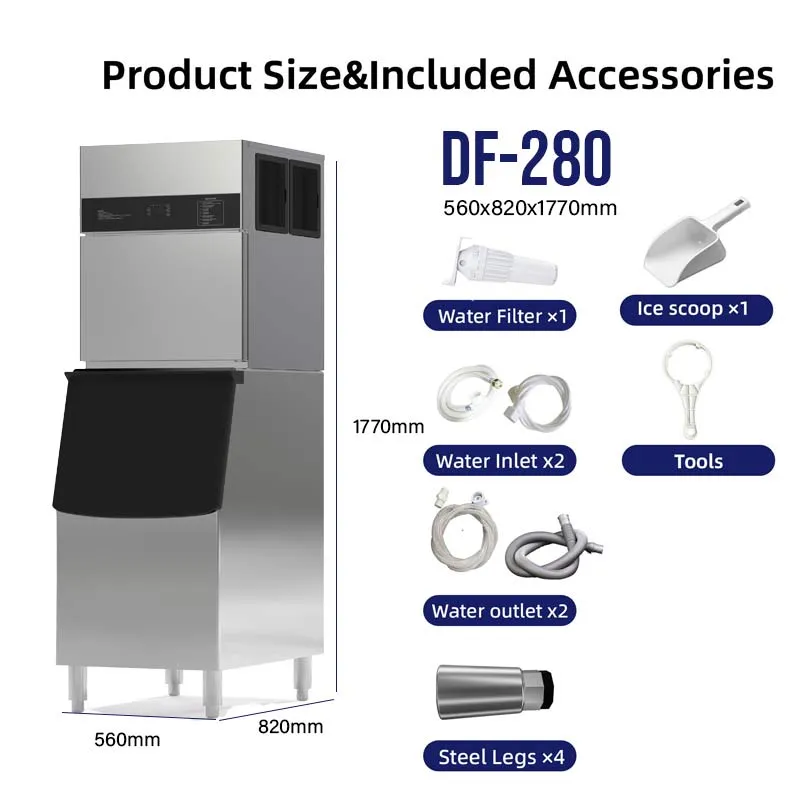
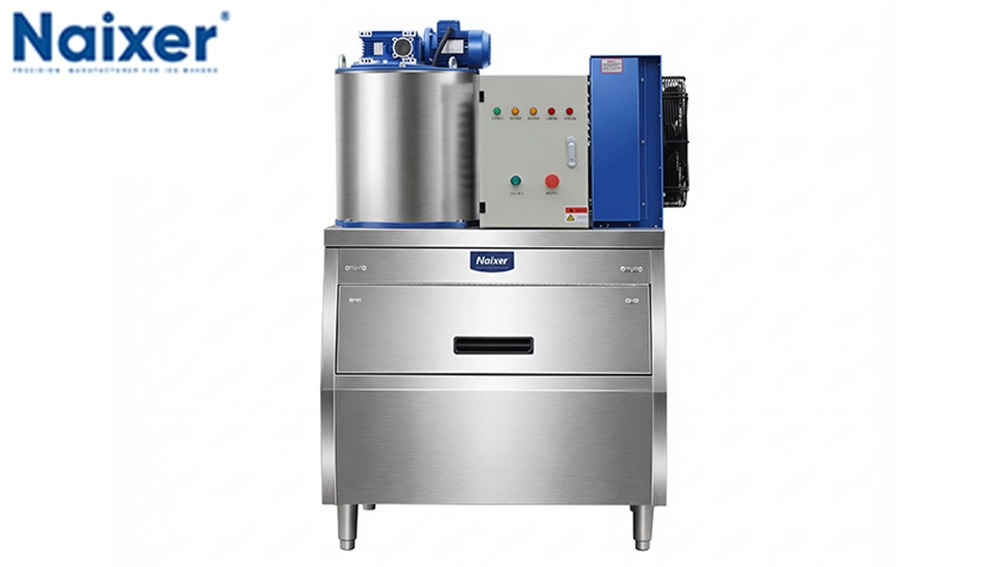
Naixer manufactures both configurations. Compact models such as the E30 undercounter unit (35 kg/24h, R290 refrigerant) are air-cooled for simple, low-maintenance setup, while split-type and modular cube ice machines (250-900 kg/24h) can be specified to match your site conditions. Tell the factory your room temperature, ventilation and water setup, and they will confirm the right configuration for your project. See the cube ice series for capacity options.
7. Environmental and Refrigerant Considerations
Cooling type is only part of the environmental picture; the refrigerant matters too.
- Compact Naixer models use R290 (propane), a low-GWP hydrocarbon refrigerant that is energy-efficient and far gentler on the climate than older refrigerants.
- Larger modular machines commonly use R404A, which has a high GWP and is being phased down globally - check local regulations and ask about R290 alternatives where available.
- Air-cooled machines avoid the water-waste issue entirely and are the more environmentally defensible choice in most regions.
- Many municipalities now restrict or prohibit new water-cooled installations; cooling tower systems are often exempt. Always check local codes before specifying water-cooled.
8. Frequently Asked Questions
Which is better, an air-cooled or water-cooled ice maker?
For most businesses, air-cooled: lower purchase and installation cost, far lower water bills and simpler maintenance. Water-cooled makes sense only in hot, poorly ventilated spaces, outdoor sites, or buildings with a recirculating cooling tower.
Do water-cooled ice makers use a lot of water?
Yes. Condenser cooling alone can consume 80-100+ gallons per 100 lb of ice - about 5-10 times the total water use of an air-cooled machine. Combined water and sewer bills are typically much higher as a result.
Does an air-cooled ice maker need a water connection?
It needs water to make ice - roughly 15-25 gallons per 100 lb - but no water for cooling. Some built-in bin models, including Naixer's, need no drain line at all.
Can a water-cooled ice maker handle a hot kitchen?
Yes, and that is its main advantage. Because cooling does not depend on ambient air, output stays stable even at 100°F+ room temperatures.
Are water-cooled ice machines being phased out?
Not entirely, but many municipalities restrict or ban new installations because of water consumption. Buildings with cooling towers that recirculate water are usually exempt. Check local codes before purchasing.
9. Final Recommendations
- Default to air-cooled for any indoor, air-conditioned installation.
- Choose water-cooled only for genuinely hot, poorly ventilated or outdoor environments.
- Add up both electricity and water bills before comparing price tags; water usually decides the winner.
- Check local municipal rules and refrigerant regulations before ordering.
- Ask the manufacturer to confirm the condenser type and refrigerant for the exact model you plan to buy.
Get a Factory Quote
Tell us your room temperature, ventilation and water setup, and Naixer's engineers will recommend air-cooled or water-cooled - with factory-direct pricing and realistic lead times.
Get a factory quote