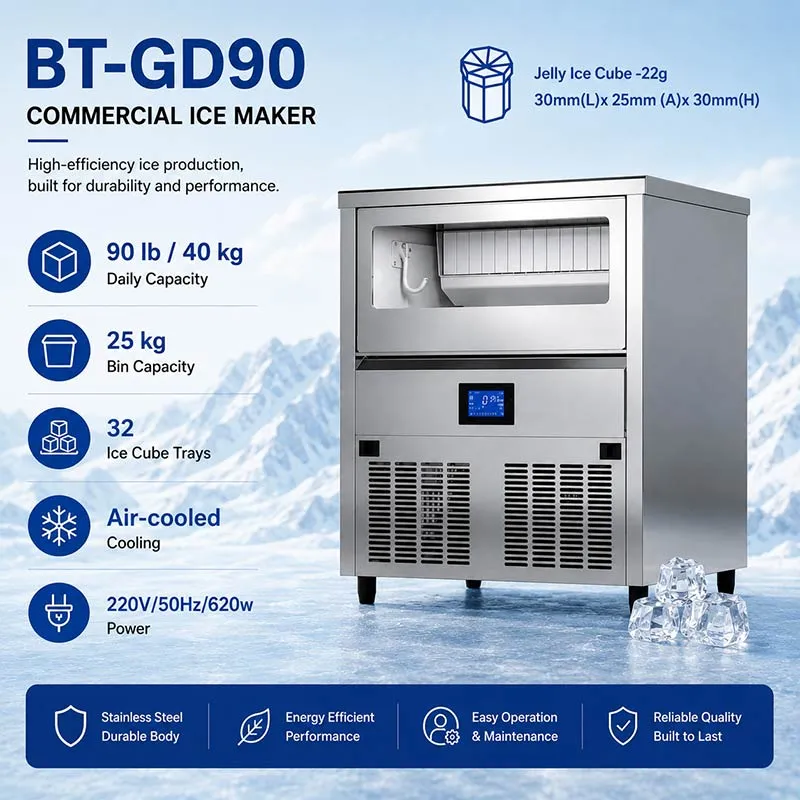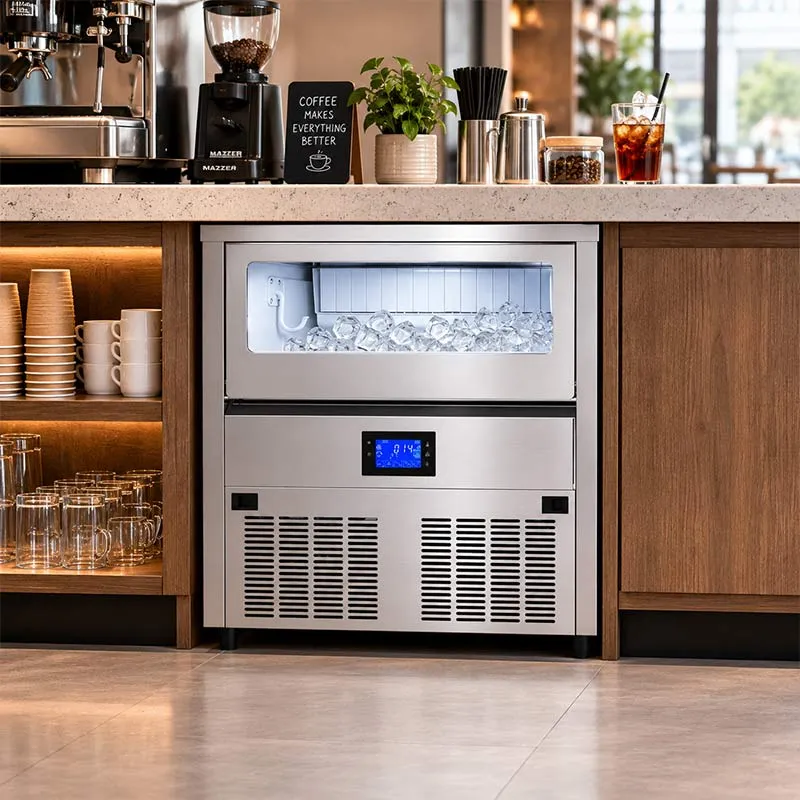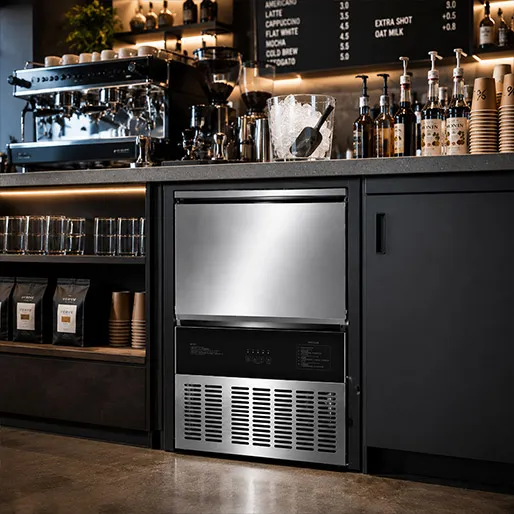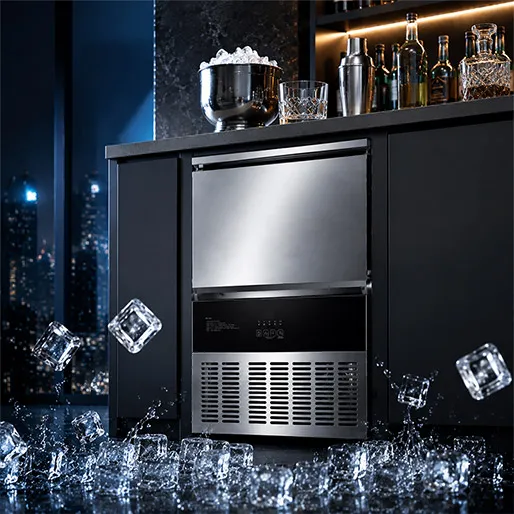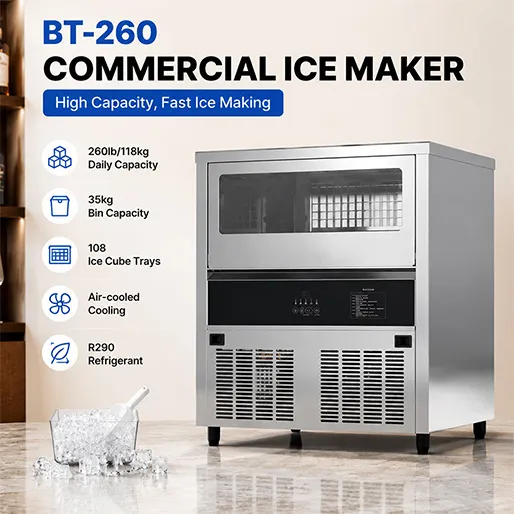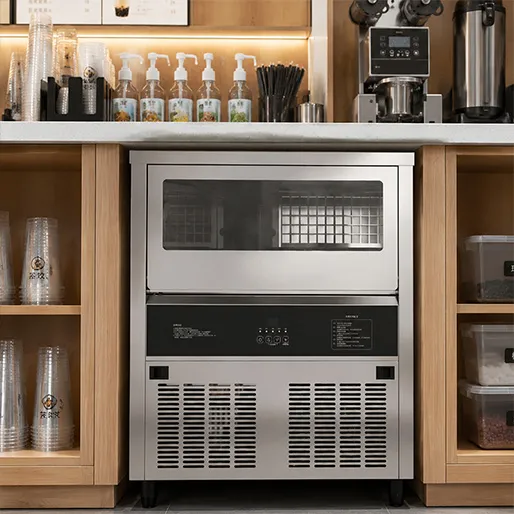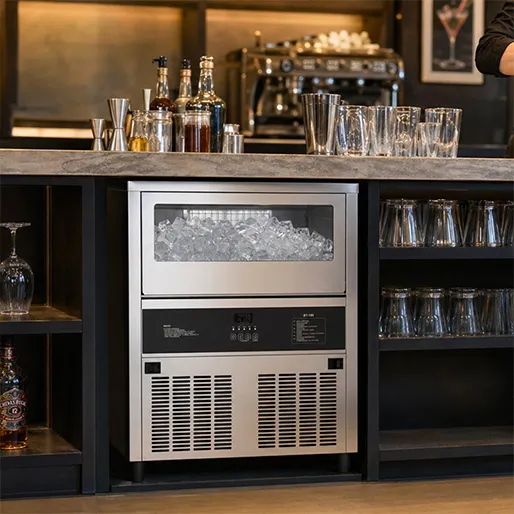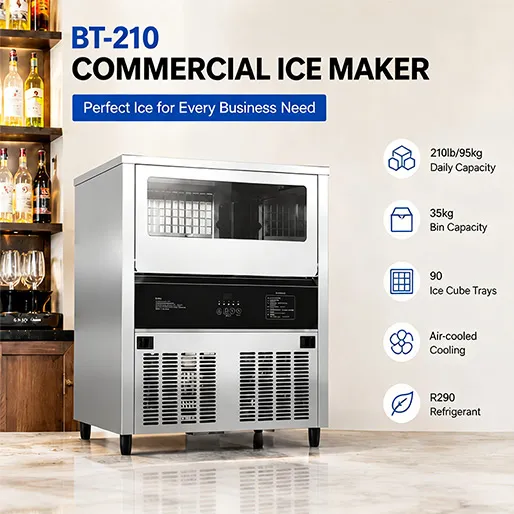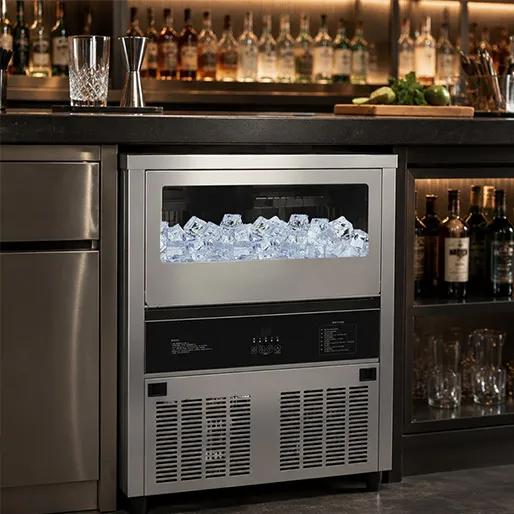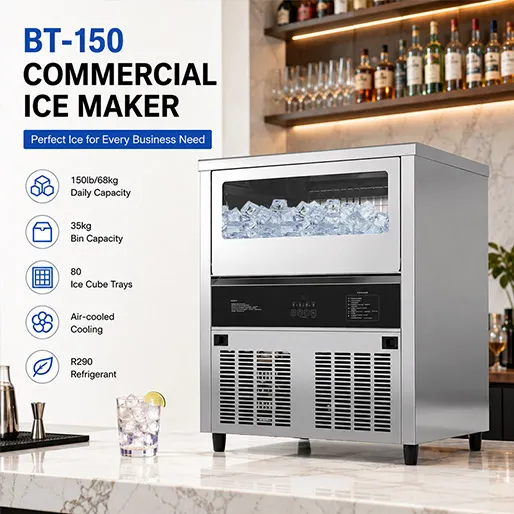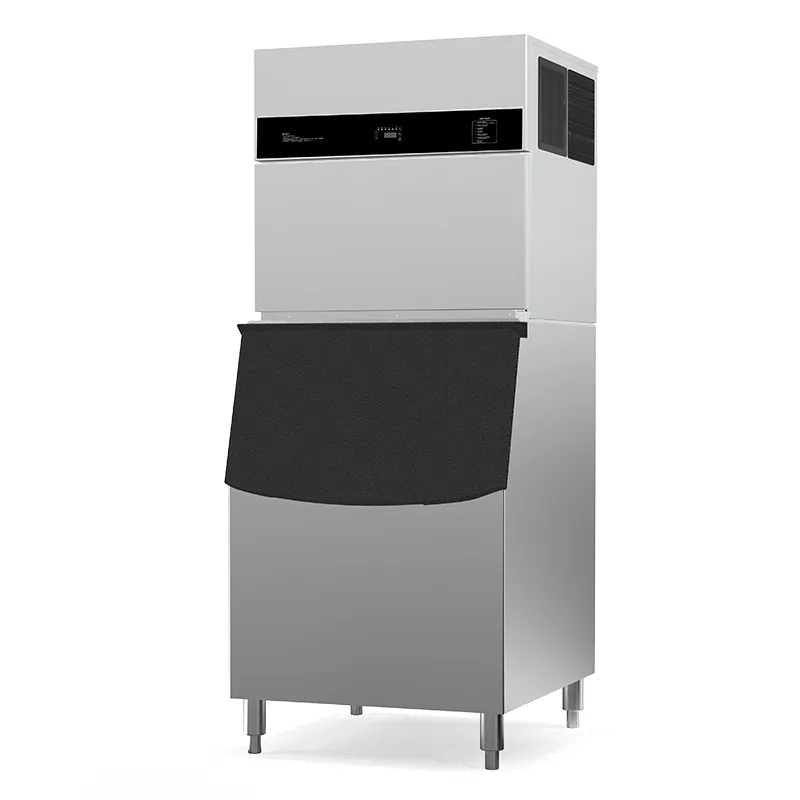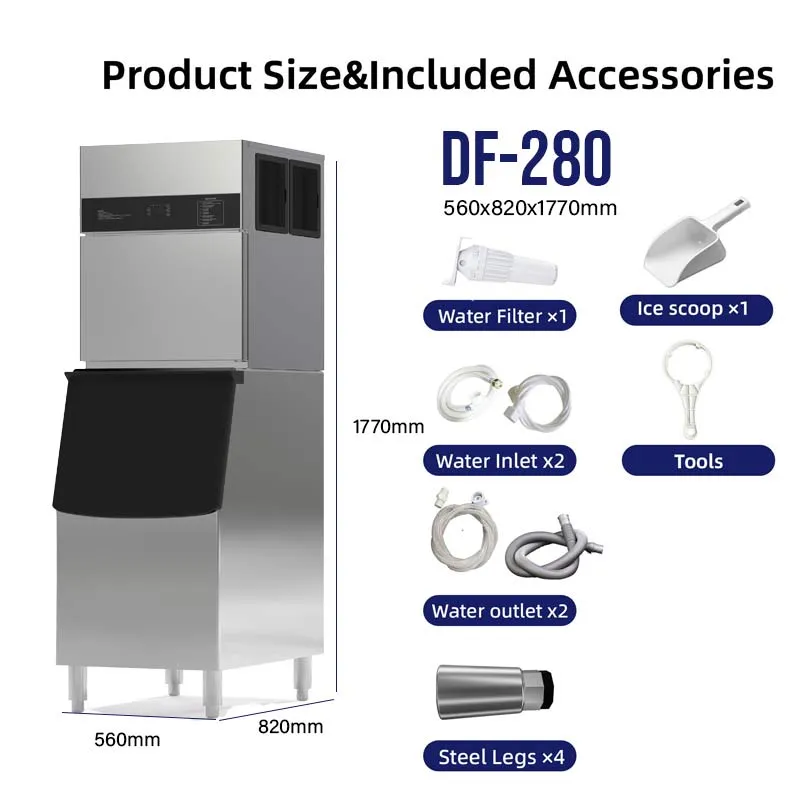
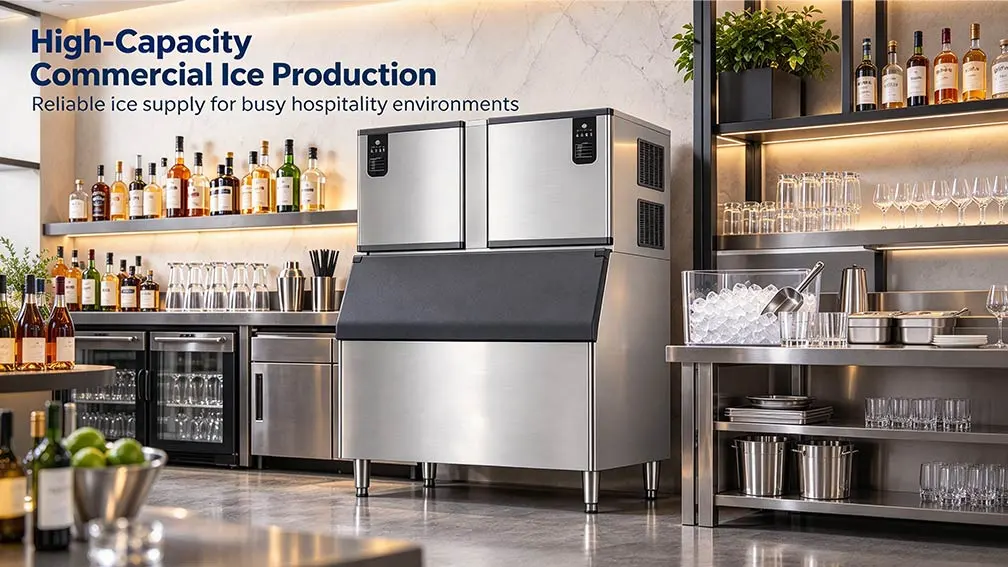
If you’re searching for a commercial ice machine for sale in America, start with the number that matters: most US buyers pay between $360 and $10,000+ in 2026, and where you buy can cut the price by 25–60% for comparable specs.
That range covers four very different buying channels — big-box stores and marketplaces, foodservice dealers, local dealers with service contracts, and factory-direct wholesale. Each one wins on a different trade-off between price, speed, service, and support.
This guide breaks down real 2026 prices (sourced from major US retailers), compares all four channels, lists the compliance checklist every machine needs, and gives you an honest framework for deciding when buying direct from a manufacturer — like Naixer — actually saves you money, and when it doesn’t.
In this guide, you will learn:
How Much Do Commercial Ice Machines Cost in America? (2026 Prices)
A 500 lb/day machine can cost $999 or $9,000 in the same US market. That’s not a typo — it’s the difference between a budget import sold on Home Depot and a full-size branded system with a US service network behind it.
Four things drive the price spread:
- Brand premium. Scotsman, Manitowoc, and Hoshizaki dominate commercial kitchens — and their list prices reflect decades of dealer networks and parts availability.
- Channel margin. A marketplace listing, a dealer floor, and a factory quote for the same class of machine carry very different markups.
- Certifications and compliance. UL/ETL listings, NSF sanitation compliance, and ENERGY STAR ratings all cost the manufacturer money — and protect yours.
- Service layer. Local dealers bundle delivery, installation, and same-week repair. That layer is invisible on the invoice but very real when a machine goes down on a Friday night.
Here’s what the actual US market looked like in October 2026:
| Machine Type (Output) | Typical US Retail | Real-World Example | Best For |
|---|---|---|---|
|
Countertop / compact undercounter (100–200 lb/day) |
$360–$700 | COTLIN 15" drainless — $359.99; EUHOMY 200 lb — $539.99 (Home Depot) | Coffee shops, offices and light bar use |
|
Freestanding units with bin (300–500 lb/day) |
$900–$2,000 | Mojgar 450 lb — $999.99 (Home Depot); EUHOMY 400 lb — $1,199.99 (Amazon) | Busy cafés, small restaurants and gas stations |
|
Full-size cube machines + bin (400–600 lb/day) |
$3,200–$5,800 | Scotsman CU50PA-1A — $3,249 (Burkett); Manitowoc IDP0450W with bin — $5,781 (KaTom) | Restaurants, hotels and bars |
|
High-capacity cube (800–1,800 lb/day) |
$4,300–$9,000+ | Manitowoc IDP0800 — $6,454; IDT1500A — $9,024 (WebstaurantStore) | Hotels, stadiums and central kitchens |
| Nugget ice & dispenser systems | $7,000–$11,500+ | Manitowoc CNF-0201A nugget dispenser — $11,478 (KaTom) | Hospitals, hotels and self-service areas |
How to read this table: the low end (undercounter, $360–$700) is dominated by imported brands selling through Home Depot, Amazon, and similar marketplaces, while the mid and high ranges belong to established US-market brands with dealer networks. For a deeper look at machine economics — compressor, evaporator, energy use — see our full breakdown of how much an industrial ice cube machine costs.
One more pattern worth knowing: the same factories that build for budget brands also supply wholesale and OEM buyers directly — we cover that channel in detail below. And if you’re still choosing between brands, our roundup of the top 10 commercial ice machine manufacturers compares the global players.
Compact undercounter units are their own category, with their own trade-offs — our guide to the best undercounter ice makers covers the strongest options for small spaces.
Where Can You Buy a Commercial Ice Machine in America?

Every machine you’ll find for sale in the USA comes through one of four channels, and the right one depends on your volume, timeline, and how much service you need. If you haven’t settled on machine type and capacity yet, our guide on how to know which commercial ice machine to buy is the right starting point — this section assumes you know what you need and focuses on where to get it.
| Channel | Price Level | Lead Time | Service & Support | Best For |
|---|---|---|---|---|
| Big-box & marketplaces Home Depot, Lowe's, Amazon, Sam's Club | $360–$1,200 typical | 2–7 days | Return window; limited installation and repair | Small operations, backup units and tight budgets |
| Foodservice equipment dealers WebstaurantStore, KaTom, Burkett | $3,200–$11,500 typical | 1–2 weeks | Delivery and installation options; US warranty and parts | Restaurants, hotels and high-volume kitchens |
| Local dealers & rental services | $1,400–$3,900 + service fees; leasing available | Same week (local stock) | Fast on-site service and maintenance contracts | Operators who need uptime and same-week repair |
| Factory-direct / wholesale Naixer and other manufacturers | Lowest per unit at volume (quote-based) | 6–10 weeks door-to-door (first order) | Factory warranty, spare parts and distributor support | Distributors, chains, OEM/private label and multi-unit projects |
1. Big-box stores and online marketplaces
Home Depot, Lowe’s, Amazon, and Sam’s Club carry the entry segment: compact and mid-size machines under roughly $1,200. You get fast shipping, easy returns, and no sales pressure. What you don’t get is application support — nobody there will tell you whether the machine fits your peak demand — and service for these units is usually limited to replacements rather than repairs. Best for low-stakes, low-volume use.
2. Foodservice equipment dealers
WebstaurantStore, KaTom, Burkett, and similar dealers specialize in commercial kitchens. Prices run higher than marketplaces, but you’re buying US-market brands with parts networks, warranty support, and delivery options that include installation. This is the default channel for restaurants and hotels that want a known brand and a support path behind it.
3. Local dealers and rental services
Local dealers add the layer no national retailer can: same-week on-site service, maintenance contracts, and rental or leasing options. In Los Angeles, for example, dealers list machine prices around $1,436–$3,879 with 1–2 day delivery inside their zone. You pay for uptime — and for operations where a down machine costs real money, that’s rational math.
4. Factory-direct and wholesale
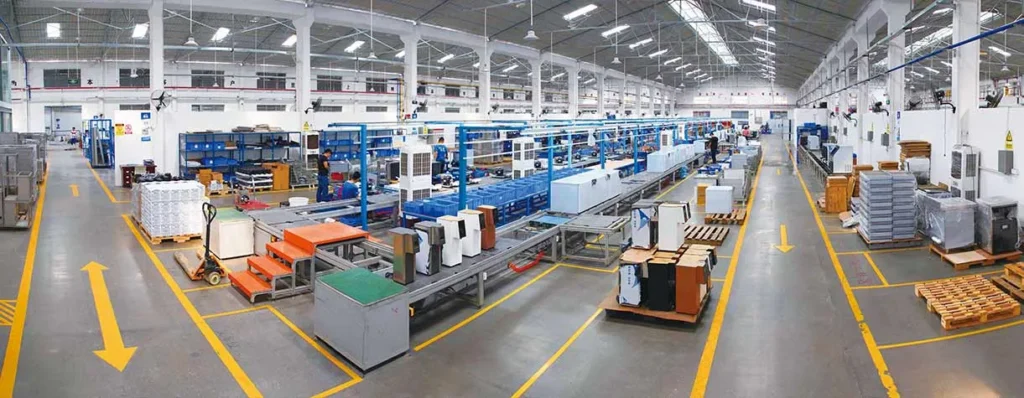
The fourth channel bypasses retail markup entirely: buying in volume directly from the manufacturer, like the ice machine manufacturers in China who build for many global brands. Unit prices drop substantially at wholesale volumes, and you can specify voltage, plug type, packaging, and even private-label branding. The trade-offs are longer lead times, freight logistics, and arranging your own service. Here’s exactly when that makes sense.
US Compliance Checklist: What to Verify Before You Buy
Whatever channel you buy through, a commercial ice machine headed into an American kitchen needs to clear five checks. Ask for the documentation — certificates, not marketing claims:
- Electrical: UL or ETL listing. US ice machine safety is measured against UL 563. A UL or ETL mark means the unit was tested to US standards — a CE mark alone is not enough.
- Sanitation: NSF/ANSI 12. The standard for automatic ice making equipment, and the one health inspectors care about. It covers materials and cleanability of everything that touches ice.
- Energy: ENERGY STAR (where applicable). Certain capacity classes carry ENERGY STAR ratings. Between two similar machines, a certified unit can cut energy costs meaningfully over five-plus years.
- Refrigerant: EPA SNAP compliance. US refrigerant rules keep tightening. New eco-friendly units increasingly use R290; older refrigerants like R404A and R134a face phase-down pressure. Confirm what’s inside — for compliance and for future service parts.
- Power configuration: 115V/60Hz or 208–230V. US commercial power is not the 220–240V/50Hz used in most export markets. If you buy direct, specify the US configuration in writing.
One line to remember: buying “for sale” cheap online is easy; buying something that passes inspection, keeps its warranty valid, and has parts available in year five is the actual goal.
The Factory-Direct Option: When Buying from the Manufacturer Makes Sense
Here’s the honest version, because most “buy direct” pages won’t give it to you.
Buy through the local channel if you’re buying one machine for one location. You’ll pay more per unit, but you gain delivery, installation, US warranty handling, and a phone number to call when something leaks. At that scale, the math works in retail’s favor.
Buy factory-direct if any of these describe you:
- You’re buying 5+ units — multi-location restaurant groups, hotel properties, franchisees opening in batches
- You’re a distributor or equipment reseller building a product line
- You need OEM or private-label production
- You’re an ice vending or packing operator where the machine is business infrastructure
- You need custom configurations — voltage, plug standard, bin sizes, carton and loading plans
At those volumes, the factory channel typically lands 25–60% below US retail for comparable specs — even after freight and duties. The savings come from cutting two or three layers of margin, not from thinner quality, provided you choose the right factory.
What to ask any factory before you commit:
- US-spec configuration in writing (115V/60Hz or 208–230V, UL/ETL-listed components, NSF-compliant materials)
- Certification documents for the exact model, not the brand category
- MOQ, sample-unit policy, and production lead time
- Spare parts and warranty terms — who ships what, from where, how fast
- OEM/ODM capability, if you plan to sell under your own name
Why we can speak to this directly: Naixer has manufactured commercial ice machines in Guangzhou since 2010 — cube, square, crescent, cylinder, nugget, and flake series — with export-ready engineering like R290 eco-friendly refrigeration, 304/316 stainless steel construction, IoT-ready controls, and 300+ patents behind the lineup. If you want to evaluate the cube ice machine series as a starting point, or explore a Naixer distributor program, those are the two most common paths our US partners take.
Shipping and Importing to the US: What to Expect
Factory-direct means you’re also your own logistics department — but the process is well-trodden:
- Production: typically 2–4 weeks after deposit, depending on model and volume.
- Sea freight: roughly 3–5 weeks on the water to the West Coast, a little longer to East Coast ports, plus port handling and inland delivery.
First order, door-to-door: budget 6–10 weeks, and keep a week of buffer for customs. - LCL vs FCL: small orders usually ship LCL (shared container). Past roughly a dozen full-size machines, a dedicated container (20GP or 40HQ) usually cuts per-unit freight sharply — ask for a loading plan to find your crossover point.
- Customs: ice machines clear under HS heading 8418. Work with a customs broker early; duty rates and tariff treatment change, so your broker’s quote belongs in your landed-cost math.
Once the machine arrives, what happens next matters as much as what you saved — see our commercial ice machine installation guide for requirements, clearances, and setup checks.
New vs Used Commercial Ice Machines in America
“Used” is one of the most common modifiers people search alongside “commercial ice machine for sale” — and it deserves a straight answer.
The used market is real. Marketplaces, restaurant equipment auctions, and refurbishers list working machines at 30–60% off new. For a backup unit or a genuinely light-duty application, that can be smart.
The risks are mechanical and regulatory. Compressor hours are invisible, refrigerant types may be phased out (older R-22 and R404A units can be hard to service), parts for discontinued models disappear, and sanitation history is unknown unless the unit was professionally cleaned and verified. A cheap used machine with a failing compressor is a $150-a-month ice-bag habit waiting to happen.
Our rule of thumb: buy new for daily commercial duty — energy, reliability, and warranty math usually win within 2–3 years. Consider used only for backups or light use. And if “used” is your budget reality, compare a factory-direct quote on a new unit before committing; at wholesale volumes, the gap is often smaller than you’d expect.
How to Choose the Right Capacity
Size for your peak day, then add a 20–30% buffer. Undersizing means buying ice bags at retail; oversizing means paying for capacity you never use. Common industry rules of thumb:
| Business Type | Rule of Thumb | Typical Machine Size |
|---|---|---|
| Café / coffee shop | Approximately 1–1.5 lb per cold drink served | 150–300 lb/day |
| Full-service restaurant | Approximately 1.5–2 lb per diner | 300–500 lb/day |
| Bar / cocktail program | Approximately 3 lb per customer | 400–800 lb/day |
| Hotel | 2–3 lb per room/day, plus kitchen and banquet demand | Dedicated units per outlet |
| Gas station / convenience store | Driven by bagged-ice sales volume | 300–1,000 lb/day |
| Seafood, bakery & food processing | Continuous flake ice coverage | 1,000–5,000+ lb/day |

Two practical tips before you commit:
- Run the numbers, not the vibes. Naixer’s free Ice Calculator converts your business type, traffic, and menu into a recommended capacity in about a minute.
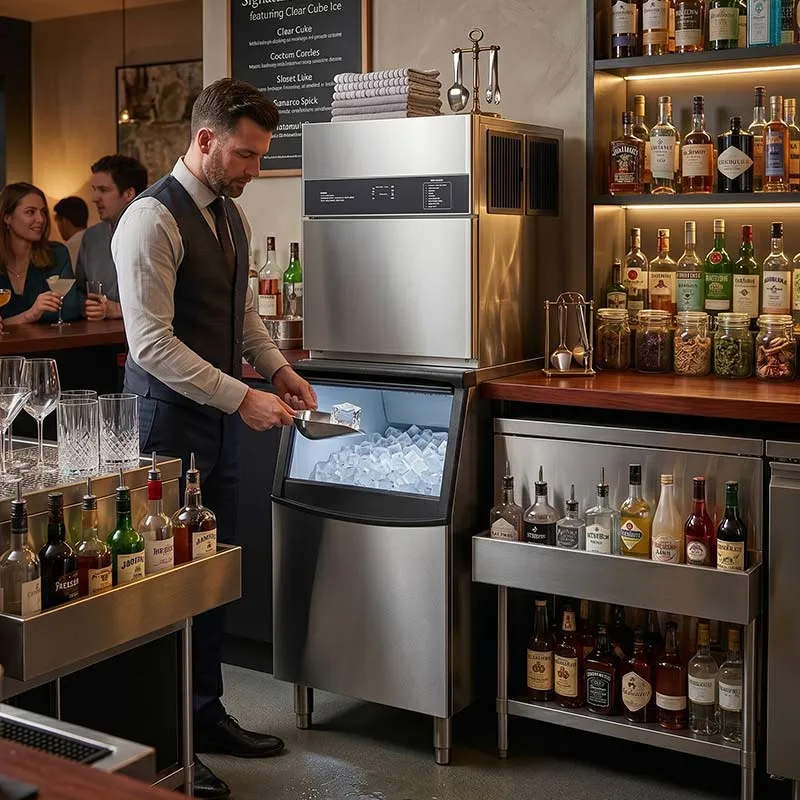
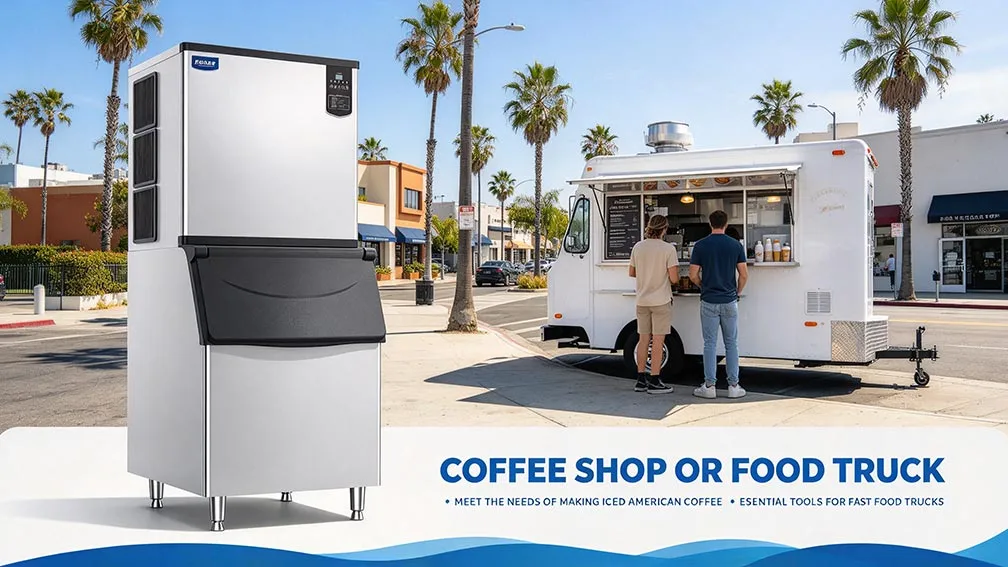
- Match ice type to use. Cube for beverages, nugget for chewable and self-serve, flake for seafood and display. We go deeper in our guides to ice machines for coffee shops, ice machines for hotels, flake ice machines for seafood and processing, and gas station ice machines.
FAQ: Commercial Ice Machines for Sale in the USA
How much does a commercial ice machine cost in America?
In 2026, expect $360–$700 for compact undercounter units, $900–$2,000 for freestanding mid-size machines, $3,200–$5,800 for full-size cube systems with bins, and $4,300–$9,000+ for high-capacity units. High-volume nugget and dispenser systems can exceed $11,000. Factory-direct wholesale pricing typically lands 25–60% below these retail levels at volume.
Where can I buy a commercial ice machine in the USA?
Four channels: big-box stores and marketplaces (cheapest for small units), foodservice equipment dealers (best brand selection and support), local dealers (fastest service), and factory-direct (lowest cost at volume). The comparison table above breaks down price, lead time, and service at each level.
Can I buy a commercial ice machine directly from the manufacturer?
Yes — most Chinese and many US manufacturers sell direct at wholesale volumes, typically with a minimum order quantity. The buyers who benefit most are distributors, multi-unit operators, and OEM/private-label brands. Naixer works with US partners through factory-direct supply and a distributor program.
Is it cheaper to import a commercial ice machine from China?
Per unit, usually yes at volume — even after freight, duties, and brokerage, landed costs typically run well below US retail for comparable specs. It is not cheaper per unit for a single machine, where freight and handling dominate. Our guide to ice machine manufacturers in China covers how to evaluate factories.
What certifications should a commercial ice machine have in the US?
At minimum: UL or ETL listing (UL 563 safety standard), NSF/ANSI 12 sanitation compliance, and US power configuration (115V/60Hz or 208–230V). ENERGY STAR ratings and EPA-compliant refrigerants such as R290 are increasingly standard in new equipment. Always ask for certificates for the specific model.
Are used commercial ice machines worth buying?
For backup or light-duty use, sometimes — at 30–60% below new prices. For daily commercial duty, new usually wins on total cost of ownership within 2–3 years through energy savings, reliability, and warranty coverage. Unknown compressor hours and phased-out refrigerants are the main used-market risks.
What voltage do commercial ice machines use in America?
Small and mid-size units run on 115V/60Hz; larger machines typically use 208–230V. This differs from most export markets (220–240V/50Hz), so if you’re importing, specify the US configuration explicitly in your purchase order.
How long does shipping from China to the US take?
Plan on 2–4 weeks production plus 3–5 weeks ocean freight to the West Coast, with customs and inland delivery on top. For a first order, 6–10 weeks door-to-door is a realistic planning number.
Get Your Factory-Direct Quote
Whether you’re buying one machine or building a product line for the US market, the fastest next step is a direct conversation:
- Single machine or small order? Tell us your business type and peak demand — we’ll recommend the right model and channel.
- Distributor, chain, or OEM buyer? Request the wholesale sheet and current MOQ.
- Get a factory quote → or message us on WhatsApp at +86 133-9248-0997.
- Prefer to browse first? Download the 2026 Naixer product catalog (PDF).