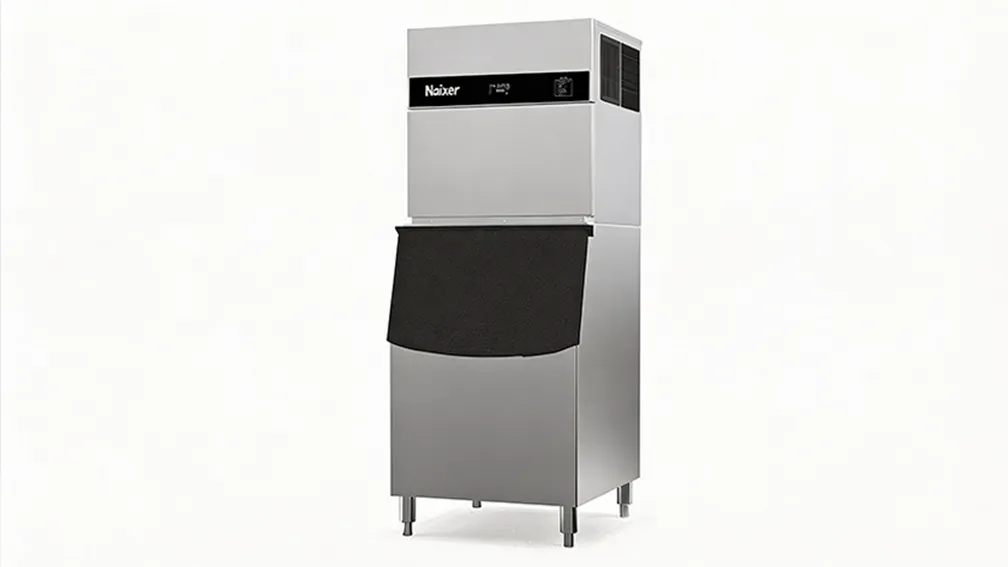
Best Undercounter Ice Maker: The 2026 Commercial Buyer’s & Selection Guide
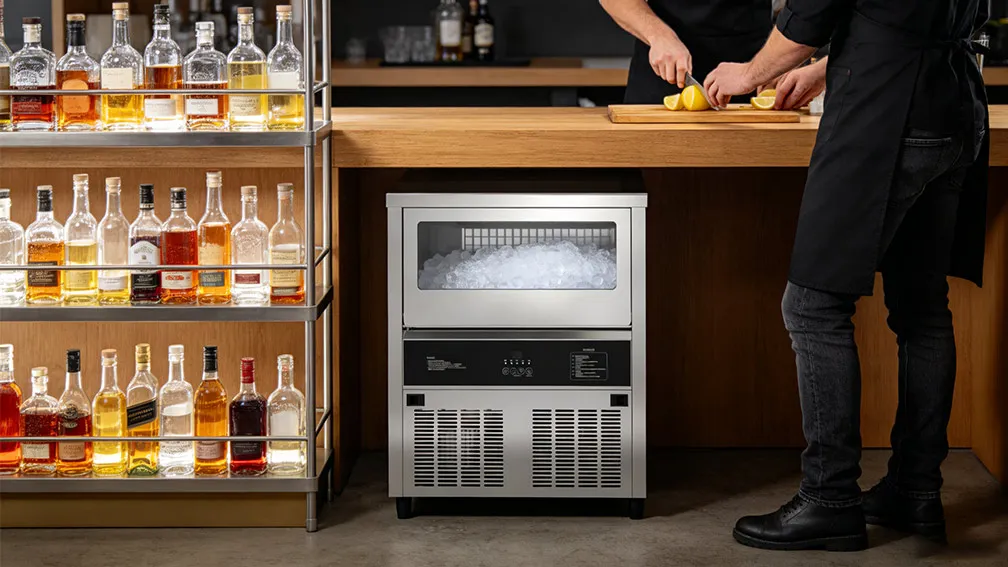
The best commercial undercounter ice maker is not the one with the highest rating on a home appliance website. It is the machine that matches your menu, your peak demand, and the physical space behind your counter. For most small and mid‑size food and beverage operations, a cube ice machine like the Naixer TH‑150B is the most versatile and cost‑effective place to start. For specialty coffee shops and craft cocktail bars, a crescent ice machine like the Naixer TH‑SE150 is the upgrade that directly improves drink quality and bar efficiency. For the smallest cafes and micro‑bars where every inch counts, the compact Naixer TH‑80B is the machine that fits without compromise. This guide walks through the best Naixer undercounter models for different business profiles, and explains what to look for when making the choice. For a broader look at the complete decision framework, the commercial ice machine buying guide covers sizing, ice type, and installation in detail.
In this guide, you will learn:
Best for Tight Spaces: The Naixer TH‑80B and BT‑120

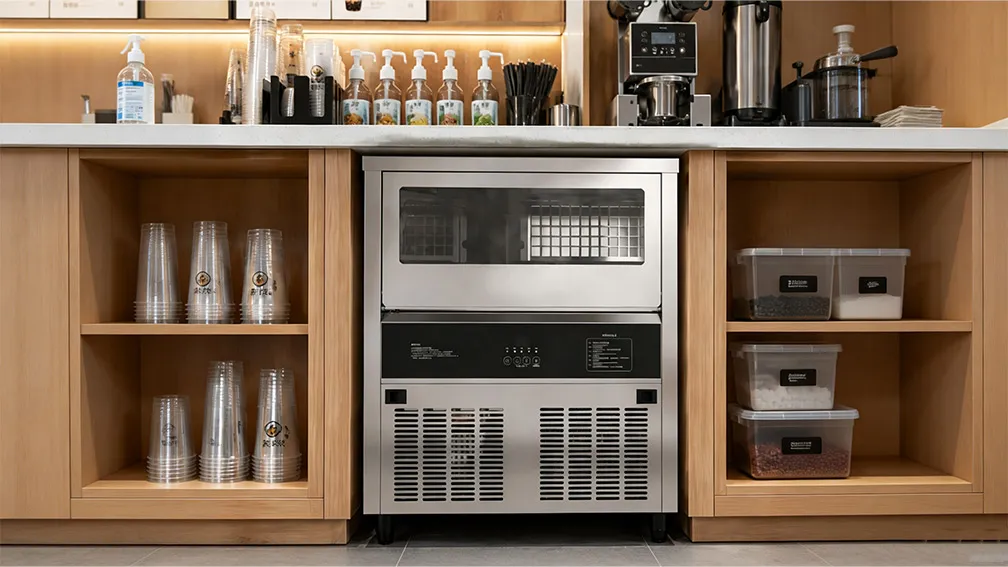
A small cafe with a dozen seats or a micro‑bar tucked into a city basement has one overriding constraint: space. Every square foot behind the counter has to earn its keep. The ice machine cannot sprawl. It has to slide under a standard counter and disappear, while still producing enough ice to handle a morning rush or a weekend crowd.
The Naixer TH‑80B is built for exactly this scenario. It produces up to 80 pounds of crystal‑clear, 22‑by‑22‑by‑22‑millimeter cube ice per day and stores 12 kilograms on standby, all within a footprint just 425 millimeters wide. That is roughly the width of a standard kitchen cabinet. It fits under virtually any counter, connects to a water line and drain, and runs on R290 refrigerant that meets the EPA’s 2026 regulations.
For a cafe pulling 100 to 150 iced drinks on its busiest day—lattes, americanos, cold brews—the TH‑80B provides exactly the right amount of ice without wasting capacity or counter space. It produces enough to cover the peak, but it does not demand the floor area of a larger machine.
If the business is slightly busier, or if the owner wants a deeper storage buffer, the Naixer BT‑120 steps up to 120 pounds of cube ice per day with 30 kilograms of built‑in storage. It is the same compact undercounter format, just with 50 percent more production and more than double the on‑hand ice. For a 20‑seat bar or a cafe that routinely serves 150 to 200 iced drinks a day, the extra headroom means fewer moments of staring at an empty bin during a rush.
Both machines produce standard cube ice—the most versatile shape in commercial foodservice. It works well in soft drinks, iced tea, and simple mixed drinks. For operations where the menu is straightforward and the priority is reliability in a small package, cube ice is the right call. For a deeper dive into how cube ice stacks up against other shapes, the guide on which ice cube shapes are best for your restaurant covers the full spectrum.
Best for Specialty Coffee and Craft Cocktails: The Naixer TH‑SE150

A cafe built around single‑origin beans and perfectly pulled shots of espresso faces a problem that a diner serving fountain sodas never has to consider. Hot espresso, around 90 degrees Celsius, hits the ice seconds after it leaves the portafilter. If the ice shatters from thermal shock, it melts fast and turns a carefully crafted iced latte thin and watery before the customer is halfway through. The same physics applies to a craft cocktail bar pouring spirits over ice for an Old Fashioned or a Negroni.
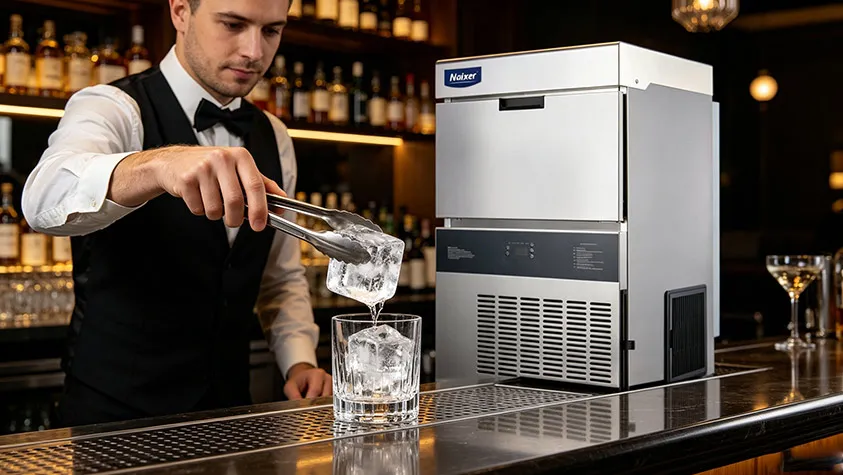
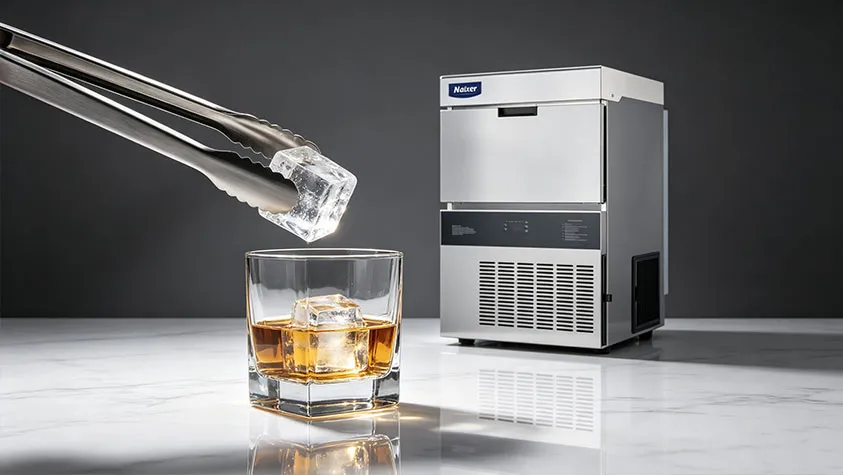
Crescent ice solves this problem through shape. Each cube has a curved half‑moon surface and a flat bottom. When hot espresso or chilled spirits hit the curve, the liquid flows smoothly around the ice rather than crashing into it head‑on. The ice cools the drink rapidly but does not shatter. And because crescent ice is solid all the way through—no hollow center, no trapped air—it melts significantly slower than standard cubes. A drink stays cold and balanced for the 15 or 20 minutes it takes to finish it.
The Naixer TH‑SE150 is the entry‑level crescent ice machine for a serious coffee or cocktail program. It produces up to 150 pounds of crescent ice per day—each piece measuring 30 by 38 by 13 millimeters—with 36 kilograms of built‑in storage, all in a compact undercounter unit that measures 660 by 710 by 960 millimeters. That is enough ice for approximately 400 to 550 iced drinks daily.
Beyond the physics of cooling and dilution, crescent ice also improves bar efficiency. It does not clump in the storage bin, so baristas and bartenders scoop quickly during a rush. It pours without splashing, so the counter stays cleaner and less product is wasted. These small advantages compound over hundreds of drinks into real time savings and fewer headaches.
For a specialty coffee shop or a craft cocktail bar where drink quality is the foundation of the business, the TH‑SE150 is not a luxury. It is the piece of equipment that protects the integrity of every drink that leaves the counter. For more on why crescent ice has become the standard in these settings, the guide on what type of ice do coffee shops use covers the science and the business case.
Best for High‑Volume Bars and Mid‑Size Restaurants: The Naixer BT‑210 and BT‑260
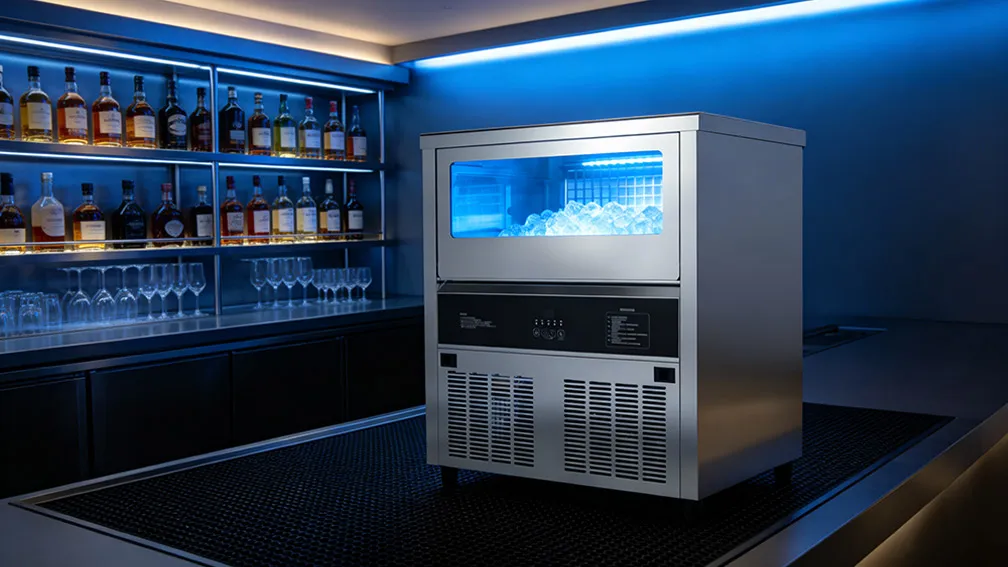
When a restaurant pushes past 80 seats, or a bar regularly goes through 300 pounds of ice on a Friday night, the undercounter ice machine needs to perform at a level that blurs the line with a modular system. These are the venues where running out of ice during a dinner rush is not a hypothetical—it is a recurring Saturday night anxiety.
The Naixer BT‑210 and BT‑260 are built for this territory. The BT‑210 produces 210 pounds of cube ice per day with 51 kilograms of storage. The BT‑260 pushes that to 260 pounds per day with the same 51‑kilogram bin. Both are self‑contained undercounter units. They do not require a separate equipment room or a dedicated floor drain in a back hallway. They fit under a standard counter and deliver ice production that would have required a much larger machine a generation ago.
The 51‑kilogram storage bin is what makes these machines work for high‑volume settings. A bar that burns through 100 pounds of ice between 9 p.m. and 11 p.m. needs a buffer. The machine builds up a reserve during the slower afternoon hours, and that reserve is what carries the well through the peak. Without it, the machine would cycle on and off constantly, and the bartenders would still run out.
For a busy gastro‑pub, a large independent restaurant with a full bar, or a craft beer hall that also serves cocktails, the BT‑210 or BT‑260 is often the machine that finally solves the weekend ice problem. It delivers the output the operation needs without demanding the floor space of a modular system. If the operation eventually grows beyond even this capacity, the next step is a modular machine that separates the ice‑making head from a much larger bin. The article on what is a modular ice machine explains when that transition makes sense.
Four Factors That Determine the Right Machine
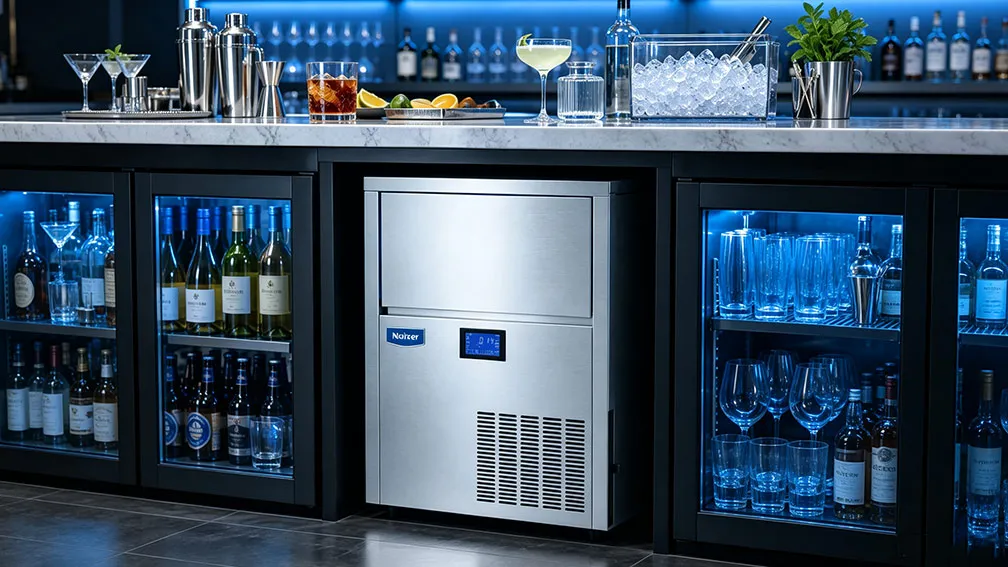
Beyond the specific model recommendations, a few principles apply no matter what kind of business you run.
First, match the ice type to your menu. Cube ice is the universal workhorse. Crescent ice is the upgrade for espresso drinks and spirit‑forward cocktails. The ice your customers taste in their drink is part of the product. Choose accordingly.
Second, size for your busiest shift, not your average. A cafe that sells 200 iced drinks on a Saturday in July needs a machine that can handle 200 iced drinks, even if a Tuesday in January is much slower. Add a 20 to 25 percent buffer on top of that peak demand. For a detailed walkthrough of the math, the guide on how big of an ice machine do i need for a coffee shop covers the formula for cafes, and the guide on how big of an ice machine do i need for a bar does the same for bars.
Third, measure your space before you order. An undercounter machine fits under a standard counter, but it still needs ventilation clearance on all sides—typically five to ten centimeters—and access to a water line, a drain, and a dedicated electrical circuit. The guide on the best under counter ice machine compares the full range of compact commercial ice makers and their installation requirements.
Fourth, invest in a machine that will last. A commercial ice machine should deliver seven to ten years of reliable service. The things that determine whether it reaches the high end of that range are stainless steel construction throughout the ice‑making zone, R290 refrigerant compliance, a warranty that covers the entire machine for at least three years, and a cleaning routine that actually gets done. Naixer machines include a One‑Touch Cleaning function that automates the descaling cycle, removing the biggest barrier to consistent maintenance. For a complete understanding of what makes a machine last, the commercial ice maker lifespan guide explains the key factors.
Need help finding the right ice machine for your business? Naixer Ice has the right machine for you.
Best Undercounter Ice Maker — Quick Answers
What is the best undercounter ice maker for a small business?
It depends on the type of business. For small cafes and neighborhood bars, the Naixer TH‑80B (80 pounds of cube ice per day) is a compact, affordable workhorse. For coffee shops and craft cocktail bars, the TH‑SE150 (150 pounds of crescent ice per day) delivers premium drink quality.
What type of ice is best for a bar or cafe?
Cube ice is the most versatile and cost‑effective. Crescent ice is the gold standard for iced espresso drinks and spirit‑forward cocktails because it cools fast, melts slowly, and resists clumping.
How much ice does my business need per day?
For cafes, plan on roughly half a pound of ice per iced drink. For bars, plan on roughly three pounds per seat. Always add a 20 to 25 percent buffer for peak hours.
Can I use a home undercounter ice maker for my business?
No. Home ice makers are not designed for continuous commercial use, produce lower‑quality ice that melts quickly, and typically lack NSF certification required by health codes.
How long does a commercial undercounter ice maker last?
With proper maintenance—deep cleaning every six months and regular condenser care—a commercial machine should last seven to ten years. Premium units from quality manufacturers can exceed fifteen years.