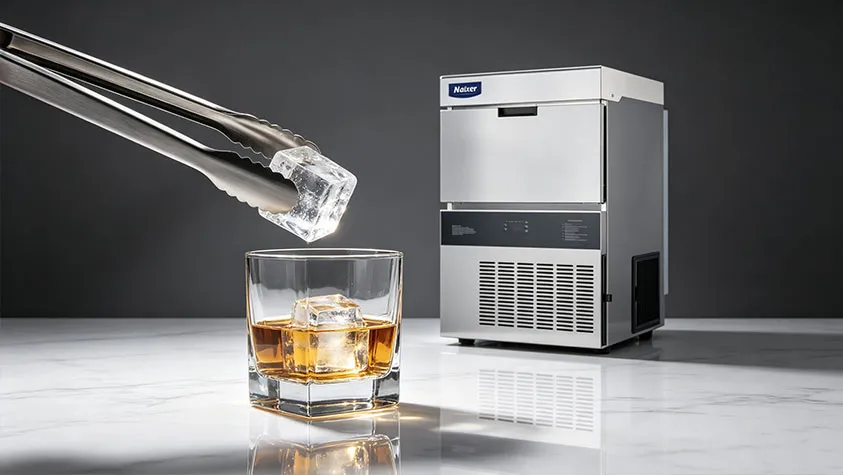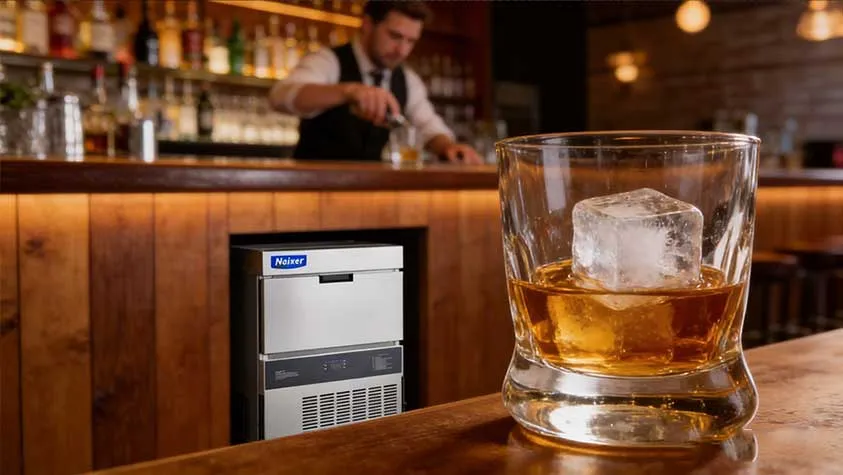

If you’ve ever picked up an iced latte from your local coffee shop and noticed the ice has a distinctive half‑moon shape—or marveled at how slowly it melts compared to the ice from your home freezer—you’ve stumbled onto a question that matters far more than you might think.
For coffee shop owners and operators, the question “What type of ice do coffee shops use?” isn’t just trivia. It’s a silent business decision that directly impacts beverage quality, barista efficiency, and how customers perceive your brand.
In 2026, cold beverages dominate coffee shop menus. Iced lattes, cold brew, refreshers, and blended frappes now represent 60% to 80% of many cafes’ daily ticket counts. Yet ice—the ingredient that touches every single one of those drinks—is still treated as an afterthought in far too many shops.
The reality is nuanced. The type of ice you choose determines:
How quickly hot espresso cools (preserving delicate aromatics)
How much your drink dilutes over the 15–20 minutes a customer nurses it
How efficiently your baristas can move during peak hours
The visual identity of your cold beverage program
This guide draws on that experience to give you a clear, actionable answer to the question: what ice types do coffee shops actually use, and which one belongs in your cafe?
Table of Contents
The Hidden Impact of Ice on Your Coffee Quality and Operations

Before diving into specific ice types, let’s establish why this decision carries so much weight. Ice isn’t just frozen water—it’s an ingredient that shapes the entire cold drink experience.
The Coffee Shop Ice Dilemma
Coffee shops face a unique thermal challenge. When a barista pulls a shot of hot espresso directly over ice, two things need to happen almost simultaneously:
Rapid cooling — to lock in the coffee’s volatile aromatic compounds and prevent bitterness from developing
Slow melting — to keep the drink from becoming watery over the next 15–20 minutes
These two goals are often in direct tension. Ice shapes with high surface area (small cubes, nuggets) cool quickly but melt fast. Ice shapes with low surface area (large cubes) melt slowly but may not cool hot espresso fast enough.
The solution lies in selecting an ice type engineered for this specific thermal dynamic. This is why many specialty coffee shops have moved beyond the standard cube—and why understanding ice geometry matters.
Visual Presentation and Customer Perception
Customers taste with their eyes first. Clear, uniform, well‑shaped ice signals professionalism and attention to detail. Cloudy, irregular, or chipped ice suggests the opposite.
In an era where customers routinely photograph their beverages for social media, ice aesthetics contribute directly to your brand’s visual identity. A distinctive ice shape—particularly crescent ice—can become a recognizable signature of your cafe.
Operational Efficiency
During a Saturday morning rush, your baristas need ice that scoops cleanly and doesn’t clump. Ice types that freeze into solid blocks or produce excessive fines (small ice chips) slow down service and create unnecessary frustration.
The right ice type keeps your bar moving, your team happy, and your customers served quickly.
Use our ice calculator to find the perfect commercial ice maker for your restaurant, bar, or hotel. Learn how to calculate daily ice needs and choose the right machine.
Which Ice Type Works Best for Your Coffee Drinks?
Understanding ice types in theory is useful. Translating that knowledge into actionable decisions for your specific menu is where the real value lies. Let’s map each major cold coffee category to its optimal ice type.
Iced Latte / Iced Americano

Best Choice: Crescent Ice
Why: These drinks involve pouring hot espresso directly over ice. The priority is rapid initial cooling (to preserve aromatics) combined with slow ongoing dilution (to maintain flavor integrity over 15–20 minutes). Crescent ice’s grooved geometry is purpose‑built for this exact thermal scenario.
Alternative: Full Cube Ice
When to Use: If crescent ice equipment isn’t currently feasible, full cube ice provides acceptable performance—just expect slightly slower initial cooling and marginally faster dilution. For cafes planning to upgrade their ice program in the future, starting with cube ice and transitioning to crescent is a common path.
Cold Brew / Iced Coffee (Pre‑Chilled)

Best Choice: Full Cube Ice or Large Cube Ice
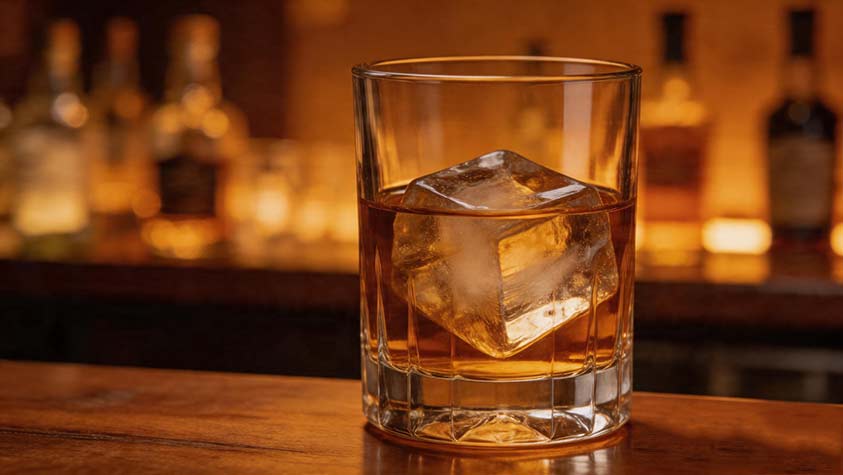
Why: Cold brew is already chilled when served, so the priority shifts entirely to maintaining temperature without dilution over a long drinking period. The densest, slowest‑melting ice available is ideal. For premium cold brew programs, large format cubes (sometimes called “whiskey cubes”) offer an even slower melt rate and a distinctive visual presentation.
Naixer Recommendation: TH Series (Full Cube) or TH‑DF Series (Large Cube, 28×28×32mm or 50×50×50mm)
Blended Frappe / Smoothie

Best Choice: Half Cube Ice or Nugget Ice
Why: Smaller ice pieces are gentler on commercial blender blades and incorporate more smoothly into the final drink. Nugget ice’s porous structure absorbs syrups and flavors exceptionally well, creating a more cohesive blended beverage. Half cube ice offers a middle ground—easier on equipment than full cube, with less dilution than nugget.
Naixer Recommendation: TH Series (Half Cube configuration) or KL Series (Nugget)
Iced Tea / Refreshers / Lemonades
Best Choice: Half Cube Ice
Why: These drinks benefit from rapid cooling, and moderate dilution is either acceptable or even desirable as flavors meld over time. Half cube ice strikes the right balance—cooling faster than full cube while still maintaining structural integrity longer than nugget ice.
Naixer Recommendation: TH Series (Half Cube configuration)
How to Choose the Right Ice Machine for Your Coffee Shop
Selecting the right ice type is only half the equation. You also need a commercial ice machine that reliably produces that ice in the volume your shop demands, fits your available space, and withstands the rigors of daily commercial use.

Start with Your Menu
Review your menu and identify which ice type serves your highest‑volume cold drinks. For most specialty coffee shops, this will be:
Crescent ice — if iced lattes and americanos dominate your cold beverage sales
Full cube ice — if cold brew and iced tea lead your menu
Some cafes benefit from a hybrid approach—using a primary cube or crescent machine for espresso‑based cold drinks, supplemented by a smaller nugget ice maker for blended drinks and specialty offerings.
Don't Guess—Calculate
Use this quick formula to estimate your minimum daily ice production requirement:
(Total Daily Drinks × Cold Drink %) × 0.5 lb × 1.2 = Minimum Daily Ice Production
Example: A cafe selling 300 total drinks per day, with 60% cold beverages:(300 × 0.6) × 0.5 lb × 1.2 = 108 lb/day minimum production
The 1.2 multiplier adds a 20% safety margin for summer peaks, weekend rushes, and future growth.
For a precise, menu‑specific calculation that factors in your exact drink mix, ice type preference, and local climate, try the free Naixer Ice Machine Sizing Calculator.
Use our ice calculator to find the perfect commercial ice maker for your restaurant, bar, or hotel. Learn how to calculate daily ice needs and choose the right machine.
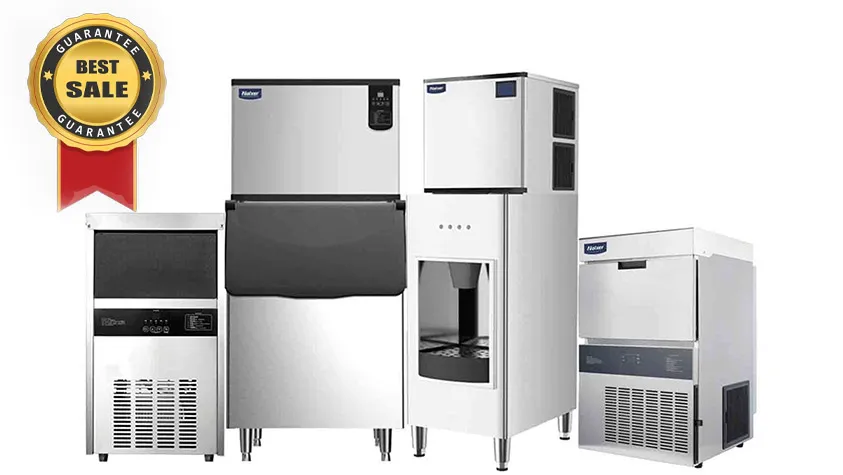
Undercounter vs. Modular
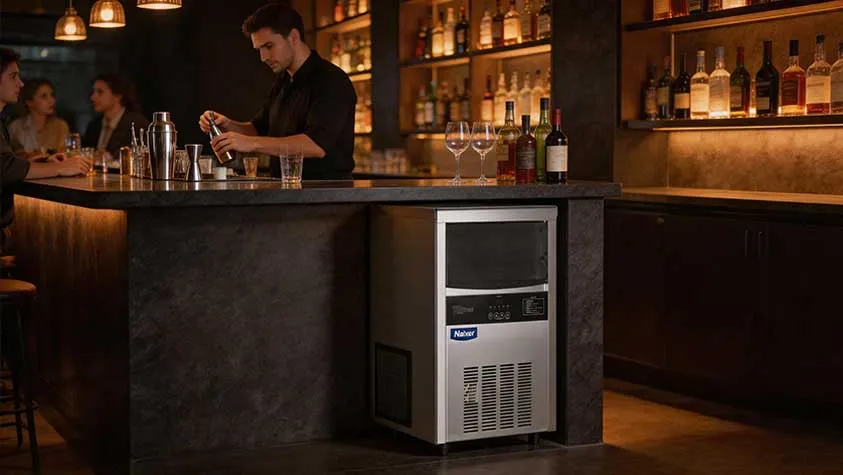
Undercounter Models: Ideal for most independent cafes with limited square footage. These units slide beneath standard counters and keep ice within arm’s reach of your baristas.
| Model | Daily Capacity | Ice Type | Dimensions (W×D×H) |
|---|---|---|---|
| TH‑80B | 80 lb | Full Cube | 425×495×760 mm |
| TH‑150B | 150 lb | Full Cube | 665×710×960 mm |
| BT‑SE120 | 120 lb | Crescent | 680×600×750 mm |
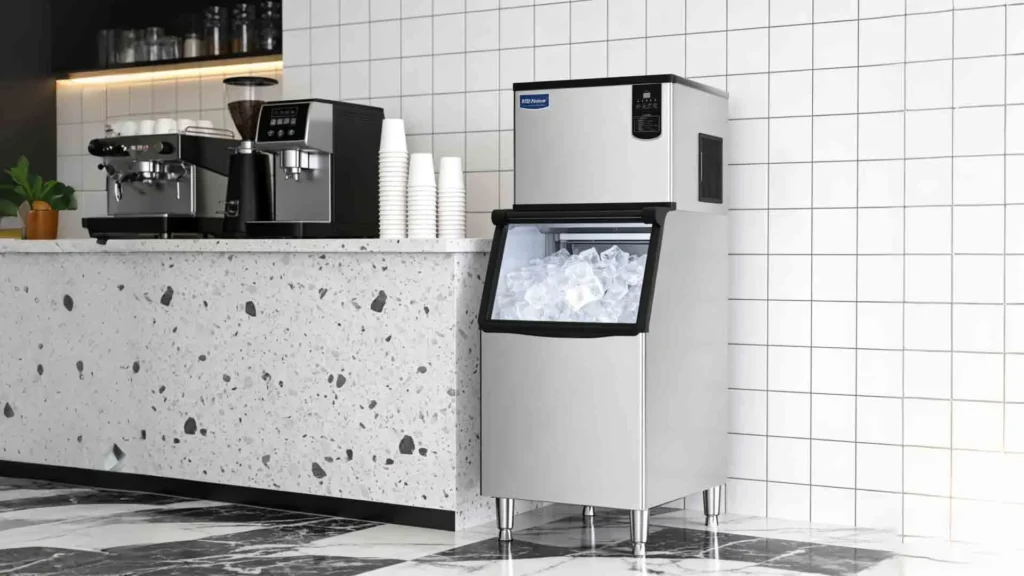
Modular Models: For high‑volume shops producing 500+ lb of ice daily, or locations that need to supply ice to multiple stations. These larger units are typically installed in a back‑of‑house area.
| Model | Daily Capacity | Ice Type | Dimensions (W×D×H) |
|---|---|---|---|
| TH‑500C | 500 lb | Full Cube | 760×820×1700 mm |
| TH‑1000C | 1,000 lb | Full Cube | 760×820×1935 mm |
Commercial‑Grade Matters
Commercial ice machines run continuously in warm, often humid environments. Reliability isn’t a luxury—it’s a requirement. A machine that fails during a summer heat wave doesn’t just cost you repair fees; it costs you lost sales and frustrated customers during your busiest season.
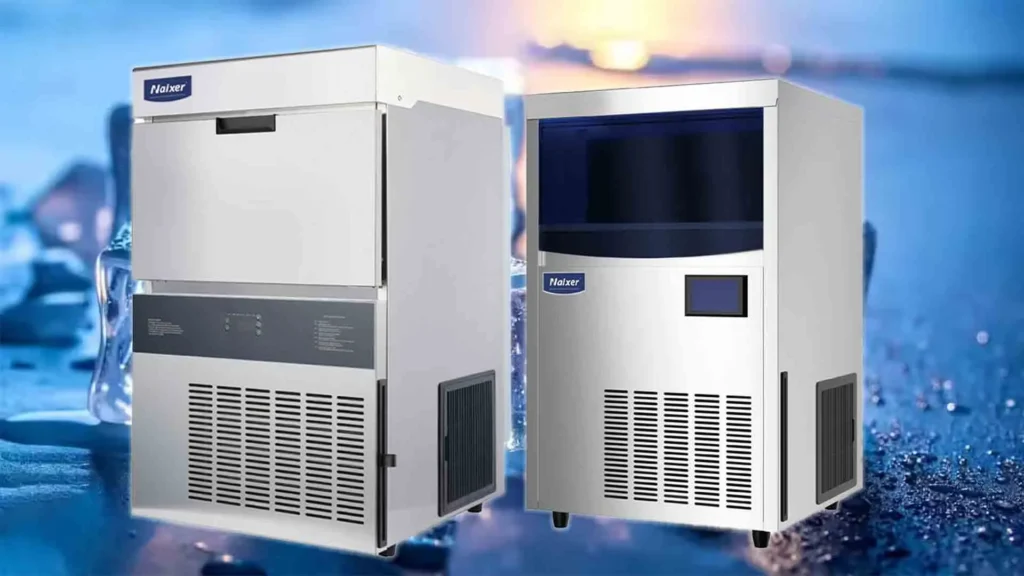
Naixer ice machines are built for this reality:
300+ technical patents and ISO9001‑certified manufacturing processes ensure consistent quality
Industrial‑grade R290 refrigerant delivers energy efficiency and reliable performance in warm kitchen environments
One‑Touch Cleaning functionality makes daily sanitation fast and foolproof
3‑year comprehensive warranty covers core systems and key components
Modular design allows for simple, quick maintenance without specialized tools
Need help finding the right ice machine for your business? Naixer Ice has the right machine for you.
Related Topics for Your Ice Maker Business Research
- How Much Water Does a Commercial Ice Machine Use
- What Size Ice Machine for a Coffee Shop?
- How Much is a Commercial Ice Maker?
- How to Make Clear Ice: The Complete Guide to Commercial Ice Makers for Bars
- Sonic Ice Maker: How It’s Made & Why Businesses Love Nugget Ice
- Commercial Ice Machine for Restaurant: The 2026 Buyer’s Guide by Type & Need
- Air Cooled vs Water Cooled Ice Machine: The 2026 Buyer’s Guide
Coffee Shop Ice Types — Quick Answers
What type of ice do most coffee shops use?
Most coffee shops use full cube ice for its slow melt rate, professional appearance, and universal equipment availability. Specialty coffee shops increasingly prefer crescent ice for iced lattes and americanos due to its superior hot‑over‑ice performance.
Why does coffee shop ice melt slower than home ice?
Commercial ice machines produce denser, harder ice with significantly fewer air bubbles than home freezer ice. Additionally, coffee shops select ice types (full cube, crescent) specifically for their slow melt characteristics.
What ice does Starbucks use?
Starbucks historically used cube ice. Beginning in 2023, the chain began transitioning select locations to nugget ice, citing customer preference for chewable texture. This change continues to generate discussion about dilution in espresso‑based drinks.
Is nugget ice good for iced coffee?
Nugget ice is excellent for blended drinks and flavored soft drinks due to its chewable texture and flavor absorption. However, it melts faster than cube or crescent ice, making it less ideal for iced lattes and americanos where dilution control is critical.
What is crescent ice and why do coffee shops use it?
Crescent ice is a half‑moon shaped ice with a curved groove on one side. Coffee shops use it because the groove increases surface contact with hot espresso for rapid cooling, while the solid body melts slowly to prevent dilution. It’s widely considered the optimal ice for iced latte programs.