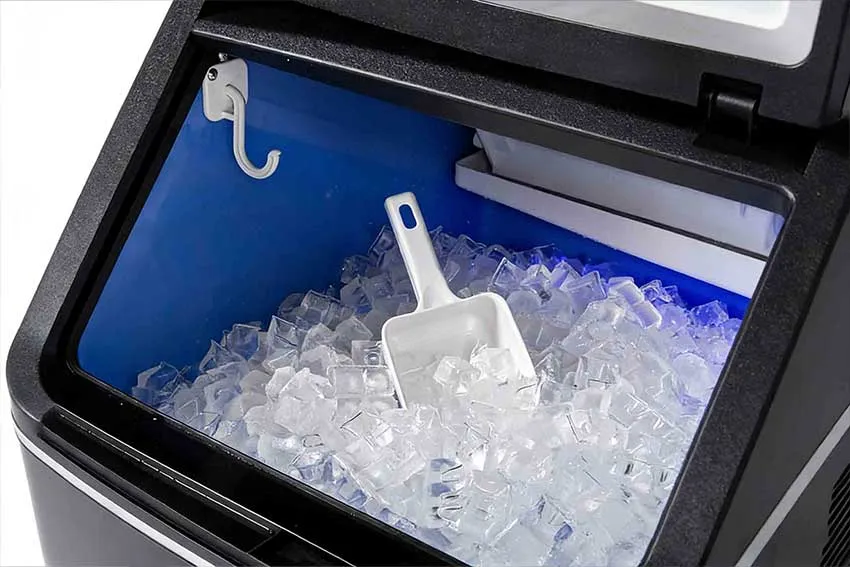
Ice may be the most trusted thing in your drink. It’s crystal clear, freezing cold, and feels about as pure as anything in a kitchen. But “cold” and “clean” are not the same thing — and “frozen” definitely doesn’t mean “sterile.”
So does ice carry germs? Yes — it can. Not because ice grows germs (it doesn’t), but because ice is an excellent delivery vehicle: whatever is in the water it’s made from, inside the machine that produced it, or on the hands and scoops that touched it can end up in your glass, perfectly preserved at -1°C.
The good news? Germ-free ice is completely achievable. It comes down to two things: how ice is made, and how it’s handled. This guide covers both — the science of germs and freezing, the four ways contamination actually happens, what studies found in the real world, how to tell if ice is clean, and the practical playbook that professionals use to keep every cube safe.
In this guide, you will learn:
The Quick Answer: Does Ice Carry Germs?
Yes — ice can carry bacteria and viruses, with an important nuance:
- Germs don’t grow on ice. It’s too cold and offers no nutrients — freezing actually suspends microbial life.
- But freezing doesn’t kill them, either. Many bacteria and viruses survive frozen storage and “wake up” when they thaw — in your glass, on your counter, or in your stomach.
- Ice is a transport vehicle, not a sterilizer. If contaminants enter at any point — water supply, machine, scoop, hands — the ice simply delivers them.
Put simply: ice doesn’t make germs; it carries them. That’s actually good news, because every contamination point can be controlled. A machine with proper filtration, kept on a cleaning schedule, with ice handled by the rules, produces ice that is exactly as safe as it looks.
Can Germs Survive on Ice? What Science Shows
Freezing Is Suspended Animation, Not Sterilization
When the temperature drops below freezing, bacteria don’t die — they go dormant. Their metabolism stops, their membranes stiffen, and they enter a state of suspended animation. Ice crystals forming around them don’t rupture most bacterial cells; if anything, cold preserves them.
Viruses aren’t technically alive to begin with, so “killing them by freezing” doesn’t apply. Many simply stay infectious — a frozen virus behaves like a sample in a laboratory freezer, waiting patiently for a thaw.
That’s why food safety experts treat freezing as storage, not treatment. Frozen contaminated food is thawing contaminated food. And an ice cube made from contaminated water is a contaminated drink — just colder.
The Germs That Actually Matter
Not every microbe survives equally. These are the heavy hitters in frozen and ice contexts:
- Norovirus — extremely freeze-resistant, with an astonishingly low infectious dose. The CDC has documented norovirus outbreaks traced to ice.
- Hepatitis A — a freeze-tolerance champion; it has survived months at frozen temperatures and caused outbreaks via frozen berries.
- E. coli and Salmonella — routinely survive frozen storage; food safety treats them as fully viable after thawing.
- Listeria — survives freezing, and uniquely, it even keeps growing at refrigerator temperatures.
Across all of them, one pattern holds: temperature doesn’t save you — hygiene does.
| Pathogen | Survives Freezing? | Common Sources | What It Can Cause |
|---|---|---|---|
| Norovirus | Yes — highly freeze-resistant | Contaminated water, hands, improper handling | Stomach flu (vomiting, diarrhea) within 12–48 hours |
| Hepatitis A | Yes — survives months frozen | Contaminated water; has caused frozen-berry outbreaks | Liver infection — serious for adults |
| E. coli | Yes | Contaminated water, unclean equipment | Severe diarrhea and cramps; dangerous strains can be life-threatening |
| Salmonella | Yes | Cross-contamination, improperly cleaned machines | Food poisoning within 6 hours to 6 days |
| Listeria | Yes — and still grows at fridge temps | Moist environments, biofilms, processed foods | Flu-like symptoms; serious risk for pregnant women, elderly, and immunocompromised people |
Freezing suspends these pathogens — it does not eliminate them. Hygiene at the source is what keeps ice safe.
How Germs Get Into Ice: 4 Pathways

Ice can’t create contamination out of nothing. Everything starts at one of four points — and each one is fixable.
1. The Water It's Made From
Ice is water — if the water isn’t safe, the ice isn’t either. Municipal supplies are treated and regulated, but problems can enter through aging building pipes, private well water, or filters that were never maintained. Good machines run water through sediment and carbon filtration, reducing contaminants and improving taste — but filters are consumables, not forever. (Here’s how much water — and filtration — goes into commercial ice.)
2. Inside the Machine
The warm, dark, wet corners of an ice machine — water troughs, evaporator areas, hoses, and the storage bin — are ideal real estate for biofilm: a slimy layer of bacteria that builds its own protective shield and is notoriously hard to remove once established. Mold happily joins in. Add an exhausted filter, and you have a machine quietly seeding every batch of ice. (See how to deep clean an ice machine — including how to tackle biofilm and scale.)
3. Handling and Scoops
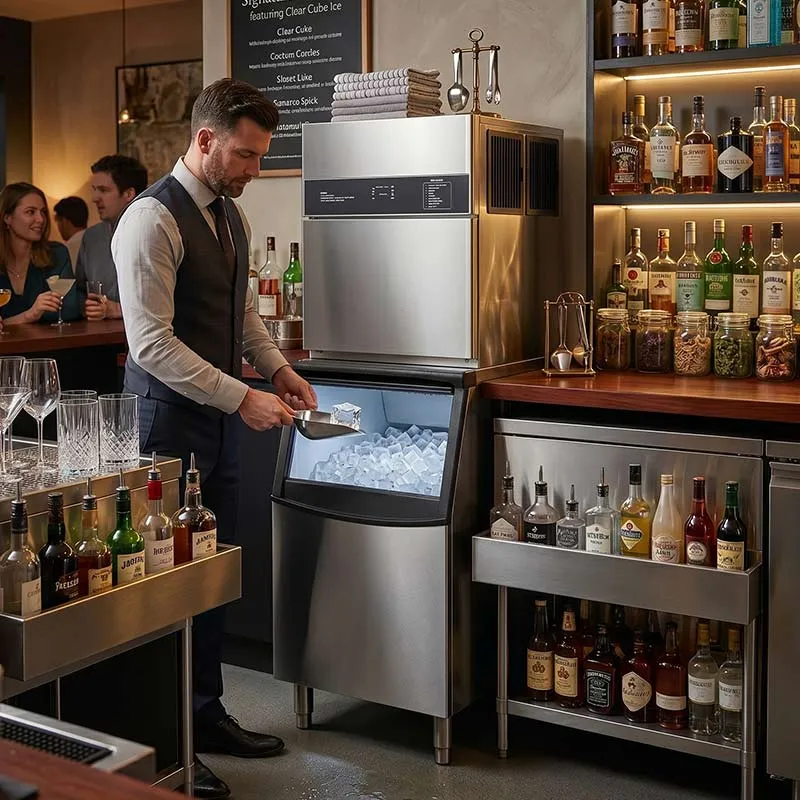
In food service, this is the number one contamination point — and it’s almost always the scoop. A glass used as a scoop carries whatever the outside of the glass touched, and can shatter into the bin. A scoop left handle-down in the ice transfers hand bacteria with every grab. Four rules prevent almost all of it:
- Use a dedicated ice scoop — never glassware, never a cup.
- Touch only the handle.
- Store the scoop in its own clean container outside the bin.
- Wash and sanitize the scoop daily.
4. Storage and Serving
Open bins collect whatever drifts by: dust, droplets, hands. Ice buckets, drink dispensers, and customers’ own containers add more contact points. Keeping bins covered, using sealed dispensers where possible, and cleaning bins weekly closes this pathway.
| Pathway | How Contamination Gets In | How to Prevent It |
|---|---|---|
| 1 Water source | Unsafe water or degraded plumbing feeding the machine | Control Point Use a treated, filtered supply; test well water; keep filters current |
| 2 Inside the machine | Biofilm, slime, and mold build up in warm, dark, wet parts; exhausted filters stop protecting | Control Point Deep clean and sanitize every 6 months; replace filters every 3–6 months |
| 3 Handling & scoops | Hands, glassware, or a dirty scoop touch the ice supply | Control Point Dedicated scoop, handle-only grip, stored outside the bin, washed nightly |
| 4 Storage & serving | Open bins collect dust and droplets; containers and buckets add contact points | Control Point Keep bins covered; prefer sealed dispensing; sanitize bins weekly |
Every pathway is a control point. Break the chain at any one of them and the ice stays clean.
The Headlines vs. What Studies Actually Show
Search “ice germs” and you’ll find eye-catching stories — usually variations on the famous claim that fast-food ice contains more bacteria than toilet water.
Here’s what’s actually behind those headlines. A 2013 study made global news after finding bacteria in ice samples from restaurants and cafés. In 2017, a BBC investigation found coliform bacteria — an indicator of contamination — in ice from several major UK chains. The findings aren’t nothing, but the “toilet water” comparison was engineered for shock, not science.
What the studies actually show is a maintenance story: when machines go uncleaned and ice goes unhandled, bacteria show up. Ice isn’t the culprit. Neglect is.
The most serious case on record shows why this matters in healthcare settings: in 2016, two patients at a Wisconsin hospital died from Legionnaires’ disease linked to contaminated water sources including an ice machine. In hospitals and care homes, water system hygiene is life-safety, not housekeeping.
And in everyday settings, the CDC has documented norovirus outbreaks traced to ice — most often linked to contaminated water or improper handling. The pattern never changes: safe ice is a chain of custody from the water line to the glass, and any broken link shows up in the cube.
Is Ice Safe Where You Buy It?
Ice risk varies by venue mostly because handling varies — and handling is something you can assess in about ten seconds.
| Where | Typical Risk | Why | What Safe Looks Like |
|---|---|---|---|
| Restaurants & bars | Medium | Ice passes through the most hands, scoops, and shared tools | Safe Practice Scoop stored outside the bin; clean bin; no glassware in the well |
| Fast-food & drive-thru | Low–Medium | Fewer touchpoints, but dispensers can be neglected | Safe Practice Clean machine face and chute; no off-odor or buildup |
| Hotels | Medium | Open bins and shared guest scoops on irregular cleaning schedules | Safe Practice Dedicated scoop and container; bin regularly emptied and cleaned |
| Gas stations & convenience stores | Low–Medium | Bagged ice passes through human handling; machines often run unattended | Safe Practice Sealed, intact bags; vending machines with sealed dispensing chutes |
| Supermarket bagged ice | Low | Packed under regulated food facilities; pickup handling still matters | Safe Practice Intact packaging; clean, frost-free display freezer |
| Home freezer | Varies | Freezer odors and aging filters (on plumbed units) | Safe Practice Clean bin, fresh filters, sealed containers between uses |
Handling, not venue type, drives most risk — assess the scoop station and bin, not the brand on the door.
How to know if ice is clean — the 60-second check:
- Smell and taste. Fresh ice is odorless and neutral. If it smells musty, chemical, or like the freezer, the machine needs attention.
- Look at the bin or dispenser. A clean scoop station, a covered bin, no visible slime or dark buildup. Slime is a hard stop.
- Look at the cubes. Clear or slightly cloudy are both fine — cloudiness is usually trapped air, not contamination. What’s not fine: colored specks, debris, or cubes fused into a slimy block.
- Check how it’s dispensed. Ice delivered through a sealed chute (think vending machines and hotel dispensers) has far fewer touchpoints than ice scooped from an open bin.
And if you’re buying bagged ice — at a gas station or supermarket — here’s what to check before you buy.
How Commercial Machines Keep Ice Clean

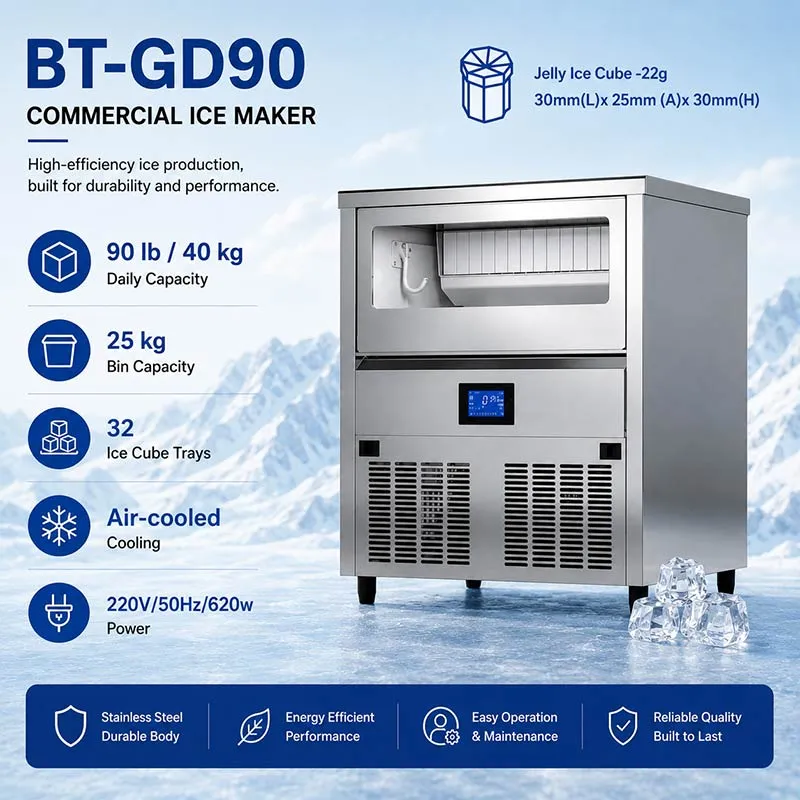
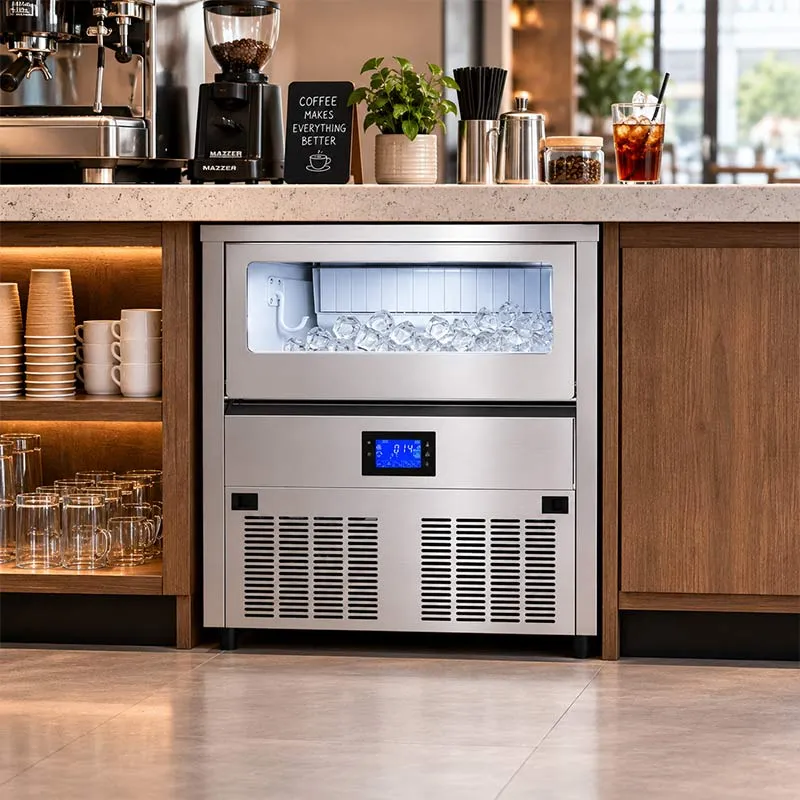
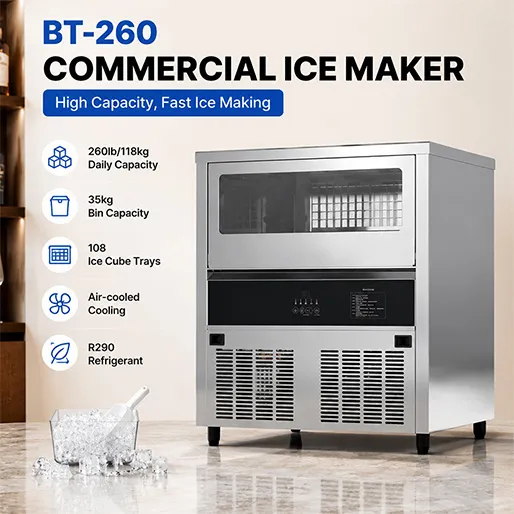
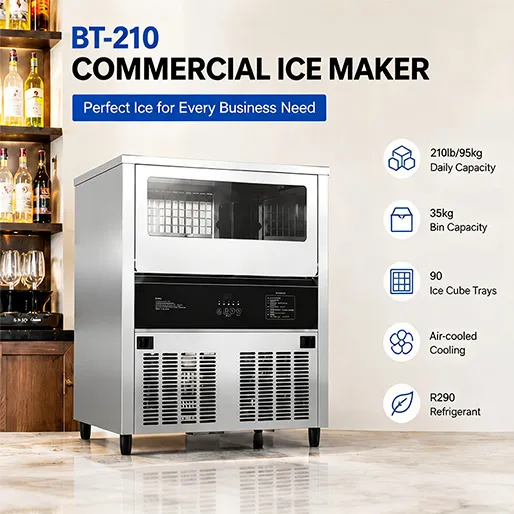
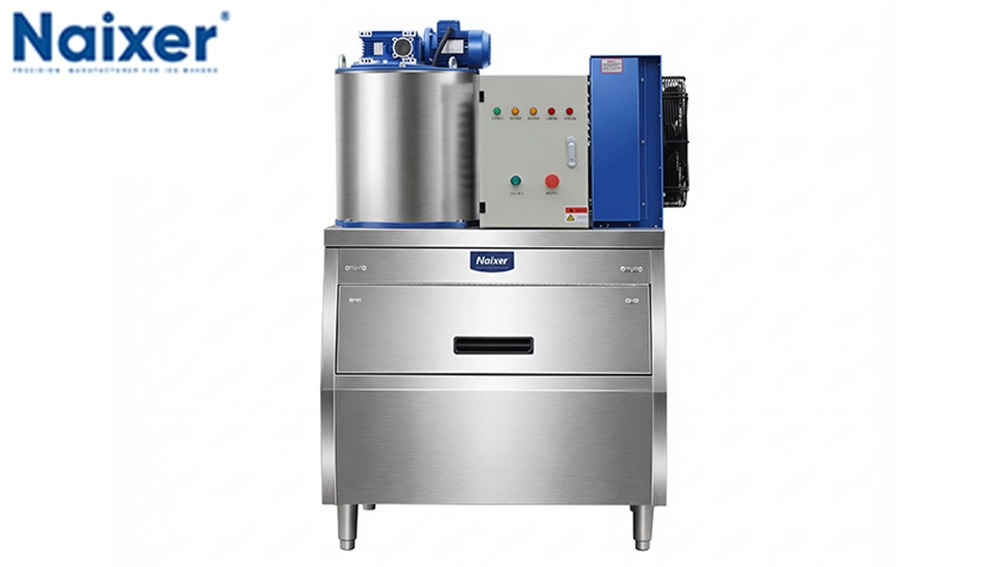
If contamination is a chain-of-custody problem, good equipment shortens the chain. Here’s how commercial machines are engineered for hygiene:
- Filtration built in. Sediment and carbon stages remove particles, chlorine, and off-tastes before water ever reaches the evaporator.
- Smooth, food-grade surfaces. 304 stainless steel and non-porous interiors give biofilm far fewer places to anchor than scratched plastic.
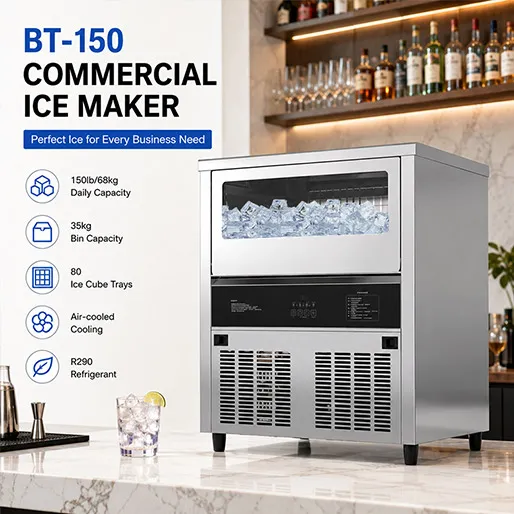
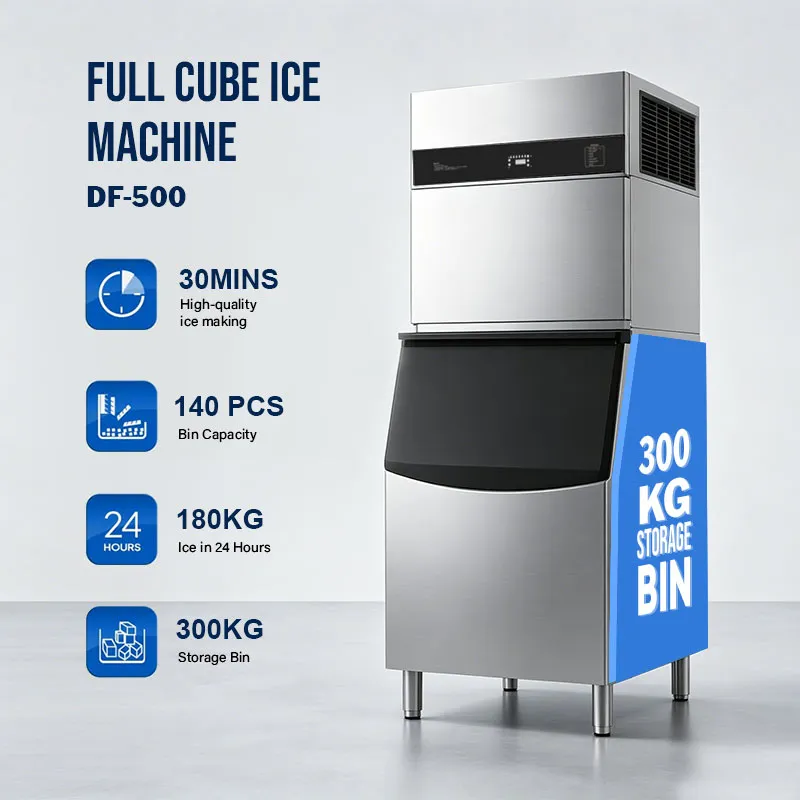
- Self-cleaning cycles. One-Touch systems — standard on self-cleaning machines like the BT-150 — automate descaling and sanitizing, turning the deep clean humans forget into a button press.
- Agitated, insulated bins. Cubes keep moving, so they don’t freeze into a single block where stale ice sits for weeks.
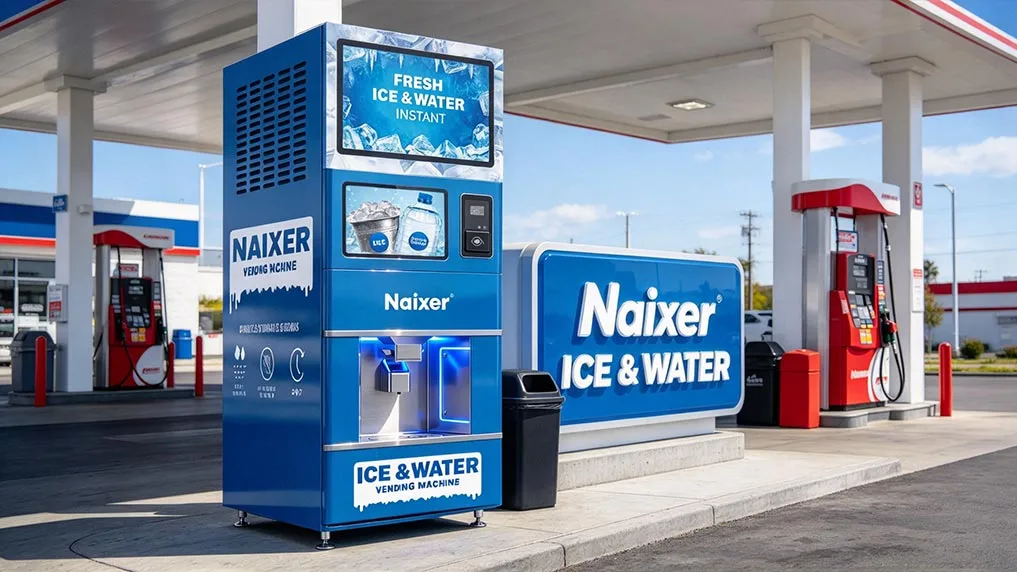
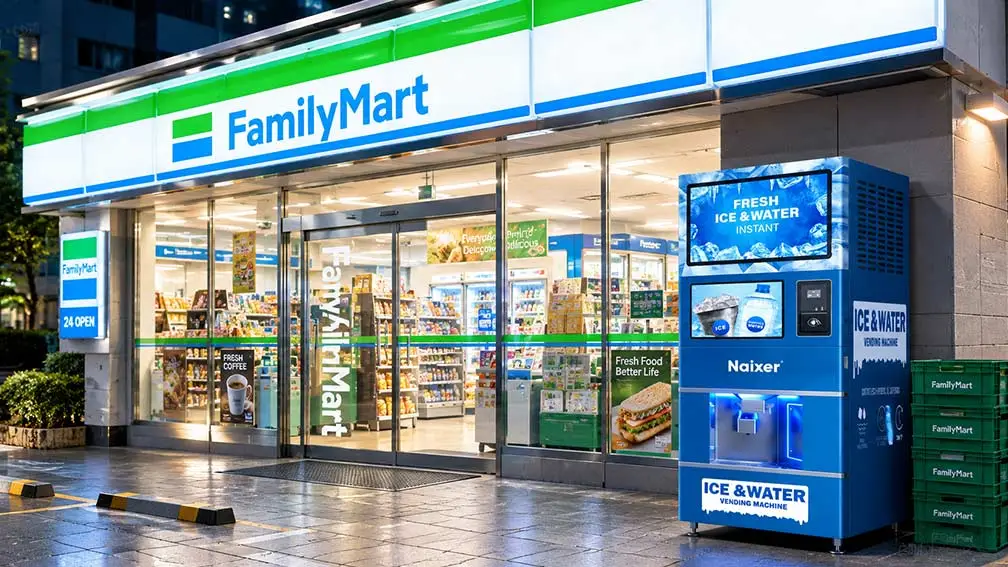
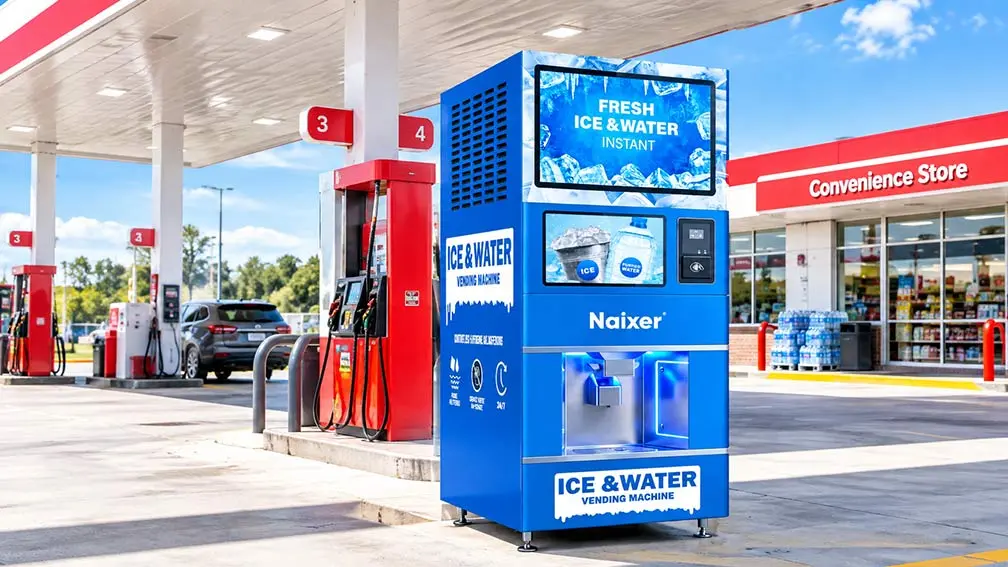
- Sealed dispensing. Ice and water vending machines deliver product through a sealed chute straight to the bag or jug — no scoops, no open bins, no hands. (We covered vending water safety in depth here.)
- Monitoring that reminds you. IoT-connected machines stream filter and temperature alerts to the operator’s phone, so maintenance happens on schedule — not on memory.
That engineering is the difference between ice you hope is safe and ice that’s safe by design. Naixer has been building commercial ice machines since 2010, and every machine ships with a 3-year comprehensive warranty.
The Cleaning and Handling Playbook
Whether you run a restaurant, operate a vending machine, or just fill a bin in your own freezer, the same four moves keep ice safe.
The scoop rules — post these by the bin:
- Right tool only — no glass, no cups.
- Hands on the handle only.
- Store the scoop outside the bin, in its own clean container.
- Wash and sanitize it nightly.
Cleaning rhythm. Wipe high-touch surfaces daily, give the bin a sanitizing wipe-down weekly, and book a professional deep clean every six months. Use a food-contact-rated sanitizer — an EPA-registered product or diluted bleach mixed to label directions — and follow its wet contact time and rinse instructions exactly.
Filters. A filter past its change date is worse than no filter: it traps contaminants and shelters growth. Replace cartridges every 3–6 months, sooner in hard-water or high-volume operations.
Watch for the signals. Slime, musty odors, or debris in the cubes are “clean now, not later” signals.
| Task | Frequency | Handled By |
|---|---|---|
| Wash & sanitize the ice scoop | Daily / each shift | Staff |
| Wipe exterior & high-touch surfaces | Daily | Staff |
| Sanitize the bin interior (light clean) | Weekly | Staff |
| Ice quality check — odor, debris, slime | Weekly / each bin opening | Staff |
| Replace water filter cartridges | Every 3–6 months | Staff / technician |
| Deep clean, descale, sanitize & inspection | Every 6 months | Professional technician |
Follow the machine manufacturer's schedule and your local food-safety requirements — whichever is stricter.
Frequently Asked Questions
Can you get germs from ice?
Yes — if the ice was made from unsafe water or handled poorly. Freezing doesn’t kill bacteria and viruses, so contamination present during production or handling rides straight into your drink. Well-made, well-maintained ice is not a meaningful germ source.
Can viruses survive in ice?
Yes. Norovirus and hepatitis A are notably resilient to freezing — hepatitis A has survived months at frozen temperatures. That’s why ice safety focuses on preventing contamination in the first place, rather than relying on cold to eliminate it.
Is it true that ice kills germs?
No — it’s one of the most persistent myths in food safety. Cold suspends microbial activity, but it doesn’t kill most bacteria or viruses. Only heat, proper sanitizers, and filtration-based removal reliably eliminate them.
How do I know if ice is clean?
Do the 60-second check: fresh ice is odorless and neutral-tasting; the bin area shows no slime, mold, or dark buildup; cubes contain no colored specks or debris; and sealed-dispenser ice generally beats open scooped bins for hygiene. Cloudiness alone is usually trapped air — not a safety warning.
Does freezing kill bacteria?
No. Most foodborne bacteria — including E. coli, Salmonella, and Listeria — survive frozen storage, and Listeria even keeps growing at refrigerator temperatures. Freezing is a pause button, not a kill switch: if the water or food was contaminated before freezing, it’s still contaminated after thawing.
Is ice from restaurants and fast-food chains safe?
Generally yes — in venues that follow maintenance and handling rules. Studies that found bacteria in chain-restaurant ice were really documenting failures of cleaning and handling, not an inherent problem with restaurant ice. Look for clean machines, sealed dispensers or proper scoop stations, and good overall hygiene.
How often should an ice machine be cleaned?
Light cleaning of high-touch areas and the scoop is daily; the bin needs a sanitizing clean weekly; the machine needs a professional deep clean and sanitize about every six months — plus filter changes every three to six months and an annual inspection.
Why does ice sometimes smell or taste strange?
Almost always the machine. Common causes: biofilm or mold in the water path, filters that are past due, or ice absorbing odors in the bin (near fish, chemicals, or a dirty freezer). If ice smells off, the machine is telling you it needs cleaning — don’t serve it until it gets one.