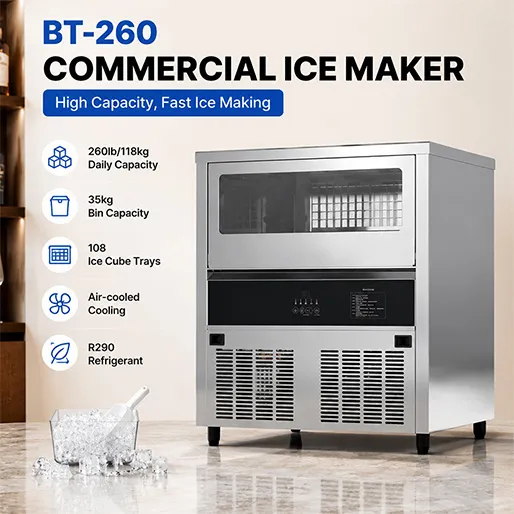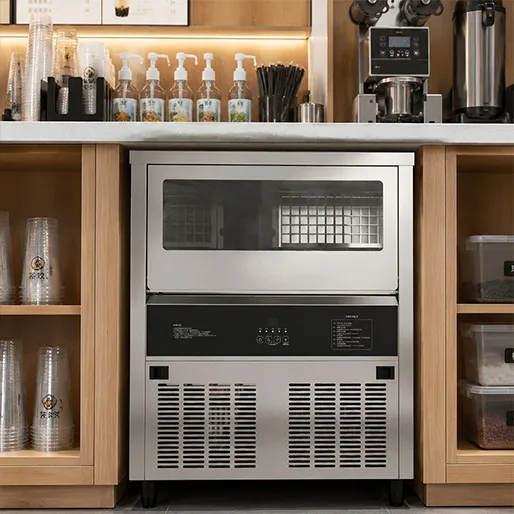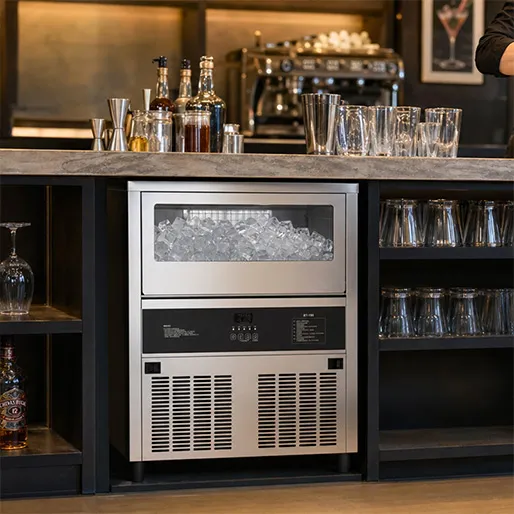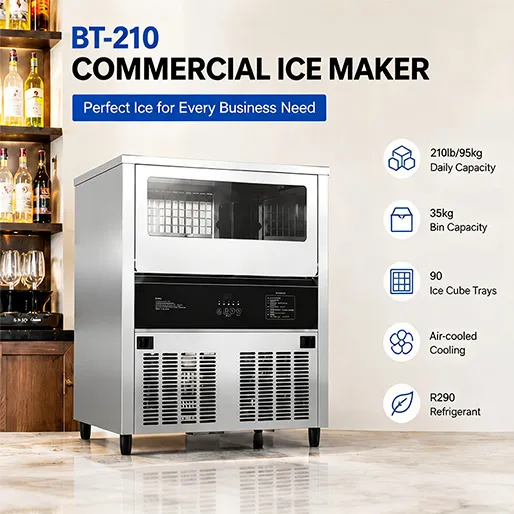
How to Clean a Naixer Ice Machine: Your Complete Commercial Maintenance Guide
Any commercial kitchen appliance that works as hard as your ice machine needs to be cleaned—and cleaned well. That’s not just about passing a health inspection. It’s about the taste of the ice, the life of the machine, and the consistency of the cubes that land in every glass.
Whether you’re running a busy restaurant kitchen, a hotel bar, or a convenience store that moves bagged ice all day, this guide walks you through exactly how to clean a Naixer ice machine, step by step, using the built‑in features that make the job simpler than you might expect.
To clean a Naixer ice machine, start by unplugging the unit and removing all ice. Run a nickel-safe ice machine cleaner through the system using the built-in cleaning mode on the LCD display—let it circulate for about 20–25 minutes to dissolve mineral scale. Rinse thoroughly with clean water at least three times to remove all chemical residue. Then sanitize all food-contact surfaces with a food-grade sanitizer and allow it to air-dry. Clean the air-cooled condenser fins every three months using a soft brush. Deep-clean and sanitize the entire system at least every six months, or quarterly if you have hard water or heavy usage. Never use vinegar, abrasive cleaners, or water jets—they can damage the evaporator and internal components.
Table of Contents
Use our ice calculator to find the perfect commercial ice maker for your restaurant, bar, or hotel. Learn how to calculate daily ice needs and choose the right machine.
1. Why Cleaning Your Naixer Ice Machine Isn’t Optional
During normal operation, the minerals naturally present in your water supply gradually settle on the machine’s internal surfaces. This mineral scale builds up on the evaporator plates, restricts water flow through distribution tubes, and insulates the very parts that need to transfer heat efficiently. Left unchecked, that buildup forces the compressor to run longer and hotter, cuts daily ice production, and eventually triggers fault codes that shut the machine down entirely.
Regular cleaning ice machine maintenance does four things for your Naixer unit:
Protects ice quality and food safety. The FDA classifies ice as food, and contaminated ice can lead to health inspection violations, fines, and reputational damage. Clean machines produce clear, odor‑free, great‑tasting ice.
Extends the life of your equipment. Mineral scale and slime buildup wear down pumps, clog distribution holes, and strain the compressor and gearbox. Routine descaling and sanitizing dramatically reduces wear on critical components.
Prevents costly emergency repairs. A proper cleaning might take a couple of hours and cost a few hundred dollars in labor. Letting scale damage reach the evaporator plate can cost thousands in replacement parts.
Keeps production capacity where it should be. A dirty machine makes less ice. During peak dinner service or a summer heatwave, that shortfall translates directly into lost sales.
2. How Often Should You Clean? Your Naixer Maintenance Schedule
Naixer recommends a thorough descaling and sanitizing cycle every 6 months under normal operating conditions. This aligns with the industry standard—cleaning and sanitizing should be performed at least every six months, more often if local water conditions dictate.
Residential ice machine users should follow the same principle: cleaning about every six months will lengthen the life of the unit.For a commercial machine, the stakes are even higher.
Some water conditions will dictate even more frequent cleaning of the ice-making section. If your establishment has high carpet areas or is near a cooking line or in a humid environment, more frequent cleaning may be necessary.
More frequent cleaning may also be necessary in these situations:
Hard water areas. High mineral content means faster scale buildup. If you’re in a hard water region, consider cleaning every 3–4 months.
Heavy usage. If your TH‑80B runs near its 80 lb/day capacity continuously, clean quarterly.
Visible buildup. White, chalky deposits on the evaporator or water trough are a sign that descaling is overdue.
Unusual taste or odor. Any off-flavor in your ice is an immediate red flag. Never serve ice from a machine that hasn’t been properly maintained.
Reduced ice production. If the machine is producing noticeably less ice than usual, scale may be the culprit. Minerals in water can accumulate and form scale, which affects the machine’s performance and the quality of the ice produced.
Never keep anything in the ice storage bin that isn’t ice. Objects like wine or beer bottles are not only unsanitary, but labels can slip off and plug up the drain.
3. How to Clean a Naixer Ice Machine: The Step‑by‑Step Deep Cleaning Guide
Naixer Cube Ice Series TH80B Ice Machine Cleaning Video
A proper deep clean of a cleaning ice machine happens in four stages: preparation, descaling, sanitizing, and verification. Set aside roughly 90 minutes the first time you perform this, and read all steps before starting so you can move through the process without stopping to reference back.
Step 1: Prep the Machine
Turn the machine off and unplug it. Turn off the water supply. Remove every cube from the storage bin and discard it—don’t save “old ice” in a freezer, as it may carry scale particles or bacteria from the bin. Remove all accessible internal components (ice scoop, water distribution tube or sprinkler arm, water trough, and any removable baffles or curtains). Wash these parts in a separate basin with warm water and mild food‑safe detergent to remove loose soil, slime, and residue. Rinse thoroughly and set aside to air‑dry in a clean area.
Step 2: Descaling the Water System (Use the Built‑in Cleaning Mode)
Naixer ice machines include a dedicated cleaning mode designed to simplify routine maintenance. Here’s how to activate it:
Ensure the machine is in the shutdown state (display shows “OFF”).
Press the Cleaning/Setting button on the touch panel once.
The machine enters cleaning mode, circulating water without initiating a freeze cycle. The digital display confirms the mode change.
If your Naixer model does not include the one‑touch clean function, follow this manual procedure:
Mix nickel‑safe ice machine cleaner according to the label directions. A typical ratio is 3–5 fluid ounces per gallon of warm water.
Pour the diluted solution into the water sump.
Restore power and let the machine run a wash cycle, circulating the cleaning solution through the distribution system, over the evaporator, and through the sump for approximately 25–30 minutes.
During the cycle, the nickel‑safe cleaner dissolves calcium, lime scale, and mineral deposits from the evaporator plates, water distribution tubes, weirs, and sump walls. For stubborn deposits, use the nylon brush to gently agitate visible scale while the solution circulates—never press hard enough to score or scratch the evaporator surface. Do not extend the circulating time beyond the cleaner manufacturer’s recommendation, as overexposure can damage internal seals.
Step 3: Thorough Rinse
Once the descaling cycle finishes, drain the solution completely. Refill the sump with fresh clean water and run a rinse cycle. Repeat this rinse at least three times, or until no trace of cleaning chemical remains. Residual cleaner left in the system will affect the taste and safety of the next ice batch. Rinse all removed parts equally thoroughly under running water.
Step 4: Sanitize
Cleaning removes scale and soil; sanitizing kills microorganisms. These are separate steps and both are required. Prepare a food‑grade sanitizer solution according to label instructions (most are designed as no‑rinse when diluted correctly, but always check your specific product’s label). Apply the sanitizer solution to all interior food‑contact surfaces: inside the bin, evaporator surface, water trough, curtains, and baffles. Allow the recommended contact time (typically 2–5 minutes depending on concentration). Drain any excess sanitizer.
Step 5: Reassemble and Discard First Batches
Reinstall all cleaned and dried components. Open the water supply valve, plug the machine back in, and power it on. Run one complete ice‑making cycle, then discard the first two batches of ice. This ensures any residual cleaner or sanitizer that may have been trapped in the water circuit is fully flushed from the system before ice reaches your customers.
Step 6: Post‑Cleaning Verification
After discarding the first two batches, check the ice from the third production cycle:
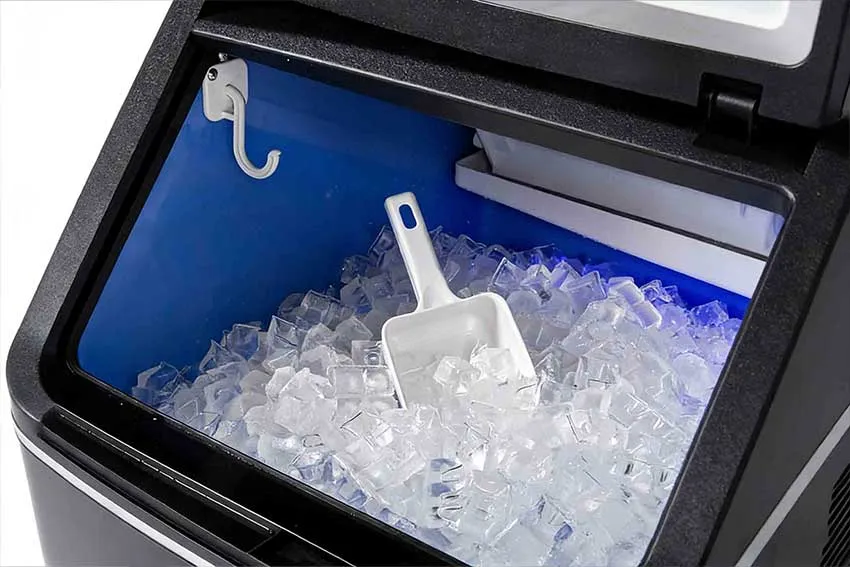
Cubes should be crystal‑clear with no cloudy centers.
No chemical odor or off‑taste (taste one cube directly).
Production speed has returned to normal. If the machine seems slow, check that the water supply pressure meets the required 130–550 kPa range and that ambient temperature has not exceeded 38°C.
Frequently Asked Questions
Q: How do you clean a commercial ice machine that doesn’t have a clean cycle?
A: Turn the machine off, unplug it, and remove all ice. Mix a nickel‑safe ice machine cleaner according to label directions and pour the solution into the water sump. Restore power and let the machine run a wash cycle (without freezing) for 25–30 minutes. Drain the solution, flush the system with fresh water at least three times, then sanitize all food‑contact surfaces with a food‑grade sanitizer. Reassemble, run a full ice cycle, and discard the first two batches of ice.
Q: How do I know if my ice machine needs cleaning?
A: Three clear signs your machine needs a cleaning soon: (1) ice cubes appear cloudy, soft, or incompletely formed; (2) ice has an off‑taste or unusual odor; (3) the machine is running but producing noticeably less ice than usual. Also, if your Naixer display shows an E6 or E7 error code, the compressor is running too hot due to restricted airflow or cooling water flow—often caused by dirty condenser fins.
Q: What’s a “nickel‑safe” ice machine cleaner, and why does it matter?
A: A nickel‑safe cleaner is specifically formulated for ice machines with nickel‑plated or tin‑plated evaporators. Standard delimers and acidic descalers will chemically strip the protective nickel coating from the evaporator plate, permanently damaging the surface and leading to costly evaporator replacement. The Naixer user manual explicitly requires nickel‑safe cleaner for all descaling procedures. Using anything else will void the warranty.
Q: Can I use vinegar or bleach to clean my ice machine?
A: No. While diluted white vinegar can work as a mild descaler for light calcium deposits, it is not effective against the heavy mineral scale found in commercial ice machines and will not sanitize properly. Bleach is corrosive to stainless steel and plastic components, leaves toxic residues in food‑contact zones, and any residual bleach will contaminate ice with chemical odor and taste. Use only commercial‑grade nickel‑safe cleaner and food‑grade sanitizer formulated specifically for ice machines.
Q: How often should I replace the water filter?
A: Most standard water filters should be replaced every six months. Heavy‑use environments or locations with particularly hard water may require replacement every three months. A clogged or exhausted water filter allows more minerals into the machine, which accelerates scale buildup and forces more frequent deep cleanings. Check the filter monthly for discoloration and replace it immediately if you notice reduced water flow or visible sediment in the filter housing.
Q: What’s the difference between cleaning, descaling, and sanitizing?
A: These are three distinct steps and all three are required for proper maintenance. Cleaning removes loose soil, slime, and residue from surfaces using detergent and mechanical action (wiping, brushing). Descaling uses an acidic nickel‑safe solution to dissolve hardened mineral scale from the evaporator, water lines, and sump. Sanitizing applies a food‑grade chemical agent that kills bacteria, mold, and other microorganisms left behind after cleaning and descaling. A common maintenance mistake is descaling without sanitizing—the mineral scale is gone, but the microbial contamination remains.