Are Ice Water Vending Machines Safe for Drinking Water?
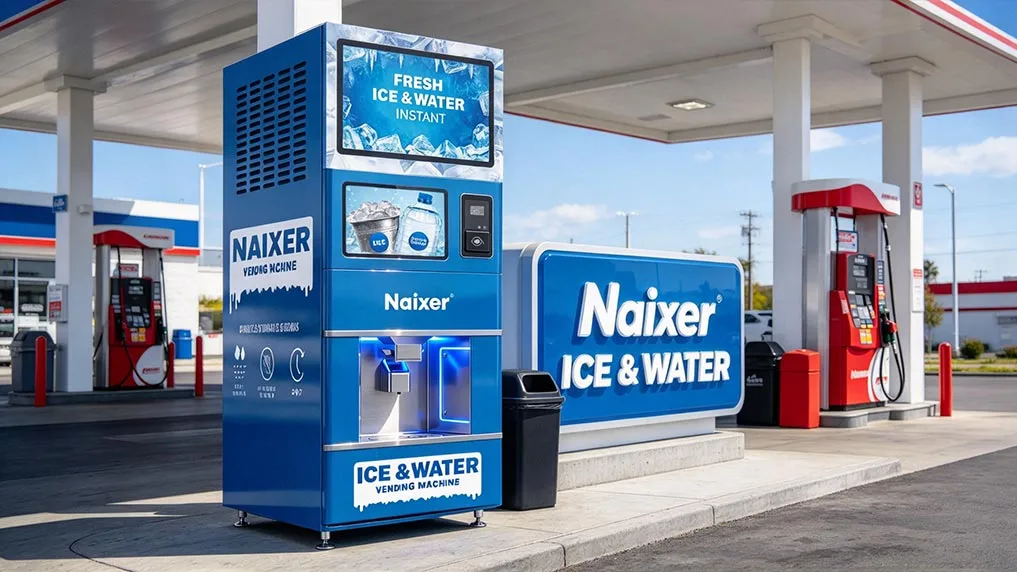
Every day, millions of people pull up to an ice water vending machine, fill a jug or grab a bag of ice, and never give it a second thought. That trust is the entire business model — and it’s earned by engineering, not luck.
So when someone asks, “Are ice water vending machines safe for drinking water?” the honest answer is: yes — when the machine is built to purify, sealed to protect, and maintained on schedule. The interesting part is what those three things actually mean. This guide breaks down the purification stack inside a modern machine, the rules and certifications that keep operators honest, the risks that appear when maintenance slips, and the safety checklist every operator should follow.
In this guide, you will learn:
The Quick Answer: Are Ice Water Vending Machines Safe?
Yes. A properly built and maintained ice water vending machine dispenses water that meets — and often exceeds — the quality of the municipal water it starts from. Three things make that possible:
- A regulated starting point. Vended water begins as public water supply, already treated and monitored under the EPA’s Safe Drinking Water Act.
- Multi-stage purification that removes particles, chlorine, dissolved solids, and microorganisms before anything is dispensed.
- A sealed path from tank to customer — treated water never touches open air or human hands on its way out.
The catch: like any water system, a machine is only as safe as its maintenance. Skip filter changes, ignore the UV lamp, never sanitize — and any dispenser can become a problem. The sections below show exactly how modern machines and responsible operators prevent that.
Here’s how vended water stacks up against the two alternatives everyone already knows:
| Factor | Ice & Water Vending | Bottled Water | Tap Water |
|---|---|---|---|
| Cost per gallon | $0.25–$1.00 | $1.50–$10+ | ≈ $0.004 |
| Treatment level | Multi-stage: sediment, carbon, RO, UV/ozone, sealed storage | Varies by brand; often single-pass filtration | Municipal treatment to EPA standards |
| Testing & oversight | State/local permits, routine testing, NSF-listed components | FDA bottled-water rules plus brand QC | EPA and state utility monitoring |
| Convenience | 24/7 self-serve; bring your own container | Buy, carry, and store | Unlimited at home |
| Environmental impact | Minimal — reusable containers | High — single-use plastic | Lowest |
Per-gallon figures reflect typical U.S. retail pricing in 2026. Bottled-water cost shown as per-gallon equivalent.
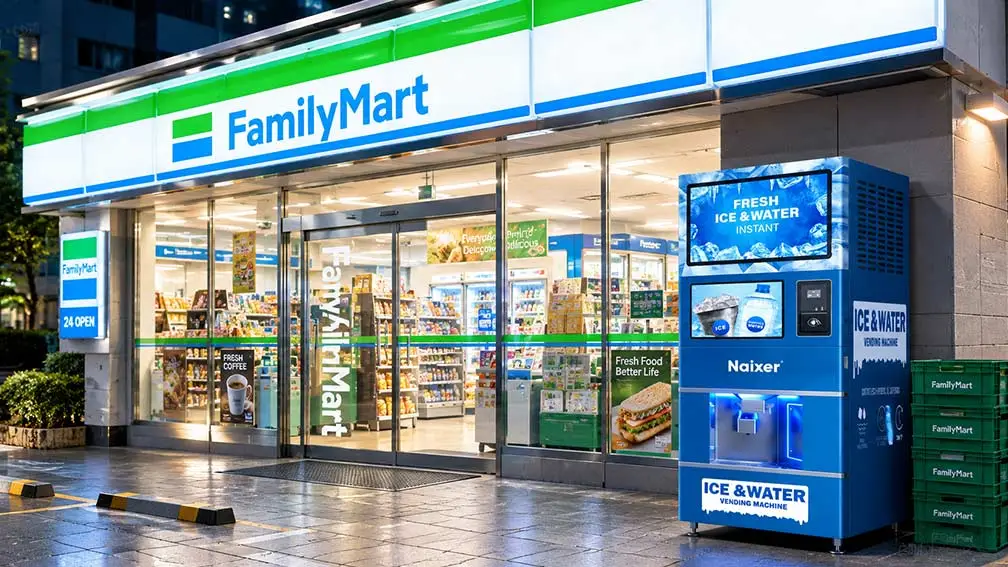
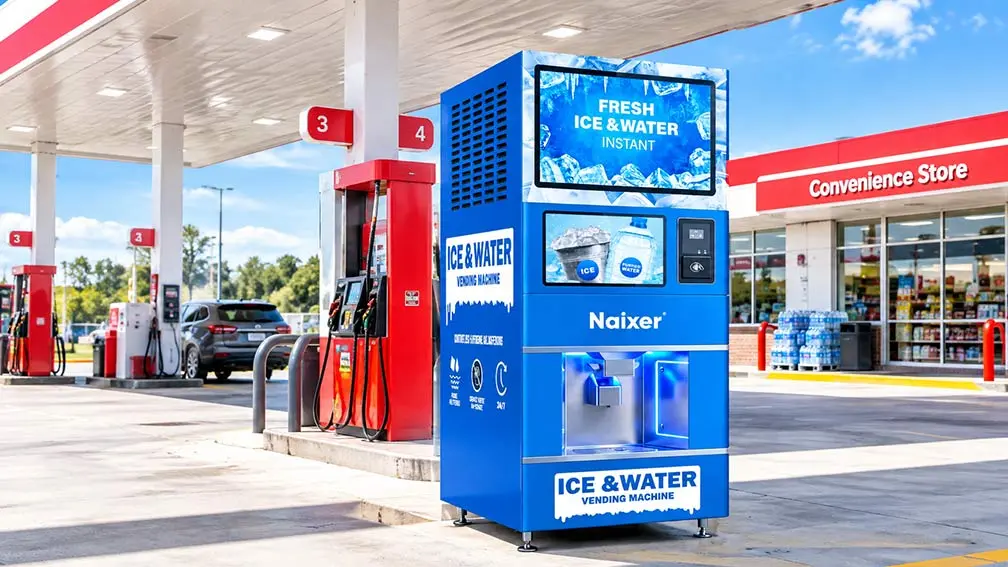
That combination — purification, price, and 24/7 access — is why ice and water vending keeps expanding outside gas stations, hotels, apartment complexes, and marinas.
How Ice Water Vending Machines Purify Water: The 5-Stage Stack

Ice water vending machines are self-service units that produce bagged ice and dispense chilled drinking water from a regulated water supply. Not every unit uses every stage, but a fully equipped commercial machine stacks up to five layers of protection. Here’s what each one does.
Stage 1 — Sediment Filtration
Water first passes through a mechanical filter that traps sand, rust, and physical particles. Unglamorous but essential: clean water entering the next stage means carbon blocks last longer and valves downstream don’t clog.
Stage 2 — Carbon Filtration
Activated carbon adsorbs chlorine, odors, and a range of volatile organic compounds. This is the stage your taste buds notice first — it’s what separates “treated water” from “genuinely fresh water.” It also protects the machinery: removing chlorine before a reverse-osmosis membrane extends that membrane’s life dramatically.
Stage 3 — Reverse Osmosis (or Scale Reduction)
This is the depth stage. A reverse-osmosis (RO) membrane forces water against a semi-permeable barrier, stripping out the vast majority of dissolved solids — heavy metals, salts, and contaminants smaller filters can’t catch. Some machines pair RO with a scale-reduction stage that stops calcium and magnesium from forming the rock-hard deposit that destroys evaporators. If a machine doesn’t carry RO, scale reduction is the minimum for protecting both water quality and equipment.
Stage 4 — UV Sterilization & Ozone
After filtration, water passes a UV chamber, where ultraviolet light at 254 nm destroys the DNA of bacteria and viruses. Many commercial machines also inject ozone, which prevents biofilm — the slimy bacterial layer that can form in storage tanks and lines. Ozone leaves no chemical residue and simply decays back to oxygen.
Stage 5 — Sealed Storage & Dispensing
Treatment is worthless if re-contamination happens afterward. Well-designed machines store water in food-grade stainless steel and dispense through a sealed chute or spout — no open reservoir, no scoops, no hand contact. The customer’s container touches nothing but the water.
| Stage | What It Removes | Why It Matters |
|---|---|---|
| 1 Sediment filtration | Sand, rust, physical particles | Protects downstream filters and valves from clogging |
| 2 Carbon filtration | Chlorine, odors, some VOCs | Better taste; chlorine removal extends membrane life |
| 3 Reverse osmosis / scale reduction | Dissolved solids, heavy metals, calcium, magnesium | Removes what smaller filters can't; prevents scale damage |
| 4 UV sterilization & ozone | Bacteria, viruses, biofilm-forming microorganisms | Disinfection immediately before ice and water are made |
| 5 Sealed storage & dispensing | Re-contamination after treatment | Treated water stays treated until it's in the customer's container |
Configurations vary by model — RO is the deepest stage available; scale reduction is the practical minimum for machine protection.
What Makes Vended Water Safe: Rules, Permits & Certifications
Safety isn’t just engineering — it’s oversight. Four layers of rules apply to ice and water vending machines in the United States:
It starts with the source. Vended water comes from municipal supplies regulated under the EPA’s Safe Drinking Water Act, which caps contaminant levels and requires utilities to test continuously.
Local health departments add a second layer. Most states and counties require operators to hold a permit and pass periodic water testing — California’s vending machine inspection program, run by the state Department of Public Health, is a well-documented example. Inspectors can shut a machine down for failed tests, which is what turns “trust us” into “check us.”
Third-party certification backs the hardware. Filtration components are tested to NSF/ANSI standards — 42 for taste and odor, 53 for health-related contaminants, 58 for reverse-osmosis systems. Whole machines can earn NAMA certification against FDA public-health requirements, verified by third-party testing rather than self-declared labels.
And the materials matter. Pipes, tanks, and fittings that contact drinking water must meet lead-free standards. Independent studies from consumer groups and universities have flagged lead and contaminant issues in a small number of vending units over the years — which is exactly why material rules and routine testing now exist.
Could Anything Go Wrong? The Real Risks — and How Machines Prevent Them

Honest answer: yes, risks exist — but they’re known, specific, and manageable. Here’s the full list.
Bacteria and Biofilm
Can bacteria grow in a water dispenser? In a neglected one, yes — standing water, warmth, and organic residue are all bacteria need. That’s why properly equipped machines run UV sterilization on every dispense, inject ozone to inhibit biofilm, and sanitize tanks and lines on a set schedule (our step-by-step cleaning guide covers the routine). The risk isn’t the technology; it’s maintenance that never happens. Automated cleaning cycles and remote monitoring close that gap.
Filter Neglect
Every filter has a lifespan. An exhausted carbon cartridge stops adsorbing — or becomes a surface for bacterial growth — and an aging membrane lets dissolved solids slip through. The fix is boring and effective: replace cartridges every 3–6 months (or at the rated volume) and log it. Modern machines stream filter-status alerts to the operator’s phone, so “we forgot” is no longer an excuse.
Point-of-Sale Contamination
Most contamination happens after purification: dirty containers, hands on spouts, splashing. Well-designed machines eliminate the opportunities — sealed dispensing chutes, touch-free payments, and clear on-machine instructions asking customers to use clean containers and avoid contact. A small design detail with an outsized safety payoff.
Storage and Dispensing Hygiene
The last few feet matter. Food-grade stainless steel tanks resist bacterial adhesion. Ice bins with automatic agitation keep cubes from clumping into a solid block where stale ice hides. And outdoor machines — the ones at gas stations and marinas — use weather-proof cabinets that protect water from heat, dust, and tampering.
| Standard / Authority | What It Covers | Why It Matters to You |
|---|---|---|
| EPA Safe Drinking Water Act Water Safety | Contaminant limits for public water supplies | Vended water starts from an already-regulated source |
| State & local health departments Local Compliance | Operating permits, inspections, routine water testing | The legal license to operate — and the records that keep it honest |
| NSF/ANSI 42 / 53 / 58 Filtration | Filter performance: taste & odor (42), health contaminants (53), RO systems (58) | Third-party proof that filtration performs as claimed |
| NAMA / FDA guidelines Vending & Sanitation | Vending machine construction and sanitation standards | Certification shows a unit meets public-health requirements |
| Lead-free material standards Materials | Plumbing, tanks, and fittings that contact drinking water | Prevents lead and material leaching — a historical issue in older units |
Requirements vary by state and country — always confirm local rules before installing a machine.
Ice vs Water: Same Machine, Two Safety Paths
Here’s a fact that surprises people: freezing does not sterilize water. If contaminants are in the water, they end up in the ice — and they survive the freezer just fine. That’s precisely why purification happens before freezing, not after.
In an ice water vending machine, both outputs come from the same purified stream, then take different paths: water flows through a sealed dispenser; ice drops into an insulated, agitated stainless-steel bin and releases through a sealed chute when a customer buys a bag. No scoops, no open bins, no hand contact. (Compare that with the bagged ice sold at gas stations — see what’s actually behind that transaction here — the difference between machine-bagged and manually handled ice is exactly this chain of custody.)
For consumers, the practical rules are simple: use clean containers, avoid touching dispenser nozzles, refrigerate vended water if you’re not drinking it right away, and consume within about a week for best quality.
How Naixer Builds Safety Into Every Machine
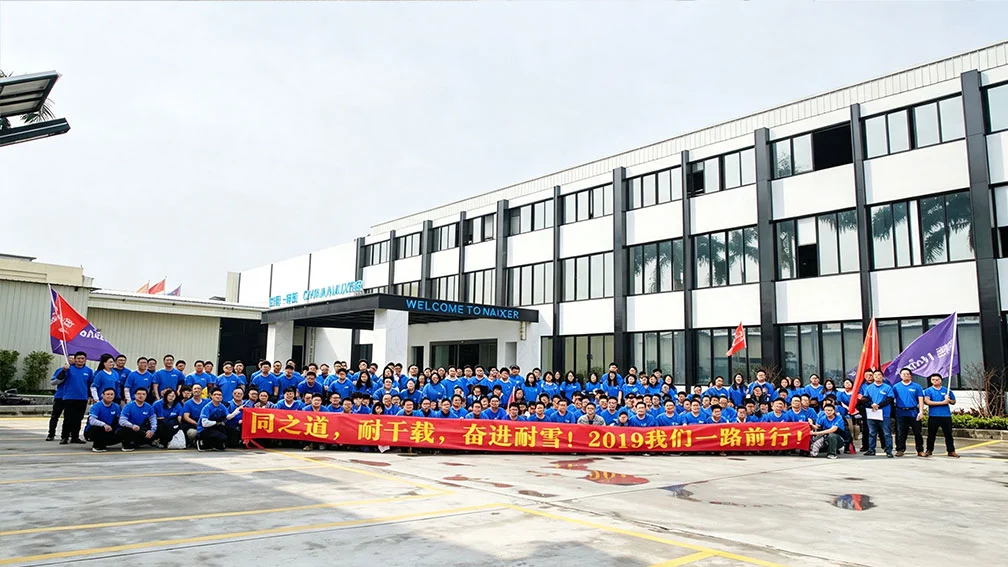
We’ve been building commercial ice machines since 2010 — 16 years in a 30,000 m² ISO9001-certified factory, with 300+ technical patents and more than 3,000 operators across 130+ countries. Safety engineering is where that experience shows.
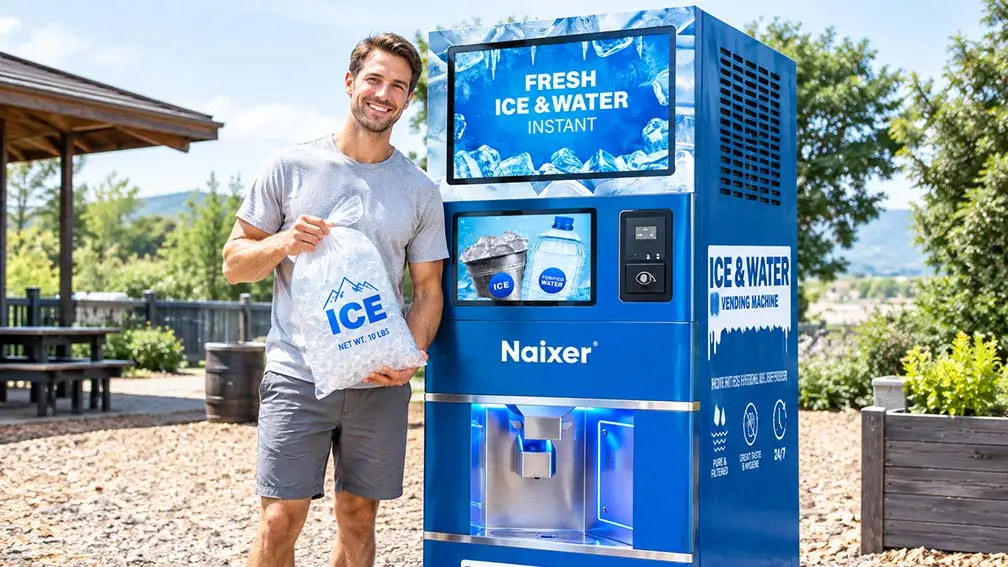
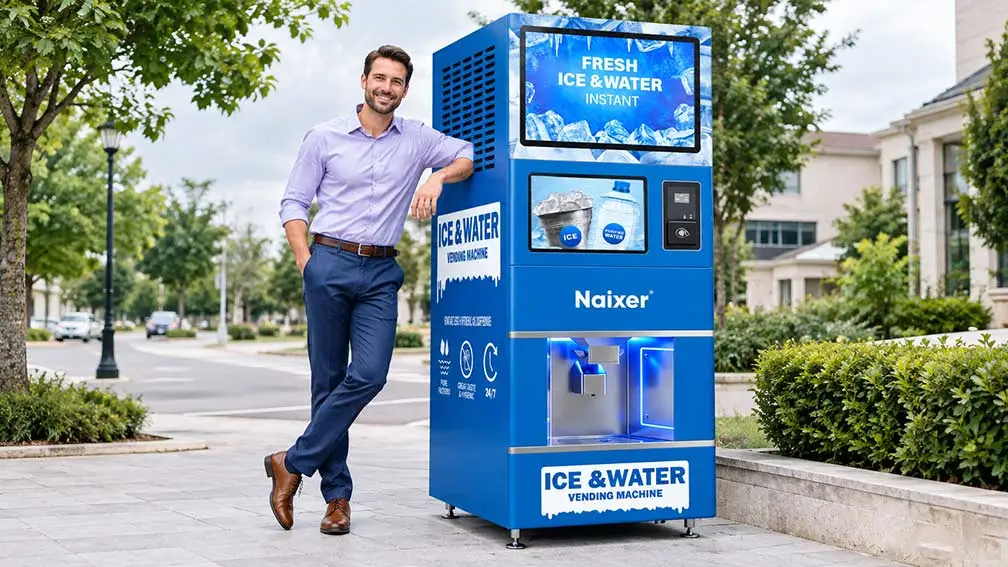
The Naixer ZD-160-A320 ice & water vending machine is a good example of the standard we build to:
- Sealed, sanitary dispensing — ice drops through a closed chute and chilled water flows through a sealed spout; customers never touch the product.
- Food-grade SUS304 stainless steel across the cabinet, tank, and ice bin — weather-proof for outdoor installation.
- Automatic agitation in the insulated ice bin prevents clumping and keeps every cube fresh.
- IoT remote monitoring as standard — sales, ice inventory, water temperature, and service alerts stream to your phone, so maintenance happens on time, every time.
- Optional chilled water dispenser — a second revenue stream from the same footprint, running through the same purification path as the ice.
- Compliance-ready build — CE, RoHS, and CB certifications, ISO9001 quality management, R290 or R404A refrigerant options, and a 3-year full-machine warranty.
Want the full specifications? Download the ZD-160-A320 brochure or request a quote — our team will match the right configuration to your location.
Frequently Asked Questions
Are ice water vending machines safe to drink from?
Yes — when the machine uses multi-stage purification (sediment, carbon, UV/ozone, ideally RO) and sealed dispensing, and the operator follows a testing and maintenance schedule. Vended water starts from an EPA-regulated municipal supply and is typically filtered beyond tap-water standards.
Can bacteria grow in a water dispenser?
In a neglected one, yes — standing water and organic residue can host bacteria and biofilm. Modern machines prevent this with UV sterilization on every dispense, ozone injection, and scheduled sanitizing. The technology works; the schedule is what matters.
How often are vending machines cleaned and tested?
Filter cartridges every 3–6 months, UV lamps annually, dispensing areas weekly, storage tanks and ice bins quarterly, and water testing at least quarterly (or as local permits require). A professional inspection once a year keeps everything calibrated.
Is vended water safer than tap water?
“Safer” is the wrong frame — think “further treated.” Vended water starts as tap water, already EPA-regulated, then passes through filters that reduce chlorine, dissolved solids, and other contaminants. For most municipal supplies, the result is cleaner-tasting, lower-TDS water.
What’s the safest container for filling from a vending machine?
Food-grade containers: glass, stainless steel, or clean BPA-free plastic designed for drinking water. Avoid reusing old single-use bottles, milk jugs, or anything that previously held non-food liquids.
What are the downsides of ice water vending machines?
Customers must bring and carry containers; machines occasionally close for servicing; and post-sale handling — container hygiene and storage — is on the customer. For operators, maintenance discipline is non-negotiable: skip it and both safety and reputation suffer.
Are ice water vending machines profitable?
Well-located, well-maintained machines are — ice and water vending is one of the more proven unattended retail models, often running on less than an hour of maintenance per week. See our full breakdown of how profitable ice vending machines really are, and model your own numbers with our ice calculator.
How long does vended water stay fresh?
Refrigerated in a clean, sealed container, vended water holds its best quality for about a week. Keep it out of sunlight and heat, and wash containers between refills.