What's the Difference Between Air-Cooled and Water-Cooled Ice Machines?

A commercial ice machine works on the same principle. It generates cold by moving heat. The compressor and condenser do the heavy lifting, and the heat they produce has to go somewhere. Where it goes—into the air or into water—is the fundamental difference between an air-cooled and a water-cooled ice machine.
Choosing the wrong cooling type for your kitchen environment will not break your machine immediately. It will simply cost you more money, every single month, for as long as you own it. An air-cooled machine in a hot, poorly ventilated kitchen will run longer cycles, produce less ice, and wear out its compressor years ahead of schedule. A water-cooled machine in a city with high water rates will send hundreds of dollars down the drain every year that could have been avoided.
The right choice depends on your kitchen, your climate, and your utility costs. This guide explains exactly how both systems work, where each one excels, and how to decide which one belongs in your operation. If you are selecting a machine for the first time, our commercial ice machine buying guide covers the broader picture of matching a machine to your needs.
In this guide, you will learn:
How Air-Cooled Ice Machines Work

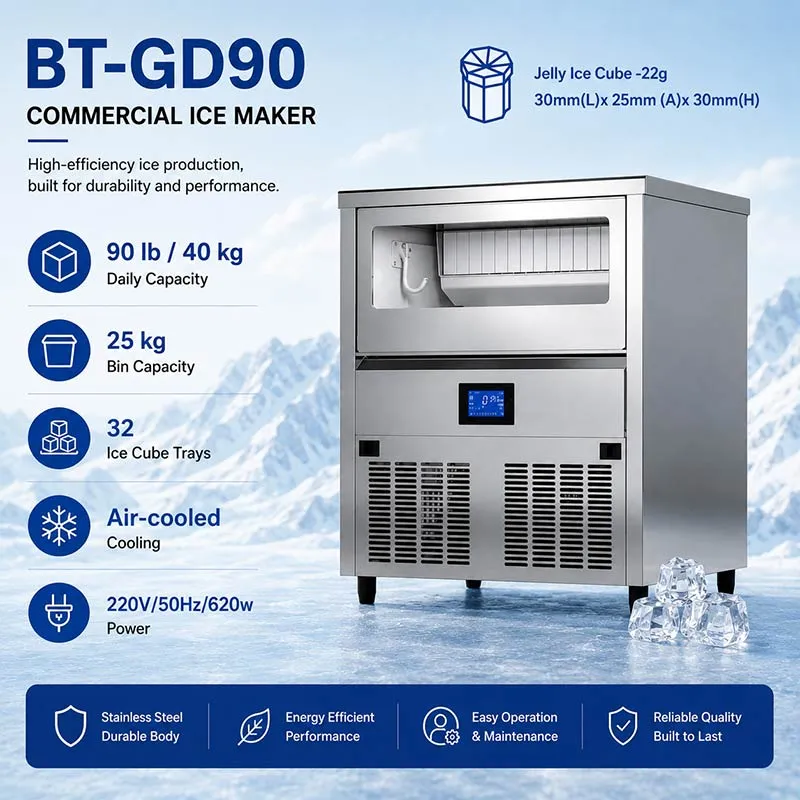
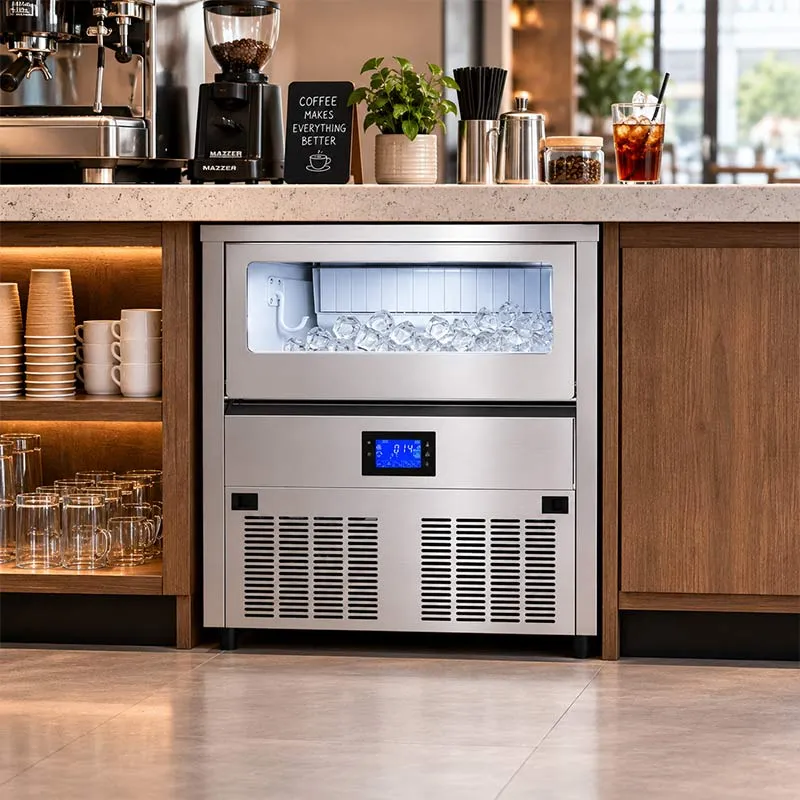
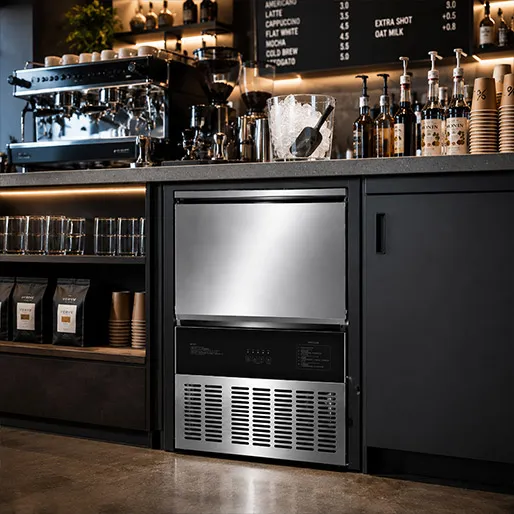
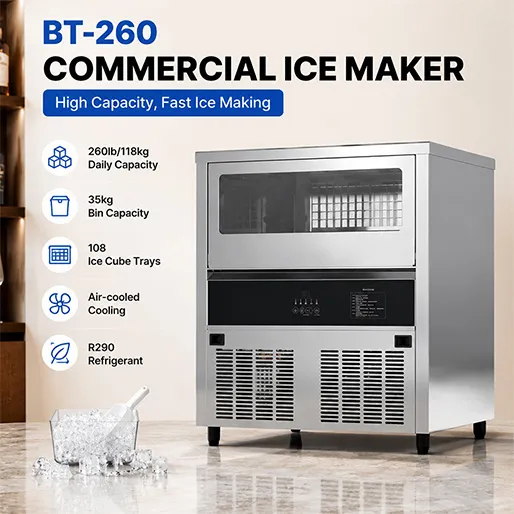
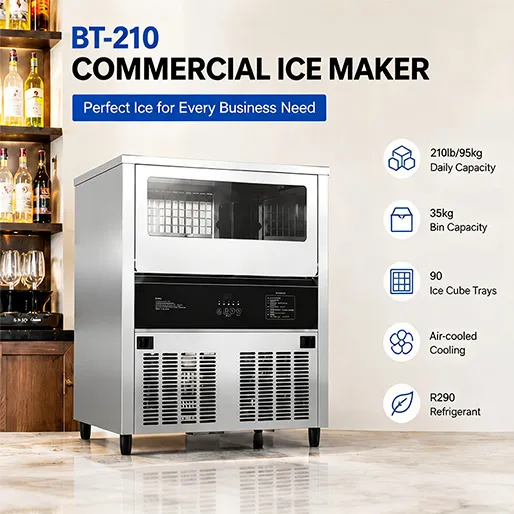
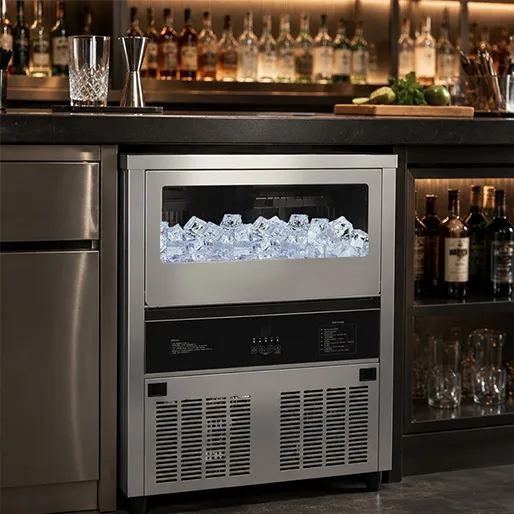
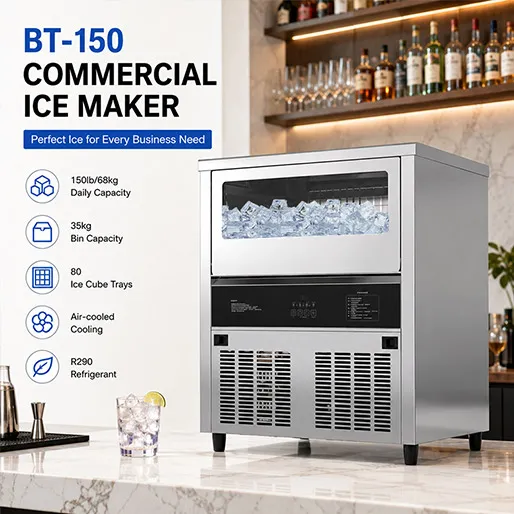
An air-cooled ice machine is the simpler of the two designs. A fan pulls ambient air from the room and blows it across the condenser coil, which is filled with hot refrigerant gas. The air absorbs the heat from the coil, the refrigerant cools and condenses back into a liquid, and the warmed air is discharged back into the room.
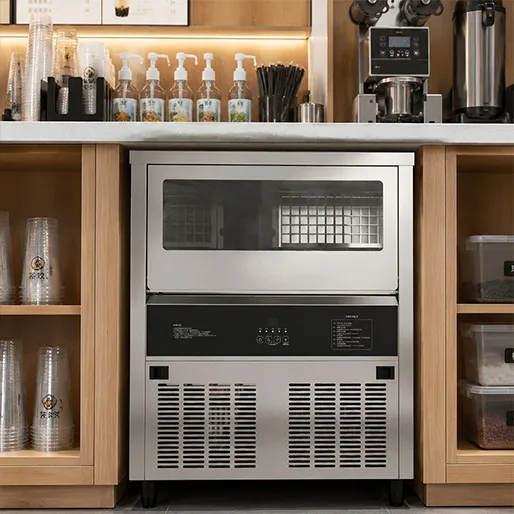
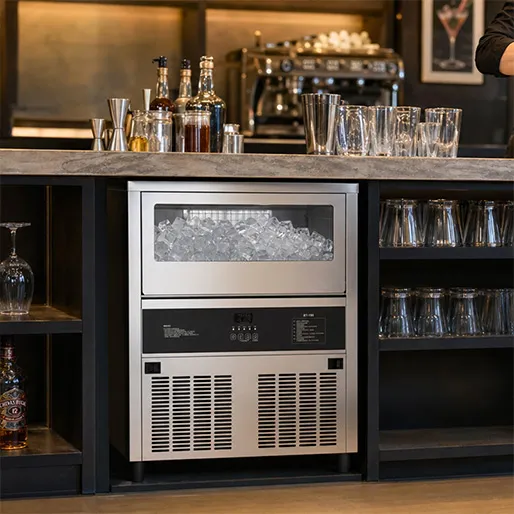
This is why ventilation matters so much for air-cooled machines. The air around the machine has to be cool enough to absorb heat effectively. If the machine is pushed tight against a wall, or crammed into a cabinet with no airflow, or placed next to a pizza oven, the fan ends up pulling in hot air and the condenser cannot shed heat fast enough. The compressor runs longer and works harder. Ice production drops. The machine’s internal temperature climbs, and in extreme cases, a thermal overload switch will shut the machine down entirely to protect the compressor.
Naixer’s product documentation specifies that air-cooled machines need at least 5 to 10 centimeters of ventilation clearance on all sides. If the ambient temperature can exceed 38 degrees Celsius, that clearance should be increased on one side to avoid overloading the refrigeration circuit.
The advantage of air-cooled is that it uses no additional water for cooling. All of the water that enters the machine goes into making ice, aside from what is used during the harvest cycle and the periodic flush. In a city with high water rates or in a region where water conservation matters, this is a significant long-term cost advantage.
How Water-Cooled Ice Machines Work

A water-cooled system replaces the fan and airflow with a continuous stream of water. Cold water from the building’s supply line flows through the condenser, absorbs heat from the refrigerant, and then flows out of the machine through a drain line, carrying the waste heat with it.
Because water conducts heat far more efficiently than air, a water-cooled condenser does not care how hot the kitchen gets. The cooling water arrives at whatever temperature the city delivers it—typically 10 to 20 degrees Celsius—and does its job the same whether the ambient air is 25 degrees or 40. For kitchens that are chronically hot, poorly ventilated, or located in tropical climates, this temperature independence is the reason to choose water-cooled.
The cost, however, is substantial. A commercial water-cooled ice machine can consume over a hundred gallons of water per hundred pounds of ice produced just for cooling the condenser. This water is not turned into ice. It flows through the condenser once and then goes down the drain. Over the course of a year, a mid-size water-cooled machine producing 500 pounds of ice a day can send tens of thousands of gallons of clean water down the drain that an air-cooled equivalent would never have used.
Water-cooled also adds a maintenance concern that air-cooled does not have. The minerals and sediment in municipal water do not disappear when the water leaves the condenser. Over time, they can build up as scale inside the condenser’s water passages, reducing heat transfer efficiency. A water-cooled machine should be on a regular descaling schedule not just for the ice-making evaporator, but for the condenser as well.
Where Each Cooling Type Excels
There is no universally superior choice. Air-cooled and water-cooled each have a set of conditions where they make sense and a set where they become a liability.
Air-cooled is the default for most restaurants, cafes, bars, and small hotels. It is simpler to install—no additional plumbing beyond the water line for ice production and a drain. It uses dramatically less water. It is easier to maintain because there is no condenser water circuit to descale. The trade-off is that air-cooled performance is tied to the temperature and cleanliness of the air around it. In a hot kitchen, on a summer day, ice production will drop.
Water-cooled is the specialist’s choice. It is built for hot kitchens with poor ventilation, for locations where ambient temperatures regularly exceed 32 degrees Celsius, and for large modular systems that produce 1,500 pounds of ice or more per day and generate enormous amounts of waste heat. A water-cooled machine in the right environment will produce more ice per day than an air-cooled equivalent because it does not slow down when the kitchen heats up.
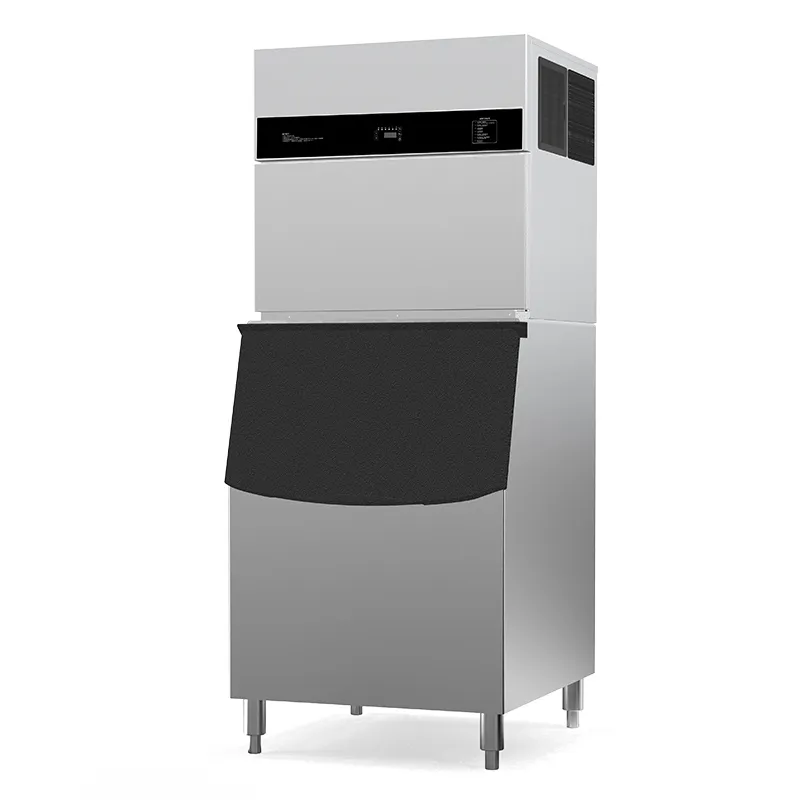
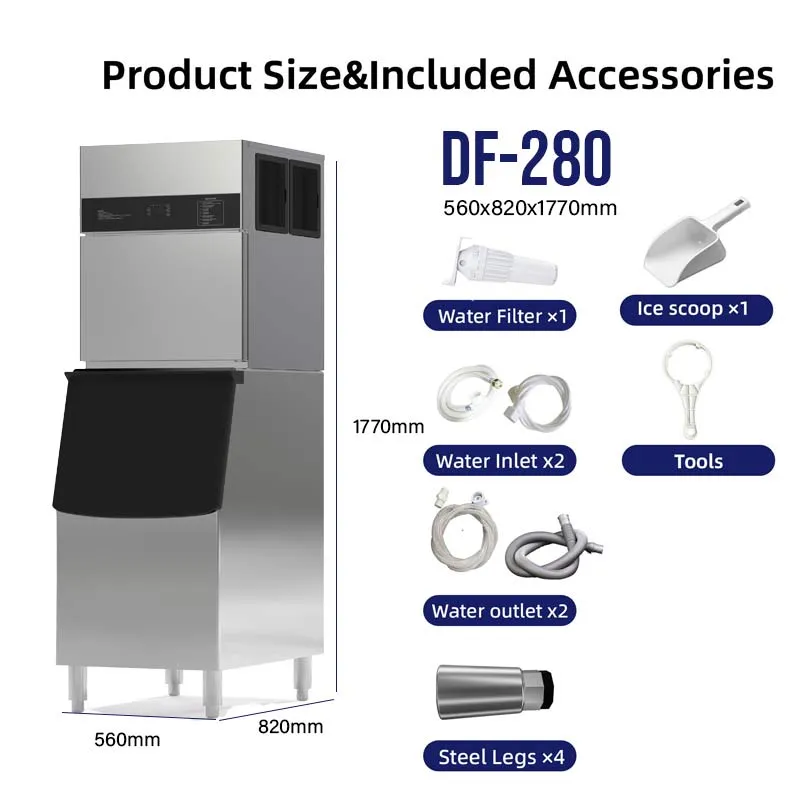
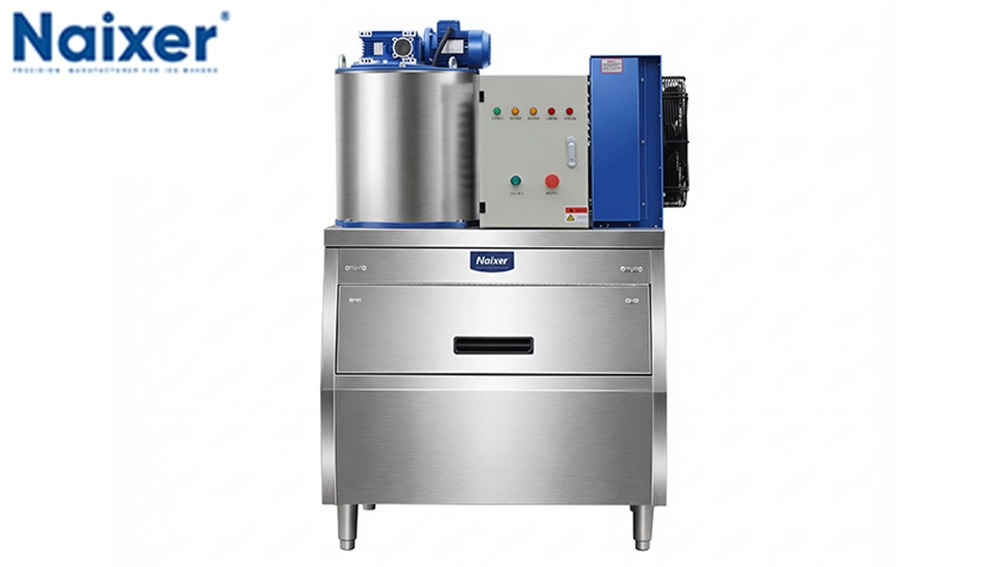
Most Naixer modular machines, including the TH-2000B, TH-1000C, and TH-500C, are available in both air-cooled and water-cooled configurations. This means you do not have to choose a different brand or model to get the cooling type your kitchen requires. You simply select the configuration that matches your environment.
For an overview of all the factors that go into selecting a commercial ice machine—not just cooling type—our best ice machine for restaurant guide walks through the decision from start to finish.
The Five-Year Cost Picture
The ongoing cost difference between air-cooled and water-cooled is not theoretical. It shows up on your utility bills every month.
For a mid-size machine producing around 500 pounds of ice per day, an air-cooled unit will cost roughly 600 to 800 dollars per year in combined electricity and water. Most of that is electricity. The water bill barely moves.
A water-cooled unit producing the same amount of ice will cost 800 to 1,500 dollars more per year in water alone, depending on local water rates. The electricity cost will be slightly lower because the compressor does not have to work as hard, but the water savings of air-cooled almost always outweigh the electricity savings of water-cooled in most U.S. markets.
Over five years, this difference can add up to 3,000 to 7,000 dollars in additional water costs for a single machine.
The counterbalance is production reliability. If your kitchen routinely hits 38 degrees Celsius in August, an air-cooled machine might produce 20 to 30 percent less ice during the hottest hours of the day. If that production drop means you have to buy bagged ice to cover the dinner rush—or worse, tell customers you cannot serve iced drinks—the water bill starts to look like a bargain.
The calculation is simple: if your kitchen stays cool and well-ventilated, air-cooled will cost you less over the life of the machine. If your kitchen is hot and ventilation is limited, water-cooled protects your ice supply and your revenue.
For a complete breakdown of what a commercial ice machine really costs to own over its full lifespan, our restaurant ice machine cost guide covers the purchase price, installation, maintenance, and utility expenses in detail.
Air-Cooled vs. Water-Cooled Ice Machines — Quick Answers
What is the main difference between air-cooled and water-cooled ice machines?
Air-cooled machines use fans and ambient air to remove heat from the condenser. Water-cooled machines use a continuous flow of water. The air-cooled version is simpler to install and uses far less water. The water-cooled version performs consistently regardless of how hot the kitchen gets.
Which is cheaper to operate?
In most locations with typical water rates, air-cooled is cheaper to operate because it uses dramatically less water—often saving hundreds of dollars per year compared to a water-cooled equivalent. The exception is if your kitchen is so hot that an air-cooled machine loses significant production, forcing you to buy bagged ice or lose sales.
How often should I clean the condenser on an air-cooled machine?
Clean the condenser fins at least every three months. A soft brush used in the direction of the fins removes dust and grease buildup. A dirty condenser reduces ice output and strains the compressor.
Does Naixer offer both air-cooled and water-cooled models?
Yes. Most Naixer modular ice machines, including the TH-500C, TH-1000C, and TH-2000B, are available in both air-cooled and water-cooled configurations to match your kitchen environment.
Can I switch my ice machine from air-cooled to water-cooled later?
No. The cooling type is built into the machine at the factory. It is not a field conversion. The decision should be made before purchase, which is why understanding your kitchen’s temperature profile and ventilation conditions matters so much.
How long should a commercial ice machine last?
With proper maintenance, 7 to 10 years. Regular cleaning, water filtration, and condenser maintenance—whether air-cooled or water-cooled—are the factors that determine whether a machine reaches the upper end of that range. For more detail, read our commercial ice maker lifespan guide .