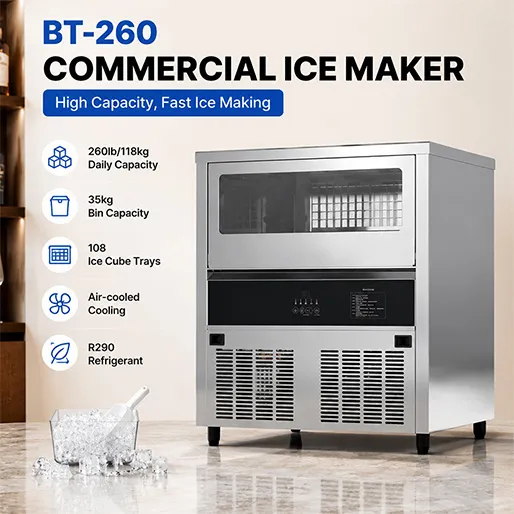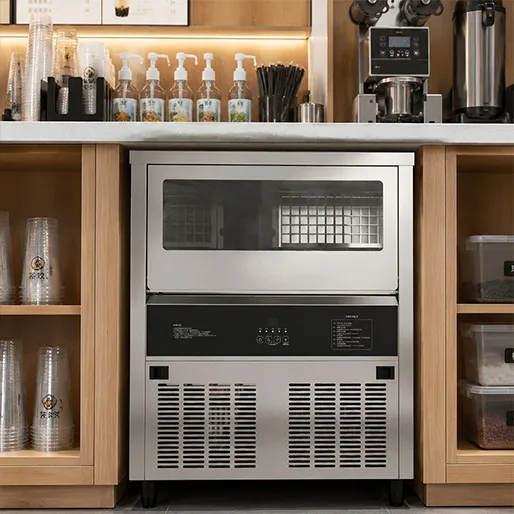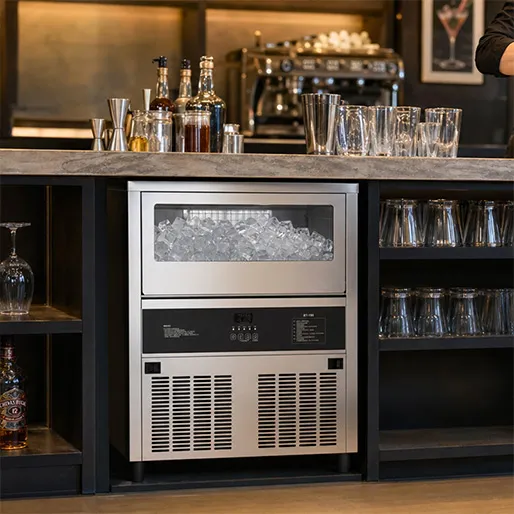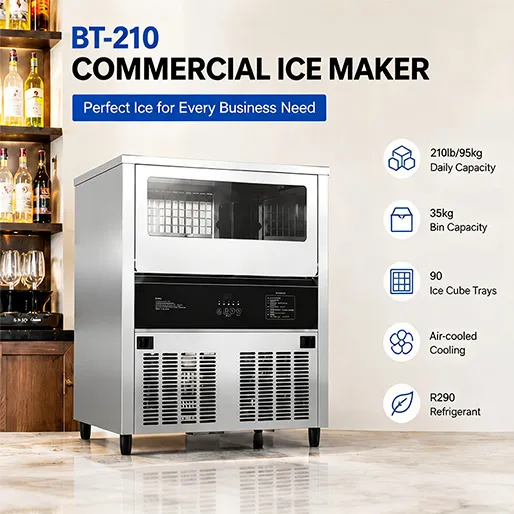
What Is the Quietest Undercounter Ice Maker? The 2026 Low-Noise Commercial Guide
If you run an open-kitchen restaurant, a craft cocktail bar, or a boutique hotel, you already know that every sound in your space matters. The hiss of the espresso machine has character. The low hum of conversation is the sound of business. But the sudden grinding growl of an ice maker? That’s the sound of a guest glancing toward the bar and frowning.
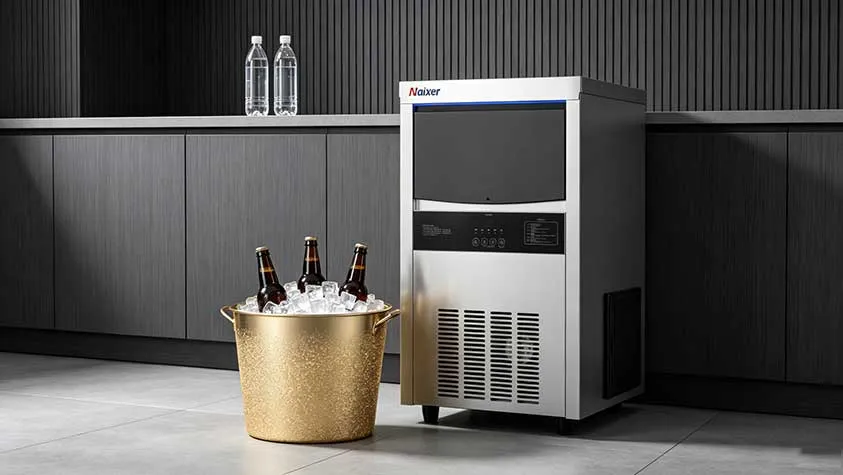
Commercial undercounter ice machines aren’t known for silence. But they don’t have to be loud, either. The quietest undercounter ice makers operate in the 40–50 decibel range—roughly the level of a quiet library or soft background music. They achieve this through careful engineering: vibration-dampened compressors, front-venting airflow, thicker insulation, and an ice harvest mechanism that doesn’t announce itself with a crash. In commercial settings where guests are only a few feet away, these are the machines that preserve the experience you’ve worked so hard to create.
Here’s something most equipment guides won’t tell you: noise isn’t just an annoyance. It’s a business problem. Research on restaurant acoustics shows that excessive background noise is one of the top complaints in dining environments, directly impacting customer satisfaction and dwell time. A single noisy appliance can shift the entire perception of your space from “intimate” to “industrial.”
So which undercounter ice makers are genuinely quiet enough for a customer-facing setting? And what should you look for when choosing one? Let’s break it down.
Table of Contents
Why Noise Matters in a Commercial Setting
Most commercial undercounter ice makers fall between 35 and 55 decibels. On paper, those numbers might not seem dramatic. But context is everything.
A normal conversation hovers around 60 dB. A library reading room sits at about 40 dB. That means an ice maker cycling on at 50 dB in an otherwise quiet hotel corridor at 2 a.m.? It might as well be a door slamming. In an open kitchen where guests are seated three feet from the counter, that same machine cycles on and off every 15 to 20 minutes—a regular interruption to the dining rhythm you’ve carefully orchestrated.
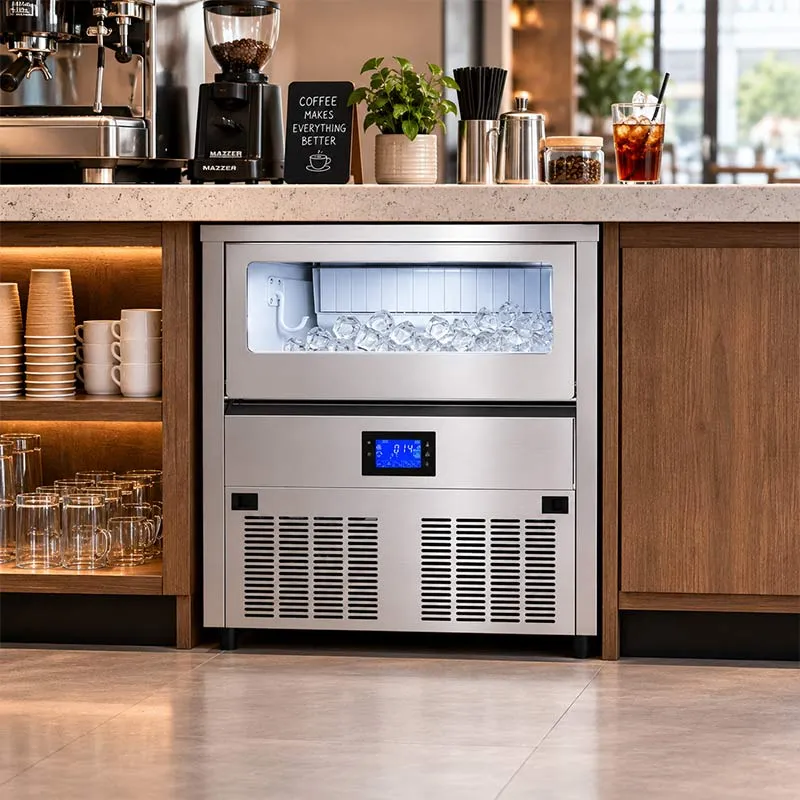
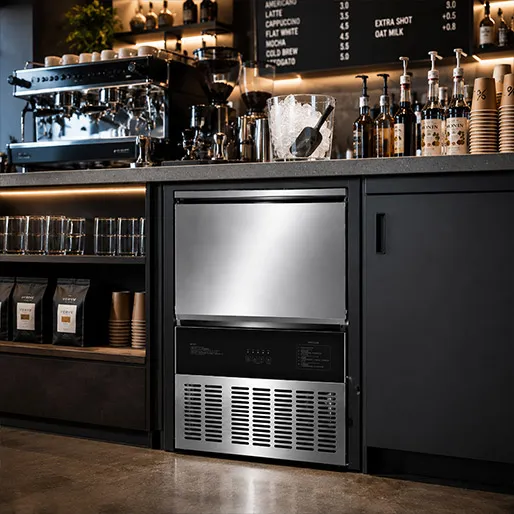
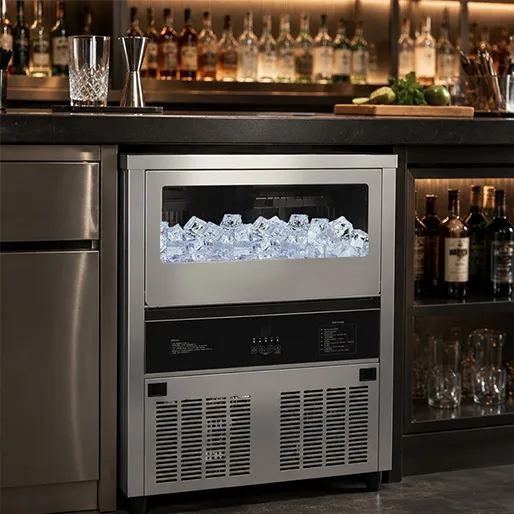
The environments where noise matters most are exactly where undercounter ice makers are designed to live: under the bar, inside the counter of a coffee shop, tucked into a hotel lounge credenza. These are front-of-house or near-front-of-house installations where the machine is visible—and audible—to your customers. The clatter of ice falling into the bin, the hum of the compressor, and the whir of the condenser fan all blend into the room’s soundscape, for better or worse.
The quietest models on the market share four engineering characteristics, which we’ll cover next. Understanding these will help you evaluate any machine—regardless of brand—for its real-world noise performance.
4 Engineering Factors That Determine Noise Level

An ice machine’s noise profile isn’t determined by a single component. It’s the sum of several design choices, each contributing its own signature to the overall sound.
1. Compressor Type and Mounting. The compressor is the heart of any ice machine—and usually the loudest part. Low-noise compressors use vibration-dampened mounting feet to prevent that mechanical hum from transferring into the countertop, the cabinetry, and ultimately the floor. In hard-surface commercial kitchens with tile or concrete floors, vibration transfer can amplify an otherwise acceptable hum into an intrusive rumble. Look for machines that specifically mention vibration-isolated compressor mounting.
2. Fan Design and Ventilation Configuration. Every air-cooled ice machine uses a fan to pull air across the condenser. Where that air goes—and how the fan is housed—matters enormously. Machines with front-venting push warm air into the room rather than into the enclosed cabinet cavity behind the machine, where sound can bounce and amplify. Some premium units use variable-speed fans that only ramp up when needed, reducing average noise levels significantly. Aftermarket fan swaps are possible on some models;
Further Reading: How Do Commercial Ice Machine Work?
3. Insulation Thickness. Insulation isn’t just for keeping ice cold. It’s also a sound barrier. Thicker insulation—like the 0.79-inch layer found in some commercial units—absorbs the operational hum of the compressor and water pump before it escapes the cabinet. A well-insulated machine doesn’t just use less energy; it’s noticeably quieter to stand next to.
4. Ice Harvest Mechanism. When ice releases from the evaporator and drops into the bin, it makes noise. The type of ice matters here. Large, dense cubes (like 22×22mm full cubes) drop less frequently and make a lower, shorter sound than smaller, lighter cubes that rattle around in the bin. Nugget ice and flake ice, by contrast, release in small, lightweight pieces—the noise is less percussive but more continuous. If your machine will sit directly beneath the bar where guests can hear it, consider choosing an ice type with a quieter harvest profile.
Low-Noise Undercounter Ice Makers Built for the Real World
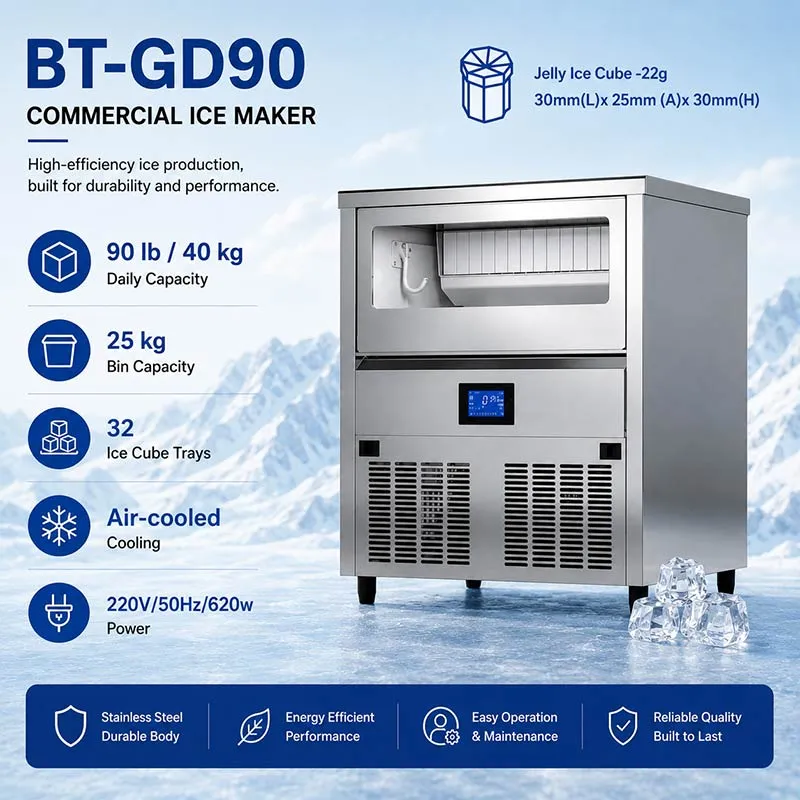
Naixer’s TH Series undercounter ice makers were designed from the start with front-of-house installations in mind—where noise matters and reliability is non-negotiable.
Noise-Optimized Design. The TH-80B and its larger sibling, the TH-150B, use a front-venting configuration that directs sound outward into the room rather than into the enclosed cabinet cavity. That might seem counterintuitive—wouldn’t you want the noise trapped inside the cabinet? Actually, trapping sound in a confined space creates resonance and amplification. Front-venting allows the sound to dissipate naturally into the room at a lower perceived volume. Combined with a compressor mounted on vibration-dampening pads, the result is a machine that hums quietly in the background rather than announcing itself every cycle.
Construction Quality That Reduces Vibration. The TH Series uses food-grade 304 stainless steel for the cabinet and evaporator—a material that’s not only corrosion-resistant but also denser than the plastic housings found on many residential machines. That density translates directly into less vibration transmission. Plastic panels can buzz and rattle with compressor vibration; thick stainless steel does not. The Naixer product manual requires a minimum 5cm clearance around the machine for proper ventilation, and at least 10cm on one side if ambient temperatures may exceed 38°C—specifications that reflect a design optimized for airflow, not just packed into the smallest possible box.
Built for the Long Haul. Every Naixer machine is manufactured in a 30,000 m² smart factory with ISO9001-certified processes, backed by 300+ technical patents and an annual production capacity of over 200,000 units. More than 5,000 commercial clients—including KFC and Luckin Coffee—run Naixer equipment daily in demanding commercial environments. Each machine carries a 3-year comprehensive warranty covering core systems and key components. And the One-Touch Cleaning function automates the descaling and sanitizing cycle, so the machine stays quiet and efficient without requiring a service call.
Use our ice calculator to find the perfect commercial ice maker for your restaurant, bar, or hotel. Learn how to calculate daily ice needs and choose the right machine.
Matching Your Machine to Your Space—and Your Noise Tolerance
Not every business needs the absolute quietest ice maker on the market. What you need depends on where the machine will sit, how close your customers will be, and what kind of atmosphere you’re creating.
For Noise-Sensitive Front-of-House Areas
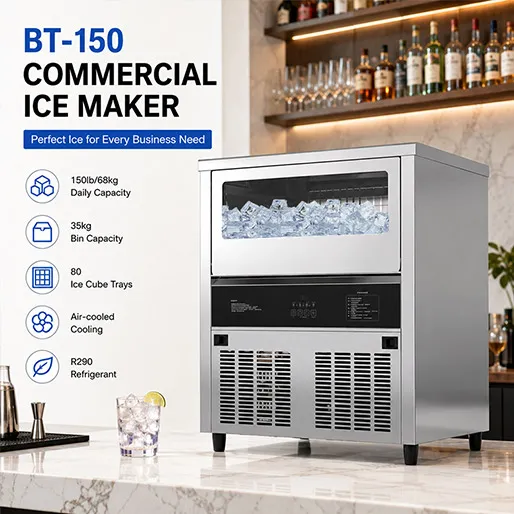
Bars, open kitchens, hotel lounges, and office breakrooms—anywhere the machine is within earshot of people who aren’t wearing kitchen clogs. Here, noise is as important as ice production. The Naixer TH-80B (80 lbs/day, full cube ice, 425×495×760mm) fits cleanly under a standard bar counter and operates with a low, even hum that won’t compete with conversation or music. For bars and coffee shops that prefer crescent ice for cocktails and iced lattes, the Naixer BT-SE120 (120 lbs/day, crescent ice, 680×600×750mm) offers similar noise performance in a slightly wider footprint.
One practical tip: place a thin rubber mat under any undercounter ice maker. This costs almost nothing and eliminates the last bit of vibration transfer into the cabinetry and floor.
For High-Volume Back-of-House Operations
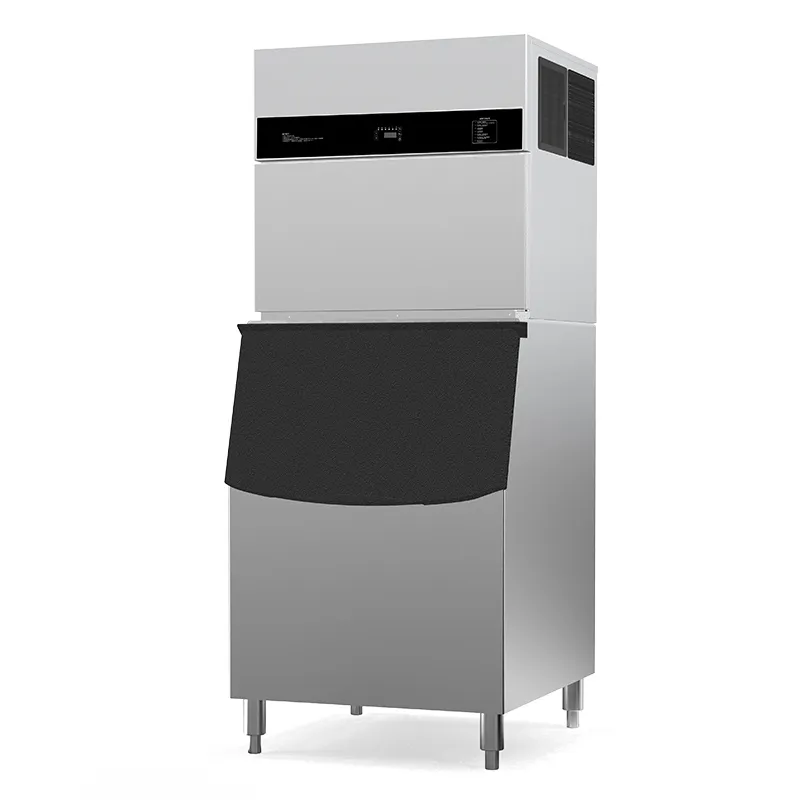
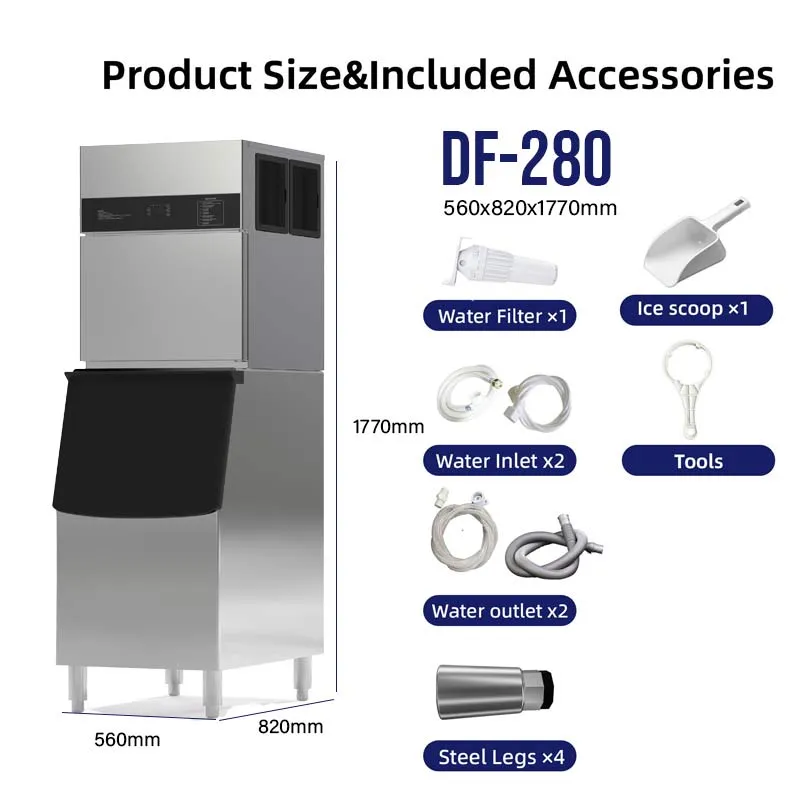
If your ice maker lives in the kitchen, away from guests, noise tolerance is higher—but still worth considering for staff comfort and health code compliance. The Naixer TH-150B (150 lbs/day, full cube ice, 665×710×960mm) provides the capacity for a busy restaurant or gastro-pub, and while it’s slightly louder than its smaller sibling, it’s still well within acceptable kitchen noise levels. For operations pushing past 300 lbs of ice daily, the modular TH-320C (320 lbs/day, 560×820×1490mm) offers a step up in production without the constant cycling that can make smaller machines feel louder over time.
Keep this in mind: placing an ice maker near ovens, grills, or direct sunlight forces the compressor to work harder, cycle more frequently, and generate more noise. The Naixer manual specifies an operating environment between 5°C and 38°C for exactly this reason.
For Hotels, Offices, and 24/7 Environments
Nighttime is the real test. A machine that sounds fine during a busy lunch service can become a disturbance at 2 a.m. in an empty hotel corridor. For 24/7 environments, prioritize machines with proven quiet operation, front-venting, and robust insulation. The Naixer BT-SE120 and TH-80B are the strongest candidates here—both are compact, quiet, and designed for installation in customer-adjacent spaces. The One-Touch Cleaning feature on all Naixer undercounter machines is especially valuable in hotel and office settings where maintenance staff may not have specialized equipment training.
Quiet Undercounter Ice Makers — Quick Answers
What is the quietest undercounter ice maker for commercial use?
For noise-sensitive commercial environments like bars and open kitchens, the Naixer TH-80B delivers optimized quiet performance through front-venting, vibration-dampened compressor mounting, and 304 stainless steel construction. It balances low operational noise with the durability and capacity commercial settings require.
How many decibels is a quiet commercial ice machine?
A quiet commercial undercounter ice machine typically operates at 40–55 dB. Normal conversation is around 60 dB, and a library reading room is about 40 dB. Machines rated at or below 50 dB are generally considered “low noise” for commercial use.
What makes an ice machine quiet?
Four factors matter most: a low-noise compressor with vibration-dampened mounting, front-ventilation design that prevents sound amplification in enclosed cabinets, thicker insulation that absorbs operational noise, and the ice harvest mechanism (larger, denser cubes drop less frequently and more quietly than small, lightweight pieces).
Are undercounter ice makers louder than countertop models?
Not necessarily. Both types typically fall within the same 35–55 dB range. However, undercounter units often have more insulation than portable countertop models, which can make them quieter in practice. The critical variable is build quality and engineering, not form factor.
Can I make my existing ice machine quieter?
Yes. Three practical steps: place a rubber isolation mat under the machine to reduce vibration transfer into the floor and cabinetry, ensure at least 5–10cm of ventilation clearance on all sides (crowded machines run hotter and louder), and clean the condenser coils every 3 months—dust buildup forces the fan to work harder and louder.
What type of ice is quietest when it drops into the bin?
Large, dense cube ice (22×22mm or larger) produces a lower, shorter sound when dropping because each harvest cycle releases fewer, heavier cubes. Nugget and flake ice drop more frequently but in small, lightweight pieces that create less percussive noise. Crescent ice falls in the middle.
Where should I install an undercounter ice maker to minimize noise?
Install away from seating areas whenever possible. If it must be under a bar or counter, choose a front-venting machine with vibration-dampened components. Avoid enclosing the unit in tight cabinetry without adequate ventilation—this both amplifies noise and reduces efficiency. Naixer specifies a minimum 5cm clearance around the machine, and 10cm on one side if ambient temperatures may exceed 38°C.
How long do quiet undercounter ice makers last?
With proper maintenance—deep cleaning every 6 months, regular water filter changes, and quarterly condenser coil cleaning—a commercial undercounter ice maker should last 7 to 10 years. Consistent maintenance keeps the compressor and fan running quietly throughout that lifespan.