How Do Commercial Ice Maker Machines Work? The Complete Technical Guide
How Do Commercial Ice Machine Work? The Complete Guide
For any restaurant, hotel, or bar owner, a steady, reliable supply of ice isn’t a luxury—it’s the backbone of service. When your commercial ice maker suddenly underperforms, it can disrupt your entire operation. Understanding how a commercial ice maker works is more than just technical curiosity; it’s the key to making smarter purchasing decisions, performing basic troubleshooting, and ensuring your investment lasts for years.
This guide will strip down the complex engineering into simple concepts. We’ll explain the journey from water to ice, detail each critical component, and highlight what separates a dependable machine from one that will cause headaches.
Table of Contents
Use our ice calculator to find the perfect commercial ice maker for your restaurant, bar, or hotel. Learn how to calculate daily ice needs and choose the right machine.
1. The Universal Principle: The Refrigeration Cycle
At its core, every ice maker, from a small countertop unit to a massive commercial ice machine, operates on the same scientific principle: the refrigeration cycle. This continuous loop of heat absorption and release is what makes freezing water on demand possible.
The cycle revolves around four essential components: the Compressor, the Condenser, the Expansion Valve, and the Evaporator. A special fluid called refrigerant moves through this system, changing from a liquid to a gas and back again to cool the interior of the machine dramatically.
This guide will strip down the complex engineering into simple concepts. We’ll explain the journey from water to ice, detail each critical component, and highlight what separates a dependable machine from one that will cause headaches.
annotated diagram of the refrigeration cycle
2. Core Components: The Inner Workings of Your Ice Machine
To truly grasp the ice maker working principle, let’s examine each ice machine component in detail.
The Compressor: The Heart of the System
Think of the compressor as the heart. Its job is to pump the refrigerant, compressing it from a cool, low-pressure gas into a hot, high-pressure gas. This prepares the refrigerant to release its heat in the next stage.
The Condenser: Releasing the Heat
The hot, pressurized gas flows into the condenser coils. Here, the heat is expelled from the machine. This is where the key difference between a water cooled ice maker and an air-cooled model comes into play.
Air-Cooled: Uses fans to blow air across the coils (common, requires good ventilation).
Water-Cooled: Uses a stream of water to cool the coils (more efficient in hot environments, but uses more water). The refrigerant, now cooled, condenses into a high-pressure liquid.
The Expansion Valve: Creating the Chill
This high-pressure liquid is forced through a small opening in the expansion valve. This rapid expansion causes the refrigerant to cool drastically, turning it into a cold, low-pressure liquid-vapor mixture ready for the magic to happen.
The Evaporator: Where Ice is Born
This super-chilled refrigerant enters the evaporator, a series of metal plates or tubes. Water is pumped over the evaporator’s cold surface. Heat from the water is absorbed by the refrigerant, causing the water to freeze into the shape of the evaporator’s mold—creating perfect ice cubes. Once the ice is fully formed, a harvest cycle briefly warms the evaporator, releasing the ice sheets into the storage bin.
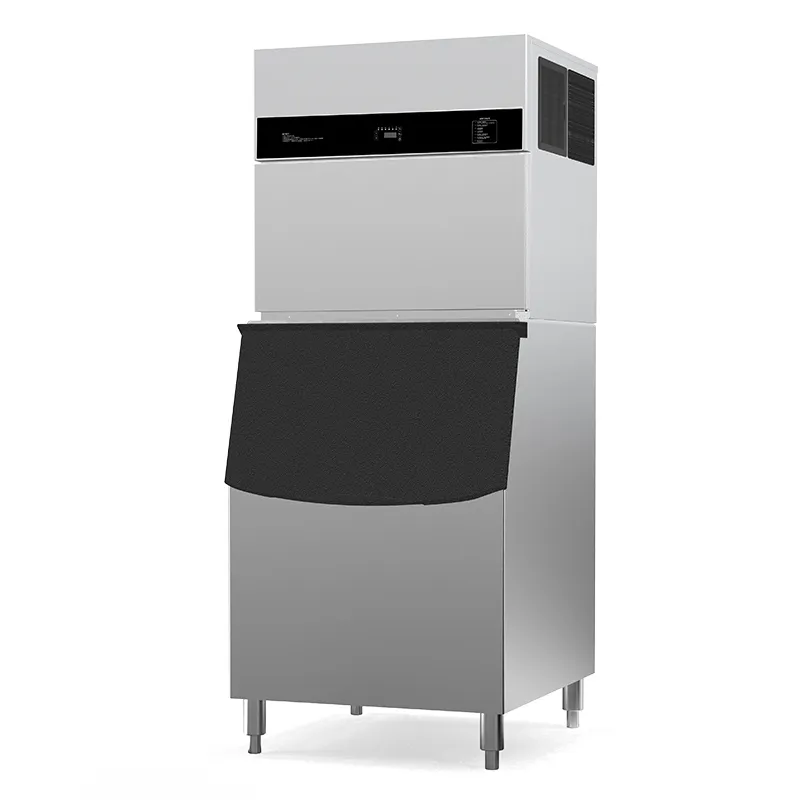
3D schematic of a commercial ice cube machine
3. The Automated Production Cycle
Modern automatic ice makers orchestrate this process flawlessly and without manual intervention. Here’s the step-by-step ice maker working principle in action:
Initiation: The machine’s brain (the control board) activates the cycle.
Water Fill: A solenoid valve opens, allowing water to fill the sump and be pumped over the evaporator.
Freezing: The refrigeration cycle runs, freezing the water layer by layer.
Harvest: When a sensor detects the ice is thick enough, the system reverses briefly, warming the evaporator to release the ice.
Collection: Ice falls into the storage bin, and the cycle repeats automatically until the bin is full.
4. Choosing a Reliable Commercial Ice Maker: Beyond the Basics
Knowing how does an ice maker work helps you ask the right questions when selecting equipment. Look for:
Durability: Commercial-grade compressors and stainless-steel evaporators resist wear.
Efficiency: CE rated machines or efficient water cooled models can lower long-term costs.
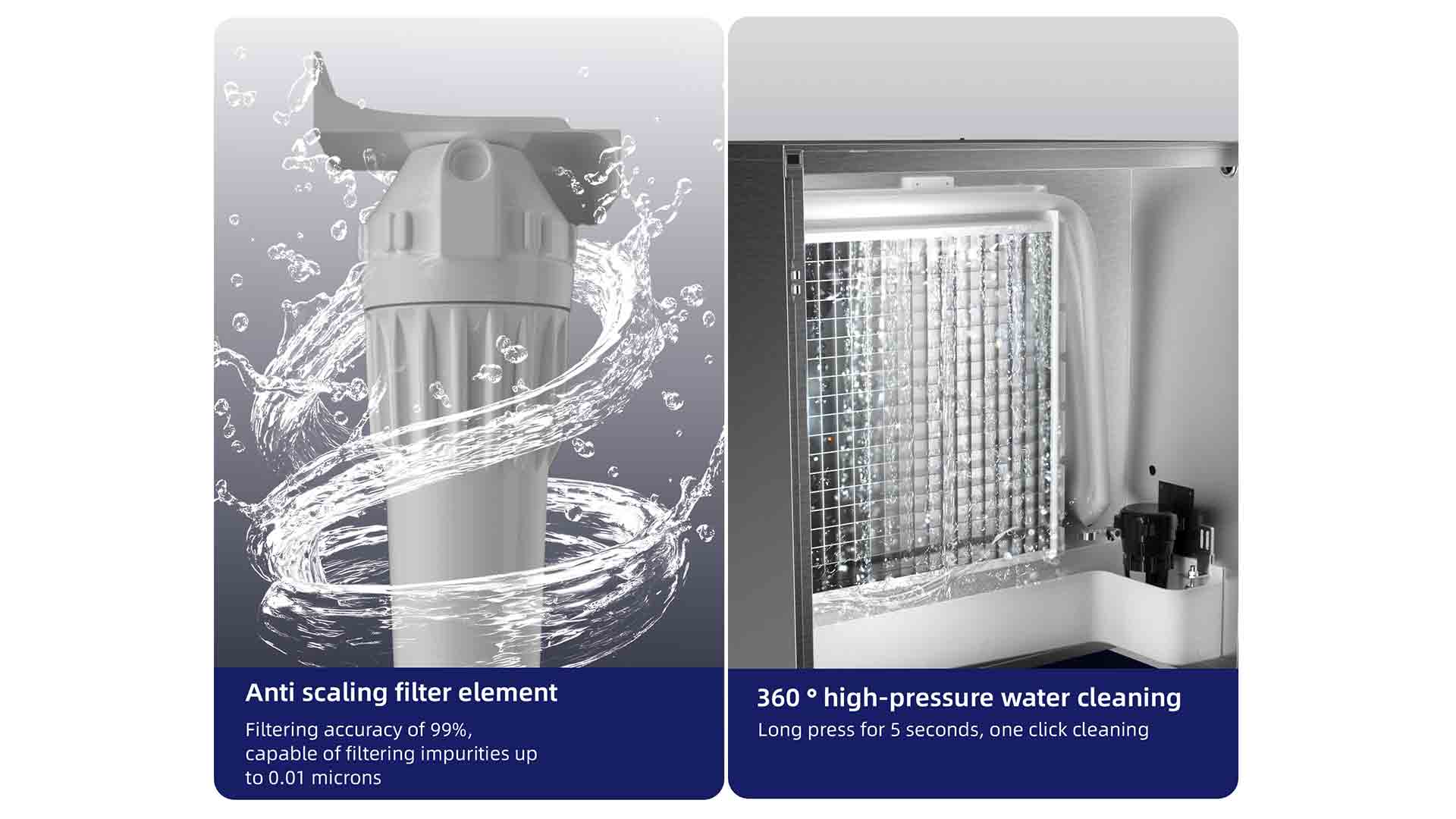
Hygiene: Built-in water filtration and antimicrobial treatments ensure clean, clear ice.
Intelligence: Modern controls allow production scheduling and provide diagnostic alerts to prevent downtime.
5. The Critical Role of Professional Maintenance
Even the best-engineered machine needs care. Mineral scale from water can insulate the evaporator, and dirty condensers force the compressor to work harder.
Regular Cleaning: Follow the manufacturer’s schedule for sanitizing and descaling.
Preventive Maintenance: Biannual professional service is crucial. Technicians clean internal components, check refrigerant levels, and ensure electrical safety, protecting your investment and avoiding costly emergency repairs.
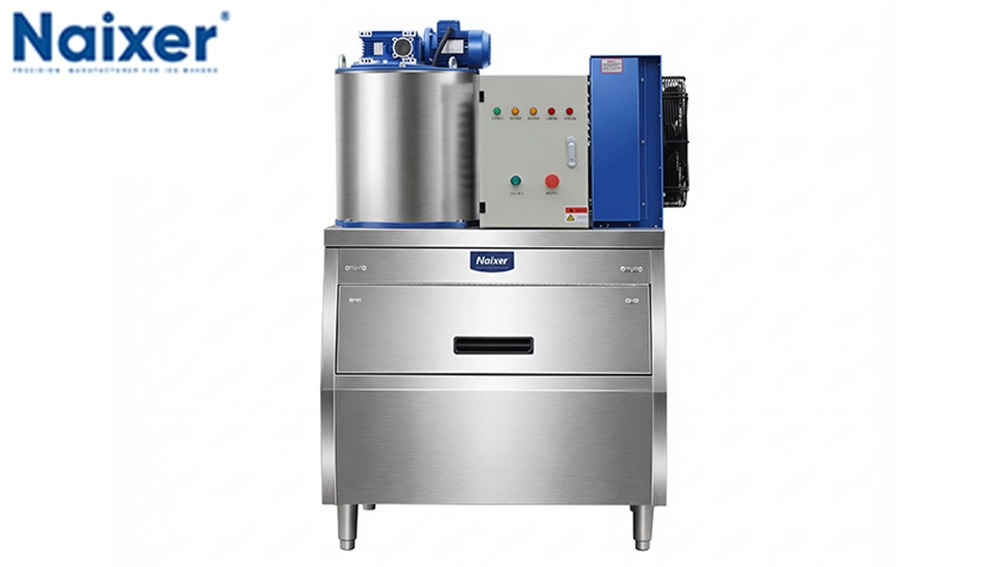
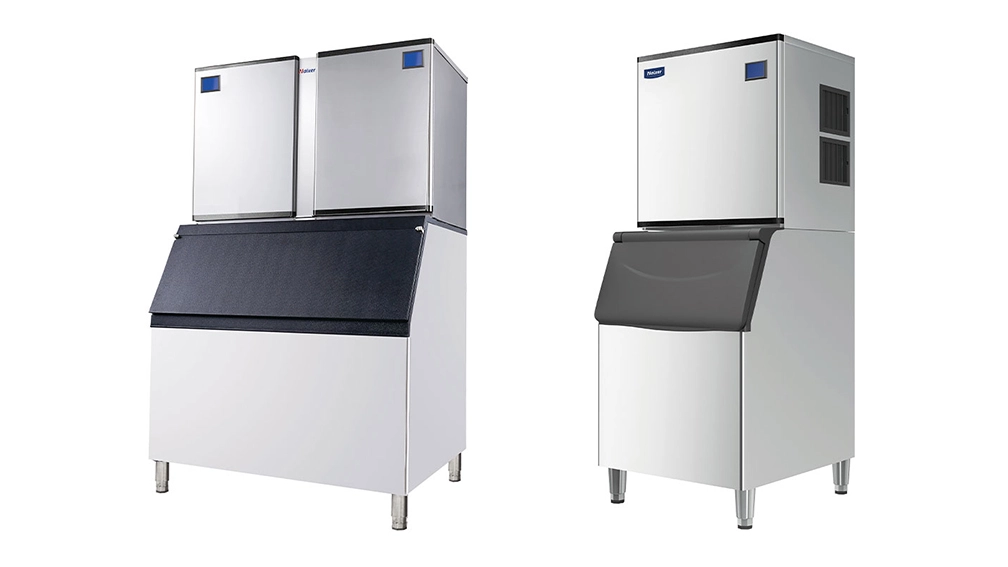
naixer ice maker
Related Topics for Your Ice Maker Business Research
FAQ: Your Commercial Ice Maker Questions, Answered
Q: What’s the main advantage of a water-cooled ice maker vs. an air-cooled one? A: A water cooled ice maker is more efficient in consistently hot environments (like a hot kitchen) as it doesn’t rely on ambient air temperature. However, it consumes more water and may have higher utility costs and local code restrictions.
Q: How can I tell if my ice machine is underperforming? A: Signs include slower ice production, thinner or cloudy ice, unusual noises, or increased energy bills. Often, this points to a need for cleaning or servicing.
Q: Why is my ice maker not producing any ice? A: Start with the basics: Is the power on? Is the water supply valve open? Is the bin full? If these are fine, it could be a clogged filter, a faulty water inlet valve, or a more serious component failure requiring a technician.
Need help finding the right ice machine for your business?
Naixer Ice has the right machine for you.
Welcome to Guangzhou Naixer Refrigeration Equipment Company Limited! Since 2010, we have been focused on commercial ice machine solutions, helping ice machine distributors and food service professionals worldwide deliver higher-quality ice machines. Our products include commercial ice makers, built in ice makers, ice and water dispensers, and automatic ice vending machines – each designed for maximum profitability. With over 3,000 successful operators in more than 130 countries worldwide, we provide proven strategies, real return on investment data, and expert guidance to help you build a thriving ice making business. Ready to start your passive income journey? 🧊