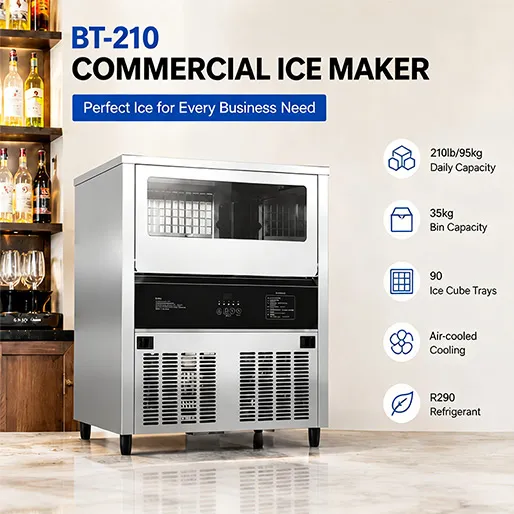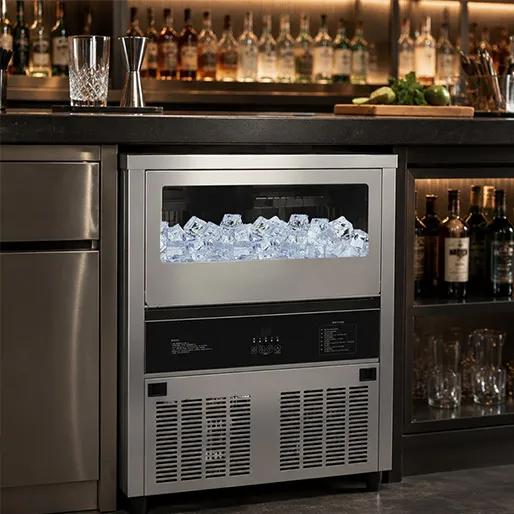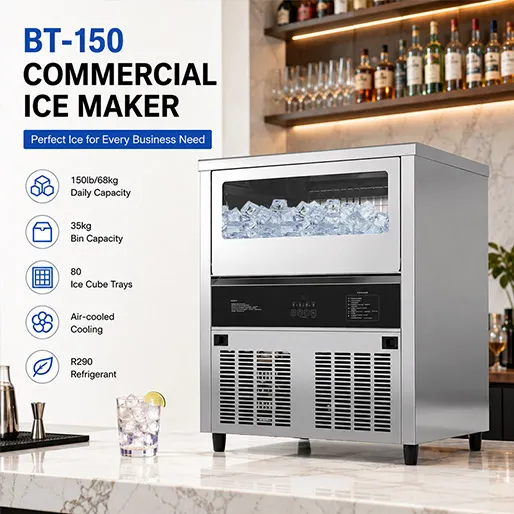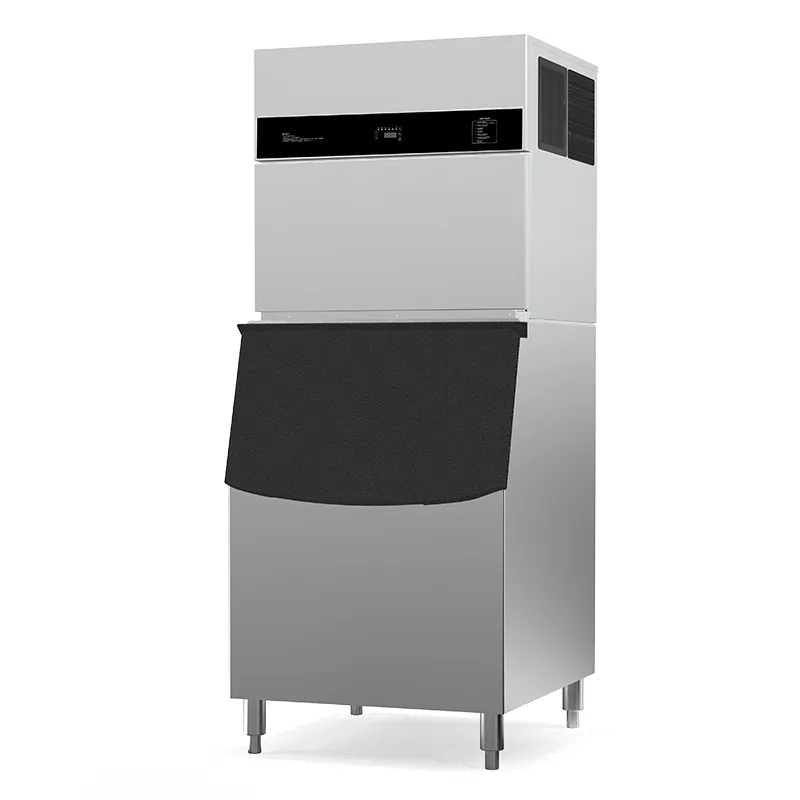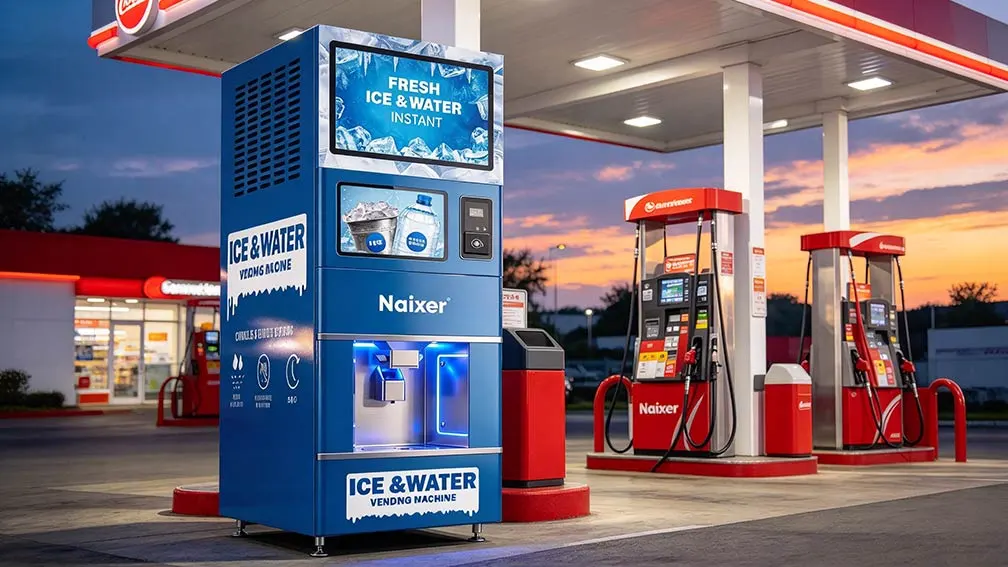
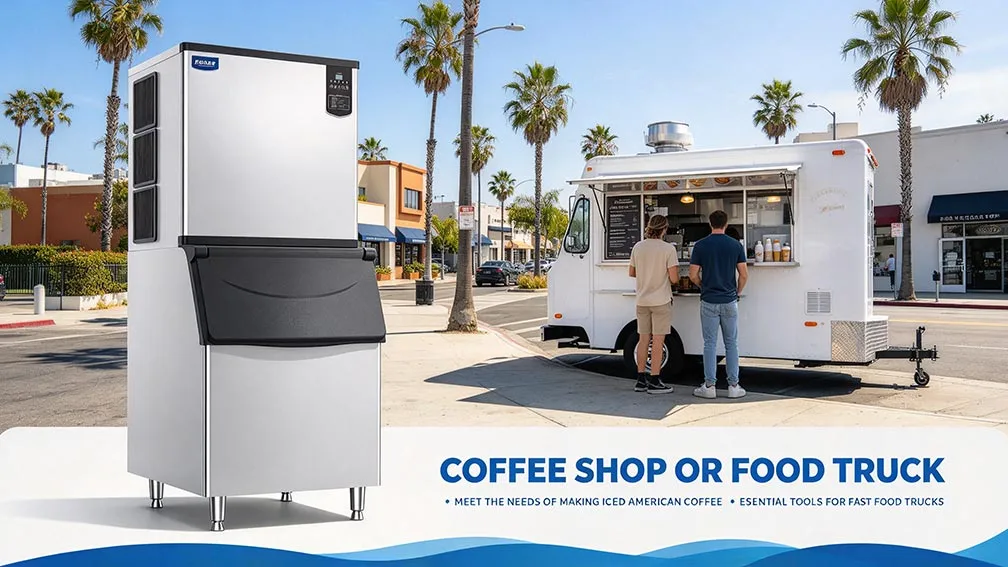
If you’re buying a commercial ice machine for food truck service, the short answer is this: most trucks need 100–200 lb of ice per day, which a compact 120–260 lb/day undercounter unit covers comfortably — with a 20–50 kg storage bin to carry you through the rush.
But the machine itself is rarely the hard part. The hard part is making ice work inside a moving kitchen with limited power, limited water, no floor drain, and constant vibration. This guide walks through the four constraints that actually decide your setup, the machine types that fit a truck, verified 2026 price benchmarks, and a setup checklist you can hand to your upfitter.
In this guide, you will learn:
How Much Ice Does a Food Truck Need?
Industry guidance for food trucks lands in a consistent range: 100–200 lb/day covers most trucks, while high-volume rigs with fountains or bagged-ice sales climb past 400 lb/day, with storage between roughly 30 and 360 lb and batch times of 5–15 minutes on modern commercial units.
Rather than copy someone else’s number, measure your own:
- Count your peak hour. How many iced drinks do you sell between 12:00 and 14:00 on your best day?
- Weigh one cup. Fill a cup the way you serve it, shake off loose ice, and weigh the ice. A typical iced-drink cup lands around half a pound — but your menu, cup size, and scoop habits set the real number.
- Multiply and add buffer. Peak-hour cups × ice per cup × peak hours = your working demand. Add 20–30% for hot days, extra ice for coolers, and menu items that use more ice than you think (blended drinks, seafood displays).
One detail most guides skip: ice output is rated under test conditions — Naixer’s catalog rates capacity at 25°C ambient and 20°C water supply. On a 35°C asphalt lot in July, every commercial machine produces less than its nameplate figure. If you regularly work summer festivals, size one step up.
For a quick number, run the free Ice Calculator. For a deeper cost breakdown, see how much a commercial ice cube machine costs.
The Four Constraints That Decide Your Machine
1. Power: the constraint that bites first
Every food truck runs on a budget of amps. A truck’s electrical panel and generator are usually sized for lights, refrigeration, and cooking equipment — then someone adds an ice machine.
Start with the nameplate, not the brochure. For reference, Naixer’s catalog lists these power draws (export 220V/50Hz configuration, per the product catalog):
- BT-series built-in undercounter units: 445 W
- TH-80B: 330 W · TH-120B: 370 W · TH-150B/TH-210B: 750 W · TH-260B: 950 W
- TH-280B–TH-700B standalone units: 850–1,500 W
Two things matter beyond running watts: compressor startup current (which can briefly draw far more than the running figure, so check the compressor data or LRA on the nameplate) and headroom — you don’t want the ice machine to be the load that trips the breaker when the espresso machine cycles on. If you’re speccing a generator, share the full equipment list and nameplate data with your upfitter. For a plain-English primer on consumption, read our guide on whether ice makers use a lot of electricity.

2. Water: plumbed line or onboard tank
Two setups are common on trucks: a plumbed connection (city water at events with hookups) or an onboard potable tank with a pump. Either way, add a water filter — scale is the number-one killer of ice machine performance, and hard water makes cloudy, slow-forming cubes.
Practical features worth asking about: a quick-release water tank (Naixer’s undercounter units have one that detaches in about 10 seconds without tools — useful for cleaning and refilling), and easy access to the water inlet for filter changes between services.
3. Drain: the step everyone forgets
Ice machines produce meltwater continuously. In a building you rely on a floor drain; on a truck you have three options: route to a grey-water tank by gravity (only works with enough fall), use a drain pump (ask your supplier whether the model supports it — don’t assume), or choose a drainless design where available. Decide this before you cut a single hole in the counter, because retrofitting a drain path in a finished truck is painful.
4. Vibration, weight and heat
A truck is a mild earthquake with a kitchen attached. Three rules:
- Secure the unit. Bracket or strap the machine so it can’t shift under braking, and leave the clearances the manual specifies so the condenser can breathe.
- Ask for the shipping weight. The Naixer catalog lists dimensions and capacities but not unit weight — get the weight from the factory and check it against your axle and floor loading.
- Respect the heat. Trucks run hot in summer. Naixer’s controller includes protection logic: when condensation temperature exceeds 70°C, it flags a high-temperature fault — treat that as your warning to improve ventilation, clean the condenser, and avoid blocking the front grille.
Also worth knowing: air-cooled is the only sensible choice on a truck — a water-cooled unit needs a continuous water supply to reject heat, which most trucks can’t provide. If you want the full comparison, read air-cooled vs water-cooled ice machines and our air-cooled ice machine guide.
Which Type Fits a Food Truck?
| Truck Concept | Service Profile | Recommended Output | Storage Bin | Naixer Model Class |
|---|---|---|---|---|
| Coffee / smoothie truck | 100–250 cold drinks per day | 120–150 lb/day (54–68 kg) | 20–45 kg | BT-120 · TH-120B · BT-150 |
| Burger, BBQ or fried truck | 100–200 covers plus fountain drinks | 150–210 lb/day (68–95 kg) | 45–51 kg | TH-150B · TH-210B · BT-210 |
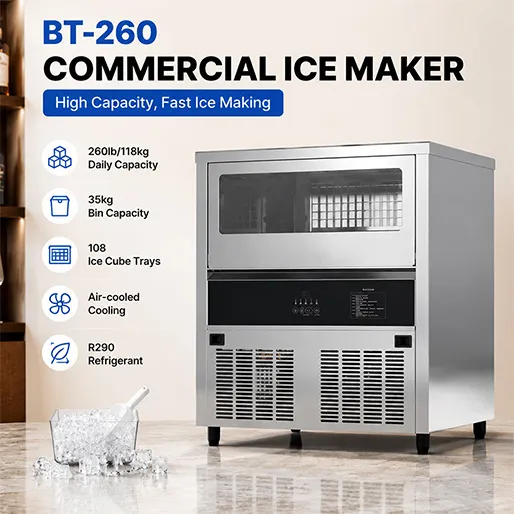
| Taco / aguas frescas / boba | 200–350 cups per day | 210–260 lb/day (95–118 kg) | 45–51 kg | TH-210B · TH-260B · BT-260 |
| Seafood / ceviche truck | Display plus drinks | Flake ice, 150–350 lb/day class | Display bins | Flake Ice Series |
| Dual-window / catering rig | 300+ drinks, events and prep | 260–500 lb/day (118–227 kg) | 45–180 kg | TH-260B → TH-420B / TH-500B (trailer) |
| Type | Example Models | Daily Output | Bin Capacity | Dimensions (W × D × H) | Power (Catalog) | Fit for a Truck |
|---|---|---|---|---|---|---|
| Built-in undercounter | BT-120 · BT-150 · BT-210 · BT-260 | 120–260 lb (54–118 kg) | 20–51 kg | 600 × 680 × 745–750 mm | 445 W | ★ Best fit — low height, all-in-one |
| Integrated cube with bin | TH-80B · TH-120B · TH-150B · TH-210B · TH-260B | 80–260 lb (36–118 kg) | 12–45 kg | 425 × 495 × 760 → 665 × 710 × 960 mm | 330–950 W | Good if counter height allows |
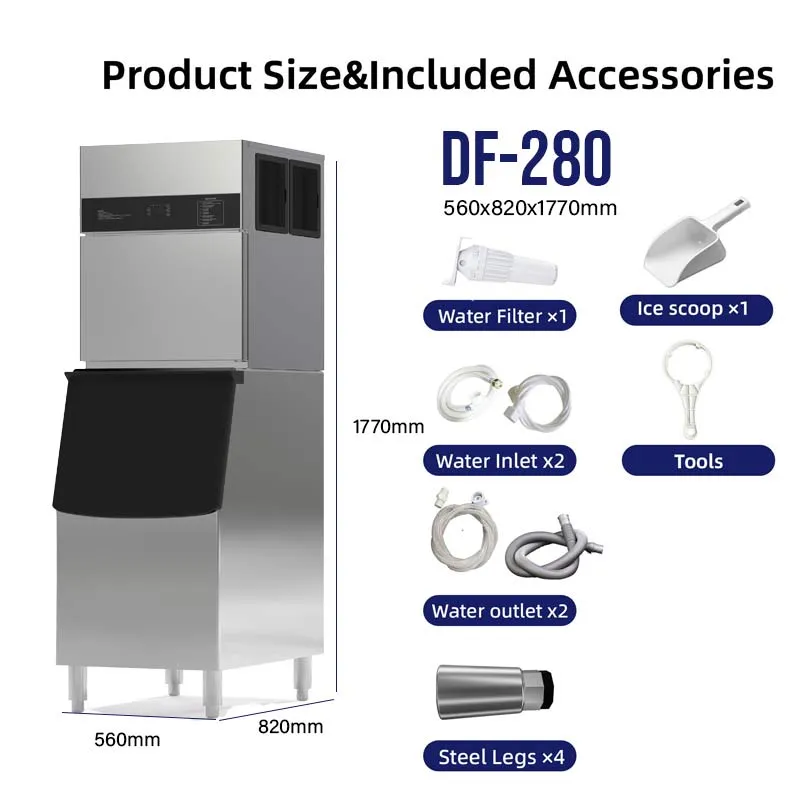
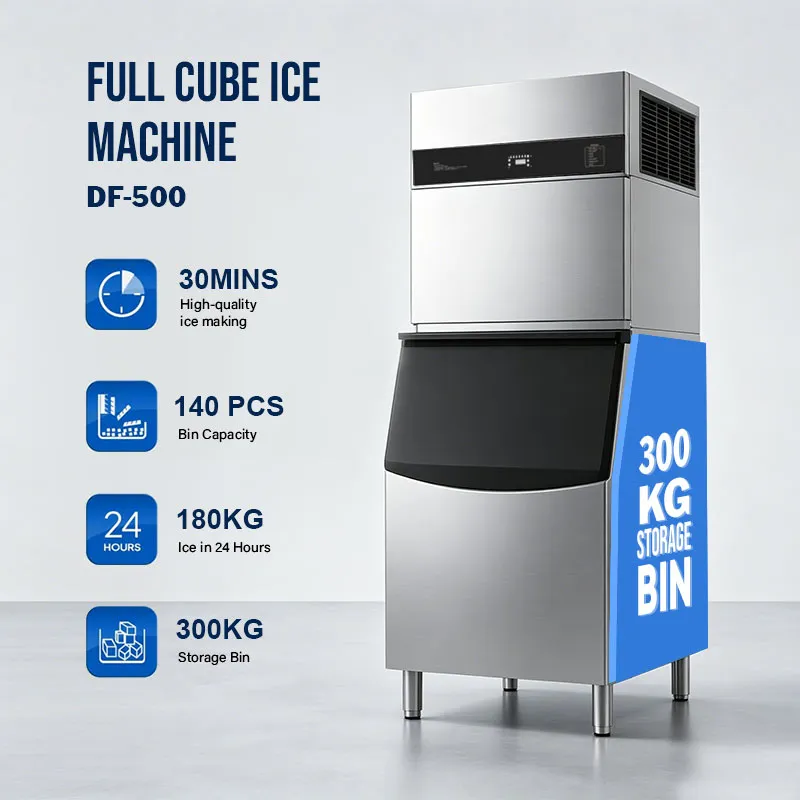
| Standalone with large bin | TH-280B · TH-320B · TH-420B · TH-500B · TH-700B | 280–700 lb (120–318 kg) | 180–300 kg | 560 × 820 × 1,490 → 760 × 820 × 1,700 mm | 850–1,500 W | Trailers / high-volume rigs only |
| Nugget | Nugget Ice Series | Varies by model — see series page | Varies | Varies | Varies | Beverage-led trucks (smoothie, boba) |
| Flake | Flake Ice Series | Varies by model — see series page | Display bins | Varies | Varies | Seafood and display trucks |
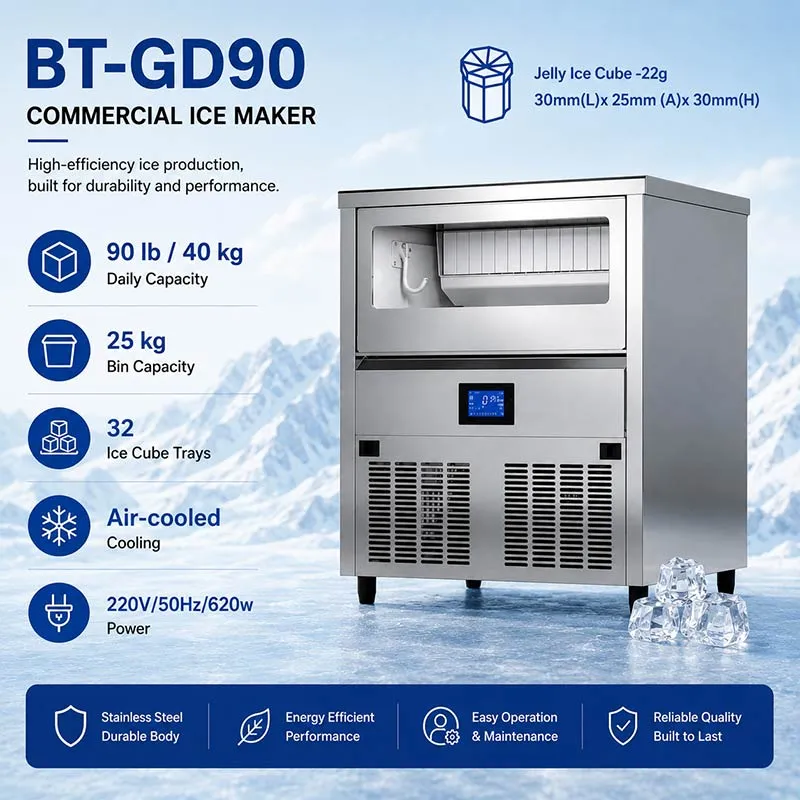
| Octagon roll ("jelly ice") | BT-GD90 · BT-GD140 · TH-GD90 · TH-GD140 | 90–140 lb (40–63 kg) | 20–40 kg | 530 × 580 × 895 → 660 × 745 × 1,005 mm | 470–810 W | Dessert-coffee niche concepts |
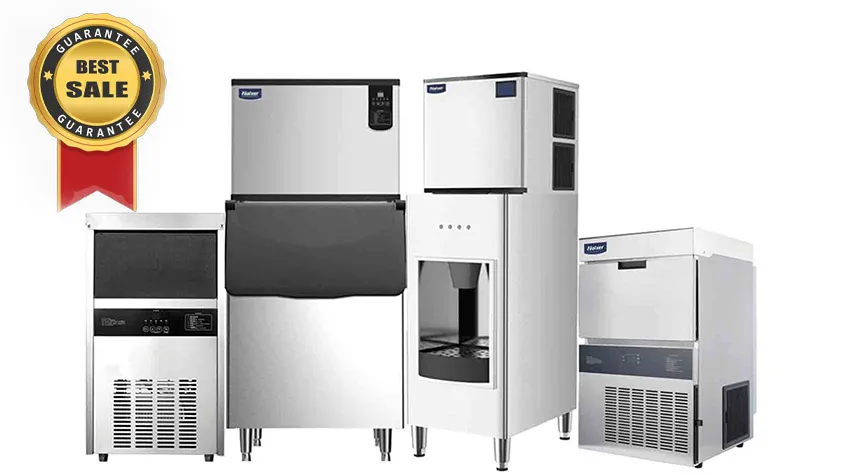
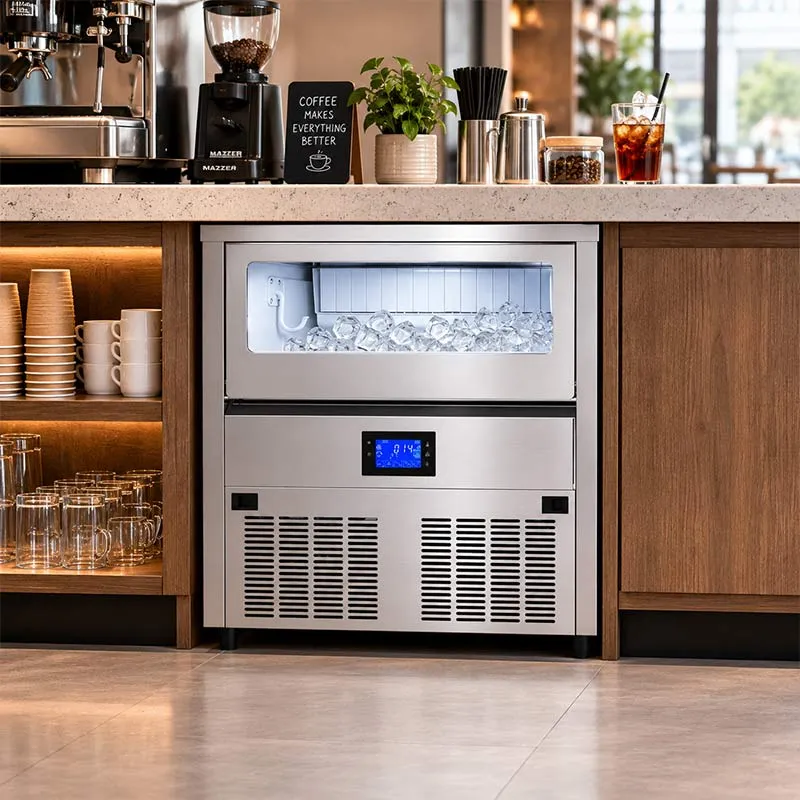
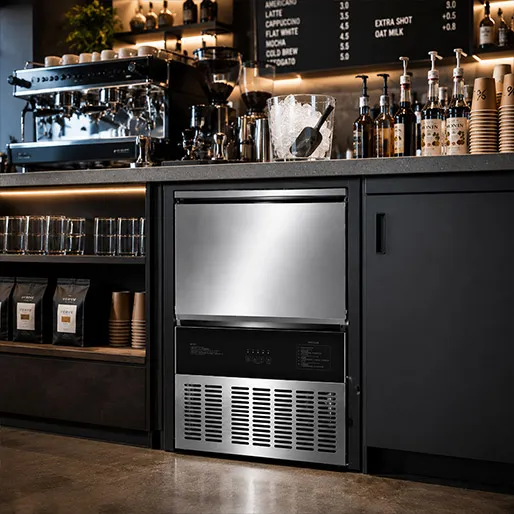
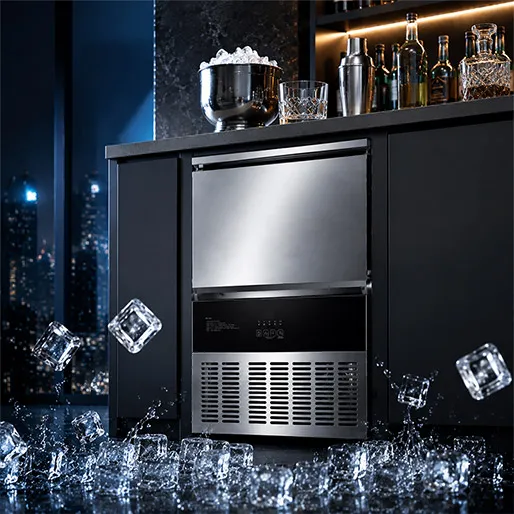
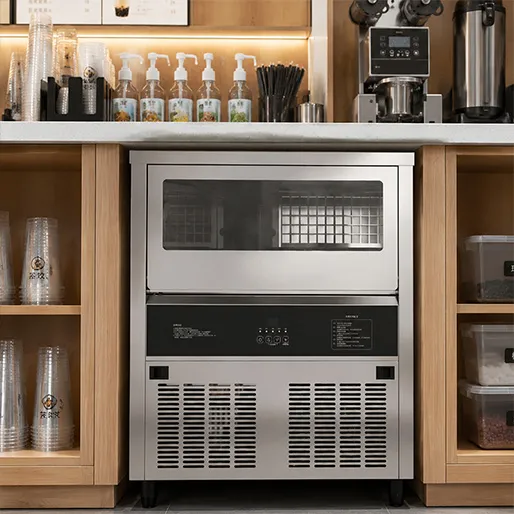
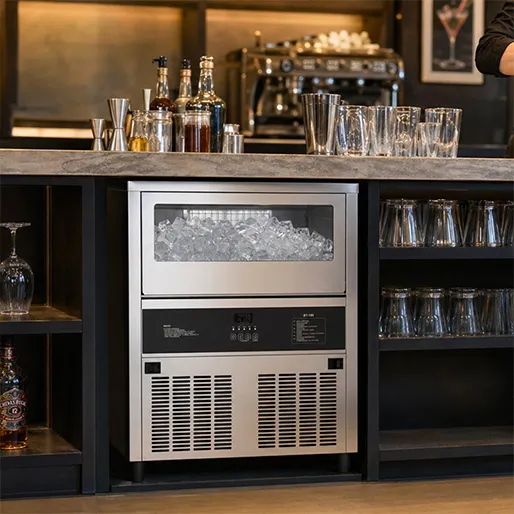
Built-in undercounter units (BT series) are the sweet spot for most trucks: 745–750 mm tall, a built-in 20–51 kg bin, all-in-one operation, and 445 W on the catalog spec. They slide under a counter and keep the ice within arm’s reach at service.
Integrated cube machines (TH-80B to TH-260B) add capacity and bin size at heights of 760–960 mm — a good option when your truck has taller counters or a dedicated equipment bay.
Standalone machines with large bins (TH-280B and up) are 1,490–1,700 mm tall and built for restaurants and trailers, not standard trucks. Skip them unless you’re building a high-volume rig with the floor space and power to match.
For beverage-led trucks (smoothies, boba, cocktails), nugget ice is worth a look — see the Nugget Ice Series. For seafood and display trucks, flake ice is the professional choice — read how a flake ice machine benefits your business. If your concept is dessert coffee, octagon “jelly” ice (Naixer’s BT-GD90/GD140 class, 40–63 kg/day) is a niche option worth reviewing in the catalog.
For more help choosing between brands and classes, our breakdown of the best ice machine for a small business and the best undercounter ice makers are the natural next reads.
Portable vs Commercial: What "Portable Ice Maker" Really Means
Search “portable ice maker for food truck” and you’ll mostly find home-appliance countertop units. Read the fine print: those machines are typically rated well under 100 lb/day — fine for sampling, a backup bin, or a small coffee cart, but not for a service window selling 150 iced drinks a day.
Commercial ice machines for food trucks are a different class: stainless steel bodies (Naixer uses 304/316 on food-contact surfaces), commercial compressors, larger bins, self-cleaning cycles, and serviceable parts. The investment is larger — but so is the ability to survive a Friday night rush without buying bagged ice at retail prices.
Rule of thumb: if your truck’s busiest hour needs more than a couple of dozen iced drinks, buy commercial.
2026 Price Ranges for Food Truck Ice Machines
| Segment | Typical US Street Price | Marketplace Examples (Oct 2026) |
|---|---|---|
| Entry compact (80–200 lb/day) | $310–$700 | EUHOMY 100 lb — $309.99 (Amazon); COTLIN 15" drainless — $359.99; EUHOMY 200 lb — $539.99 (Home Depot) |
| Mid undercounter (300–450 lb/day) | $1,360–$1,800 | COTLIN 450 lb — $1,359.99 (Amazon); ELECTACTIC 352 lb — $1,749.99 (Wayfair) |
| Mid-high (550–660 lb/day) | $2,270–$2,580 | Garvee 360 lb — $2,265.99; Cooler Depot 660 lb — $2,572.50 (Walmart) |
| Premium US brands (830–1,830 lb/day) | $6,730–$9,850 | Manitowoc IDT0900N — $6,733; IDT1200C — $6,765; IYT1200A — $7,299; IDT1500A — $9,849 |
Here’s what those price bands mean in practice. The $310–$700 entry tier is dominated by imported compact units sold on marketplaces — fine for very light duty, but check certifications and parts availability before you commit. The $1,360–$2,600 mid tier buys proper undercounter commercial units around 350–660 lb/day, which covers most food trucks. The $6,700–$9,900 premium tier is US-brand territory with dealer service networks behind it.
Naixer machines sit in the factory-direct channel: quote-based pricing rather than fixed retail, with volume pricing for fleets, builders, and distributors. If you’re comparing your landed cost against marketplace prices, include freight, duty, and your time — see our cost breakdown for the full math.
Installation Checklist for a Moving Kitchen
Hand this list to your upfitter or check it yourself before the first service:
- Dedicated circuit with GFCI protection, correct voltage (for the US, confirm the 115V/60Hz configuration with the factory), and breaker sizing from the nameplate — not from marketing pages.
- Generator headroom: total running watts + startup surge + 20% reserve. Share every nameplate with the generator supplier.
- Water: filter installed, line pressure checked, or tank + pump sized for a full service day.
- Drain plan: gravity fall, pump, or drainless — decided before counters are cut.
- Mounting: secured to the floor or counter structure, clearances respected on all vented sides.
- Ventilation: the machine rejects heat into the truck; plan airflow so it isn’t recycling its own hot air.
- Cleaning routine: one-touch cleaning cycles exist on Naixer units — schedule them weekly in season, and train staff on the ice-thickness setting (the controller defaults to a 15-minute cycle, adjustable in one-minute steps).
- Service access: leave room to remove the front panel and reach the water inlet and condenser.
For the full checklist beyond trucks, see our commercial ice machine installation guide. And if you’re budgeting long-term, our guide on how long undercounter ice makers last explains what drives lifespan in mobile use.
Buying Direct: For Food Truck Builders, Fleets and Distributors
If you build trucks — or run more than one — the economics change. Upfitters and fleet operators buy in volume, which means factory-direct supply, OEM branding, and US-spec configuration become the deciding factors.
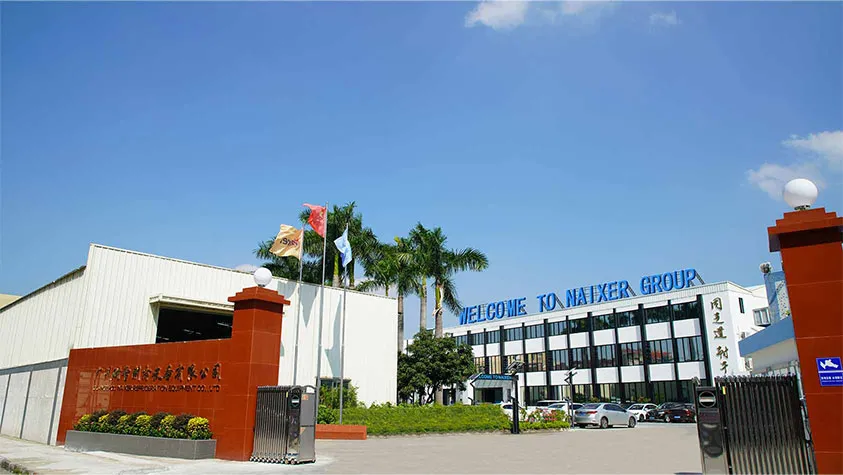
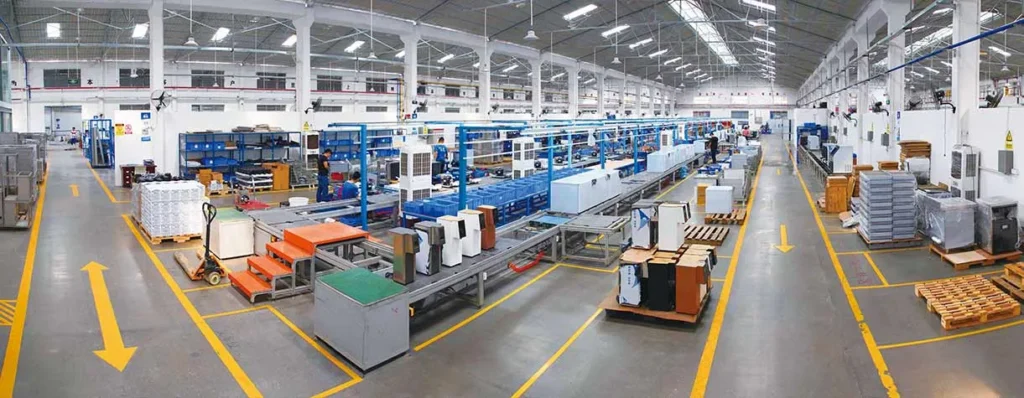
What Naixer offers in this segment, per the company’s catalog and product pages: machines manufactured in Guangzhou since 2010 (the company reports a 30,000 m² factory, 300+ team, and customers in 100+ countries), a compact range that fits truck counters (BT-series undercounter units at 745–750 mm height with 20–51 kg bins, 22 × 22 × 22 mm cubes, R290 refrigerant on the compact lines), one-touch cleaning, optional UV-C sterilization on split-type units, and OEM/ODM support. For volume buyers, the practical next step is a spec sheet with US power configuration, certification documents, MOQ, and lead time — see how factories compare in our guide to ice machine manufacturers in China, and ask about the Naixer distributor program if you’re building a reseller line.
FAQ: Commercial Ice Machines for Food Trucks
How much does a commercial ice machine for food truck use cost?
Expect $310–$700 for compact entry units, $1,360–$2,600 for mid-size undercounter commercial machines covering most trucks, and $6,700–$9,900+ for premium US-brand high-capacity systems. Factory-direct pricing is quote-based and typically lower at volume — request a landed-cost comparison for your spec.
How much ice does a food truck need per day?
Most trucks need 100–200 lb/day; high-volume trucks with fountains or bagged-ice sales need 400+ lb/day. Measure your peak hour, weigh one served cup of ice, and add a 20–30% buffer — then size from there.
Can a food truck run an ice machine on a generator?
Yes — if the generator is sized for the running watts plus compressor startup, not just the running figure. Naixer’s compact units list 330–950 W in the catalog (220V/50Hz export spec); for the US, request the 115V/60Hz nameplate and amp draw and size the generator from that.
Do I need a water tank or a water connection?
Either works. Trucks with event hookups can plumb in; mobile-only trucks need a potable tank with a pump. In both cases, add a water filter — scale is the top cause of slow ice and service calls.
What about the drain?
Decide before installation: gravity drain to a grey-water tank, a drain pump, or a drainless design where available. Ask your supplier which option the specific model supports — don’t assume.
Is a portable ice maker enough for a food truck?
Usually not. Home-style portable units are typically rated well under 100 lb/day — suitable for backup or very light service, not for a busy window. Commercial undercounter units are built for continuous duty, sanitation, and serviceability.
Which ice type is best — cube, nugget or flake?
Cube for general beverage service, nugget for chewable/self-serve drinks (smoothies, boba), flake for seafood and display. Match the ice to your menu first; the machine class follows.
How do I keep the machine working in summer heat?
Keep the condenser clean, respect ventilation clearances, avoid blocking the front grille, and watch for high-condensation-temperature warnings (Naixer controllers flag a fault above 70°C condensation temperature). If your summers are brutal, size up one capacity step.
Get a Factory-Direct Quote
Whether you’re outfitting one truck or supplying a fleet, tell us your menu, peak volume, space, and power setup — we’ll recommend a model and send a factory-direct quote within 24 hours.
- Food truck owner? Send your counter dimensions and generator specs — we’ll match the right BT or TH model.
- Builder, fleet, or distributor? Request the wholesale sheet, US configuration options, certification documents, and MOQ.
- Get a factory quote → or message us on WhatsApp at +86 133-9248-0997.
- Prefer to browse? Download the 2026 Naixer product catalog (PDF).