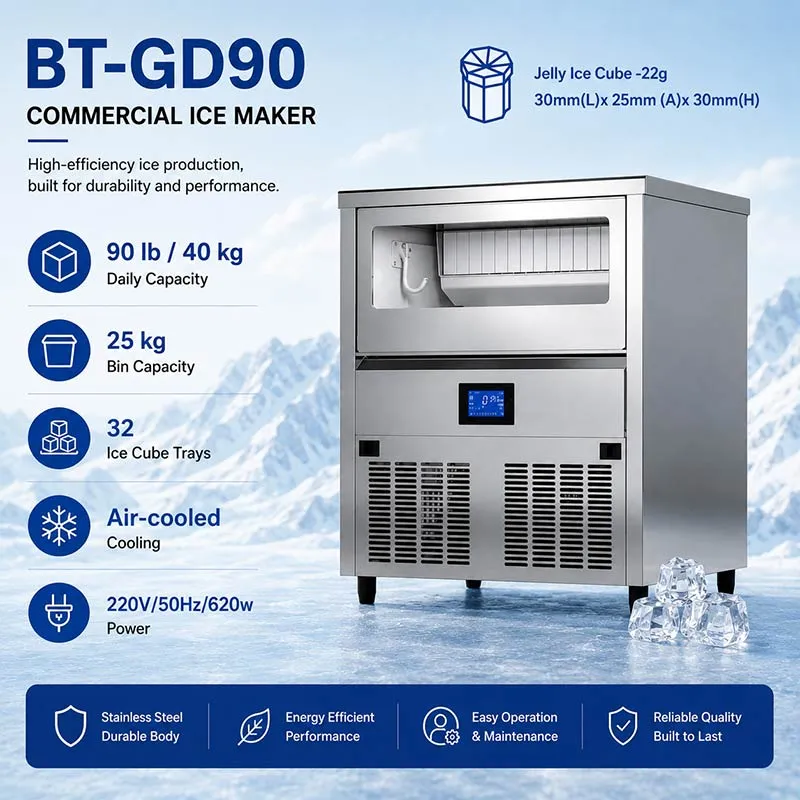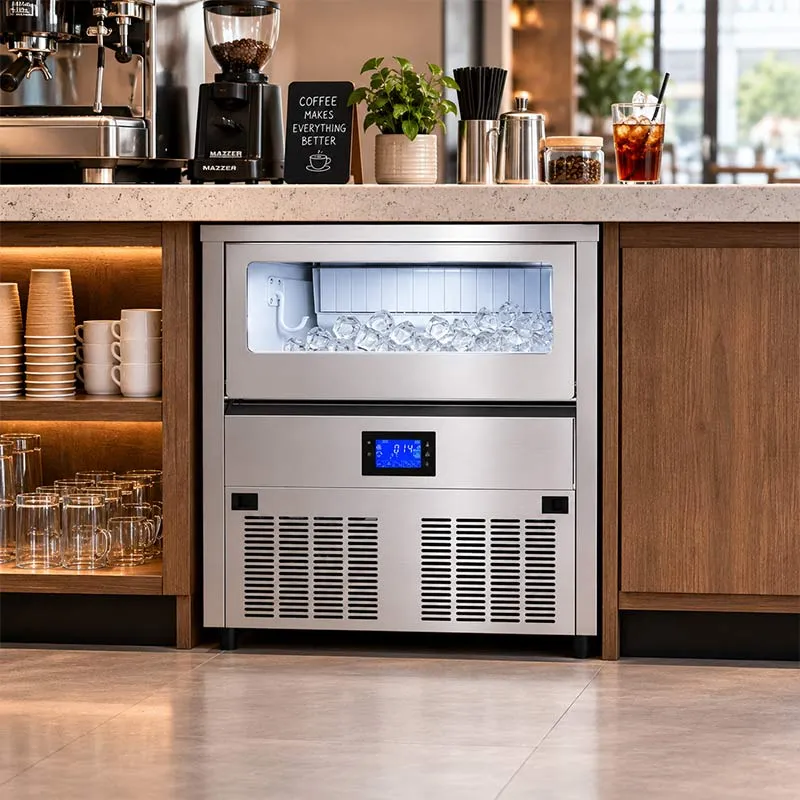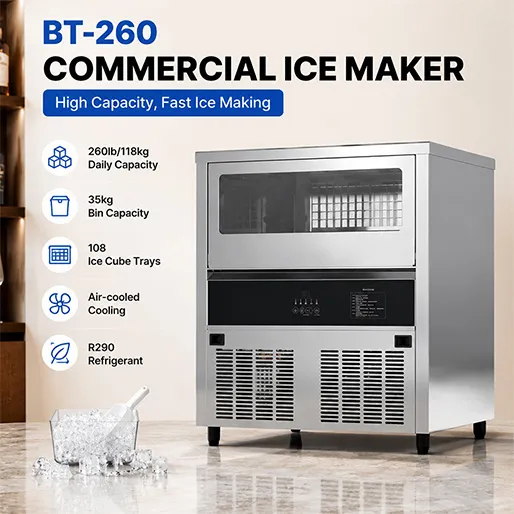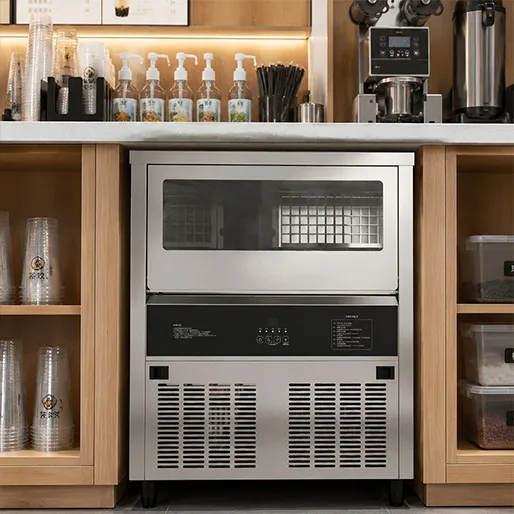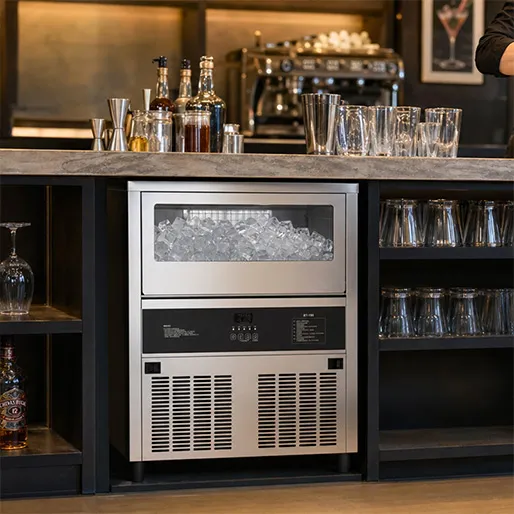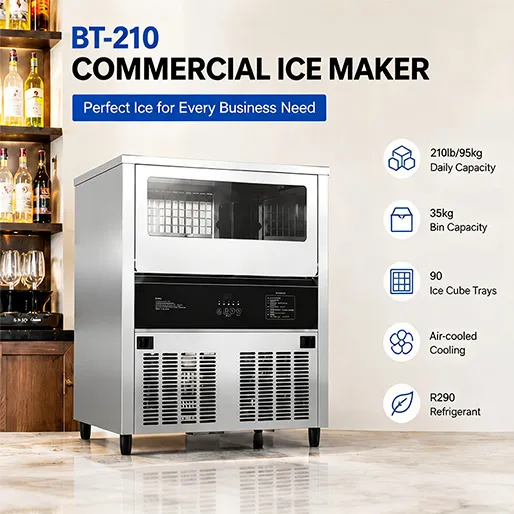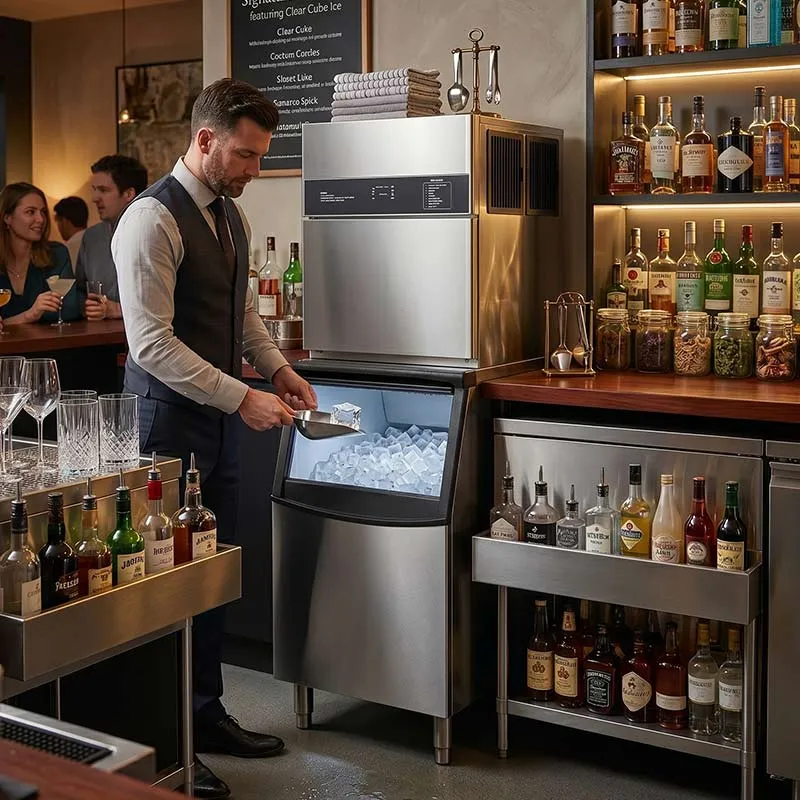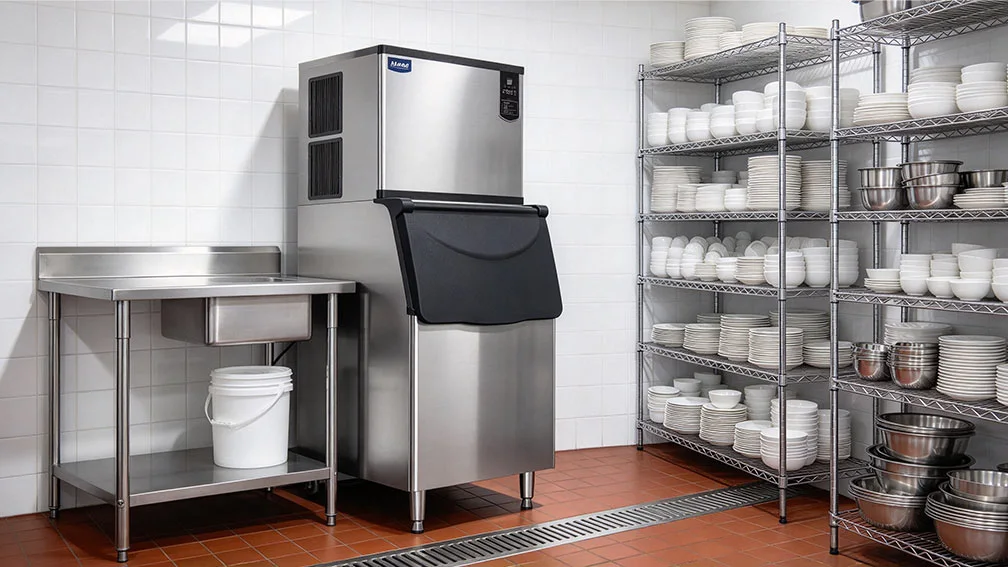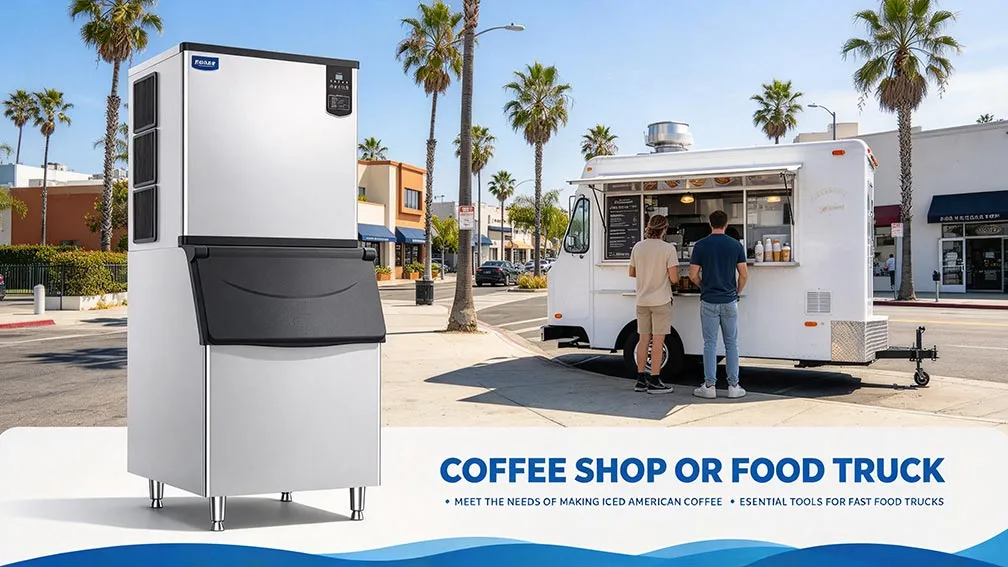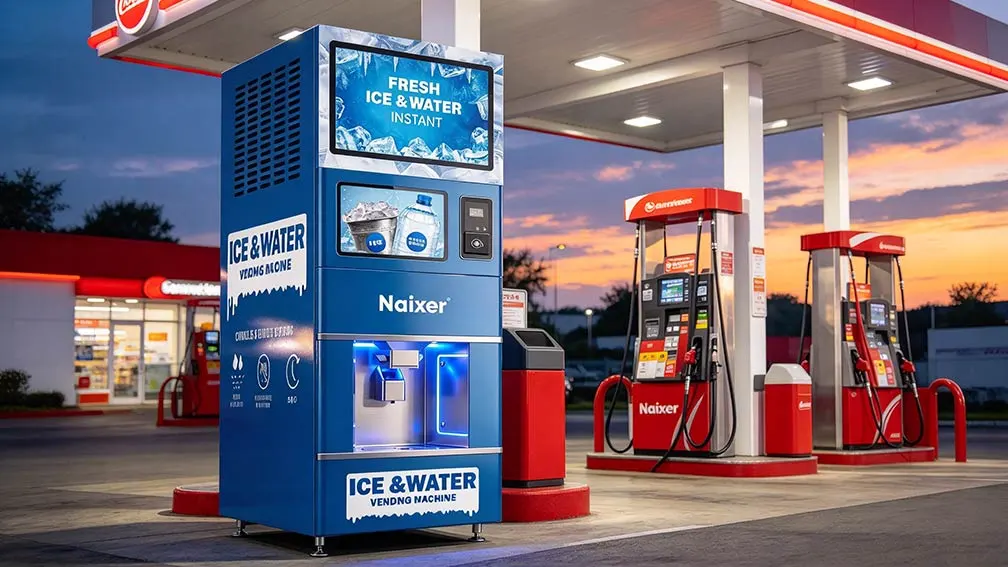
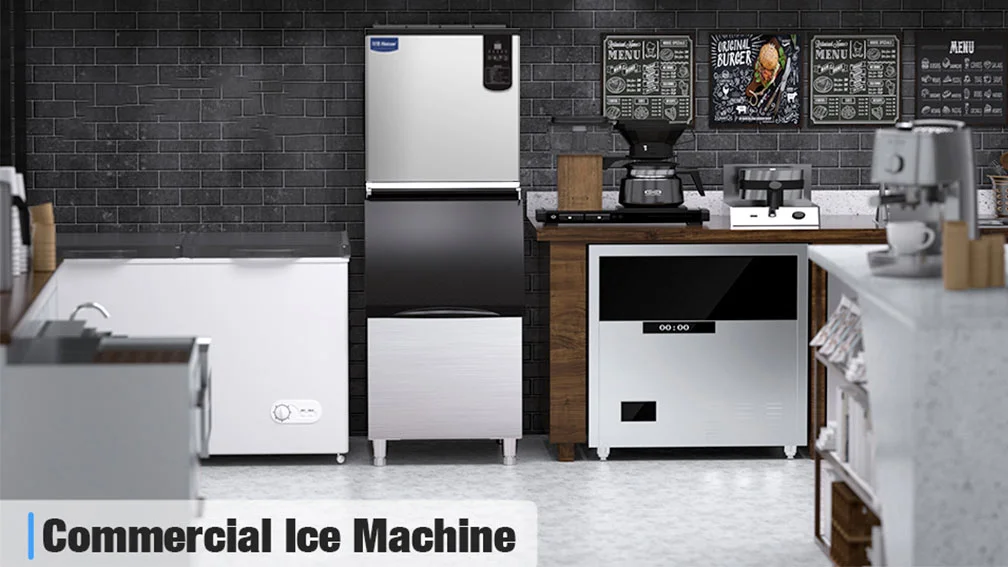
Selecting an ice maker machine for business operations is not merely a equipment purchase—it is a core infrastructure investment that directly impacts daily workflow, beverage quality, and profit margins. Whether running a bustling cocktail lounge, a 200-seat restaurant, a hotel, or a healthcare facility, running out of ice during peak hours can disrupt service and damage your reputation.
Commercial ice equipment operates under higher ambient temperatures and continuous duty cycles compared to residential units. Finding the right machine requires balancing daily ice output (measured in pounds per 24 hours), storage bin capacity, cooling efficiency, and footprint constraints.
| Business Type | Recommended Output (lbs/24h) | Preferred Machine Type | Ideal Ice Type | Factory Direct Price Range (USD) |
|---|---|---|---|---|
| Office / Breakroom / Healthcare | 50 – 200 lbs | Countertop / Small Dispenser | Nugget / Chewable Ice | $350 – $400 |
| Small Cafe / Bar | 100 – 250 lbs | Undercounter Self-Contained | Half-Cube / Crescent Ice | $400 – $700 |
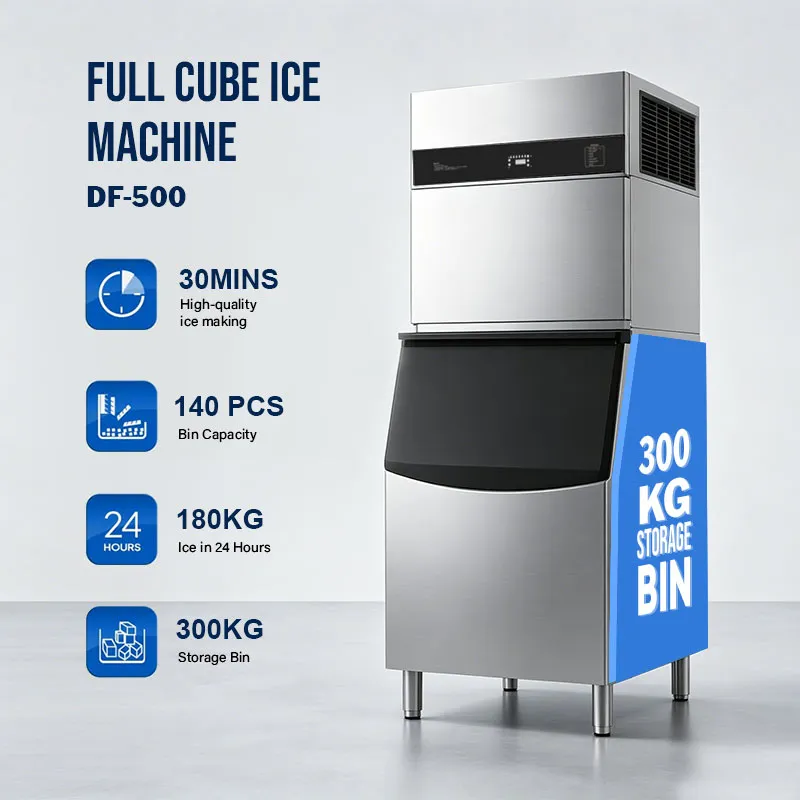
| Medium Restaurant | 300 – 600 lbs | Modular Machine + Storage Bin | Full Cube / Dice Ice | $900 – $1,400 |
| Hotel / Large Seafood Buffet | 800 – 1,500+ lbs | High-Capacity Modular / Flaker | Cube / Flake Ice | $1,600 – $3,100+ |
In this guide, you will learn:
Commercial vs. Residential Ice Makers: Why Business Equipment Matters
Using a residential ice maker in a commercial environment leads to rapid component failure, excessive energy bills, and sanitation compliance violations. A dedicated commercial ice machine for business environments is engineered to meet strict food safety and production demands.
Continuous Duty Components: Heavy-duty compressors, commercial-grade pumps, and 304 food-grade stainless steel evaporators allow these units to produce ice constantly in 24-hour cycles.
Sanitation & Compliance: Commercial machines are built to satisfy NSF/ANSI Standard 12 (sanitary design for ice-making equipment) and UL 563 electrical safety benchmarks, which local health inspectors mandate during routine audits.
High Ambient Resilience: Business-grade units operate reliably in kitchen environments where ambient temperatures regularly reach 90°F(32°C).
Sizing Calculator: How Much Ice Does Your Business Actually Need?

Purchasing an undersized machine forces your staff to buy bagged ice at retail prices, while an oversized machine wastes electricity and standing water. Calculate your daily requirement using these industry baseline benchmarks:
Daily Required Ice Capacity (lbs) = Volume Multiplier × Daily Customer / Unit Capacity
Restaurants & Dining: Calculate 1.5 lbs(0.7kg) per customer seat per day.
Bars & Cocktail Lounges: Calculate 3 lbs(1.4kg) per seat per day (account for heavy craft cocktail presentation and shaker cooling).
Hotels & Hospitality: Calculate 5 lbs(2.3kg) per guest room per day.
Offices & Breakrooms: Calculate 0.5 lbs(0.2kg) per employee per day.
Healthcare & Cafeterias: Calculate 10 lbs(4.5kg) per active patient bed per day.
Types of Business Ice Machines: Matching Form Factor to Footprint
Choosing the best ice machine for small business settings requires matching the unit’s physical structure to your floor plan and daily demand volume.
| Form Factor | Footprint / Dimensions | Key Advantage | Limitation |
|---|---|---|---|
| Undercounter | Compact (24" - 30" width) | Saves floor space, fits under standard bars | Limited bin storage (typically < 100 lbs) |
| Modular Head + Bin | Full Size (30" - 48" width) | High production volume, interchangeable bins | Requires dedicated kitchen floor space |
| Countertop Dispenser | Medium (16" - 24" width) | Touchless sanitary dispensing | Higher unit cost per pound of production |
1. Undercounter Ice Machines
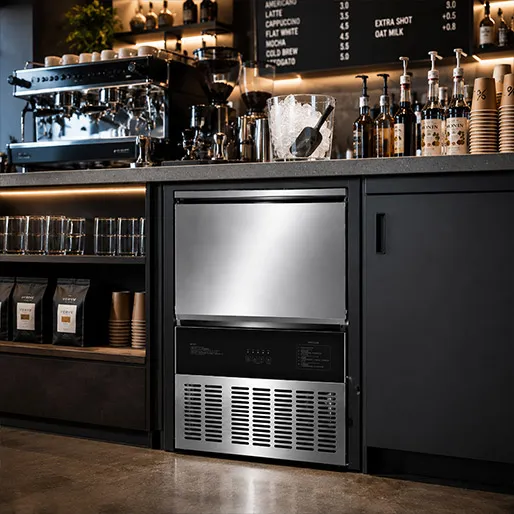
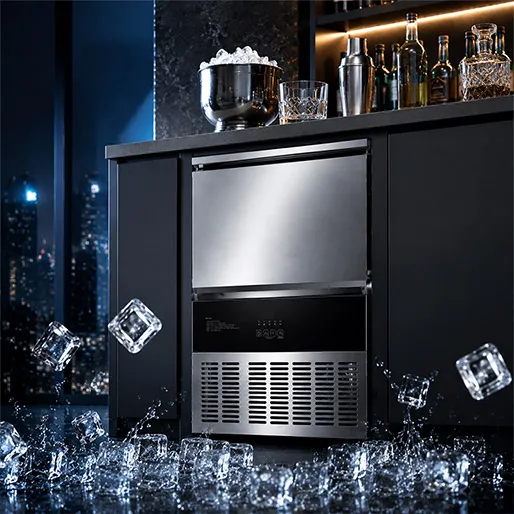
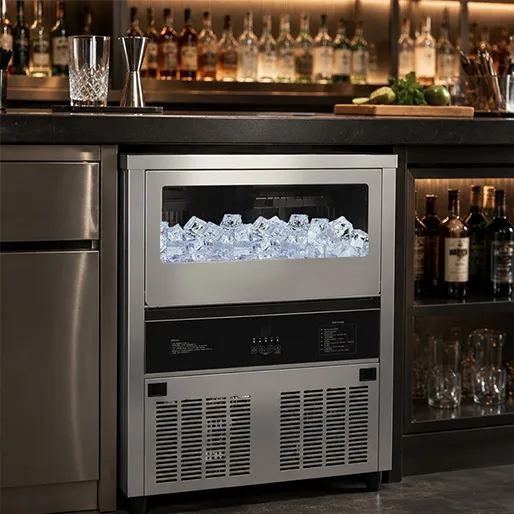
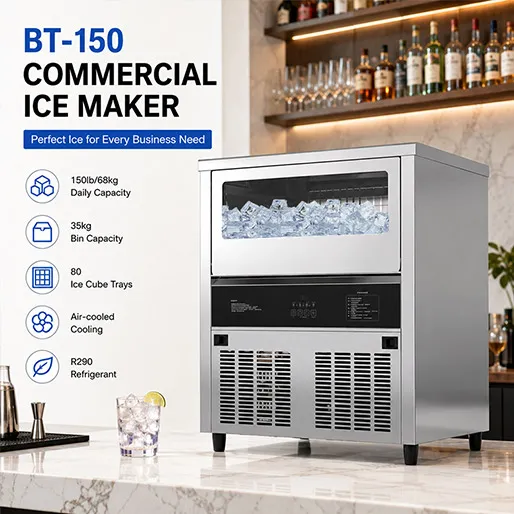
Undercounter units combine the ice maker head and storage bin into a compact cabinet (typically 30–40 inches tall). Designed to slide beneath standard counters, they are ideal for small bars, coffee shops, and executive suites where floor space is limited. Learn more about choosing the best ice cube shapes for beverages for undercounter applications.
2. Modular Ice Machines (Head Units)
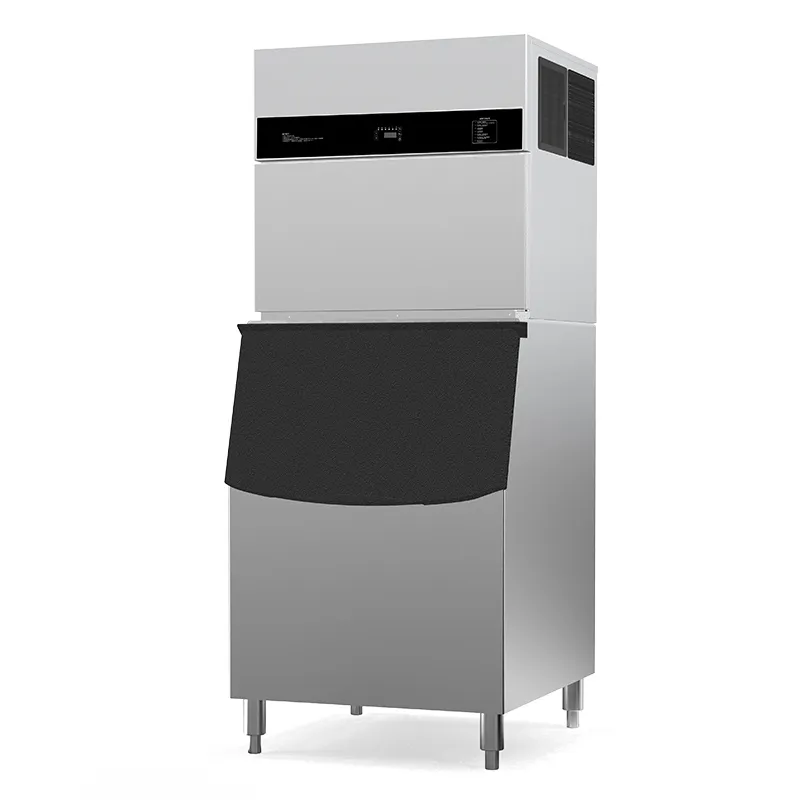
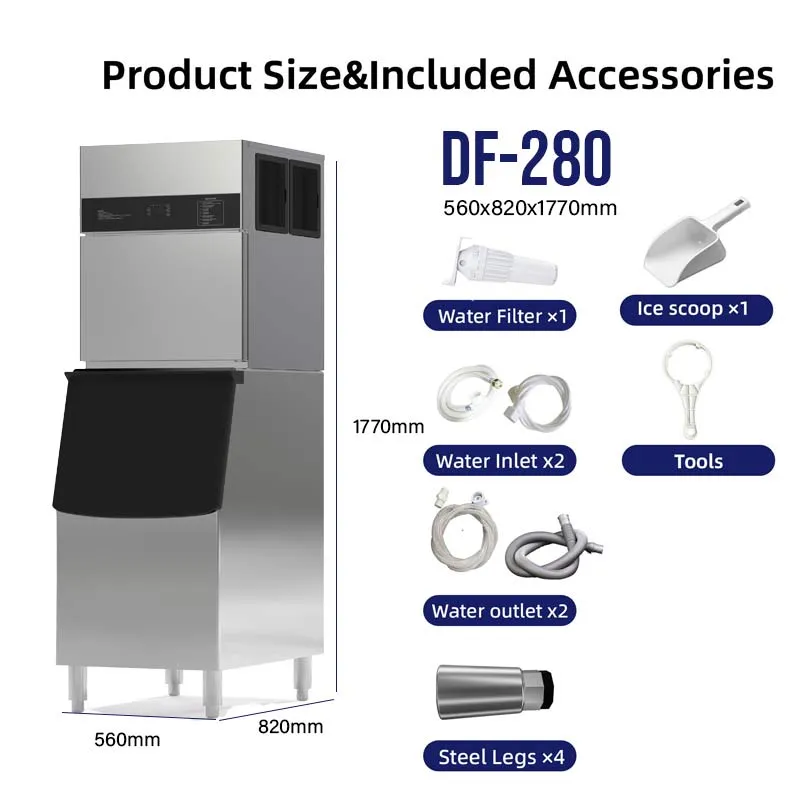
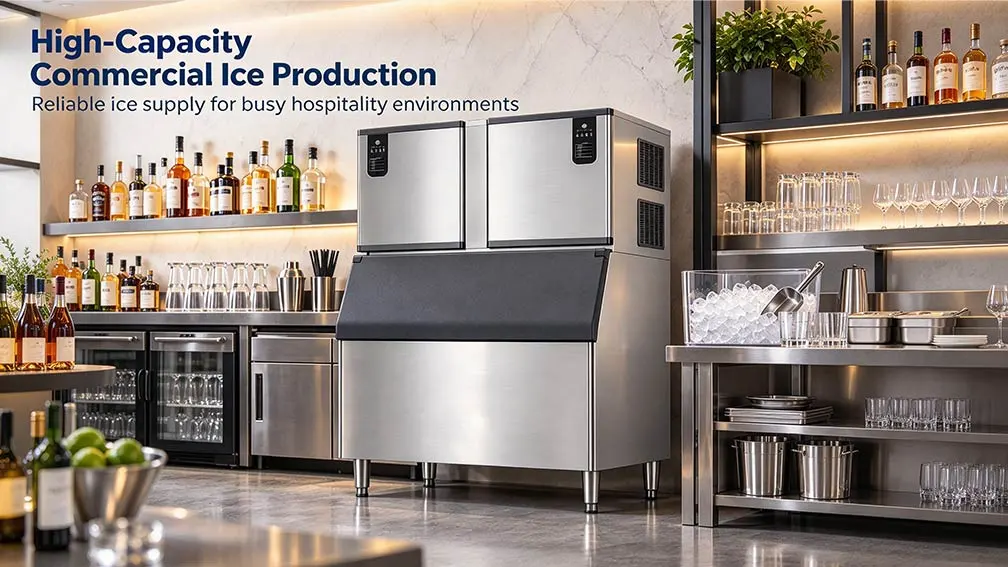
Modular units consist of a top-mounted ice generator designed to sit on top of a separate, high-capacity storage bin or dispenser. Producing anywhere from 300 to over 2,000 lbs of ice per day, modular systems serve as the workhorse for high-volume dining establishments, hotels, and processing facilities.
3. Countertop Ice & Water Dispensers
Commonly found in office breakrooms, hospital stations, and self-service cafeterias, these units dispense chewable nugget ice and water directly into cups, reducing contamination risk from ice scoops.
Air-Cooled vs. Water-Cooled: Total Cost of Ownership (TCO)

The cooling mechanism directly governs operating costs, water consumption, and installation complexity:
Air-Cooled Ice Machines: The most common and cost-effective choice. They use fans to draw ambient air over the condenser coils. While they slightly heat up ambient room temperature, they require no additional water to cool the system, lowering overall utility costs. Check out our detailed guide on ice machine electricity consumption to calculate monthly utility impacts.
Water-Cooled Ice Machines: These units circulate cold water through a secondary circuit to cool the condenser. They run quietly and maintain consistent production even in hot kitchens exceeding 100°F (38°C). However, they consume significant amounts of water, resulting in higher utility bills unless connected to a closed-loop cooling tower.
Reviewing a comprehensive commercial ice machine cost breakdown helps clarify initial capital expenditure versus 5-year operating costs.
Operational Maintenance & Longevity SOP
Mineral scale buildup is the leading cause of premature ice machine failure. Implementing a structured maintenance plan ensures consistent ice clarity and prolongs compressor life:
Water Filtration System Installation: Always install a multi-stage pre-filter with a scale inhibitor. Replace filter cartridges every 6 months to prevent lime scale from coating the evaporator plate.
Bi-Annual Sanitization Routine: Run an approved nickel-safe ice machine cleaner through the wash cycle twice a year to remove mineral deposits, followed by an EPA-registered sanitizer.
Air Filter & Condenser Cleaning: Vacuum the air filter and condenser coils monthly to remove grease and dust, ensuring optimal heat transfer and preventing compressor overheating.