Choosing the Perfect Type of Ice for Your Restaurant, Bar, or Hotel
Have you ever taken a sip of a fountain soda at a fast‑food restaurant and found yourself more impressed by the ice than the drink? That soft, crunchy pellet that seemed to soak up the cola’s flavor, making every sip just a little more satisfying? Or maybe you’ve sat at a dimly lit cocktail bar and watched a single, crystal‑clear cube land in a rocks glass, and thought — that looks like it belongs there. That’s the quiet power of ice. Not all frozen water is created equal, and choosing the perfect type of ice for your business isn’t just a matter of preference. It’s a decision that touches every drink you serve, every plate you present, and every guest who walks through your door.
In this guide, you will learn:
Full Cube Ice — The Slow‑Melting Standard for Bars and Fine Dining

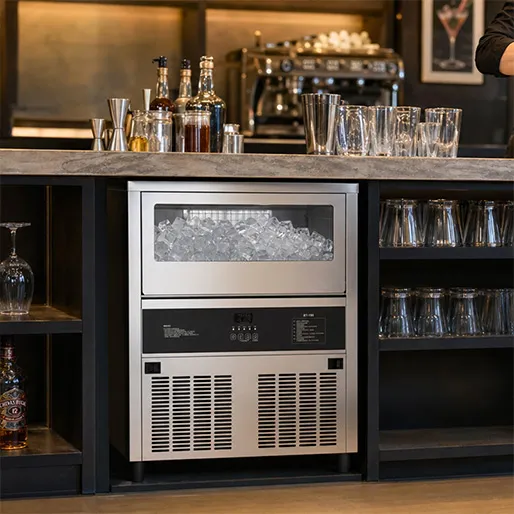
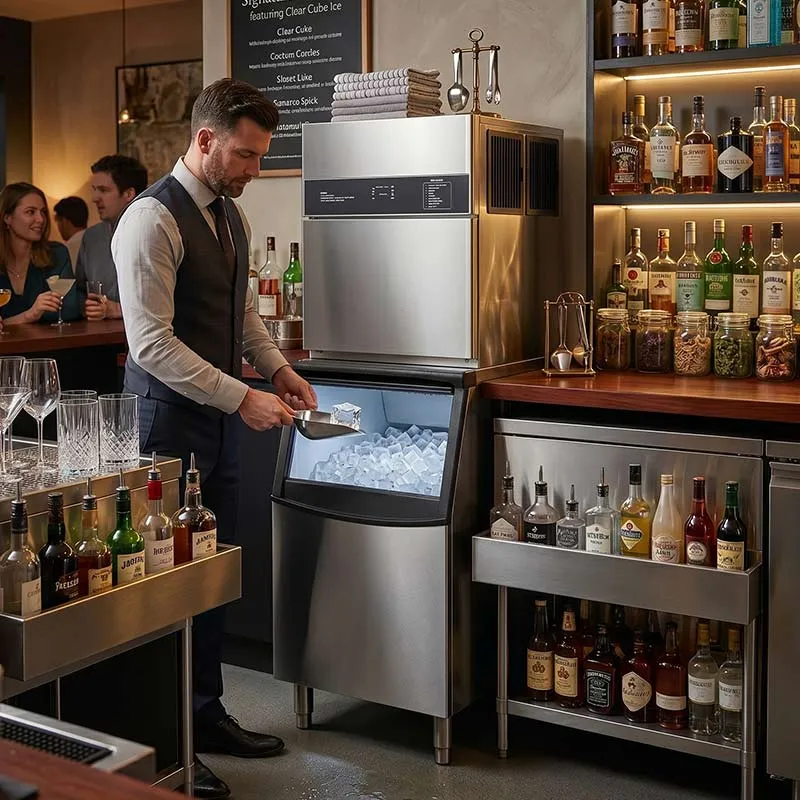
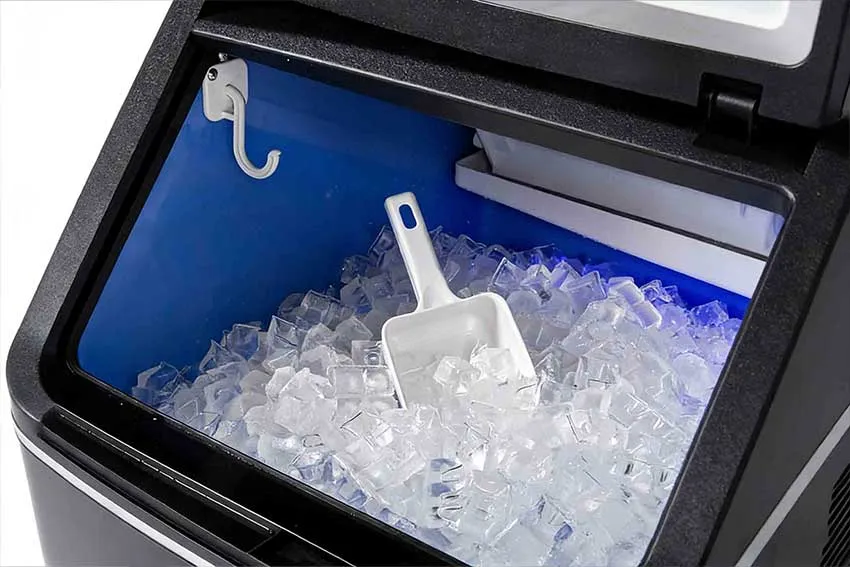
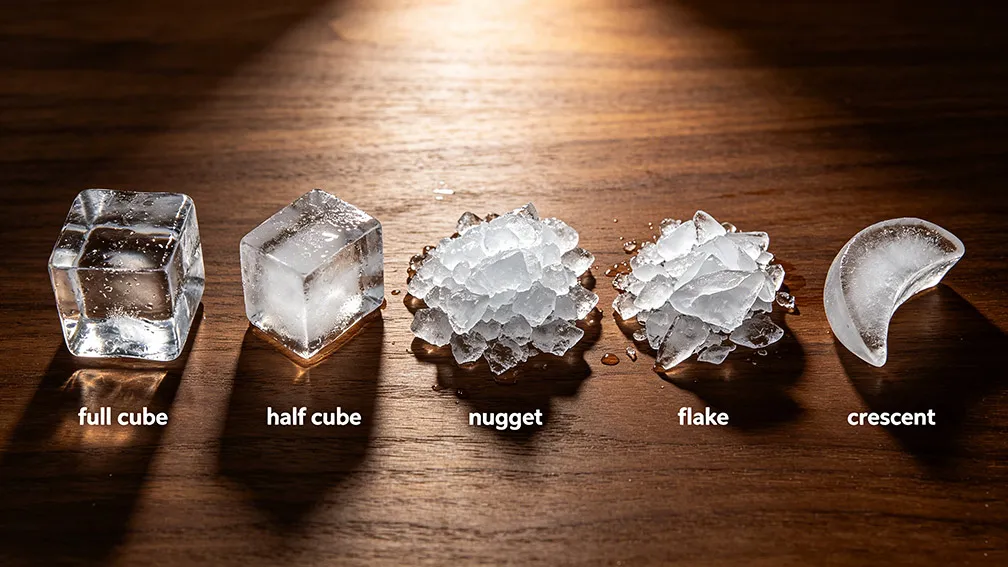
There’s a reason that almost every high‑end cocktail bar you’ve ever walked into uses the same ice. It’s not a coincidence. It’s physics. Full cube ice — those 22×22×22mm squares that look like they were cut from a block of glass — has the smallest surface‑to‑volume ratio of any common commercial ice shape. Less surface area touching the liquid means slower heat transfer, which means slower melting. For a bartender building an Old Fashioned or a guest nursing a bourbon on the rocks for twenty minutes, that slow melt is everything. It keeps the drink cold without turning it into a watery shell of itself. The first sip and the last sip taste the same.
But full cube ice isn’t just about performance. It’s about presentation. When a customer sees a clear, hard cube in their glass, something registers — a signal that the establishment cares about the details. In an age where drinks are photographed almost as often as they’re consumed, that visual matters. And for the operator, full cube ice is the most versatile shape in a commercial kitchen. One machine produces ice that works in a soda glass, an iced tea pitcher, and a banquet water station. That’s simplicity that saves money and counter space.
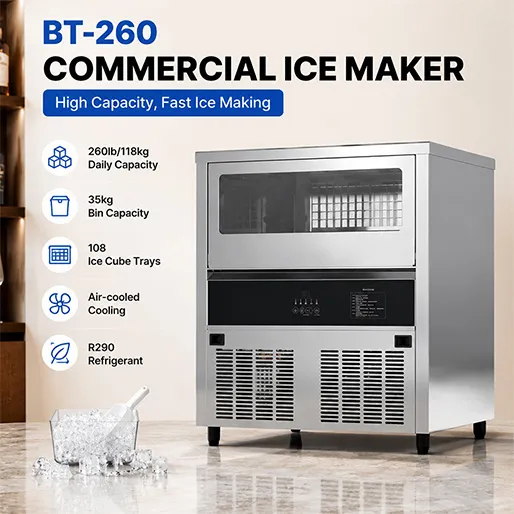
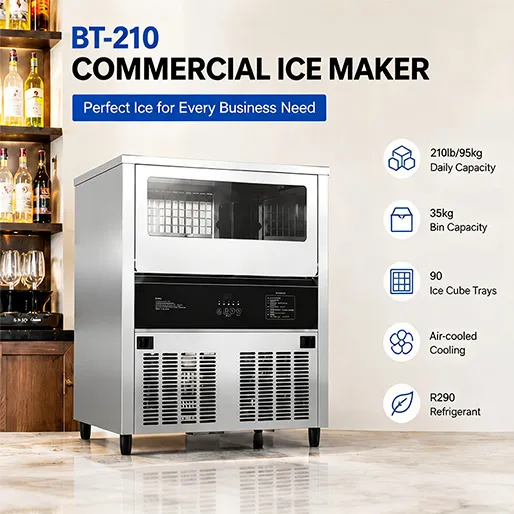
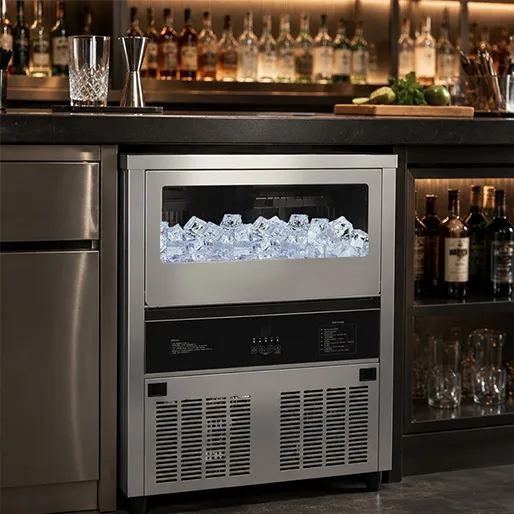
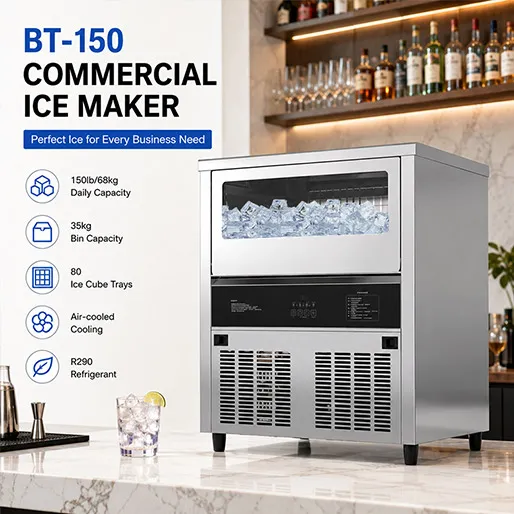
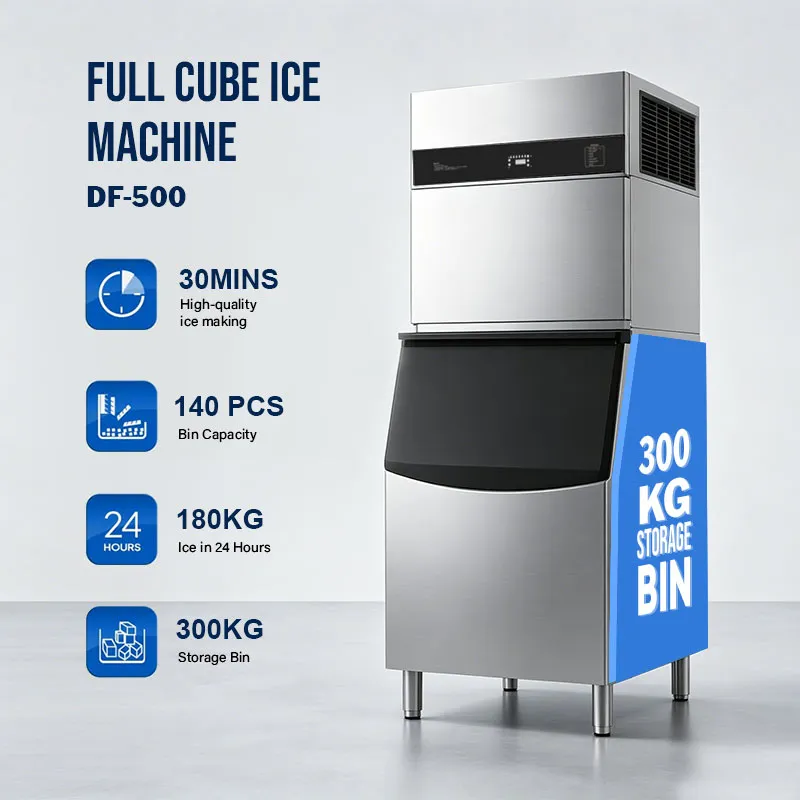
If your business falls into this category — a full‑service restaurant, a hotel lobby bar, a banquet hall, a craft cocktail lounge — a self‑contained full cube ice machine is your foundation. Naixer’s TH series covers this need across a broad capacity range. The TH‑280B delivers 280 to 300 pounds per day for a busy independent bar. The TH‑500B at 500 pounds handles a high‑volume kitchen and bar. The TH‑700B at 700 pounds supports banquet halls and large hotels. Every model in this series arrives with a built‑in storage bin, which means one purchase, one installation, and no separate $800–$2,000 bin to buy. For help calculating exactly how much ice your specific venue requires, our restaurant ice machine sizing guide walks through the formulas by restaurant type.
Nugget Ice — The Chewable Customer Favorite for Quick‑Service and Smoothies
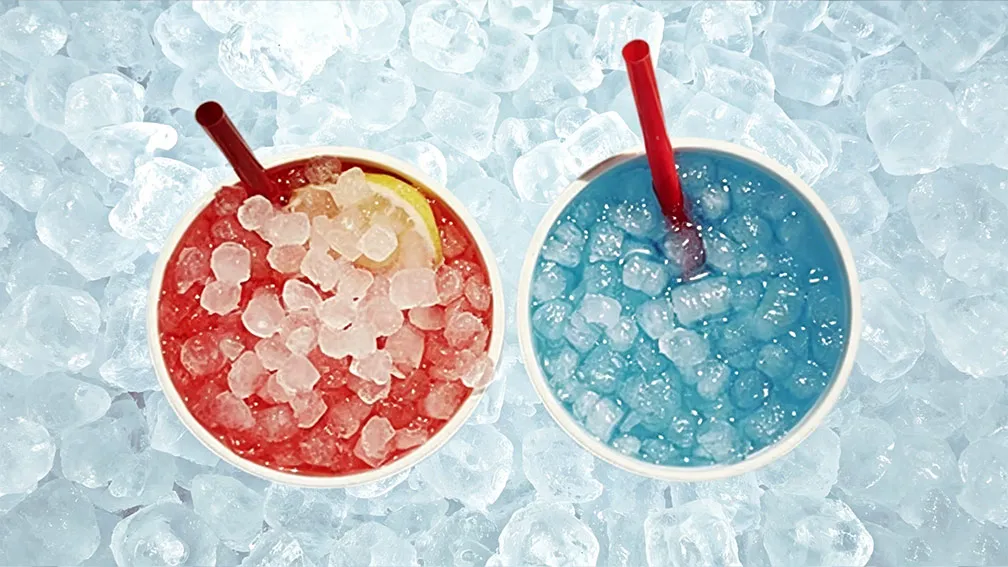
If full cube ice is the professional’s choice, nugget ice is the people’s choice. It’s the ice that people drive across town for. The ice they talk about in online reviews. The ice that turns a routine soda purchase into a ritual. Soft, porous, and instantly chewable, nugget ice — sometimes called pellet ice, Sonic ice, or cylindrical ice — has a texture unlike anything else in the frozen world. It crunches, it absorbs flavor, and it melts in a way that feels satisfying rather than disappointing.
Why does it inspire such loyalty? Partly it’s the mouthfeel. Humans are drawn to foods that crunch, and nugget ice delivers that sensation without the jaw‑breaking hardness of a full cube. Partly it’s the flavor. Because nugget ice is porous, it soaks up whatever it’s submerged in — cola, lemonade, sweet tea — and releases that flavor back as you chew. It doesn’t just chill the drink; it becomes part of the drink.
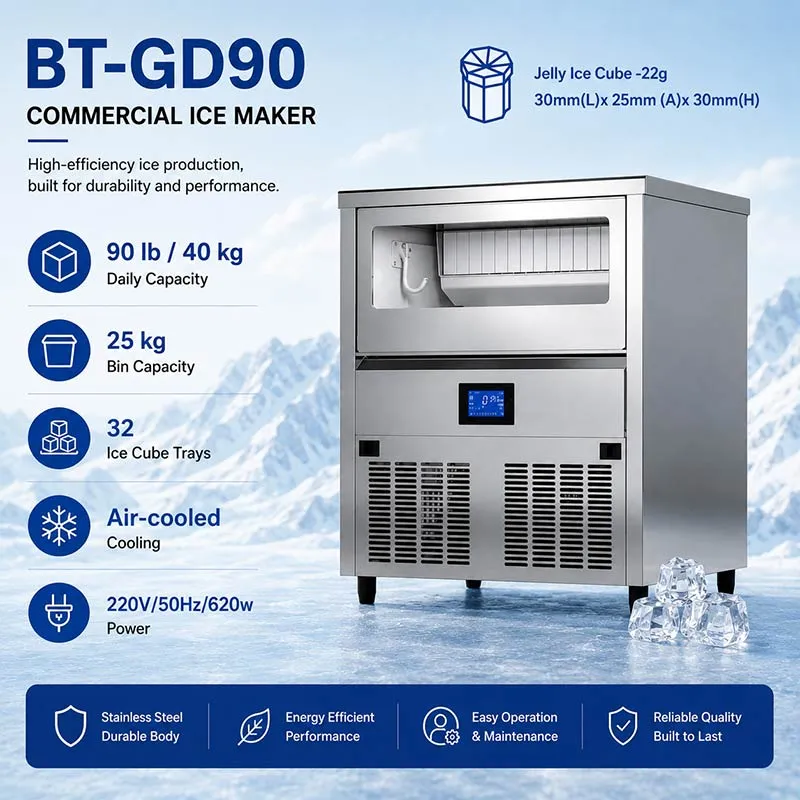
For a quick‑service restaurant, a smoothie shop, or a bubble tea brand, nugget ice is a genuine competitive advantage. It blends effortlessly, reducing wear on blender blades and producing smoother, more consistent frozen drinks. And because it’s so strongly associated with certain beloved brands, adding it to your menu can signal to customers that you’re in that same league. Naixer’s GD series produces this ice in two capacities: the TH‑GD90 delivers 90 pounds per day, perfect for a small shop or a secondary ice station, while the TH‑GD140 at 140 pounds covers higher smoothie and fountain drink volume. Both include a built‑in storage bin and carry the same 3‑year full machine warranty as every Naixer machine.
Flake Ice — The Gentle, Moldable Ice for Seafood and Food Displays
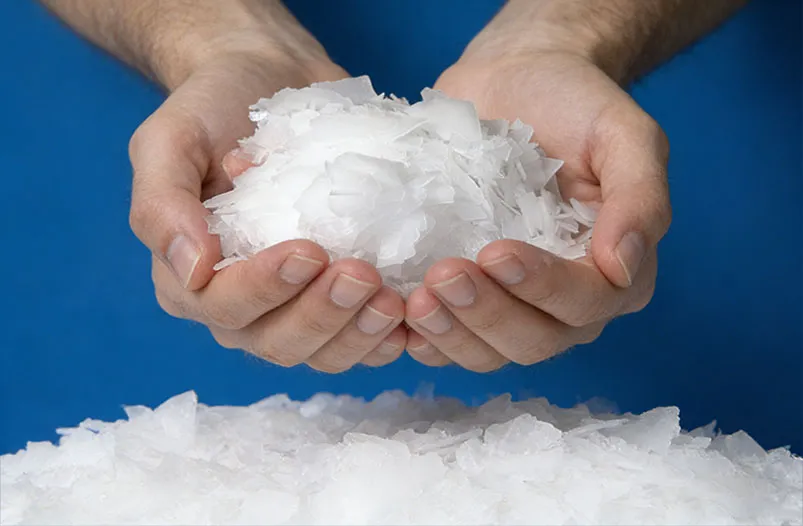
Walk past a seafood counter at a high‑end market or a hotel buffet, and you’ll see a type of ice that looks nothing like what’s in your drink. It’s white, soft, and seems to flow around the fish and shrimp like snow that never melts. That’s flake ice, and for businesses that display fresh food, it’s not optional — it’s essential.
Flake ice is made by freezing a thin layer of water onto a chilled drum, then scraping it off in delicate, irregular flakes that are dry to the touch. The flakes are soft enough to pack around a whole fish without bruising its skin, and dry enough that they don’t pool into a watery mess as they slowly melt. A fresh oyster on flake ice looks plump and glistening. That same oyster on hard cube ice looks like it’s been in a fight, and the shell might be cracked.
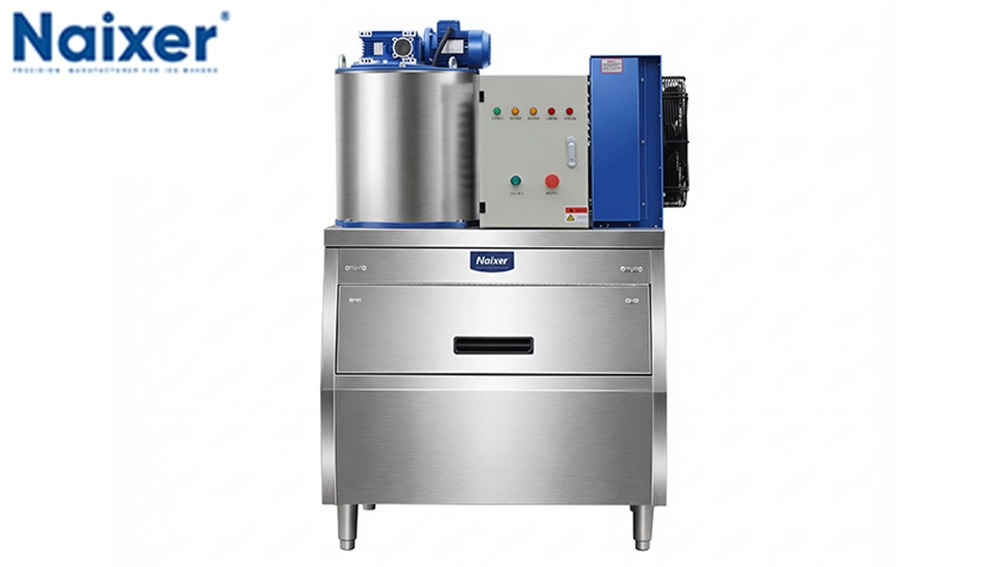
The rule of thumb for seafood displays is about half a kilogram to one kilogram of flake ice per kilogram of product, replaced daily. A busy fish counter moving a hundred kilograms of seafood needs 50 to 100 kilograms of flake ice every single day. Naixer’s PB‑300 produces 300 kilograms per day, comfortably covering that with room for weekends. The PB‑500 at 500 kilograms handles larger markets and processing needs. The PB‑1000 at 1,000 kilograms serves high‑volume wholesale and cold‑chain operations.
Flake ice also finds its way into bakeries, where it’s added to dough to control temperature during mixing, and into healthcare settings for therapeutic cooling. But for restaurants, its primary role is in presentation and preservation — keeping food looking as fresh at closing time as it did when the doors opened.
Crescent Ice — The Self‑Serve Champion for Hotels and Cafeterias

If you manage a hotel, a hospital cafeteria, or a university dining hall, the most important quality in an ice machine isn’t the ice shape itself — it’s whether the ice will actually come out of the dispenser when a guest presses the lever. Anyone who’s ever stood at a self‑serve beverage station, repeatedly jabbing a button while a frozen block of ice refuses to budge, understands this frustration intimately.
Crescent ice was designed to eliminate that exact problem. Its distinctive half‑moon shape — 30 by 38 by 13 millimeters, curved on every side — means the pieces touch each other at only a single point. They don’t lock together. They don’t form a frozen brick. They pour, smoothly and reliably, every single time. That’s why major hotel chains have standardized on crescent ice for decades. When a traveler fills a cup at 6 a.m. before a flight, the dispenser works. No maintenance call, no front desk complaint, no guest starting their day annoyed.
Beyond its dispensing reliability, crescent ice is hard and slow‑melting, just like full cube ice — so it doesn’t dilute drinks any faster. It’s simply a different shape, optimized for a different workflow. Naixer’s SE series produces crescent ice in capacities suited to mid‑size and larger operations. The TH‑SE150 delivers 150 pounds per day, enough for a hotel breakfast buffet or a small employee cafeteria. The BT‑SE120 at 120 pounds fits tighter spaces. Both are self‑contained with built‑in bins. For hotels, sizing generally follows the industry standard of about five pounds of ice per room per day, with additional capacity for banquet and restaurant service. Our complete hotel ice machine sizing guide covers those calculations in detail.
Half Cube Ice — The Efficient Choice for High‑Volume Soft Drinks

Not every drink is meant to be savored for half an hour. Sometimes a soda is just a soda — consumed in five minutes, the cup tossed, the customer gone. In those environments, half cube ice shines.
Half cube ice is exactly what it sounds like: a full cube sliced in half, roughly 22 by 22 by 11 millimeters. It cools drinks faster than full cube ice because more of its surface is in contact with the liquid at once. It also packs more densely in a cup, which means less ice and more beverage per serving — a subtle difference that can add up to meaningful savings across thousands of drinks.
You’ll find half cube ice in self‑serve soda fountains at fast‑food restaurants, in stadium concession stands, and in convenience store fountain stations. Its faster melt rate isn’t a problem in these settings because the drink is finished before dilution becomes noticeable. For full‑service restaurants and bars, however, full cube ice remains the more versatile choice — it serves both quick‑turn sodas and slow‑sipping spirits equally well, without requiring two different machines. If your operation spans both formats, a single full cube machine can usually cover all your needs.
Beyond the Ice Shape — How to Choose the Right Machine for Your Perfect Ice

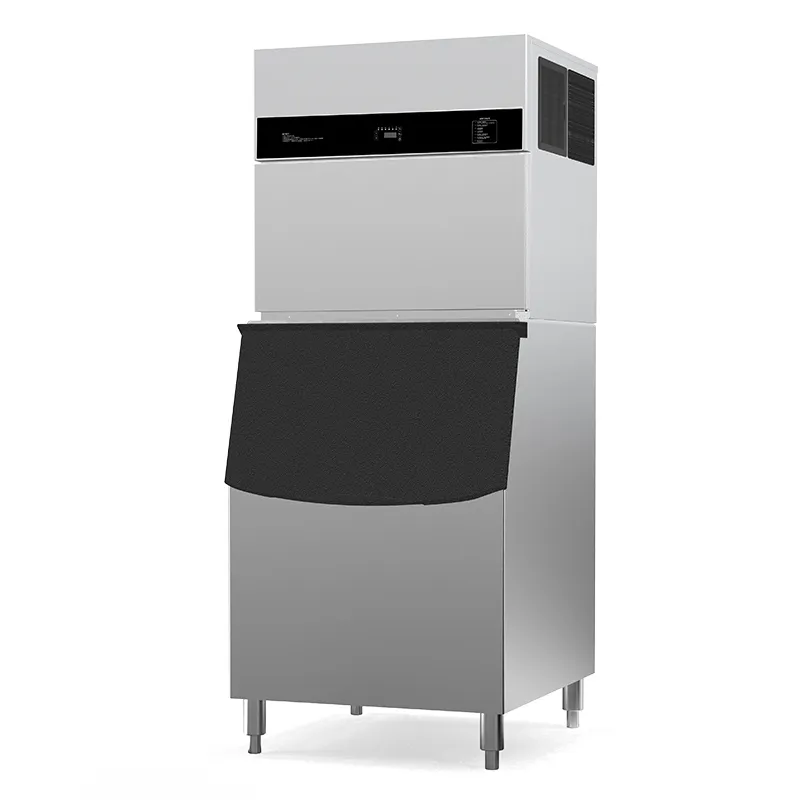
Once you’ve identified the ice type that fits your menu, the next step is choosing the machine that produces it — and this is where many restaurant and hotel owners encounter a costly surprise. Premium equipment brands often sell their ice machines in a modular format: the ice‑making head and the storage bin are two separate items on two separate invoices. A compatible bin for a mid‑size machine can add $800 to $2,000 to the total system cost, and first‑time buyers frequently don’t realize the bin isn’t included until the equipment arrives.
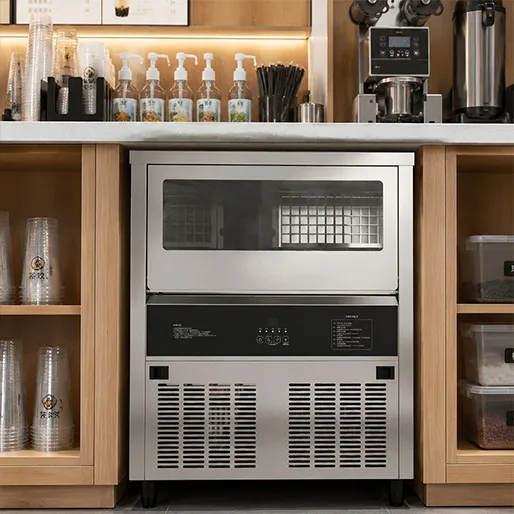
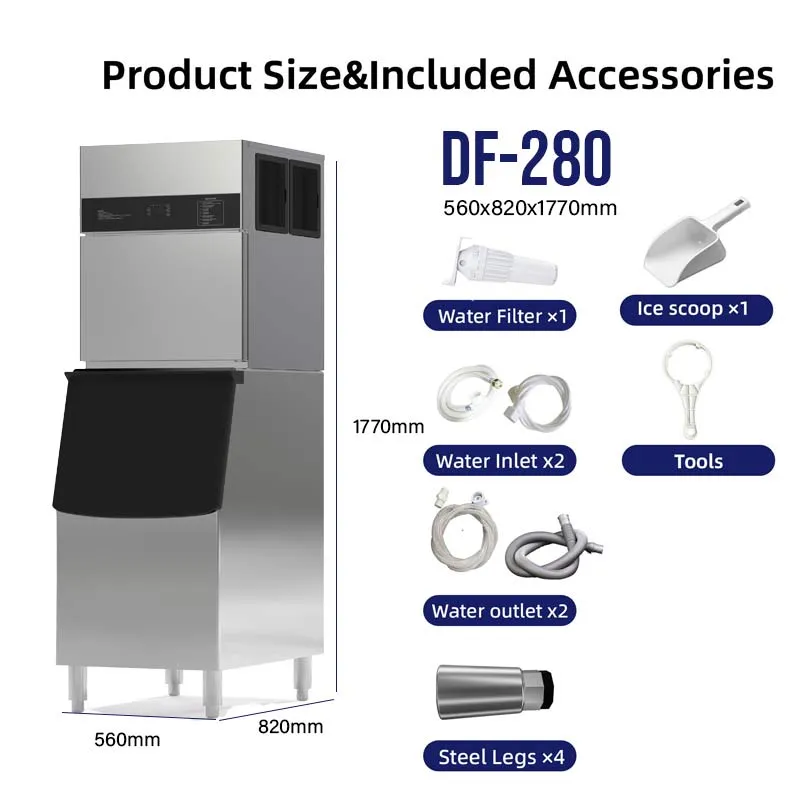
Naixer takes a different approach. Every ice machine in our product line — from the compact TH‑280B to the high‑capacity TH‑1200B — is self‑contained. The storage bin is built into the chassis from the factory floor. You receive one machine, connect one set of utilities, and start making ice. One purchase, one installation, one warranty. No separate bin to research, no compatibility matrix to navigate, no surprise second invoice.
Beyond the equipment architecture, there’s the question of capacity. The formula for full‑service restaurants is 1.5 to 2 pounds of ice per customer on the busiest day of the year, plus a 20 percent buffer. Bars should calculate 3 pounds per seat. A 120‑seat restaurant doing 200 covers on a peak night needs roughly 360 to 480 pounds of daily production. If you’re unsure how to run these numbers for your specific operation, our restaurant ice machine sizing guide explains the calculation step by step.
Warranty length is another factor that directly affects your long‑term cost. A compressor replacement — the most expensive common repair — typically costs $1,000 to $2,500 and most frequently occurs in years two through five, after a standard 12‑month warranty has expired. Naixer’s 3‑year full machine warranty covers core systems and key components through that entire risk window, providing a genuine financial buffer when you need it most. For a complete picture of what a commercial ice machine costs to buy, install, and maintain — including utilities and repairs — our restaurant ice machine cost guide breaks down every expense category.
Finally, consider the manufacturing behind the equipment. Naixer ice machines are designed and assembled in a 30,000‑square‑meter ISO9001‑certified facility, staffed by over 200 technicians and supported by more than 300 active technical patents. All ice‑contact surfaces are SUS304 food‑grade stainless steel, meeting CE, RoHS, and CB international hygiene standards. This is the same infrastructure that serves KFC, Luckin Coffee, and over 5,000 commercial clients across more than 100 countries. When you choose a machine built to that standard, you’re choosing reliability that lasts.

Frequently Asked Questions
Q: What is the perfect ice type for a cocktail bar?
A: Full cube ice. Its low surface‑to‑volume ratio makes it the slowest‑melting commercial ice shape, keeping a whiskey or craft cocktail cold and undiluted for twenty minutes or more. It’s also crystal‑clear, which adds a level of visual sophistication that guests notice.
Q: Why do people love nugget ice so much?
A: Nugget ice is soft, porous, and easy to chew. It absorbs the flavor of the drink it’s in, so every bite tastes like the beverage itself. That combination of texture and flavor creates a sensory experience that hard cube ice simply can’t replicate, which is why customers will choose a restaurant specifically for its ice.
Q: Can I use one ice machine for both drinks and food displays?
A: It’s not recommended. Drinks require slow‑melting ice like full cubes, while food displays need soft, moldable flake ice that won’t damage delicate items. These two ice types are produced by completely different machines. If your operation includes both a bar and a seafood counter, you’ll need both a full cube machine and a flake ice machine.
Q: How do I know which ice type is right for my business?
A: Start with your menu. Full cube ice is the right foundation for bars and full‑service restaurants. Nugget ice fits quick‑service counters and smoothie shops. Flake ice is essential for seafood and buffet displays. Crescent ice is engineered for self‑serve hotel and cafeteria stations. Half cube ice works well for high‑volume fountain drink service where drinks are consumed quickly.
Q: What should I look for when buying an ice machine?
A: First, confirm the machine produces the ice type your menu requires. Second, choose a self‑contained unit with a built‑in storage bin — this avoids the $800–$2,000 hidden cost of purchasing a separate bin that many modular systems require. Third, look for a manufacturer that offers at least a 3‑year full machine warranty, because major repairs most often occur in years two through five.
Q: Are there hidden costs I should know about when buying an ice machine?
A: The most common hidden cost is the storage bin in modular systems — many brands quote the ice head and bin separately, and first‑time buyers may not realize the bin isn’t included. Another overlooked expense is condenser water for water‑cooled machines, which can consume over 100 gallons of water per 100 pounds of ice produced. Self‑contained air‑cooled machines avoid both of these costs. For a detailed breakdown, see our restaurant ice machine cost guide.
Key Takeaways: Choosing the Perfect Type Ice
The ice you serve is part of the experience. It chills, it textures, it displays, and it can be the reason a customer comes back.
Full cube ice is the most versatile and slowest‑melting shape. It’s the right foundation for bars, full‑service restaurants, and any venue where drinks are meant to be savored.
Nugget ice creates genuine customer loyalty. Its soft, chewable texture and flavor‑absorbing properties make it a competitive differentiator in quick‑service settings.
Flake ice is essential for seafood and food displays. Its gentle, moldable texture protects product and extends display life.
Crescent ice is engineered for self‑serve reliability. It won’t clump, it won’t jam, and it pours smoothly every time.
Choose a self‑contained machine with a built‑in bin. It eliminates the $800–$2,000 hidden cost of modular systems and simplifies installation.
Insist on a 3‑year full machine warranty. It protects you through the years when major component failures are most likely to occur.