How Do I Find the Perfect Ice Vending Machine Location? (2026 Guide)
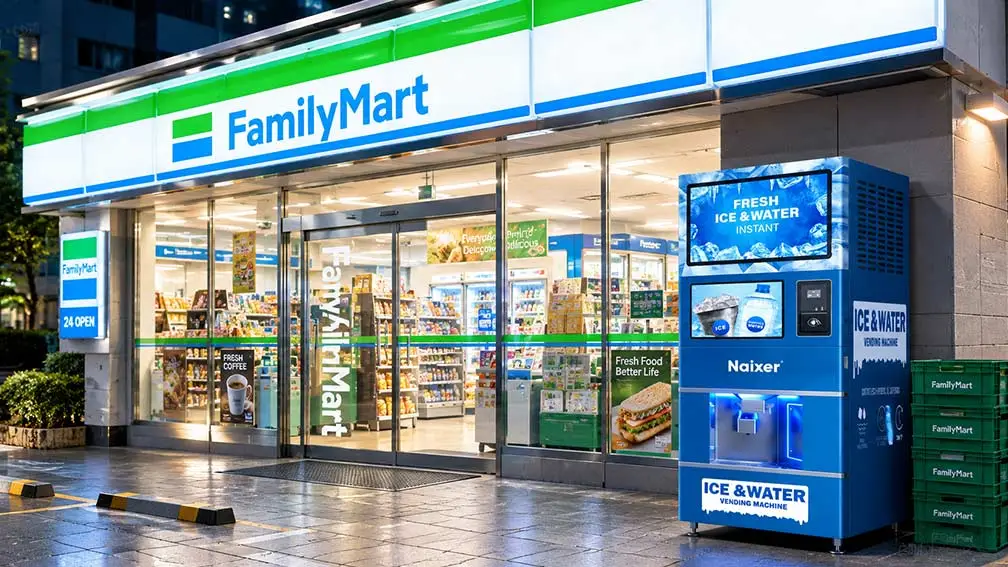
Ask any successful ice vending operator what separates a machine that prints money from one that collects dust, and you’ll hear the same answer: the location. A great site can pay a machine off in months. A poor one drains your budget for years — even if the machine itself is flawless.
The good news is that finding a perfect ice vending machine location isn’t luck. It’s a repeatable process. In this guide, you’ll learn what actually makes a site work, a 10-point site scorecard that rates any location in ten minutes, what locations cost in 2026, and how to match the right machine to the site you choose.
In this guide, you will learn:
What Makes an Ice Vending Machine Location "Perfect"?
“Perfect” doesn’t mean the busiest corner in town. It means the right combination of six factors — and when one of them is missing, the others have to work twice as hard.
1. Traffic That Already Stops Nearby
3,000 cars a day sounds impressive — until you notice they’re flying past at 50 mph with nowhere to pull over. What matters is traffic that naturally slows or stops: intersections, fuel stations, store entrances, schools, and turn-ins. Watch a candidate site between 7–9 a.m. and 4–6 p.m. before you decide anything.
2. Visibility and an Easy Pull-In
If customers can’t see the machine from the road, it doesn’t exist. Aim for at least 100 feet of open sightline and a safe, wide approach where a driver can park for 30 seconds without blocking anyone. A generous approach beats a big lot every time.
3. A Built-In Demand Driver
4. Access to Power and Water
Ice and water vending machines need a reliable power feed and a potable water supply. The shorter the run from the panel and water line to your pad, the cheaper your install. Before you fall in love with a spot, ask: where’s the panel, how far is the water line, and who pays for trenching?
5. Competition You Can Beat — or Avoid
Zero competition often means zero demand. The sweet spot is a site where ice demand is already proven, but the nearby supply is inconvenient, overpriced, or closed half the day. Vending wins on 24/7 convenience and a better price.
6. Safety and Year-Round Access
Good lighting, camera coverage, and clear sightlines reduce vandalism and keep customers comfortable at 10 p.m. Confirm the machine stays reachable in winter, and that your service vehicle can park right next to it without drama.
How to Find an Ice Vending Machine Location: 5 Steps
Here’s the process most successful operators follow — usually in two to six weeks. Still planning the business itself? Start with our guide to starting an ice & water vending machine business.
Step 1: Map the Demand, Not Just the Traffic
Open Google Maps and mark demand drivers across your region: campgrounds, marinas, apartment clusters, sports complexes, industrial parks, car washes. Then overlay the main commuting roads. Your best candidates sit where people who already use ice regularly travel.
Step 2: Build a Shortlist of 5–10 Sites
For each promising area, list three to five specific hosts or lots — gas stations, storage facilities, laundromats, hotels, empty pads. Don’t filter too hard yet; the scorecard comes next.
Step 3: Visit at the Right Times
Drive by each shortlisted site twice on a weekday and once on the weekend. Note how many cars pass in 15 minutes. Can you spot the spot from 300 feet away? Where would the machine physically stand — and is it shaded? Photograph everything so you can compare fairly later.

Step 4: Score Every Site (Use the Scorecard Below)
Rate each location on the ten factors in the scorecard below — in the parking lot, not from memory. Sites scoring 40+ are worth pursuing aggressively. A score of 30–39 means fixing weak spots or negotiating hard. Under 30? Keep looking.
Step 5: Talk to the Host — and Put It in Writing
Approach the owner or manager with a one-page summary: what the machine looks like, how much space it takes (about 20–30 sq ft — roughly half a parking space), power and water needs, insurance, and what they get out of it: monthly rent plus extra customer visits. Agree on terms, then get everything — access, duration, utilities, insurance — in writing before you schedule delivery.
The 10-Point Site Scorecard (Rate Any Location in 10 Minutes)
Print this table or copy it into your notes app. Score each factor from 1 (poor) to 5 (excellent). It’s the fastest way to compare two locations that both “feel” right — and to justify walking away when one quietly fails.
| Factor | 5 What a 5 Looks Like | 1–2 Red Flag |
|---|---|---|
| 01 Daily Drive-By Traffic | 3,000+ vehicles pass daily, with a natural reason to slow or turn in | Under 1,000/day on a fast road with no reason to stop |
| 02 Ease of Stopping | Wide, safe pull-in with room to park for 30 seconds | No shoulder, tight lot, one-way exits |
| 03 Visibility | Machine visible from the road with 100+ feet of sightline | Hidden behind buildings, signs, or landscaping |
| 04 Nearby Demand Driver | Campground, marina, apartments, or worksite within 1–2 miles | Only pass-through traffic, no local anchor |
| 05 Power Access | 220V service within ~30–50 ft of the pad; panel has spare capacity | Long trench runs or panel upgrades required |
| 06 Water Access | Potable water line available near the pad | No water source and no realistic plan for one |
| 07 Competition | Demand proven, but nearby ice supply is inconvenient or overpriced | Two established ice vendors within a mile |
| 08 Seasonality Balance | Demand spread across most of the year | One short season with no off-season demand |
| 09 Host Terms | Flat lease under $300/mo or fair revenue share; decision-maker easy to reach | Unrealistic rent demands or months of indecision |
| 10 Security & Service Access | Well-lit, camera coverage, easy service access, low vandalism risk | Dark lot, no visibility from staffed areas, hard to service |
How to read your score: 40–50 — negotiate and move fast. 30–39 — pursue only if you can fix the weak factors or the rent is unusually low. Below 30 — keep looking. One fatal flaw (no power access, no safe pull-in) outweighs five perfect scores.
What a Good Location Costs in 2026
Landlords rarely ask for a fortune — but terms vary widely. Here are the ranges ice vending operators typically see in 2026, and how to frame the deal.
| Cost Item | Typical 2026 Range | Notes |
|---|---|---|
| Flat monthly lease | $200–$500 / month | Most common structure. Pay the top end only for proven, high-traffic sites. |
| Revenue share | 15–25% of net sales | Cost drops in slow months; requires a simple monthly reconciliation with the host. |
| Electricity & water | $75–$150 / month | Varies with machine model, climate, and local utility pricing. |
| Utility connection (one-off) | $0–$1,500 | Separate meter, trenching, or panel work if service isn't already at the pad. |
| Insurance & permits | $20–$60 / month | Liability coverage plus any local vending or sign permits. |
Two deal structures dominate: a flat monthly lease (simple and predictable) and a revenue share (cheaper in winter, pricier in summer). A third option — rolling utilities into rent — keeps bookkeeping simple but can hide real costs. Whichever you choose, sell the value first: your machine brings paying visits to their lot every single day, and those customers often spend money inside too. Many operators sweeten the deal with free-vend coupon booklets for the host’s staff and customers — cheap for you, genuinely appreciated by them.
What One Good Location Can Earn (Worked Example)
Numbers make location decisions objective. Here’s a simple, adjustable model — swap in your own bag price and daily volume:
Assumption: 20 bags per day at $2.50 each = $50/day
Monthly gross: ≈ $1,500
Location lease: −$300
Electricity & water: −$90
Bags, filters, misc.: −$160
Estimated net: ≈ $950 per month per location, before tax and financing
Because the machine runs unattended, this income keeps flowing while you add locations instead of staff. Most operators target payback within 12–24 months, then scale. Want sharper forecasts? Run your own numbers with the free ice vending profit calculator, compare monthly scenarios in what an ice vending machine makes in 2026, and if you’re aiming bigger, see how many machines it takes to make $100K a year.
Match the Machine to the Location

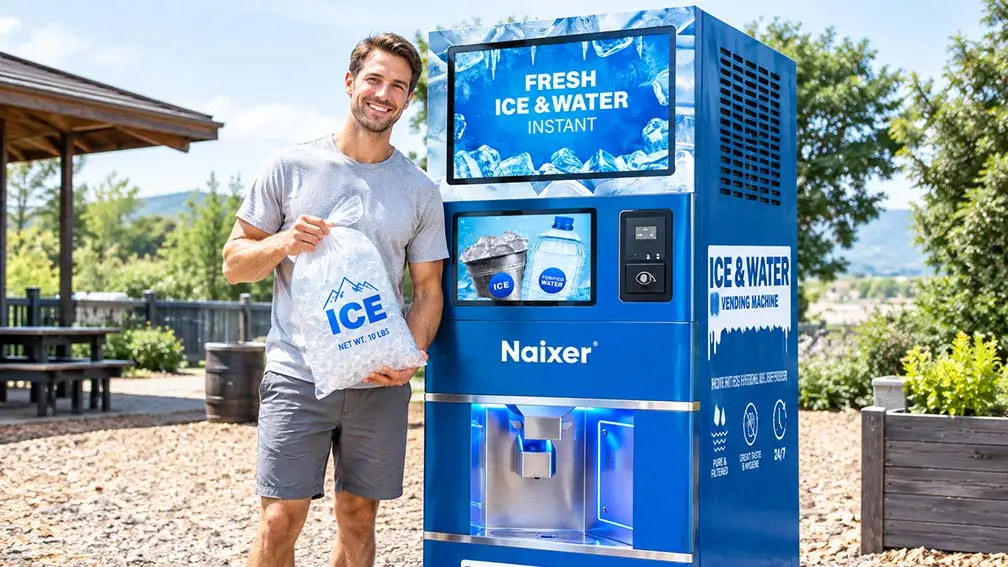
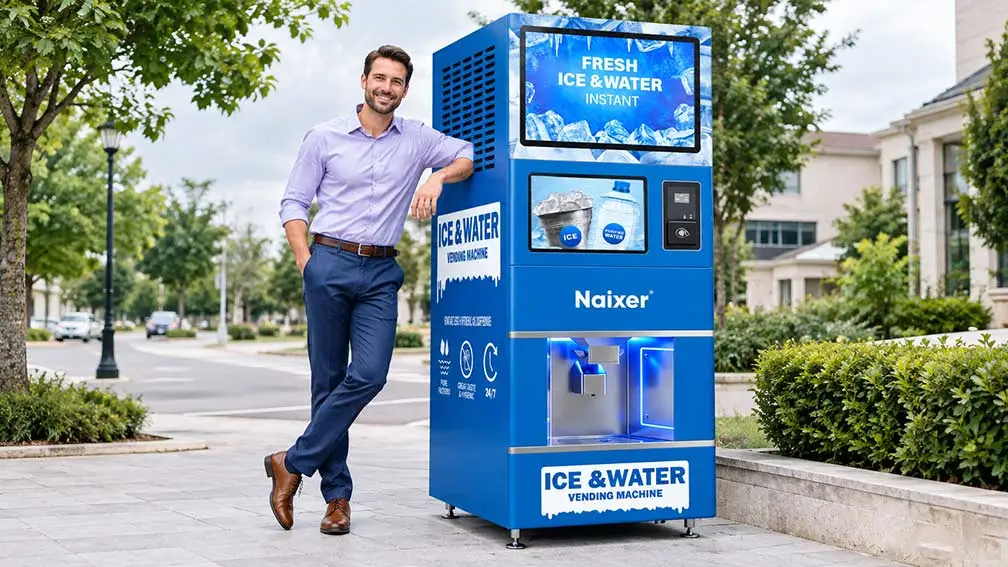
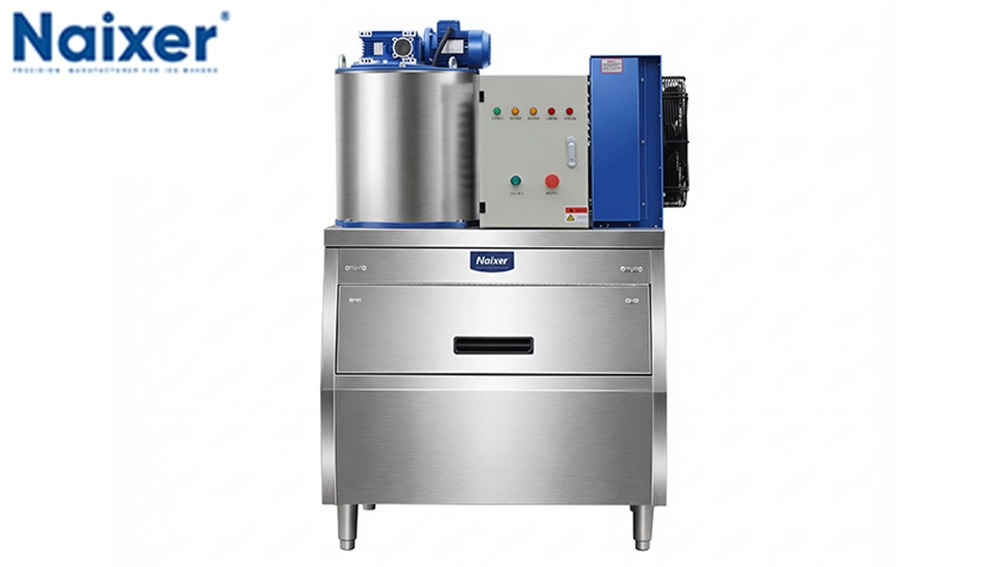
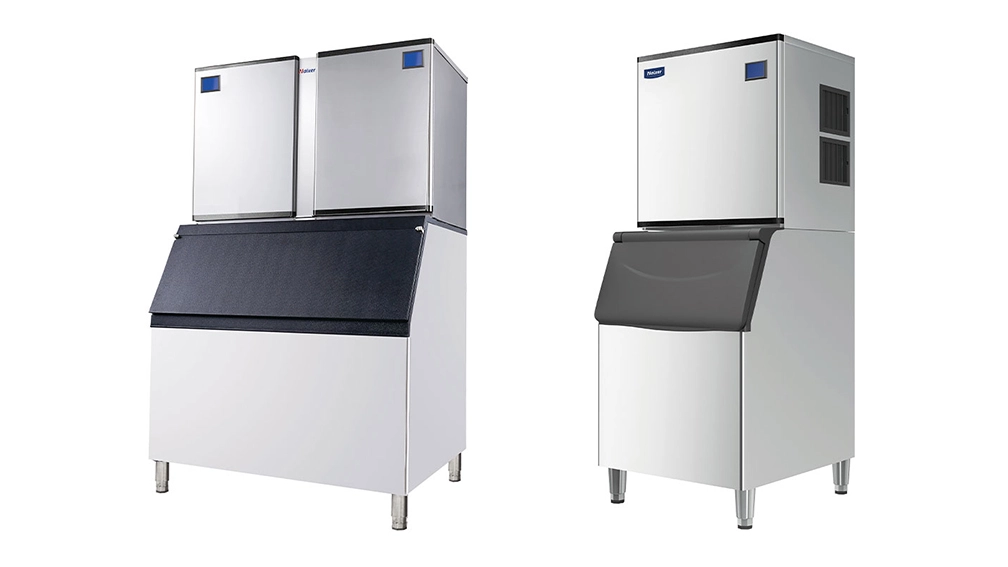
The right machine unlocks sites a small machine simply can’t serve. Naixer’s ZD-160-A320 ice & water vending machine is built for exactly the locations above: up to 3,200 lbs of crystal-clear cube ice per day, a 1,600 lb insulated storage bin with agitation so cubes never clump, and dispensing in under 30 seconds — card or phone tap, with an optional coin acceptor.
| Specification | Detail |
|---|---|
| Daily ice production | Up to 3,200 lbs (1,450 kg) per 24 hours |
| Ice storage bin | 1,600 lb (725 kg) insulated, food-grade stainless steel, with agitation to prevent clumping |
| Ice type | Crystal-clear, hard full-cube ice |
| Water option | Chilled, filtered water dispenser on the same touchscreen |
| Payment | Card and mobile tap as standard; optional coin acceptor |
| Remote monitoring | IoT dashboard: sales, ice inventory, temperatures, service alerts |
| Cabinet | Weather-proof SUS304 stainless steel, built for covered or semi-covered outdoor installs |
| Power supply | 220V / 60Hz as standard; other regional voltages customizable |
| Dispensing time | Under 30 seconds per bag |
| Warranty & certifications | 3-year full machine warranty; CE, RoHS, CB; ISO9001-certified factory |
Before you sign a lease, confirm the site supports the machine: a sturdy, level pad, 220V power (other voltages customizable), and a water connection — or a clear plan for one. The closer the panel and water line, the cheaper your install. Download the ZD-160-A320 spec sheet (PDF) or the full product brochure (PDF) to bring real numbers to your site survey — and if you’re outfitting multiple locations, ask about becoming a Naixer distributor.
Location Types That Outperform (and What to Watch For)

Not every good-looking site is a good ice vending location. These eight settings consistently produce strong, repeatable sales — and they’re a big reason most ice vending machines sit in front of businesses that don’t sell ice at all. For a deeper breakdown, see the 7 hottest locations for ice & water vending machines.
| Location Type | Why It Works | Watch Out For |
|---|---|---|
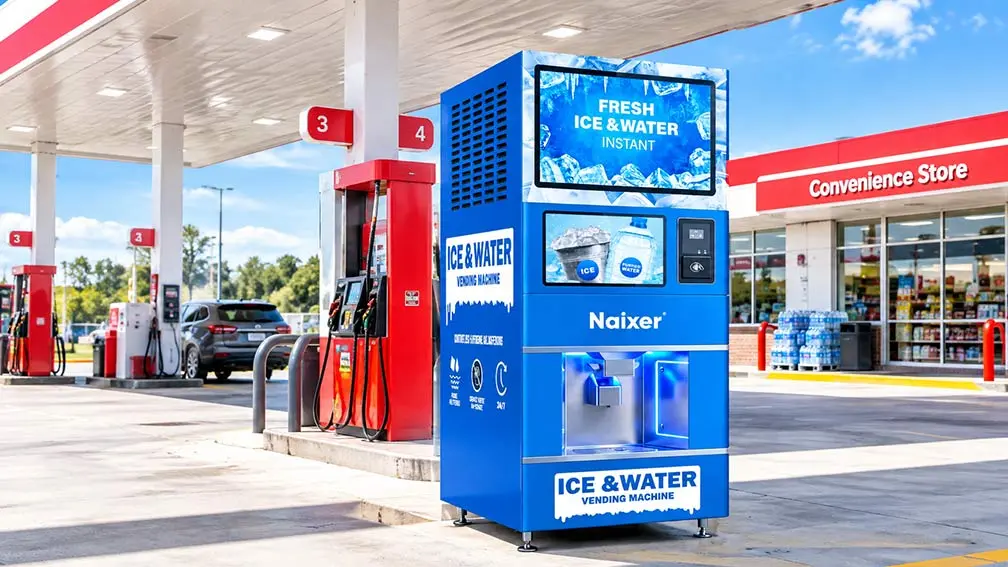
| Gas stations & c-stores | 24/7 traffic and natural impulse ice purchases | Confirm power access; check whether the store sells its own ice |
| Hotels & resorts | A guest amenity that pays for itself; strong tourist demand | Needs management buy-in; aim for a covered placement |
| Apartment complexes | Hundreds of residents within walking distance; weekend and party demand | HOA approvals; add lighting to prevent tampering |
| Marinas & boat ramps | Boaters buy in bulk and competition is scarce | Strong seasonality; secure power near the dock area |
| Campgrounds & RV parks | Campers refill coolers daily with few alternatives nearby | Peak-only demand — check winter viability |
| Car washes & laundromats | Customers are already parked with wait time to fill | Utility tie-in costs; keep the machine clear of the wash bay |
| Sports complexes & parks | Tournament weekends create bulk-buying spikes | Weekend-heavy — consider a second site for weekdays |
| Worksites & storage facilities | Crews ice down coolers daily; long dwell time | Access hours; choose a shaded, dust-protected pad |
Notice the pattern? The best hosts are places people already stop with a cooler, a boat, or an errand — and where grabbing ice is a convenience, not a detour. The consumer demand is real: people literally search for how to buy ice at a gas station on their way out of town.
5 Mistakes That Kill a Great Location
- Falling for cheap rent over real traffic. A $100/month pad on a dead road costs more than $400/month where people actually stop.
- Ignoring the utility run. A “free” spot that needs a 200-foot trench and a panel upgrade isn’t free.
- Choosing the most exposed, sun-baked pad. Heat stress hurts machine efficiency and ice quality. A shaded or covered pad keeps output stable and customers comfortable.
- Skipping the written agreement. A handshake deal — or a property that gets sold — can end your location in a week.
- Budgeting like summer lasts all year. Assume a slow season; sites with diverse nearby demand smooth the dips.
Frequently Asked Questions
How do I find a location for an ice vending machine?
Start with demand drivers, not raw traffic: map campgrounds, marinas, apartments, and worksites, then shortlist hosts where people already stop. Visit at peak hours, score each site with the 10-point scorecard above, and only negotiate for sites that score 40+.
How much does it cost to lease a spot for an ice vending machine?
Flat leases typically run $200–$500 per month in 2026, though prime sites can go higher. Revenue-share agreements usually land at 15–25% of net sales. Utilities add roughly $75–$150 per month.
How much does it cost to get an ice vending machine?
Pricing depends on capacity, configuration, payment options, and destination market. As a factory-direct manufacturer, Naixer quotes per project — see our ice vending machine cost guide for the full breakdown of what drives the number.
Do ice vending machines need a water and power connection?
Yes. A standard installation needs a potable water supply and a 220V power feed near the pad (other voltages are customizable). The shorter those runs, the lower your installation cost — always confirm access before signing a lease.
How much space does an ice vending machine need?
Plan on roughly 20–30 square feet — about half a parking space — plus a clear pull-in, and enough room for your service vehicle to park beside it. Height and drainage matter too: a level, well-drained pad keeps the machine stable year-round.
Are there vending machines just for ice?
Yes. Modern ice vending machines produce and dispense bagged ice — and often chilled water — fully unattended, 24/7. They’re common at gas stations, marinas, campgrounds, and apartment complexes across the US and beyond.
How profitable is an ice vending machine?
A well-placed machine can net roughly $700–$1,200 per month after location and utility costs, as in the worked example above. Actual results swing with traffic, pricing, and seasonality — see our full profitability breakdown for scenarios.
How long does it take to find the right location?
Most operators secure a site in two to six weeks. Having five to ten shortlisted candidates — and moving fast when one scores 40+ — is the difference between two weeks and two months.