What Kind of Ice Do Restaurants Use? The 2026 Commercial Kitchen Guide
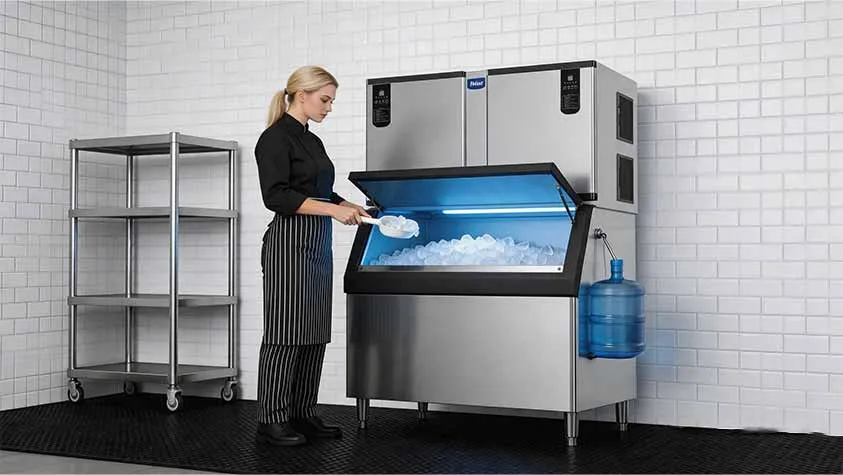
Not all ice is created equal. You’ve got square cubes, half-moon crescents, soft nuggets, flaky shavings, and crystal-clear large-format blocks — each with its own personality. Some ice melts slowly and keeps drinks cold for half an hour. Other ice is soft, chewable, and absorbs flavor like a sponge. When selecting a commercial ice machine for your restaurant, it‘s important to weigh your options carefully. Because the right type of ice depends on your specific menu, your service volume, and the experience you want your guests to have.
So what kind of ice do restaurants actually use? The short answer: most keep at least two types on hand. The long answer depends on what you serve, how fast you serve it, and whether you’re cooling a cocktail or displaying fresh seafood.
Let‘s break down the five most common types of commercial ice, what they’re best for, and which Naixer machines produce them.
Table of Contents
Why Ice Size and Clarity Are Important for Whiskey
Selecting the right ice type for your restaurant isn‘t just a small detail — it’s a decision that ripples through every cold drink and every food display on your line. Each type of ice, from classic cubes to chewable nuggets, has unique features that impact the taste and texture of beverages, the visual appeal of food displays, and even your operating costs.
Here‘s what’s at stake:
Dilution control. Ice that melts too fast waters down a $15 cocktail in minutes. Ice that melts too slowly might not chill a fountain drink fast enough during a lunch rush.
Presentation. Cloudy, irregular ice signals neglect. Crystal-clear, uniform ice signals attention to detail. In a world where guests photograph their drinks, ice aesthetics matter.
Operating costs. Different ice machines have different water and energy footprints. In 2026, self-contained air- and water-cooled ice machines that produce 1,000 lbs of ice or less must use R290 refrigerant under the EPA’s Technology Transition Rule. Choosing a compliant, efficient machine today protects you from regulatory headaches tomorrow.
So yes — the type of ice matters. Let‘s look at what’s available.
1. Cube Ice (Full Cube & Half Cube): The Restaurant Standard
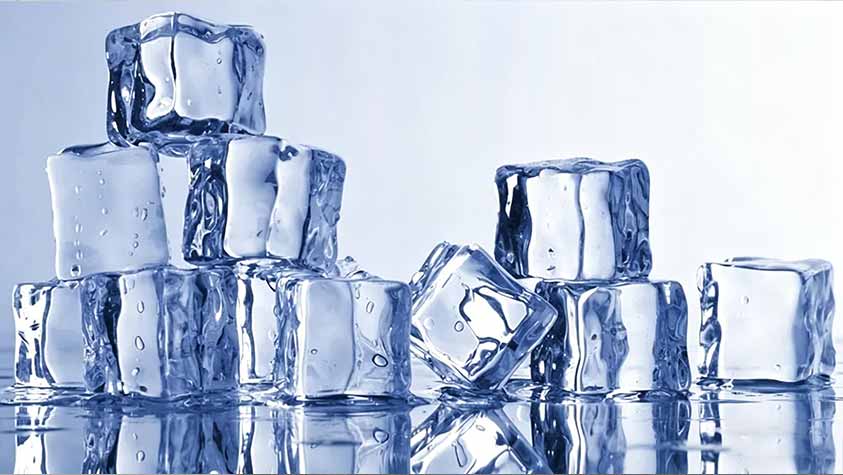
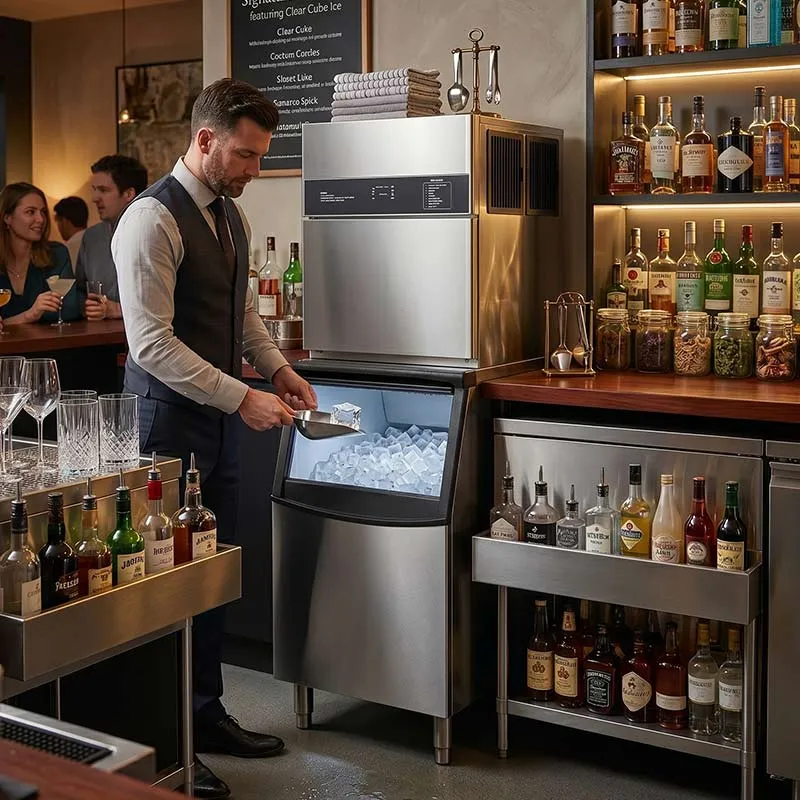
You‘ve seen this ice a thousand times. Classic cube ice is what most people picture when they think of restaurant ice — square, dense, and crystal clear. It’s the workhorse of the commercial kitchen, and for good reason: cube ice melts slowly, cools drinks efficiently, and looks clean in any glass.
The category splits into two sizes, each with a different job:
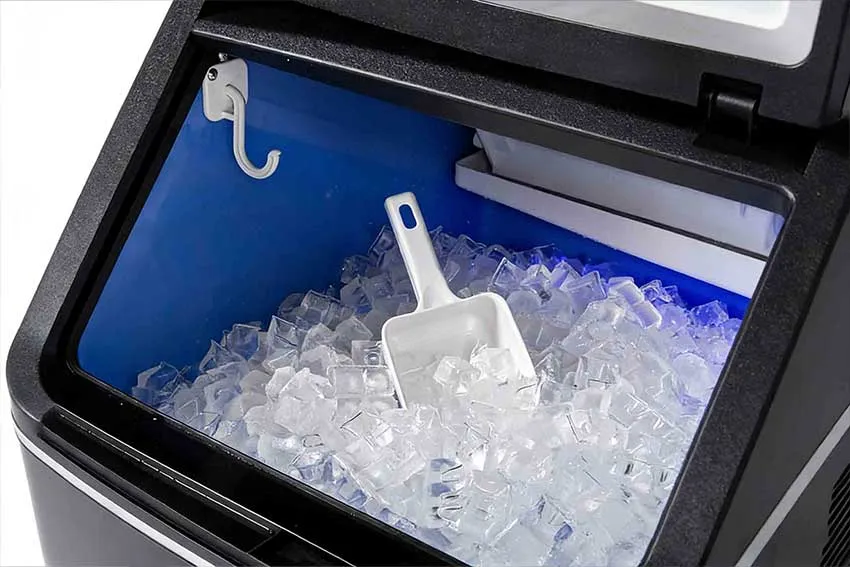
Full Cube Ice (Dice Ice) is the larger version — roughly 22×22mm or bigger. It melts slowly because of its high density and low surface-area-to-volume ratio, making it the go-to for spirit-forward cocktails, whiskey on the rocks, and any drink where you want minimal dilution. Full cube ice is the most common ice type in commercial operations, especially at chain restaurants.
Half Cube Ice (Half-Dice) is exactly what it sounds like — the same square shape, but smaller. It cools drinks faster because of its increased surface area, works beautifully in soft drinks and blended beverages, and is easier on blender blades when making frozen cocktails. It‘s also the ideal choice for self-service beverage stations and bagging.
Best for: Shaken cocktails, highballs, soft drinks, bagged ice, self-service stations.
Naixer solution: The TH Series cube ice machines produce 22×22×22mm standard cubes, with capacities ranging from 80 lbs/day (TH-80B, undercounter) up to 4,000 lbs/day (TH-4000B, modular). For half-cube production, TH Series machines can be configured to produce smaller ice sizes
2. Crescent Ice: The Bartender’s Best Friend
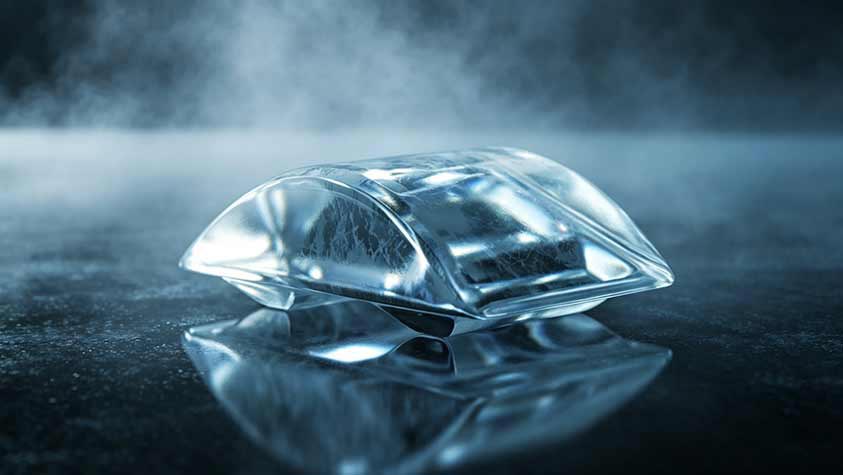
Crescent ice — that distinctive half-moon shape with a curved top and flat bottom — is one of the most respected ice types in the industry. It‘s not just about looks.
The curved surface of crescent ice channels liquid smoothly around the cube when poured, dramatically reducing splashing at busy bar stations. Less splash means less product waste, less sticky counter cleanup, and faster service during peak hours. The shape also helps crescent ice resist clumping in the storage bin — during a rush, your bartenders scoop faster and never have to stab at a frozen brick of ice.
Crescent ice is solid all the way through. No hollow centers, no trapped air. This makes it melt significantly slower than standard cubes while cooling hot liquids (like espresso for an Espresso Martini) rapidly. That’s why specialty coffee shops and high-end cocktail bars have adopted it as their standard.
Best for: Spirit-forward cocktails (Old Fashioned, Negroni, Espresso Martini), iced coffee drinks, premium soft drink service.
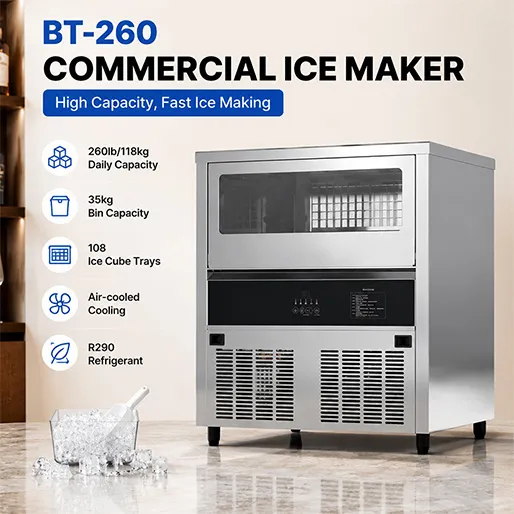
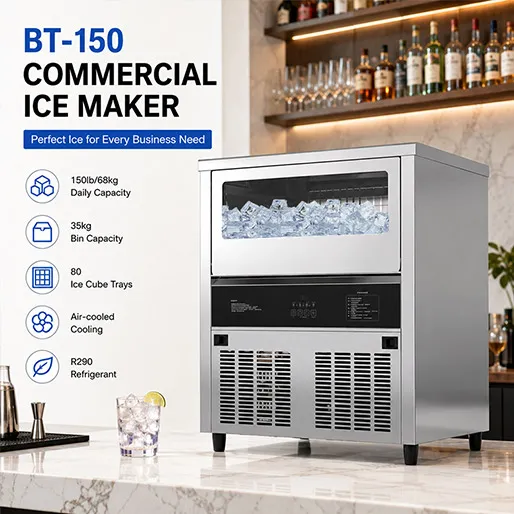
Naixer solution: The TH-SE Series crescent ice machines produce crescent cubes at 30×38×13mm — a size optimized for rapid cooling and slow melting. The TH-SE150 produces up to 150 lbs/day in a compact undercounter unit; the BT-SE120 delivers 120 lbs/day in an even smaller footprint.
3. Nugget Ice (Chewable Ice / “Sonic” Ice): The Cult Favorite

Here‘s a statistic that might surprise you: consumers prefer nugget ice over traditional cube ice by a margin of 2 to 1. Some foodservice operators have reported sales increases of over 25% after switching from cube ice to nugget ice in their beverage programs.
Why? Nugget ice — also called chewable ice, pellet ice, or “Sonic ice” — is soft, porous, and entirely chewable. It’s made by compressing flake ice into small, cylindrical pellets that absorb the flavors of whatever drink they‘re in. That flavor absorption creates a sensory experience that cube ice simply can’t replicate.
But nugget ice has a catch: it melts faster than cube or crescent ice because of all those air pockets. For a craft cocktail that‘s supposed to evolve slowly over 20 minutes, nugget ice is the wrong choice. For a quick-service soft drink, a blended frappe, or a Tiki cocktail where rapid dilution is part of the experience, it’s perfect.
Nugget ice has also found a strong following in healthcare and senior living facilities because of its soft, chewable texture.
Best for: Soft drinks, blended beverages, Tiki cocktails, healthcare foodservice, any venue where chewable ice is part of your brand identity.
Naixer solution: The KL Series nugget ice machines produce soft, chewable nugget ice in capacities from 60 kg/day (KL-60)
4. Flake Ice: The Food Display Specialist

Walk past a seafood counter or a salad bar, and what do you see? A bed of soft, snow-like ice cradling fresh oysters, shrimp, and crisp greens. That‘s flake ice — and it’s not for beverages.
Flake ice is made up of thin, irregular shavings of ice with an enormous amount of surface area. This high surface contact cools items quickly and evenly, making it the gold standard for seafood displays, meat cases, and produce bars. Flake ice molds around delicate items without bruising or crushing them, keeping everything fresh and visually appealing throughout service.
Flake ice has some unique industrial uses too: it‘s commonly used in healthcare settings for cold compresses because it molds around body parts, and in bakeries for dough temperature control.
One thing to avoid: putting flake ice in a beverage. It melts in seconds and will water down a drink almost instantly.
Best for: Seafood and meat displays, salad bars, produce cooling, healthcare cold therapy, commercial bakeries.
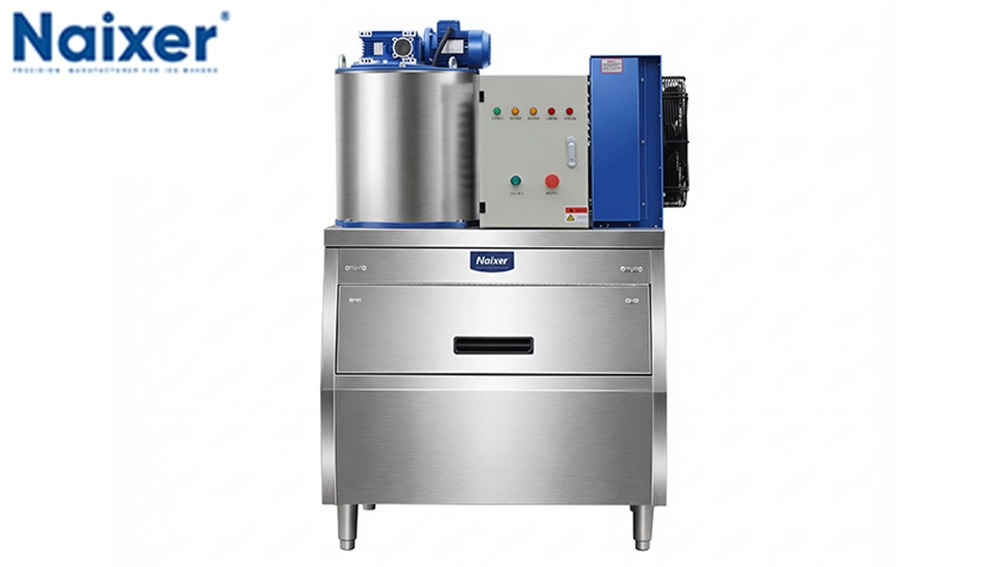
Naixer solution: The PB Series can also be configured for flake ice production, with capacities ranging from 300 kg/day to 1,000 kg/day.
5. Gourmet / Large Cube Ice: The Premium Pour Protector

When a guest orders a $30 pour of single malt whiskey and asks for “one rock,” that cube had better be right.
Gourmet ice — typically large-format 2-inch cubes or spheres — is the most visually striking and slowest-melting ice type in commercial use. These cubes are crystal clear, completely free of air bubbles and impurities, and have an extremely low surface-area-to-volume ratio. The result: they chill premium spirits with almost zero dilution, preserving the full flavor profile for 20 minutes or more.
Large cubes aren‘t for high-volume wells. They’re for the top shelf. They take longer to produce (20–40 minutes per batch depending on size) and require specialized machines, but for a bar whose reputation is built on premium pours, the investment pays for itself. The visual alone — a heavy rocks glass, a single massive clear cube, and a deep amber spirit — supports premium pricing and enhances the entire guest experience.
Best for: Whiskey on the rocks, premium tequila, high-end craft cocktails, presentation-focused bar programs.
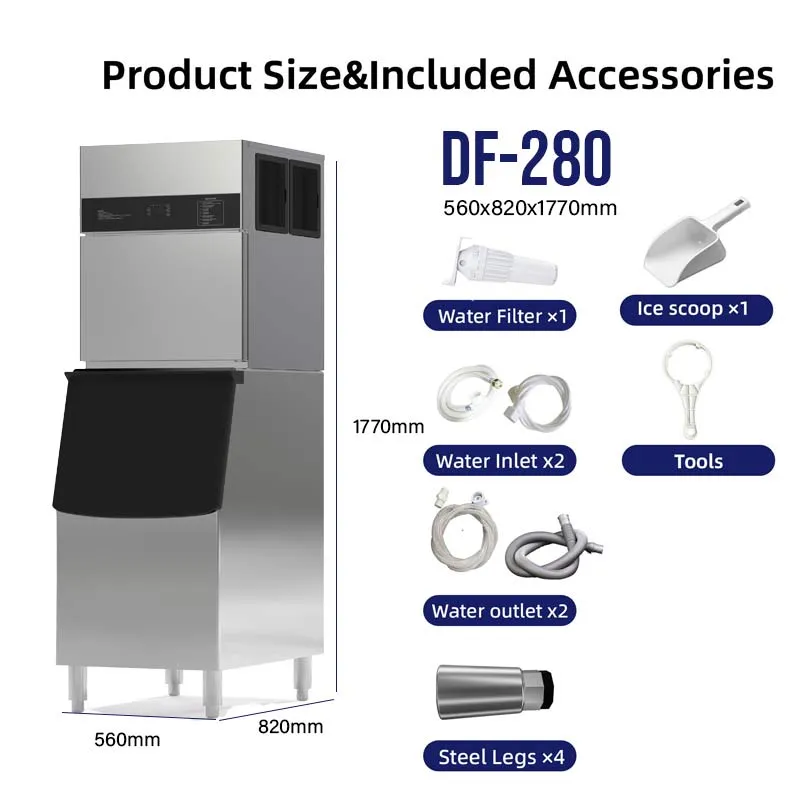
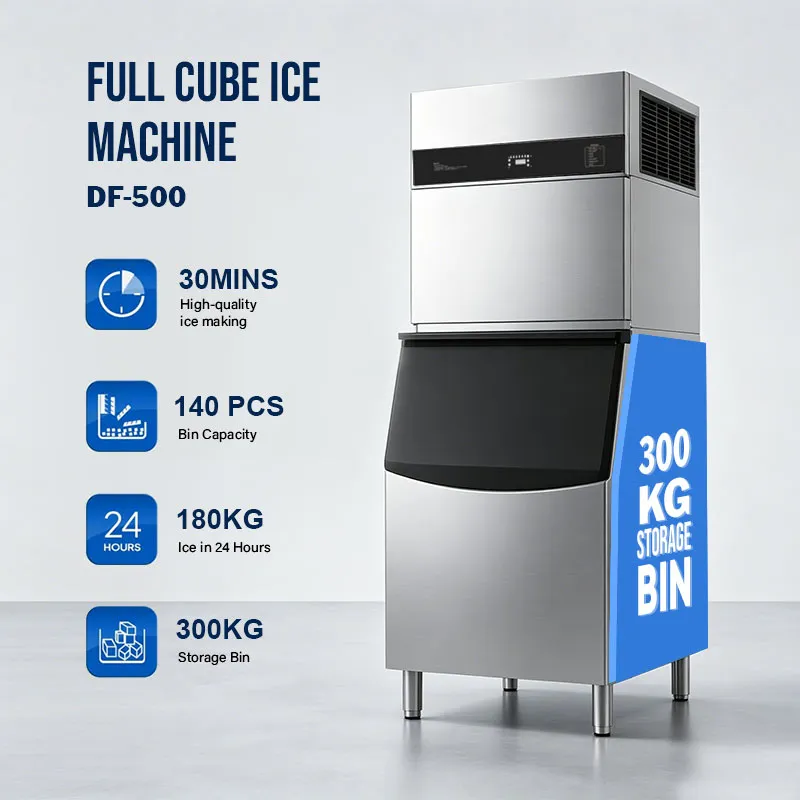
Naixer solution: The TH-DF Series gourmet ice machines produce large cubes in two size options — 28×28×32mm and 50×50×50mm — with capacities ranging from 90 lbs/day (TH-DF90) to 500 lbs/day (TH-DF500).
Side-by-Side: Which Ice for Which Operation

| Ice Type | Best For | Melt Rate | Naixer Series |
|---|---|---|---|
| Cube (Full & Half) | Cocktails, soft drinks, bagging, self-service | Slow (full) / Moderate (half) | TH Series |
| Crescent | Spirit-forward cocktails, iced coffee, premium service | Slow | TH-SE & BT-SE Series |
| Nugget | Soft drinks, blended drinks, Tiki, healthcare | Moderate | KL Series |
| Flake | Seafood & meat displays, salad bars, healthcare | Fast | PB Series |
| Gourmet / Large Cube | Whiskey on the rocks, premium spirits | Slowest | TH-DF Series |
For casual restaurants and bars, cube ice is the standard — versatile, familiar, and cost-effective. For cocktail bars, crescent ice offers a potential boost in presentation and pouring efficiency. For fast-casual establishments, nugget ice has been shown to significantly increase customer satisfaction and drive repeat business. For seafood concepts, flake ice is irreplaceable for food display.
Use our ice calculator to find the perfect commercial ice maker for your restaurant, bar, or hotel. Learn how to calculate daily ice needs and choose the right machine.
What to Look for in a Restaurant Ice Machine in 2026
Picking the right ice type is step one. The machine that makes it — and the regulations you need to comply with — is step two. Here‘s what actually matters when comparing commercial restaurant ice machines.
1. Ice type first, capacity second. Match the machine to your menu. If you run a cocktail bar, a crescent or gourmet ice machine may be your priority. If you’re a quick-service restaurant, half-cube or nugget ice might be your core. Many restaurants run two machines — one for the beverage station, one for specialty ice needs.
2. Size for peak demand, not daily average. A common mistake: buying a machine based on how much ice you use on a quiet Tuesday. Use your busiest Friday night as the benchmark. A reasonable rule of thumb: 1.5 to 2 lbs of ice per customer for a full-service restaurant, and add a 20% buffer for peak periods and unexpected demand.
3. Ventilation and installation. Air-cooled machines are the simplest to install — they just need good ventilation around the unit (typically 4–6 inches of clearance on all sides). Water-cooled machines perform better in hot, poorly ventilated kitchens but require a dedicated water line and drain. Undercounter units combine the ice maker and storage bin in one cabinet and fit under standard countertops — ideal for bars and small kitchens.
4. 2026 refrigerant compliance. As of January 1, 2026, self-contained air- and water-cooled ice machines producing 1,000 lbs or less must use R290 refrigerant under EPA regulations. If you‘re buying new equipment today, make sure it’s compliant. Naixer ice machines across all series use R290 or R404A refrigerants designed to meet current environmental standards.
5. Sanitation and food safety compliance. NSF certification confirms that an ice machine is constructed with food-safe materials, has smooth and cleanable interior surfaces, and meets sanitation performance standards. Many local health authorities require NSF certification for commercial ice machines. Naixer machines meet NSF standards for food-safe materials and sanitary design.
6. Maintenance ease. All ice machines need regular cleaning. Manufacturers recommend deep cleaning at least every 6 months, with more frequent cleaning in high-usage or high-humidity environments. Machines with one-touch cleaning cycles — like Naixer‘s — dramatically simplify this process, turning what could be a service call into a push-button routine. Naixer’s One-Touch Cleaning automates the sanitation cycle, so your staff can maintain the machine without specialized training.
Related Topics for Your Ice Maker Business Research
- How Much Water Does a Commercial Ice Machine Use
- What Size Ice Machine for a Coffee Shop?
- How Much is a Commercial Ice Maker?
- How to Make Clear Ice: The Complete Guide to Commercial Ice Makers for Bars
- Sonic Ice Maker: How It’s Made & Why Businesses Love Nugget Ice
- Commercial Ice Machine for Restaurant: The 2026 Buyer’s Guide by Type & Need
- Air Cooled vs Water Cooled Ice Machine: The 2026 Buyer’s Guide
Restaurant Ice — Quick Answers
What kind of ice do most restaurants use?
The vast majority of restaurants use cube ice (full cube or half cube). Full cube is the most common ice type in commercial operations, especially at chain restaurants, because it‘s versatile, slow-melting, and works in everything from soft drinks to cocktails.
What kind of ice do fast food restaurants use?
Fast food and quick-service restaurants typically use half-cube ice or nugget ice. Half-cube ice cools drinks faster and fills cups efficiently. Nugget ice is chewable, absorbs beverage flavors, and has been shown to increase soft drink sales — some operators report over 25% sales increases after switching to nugget ice.
Is crescent ice better than cube ice for my bar?
For cocktail bars, yes. Crescent ice cools spirits rapidly due to its curved surface area, then melts slowly because it’s solid throughout. It also reduces splashing when pouring — a significant efficiency gain during busy service.
Can one machine make both cube and flake ice?
No. Cube ice machines and flake ice machines use completely different freezing and harvesting mechanisms. Cube machines operate in batch cycles (freeze, then harvest), while flake machines produce ice continuously. If your operation needs both cube and flake ice, you‘ll need two separate machines or a modular setup with different ice-making heads.
How much ice does a restaurant use per day?
A common industry estimate is 1.5 to 2 lbs of ice per customer for full-service restaurants. Bars may use up to 3 lbs per customer. Always size your machine for peak demand — your busiest shift — not your daily average, and add a 20% buffer.
How often should a restaurant ice machine be cleaned?
Manufacturers recommend deep cleaning and sanitizing at least every 6 months. High-volume operations in warm or humid environments should clean every 3 months. Weekly wipe-downs of exterior surfaces and regular water filter changes help maintain peak performance between deep cleans.
What certifications should a restaurant ice machine have?
NSF certification is the most important. It verifies that the equipment is constructed with food-safe materials, has smooth and cleanable interior surfaces, and meets sanitation performance standards. Many local health authorities require NSF certification for commercial ice machines, ice dispensers, and ice storage bins.