What’s the Best Ice for Whiskey? A Complete Guide for Enthusiasts and Bar Professionals
Pour a fine whiskey over the wrong ice, and you’ll watch decades of craftsmanship drown in a puddle of cold water. Pour it over the right ice, and you‘ll experience something entirely different — the spirit opens up, the aromas lift from the glass, and each sip evolves as the ice melts at just the right pace. For bartenders, bar managers, and serious enthusiasts, the question isn’t whether to use ice. The question is: what‘s the best ice for whiskey — and how do you get it consistently, at scale, in a busy commercial environment?
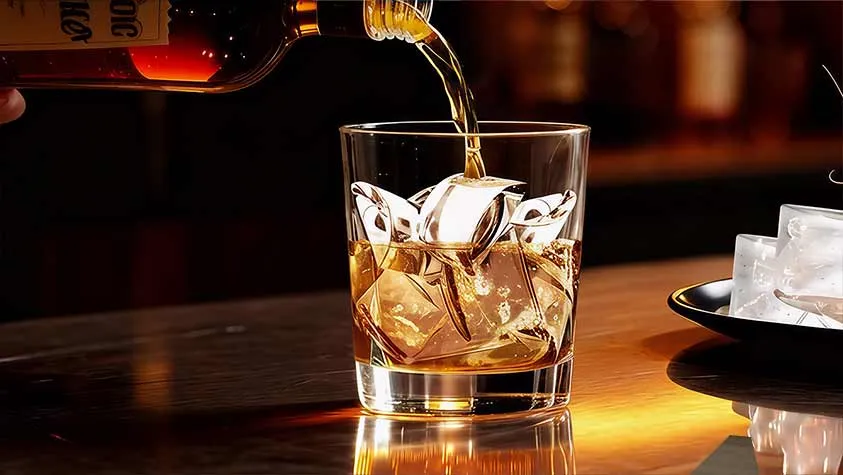
The best ice for whiskey is a large, crystal-clear cube or sphere that melts slowly and minimizes dilution. Large cubes (ideally 22×22×22mm full cube or larger 28×28×32mm grande cube) and spheres (60–65mm diameter) have the smallest surface-area-to-volume ratio among all ice shapes — meaning your whiskey stays chilled, not watered down. For commercial bars and hotels, a commercial clear ice cube machine producing full cube ice delivers the ideal balance: bartender-grade clarity, specialty-ice melt performance, and the capacity to serve hundreds of whiskeys a night without running short.
Table of Contents
Why Ice Size and Clarity Are Important for Whiskey
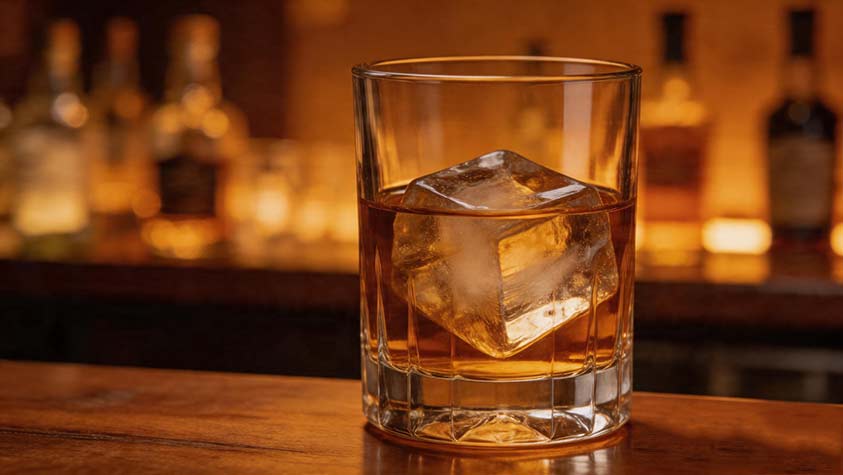
Before comparing shapes, it’s worth understanding the physics at play. Two factors determine how ice performs in a whiskey glass: surface-area-to-volume ratio and ice clarity.
Surface Area and Dilution
When you drop ice into whiskey, two things happen simultaneously: the ice chills the liquid, and the liquid melts the ice. The rate at which the ice melts is determined primarily by how much of its surface is touching the whiskey relative to its total volume.
A crushed ice particle has an enormous surface area relative to its tiny volume — it chills the whiskey almost instantly, but it also melts almost instantly, flooding your glass with water. A perfectly spherical ice ball has the smallest possible surface area for its volume — it chills slowly and evenly, releasing water in tiny increments over time.
This is why bourbon experts consistently recommend using large, solid chunks of ice rather than smaller cubes or shavings: the larger format allows flavors and aromas to emerge gradually, creating a more laid-back and even sipping experience.
Clarity and Purity
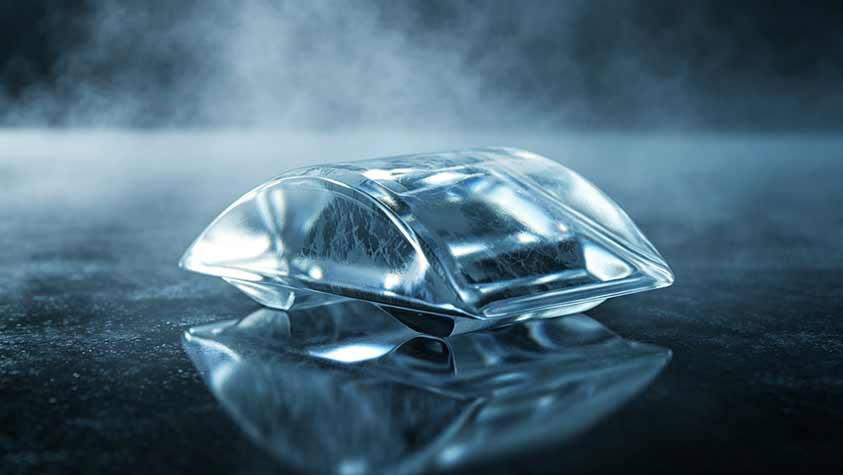
Cloudy ice is cloudy for a reason: trapped air bubbles and dissolved minerals that were pushed into the cube’s center during rapid freezing. When that cloudy ice melts, those impurities release into your whiskey, subtly affecting taste and aroma. Crystal-clear ice — frozen slowly and directionally so that air and minerals are pushed out of the cube entirely — melts cleanly, releasing nothing but pure water into the spirit. Bartenders who work with top-shelf whiskey obsess over clarity because they know their guests can taste the difference.
Use our ice calculator to find the perfect commercial ice maker for your restaurant, bar, or hotel. Learn how to calculate daily ice needs and choose the right machine.
Comparing Ice Shapes: The Definitive Whiskey Ice Ranking
Not all ice performs equally in a whiskey glass. Here’s how the five most common ice types stack up, ranked from best to worst for whiskey service:
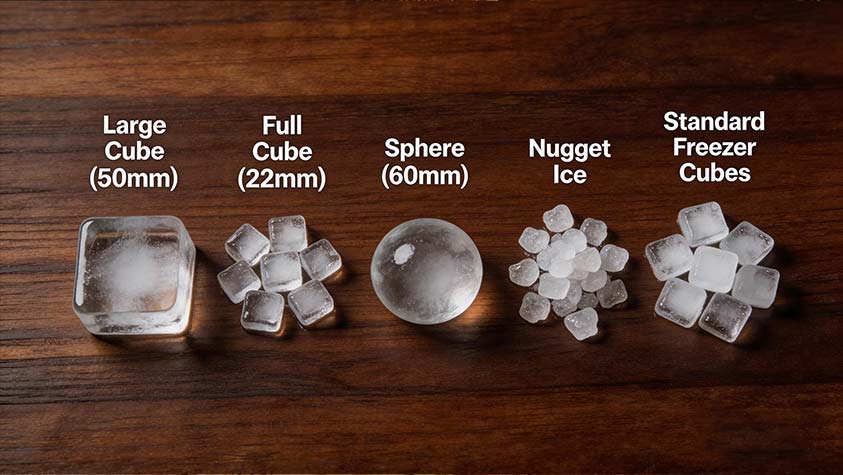
| Ice Shape | Typical Size | Surface-to-Volume Ratio | Melt Rate | Zero dilution |
|---|---|---|---|---|
| Large / Grande Cube | 28×28×32mm to 50×50×50mm | Lowest — minimal dilution | Slowest | The platinum standard. One cube fills a rocks glass and melts glacially. High-end bars use this for top-shelf pours. |
| Sphere (Ice Ball) | 60–65mm diameter | Very low — comparable to large cube | Very slow | Equivalent to a large cube in performance, with stunning visual appeal. Rotates elegantly in the glass. |
| Full Cube (22×22×22mm) | Standard commercial | Low — smaller than large cube but still dense | Slow | The workhorse of high-volume bars. Much slower melting than half-cubes, but far easier to produce in bulk than large cubes. Ideal for busy whiskey bars. |
| Half Cube / Crescent | ~22×22×11mm | Medium | Medium | Better for soft drinks and self-serve fountains. Melts too fast for a spirit-forward sipping experience. |
| Crushed / Nugget Ice | Irregular, 5–15mm | Very high | Very fast | Excellent for mint juleps and tiki cocktails, but will water down a neat pour of whiskey in minutes. |
| Whiskey Stones (Steel/Stone) | ~20mm | N/A (no melting) | Zero dilution | Cools without dilution, which defeats the purpose—a small amount of water is essential to "open up" the whiskey’s aromas. |
The verdict from the whiskey community is remarkably consistent: for minimal dilution, reach for ice spheres or large clear cubes. For casual drinking, standard cubes are fine — but you’ll notice the difference in any whiskey you sip slowly.
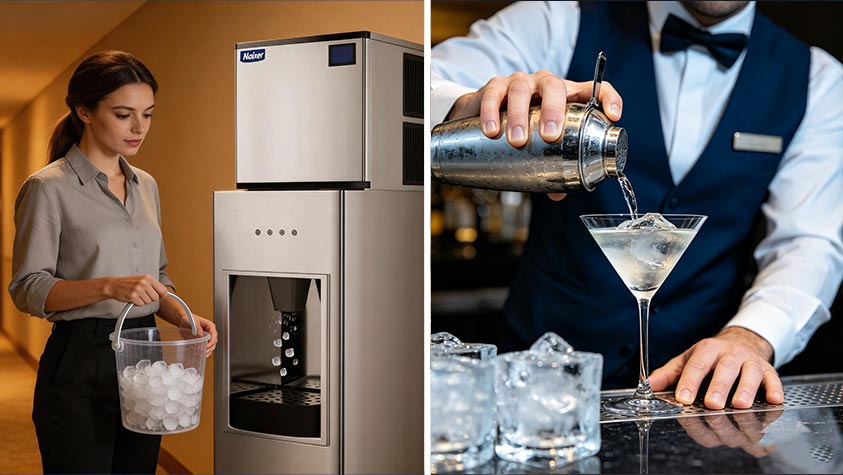
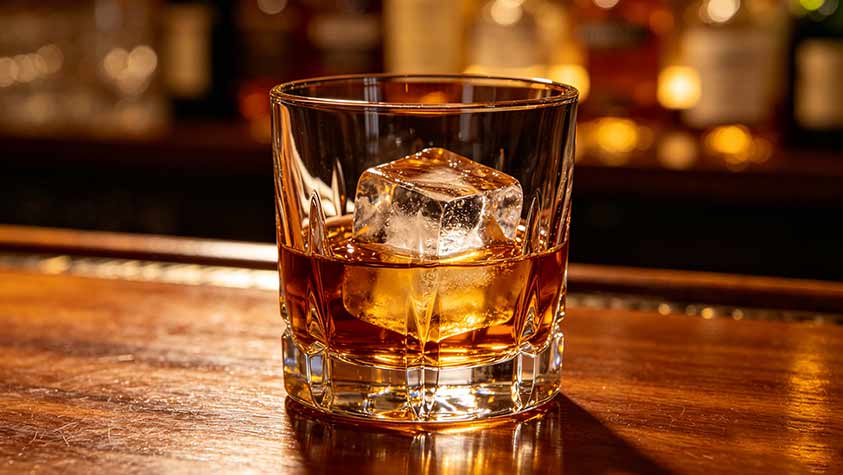
But here’s the part most articles skip: that large cube you’re admiring in the photo? It’s nearly impossible to produce in volume using home methods. A busy whiskey bar might go through 300–500 large cubes on a Saturday night. That’s where commercial ice machines become essential — and where most bar owners face a difficult trade-off between ice quality and production capacity.
The Full Cube Ice Advantage: A Commercial Bartender’s Secret Weapon
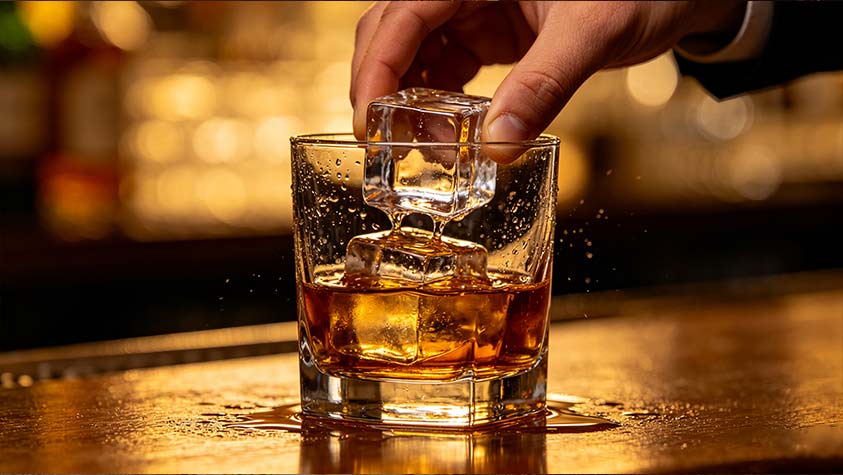
Why do commercial bars rely on full cube ice? Because it solves three problems simultaneously:
1. Melt Rate Without the Wait
A 50×50×50mm grande cube takes significantly longer to freeze than a standard 22×22×22mm full cube — which means a commercial machine can produce far more full cubes per day than oversized cubes. For a bar serving 200 whiskeys a night, that production difference is the gap between fully stocked and running out at 10 p.m. Yet a full cube still melts far slower than a half cube or nugget ice, giving the guest a properly chilled, slowly evolving whiskey experience.
2. Versatility Across the Bar
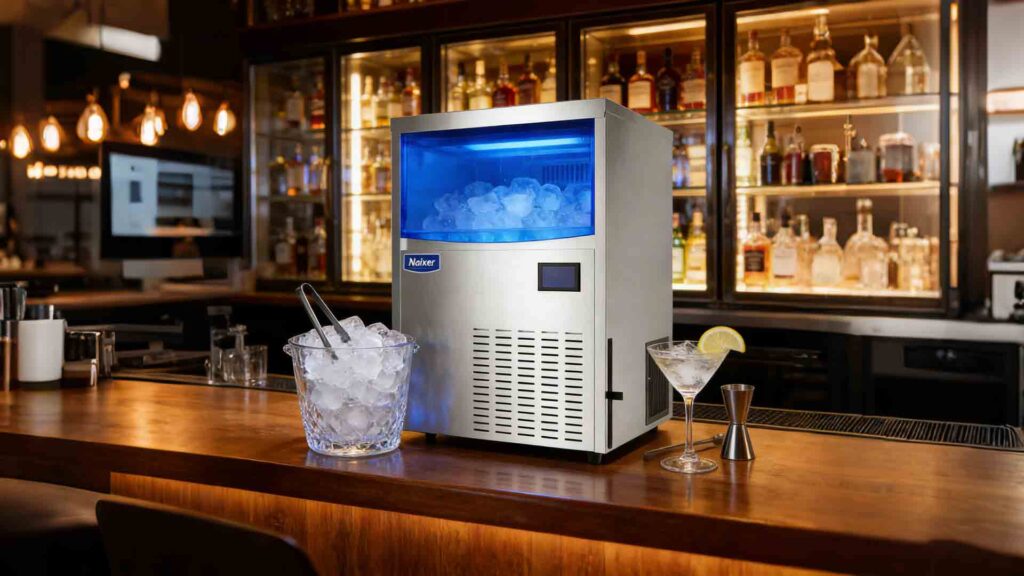
A full cube ice machine serves the entire beverage program: whiskey at the bar, cocktails at the service well, iced tea in the dining room, and bagged ice for hotel guest floors. One machine, one ice type, every station covered. That’s operational simplicity in a space where counter space and budget are both finite.
3. Reliable Clarity at Volume
Full cube ice from a well-engineered commercial machine uses controlled freeze cycles and fresh water per batch — every cube lands in the glass crystal-clear, without the cloudy center or off-taste that plagues commodity ice makers.
For the enthusiast at home, a silicone mold making two large cubes overnight is perfectly adequate. For the commercial bar, the question isn’t just “what’s the best ice for whiskey” — it’s “what’s the best ice I can produce 500 pounds of tonight without sacrificing quality?” The answer, in most cases, is a commercial clear ice cube machine producing clean, clear, dense 22×22×22mm cubes.
Clear Ice vs. Cloudy Ice: Why Your Whiskey Tastes Better with Transparency
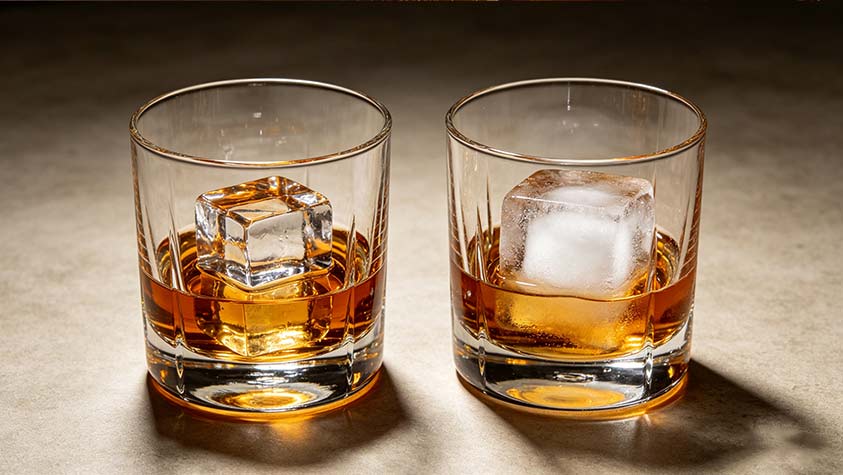
The clearest ice comes from boiling the water up to two times, which removes potential air bubbles that cause cloudiness. But boiling enough water to fill a commercial ice machine every day is a logistical impossibility — which is why commercial ice makers use a completely different method: directional freezing.
Instead of freezing water from all sides simultaneously (which traps air and minerals in the center), a well-designed commercial ice machine freezes water in layers, pushing impurities out as each layer solidifies. The result is ice that’s consistently clear from edge to edge — no boiling, no distilled water, no special handling required.
The difference isn’t just cosmetic. Cloudy ice contains trapped air, which reduces its density and makes it melt faster. Clear ice, being denser and purer, chills whiskey more slowly and evenly — exactly the behavior you want for a spirit that rewards patience. Bartenders and whiskey experts overwhelmingly prefer clear ice for this reason.
For commercial bars and hotels, the ability to produce crystal-clear ice at scale — 200, 500, or 1,000 pounds per day — is what separates a premium whiskey program from a forgettable one. Hoshizaki’s 2by2 specialty cubes, for example, are marketed specifically as “crystal-clear” and “perfect for premium cocktails, whiskey, and spirits.” Ice-O-Matic‘s Grande Ice Cube machine similarly emphasizes the slow melt rate of its large-format clear cubes as ideal for whiskey and brandy. The market has spoken: clarity equals quality, and your guests notice.
Building a Whiskey Bar Ice Program: What Equipment Do You Need?
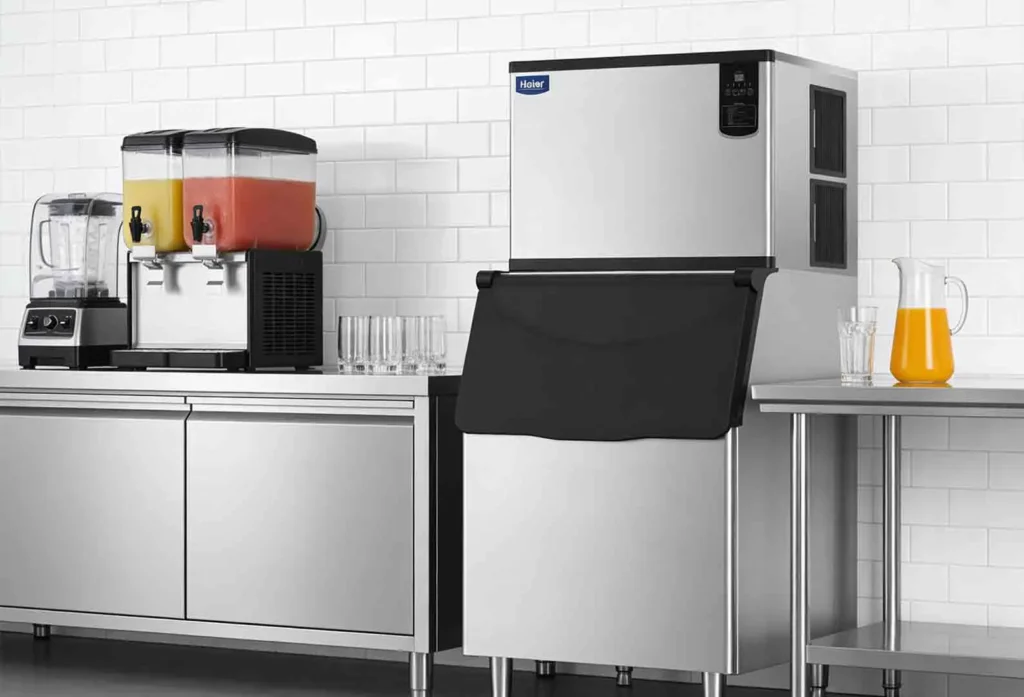
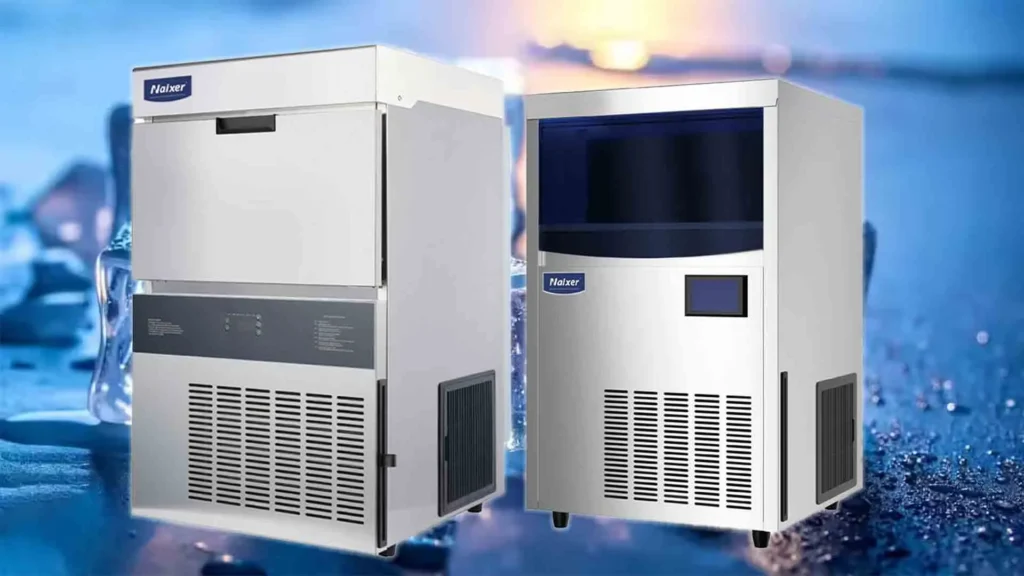
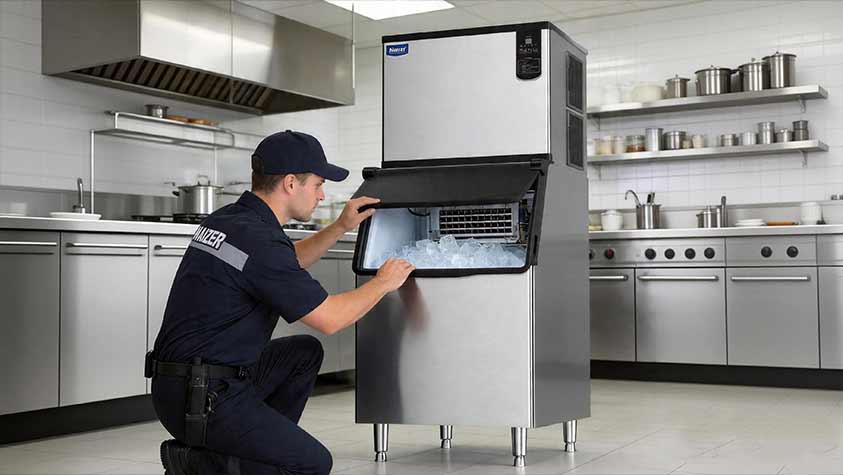
For a whiskey enthusiast at home, a silicone sphere mold and a freezer are sufficient. But for a commercial bar, hotel lobby lounge, or restaurant with a serious whiskey list, the math is different. These operations need machines that can produce 280 to 1,200 pounds of crystal-clear full cube ice per day — not two spheres overnight.
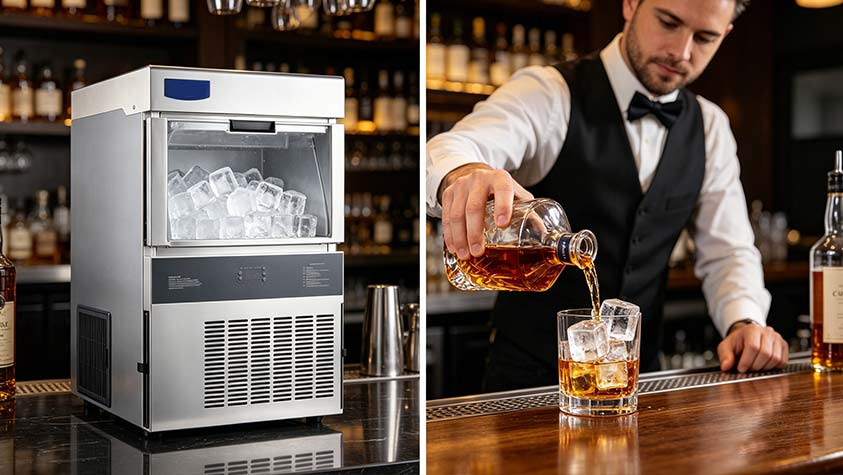
The best ice machines for whiskey-focused bars share several characteristics:
Full cube or large cube production — full cubes are the workhorse of most bars, balancing surface area and density to offer steady, controlled dilution for spirit-forward drinks like Old Fashioneds, Negronis, and straight whiskey pours.
Directional freezing for clarity — the machine should push air and impurities outward as each cube forms, ensuring consistent crystal-clear results without manual intervention.
Built-in storage — self-contained machines with integrated bins hold a full day’s production on-site, eliminating the need to purchase separate storage bins at an additional 600–600–1,500.
Commercial-grade durability and warranty — SUS304 food-grade stainless steel construction, ISO9001-certified manufacturing, and a warranty that genuinely protects the investment.
Related Topics for Your Ice Maker Business Research
- How Much Water Does a Commercial Ice Machine Use
- What Size Ice Machine for a Coffee Shop?
- How Much is a Commercial Ice Maker?
- How to Make Clear Ice: The Complete Guide to Commercial Ice Makers for Bars
- Sonic Ice Maker: How It’s Made & Why Businesses Love Nugget Ice
- Commercial Ice Machine for Restaurant: The 2026 Buyer’s Guide by Type & Need
- Air Cooled vs Water Cooled Ice Machine: The 2026 Buyer’s Guide
Frequently Asked Questions About Whiskey Ice
Q: What is the absolute best ice for whiskey?
A: A large, crystal-clear cube or sphere. Both shapes have a very low surface-area-to-volume ratio, meaning they melt slowly and chill whiskey without excessive dilution. For commercial bars, a full cube ice machine delivering 22×22×22mm clear cubes is the practical gold standard: it balances near-large-cube melt performance with the high-volume production capacity that busy bars need.
Q: How does ice shape affect whiskey’s flavor and dilution?
A: Ice shape determines the surface area in contact with the whiskey. A sphere has the smallest possible surface area for a given volume and melts the slowest. A large cube (28mm+ per side) is close behind. Crushed ice, with its massive surface area, melts almost instantly and is rarely recommended for straight whiskey. The larger and more uniform the ice piece, the more gradual and controlled the dilution.
Q: Why is clear ice considered better for whiskey than cloudy ice?
A: Cloudy ice contains trapped air bubbles and mineral deposits that release into the whiskey as the ice melts, subtly affecting taste. Clear ice, produced through directional freezing that pushes impurities out of the cube, is denser and melts cleanly — chilling the spirit without adding anything but pure water. Bartenders and whiskey experts overwhelmingly prefer clear ice for this reason.
Q: What kind of ice do professional bartenders use for whiskey service?
A: In premium cocktail bars, bartenders typically use large clear cubes (2 inches or larger) or spheres for straight whiskey pours and spirit-forward cocktails. In higher-volume venues, full cube ice — the standard 22×22×22mm commercial format — is more common because it maintains excellent melt performance while being feasible to produce in the quantities (300–500 lbs/day) that busy shifts demand.
Q: Can I make perfectly clear ice for whiskey without buying a commercial machine?
A: Yes. Directional freezing — where water freezes from one direction, pushing air and impurities to one side — is the DIY method used by enthusiasts. However, this typically produces one or two clear cubes per cycle and requires manual preparation. For a busy bar serving dozens of whiskey drinks per hour, a commercial ice machine with integrated directional freezing and automated harvest cycles is the only practical solution.
Q: Do whiskey stones work as well as ice?
A: Whiskey stones (made of stainless steel, soapstone, or granite) chill whiskey without any dilution at all — which sounds ideal but eliminates the water integration that whiskey experts consider essential. All whiskey purists agree: a controlled amount of water from slow-melting ice opens up the spirit’s aroma and smooths out the palate. Stones chill but don’t open; large clear ice does both. For the best whiskey experience, large clear ice remains the superior choice.