How to Buy Ice at a Gas Station: A Complete Guide (2026)
It’s 6 p.m. on a Friday, the barbecue starts in an hour, and your cooler is empty. You need ice — fast. For most people, the nearest gas station is the obvious answer, and in most cases it really is the fastest place to buy bagged ice. What trips people up is the “how”: which freezer to check, whether you pay outside or inside, and how to avoid the bag that’s frozen into a solid brick.
Short answer: You can buy ice at a gas station in three ways — grab a bag from the outdoor freezer and pay inside, take one from a chest freezer at the checkout, or use a self-service ice vending machine that makes fresh ice on-site and takes card or phone payment. Most stations sell 7–20 lb bags for about $2–$5, and self-service ice machines often sell a 10 lb bag for less.
This guide walks through all three options step by step, what ice costs, how to spot a bad bag before you pay, and — for station owners reading this — why modern ice vending is quietly replacing the old delivery model.
In this guide, you will learn:
3 Ways to Buy Ice at a Gas Station
Not every station sells ice the same way, and knowing where to look saves you time:
- The outdoor ice freezer. The most common setup: a large, standalone freezer near the front entrance. Grab your bag, walk inside, and tell the cashier how many bags you took.
- A chest freezer inside the store. Smaller stations often keep a chest freezer near the checkout or by the drinks section. Same process — grab a bag, pay at the counter.
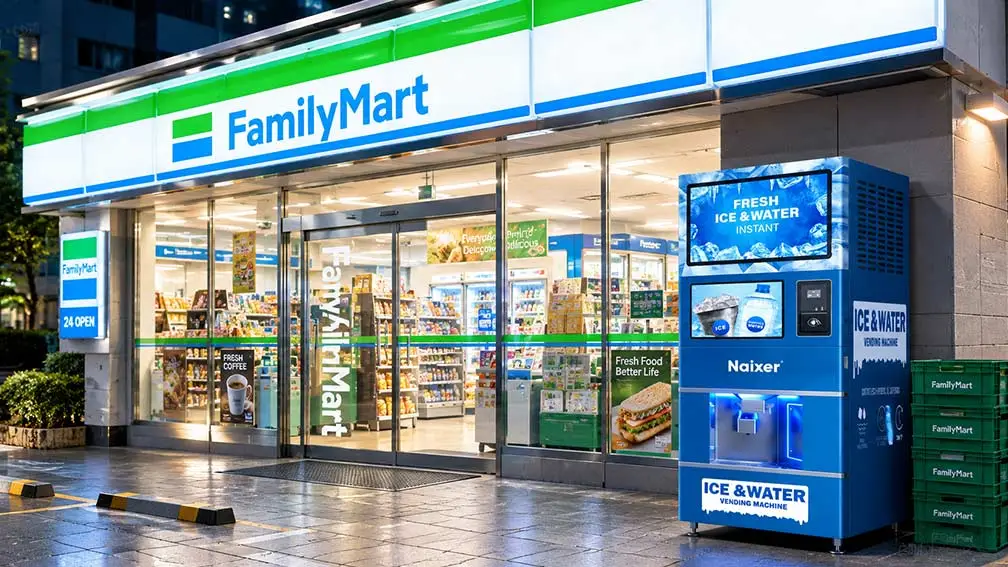
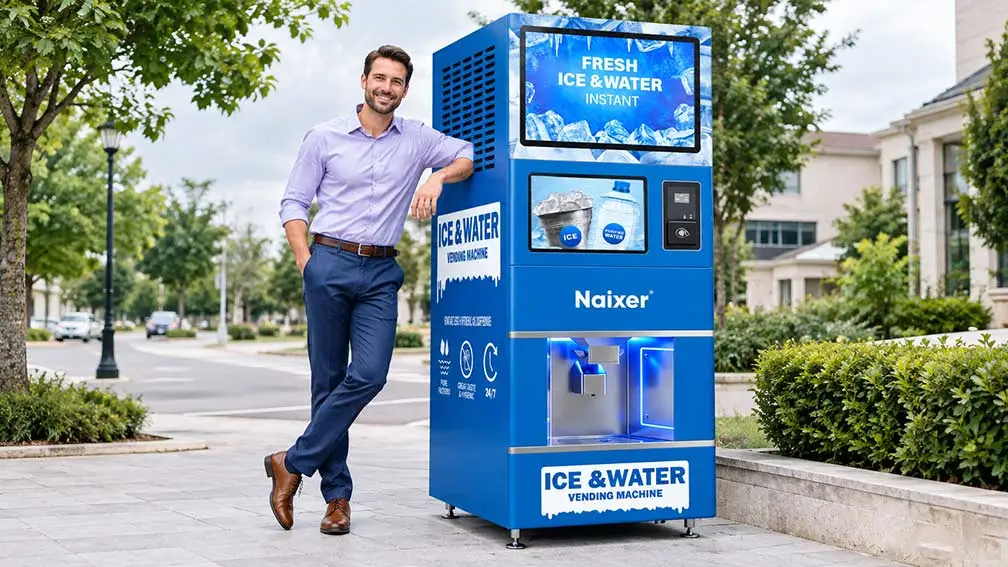
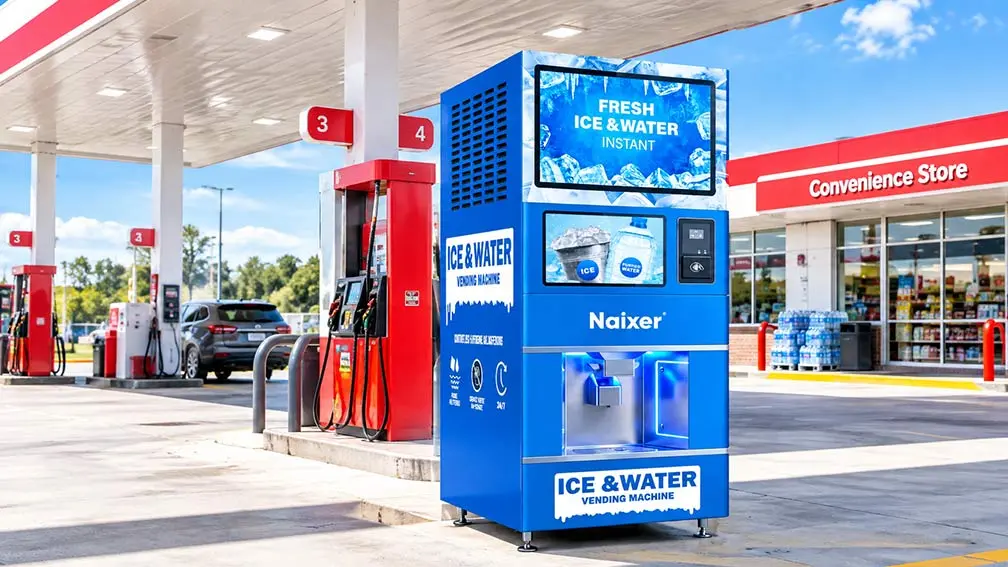
- A self-service ice vending machine. Increasingly common at busy stations: a standalone machine that makes, bags, and dispenses fresh ice around the clock. You pay at the machine with a card or your phone — no cashier involved.
| Where | How You Pay | Typical Price | Best For |
|---|---|---|---|
| Outdoor Ice Freezer | Grab a bag, pay inside at the register | $2–$5 per bag | Quick stops during normal store hours |
| Chest Freezer Inside the Store | Take it to the checkout counter | $2–$5 per bag | When the outdoor freezer is empty |
| Self-Service Ice Vending Machine | Card or phone — pay at the machine | $1.50–$3 per 10 lb bag | Late nights, fresh ice, no checkout line |
The first two options are simple, but they share one weakness: the ice was made somewhere else, loaded onto a truck, and sat in a freezer for an unknown amount of time. The third option is different — the ice is made on-site and bagged the moment you buy it. We’ll come back to why that matters.
How to Buy Ice at a Gas Station: Step by Step
Step 1: Find the freezer — or the kiosk.
Walk toward the store entrance and look for a large metal freezer beside the doors, or a chest freezer inside near the register. At stations with an automated ice machine, you’ll see a tall outdoor unit with a payment screen and a dispensing door — usually near the building’s front corner or under the canopy.
Step 2: Check the bag before you take it.
This is the step most people skip, and it’s the one that ruins cookouts. Before you head to the register:
- Squeeze the bag gently — cubes should move loosely, not as one solid block.
- Look for evenly formed cubes with no webbed frost patterns, which signal the ice was frozen properly.
- Check that the bag is fully sealed, with no tears or wet spots around the seams.

If a bag feels like a brick or looks cloudy and fused together, take one from the back of the freezer — those are usually the freshest.
Step 3: Pay inside or at the machine.
For freezer ice, tell the cashier how many bags you have — prices are usually posted on the freezer itself. For an automated ice machine, just select your bag size on the screen and pay with a card or mobile wallet. No coins, no waiting in line.
Step 4: Load it and keep it cold.
Put the bags at the bottom of your cooler and stack food and drinks on top — ice cools better from below.
How Much Does Ice Cost at a Gas Station?
Ice prices at gas stations typically run $0.22 to $0.50 per pound, with larger bags offering better value. Here’s the range you’ll see across most U.S. markets:
| Bag Size | Typical Price | Price per Pound |
|---|---|---|
| 5 lb | $1.50–$2.50 | $0.30–$0.50 |
| 7–8 lb | $2–$3 | $0.28–$0.40 |
| 10 lb Retail Bag | $2.50–$4 | $0.25–$0.40 |
| 20 lb | $4.50–$8 | $0.22–$0.40 |
| 10 lb Ice Vending Machine | $1.50–$3 | $0.15–$0.30 |

Three things explain the differences you’ll notice:
- Bag size. Bigger bags cost more per bag but less per pound. A 20 lb bag often costs about 30–40% less per pound than a 5 lb bag.
- Region and season. Ice prices run higher in hot climates and during summer peaks, when demand outruns local supply.
- Where the ice is made. Delivered ice carries trucking and distributor margins. Ice made on-site — like at a self-service machine — skips those costs, which is why machine ice is often the cheapest per bag and the price rarely changes.
How to Pick Good Ice: 5 Things to Check
Whether you’re buying for a cooler or a cocktail, quality checks take five seconds:
- Evenly formed cubes. Uniform shape means the machine froze the water properly. Irregular, cloudy lumps suggest rushed or refrozen ice.
- No “webbing.” Spider-web frost between cubes means the bag partially melted and refroze — usually a sign of old stock.
- A tight seal. Torn or damp bags let in air and contaminants.
- Loose, not fused. If the bag moves like a sandbag, the cubes froze together in storage and will clump in your cooler.
- Clarity. Clear ice means filtered water. Cloudy ice often contains trapped air or dissolved minerals.

One more tip: if you can see an ice vending machine at the station, try it. The ice is produced on demand from filtered water — the closest thing to “just made” ice you can buy at retail.
Ice Freezer vs. Ice Vending Machine: What's the Difference?
Both sell bagged ice, but they work in completely different ways. A traditional freezer is a retail shelf: ice is manufactured at a distribution plant, delivered by truck, and sold over days or weeks. A self-service ice vending machine is a miniature factory: it filters local water, freezes it, bags it, and dispenses it when you pay — all in one unit, all day long.
| Compare | Traditional Ice Freezer | Self-Service Ice Vending Machine |
|---|---|---|
| Where Ice Comes From | Delivered by truck from a distribution plant | Made on-site from filtered water |
| Freshness | Varies — bags may sit for days and slowly melt | Bagged at the moment you buy |
| Payment | Pay inside at the register | Card or phone at the machine |
| Opening Hours | Store hours only | 24/7, even when the store is closed |
| Handling | Multiple hand-offs from plant to shelf | No human contact until you grab the bag |
| Price Consistency | Rises with delivery and wholesale costs | Stable — you control pricing |
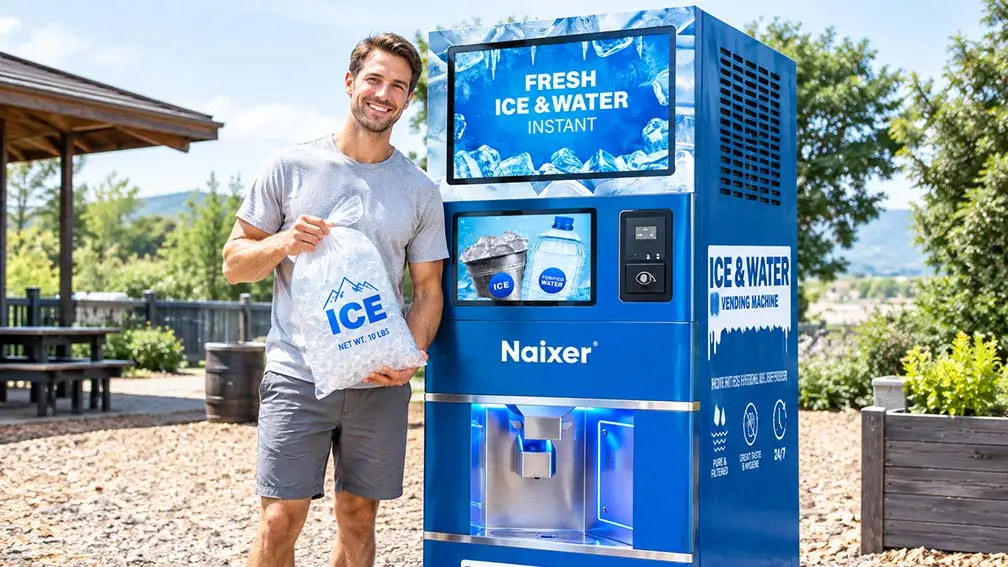
For customers, the practical difference is freshness and convenience — on-demand ice, card payment, and no rush at closing time. For station owners, the difference is bigger: it’s the gap between reselling someone else’s ice at a thin margin and producing your own with almost no labor.
For Gas Station Owners: Why Modern Ice Vending Wins
If a machine can beat a freezer on freshness and price, there’s an obvious question: why haven’t all stations switched? The short answer is that the change is happening now — and it’s driven by three problems with the traditional model that every owner recognizes:
- Supply runs out at the worst time. One hot weekend empties the freezer, and the truck isn’t coming until Tuesday.
- Thin, squeezed margins. You buy at wholesale, sell at retail, and every trucking cost increase eats your profit.
- Labor you can’t spare. Someone has to check stock, restock bags, and babysit the freezer — usually your busiest employee.
A self-service ice vending machine flips all three. It produces ice continuously from the water line (no deliveries, no stockouts), sells at margins reserved for producers (not resellers), and runs 24/7 with zero daily labor. Gas stations are arguably the single best location type for this model — the hottest locations for ice vending are almost always high-traffic, 24-hour sites exactly like yours.
And the economics are not marginal. A well-placed machine typically generates what a single machine can realistically earn — thousands of dollars a month at 70–85% gross margins — with payback in 2–3 years and profit continuing for a decade after. That’s why so many stations now treat ice not as a $2 add-on, but as a standalone revenue line.

Of course, the same machine in two different spots can produce very different sales — placement, signage, and payment options matter more than most operators expect. If you want the playbook, see our field-tested tips on how to make your machine stand out.
Five things to check before buying any ice vending machine:
- Daily production capacity — sized to your hottest weekend, not your average day.
- Water filtration — multi-stage filtration is what makes the ice clear and repeat customers.
- Cashless payment — card and mobile wallets now account for most impulse buys.
- Remote monitoring — you should see sales, stock, and faults from your phone.
- Customization and support — colors, logos, and warranty coverage from the manufacturer.
A good reference point is the Naixer ZD-160 ice & water vending machine: it produces up to 160 kg (about 350 lb) of ice daily, dispenses bagged ice and purified water, accepts card and mobile payments, and includes remote monitoring — features once only found on machines costing far more. And when the first machine proves itself, scaling up to multiple machines follows the same playbook at new locations.
FAQ
How does getting ice at a gas station work?
Walk to the outdoor freezer (or an inside chest freezer), take the bag you want, and pay at the register inside. At stations with a self-service ice machine, you instead select the bag size on the machine’s screen and pay there with a card or phone — no checkout needed.
How much is a bag of ice at gas stations?
Most gas stations sell ice for about $2 to $5 per bag, depending on bag size and region. Small 5 lb bags run $1.50–$2.50; 10 lb bags run $2.50–$4; 20 lb bags run $4.50–$8. Self-service ice vending machines are often cheaper — commonly $1.50–$3 for a 10 lb bag.
How much does a 10 lb bag of ice cost?
Typically $2.50–$4 at a store counter, or about $1.50–$3 from a self-service ice vending machine. Per pound, that’s roughly $0.25–$0.40 for retail bags.
What is the average cost of a 20 lb bag of ice?
Around $4.50–$8 in most U.S. markets. 20 lb bags are the best value in the freezer — usually $0.22–$0.40 per pound.
Can you buy ice at a gas station 24/7?
At stations with a self-service ice vending machine, yes — those run around the clock, independent of store hours. Freezer ice, however, can only be bought while the register is open, since you pay inside.
Is it profitable to sell ice at a gas station?
Yes — it’s one of the highest-margin products a station can carry. Vended ice has no spoilage (unsold ice stays frozen), needs no labor, and runs on tap water. Machine owners typically see 70–85% gross margins, but results depend heavily on location and pricing — our ice vending profit benchmarks break down the real numbers by scenario.
Why do people buy bagged ice?
Mainly convenience and consistency. Bagged ice is available on nearly every corner, comes in standard sizes (7–20 lb) that fit coolers exactly, and is cheaper than making large quantities at home — a few dollars per bag versus hours of tray ice.