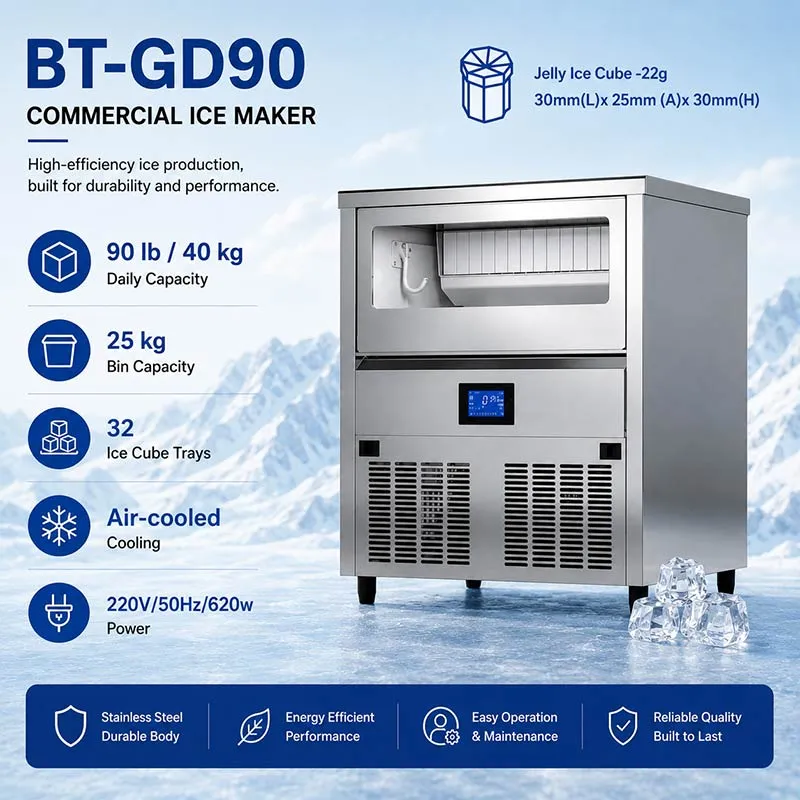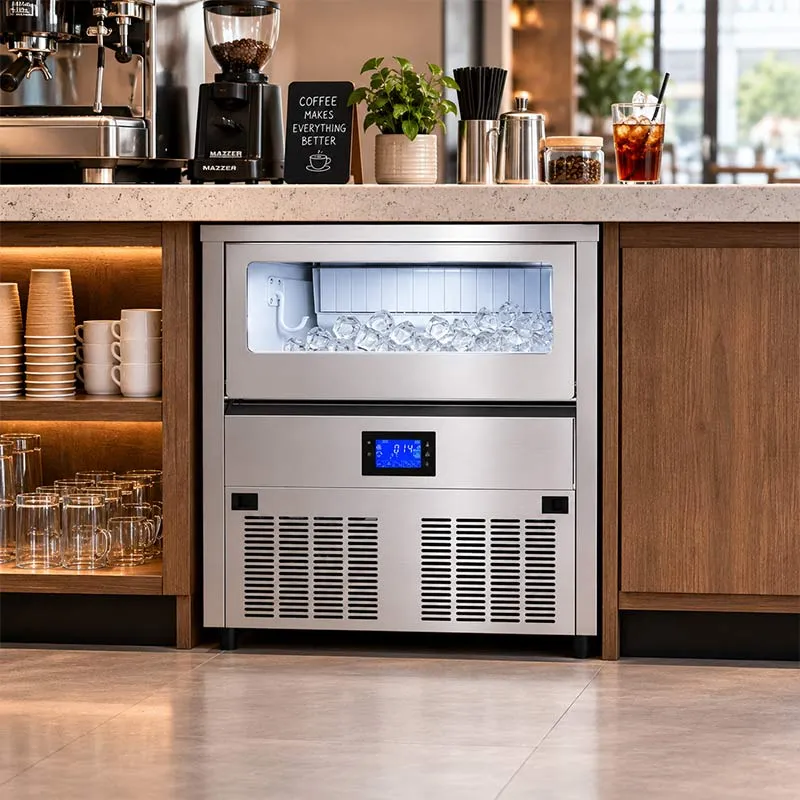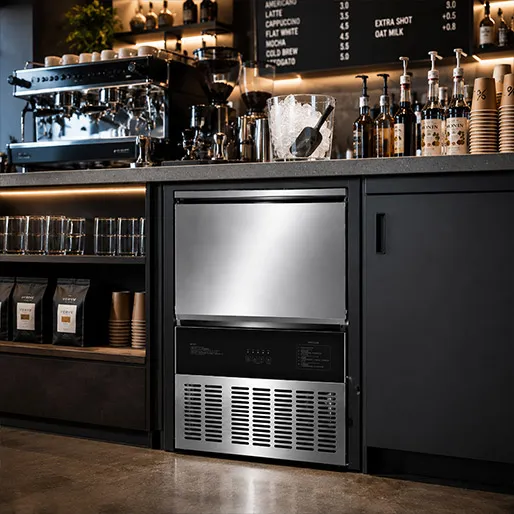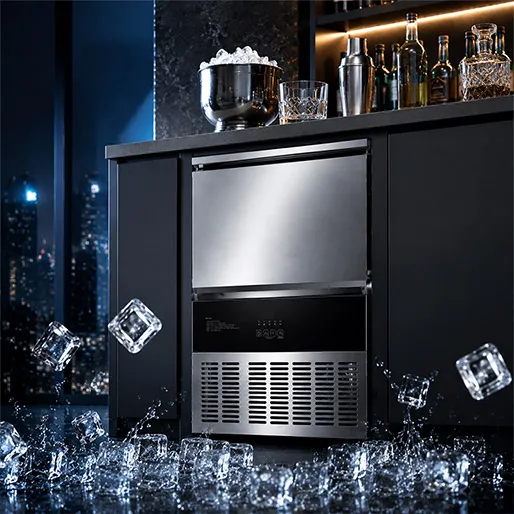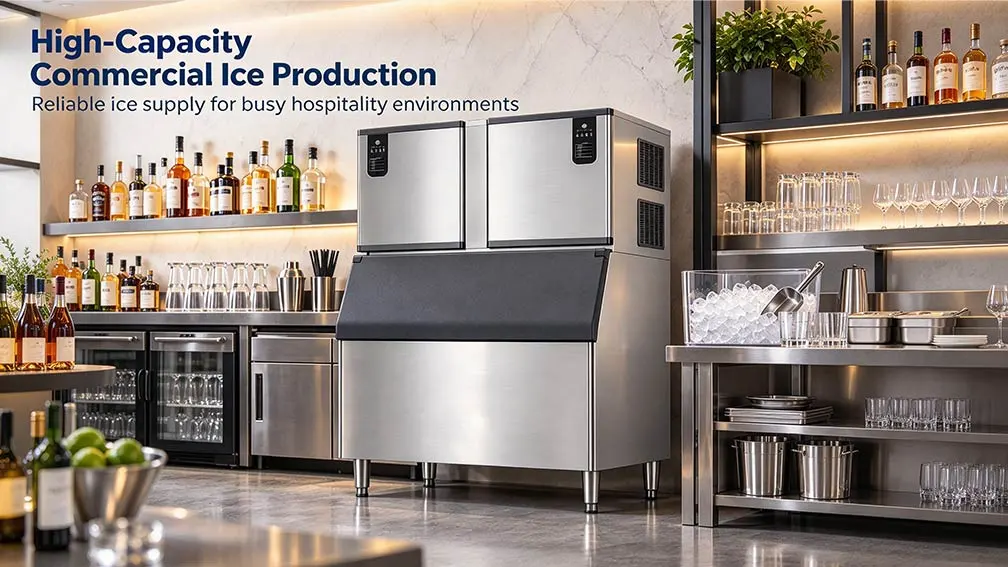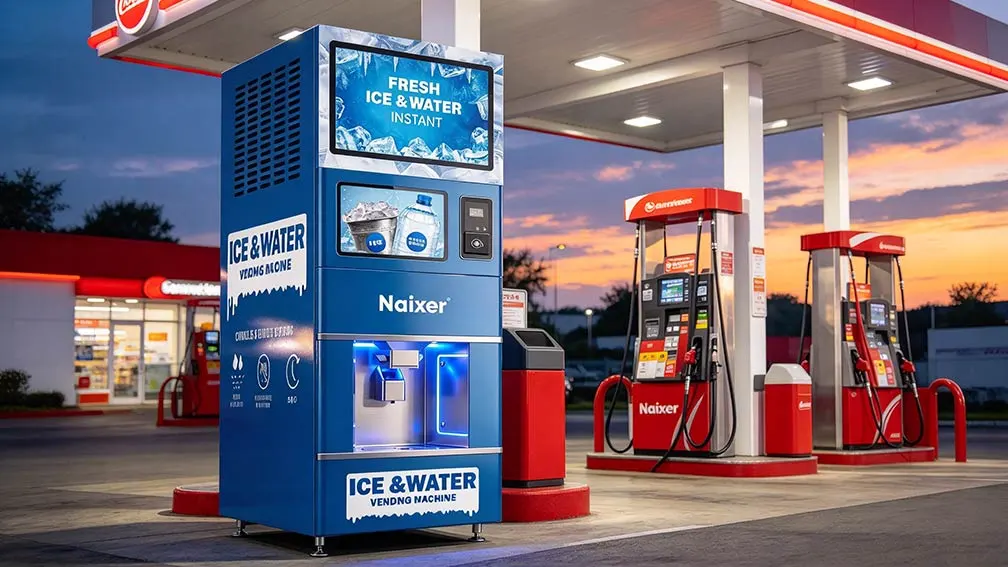
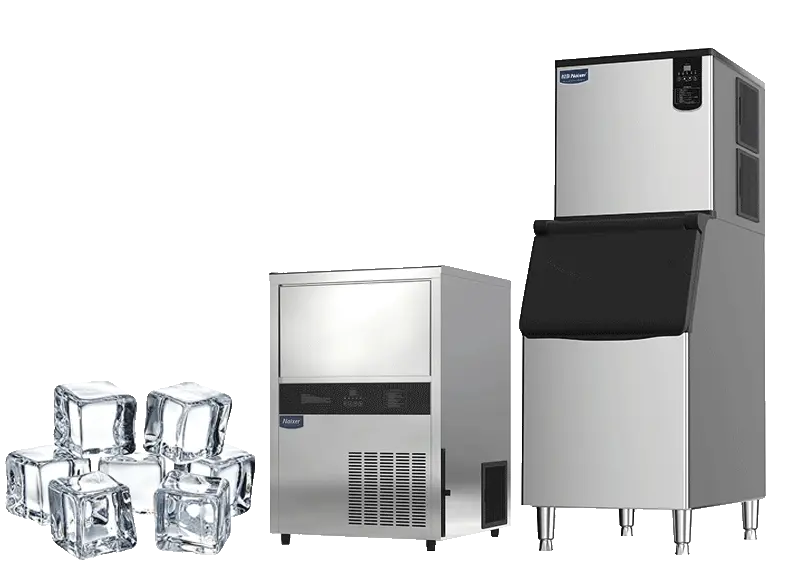
When you start shopping for a commercial ice machine, one of the first decisions you will face is cooling type: air-cooled or water-cooled. It sounds technical. It is actually a practical question about how the machine rejects the heat it generates while freezing water into ice—and whether your kitchen can support the way it does that.
An air-cooled ice machine uses ambient air and a condenser fan to remove heat from the refrigeration system. The machine still uses water to make ice, but it does not consume condenser water for heat rejection. This makes air-cooled machines the most common configuration in restaurants, bars, cafés, hotels, convenience stores, and healthcare foodservice environments where adequate ventilation is available.
This guide explains how air-cooled ice machines work, when they are the right choice, and which Naixer models fit different commercial applications. For the complete decision framework across all machine types and capacities, the commercial ice machine buying guide covers every factor from sizing to installation. If you are specifically comparing cooling methods, the detailed comparison is in the article on air cooled vs water cooled ice machines .
In this guide, you will learn:
What Is an Air Cooled Ice Machine?

An air-cooled ice machine is a commercial ice maker that uses ambient air and a condenser fan to remove heat from the refrigeration system during ice production. The machine still requires water to make ice, but it does not use condenser water for heat rejection. Instead, the condenser fan pulls room air across the condenser coil, absorbing the heat and discharging it back into the surrounding space.
This is the fundamental distinction from a water-cooled machine, which uses a continuous flow of water through a separate condenser circuit to carry heat away. Both types make ice the same way—water freezes on a chilled evaporator surface and is harvested into the storage bin. The difference is entirely in how the machine sheds the heat generated by the refrigeration process.
The U.S. Department of Energy’s Federal Energy Management Program classifies air-cooled ice machines into three categories: self-contained units, ice-making heads, and remote-condensing units. Each has a different physical configuration, but all use air rather than water for condenser heat rejection. For Naixer’s commercial line, air-cooled configurations are available across multiple product series, including cube ice machines, cylinder ice machines, nugget ice machines, and large-format gourmet cube machines.
How Does an Air Cooled Ice Machine Work?

An air-cooled ice machine follows the same basic refrigeration cycle as any ice maker, with one defining difference: the condenser releases heat into the air instead of into a water stream.
The process works in five stages. First, water is supplied to the machine and directed to the evaporator, where it is chilled below freezing. Second, the water freezes into ice on the evaporator surface, forming the specific ice shape the machine is designed to produce—cube, crescent, cylinder, nugget, or flake. Third, when the ice reaches the correct thickness or size, the machine initiates a harvest cycle, briefly warming the evaporator to release the ice into the storage bin. Fourth, the refrigeration cycle continues, with the compressor circulating refrigerant through the system to maintain freezing temperatures at the evaporator.
The fifth stage is where air cooling comes in. The refrigerant, now carrying the heat it absorbed from the ice-making process, passes through the condenser coil. A fan pulls ambient air across the coil, absorbing the heat and discharging it into the room. The refrigerant cools and condenses back into a liquid, ready to repeat the cycle.
The key point to remember: air is used for heat rejection, while water is still used for ice production. An air-cooled machine is not a water-free machine. It simply avoids the additional condenser-water flow that a water-cooled system requires.
Air Cooled vs Water Cooled Ice Machines
Both air-cooled and water-cooled machines make the same ice. The difference is how they manage heat, and that difference shows up in water consumption, installation requirements, and performance in challenging environments.
| Factor | Air-Cooled | Water-Cooled |
|---|---|---|
| Cooling medium | Ambient air | Water |
| Condenser water | None | Required |
| Heat released into room | Yes | Lower |
| Ventilation | Important | Less dependent on room airflow |
| Water use | Lower | Higher |
| Common applications | Most commercial sites | Hot or difficult environments |
For a complete, side-by-side breakdown of when each cooling type makes sense, the article on air cooled vs water cooled ice machines explores the trade-offs in detail, including installation requirements, operating costs, and performance in high-temperature kitchens.
Why Are Air Cooled Ice Machines Popular for Commercial Use?

Air-cooled systems dominate commercial ice machine installations for practical reasons. They generally avoid the additional condenser-water consumption of water-cooled systems, which simplifies utility planning and keeps water bills lower. This matters in municipalities where water costs are high or where water conservation is a business priority.
The installation is also simpler. A water-cooled machine requires a dedicated condenser water supply line and a drain for the condenser water. An air-cooled machine needs only the standard water line for ice production and a drain for the ice bin. Fewer plumbing connections means fewer points of failure and a cleaner installation.
The trade-off is that air-cooled machines discharge heat into the surrounding space and require suitable airflow and ventilation. In a room with adequate ventilation and moderate ambient temperature, this is rarely a problem. In a hot, enclosed, poorly ventilated kitchen, it can reduce ice output and strain the compressor. Understanding where an air-cooled machine works well—and where it struggles—is the key to making the right choice.
When Should You Choose an Air Cooled Ice Machine?
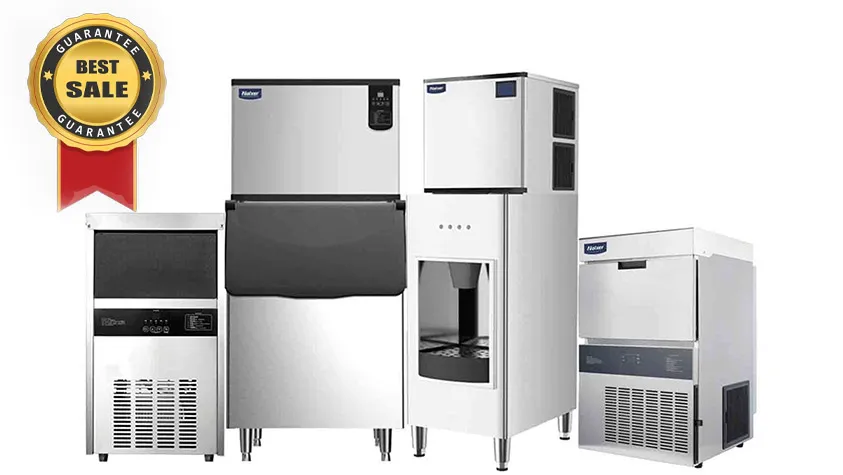
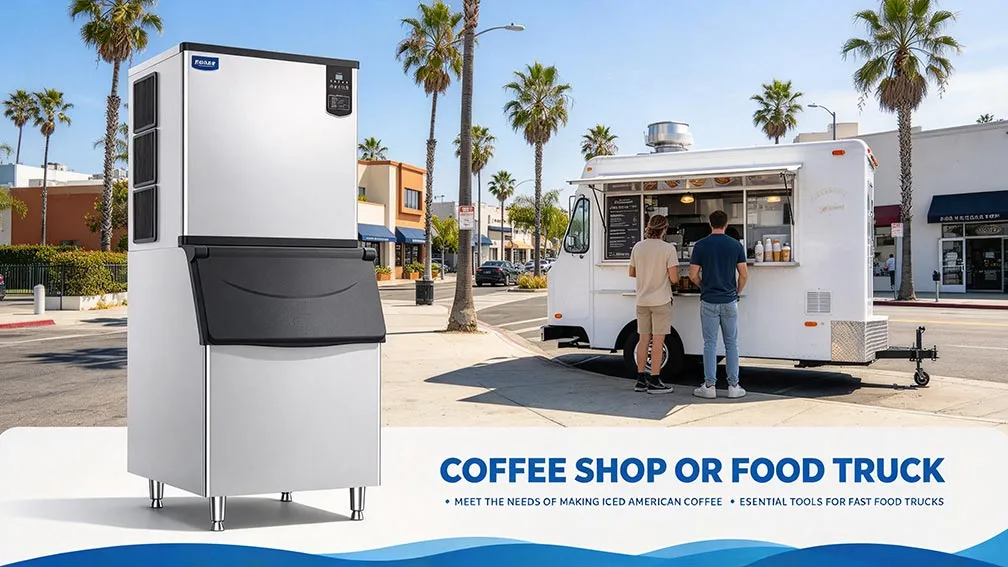
Air-cooled ice machines are the default choice for most commercial foodservice environments. If your kitchen, bar, or cafe has adequate airflow and a reasonably controlled ambient temperature, an air-cooled machine will serve you well. Air-cooled is also the only practical choice for a food truck ice machine — here’s why.
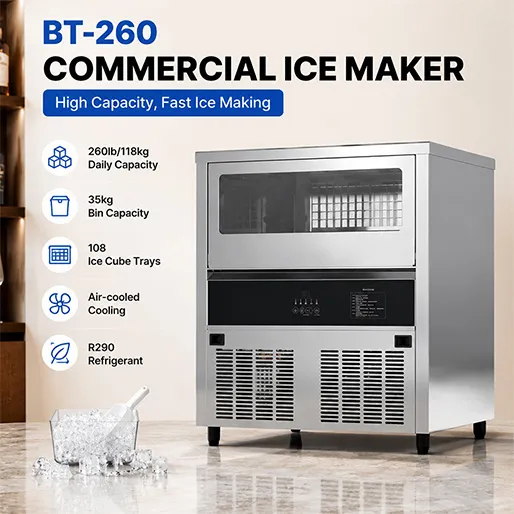
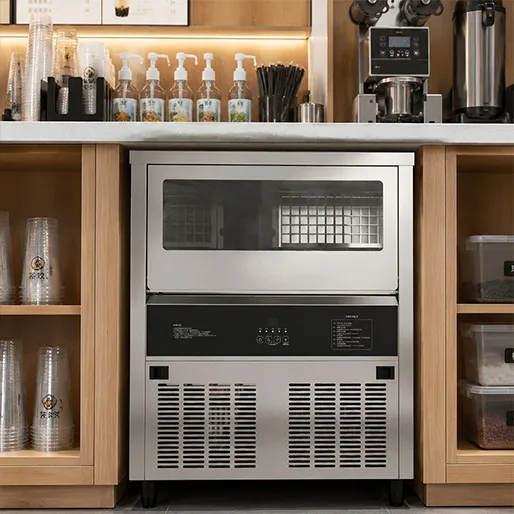
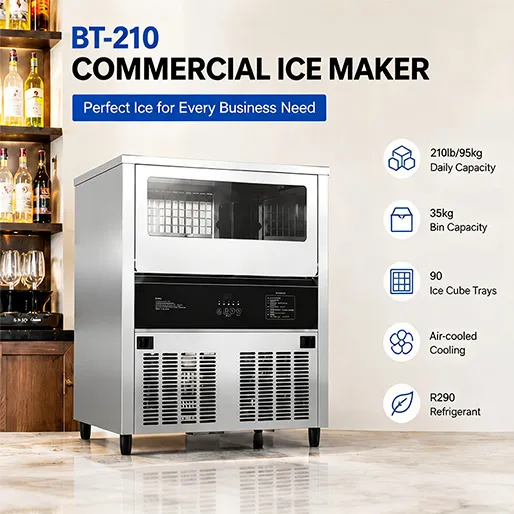
Restaurants benefit from air-cooled machines because they typically have HVAC systems that maintain moderate kitchen temperatures. A Naixer BT-210 or BT-260 undercounter cube ice machine delivers the 210 to 260 pounds of daily ice production a busy restaurant needs, without the additional plumbing complexity of water cooling.
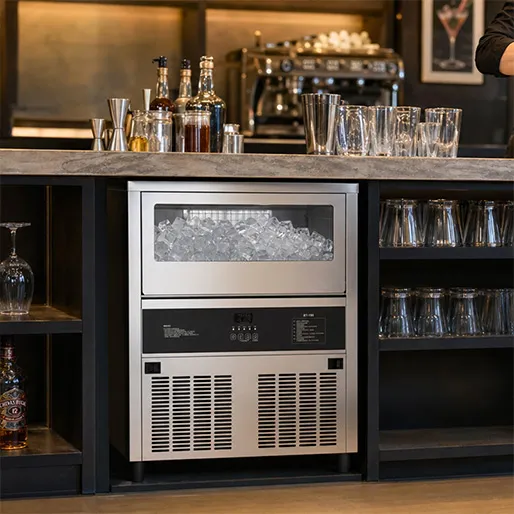
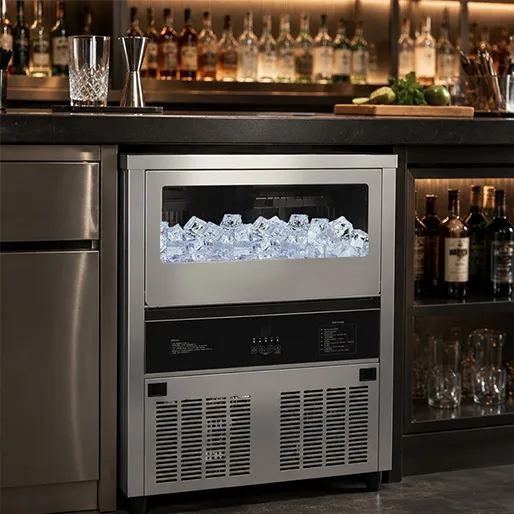
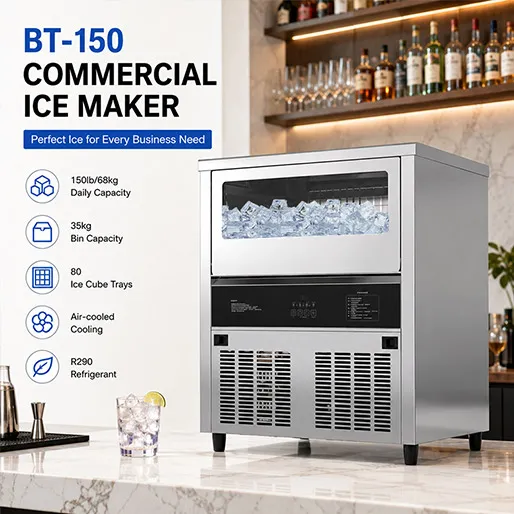
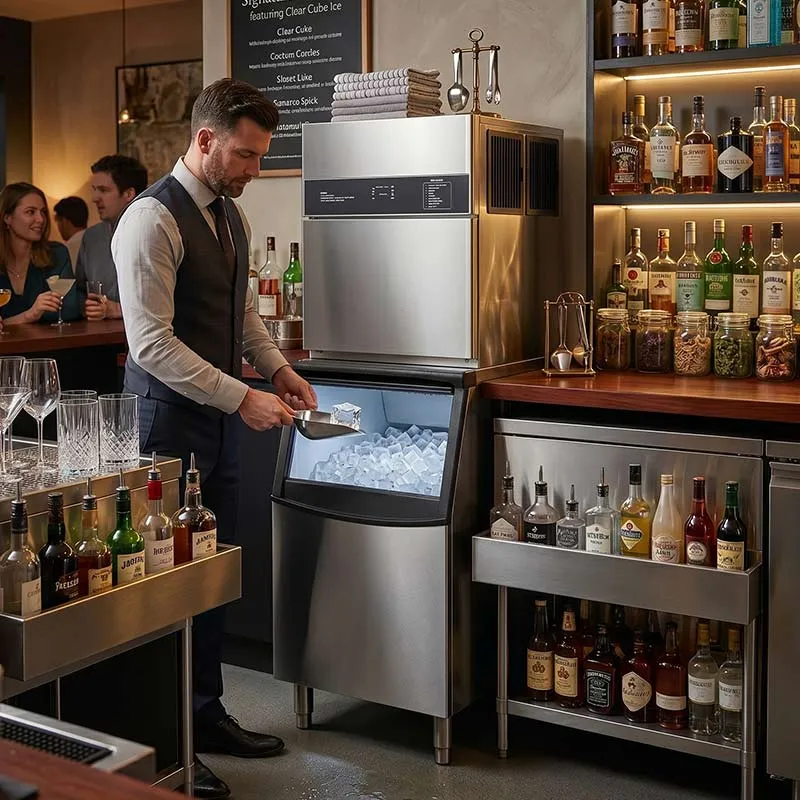
Bars and pubs use air-cooled machines for the same reason. The ice sits under the counter, close to the service well, and the machine draws room air through its front vent. The Naixer BT-150 is a compact 150-pound-per-day machine that fits under a standard bar counter and keeps the well stocked through a busy night.
Cafés and coffee shops often prefer air-cooled machines because they are simpler to install in small spaces. A Naixer BT-120 or TH-80B undercounter machine provides 80 to 120 pounds of cube ice per day for iced lattes, americanos, and cold brews. For shops that want crescent ice, the Naixer TH-SE150 produces 150 pounds of crescent ice per day in the same undercounter footprint.
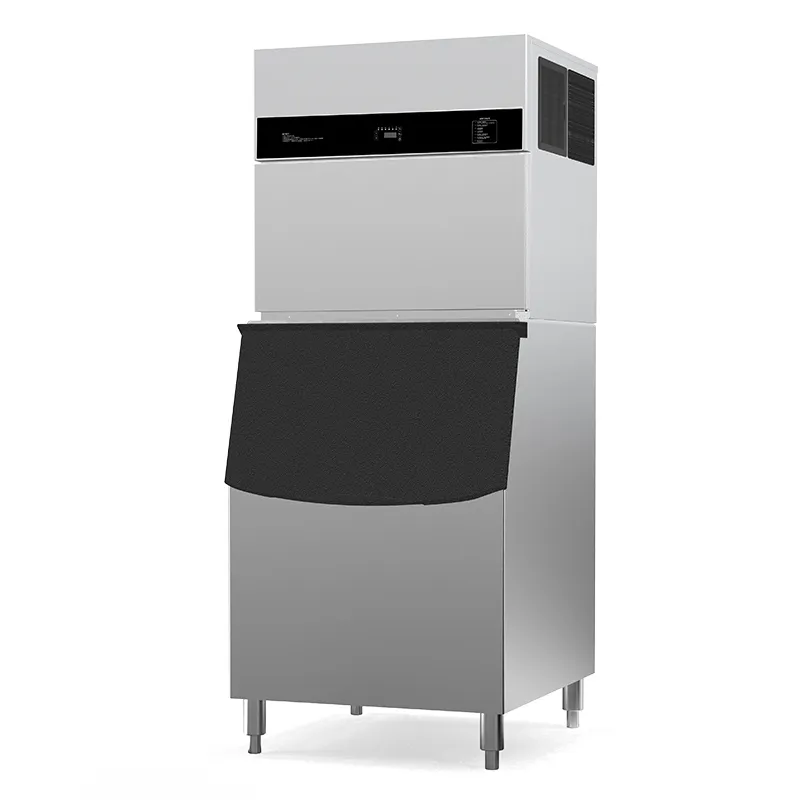
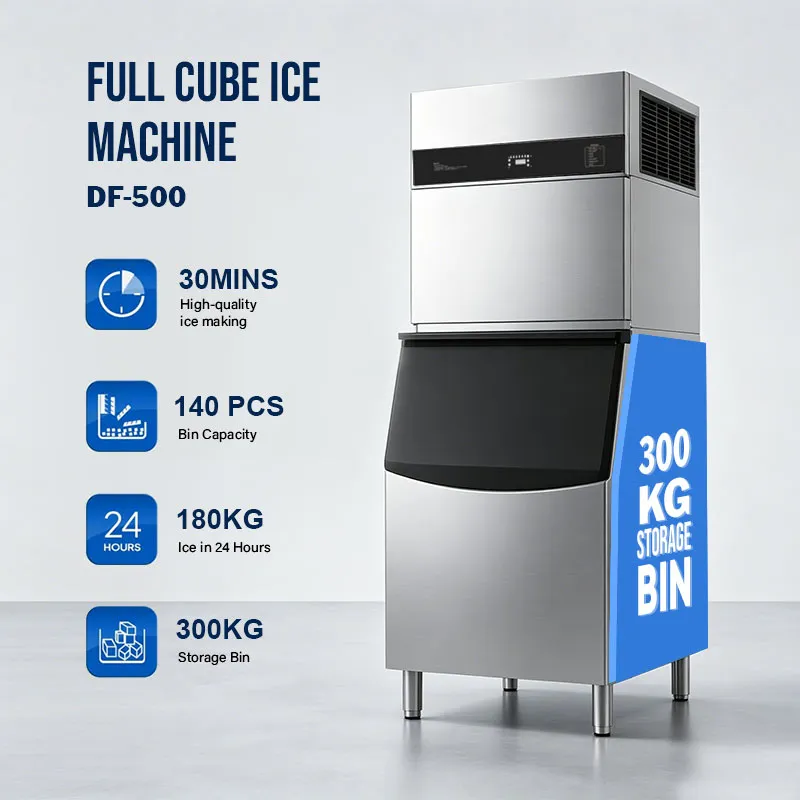
Hotels use air-cooled machines in guest floor dispensers, lobby bars, and back kitchens where ventilation is available. The Naixer TH-1000B provides 1,000-pound-per-day self-contained ice production with a built-in 300-kilogram bin for hotel back kitchens and banquet operations.
Convenience stores and small foodservice operations benefit from the simplicity of air-cooled machines. The Naixer BT-GD140 cylinder ice machine produces 140 pounds of slow-melting cylindrical ice per day, offering a distinctive product for fountain drinks and specialty beverages. The Naixer KL-60 nugget ice maker produces the soft, chewable ice that customers love in sodas and blended drinks.
For more on matching the right machine to a specific business type, the article on the best commercial ice machines for businesses covers the full range of restaurant, bar, cafe, and hotel applications.
When Is an Air Cooled Ice Machine Not the Best Choice?
Air-cooled machines have real limitations, and ignoring them leads to frustration: reduced ice output, overheating compressors, and premature equipment failure.
The first limitation is ambient temperature. An air-cooled machine rejects heat into the room air around it. If that room air is already very hot—say, above 90°F in a poorly ventilated kitchen—the condenser cannot shed heat effectively. The compressor works harder, ice production drops, and the machine’s service life shortens. In these environments, a water-cooled machine often performs better because it does not depend on room air temperature.
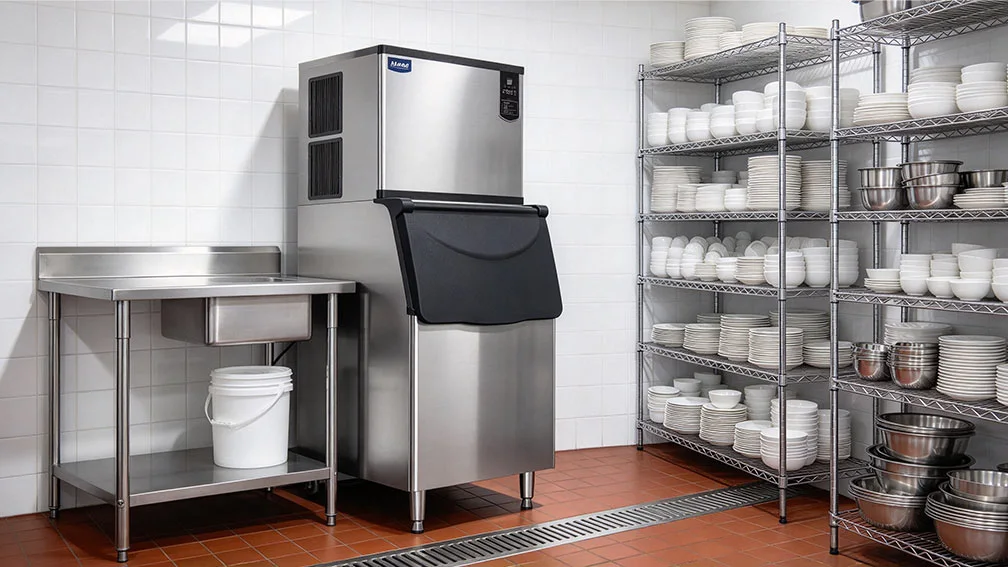
The second limitation is airflow. Air-cooled machines need clearance on all sides to pull in air and discharge heat. A machine crammed into a tight alcove or pushed flush against a wall cannot breathe. The fan circulates increasingly warm air, and the same decline in performance occurs.
The third limitation is heat discharge into occupied spaces. An air-cooled machine in a small, enclosed room—like a coat closet or a tiny kitchen—can make the space noticeably warmer. This is rarely a problem in a large commercial kitchen, but it can be an issue in a small cafe or an office pantry.
If any of these conditions apply to your installation, a water-cooled machine may be the better choice. The comparison article on air cooled vs water cooled ice machines walks through the decision in detail.
What Ice Types Are Available in Air Cooled Ice Machines?

Air-cooled configurations are available across multiple commercial ice-machine designs. Availability depends on the specific model.
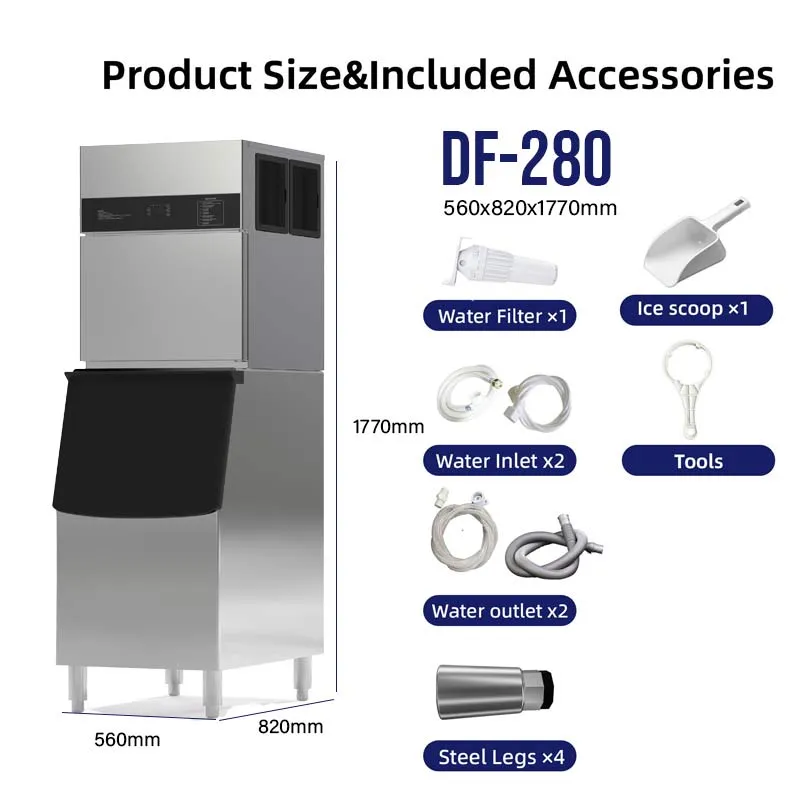
The most common air-cooled ice type is cube ice, produced by Naixer’s BT Series and TH Series machines. These units make 22-by-22-by-22-millimeter full cubes—the versatile, slow-melting standard used in soft drinks, iced tea, and cocktails. Cylinder ice is another air-cooled option, produced by the Naixer BT-GD Series. Its hollow cylindrical shape cools drinks fast and offers a distinctive visual presentation. Large-format square ice is produced by the Naixer DF Series, including the DF-130 with its 50-by-50-by-50-millimeter cubes for premium whiskey service. Nugget ice—the soft, chewable, pellet-style ice—is produced by the Naixer KL-60. Flake ice, used for seafood displays and food processing, is available through the PB Series.
Not every ice type is available in every capacity or configuration, and not every model within a series is air-cooled. The best approach is to start with the ice type your menu requires, then filter the Naixer product center for air-cooled models in the capacity range you need. The article on which ice cube shapes are best for your restaurant compares the ice types in detail.
How to Choose the Right Air Cooled Ice Machine
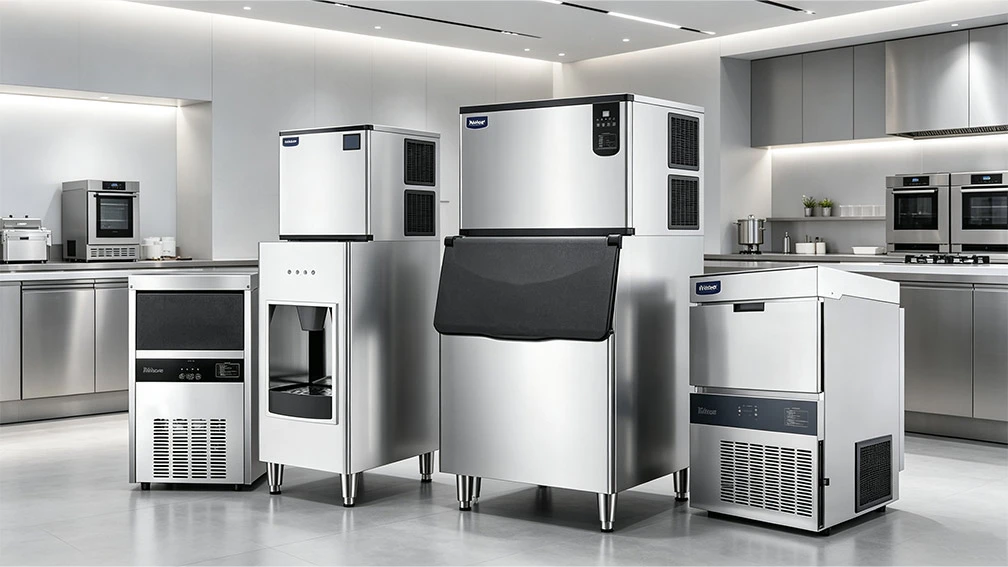
The selection process for an air-cooled machine is the same as for any commercial ice machine, with one additional consideration: ventilation.
Start with the ice type your menu demands. Cube ice is the all-purpose workhorse. Crescent ice is the upgrade for espresso drinks and spirit-forward cocktails. Cylinder ice offers a distinctive look and fast cooling. Nugget ice is for chewable-ice programs. Large-format square ice is for premium spirits. Flake ice is for food displays and processing.
Next, calculate your peak daily ice demand. For restaurants, plan on 1.5 to 2 pounds of ice per customer. For bars, plan on 3 pounds per seat. For cafes, plan on 0.5 pounds per iced drink. Add a 20 to 25 percent buffer on top of that peak. The sizing guide at how to choose the right size commercial ice maker walks through the math.
Then measure your installation space. Confirm that an air-cooled machine’s ventilation clearance requirements can be met. If the space is tight, enclosed, or hot, consider whether a water-cooled machine would be a better fit, or whether a different location is available.
Finally, compare total cost of ownership across the machines you are considering. Purchase price, utilities, maintenance, and expected lifespan all factor into the real cost. For a complete cost breakdown, the restaurant ice machine cost guide covers every line item.
Naixer Air Cooled Commercial Ice Machines
Naixer’s commercial ice machine portfolio includes multiple air-cooled models across different ice types, capacities, and machine configurations. The models below represent the range of air-cooled options available. For the full current lineup, explore the Naixer commercial ice machine product center .
Naixer BT-150 is a 150-pound-per-day air-cooled cube ice machine in a compact undercounter configuration. It produces 22-by-22-by-22-millimeter full cubes and fits under a standard bar counter, making it a strong choice for restaurants, bars, and cafes. Specifications are available on the Naixer product page .
Naixer BT-210 produces 210 pounds of cube ice per day, stepping up the capacity for busier operations that still want the undercounter footprint. It is built for mid-size restaurants and busy gastro-pubs. See the full details on the Naixer product page .
Naixer BT-260 pushes undercounter air-cooled production to 260 pounds per day with a 51-kilogram storage bin. It is the machine for high-volume bars and restaurants that need serious ice output without sacrificing the self-contained footprint. Details are on the Naixer product page .
Naixer BT-GD140 is a 140-pound-per-day air-cooled cylinder ice machine. Its hollow cylindrical ice cools drinks fast and looks distinctive in a glass—a good match for bars and specialty beverage programs. Specifications are on the Naixer product page .
Naixer DF-130 produces 130 pounds of air-cooled large-format square ice per day, with 50-by-50-by-50-millimeter cubes built for premium whiskey service. It fits under a standard counter and is designed for high-end bars and steakhouses. See the Naixer product page for full specifications.
Naixer KL-60 is a 60-kilogram-per-day air-cooled nugget ice machine, producing the soft, chewable ice that customers love in sodas, blended drinks, and healthcare settings. Details are on the Naixer product page .
For more on matching a specific model to your operation, the article on the best commercial ice machines for businesses provides scenario-based recommendations across restaurant, bar, cafe, hotel, and specialty applications.
Air Cooled Ice Machines — Quick Answers
Are air cooled ice machines better than water cooled?
Not universally. Air-cooled machines use less water and are simpler to install, which makes them the better choice for most commercial sites. Water-cooled machines perform more reliably in hot, poorly ventilated spaces. The right answer depends on your installation environment.
Do air cooled ice machines use water?
Yes. Air-cooled machines use water to make ice. They do not use a separate condenser-water stream for heat rejection, which is why their total water consumption is typically lower than water-cooled machines.
Do air cooled ice machines need ventilation?
Yes. Air-cooled machines rely on airflow across the condenser coil. Adequate clearance on the sides, back, and front is essential for maintaining ice production and protecting the compressor.
Are air cooled ice machines suitable for restaurants?
Yes. Air-cooled machines are the most common configuration in restaurants, bars, cafes, and similar foodservice settings where ambient temperatures are moderate and ventilation is available. Models like the Naixer BT-150, BT-210, and BT-260 are designed for these environments.
Are air cooled ice machines suitable for hot kitchens?
It depends on how hot and how well ventilated. In a hot but well-ventilated kitchen, an air-cooled machine can perform acceptably, though production may be slightly below rated capacity. In a hot, enclosed kitchen with poor airflow, a water-cooled machine is usually the better choice.
How much electricity does an air cooled ice machine use?
Energy consumption depends on machine size, ice type, production level, and efficiency rating. Compare machines using a consistent metric such as kilowatt-hours per 100 pounds of ice produced.
Can an air cooled ice machine be installed outdoors?
No. Commercial ice machines, including air-cooled models, are designed for indoor installation. Outdoor exposure introduces electrical hazards, accelerates corrosion, and voids the warranty. Naixer machines are rated for indoor use within a specific ambient temperature range.