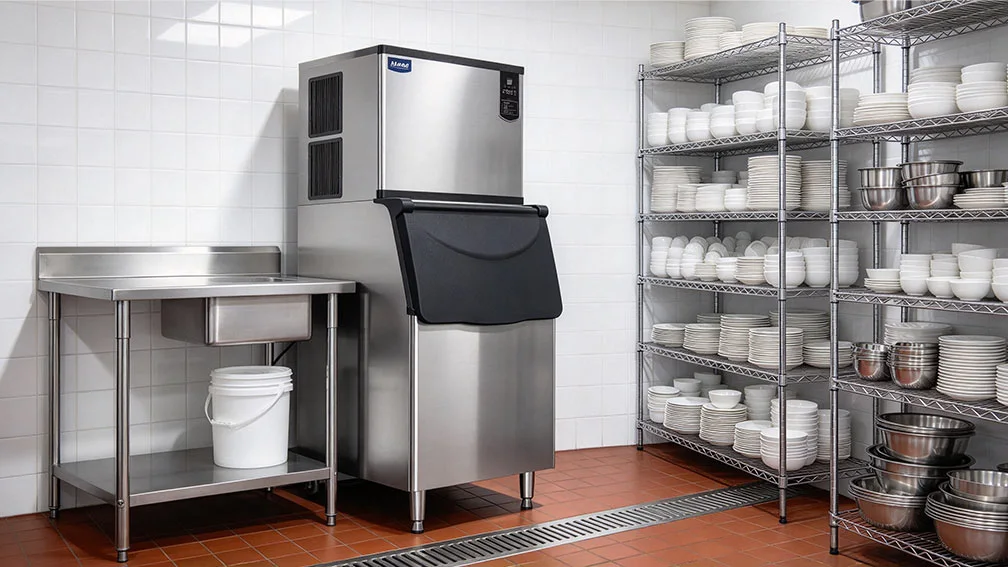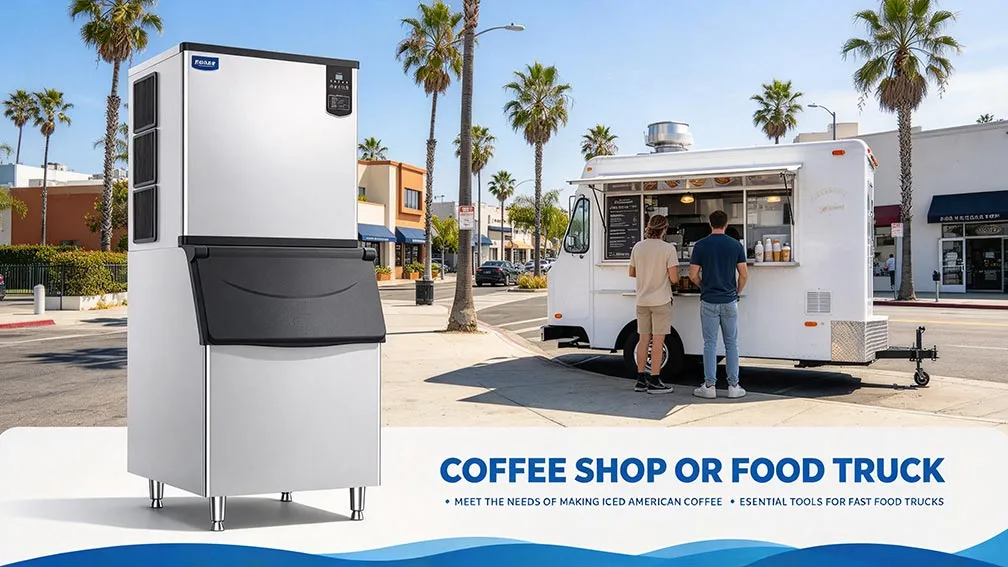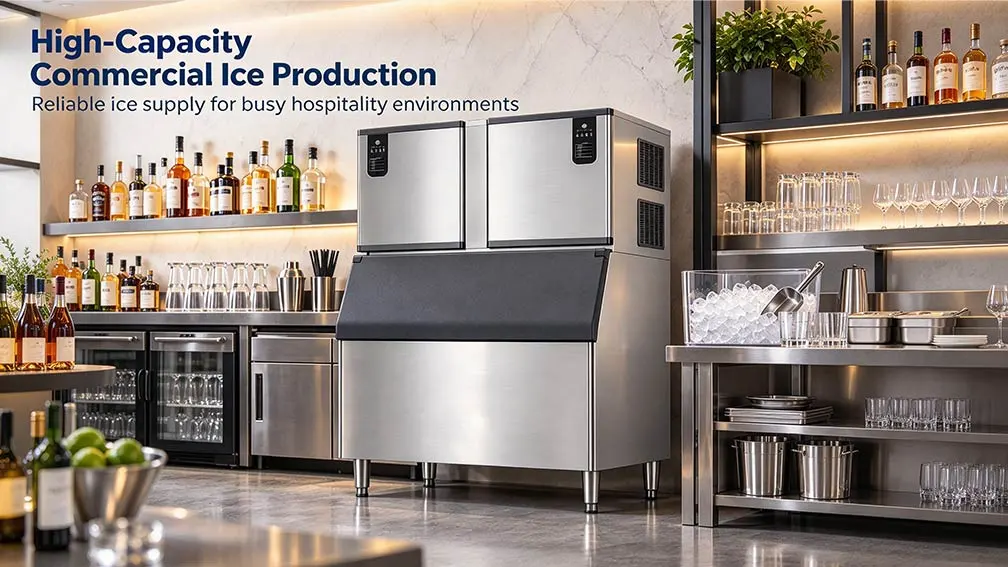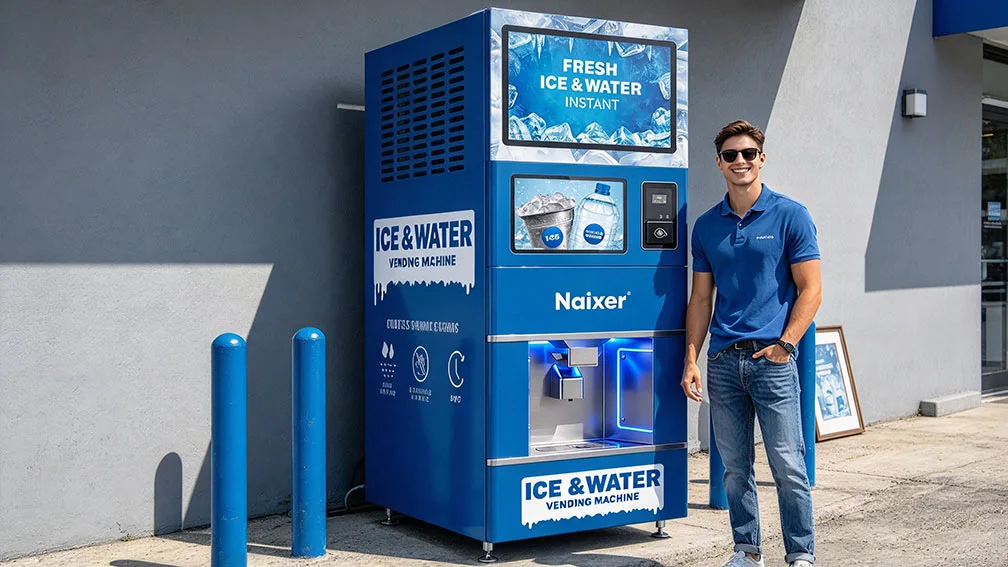

Grocery stores use ice in more places than most operators realize. It is not just a beverage service item. It keeps seafood fresh on display, preserves produce quality in prep areas, supports deli operations, and—in many stores—becomes a retail product itself, sold by the bag at the front of the store. A single ice machine rarely serves all of these needs.
The right grocery store ice machine depends primarily on the application, ice type, daily production demand, storage requirements, available space, and cooling method. This guide walks through each of those factors, with specific Naixer models recommended for each application. For the complete framework on matching any commercial ice machine to its operation, the commercial ice machine buying guide covers the full selection process.
In this guide, you will learn:
Where Are Ice Machines Used in Grocery Stores?
Seafood Department
The seafood department is the most visible ice user in any grocery store. Fresh fish, shrimp, and shellfish are displayed directly on ice, and that ice has to do two jobs at once: keep the product at a safe temperature and make the display look appealing. The ice itself becomes part of the merchandising. A seafood display on clean, white, evenly spread ice looks fresh and abundant. A display on melting, cloudy, irregular ice does not.
Produce Department
Produce departments use ice less visibly, but it is still a critical tool. Leafy greens are often misted or packed with ice during display to maintain crispness. Back-of-house prep areas use ice to cool vegetables rapidly after washing. In some stores, seasonal displays—like corn on ice or fresh herbs on ice—use the same ice supply.
Deli & Prepared Foods
Deli counters and prepared food stations rely on ice for cold holding and display. Salad bars, chilled soup stations, and grab-and-go cases all need ice to maintain safe temperatures without drying out the food. Cube ice and flake ice are both used here, depending on the specific application.
Beverage Stations
In-store cafes, juice bars, and self-service beverage stations all need ice for drinks. Cube ice is the standard here—it is versatile, slow-melting, and familiar to customers. Nugget ice is sometimes added as a secondary option for stores that want to offer the soft, chewable ice experience.
Retail Bagged Ice
For many grocery stores, bagged ice is a direct revenue product. Stores that sell bagged ice need a dedicated production source—usually a cube ice machine—that can produce enough ice to fill bags continuously during operating hours. The ice in those bags has to be clear, uniform, and clean, because it is sold as a food product.
For a deeper look at how different ice types perform across different food retail applications, the article on which ice cube shapes are best for your restaurant covers the full spectrum.
What Type of Ice Is Best for a Grocery Store?
Grocery stores usually need more than one ice type, because the applications are so different. The table below maps the major ice types to their most common grocery store uses.
| Ice Type | Common Grocery Store Applications | Key Benefit |
|---|---|---|
| Flake Ice | Seafood, produce, fresh food | Easy to spread around products |
| Nugget Ice | Beverage service | Soft and chewable |
| Cube Ice | Drinks and foodservice | Versatile |
| Crescent Ice | Beverage service | Durable and slow-melting |
| Square Ice | Premium beverages | Large, attractive format |
| Cylinder Ice | Beverage applications | Suitable for specific drink service |
Flake Ice for Seafood and Produce
Flake ice is the most important ice type for a grocery store’s fresh food operations. It is soft, snow-like, and made of thin, irregular shavings. When spread across a seafood display, it molds around fish and shellfish, providing continuous cooling contact without bruising or crushing the product. This is the same reason it works so well for produce displays—leafy greens and delicate vegetables stay fresh without being damaged by hard ice edges. For a complete explanation of where flake ice fits and where it does not, the guide on what is a flake ice machine used for covers the applications in detail.
Nugget Ice for Beverage Service
Nugget ice—soft, porous, and chewable—has become a customer expectation in many self-service beverage settings. It absorbs the flavor of drinks, and customers love it. Some grocery stores add a nugget ice machine in the beverage area specifically to offer this experience. It is not the right ice for seafood or produce, but for the drink station, it has real customer appeal.
Cube Ice for General Foodservice
Cube ice is the workhorse of grocery store foodservice. It is used in deli cold holding, prepared food stations, employee breakrooms, and retail bagged ice. It is the most versatile and cost-effective ice type, and it is what most customers expect to see in a bag of ice or a cold drink.
Other Ice Types for Specific Applications
Crescent ice, square ice, and cylinder ice serve more specialized functions. Crescent ice is durable and slow-melting, making it useful in beverage service where dilution control matters. Square ice—especially large-format cubes—is used in premium beverage presentations. Cylinder ice offers a distinctive look for specific drink services. These ice types are usually secondary additions, not the primary grocery store machine.

Recommended Grocery Store Ice Machines by Application
For Seafood & Fresh Food Displays
The seafood department needs flake ice, and the Naixer PB Series is the right line for this application. The Naixer PB-300 produces 300 kilograms of flake ice per day with 150 kilograms of storage—enough for a small to mid-size grocery store seafood display. For larger supermarkets or stores with extensive seafood and produce operations, the PB-500 and PB-1000 step up to 500 and 1,000 kilograms per day respectively.
For Beverage & Foodservice Areas
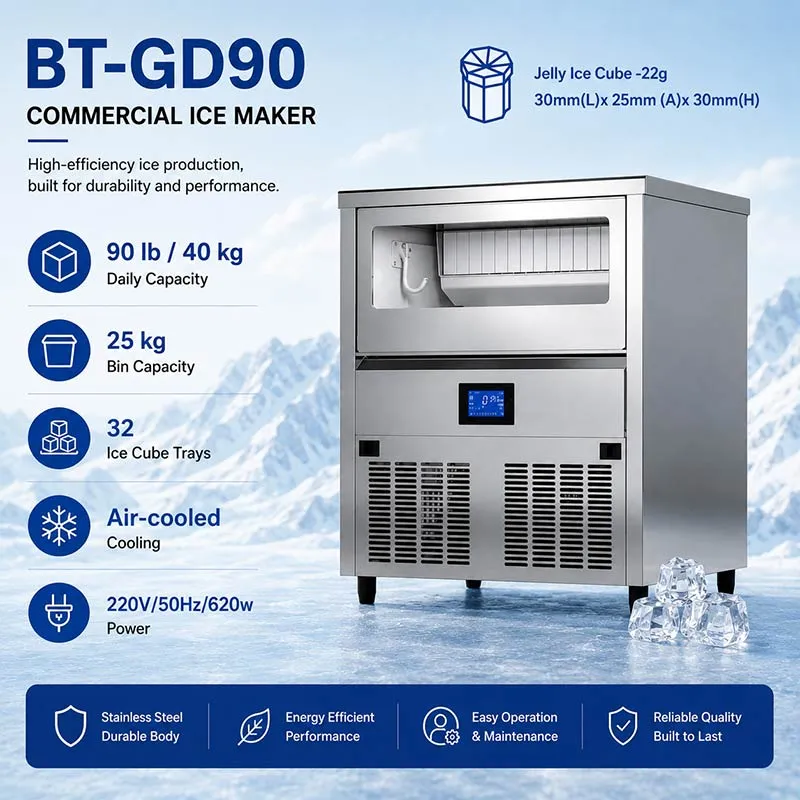
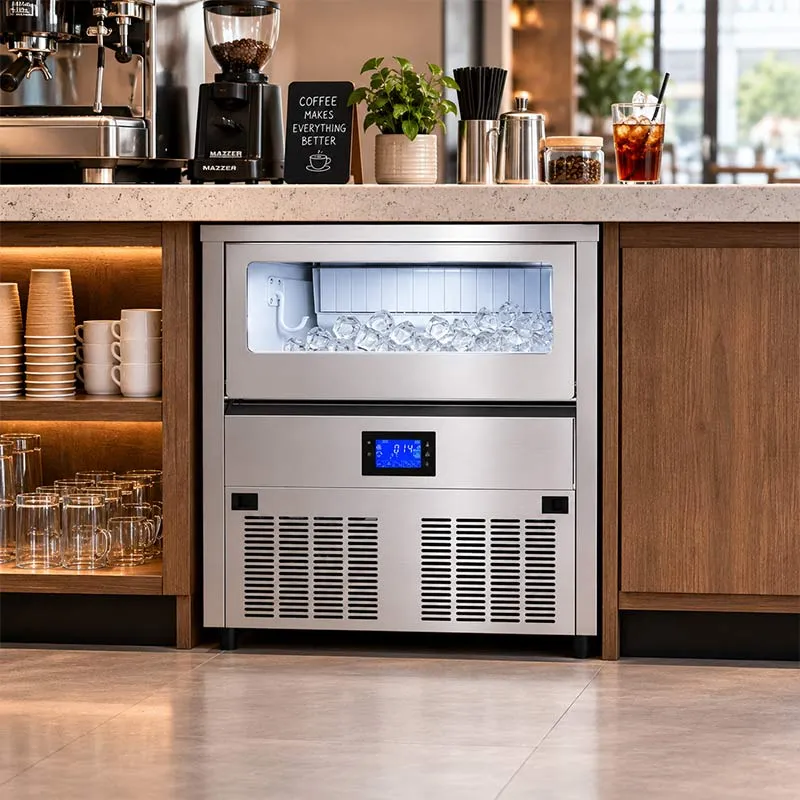
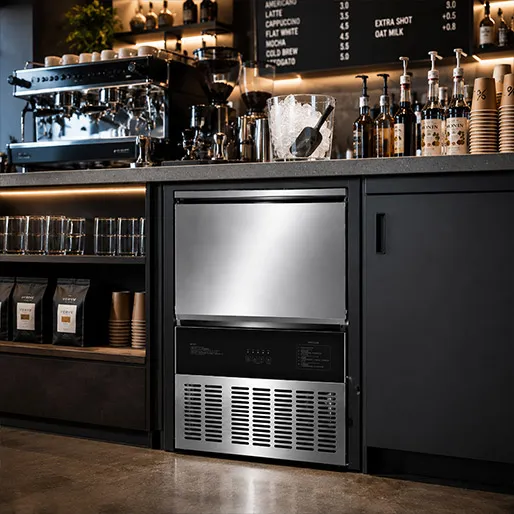
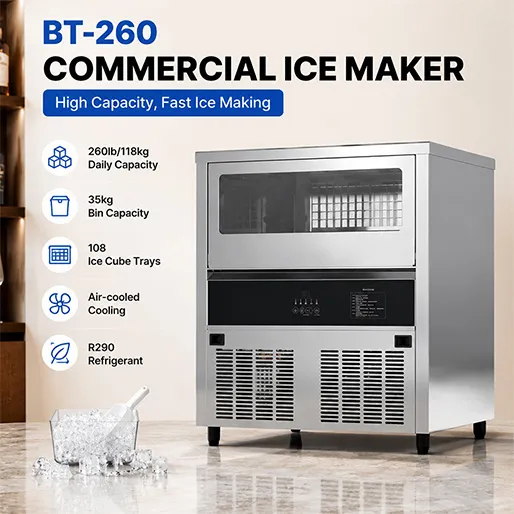
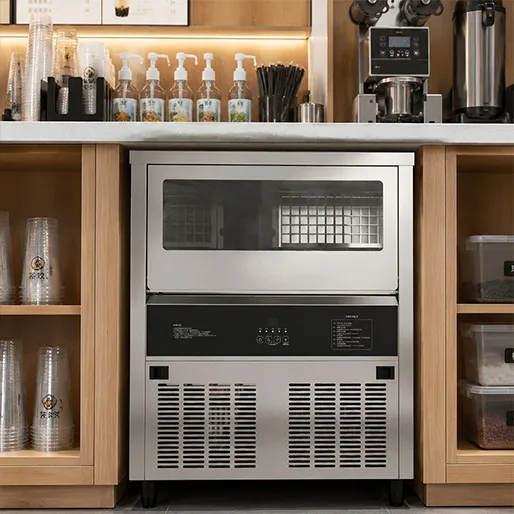
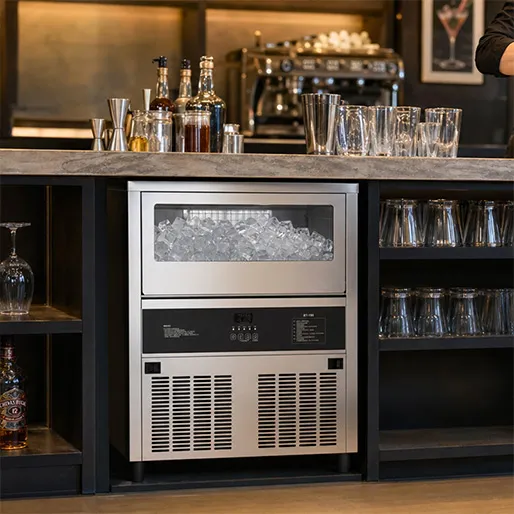
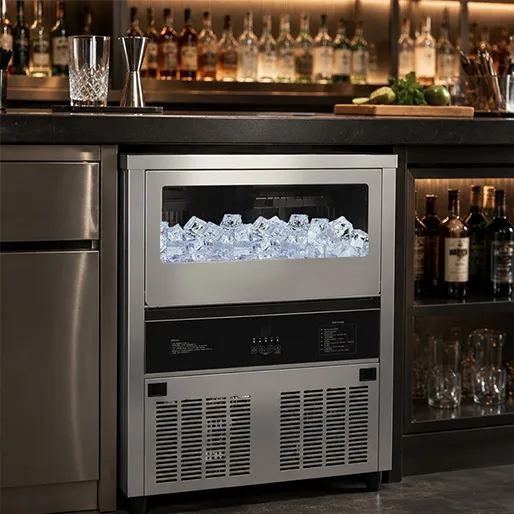
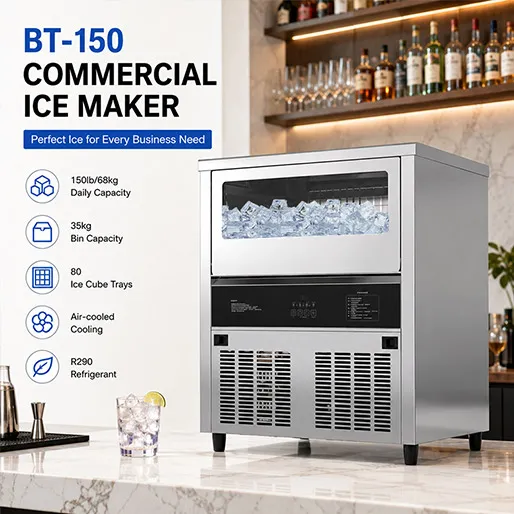
Beverage stations, deli counters, and prepared food stations are best served by cube ice. The Naixer TH-80B is an 80-pound-per-day undercounter cube ice machine that fits in small spaces and covers a modest beverage station or deli cold holding need. For larger foodservice areas, the Naixer BT-150 produces 150 pounds of cube ice per day, and the BT-260 pushes that to 260 pounds per day for busy stores.
For High-Volume Grocery Operations
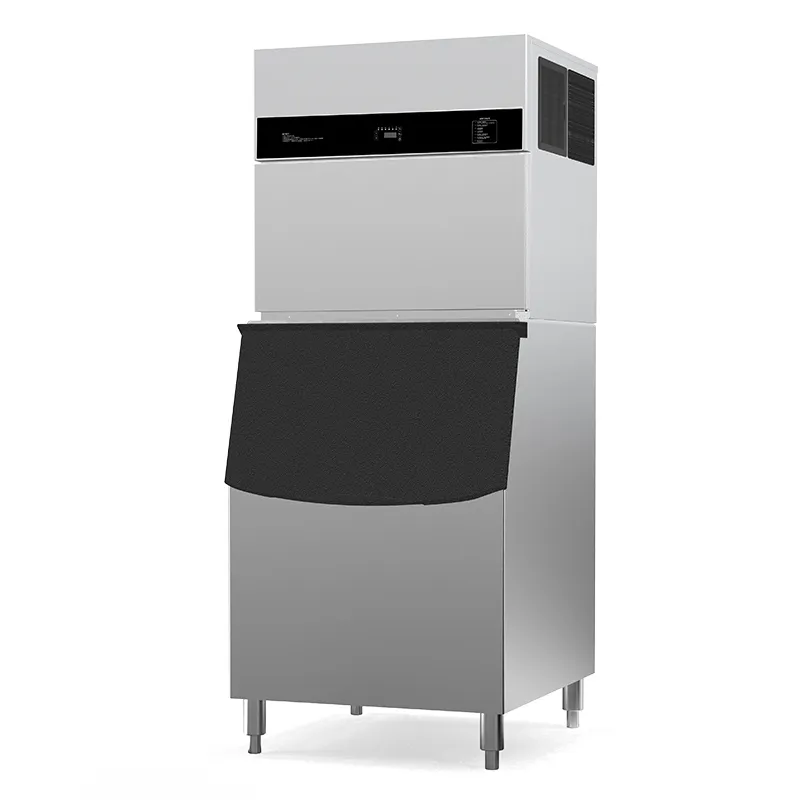
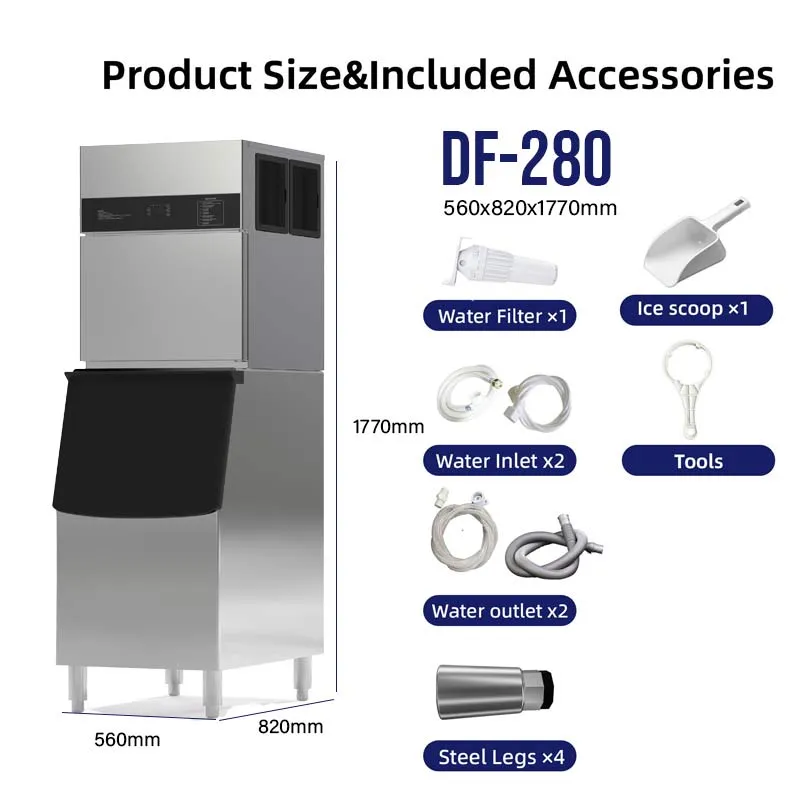
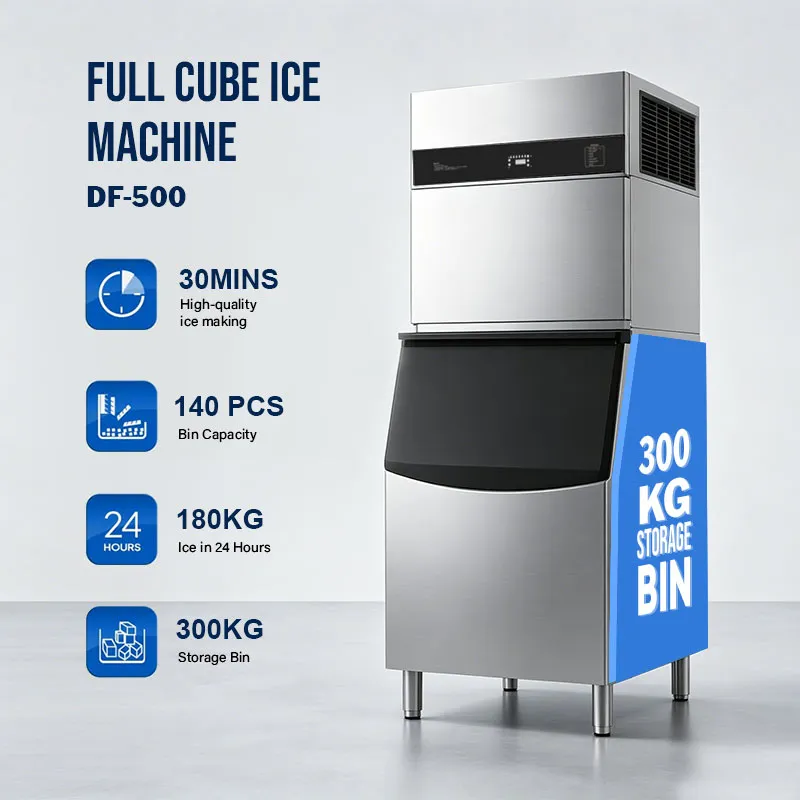
Large supermarkets and stores with active retail bagged ice programs need more production. The Naixer TH-1000B is a 1,000-pound self-contained ice machine with a built-in 300-kilogram storage bin—enough for high-volume bagged ice and multi-department foodservice needs. For the largest operations, the TH-1500B and TH-2000B modular systems produce 1,500 and 2,000 pounds per day respectively. For more on the 1,000-pound class specifically, see the article on the 1000 lb ice machine .

Grocery Store Ice Machine FAQs
What type of ice machine is best for a grocery store?
Most grocery stores need more than one type. A flake ice machine serves seafood and produce displays. A cube ice machine serves beverages, deli operations, and retail bagged ice. The right mix depends on the store’s departments.
What type of ice is best for seafood displays?
Flake ice is the standard for seafood displays. It is soft, moldable, and conforms to the shape of fish and shellfish, providing even cooling without bruising the product.
Do grocery stores need flake ice machines?
If the store has a seafood department or a fresh food display that uses ice, yes. Flake ice is not a beverage ice—it melts too quickly—but for food display, it is irreplaceable.
How much ice does a grocery store need per day?
Demand varies widely. A small store with no seafood department might need 300 to 500 pounds per day. A large supermarket with seafood, produce, deli, beverage, and retail bagged ice might need 1,000 to 2,000 pounds or more.
What size ice machine does a supermarket need?
Start with the departments. A seafood display needs flake ice sized to the display case and restocking frequency. Beverage and deli areas need cube ice sized to customer traffic. Add a 20 to 25 percent buffer on top of the total.
Should a grocery store use an air-cooled or water-cooled ice machine?
Air-cooled is the default choice for most climate-controlled store spaces. Water-cooled is better for hot, enclosed back-of-house spaces where ventilation is limited.
Can one ice machine serve multiple grocery store departments?
It depends on the ice type. A cube ice machine can serve beverage, deli, and retail bagged ice. But a seafood display needs flake ice, which requires a separate flake ice machine.
What should I consider when buying a grocery store ice machine?
Ice type, daily production capacity, storage capacity, cooling method, available space, and whether you need one machine or multiple machines.
Not sure which grocery store ice machine fits your application? Tell Naixer your ice type, estimated daily demand, store application, and target market. Our team can recommend a suitable machine configuration and provide the corresponding specifications and factory quotation.