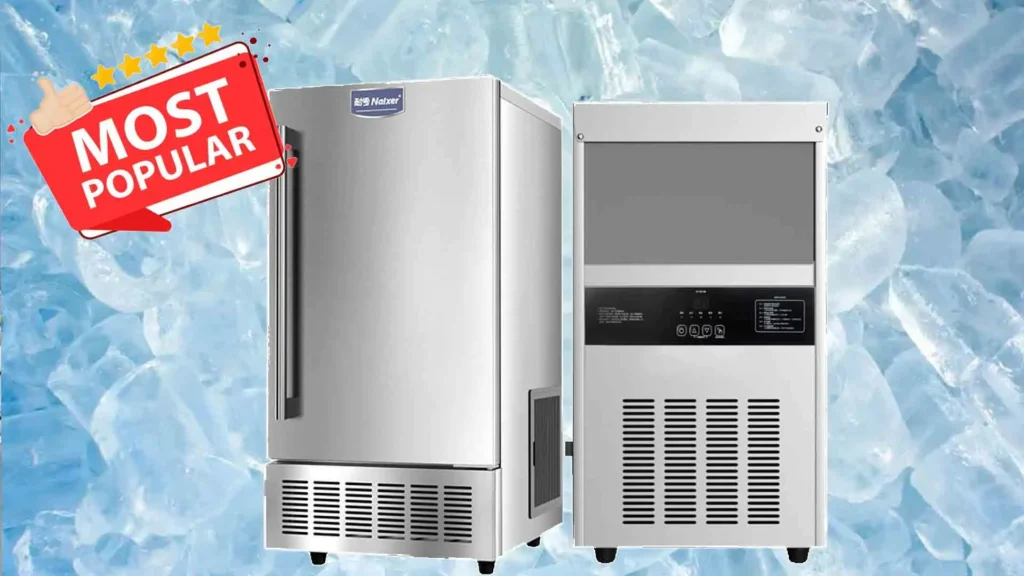
If you run a coffee shop in 2026, you’ve probably asked this exact question: What size ice machine do I actually need?
It’s a deceptively simple question with an expensive answer if you get it wrong. Buy too small, and you’ll run out of ice during the Saturday morning rush—sending frustrated customers to the shop down the street. Buy too big, and you’re wasting precious square footage, energy, and capital.
But here‘s the bigger problem: most ice machine sizing advice is dangerously outdated.
Ten years ago, iced drinks made up maybe 30% of a coffee shop’s sales. Today, cold beverages—iced lattes, cold brew, refreshers, and blended frappes—account for 60% to 80% of many cafes‘ daily tickets. Yet the old “5 to 8 ounces of ice per drink” rule still circulates in industry guides. That formula was written before the cold beverage boom.
This guide will give you a 30‑second formula to estimate your needs, explain why ice shape matters as much as ice quantity, and show you exactly which Naixer models fit your floor plan. Let’s fix the math.
Table of Contents
How to Estimate Your Coffee Shop's Ice Machine Size in 30 Seconds

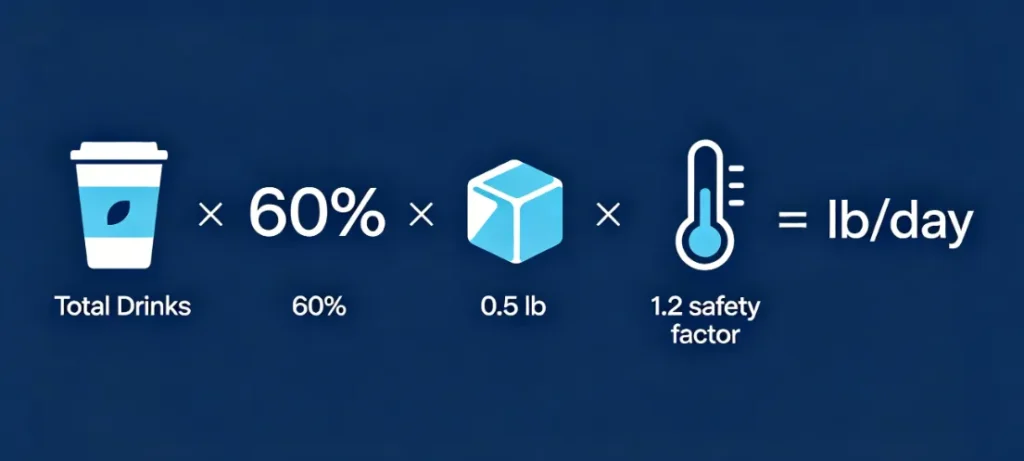
You don’t need a complex calculator to get a reliable starting point. This four‑step formula—based on updated 2026 consumption data—will give you a solid ballpark number.
Step 1: Estimate your total daily drink sales. (Include everything: espresso, drip, tea, blended drinks.)
Step 2: Multiply by your cold drink percentage. For most cafes today, this is 60% (0.6). If you‘re a drive‑thru heavy location or located in a warm climate, use 70–80%.
Step 3: Multiply by 0.5 pounds—the average ice used per iced drink. (Blended drinks use more, iced americanos use slightly less; 0.5 lb is a reliable industry average.)
Step 4: Multiply by 1.2 to add a 20% safety margin. This accounts for summer heat waves, weekend spikes, and the inevitable “we’re busier than expected” days.
The Formula:
Two Real‑World Examples:
| Shop Profile | Daily Total Drinks | Quick Formula Result | What This Means |
|---|---|---|---|
| Neighborhood Cafe | 150 drinks/day | ~54 lb/day | You need a machine that produces at least 55–60 lb per 24 hours. |
| Busy Downtown Coffee Bar | 350 drinks/day | ~126 lb/day | You need a machine that produces at least 125–130 lb per 24 hours. |
This 30‑second formula gives you a reliable estimate. But if you want a customized recommendation based on your exact menu mix (do you sell a ton of frappes? mostly iced americanos?), your preferred ice type, and your local climate, our free interactive tool takes it to the next level.
Use our ice calculator to find the perfect commercial ice maker for your restaurant, bar, or hotel. Learn how to calculate daily ice needs and choose the right machine.
Crescent Ice vs. Cube Ice — The Quality Difference That Affects Your Bottom Line

Most sizing guides stop at the number. They tell you “buy a 300 lb machine” and call it a day. But here‘s what they miss: a 300 lb machine making the wrong type of ice will still hurt your business.
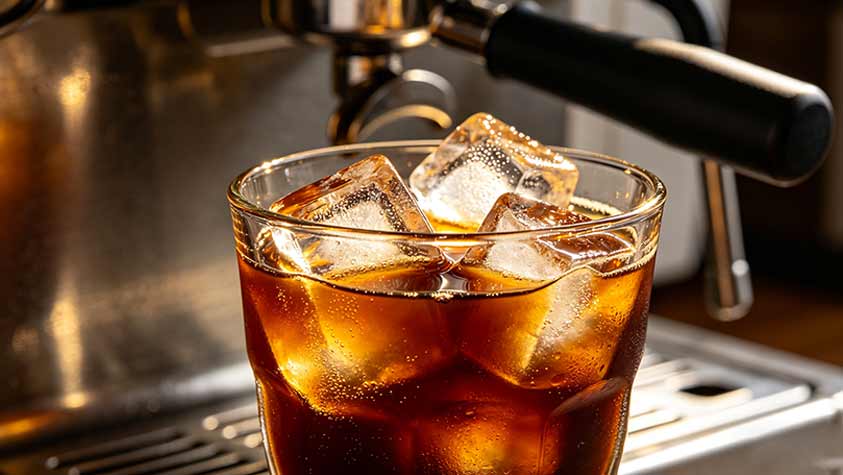
For a coffee shop, ice isn’t just a cooling agent. It‘s an ingredient. It touches your product, affects extraction and dilution, and ultimately shapes the customer’s last sip.
The Problem with Standard Cube Ice in Specialty Coffee
Standard cube ice has a fundamental design flaw when it comes to iced coffee. Cubes are flat on all sides. When you pour hot espresso over them, the liquid only makes contact with the cube‘s outer edges. This creates uneven cooling and rapid, localized melting.
The result? The first few sips of an iced latte taste great. But by the halfway point, the drink is noticeably watery. By the bottom of the cup, your customer is drinking brown, diluted water—not the $6 craft beverage they paid for.
That’s not a failure of your barista. It‘s a failure of your ice shape.
The Naixer Crescent Ice Advantage for Iced Lattes and Cold Brew
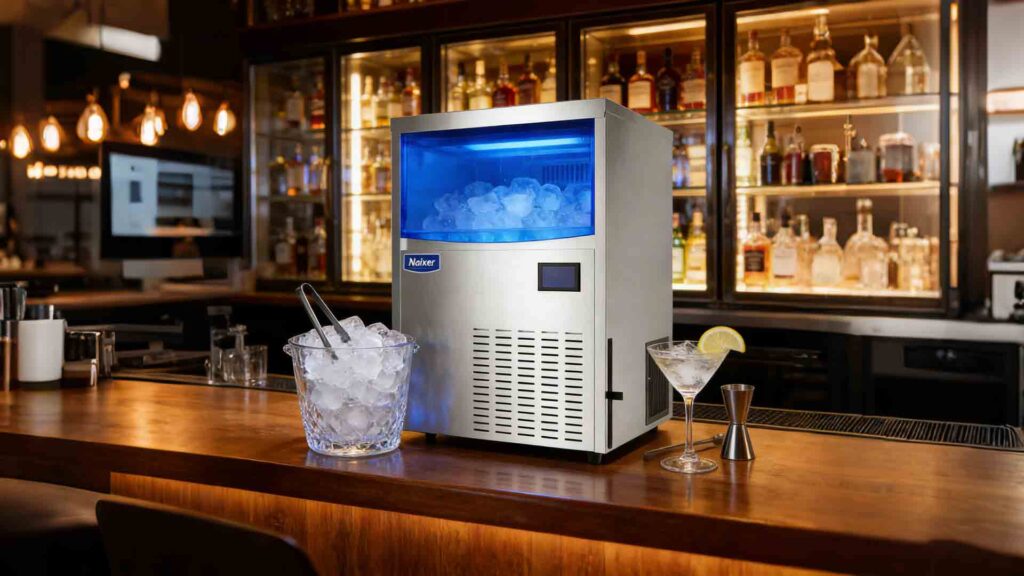
Naixer‘s crescent ice is engineered specifically to solve this problem. Our crescent cubes measure 30mm × 38mm × 13mm, with a unique half‑moon shape and a curved groove on one side.
Here’s why that geometry matters:
The curved groove hugs the cup wall. This creates more surface contact with the hot espresso as it‘s poured, rapidly cooling the liquid to preserve volatile aromatics.
The solid, rounded back melts slowly. Once the drink is cold, the remaining ice mass resists further melting, minimizing dilution over the next 15–20 minutes.
Internal Naixer lab testing shows that crescent ice reduces dilution in an iced latte by up to 25% over 20 minutes compared to standard cubes. For your customer, that means a consistent, flavorful drink from first sip to last. For your business, that means higher satisfaction, better reviews, and more repeat visits.
Comparison Table: Not All Ice Is Created Equal
| Feature | Standard Cube Ice | Nugget Ice (Pellet) | Naixer Crescent Ice |
|---|---|---|---|
| Melt Rate in Hot Coffee | Medium | Very Fast | Slow |
| Dilution After 20 Min | High | Very High | Low |
| Barista Workflow | Acceptable | Clumps, sticks to scoop | Scoops cleanly |
| Best For | Soda, general use | Healthcare, soft drinks | Iced lattes, cold brew |
| Naixer Model Example | TH Series | KL Series | TH‑SE150 (150 lb/day) |

Key Takeaway: When selecting your machine size, consider the type of ice it produces. A smaller crescent ice machine (like the SE-65) can often deliver a better customer experience than a larger cube ice machine, because the ice itself is optimized for coffee. For cafes serious about their iced beverage program, crescent ice isn‘t a luxury—it’s a competitive advantage.
Undercounter vs. Modular — Which Footprint Fits Your Bar Layout?

Coffee shop real estate is expensive. Every square foot behind your counter has to earn its keep. The physical footprint of your ice machine directly impacts barista workflow, storage space, and even your equipment layout options.
Undercounter Ice Machines — The Space‑Saving Workhorse
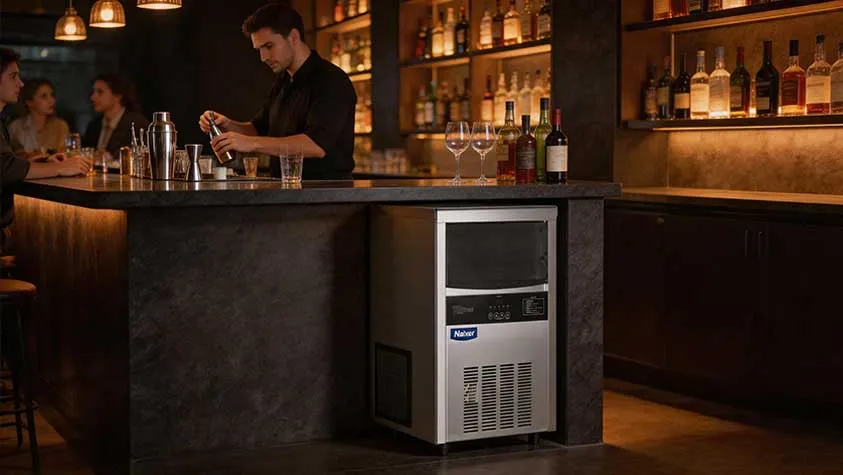
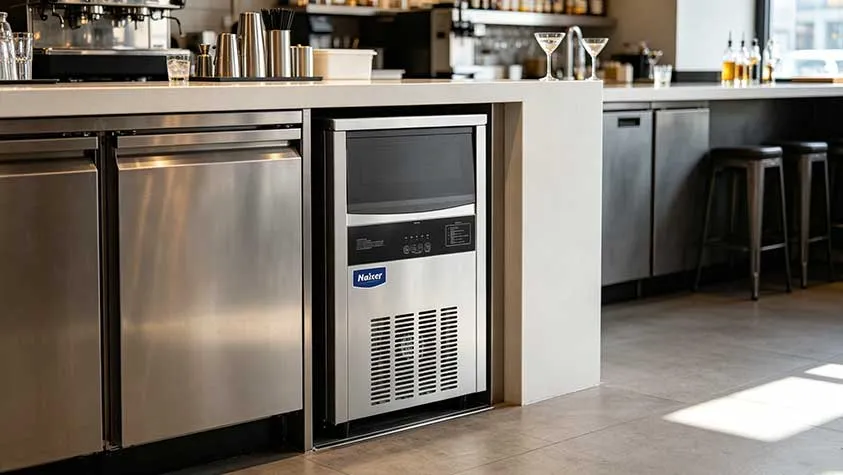
For 90% of independent coffee shops, an undercounter ice machine is the right answer. These units are designed to slide beneath a standard counter height, freeing up valuable floor space and keeping ice within arm‘s reach of your baristas.
Naixer Undercounter Models Optimized for Coffee Shops:
| Model | Daily Capacity | Dimensions (W×D×H) | Ice Type | Fits Under Standard Counter? |
|---|---|---|---|---|
| TH‑80B | 80 lb | 425×495×760 mm | Cube | ✅ Yes (compact depth) |
| TH‑150B | 150 lb | 665×710×960 mm | Cube | ✅ Verify height |
| SE-65 | 120 lb | 680×600×750 mm | Crescent | ✅ Yes |
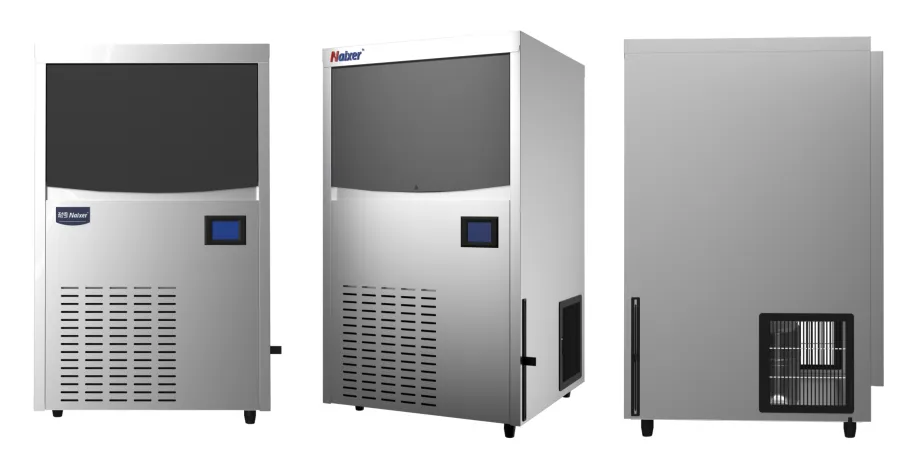
Space‑Saving Tip: Always check the door swing clearance and rear ventilation requirements before finalizing your cabinet design. Most Naixer undercounter models require 4–6 inches of clearance at the back and sides for proper airflow. Without it, your machine will run hotter and work harder—reducing efficiency and lifespan.
Modular Ice Machines — When Volume Demands More
If your shop consistently sells 400+ iced drinks per day or supplies ice to a kitchen or second location, an undercounter unit may struggle to keep up. In these cases, a modular ice machine—typically paired with a separate ice bin or dispenser—offers the production capacity you need.
Naixer Modular Recommendations for High‑Volume Cafes:
| Model | Daily Capacity | Dimensions (W×D×H) | Best For |
|---|---|---|---|
| TH‑320B | 320 lb | 560×820×1490 mm | Regional chains, busy urban locations |
| TH‑500B | 500 lb | 760×820×1700 mm | Drive‑thru heavy, commissary kitchens |
| TH‑1000B | 1,000 lb | 760×820×1935 mm | Roastery cafes, high‑volume flagship stores |
Beyond the Calculator — What Else Impacts Your Ice Supply?
Even with the right machine size and ice type selected, several operational factors can undermine your ice supply. Understanding these will help you avoid the dreaded “Sorry, we‘re out of ice” moment.
The Cold Beverage Surge
The shift toward cold coffee isn’t slowing down. Industry data shows that over the past five years, cold beverage share on coffee shop menus has climbed from roughly 35% to over 60%. If your menu is evolving toward more iced drinks, size your machine for where you‘ll be in 2–3 years, not where you are today.
The Weekend Peak
Ice consumption isn’t linear. Saturday and Sunday mornings can easily see 1.5× the ice usage of a typical Tuesday. If your machine‘s daily production barely meets your weekday average, you will run out on weekends. The 20% safety margin in our formula is non‑negotiable for this exact reason.
Ambient Heat in the Kitchen
Your espresso machine, panini press, and dishwasher all generate significant heat. This ambient temperature rise can reduce your ice machine’s effective output by 10–15% compared to its rated capacity (which is tested in cooler, standard lab conditions). Naixer‘s R290 refrigerant and industrial‑grade compressors are specifically engineered to maintain rated performance even in warmer kitchen environments.
Water Quality and Maintenance Neglect
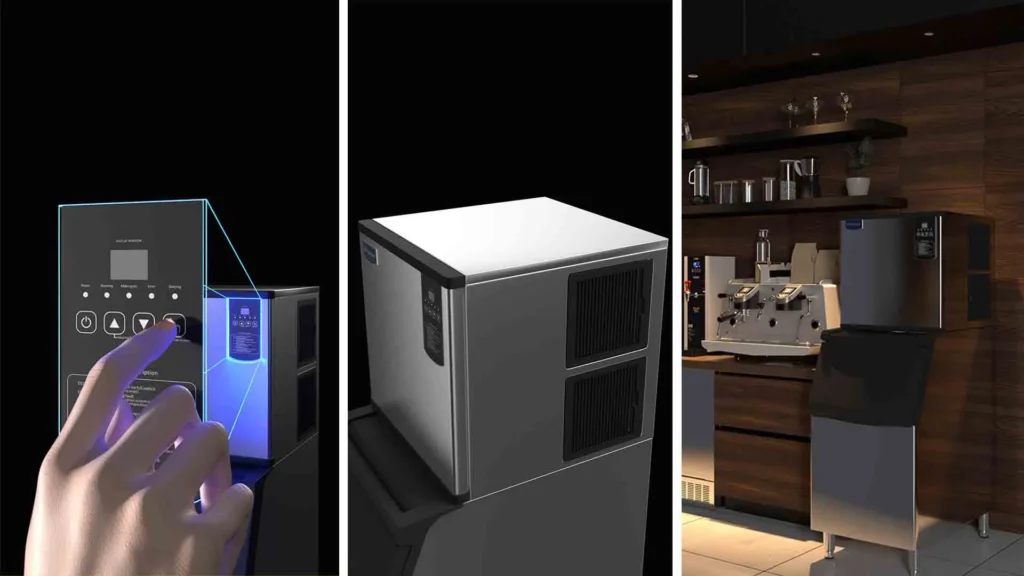
Hard water scale is the silent killer of commercial ice machines. Mineral buildup coats evaporator plates, reduces heat transfer efficiency, and eventually causes component failure. Naixer‘s One‑Touch Cleaning feature makes routine sanitation fast and foolproof. Pair your machine with an appropriate water filtration system, and you‘ll extend its service life by years.
Ready to Find the Perfect Naixer Ice Machine for Your Coffee Shop?
Choosing the right size ice machine isn‘t guesswork. It’s a formula:
Cold Drink Volume + Crescent Ice Shape + Space Efficiency = A Coffee Shop That Never Runs Out of Ice
Get two out of three wrong, and you‘re pouring profit—and customer goodwill—down the drain. Get all three right, and your ice machine becomes an invisible, reliable workhorse that quietly supports your baristas and delights your customers.
Still unsure which Naixer model fits your specific menu, layout, and growth plans? Our coffee equipment specialists are ready to provide a free, no‑obligation sizing consultation tailored to your business. We’ll help you navigate ice types, dimensions, and capacity requirements so you can focus on what matters most: serving great coffee.
Need help finding the right ice machine for your business? Naixer Ice has the right machine for you.
Related Topics for Your Ice Maker Business Research
- How Much Water Does a Commercial Ice Machine Use
- What Size Ice Machine for a Coffee Shop?
- How Much is a Commercial Ice Maker?
- How to Make Clear Ice: The Complete Guide to Commercial Ice Makers for Bars
- Sonic Ice Maker: How It’s Made & Why Businesses Love Nugget Ice
- Commercial Ice Machine for Restaurant: The 2026 Buyer’s Guide by Type & Need
- Air Cooled vs Water Cooled Ice Machine: The 2026 Buyer’s Guide
Coffee Shop Ice Machine Sizing — Quick Answers
How do I calculate what size ice machine I need for my cafe?
Use our 30‑second formula: (Total Daily Drinks × 0.6) × 0.5 lb × 1.2. For a precise, menu‑specific calculation, try the free Naixer Ice Machine Sizing Calculator.
What is the best ice machine for a small coffee shop?
An undercounter model like the Naixer TH‑80B (80 lb/day) or TH‑150B (150 lb/day) offers the ideal balance of capacity and space efficiency for most independent cafes.
How many pounds of ice does a coffee shop use per day?
Small neighborhood cafes: 50–100 lb
Busy downtown locations: 150–250 lb
High‑volume drive‑thrus: 300+ lb
Is crescent ice better than cube ice for iced lattes?
Yes. Crescent ice cools hot espresso rapidly while melting significantly slower than standard cubes, preserving the coffee‘s flavor profile longer and reducing dilution.
What are the dimensions of an undercounter ice maker?
Most Naixer undercounter models range from 16.7 inches to 27 inches wide. See the comparison table in the Space Planning section for exact model specifications.
How much clearance does an ice machine need?
Generally, 4–6 inches on the sides and back for proper ventilation. Always consult the specific model‘s installation manual for exact requirements.