South Africa has one of the thinnest ice vending markets of any major economy. Walk through the search results and you will find a handful of importers, a few appliance retailers, and almost no one answering the three questions buyers actually ask: what does it cost, what permits do I need, and what happens when the power goes out.
This guide answers all three, with the prices currently advertised in South Africa, the compliance path importers have to follow, and an honest look at the power question that most suppliers skip.
Quick answer: Self-service ice vending machines currently advertised in South Africa run R333,532 to R496,815 (roughly US$19,000–28,400 at the time of writing). Imports must clear SARS customs plus 15% VAT, and electrical appliances need an NRCS Letter of Authority before they can be sold. Mains supply is 230 V, 50 Hz — the same as China and most of Europe.
In this guide, you will learn:
What Ice Vending Machines Cost in South Africa
The range here is narrow and skewed high. Almost everything on the market is a large outdoor unit.
| Product | Price (ZAR) | Notes |
|---|---|---|
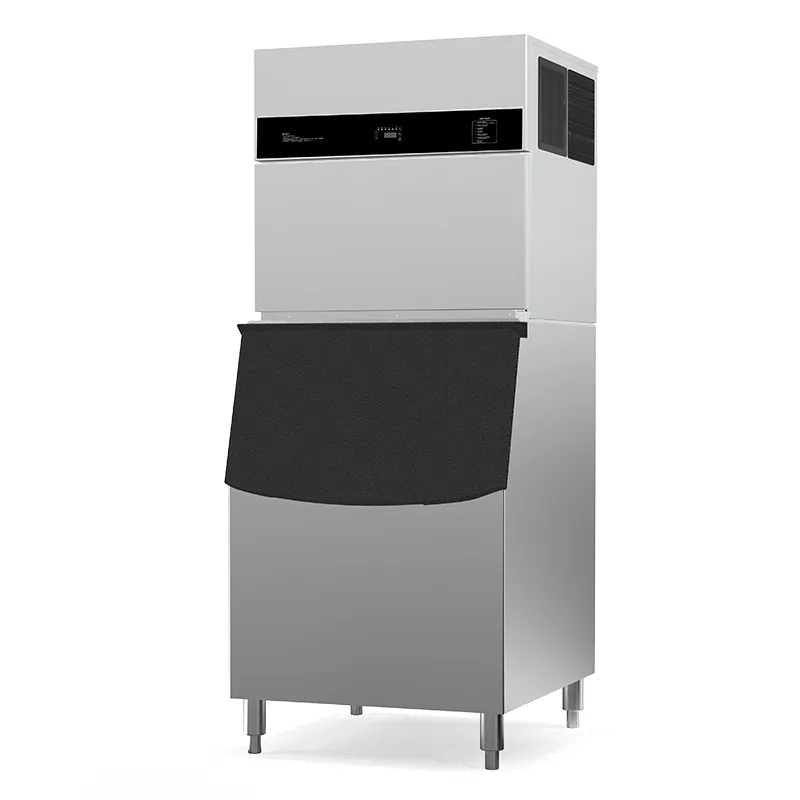
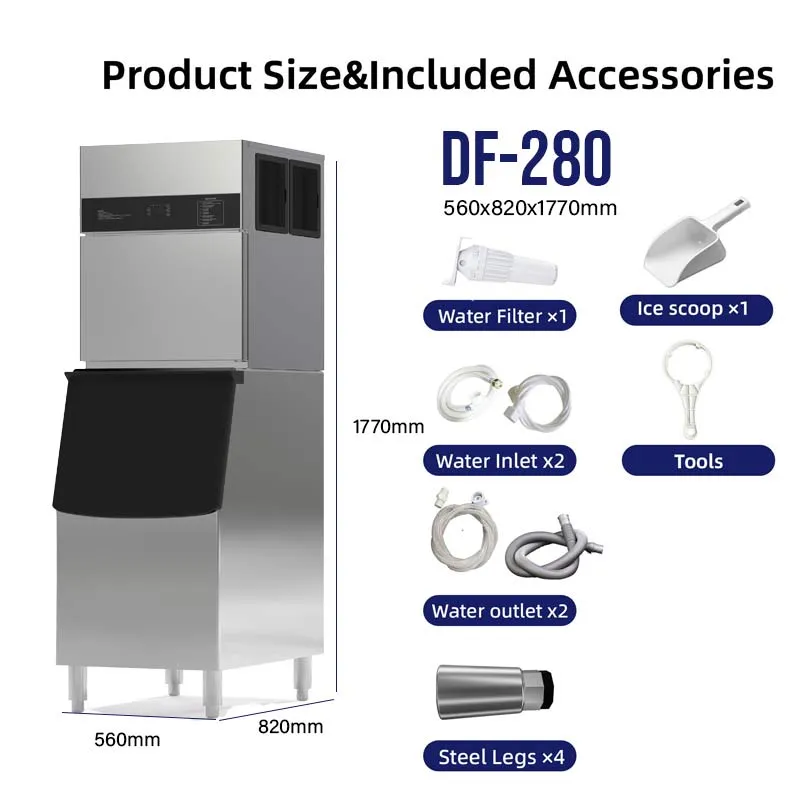
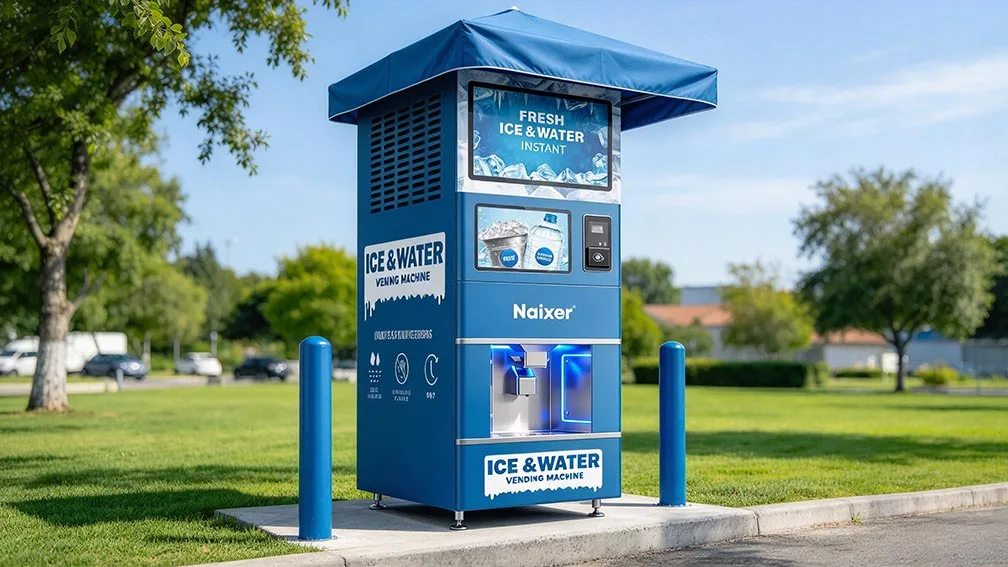
| Self-service ice vending machine | R 333,532–R 496,815 | Produces, stores and dispenses ice on demand. Listed as in stock. |
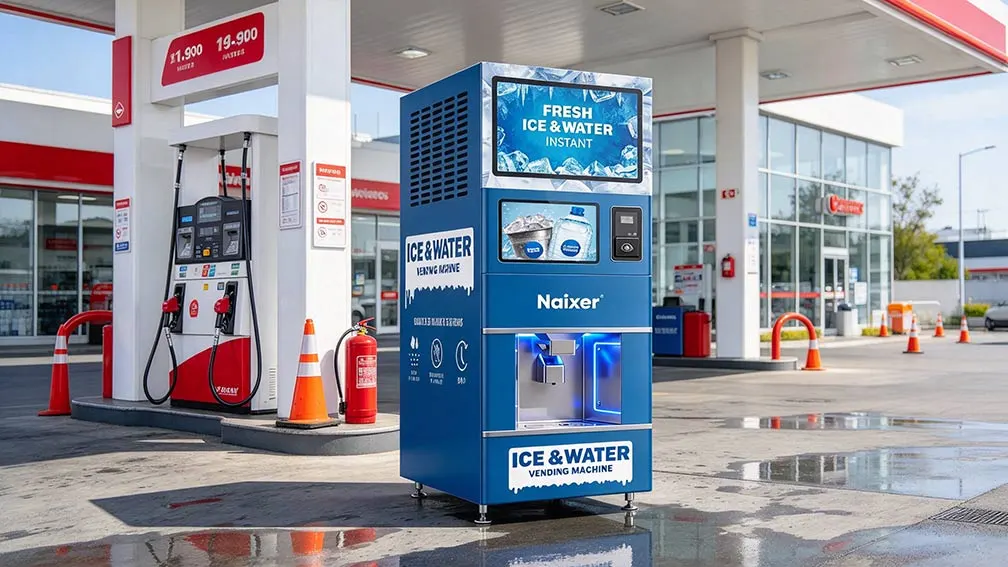
| Outdoor big-capacity vending unit | R 393,000 | 350 moulds, 3,500 W, a 21.5-inch screen, and automated water purification, ice making, bagging and vending. |
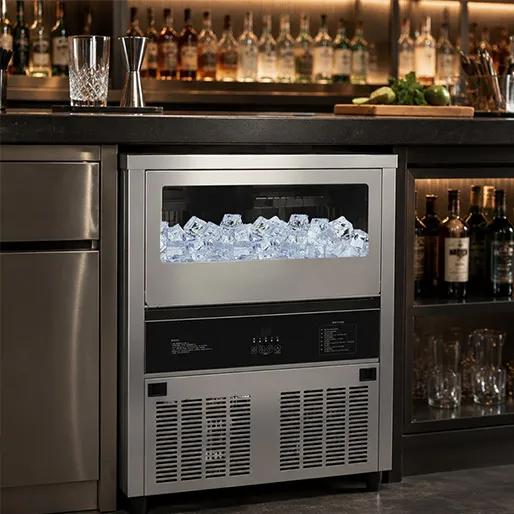
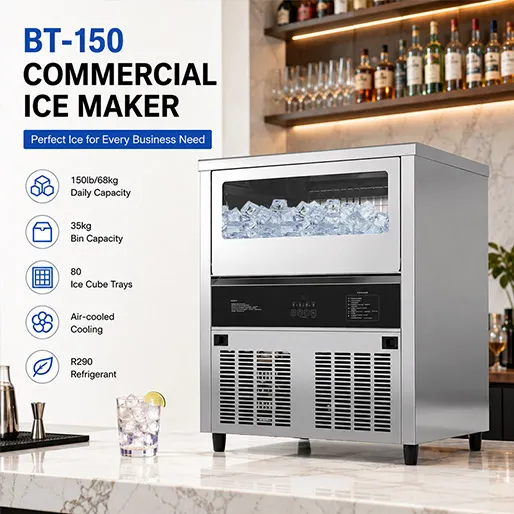
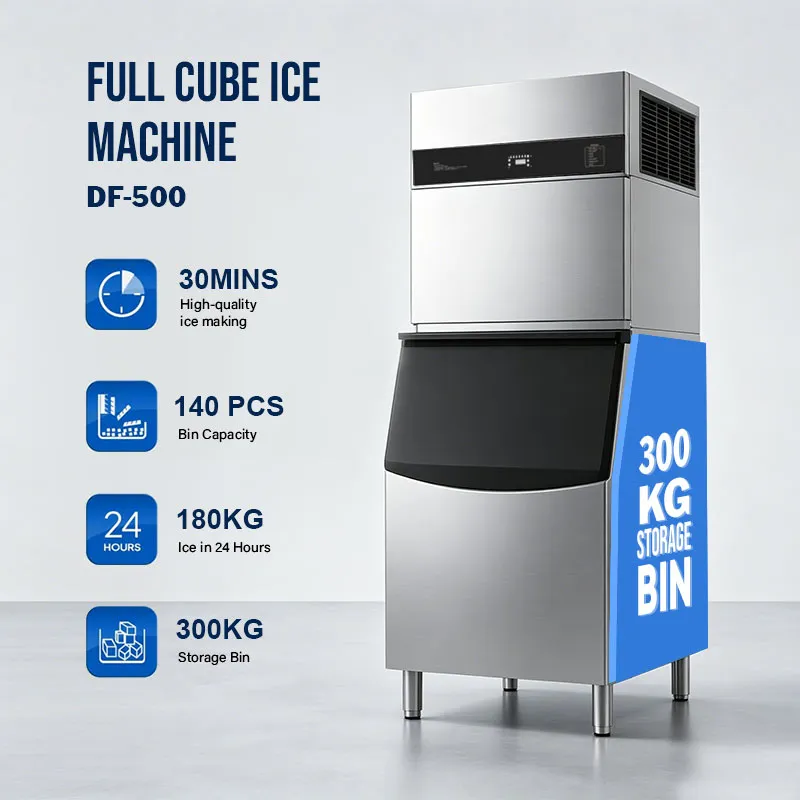
| Commercial ice machine, 44 kg / 24 h | R 39,450 | Branded, self-contained cube ice machine; not a vending unit. |
| Gourmet ice maker, 29 kg / 24 h | R 27,950 | Premium cube ice machine; not a vending unit. |
| Bullet ice machine, 28 kg / 24 h | R 12,650 | Entry-level commercial ice machine; not a vending unit. |
Price note: Prices observed in South African listings in October 2026. Delivery, installation, site works and applicable import charges may be additional. Confirm the final price and any exchange-rate adjustments with the supplier before ordering.
Two things stand out.
The gap between R39,450 and R333,532 is enormous. That is not a quality gradient — it is the difference between a machine that makes ice and a machine that makes, bags, sells and monitors ice. A vending unit carries a refrigeration system, a bagging mechanism, a payment terminal, a display and a telemetry unit. A cube machine carries the first of those five.
Almost nothing sits in the middle. The South African market currently jumps from commercial ice machines in the tens of thousands of rand straight to outdoor vending units in the hundreds of thousands. Whether that reflects real demand or simply what importers have chosen to stock is an open question — but it is worth asking before you assume you have to spend R400,000.
If you are comparing vending units across markets, our breakdown of what ice vending machines cost worldwide puts these figures beside US and European pricing.
Loadshedding: The Question Nobody Answers
Ask a South African operator what worries them about an outdoor ice machine and the answer is rarely price. It is power.
Load-shedding has shaped how commercial sites here plan electricity for years, and an ice vending machine is uniquely exposed to it. Three things happen when the supply drops:
Ice starts to melt. An insulated bin holds temperature for a while — how long depends on ambient temperature, how full the bin is, and how often the lid opens. A bin sitting at 35 °C in Gauteng in December is a different proposition from one at 18 °C in the Cape in July.
The compressor restarts under load. Repeated stop-start cycles are hard on compressors, particularly when the supply comes back and several machines on the same circuit try to restart at once.
Card and telemetry systems drop. A machine that cannot take payment is not selling, even if the ice is fine.
| Option | What It Protects | Trade-Off |
|---|---|---|
| Inverter + Battery | Helps keep the compressor and control board operating during short power outages, if the system is properly sized. | Correct sizing is critical. Compressor start-up current can be several times higher than its running current. |
| Generator | Can support continued machine operation during extended outages when the generator has sufficient capacity. | Requires fuel and maintenance and can generate noise. Automatic unattended operation may require a compatible automatic transfer switch and suitable controls. |
| Solar + Battery | Can support daytime operation and improve resilience when solar generation and battery capacity are sufficient. | Usually involves higher upfront investment and requires suitable roof or canopy space, system design and installation. |
| Thermal Storage Only | Helps preserve already-produced ice in a well-insulated storage bin during an outage. | Ice production and sales may stop during the outage. There is no backup power system to fuel or maintain. |
Important sizing note: Backup systems must be sized using the ice machine's actual start-up current and electrical requirements, not rated running watts alone. Ask the supplier to confirm the start-up current, running current and recommended backup capacity in writing.
The practical question to ask any supplier is simple: “What is the compressor’s locked-rotor current, and what size inverter will start it reliably?” A supplier who cannot answer that has not sold into this market before.
Before you design anything, check the current load-shedding schedule for the specific site — the picture differs by region and by season.
NRCS Letter of Authority and SANS 60335
If you plan to import and sell ice machines in South Africa, the compliance question comes before the commercial one.
Electrical appliances sold in South Africa fall under the National Regulator for Compulsory Specifications (NRCS). In practice, you need a Letter of Authority (LoA) before the product can be offered for sale locally. The LoA is issued against the relevant compulsory specification, and for appliances the underlying safety standard is SANS 60335 — South Africa’s adoption of the IEC 60335 household and commercial appliance safety series.
What that means in sequence:
- The factory must hold a valid test report against the applicable IEC 60335 part, from a recognised laboratory.
- The importer applies to the NRCS with that report, product documentation and marking evidence.
- The LoA is issued to the importer, not to the overseas factory — which is why this step usually falls to whoever is bringing the goods in.
This is the practical answer to the question “how much is a vending machine permit in South Africa”: the permit is not a fixed fee you pay at the door. It is a document track that depends on whether your supplier already has the test reports.
Ask your supplier for three things before you commit: the IEC 60335 test report number, the issuing laboratory, and whether they have previously supported an NRCS LoA application. A factory that has exported to South Africa before will have all three.

230 V, 50 Hz, Type M: The Electrical Checklist
The good news for buyers sourcing from Asia: South Africa runs 230 V at 50 Hz, which is the same supply most Chinese and European equipment is built for. No transformer, no frequency mismatch, no derating.
What still needs checking:
The plug. South African sockets are predominantly Type M — the large three-pin 15 A plug. Newer installations increasingly use Type N (the Euro-style round pin). Machines shipped with a European Schuko or a UK Type G plug will need re-terminating on site, which is a five-minute job for an electrician but a genuine safety issue if someone improvises an adapter.
The circuit. A hard-wired outdoor unit should not share a circuit with anything else. Confirm the breaker rating against the machine’s start-up current, not its running current.
The cable run. Outdoor units are often sited far from the distribution board. Voltage drop over a long run is real, and undersized cable is a common cause of nuisance tripping.
If you are sizing the electrical side from scratch, our guide to how much electricity an ice maker uses gives real wattage figures by capacity class, and the installation requirements checklist covers circuit, water and drainage together.
Water: Supply, Quality and Scarcity
Ice is water with the heat taken out, so the water supply is not a secondary concern.
Quality varies enormously by municipality. Hard water scales the evaporator and quietly reduces output over months; high sediment clogs filters faster than the maintenance schedule expects. An inline filtration stage is not optional in this market.
Supply interruptions happen. A machine that loses water mid-cycle can fault, and in some cases the pump runs dry. Confirm whether the model has a low-water cut-out.
Water scarcity is a live issue in parts of the country. Sites in water-stressed areas should plan for metering and for a filtration setup that does not waste large volumes on backwash.
Our guide to how much water a commercial ice machine uses covers consumption by capacity and the filtration decisions that go with it.
Site Selection: Where These Machines Actually Earn
An unattended machine earns in proportion to footfall at the exact moment someone wants ice — which is not the same as general foot traffic.
What tends to work:
- Forecourts on holiday routes — high seasonal volume, clear ice-buying occasion
- Township retail nodes — high density, cash-heavy, but power and security need planning
- Tourist corridors — peak summer demand, sharp seasonality
- Event and sports venues — burst demand, short windows
What tends to disappoint: sites with good general traffic but no ice-buying habit, and sites where the machine is out of sight of the till.
Before committing to a lease, read how to find the perfect vending machine location and the seven locations that actually work. Then model the revenue side honestly using what an ice vending machine actually earns.

Import vs Local Distributor
Both routes exist in South Africa, and they suit different buyers.
| Factor | Local Distributor | Direct Import |
|---|---|---|
| Unit Price | Higher upfront price, typically reflecting import costs, applicable taxes, distributor margin and local stock. | May offer a lower quoted equipment price, but the buyer takes on more import, compliance and logistics work. |
| NRCS Letter of Authority | Potential advantage The distributor may already have the relevant approval for the specific product and supply arrangement. | Verify first Confirm whether an LoA is required and who must obtain it before placing the order. |
| Lead Time | Often days to weeks, depending on local stock and delivery. | Includes manufacturing or dispatch time, sea freight to Durban or another suitable port, customs clearance and inland delivery where applicable. |
| Service & Spare Parts | May provide local technicians and more readily available spare parts, subject to the distributor's service coverage. | May require remote technical support and advance planning for spare parts, unless local support has been arranged. |
| Customisation | Usually limited to the models and options offered locally. | May allow more flexibility for voltage configuration, bag sizes, branding and payment systems, subject to manufacturer capability and local compliance. |
| Best Fit | A single site, urgent installation or buyer who prefers local service and simpler procurement. | Multi-site projects, equipment distributors and buyers with the capacity to manage import and compliance. |
Import compliance note: Confirm the applicable customs duty, VAT treatment, tariff classification and NRCS requirements with a licensed clearing agent or the relevant authority before committing to a purchase. South Africa's standard VAT rate is 15%; customs duty varies by product classification and other applicable factors.
One note that matters more than it looks: the local distributors in this category are also potential customers. South Africa’s vending suppliers are importers, not manufacturers. If you are building a distribution business rather than installing one machine, the fastest route in is often to supply them.

FAQ
How much does an ice vending machine cost in South Africa?
Advertised prices for self-service ice vending machines run from about R333,532 to R496,815. Commercial ice machines that make ice but do not vend start far lower — around R12,650 for a 28 kg/day unit and R39,450 for a 44 kg/day branded machine.
Do I need a permit to sell ice vending machines in South Africa?
Electrical appliances require an NRCS Letter of Authority before they can be offered for sale. The application is made against the relevant compulsory specification, with a test report to the SANS 60335 / IEC 60335 standard. The LoA is issued to the importer.
What voltage do ice machines use in South Africa?
230 V at 50 Hz, which matches equipment built for China and Europe. The main practical issue is the plug — Type M (large three-pin) dominates, with Type N in newer buildings.
Can an ice vending machine run during load-shedding?
Only with backup power sized for the compressor’s start-up current, which is several times its running draw. Options are an inverter and battery for short outages, a generator for extended ones, or a solar and battery system where capital allows.
How long will ice stay frozen in the bin during an outage?
It depends on ambient temperature, how full the bin is and how often the lid opens. Ask the supplier for the bin’s insulation rating and a realistic hold-time figure for 35 °C ambient — not a best-case number.
Where can I buy an ice vending machine in South Africa?
The market is served mainly by importers and equipment suppliers, several of them based in Gauteng, plus general vending distributors and catering equipment retailers for smaller machines. For larger rollouts, direct import is common.
Is it cheaper to import an ice vending machine from China?
Usually lower on unit price, but you take on the NRCS LoA, customs clearance and 15% VAT yourself. Add spares, freight and the cost of your own time before comparing to a local quote.
What size ice vending machine suits a South African site?
It depends on footfall and seasonality rather than site type. A forecourt on a holiday route and a township retail node have very different demand curves. Model peak-day sales first, then size the machine and bin to that.
Next Step
If you are evaluating an ice vending rollout in South Africa — or considering supplying the local market — send us your target bags per day, the site’s supply details, and whether you will be the importer of record. We will tell you which configuration fits and what documentation the machine can be shipped with.
Compare Naixer ice and water vending machines →
Evaluating the business case first? Start with whether ice vending is profitable and how to start an ice and water vending business.