Buying Guide - Updated 2026
Ice Machines for Hotels: The Complete Buyer's Guide (2026)
Ice might be the most overlooked part of hotel operations - until a wedding banquet runs out, a lobby dispenser jams, or a kitchen machine fails on a sold-out weekend. Hotels use ice across guest rooms, bars, restaurants, pool decks and event halls, and each zone places different demands on production, storage and hygiene.
This guide covers everything hotel owners, F&B directors and engineering teams need when choosing commercial ice machines for hotels: capacity planning, machine types, ice shapes, installation, operating costs, certifications and maintenance. Specifications are drawn from Naixer's factory lineup, so you can compare real numbers instead of generic marketing claims.
1. How Much Ice Does a Hotel Need?
There is no single answer, but the hospitality industry uses well-established planning benchmarks:
| Zone | Planning rate | Notes |
|---|---|---|
| Guest rooms (full service) | 5 lb (2.3 kg) per occupied room per day | In-room ice buckets, mini-bar and guest requests |
| Bar and lounge | 3 lb (1.4 kg) per customer | Cocktails, highballs and draft lines |
| Restaurant | 2 lb (0.9 kg) per guest | Beverages, buffet and table service |
| Banquets and events | 0.75-1 lb (0.35-0.45 kg) per guest | Double the rate for buffet and seafood displays |
These figures match the benchmarks used by North American hotel suppliers (about 5 lb per occupied room) and by operators in Asia and the Middle East (2-4 kg per room per day for full-service hotels).
- Guest rooms: 80 rooms x 5 lb = 400 lb (181 kg)
- Bar: 60 customers x 3 lb = 180 lb (82 kg)
- Restaurant: 120 guests x 2 lb = 240 lb (109 kg)
- Banquet: 200 guests x 0.9 lb = 180 lb (82 kg)
- Peak-day total: about 1,000 lb (454 kg)
Ice demand peaks on event days and hot weekends. Add a 1.5x buffer, so plan for roughly 650-700 kg (1,430-1,540 lb) of rated production, split across dispensers, undercounter units and modular machines.
2. The Four Types of Hotel Ice Machines
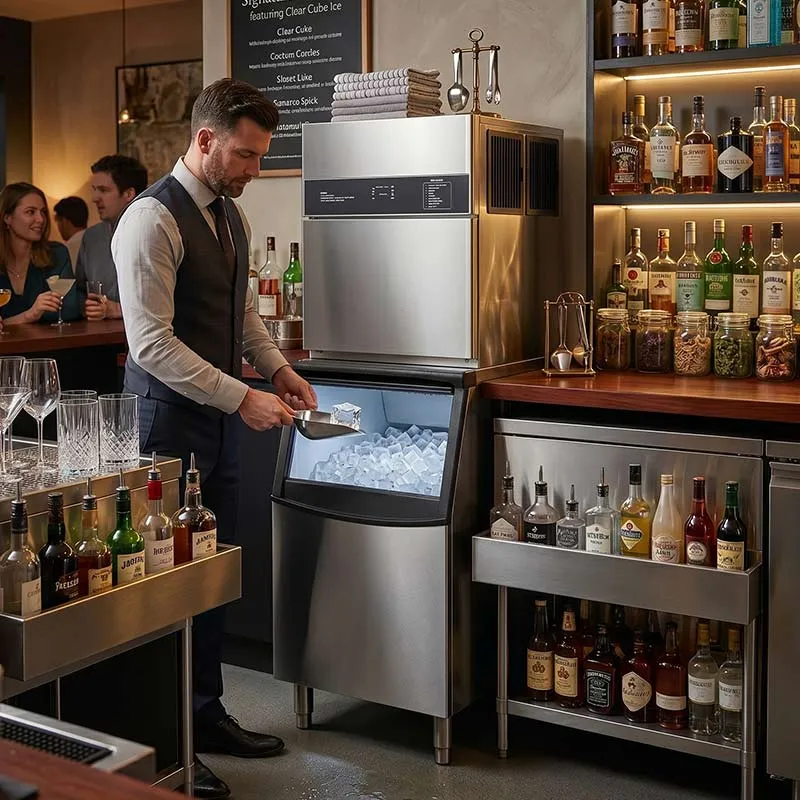
Hotels rarely rely on one machine. A well-designed hotel ice strategy combines self-serve dispensers for guests, compact units for bars and kitchens, and high-capacity modular machines for banquets.
2.1 Hotel Ice Dispensers
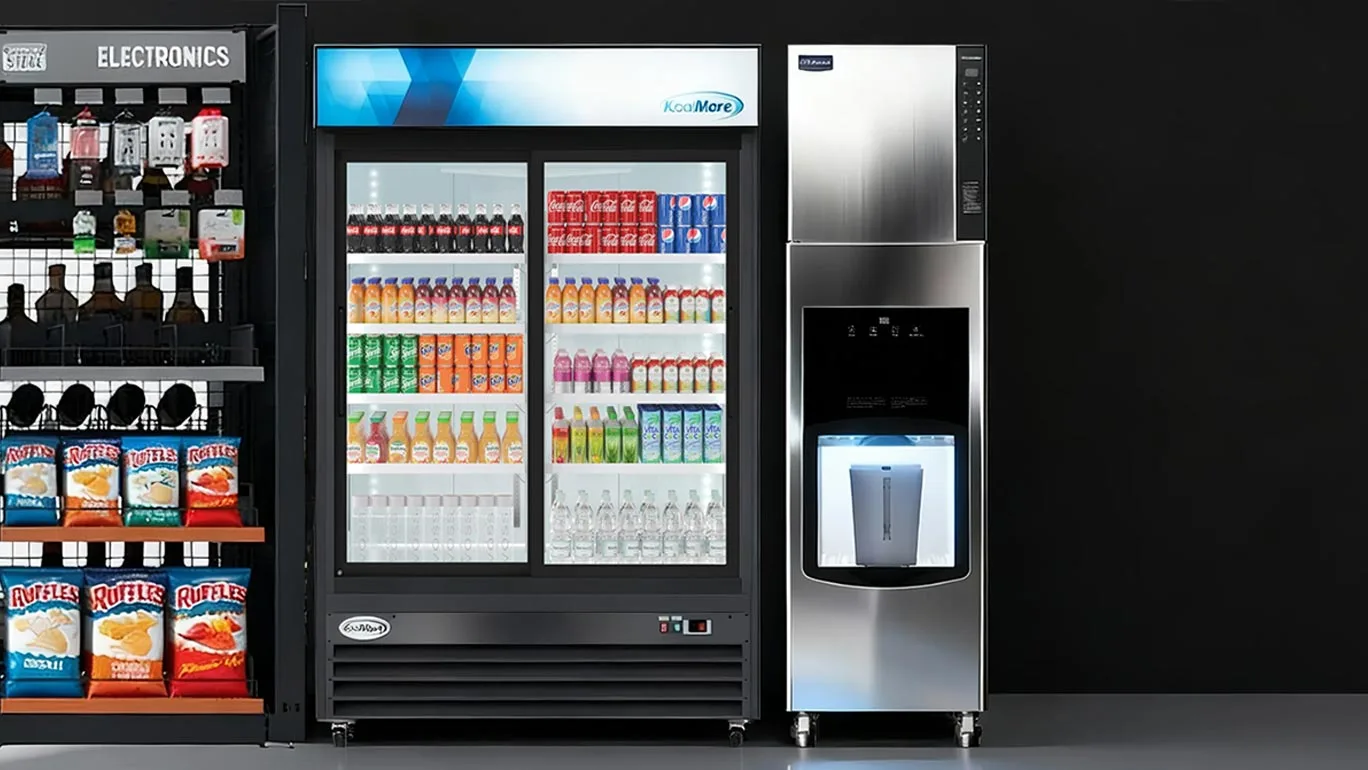
Dispensers produce ice and store it in a built-in bin with a dispensing chute, so guests can fill ice buckets or cups without touching the machine. Touchless dispensing is the standard choice for guest floors, breakfast areas and pool decks because it limits cross-contamination.
The Naixer ZD-160 hotel ice dispenser produces 160 kg (353 lb) per 24 hours, stores 100 kg (220 lb) of 22 x 22 x 22 mm cube ice, and supports touchless dispensing. See the full ice dispenser lineup.
2.2 Undercounter and Built-In Bin Machines
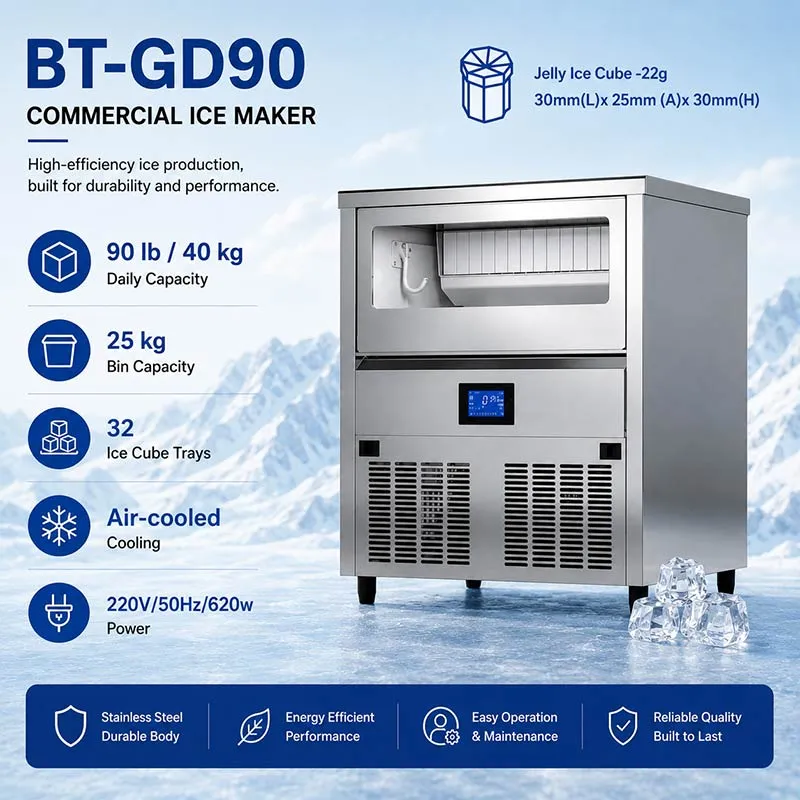
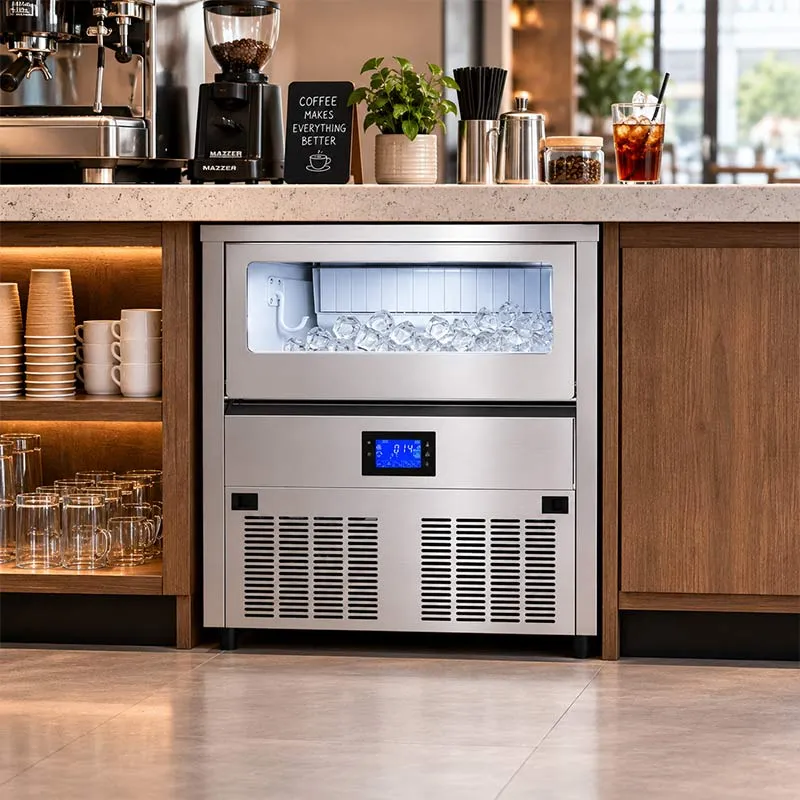
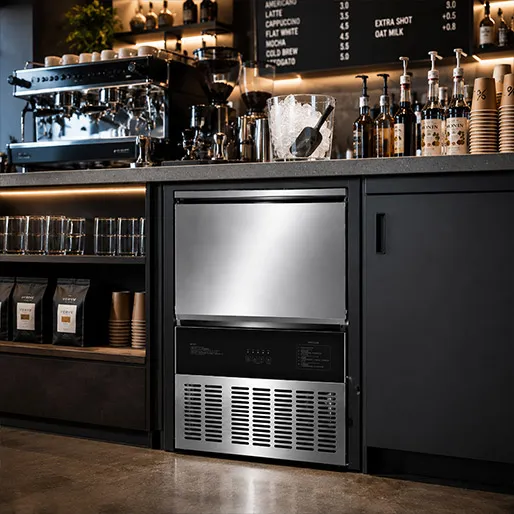
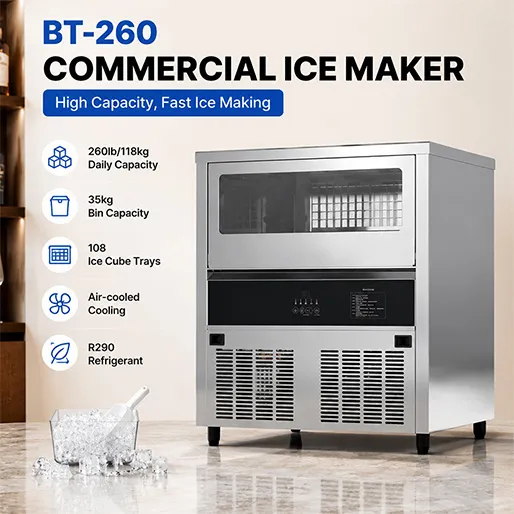
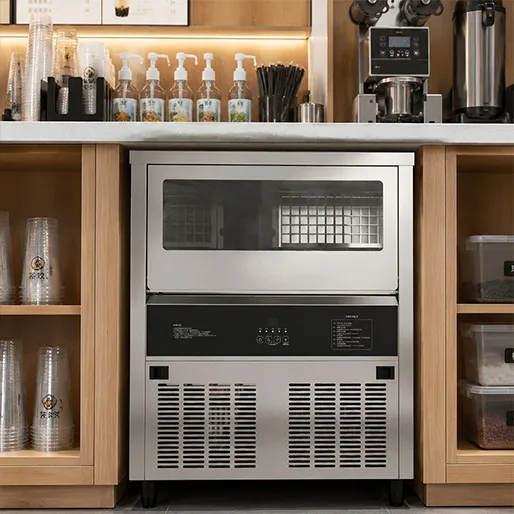
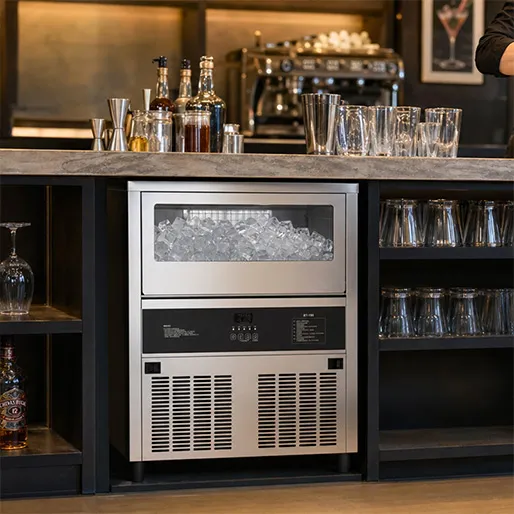
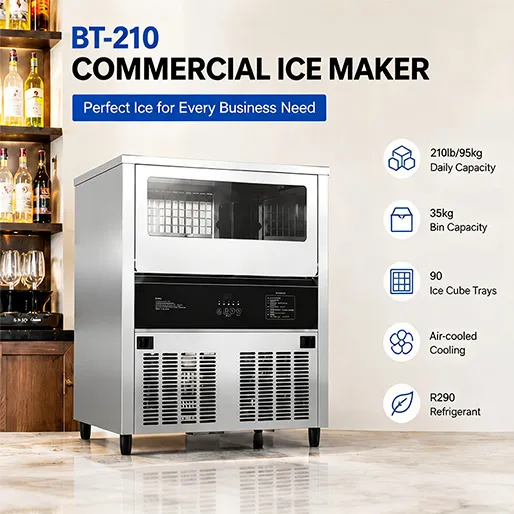
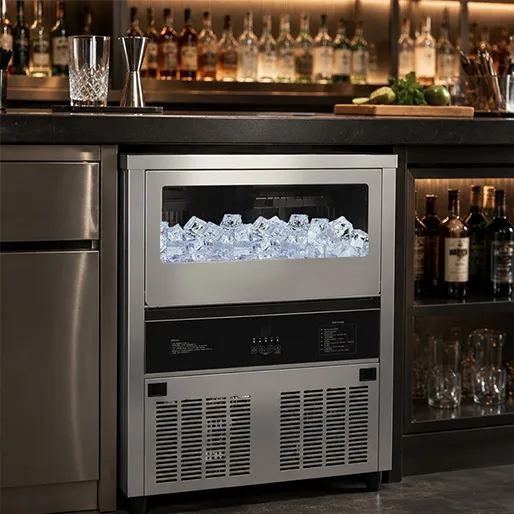
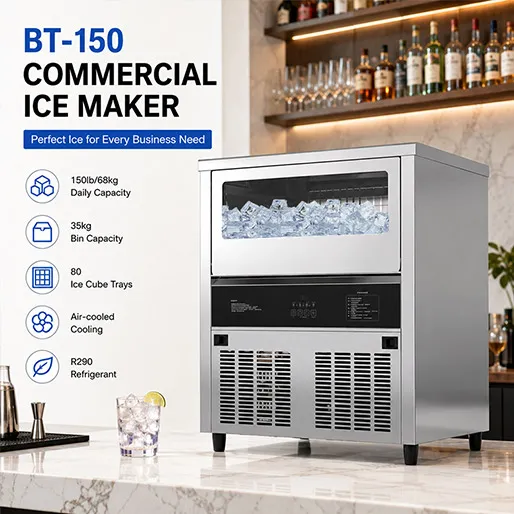
For bars, staff pantries and small kitchens, undercounter machines fit neatly below the countertop. The Naixer E30 produces 35 kg (77 lb) per 24 hours, measures 410 x 550 x 855 mm, and runs on R290 refrigerant.
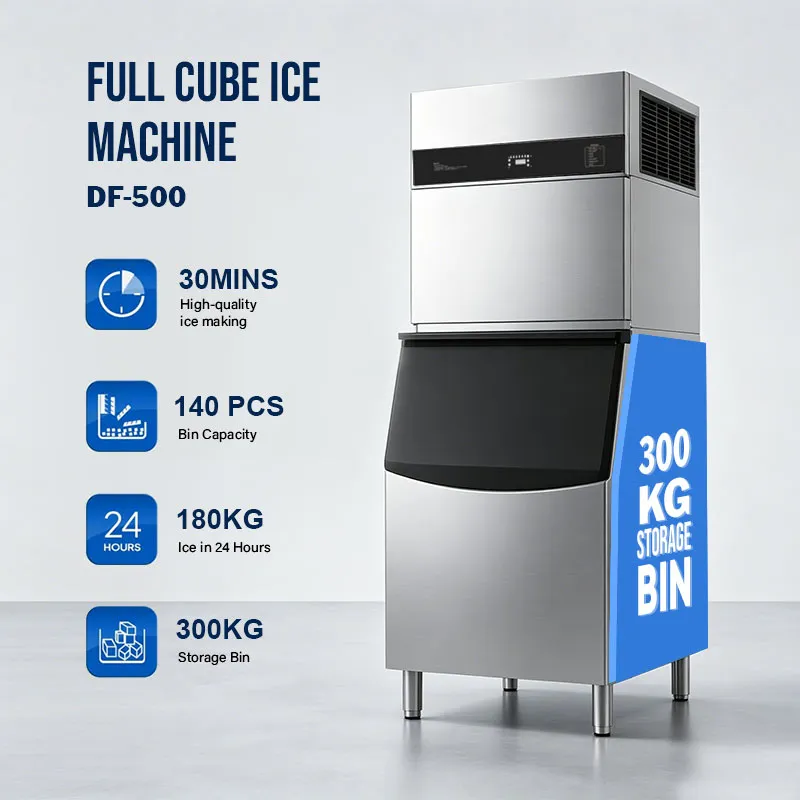
Built-in bin models combine the ice maker and storage bin in one cabinet. Naixer built-in bin cube ice machines cover 55-190 kg (121-419 lb) per day, and key models require no drain line, which simplifies installation and lowers retrofit cost. Explore the cube ice series.
2.3 Modular Ice Machines
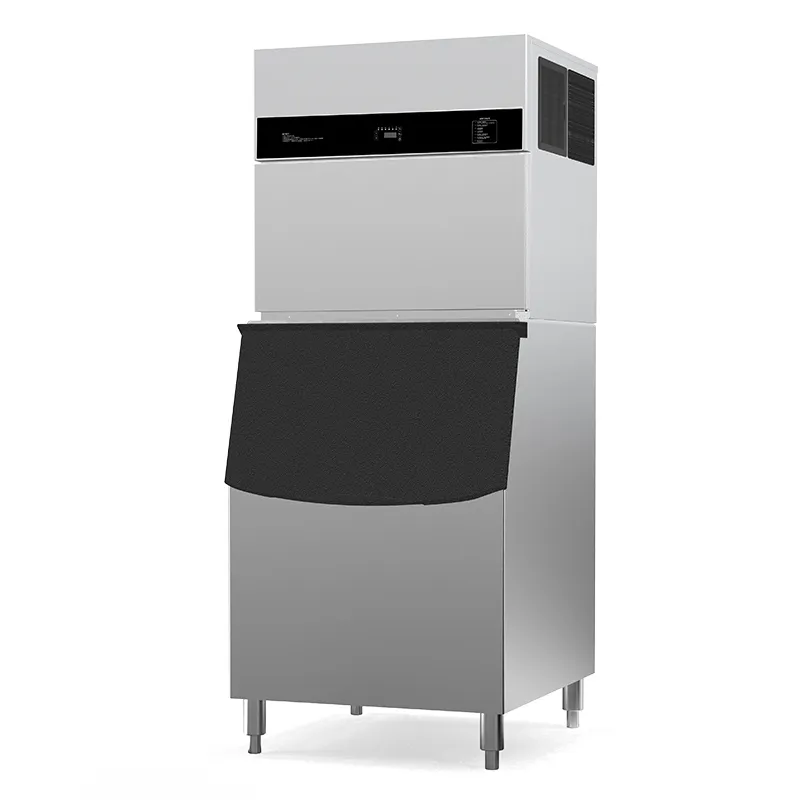
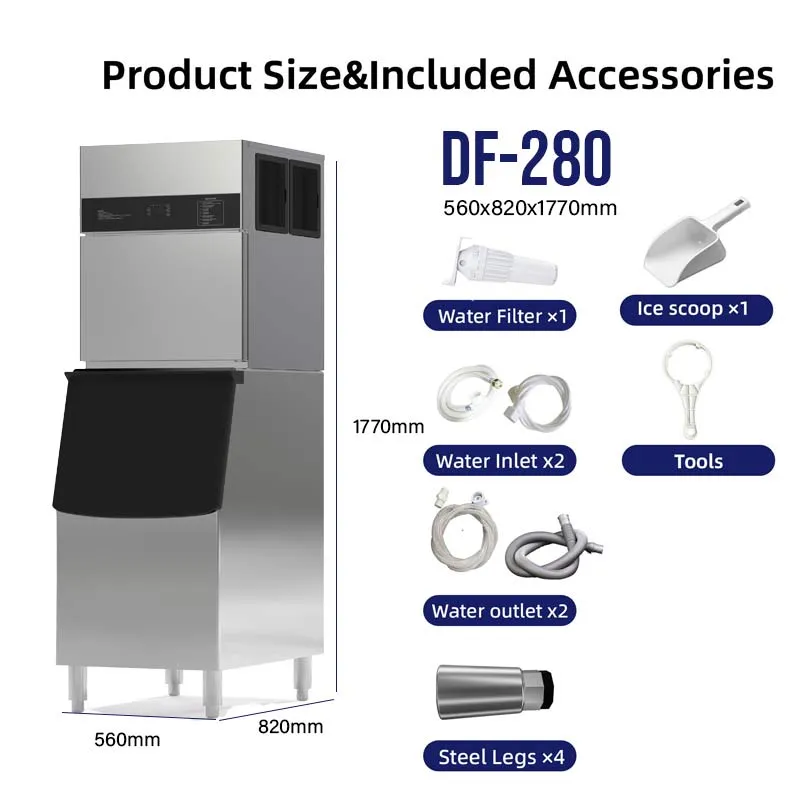
Modular machines separate the ice-making head from a storage bin, so production and storage can be sized independently. They are the workhorses of hotel kitchens and central ice rooms, with rated outputs from 250 kg to 900 kg per 24 hours. Pair a modular head with a matching bin, or connect it to existing storage.
2.4 Ice and Water Vending Machines
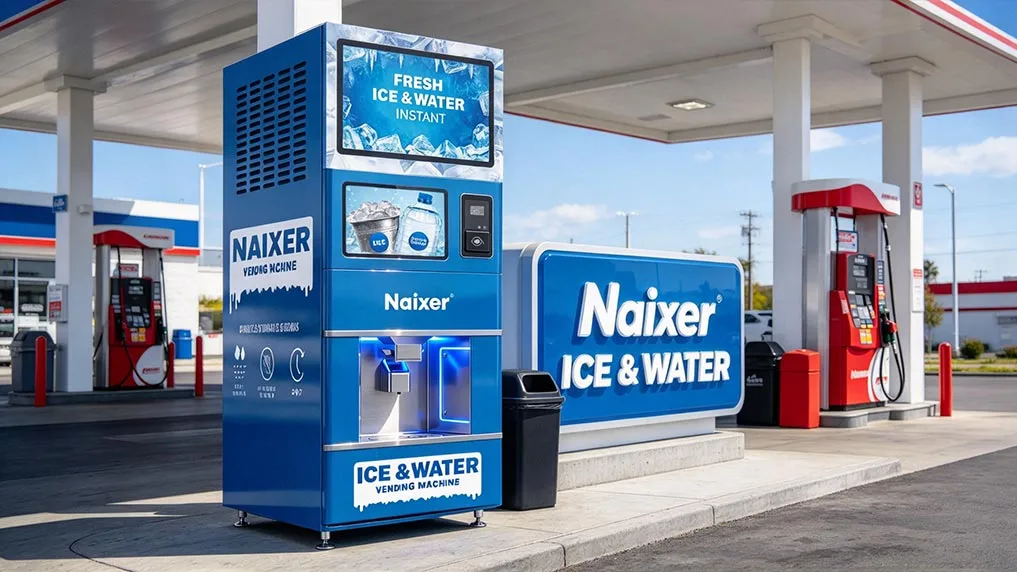
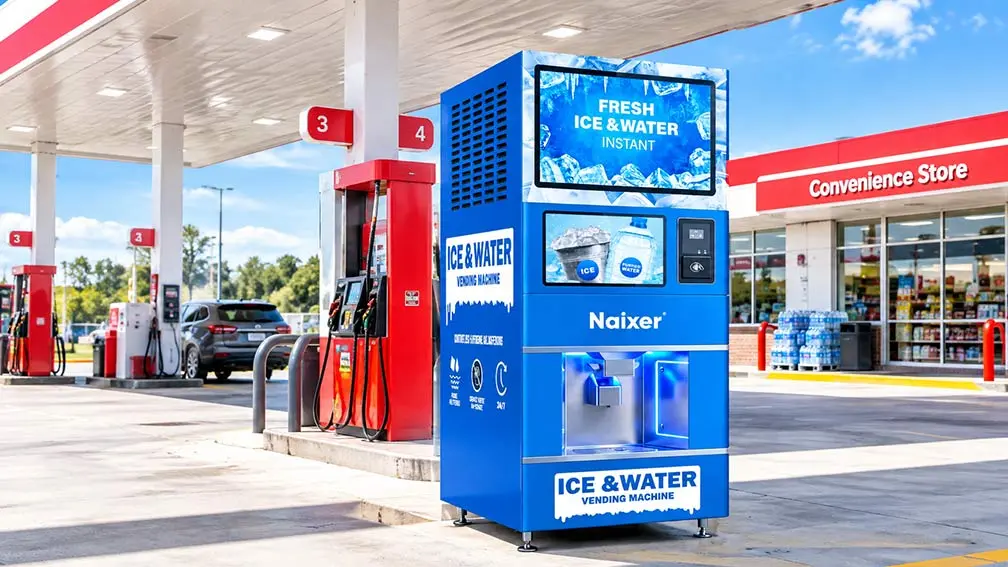
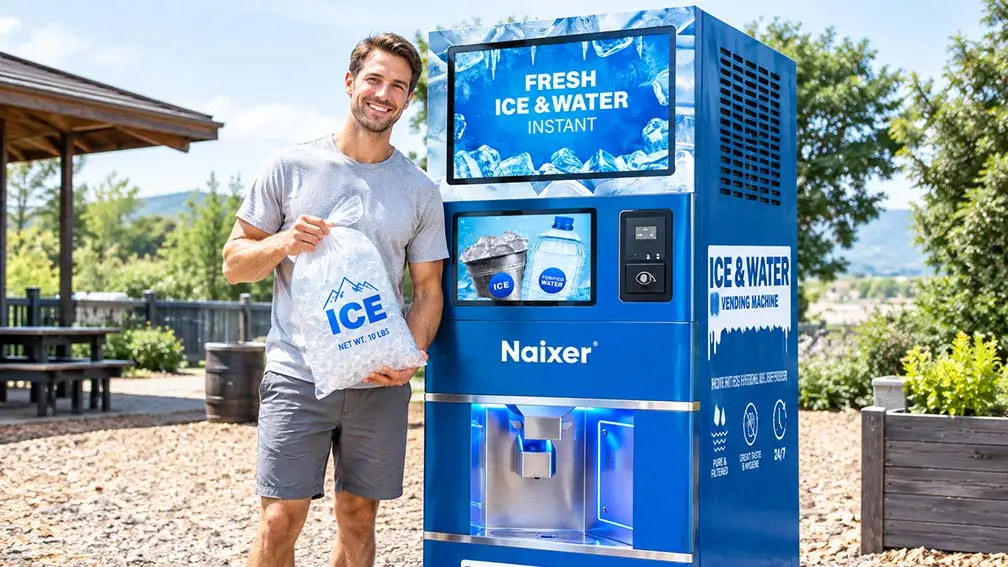
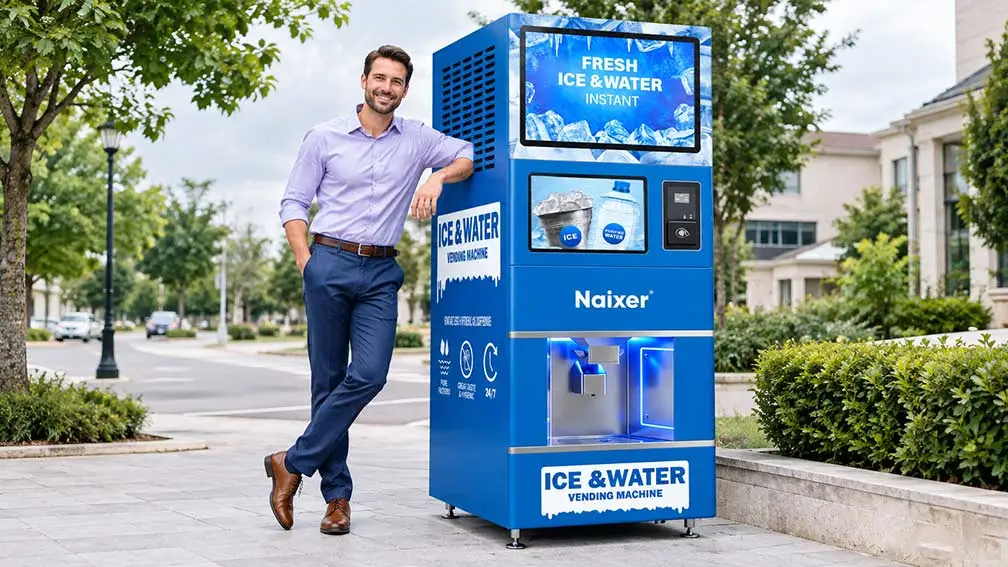
For resorts, hostels and high-traffic locations, self-service ice and water vending machines let guests pay by card, mobile or coin. The Naixer ZD-160-A320 produces 100 kg (220 lb) per day, dispenses 29 x 29 x 22 mm cubes, supports four payment methods, and measures 1210 x 960 x 2350 mm. Vending machines can also become a small revenue channel. See the ice and water vending machine page.
| Machine type | Typical output | Best for | Naixer example |
|---|---|---|---|
| Hotel ice dispenser | 160 kg / 24h | Guest floors, breakfast areas | ZD-160 |
| Undercounter | 35 kg / 24h | Bars, staff pantries | E30 |
| Built-in bin | 55-190 kg / 24h | Kitchens, staff areas | TH series |
| Modular | 250-900 kg / 24h | Central ice rooms, banquets | TH / SE series |
| Ice and water vending | 100 kg / 24h | Resorts, lobbies, retail | ZD-160-A320 |
3. Which Ice Shape Is Right for Your Hotel?
Ice shape affects how drinks look, how fast ice melts, and how well it holds carbonation. Most hotels standardize on one shape for guest rooms and bars, then add a second shape for specialty outlets.
| Ice shape | Typical size | Best for | Naixer series |
|---|---|---|---|
| Square cube | 30 x 30 x 30 or 50 x 50 x 50 mm | Upscale bars, whisky and cocktails, visual presentation | DF - square ice series |
| Crescent | About 32 mm wide | All-purpose bars and restaurants; melts about 32% slower | SE - crescent ice series |
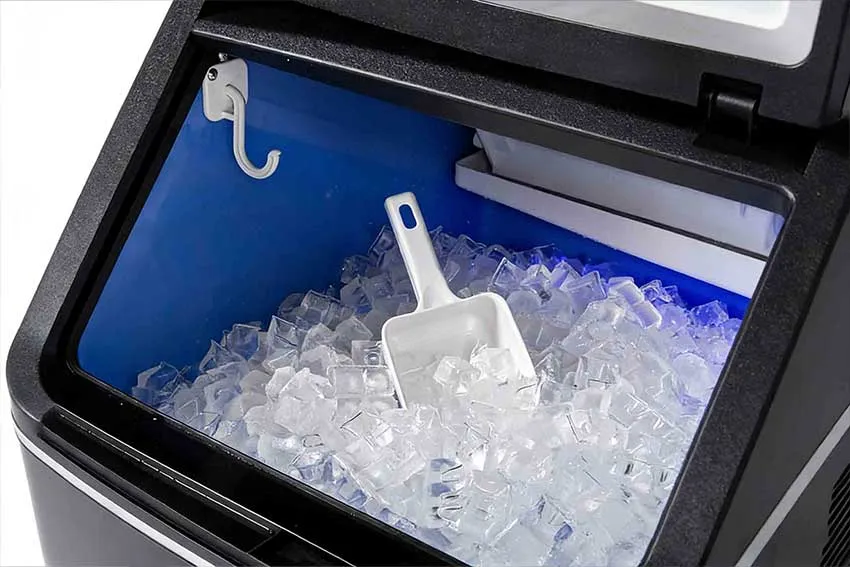
| Regular cube | 22 x 22 x 22 mm | Restaurants, soft drinks, banquet service | TH - cube ice series |
| Cylinder | About 30 mm diameter | Bubble tea, specialty drinks, display | YZ - cylinder ice series |
| Nugget / flake | Pellet or flake | Food display, seafood, blended drinks | KL |

4. Installation Requirements
Plan installation before you buy. These five requirements cause most hotel retrofit surprises.
- Space and ventilation: allow at least 12 inches (30 cm) of clearance around air-cooled units, and confirm doorways, elevators and corridors can fit the machine.
- Drainage: most ice machines drain by gravity to a floor drain. If no drain is available, choose a built-in bin model with a no-drain design - Naixer offers this on key cube ice models.
- Water supply: connect a filtered 1/4-inch water line and install an inline filter to protect the evaporator and keep ice clear.
- Electrical: match voltage to your region - 110V/60Hz in North America, 220-240V/50Hz in Europe and Asia, and 380V for large modular systems - on a dedicated circuit.
- Noise: for machines placed near guest rooms, check the sound rating and consider undercounter or remote-condenser designs.
5. Energy, Water and Operating Costs
Ice machines run around the clock, so energy and water efficiency matter as much as the purchase price.
- Refrigerant: compact Naixer models use R290, a low-GWP hydrocarbon refrigerant. Larger modular machines commonly use R404A; check local refrigerant regulations before purchase.
- Water efficiency: a modern air-cooled machine uses about 1.1 L of water to produce 1 kg of ice, including purge water for clarity.
- Melt resistance: crescent ice remelts about 32% less than other shapes, reducing both energy use and machine run time.
- Purchase price: hotel ice machines typically range from $1,500 for compact undercounter units to $10,000+ for large modular systems; dispensers usually sit in the $3,000-$8,000 range.
- Maintenance budget: plan for two professional deep cleans per year at roughly $300 per service, plus $15-$100 per water filter replacement.
6. Food Safety, Sanitation and Certifications
Ice is food. In the U.S. and many other markets, ice machines fall under food-safety inspection, so certifications are not optional.
- NSF - food-contact safety and cleanability, the standard for U.S. food service.
- CE / UKCA / CB - electrical safety for Europe, the U.K. and global markets.
- ETL - North American safety certification.
- RoHS - restriction of hazardous substances.
- ISO 9001 - factory quality management.
Naixer ice machines carry NSF, CE, ETL, RoHS, ISO 9001, KC, UKCA and CB certifications, and certificates can be provided on request.
Hygiene routine for hotel ice
- Clean the bin and dispenser chute daily.
- Deep-clean the evaporator and water system twice a year.
- Replace water filters on schedule.
- Prefer touchless dispensers for guest-accessible ice.
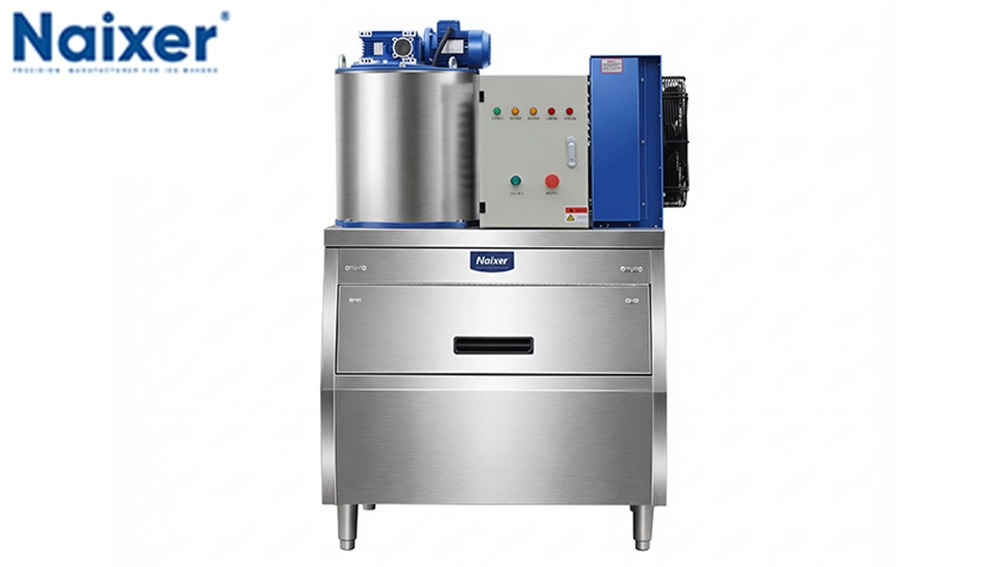
Naixer is the manufacturer, not a trading company: the 30,000 sqm smart factory, 16+ years of ice machine experience and 300+ brand partners mean specifications, quality control and after-sales support come from one source. See how Naixer builds commercial ice machines.
7. Frequently Asked Questions
How much ice does a hotel need per day?
Plan 5 lb (2.3 kg) per occupied room, plus 3 lb per bar customer and 2 lb per restaurant guest. A 100-room hotel typically needs 400-600 kg per day; add a 1.5x buffer for events and hot weekends.
What is the best ice machine for a hotel?
Most hotels use a mix: hotel ice dispensers on guest floors, undercounter or built-in bin units in bars and kitchens, and modular machines for banquets. For ice quality, crescent and square cube shapes are the most popular.
Air-cooled or water-cooled?
Air-cooled machines are easier to install and maintain, and are the default for most hotels. Water-cooled machines use more water but run more efficiently in hot, poorly ventilated kitchens.
Do hotel ice machines need a drain line?
Most do. If no floor drain is available, choose a no-drain built-in bin model - Naixer offers this on key cube ice machines, which significantly simplifies retrofit projects.
Are Naixer ice machines certified for export?
Yes. Naixer machines are certified NSF, CE, ETL, RoHS, ISO 9001, KC, UKCA and CB, with certificates available on request for your market.
8. Final Recommendations
Choosing hotel ice machines comes down to four decisions: capacity, machine mix, ice shape and certification.
- Size for the peak day, not the average day.
- Combine dispensers, undercounter units and modular machines instead of one oversized machine.
- Choose crescent or square cube ice for bars and guest rooms.
- Verify certifications for your market before ordering.
- Budget for water filters and two deep cleans per year.
Get a Factory Quote
Tell us your room count, outlets and peak-event plans, and Naixer's engineers will recommend the exact machine mix, capacity and configuration - with factory-direct pricing and lead times.
Get a factory quote