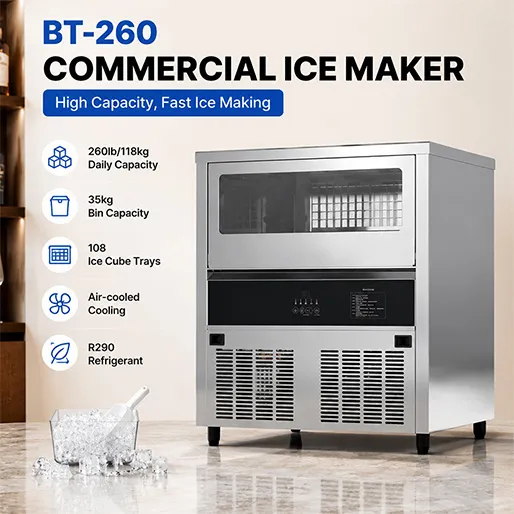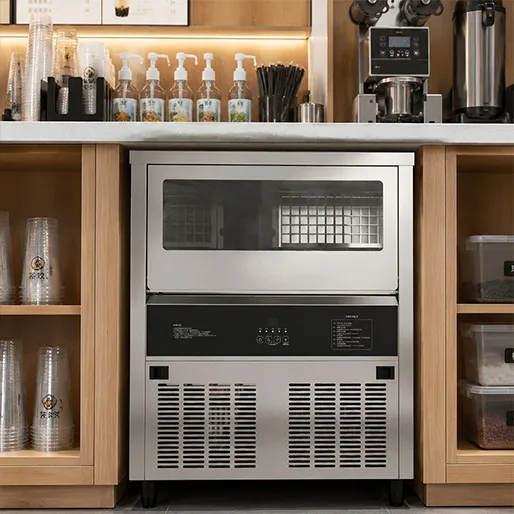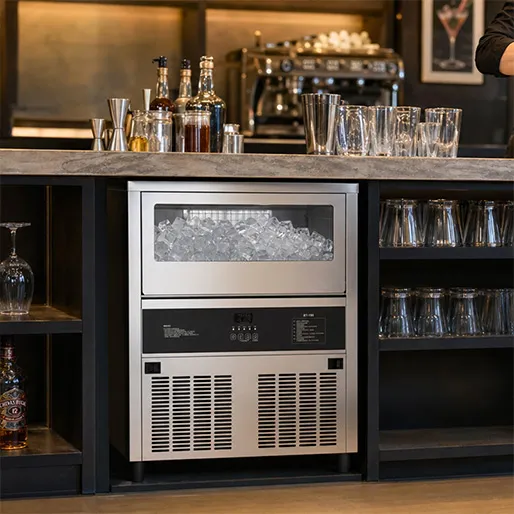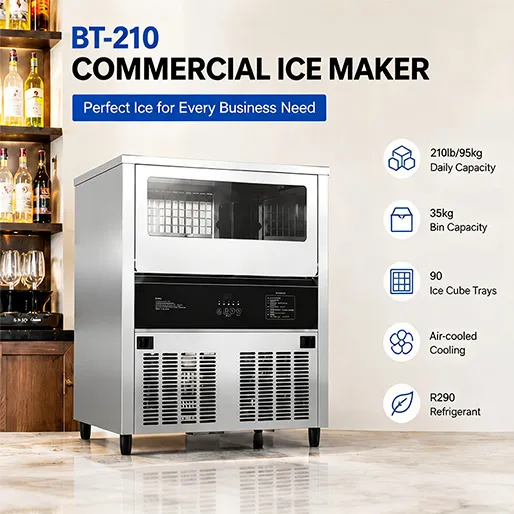
How Big of an Ice Machine Do I Need for a Coffee Shop?

To determine how big of an ice machine you need for a coffee shop, calculate 1.5 lbs of ice per customer (or per cup) per day as an industry benchmark. For a standard specialty cafe serving 200 customers daily, you will need a coffee shop ice maker machine with a minimum 24-hour yield of 300 lbs paired with an adequately sized storage bin.
Opening a specialty cafe or expanding your cold brew menu requires razor-sharp asset planning. In a modern beverage workflow, ice is not just an add-on; it is a core ingredient that dictates the texture, dilution, and consistency of your signature iced lattes, frappes, and cold foams. Under-sizing your equipment leads to the ultimate Saturday afternoon nightmare: running out of ice during a peak rush.
In this guide, you will learn:
The Coffee Shop Ice Sizing Formula: How to Calculate Your Daily Yield
To find the perfect fit, you must move away from guesswork and use a structured, data-backed calculation. The total capacity of your coffee shop ice machine depends heavily on your daily volume and menu mix.
The Baseline Calculation Formula
Each variable deserves a moment of attention, because the range isn’t arbitrary — it’s driven by your specific menu.
Iced drinks per day should be counted on your busiest day of the year, not an average Tuesday. Pull your point-of-sale data from last July and look at the top five iced-drink days. Use the highest number. That’s your baseline.
Ice per drink varies by what’s in the cup. An iced latte — typically 8 to 12 ounces with a double shot of espresso and several ounces of cold milk — uses about 0.3 lbs of ice because the milk already fills part of the cup. An iced Americano, which is mostly water over ice, uses closer to 0.4 lbs. A blended frappé or smoothie can push past 0.5 lbs easily because ice is the body of the drink. If your menu is evenly split between iced lattes and Americanos, use 0.4 lbs as your average. If you sell a lot of blended drinks, lean toward 0.5.
The 20% peak buffer covers you during the unexpected — the heatwave that doubles iced drink orders in a week, the summer holiday weekend, the machine’s slight efficiency drop after a few years of service. It’s not a cushion. It’s a cost of doing business.
A worked example. A coffee shop that sells 200 iced drinks on a busy July Saturday, with a menu mix of mostly lattes and Americanos: 200 × 0.4 lbs × 1.2 = 96 lbs of ice needed per day. A self-contained full cube machine rated at 280–350 lbs, like the Naixer TH-280B or TH-320B, gives you comfortable headroom without overspending on capacity you’ll never use.
Why Your Coffee Shop Menu Determines Your Ice Type — Not Just Your Machine Size

Calculating how much ice you need tells you the machine capacity. But it doesn’t tell you which coffee shop ice maker machine to buy. For that, you need to look at what’s actually on your menu — because a cold brew shop and a smoothie café have fundamentally different ice requirements, even if they sell the same number of drinks per day.
Most coffee shops fall into one of three menu profiles. Each demands a different ice type, and the wrong match will quietly undermine your drink quality.
The Pure Coffee Shop — Cold Brew, Iced Lattes, Iced Americanos

This is the shop where espresso dominates. Cold brew steeps overnight. Iced lattes are the top seller from May through September. The ice in these drinks has one job: chill the coffee without diluting it. A customer sips an iced Americano over fifteen or twenty minutes; if the ice melts fast, the last third of the drink tastes like coffee-scented water.
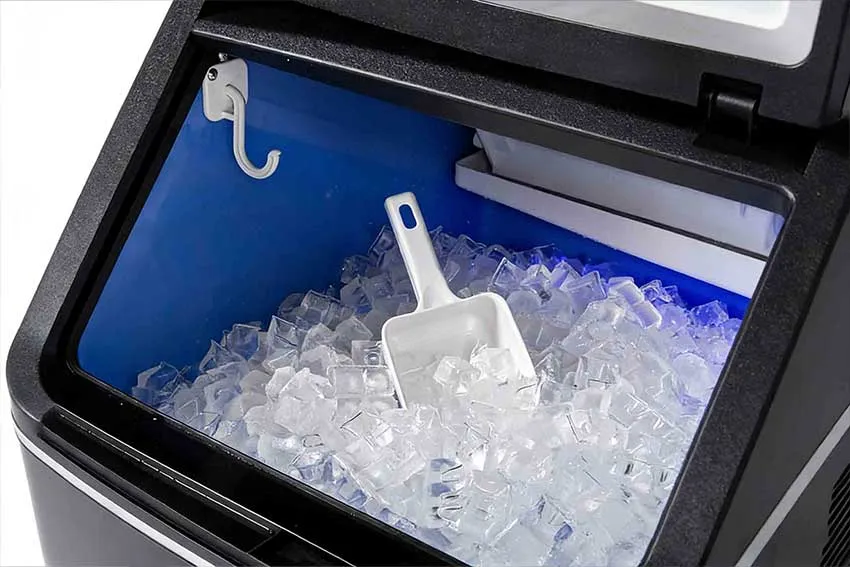
The only ice type that works here is full cube ice — 22×22×22mm, hard, crystal-clear, and the slowest-melting commercial ice shape available. Its density means it holds its structure long after cloudy, budget-machine ice has turned to slush. For a pure coffee shop, a self-contained full cube machine like the Naixer TH-280B (280–300 lbs/day) or TH-320B (320–350 lbs/day) is the right call. Both include built-in storage bins, which means no separate bin purchase, no compatibility matching, no hidden cost.
The Hybrid Café — Coffee, Smoothies, and Blended Drinks

This is the shop with a menu that spans hot lattes, iced mochas, fruit smoothies, and blended protein shakes. One ice type cannot serve all of these drinks well. Full cube ice is perfect for the iced coffees and teas, but it’s too hard for a blender — it wears down blades faster and doesn’t incorporate smoothly into a thick smoothie. Nugget or cylindrical ice blends beautifully and absorbs fruit flavors, but it melts too fast in an iced latte, diluting the espresso before the customer finishes the cup.
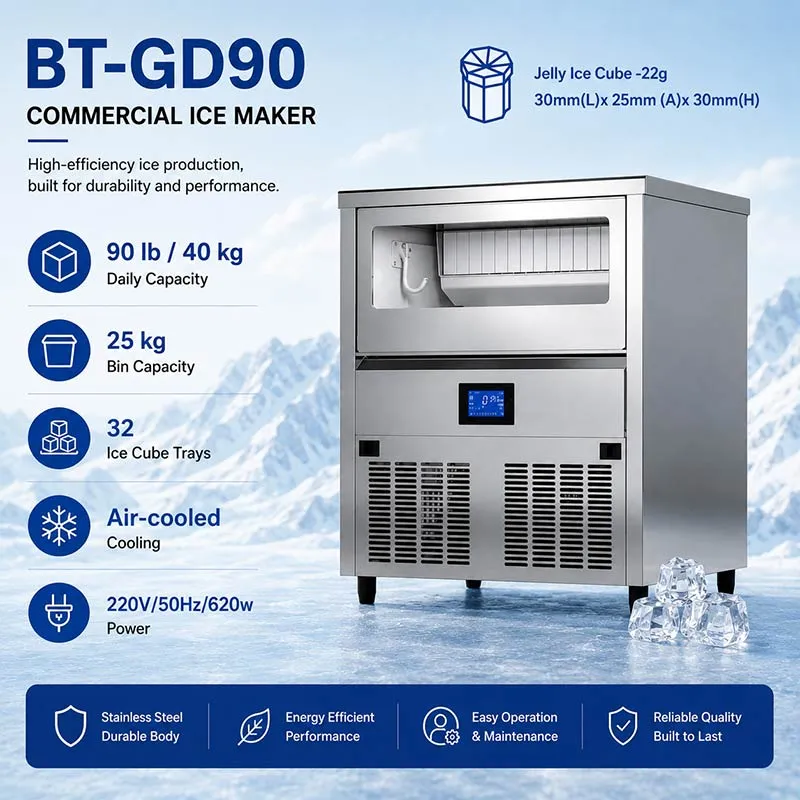
The right solution here is two machines: a TH series full cube unit for the coffee and tea side of the menu, and a GD series cylindrical ice unit for the smoothie and blended side. A common pairing is the TH-280B (280–300 lbs/day of full cube ice) alongside the TH-GD90 (90 lbs/day of soft, chewable cylindrical ice) or the TH-GD140 (140 lbs/day) for higher smoothie volume. This way every drink gets the ice it actually needs, and neither machine is asked to do a job it wasn’t designed for.
The Convenience-Style Coffee Kiosk — Self-Serve and Bagged Ice

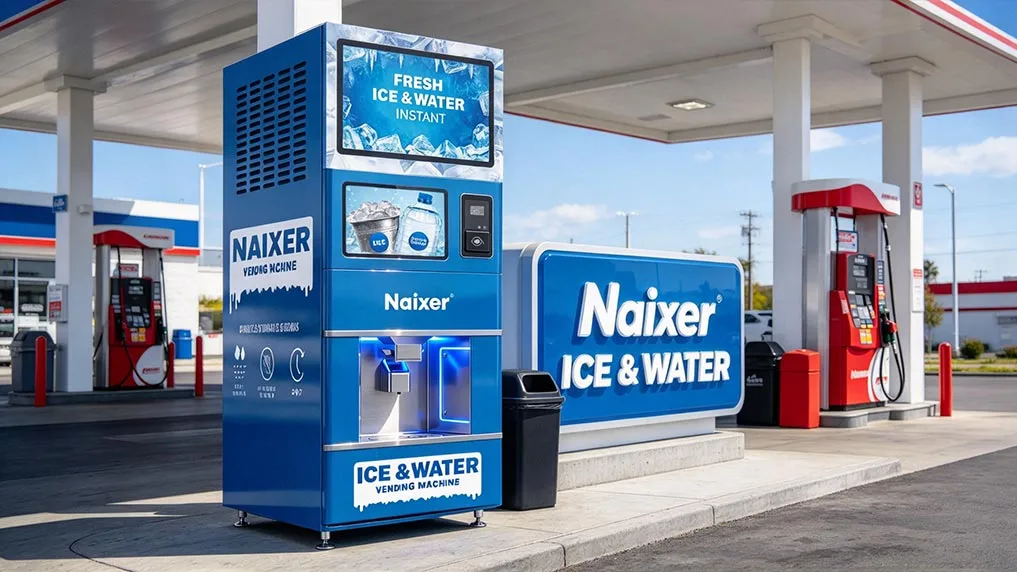
This is the coffee station in a grocery store, a gas station kiosk, or a university grab-and-go counter. Customers serve themselves from a dispenser, and some locations also sell bagged ice. The ice needs to flow through a dispenser chute without jamming, sit in a bin without clumping into a solid block, and look clean and clear in a customer’s cup.
Full cube ice does all of that reliably. Its uniform square shape and flat faces mean it dispenses smoothly without bridging across the hopper — a problem that plagues irregular shapes like nugget ice in self-serve settings. For this model, a machine with higher daily output and a larger built-in bin makes sense: the Naixer TH-420B (420 lbs/day) or TH-500B (500 lbs/day), both with integrated storage bins large enough to supply self-serve demand through a full day of operation.
Full Cube vs. Nugget Ice for Coffee Shops — What's Actually Better for Your Drinks?

The question comes up in every coffee shop equipment discussion: full cube or nugget? The answer isn’t one-size-fits-all, but the decision framework is straightforward once you understand what each ice type does to a drink.
Full cube ice — 22×22×22mm, hard, crystal-clear — melts slower than any other commercial ice shape. That’s physics, not marketing. The cube’s low surface-area-to-volume ratio means less of the ice is touching the liquid at any given moment, so heat transfer happens gradually. For an iced latte or cold brew that a customer sips over fifteen minutes, that slow melt preserves the coffee’s flavor and body. By the time the cup is empty, the drink still tastes like what the barista made.
Full cube ice also holds its structural integrity. When a customer swirls their cup or tips it back for the last sip, the cubes stay intact rather than disintegrating into slush. That matters in a coffee shop because the visual of clear, chunky ice in an amber cold brew jar is part of the product — and customers photograph products that look good.
Nugget ice — also called chewable ice, pellet ice, or cylindrical ice — is soft, porous, and absorbs liquid like a sponge. It’s the ice people actively seek out at certain soda fountains. For a coffee shop that sells smoothies, blended frappés, or protein shakes, nugget ice is the right choice because it blends smoothly, adds body to the drink, and its flavor-absorbing properties mean the ice itself tastes like the mango or berry it’s blended with. But put nugget ice in an iced latte, and it will melt into watery coffee in half the time a full cube would.
The decision rule: If iced coffee and tea make up more than 70% of your iced drink sales, buy a full cube machine. If smoothies and blended drinks dominate, buy a nugget machine. If you’re split down the middle, run both — each machine doing the job it was engineered for, each drink served with the ice that makes it taste best. For more on how ice shapes affect different beverage types and food displays, our guide to restaurant ice types compares full cube, nugget, flake, and crescent ice across common commercial applications.
Undercounter vs. Freestanding — Which Ice Machine Layout Fits Your Coffee Shop?

The physical footprint of your coffee shop ice machine matters just as much as its production capacity. A machine that can’t fit under your counter — or one that’s too small to keep up with demand because you chose compact over capable — creates daily friction for your team.
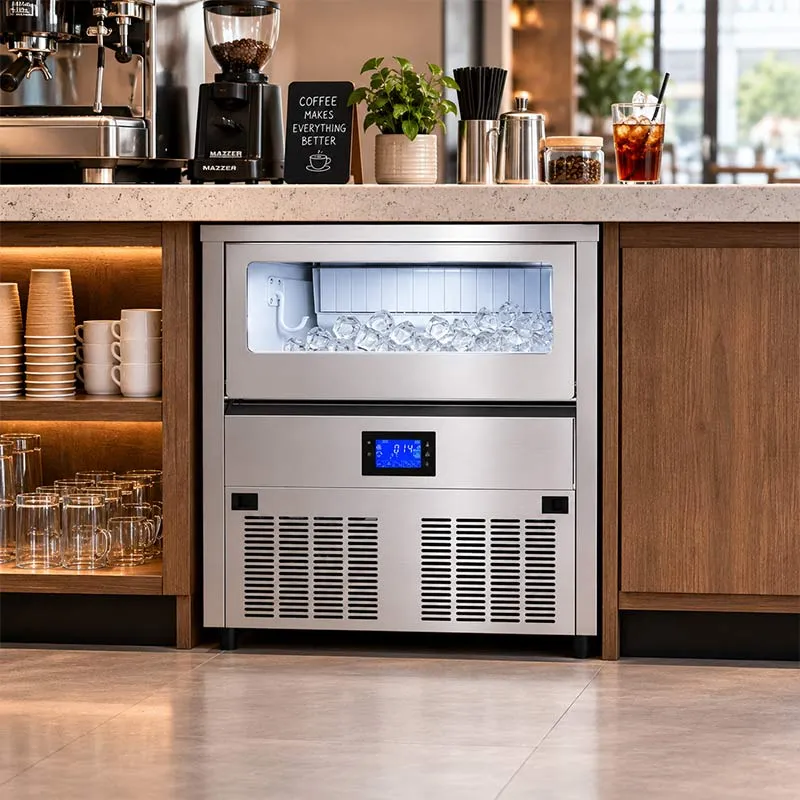
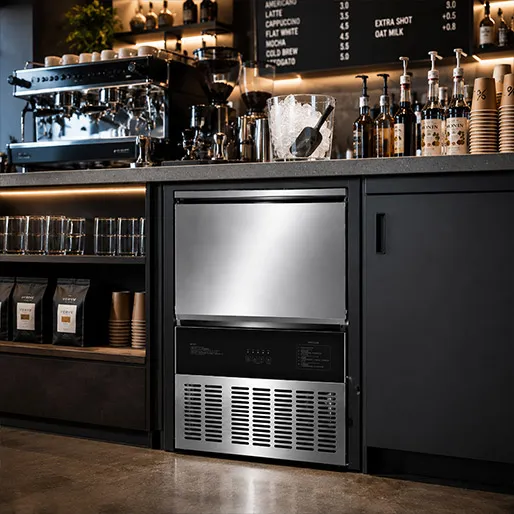
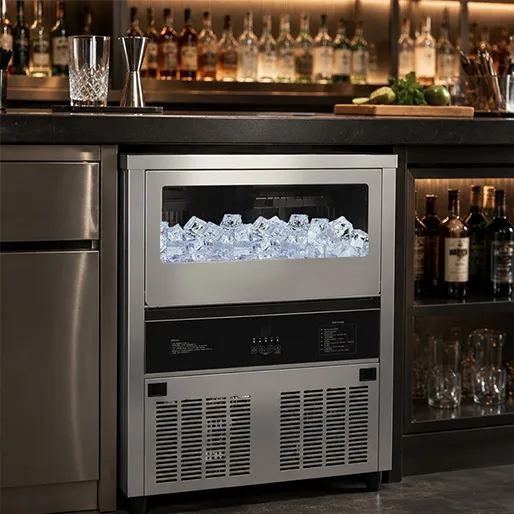
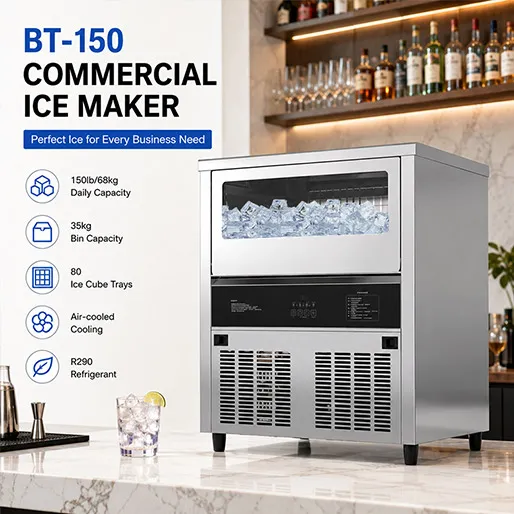
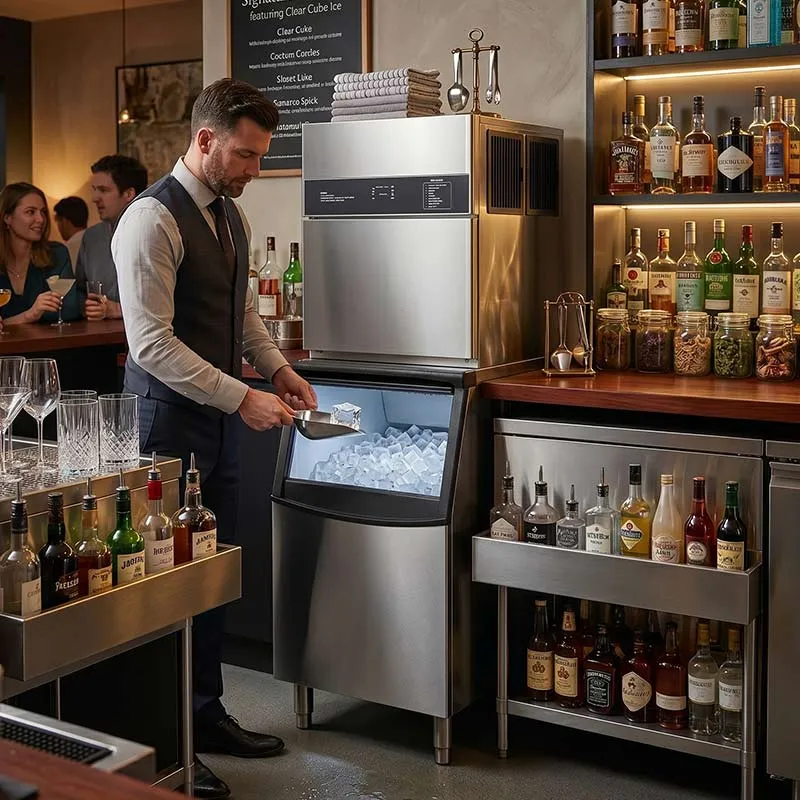
Undercounter ice machines are the default choice for coffee shops where the barista makes every drink. These units are 15 to 24 inches wide and stand no taller than 34 inches, which means they slide under a standard counter and put ice within arm’s reach of the espresso machine. The barista never has to turn around or walk to a back room to scoop ice; they pivot, scoop, and keep building drinks. For a shop that does 100 to 200 iced drinks a day, an undercounter unit rated at 250–350 lbs/day — like the Naixer TH-280B or TH-320B — is the sweet spot.
One thing to check before buying an undercounter unit: ventilation. Machines with front-in, front-out venting can be installed with essentially zero side clearance, which is ideal for tight under-counter bays. Side-vented models need six inches of air gap on both sides, which may not be available under a standard bar. Naixer’s TH series undercounter units use front-vented architecture, so they fit flush into cabinet openings.
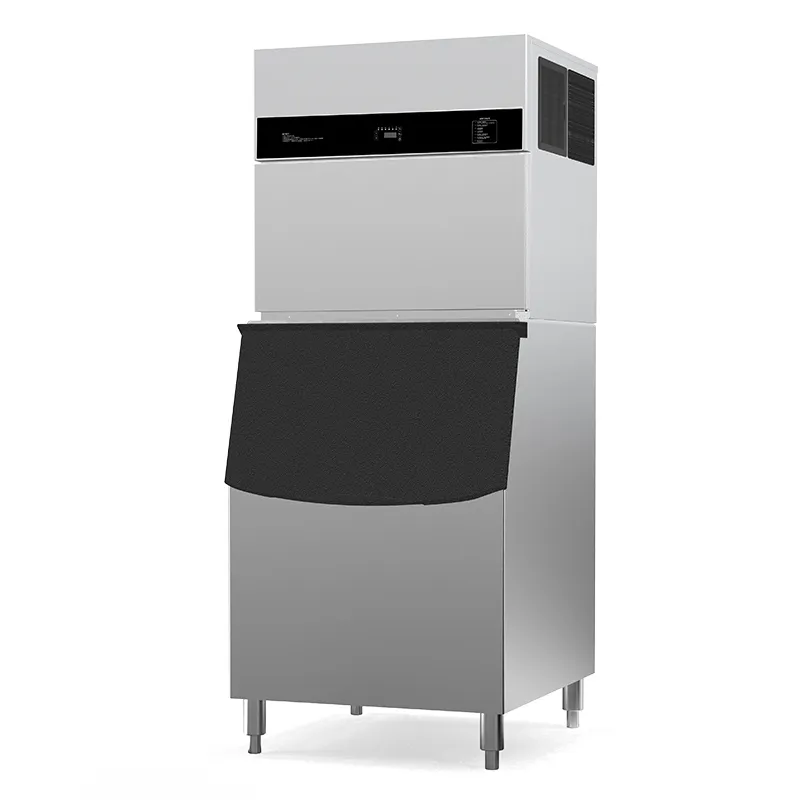
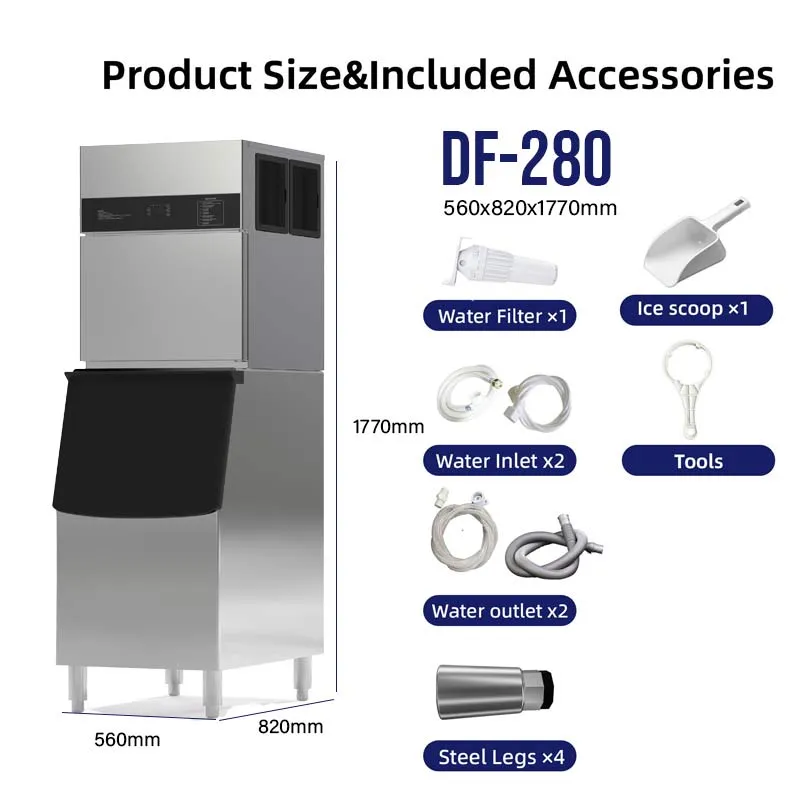
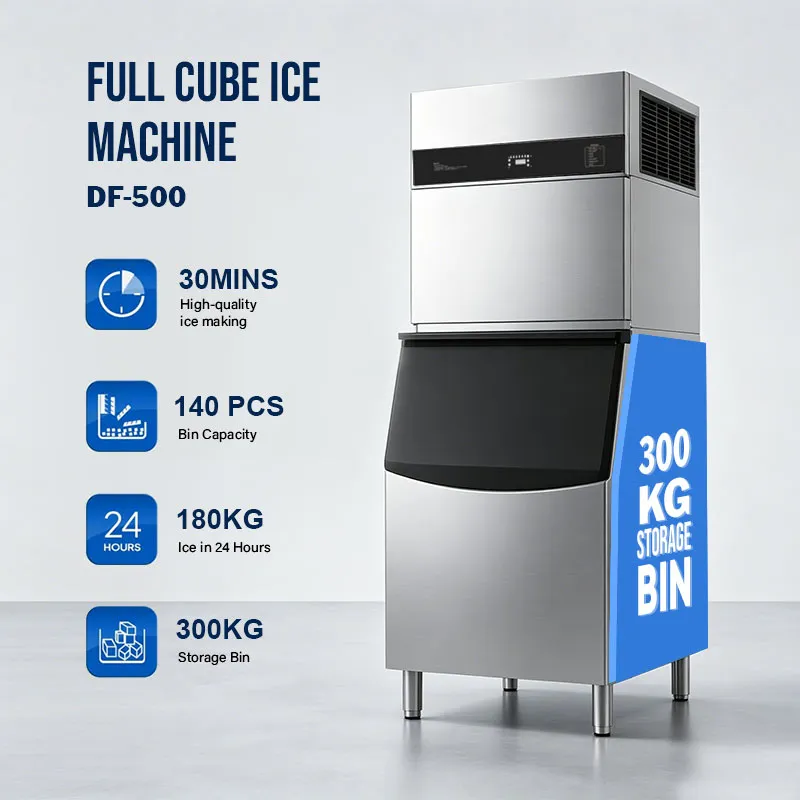
Freestanding self-contained machines are the right call when your shop needs more daily production than an undercounter unit can deliver — typically above 350 lbs/day — or when the ice machine lives in a back room, not behind the counter. A self-contained freestanding unit like the Naixer TH-500B (500 lbs/day) or TH-700B (700 lbs/day) combines the ice maker and storage bin in one floor-standing cabinet. These are built for high-volume shops, multi-location cafés, or coffee shops that also handle commissary or catering ice needs. They take up about the same floor space as a small refrigerator and connect to a single set of utilities.
How to Calculate the Right Size Coffee Shop Ice Machine — Quick Reference
Use this quick-reference chart to find your recommended daily ice production and a matching Naixer model. Remember: these numbers assume you’ve already calculated your iced drink volume on your busiest day and applied the 20% buffer.
100 iced drinks/day: 36–60 lbs of ice needed → Naixer TH-280B (280–300 lbs, room to grow)
200 iced drinks/day: 72–120 lbs of ice needed → Naixer TH-320B or TH-420B (320–420 lbs)
300 iced drinks/day: 108–180 lbs of ice needed → Naixer TH-500B (500 lbs)
500+ iced drinks/day: 180–300 lbs of ice needed → Naixer TH-700B (700 lbs)
If you also need nugget ice for smoothies: Add a TH-GD90 (90 lbs) or TH-GD140 (140 lbs) as a secondary machine
All TH series and GD series models are self-contained with built-in storage bins — one purchase, one installation, no $800–$2,000 hidden bin cost. For a complete breakdown of what commercial ice machines cost to buy, install, and maintain, our restaurant ice machine cost guide covers every cost category in detail.
One installation note worth paying attention to: your machine needs at least 5 cm of ventilation clearance on all intake and exhaust sides, and 10 cm if ambient temperatures can exceed 38°C. A coffee shop kitchen — often compact and warm from multiple appliances — can push a poorly placed ice machine beyond its rated operating range, which reduces daily output and shortens the machine’s service life. Give it room to breathe. For more on how installation conditions affect equipment longevity, see our undercounter ice maker lifespan guide.
Frequently Asked Questions
Q: How big of an ice machine do I need for a small coffee shop?
A: Use the formula: daily iced drinks × 0.3–0.5 lbs per drink × 1.2 buffer. A shop doing 100 iced drinks per day needs roughly 36–60 lbs of daily ice production. For real-world headroom — accounting for summer surges and future growth — a self-contained full cube machine rated at 280–300 lbs/day, like the Naixer TH-280B, provides comfortable capacity without overspending.
Q: Full cube ice or nugget ice — which is better for coffee?
A: For iced coffee, cold brew, and iced lattes, full cube ice is the better choice. It melts slower, preserves the coffee’s flavor and body for the entire drinking experience, and looks more appealing in the glass. Nugget ice works well for smoothies and blended drinks, where its soft texture and flavor absorption are assets, but it dilutes coffee too quickly.
Q: Can I put my coffee shop ice machine under the counter?
A: Yes — if the machine is an undercounter model that’s no taller than 34 inches and 15 to 24 inches wide. Choose a front-vented unit like the Naixer TH-280B or TH-320B for zero-clearance installation in tight under-bar bays. Side-vented models need at least six inches of air gap on both sides and may not fit under a standard counter.
Q: How much does an ice machine for a coffee shop cost?
A: Commercial undercounter ice machines range from approximately $1,500 to $7,000. A self-contained full cube machine in the 300–500 lb/day range — the sweet spot for most coffee shops — typically falls between $3,000 and $6,000. Avoid modular systems when possible: they quote the ice head price separately from the storage bin, which adds $800–$2,000 to the total. Self-contained units with built-in bins eliminate that hidden cost. For a detailed breakdown, see our restaurant ice machine price guide.
Q: How do Naixer ice machines compare to Hoshizaki or Manitowoc?
A: All three produce commercial-grade ice machines with strong build quality and warranty coverage. The key differences: Naixer’s TH series is self-contained with a built-in storage bin, whereas comparable Hoshizaki and Manitowoc models are often modular and require a separate bin purchase. Naixer sells factory-direct, which removes the distributor markup layer, and provides a 3-year full machine warranty — matching or exceeding premium competitors while eliminating the hidden bin cost.