Best Ice Machine for Bubble Tea Shop? Protecting Milk Tea Texture and Profits
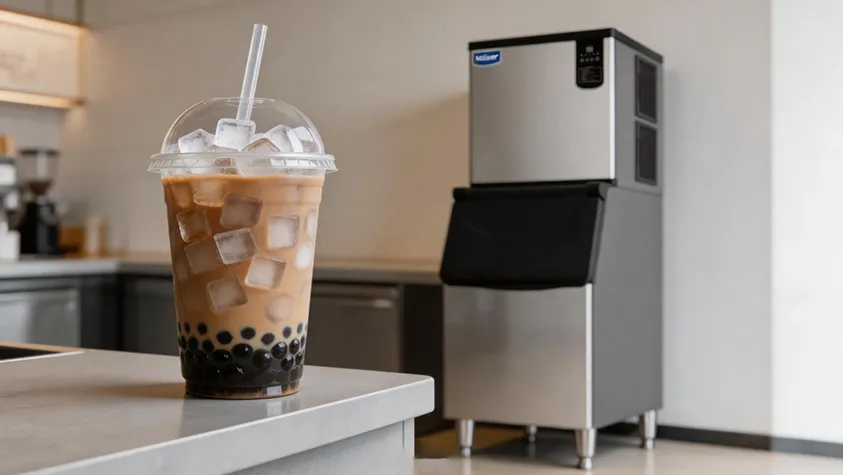
In the competitive world of specialty beverage retail, consistency is the ultimate driver of customer loyalty. Bubble tea operators spend months perfecting the balance of heavy brown sugar syrups, delicate matcha powders, and high-fat dairy or plant-based creamers. Yet, many new store owners overlook the single most reactive ingredient in their plastic cups: the ice.
If you are currently researching the best ice machine for bubble tea shop deployments, you must look beyond raw production capacity. You need to focus heavily on ice melt mechanics.
Why does ice clarity matter so much for boba tea? Standard, low-tier commercial ice makers produce cloudy, weak ice cubes filled with trapped microscopic oxygen bubbles. When these fragile cubes are shaken or submerged in a rich milk tea base, they dissolve almost instantly.
This rapid melting introduces chaotic water runoff that quickly breaks down milk fat emulsions. Within five minutes of walking out your door, your customer is left with a separated, watery, and bland beverage. Investing in the best ice machine ensures your signature flavor profiles remain intact from the first sip to the last pearl.
In this guide, you will learn:
Why Bubble Tea Shops Need to Obsess Over Their Ice
Most new shop owners spend weeks selecting tea suppliers, testing syrup ratios, and perfecting their pearl cooking times. Then they buy whatever ice machine fits the budget and never think about it again. That’s a mistake, and it’s one that quietly costs them repeat customers.
Think about the lifecycle of a bubble tea. Someone orders a mango fruit tea, takes a photo for social media, then sips it over the next twenty or thirty minutes while they walk, chat, or scroll through their phone. If the ice in that cup is cloudy and soft, three things happen. First, the drink looks unremarkable in the photo — and in a world where a drink’s Instagrammability directly drives foot traffic, that matters. Second, the ice melts fast, turning the last third of the tea into a watery, diluted version of what the customer paid for. They won’t complain. They just won’t come back as often. Third, when they chew through a mouthful of boba, they’ll accidentally crunch through the ice too — and that soft, unexpected texture disrupts the whole experience.
Cloudy ice has another problem that most guides skip: trapped air and minerals in the center of each cube release into the drink as the ice melts, subtly changing the flavor profile. In a spirit-forward cocktail, that might go unnoticed. In a delicate jasmine green tea or a fruit tea balanced with precise syrup ratios, it’s detectable — and it’s not the taste you worked hard to create.
For the owner who has invested time and money in sourcing high-quality tea leaves and fresh fruit, serving those ingredients over cloudy, fast-melting ice undoes much of that work. The right best ice machine preserves the product integrity from the first sip to the last.
What Makes Ice Crystal-Clear Instead of Cloudy? The Science That Matters for Your Shop

Most new shop owners spend weeks selecting tea suppliers, testing syrup ratios, and perfecting their pearl cooking times. Then they buy whatever ice machine fits the budget and never think about it again. That’s a mistake, and it’s one that quietly costs them repeat customers.
Think about the lifecycle of a bubble tea. Someone orders a mango fruit tea, takes a photo for social media, then sips it over the next twenty or thirty minutes while they walk, chat, or scroll through their phone. If the ice in that cup is cloudy and soft, three things happen. First, the drink looks unremarkable in the photo — and in a world where a drink’s Instagrammability directly drives foot traffic, that matters. Second, the ice melts fast, turning the last third of the tea into a watery, diluted version of what the customer paid for. They won’t complain. They just won’t come back as often. Third, when they chew through a mouthful of boba, they’ll accidentally crunch through the ice too — and that soft, unexpected texture disrupts the whole experience.
Cloudy ice has another problem that most guides skip: trapped air and minerals in the center of each cube release into the drink as the ice melts, subtly changing the flavor profile. In a spirit-forward cocktail, that might go unnoticed. In a delicate jasmine green tea or a fruit tea balanced with precise syrup ratios, it’s detectable — and it’s not the taste you worked hard to create.
For the owner who has invested time and money in sourcing high-quality tea leaves and fresh fruit, serving those ingredients over cloudy, fast-melting ice undoes much of that work. The right best ice machine preserves the product integrity from the first sip to the last.
Full Cube vs. Cylindrical Ice: Which Is the Right Ice for Your Bubble Tea Menu?
Not all bubble tea shops serve the same menu, and the ice that works perfectly for a classic milk tea might not be the best fit for a shop that specializes in thick, blended smoothies. The two ice types worth considering are full cube ice and cylindrical ice — and they serve different purposes.

Full Cube Ice (22×22×22mm) — The Gold Standard for Tea-Based Drinks
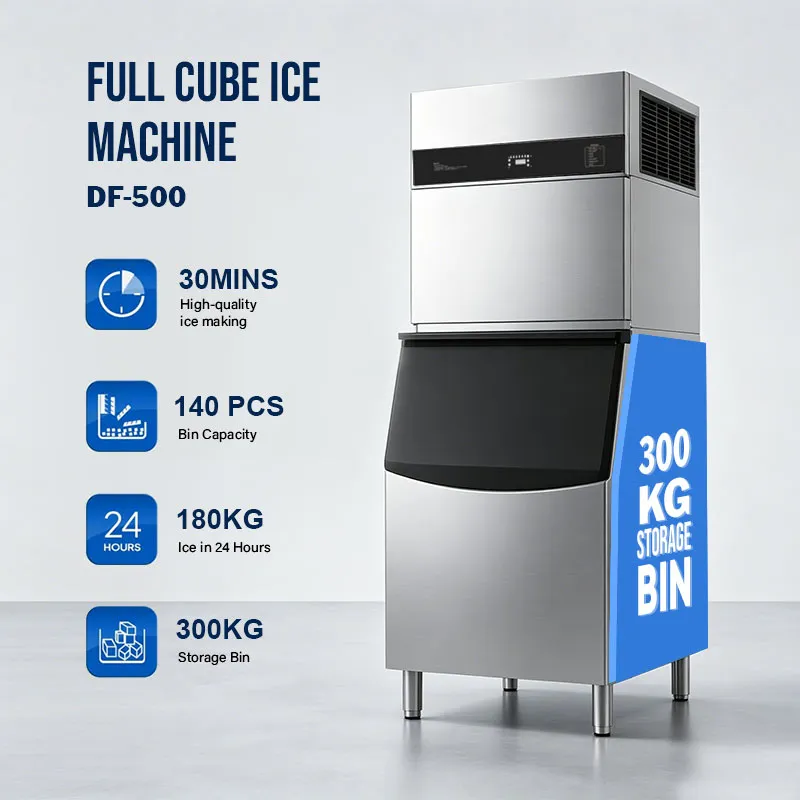
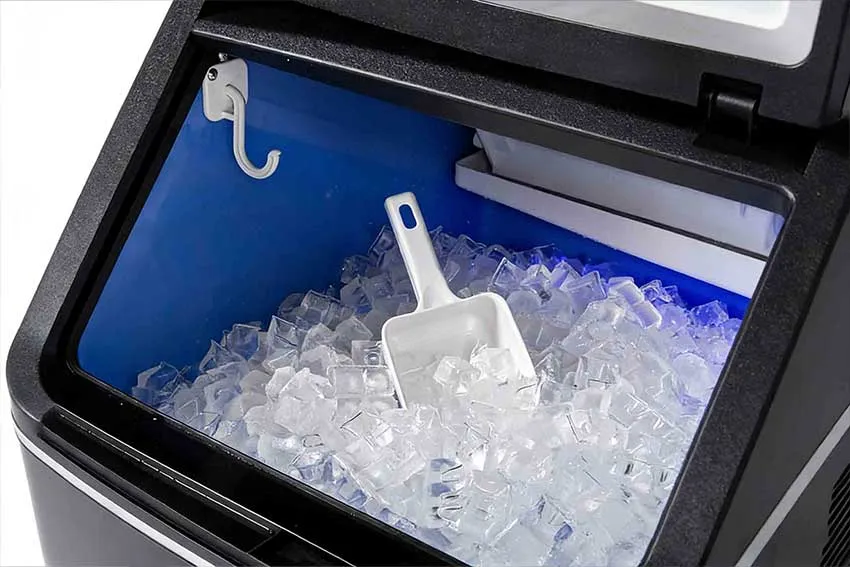
Full cube ice is hard, clear, and slow-melting. Its large, uniform shape gives it the smallest surface-area-to-volume ratio among commercial ice types, which means it melts slower than any other ice shape. In a classic milk tea, a jasmine fruit tea, or a cheese tea — drinks that are meant to be sipped over 20 to 30 minutes — full cube ice preserves the flavor balance from the first sip to the last. It also holds its shape when a customer chews through boba, so there’s no unexpected crunch of broken ice disrupting the rhythm of the drink.
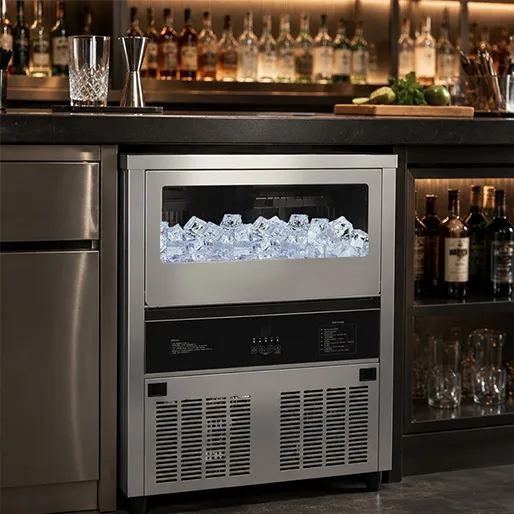
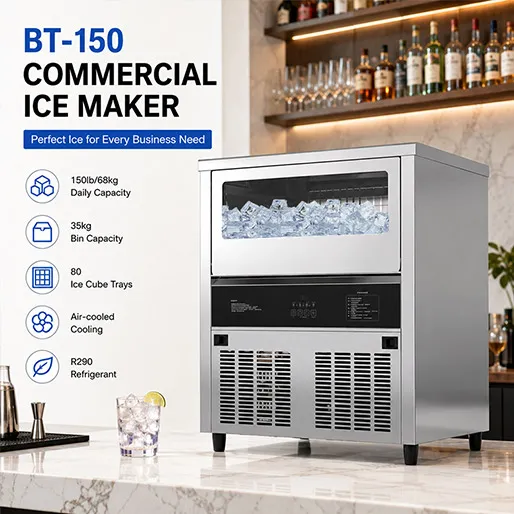
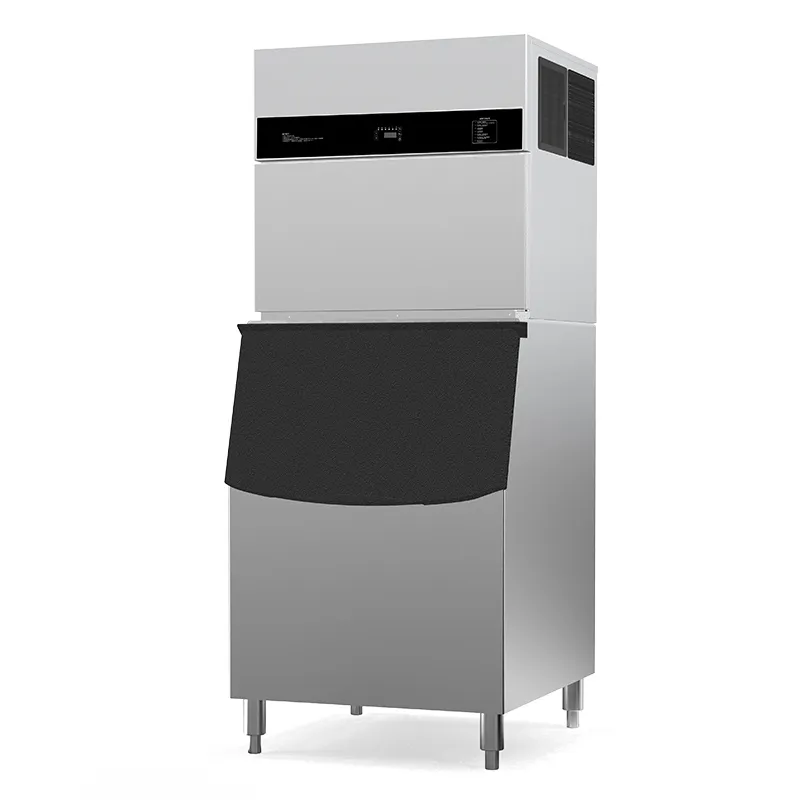
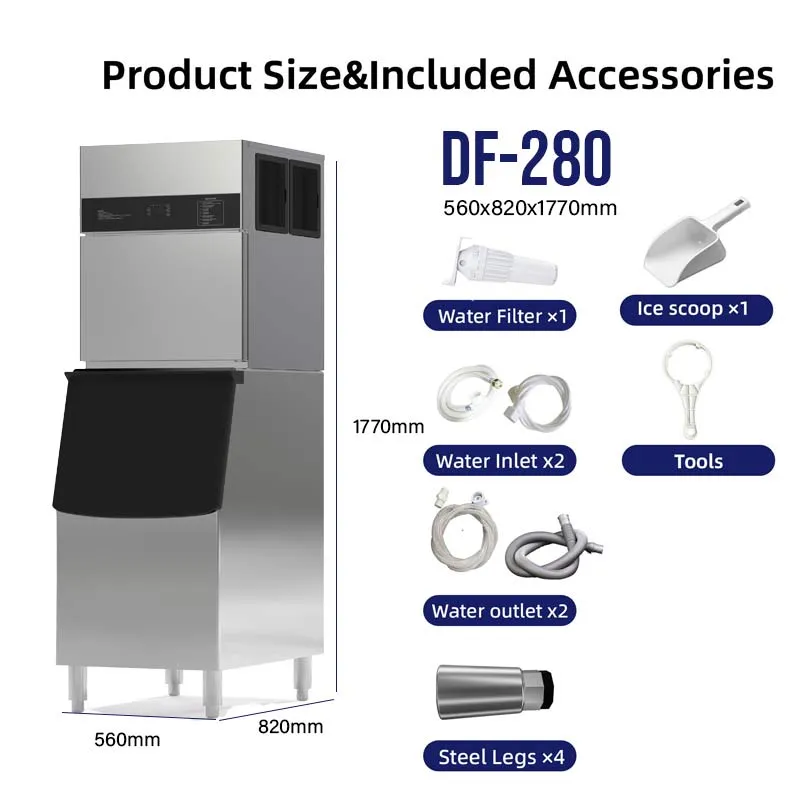
For shops where tea-based drinks make up the majority of the menu, a full cube ice machine like the Naixer TH-280B (280–300 lbs/day) or TH-500B (500 lbs/day) is the clear choice. Both are self-contained units with built-in storage bins, which means no separate bin to purchase — a hidden cost that modular systems from Hoshizaki and Scotsman often add as a separate line item. If your shop is smaller, the TH-280B covers about 400–500 drinks per day with room to spare. If you’re doing higher volume, the TH-500B gives you capacity for 800–1,000 drinks daily. For a deeper understanding of how different ice shapes perform across various commercial settings, our guide to commercial ice types breaks down every option in detail.

Cylindrical Ice (30×30×25mm, Hollow Center) — Perfect for Smoothies and Blended Drinks
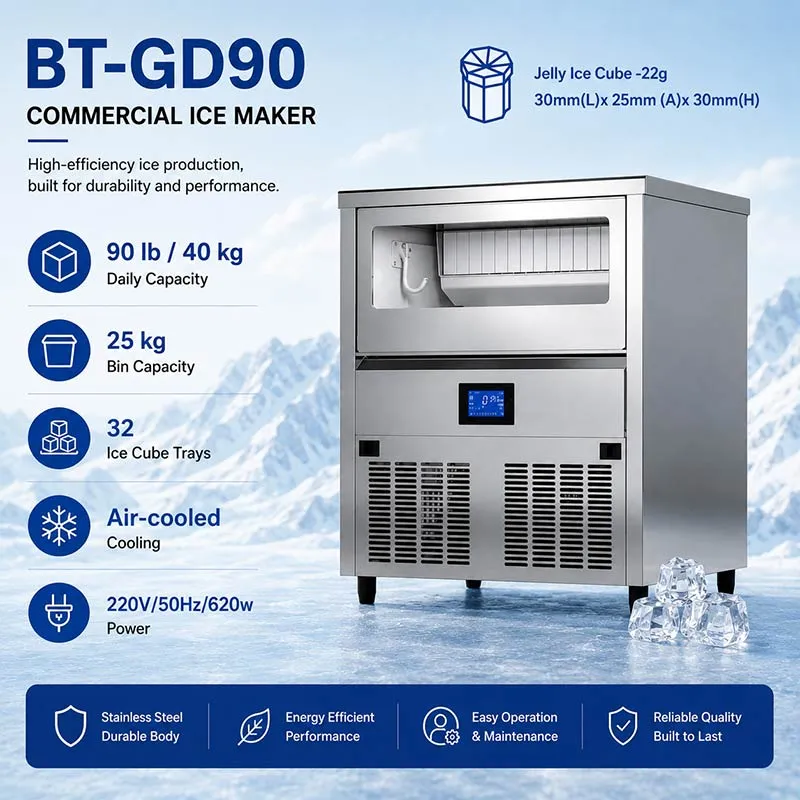
Cylindrical ice — sometimes called jelly ice — is soft, chewable, and has a distinctive hollow center. That hollow core isn’t a manufacturing defect; it’s the feature that makes this ice type behave so differently. The open center increases the ice’s surface area dramatically, which means drinks chill faster and the ice absorbs the flavor of whatever it’s blended with. For a thick mango smoothie or a taro blended drink, that flavor absorption is an asset — the ice becomes part of the drink rather than just a cooling agent.
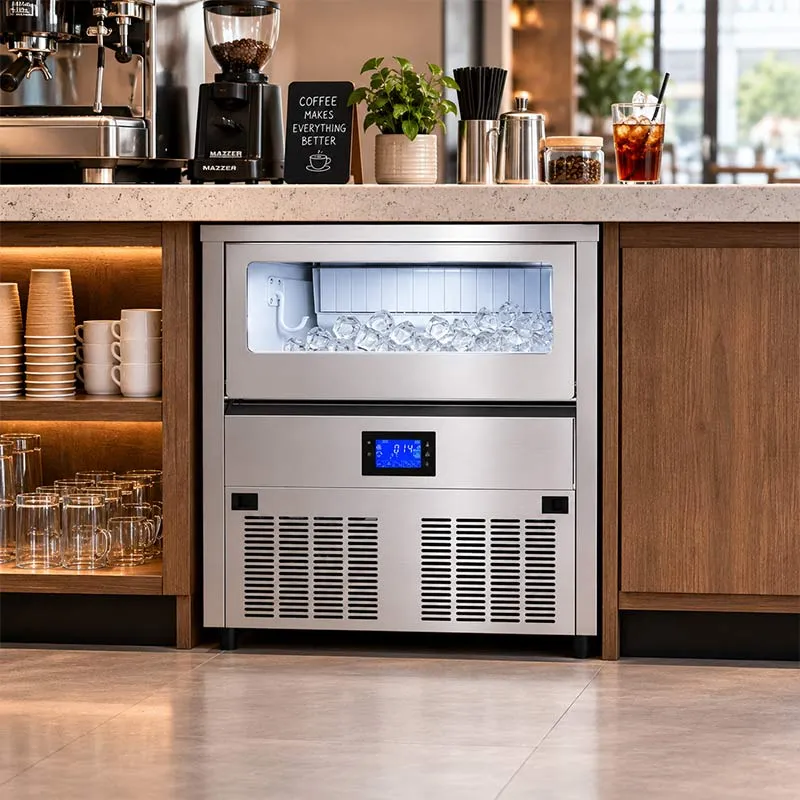
Naixer’s GD series produces this type of ice. The TH-GD90 (90 lbs/day) is sized for a smaller shop or a secondary ice station, while the TH-GD140 (140 lbs/day) covers higher smoothie and blended drink demand. Both include built-in bins and carry the same 3-year full machine warranty as the TH series.
How to Decide
If your menu is 80% tea-based drinks and 20% smoothies, buy a TH series full cube machine as your primary unit. If you’re 50/50, run both types — a full cube machine for the teas and a cylindrical ice machine for the blended drinks. The ice in the cup is part of the product, and using the wrong type for a given drink is like serving a hot latte in a plastic cup: it works, but it’s not right.
How to Size Your Bubble Tea Shop's Ice Machine So You Never Run Out
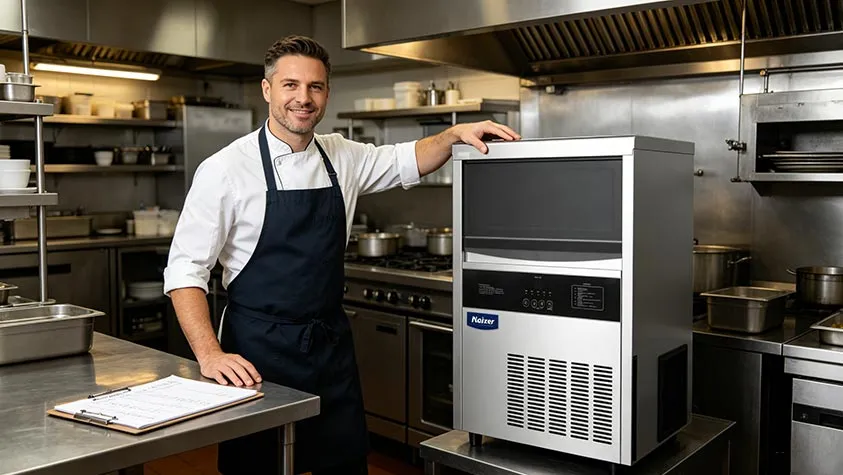
An ice machine that’s too small will fail you on a hot Saturday afternoon when the line is out the door. One that’s too large wastes money on equipment and energy you didn’t need to spend. The sizing formula for a bubble tea shop is straightforward, but it’s worth running the numbers rather than guessing.
The Formula
Start with your estimated daily drink count on a busy day — not an average Tuesday. Multiply by 0.3 to 0.5 lbs of ice per drink (a typical bubble tea uses roughly that amount, with blended drinks on the higher end and iced teas on the lower end). Then add a 20% buffer for peak surges and summer demand.
For example, a shop that sells 200 drinks on a busy day: 200 × 0.4 lbs × 1.2 = roughly 96 lbs of ice needed per day. A machine rated at 280–300 lbs, like the Naixer TH-280B, gives you plenty of headroom without being oversized.
Quick Sizing Guide
100 drinks/day: 36–60 lbs of ice → TH-280B (plenty of room to grow)
200 drinks/day: 72–120 lbs of ice → TH-280B or TH-320B
300 drinks/day: 108–180 lbs of ice → TH-420B or TH-500B
500+ drinks/day: 180–300 lbs of ice → TH-700B
If you also need cylindrical ice for smoothies: Add a TH-GD90 or TH-GD140 as a secondary machine
This same sizing logic applies directly to coffee shops, which have nearly identical ice demands. A coffee shop ice machine should follow the same per-drink formula — iced lattes, cold brews, and blended frappés all consume ice in similar quantities. An operator who runs both a bubble tea brand and a coffee concept can standardize on Naixer’s TH series across both locations, which simplifies maintenance, parts stocking, and staff training. If you’re curious about how ice machines fit into a broader equipment budget, our restaurant ice machine cost guide covers purchase price, installation, and ongoing operating expenses in detail.
One installation note from the Naixer manual worth paying attention to: Your machine needs at least 5 cm of ventilation clearance on all intake and exhaust sides, and 10 cm if ambient temperatures can exceed 38°C. A bubble tea shop kitchen — often compact and warm from multiple appliances — can easily push a poorly placed ice machine beyond its rated operating range, which reduces daily output and shortens the machine’s life. Give it room to breathe.
Why Naixer Ice Machines Are Built for Beverage Shops That Care About Quality
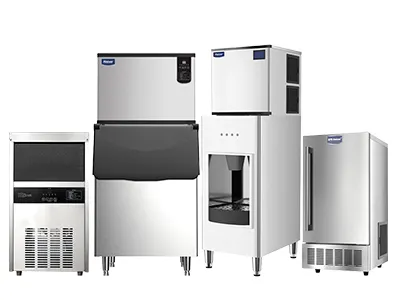
A bubble tea shop’s ice machine runs every single day, often for 10 to 14 hours straight during summer. It needs to produce consistent, clear ice through all of those hours without requiring constant attention. That’s the engineering standard Naixer builds to.
Every Naixer ice machine — whether a TH series full cube unit or a GD series cylindrical ice maker — is designed and assembled in a 30,000 m² ISO9001-certified facility, one of the largest dedicated commercial ice machine factories in the world. Over 200 technicians, more than 300 active technical patents, and an annual production capacity exceeding 200,000 units form the manufacturing backbone. Before any machine ships, it passes automated cooling performance verification, helium leak detection on the refrigeration circuit, electrical safety testing, and an extended burn-in under simulated extreme conditions.
All ice-contact surfaces are SUS304 food-grade stainless steel, meeting CE, RoHS, and CB international hygiene standards — which matters when your local health inspector visits and when your customers trust that their ice is as clean as it looks.
Three practical things that set Naixer apart for a bubble tea shop owner:
Self-contained design with built-in storage. No separate bin to purchase, no $600–$1,500 hidden cost that modular systems from Hoshizaki and Scotsman often add. One delivery, one installation, one warranty.
A 3-year full machine warranty covering core systems and key components. In an industry where many compact commercial ice machines ship with just 12 months of coverage, that extended protection directly reduces your ownership risk.
Factory-direct pricing. No distributor markup. You pay for the engineering and materials, not for a multi-tier distribution chain.
The same manufacturing infrastructure serves KFC and Luckin Coffee in over 100 countries — brands that don’t tolerate equipment that underperforms during peak service. For a bubble tea shop owner who needs reliability and ice quality in equal measure, that track record matters.
Frequently Asked Questions
Q: What is the best ice machine for a bubble tea shop?
A: A self-contained full cube ice machine that produces crystal-clear, slow-melting 22×22×22mm cubes. This ice type preserves tea flavor, looks premium in photos, and holds its shape when customers chew through boba. Naixer’s TH series covers 280 to 1,200 lbs per day, with built-in storage bins that eliminate the separate bin purchase required by many modular systems.
Q: Why is clear ice better for bubble tea than cloudy ice?
A: Clear ice is denser than cloudy ice because it contains no trapped air pockets. It melts significantly slower, which means your tea stays cold and concentrated for 20 to 30 minutes instead of turning watery after 10. It also looks better — customers notice the difference, and they photograph drinks that look good. Additionally, clear ice is flavor-neutral; cloudy ice can release trapped minerals into the drink as it melts.
Q: Should I choose full cube ice or cylindrical ice for my bubble tea shop?
A: It depends on your menu. If you primarily sell tea-based drinks — milk tea, fruit tea, cheese tea — full cube ice is the better choice because it melts slower and won’t be accidentally chewed through when customers eat their boba. If your menu is heavy on smoothies and blended drinks, cylindrical ice absorbs flavor and blends more easily. Many shops run both types.
Q: How do I size an ice machine for a coffee shop or bubble tea shop?
A: Use this formula: daily drinks × 0.3–0.5 lbs per drink × 1.2 (20% peak buffer) = daily ice production needed. A shop serving 200 drinks per day needs roughly 96 lbs of ice daily. Both bubble tea shops and coffee shop ice maker machines follow this same sizing logic because their per-drink ice consumption is nearly identical.