Best Crescent Cube Ice Maker: How to Choose the Right One for Your Business
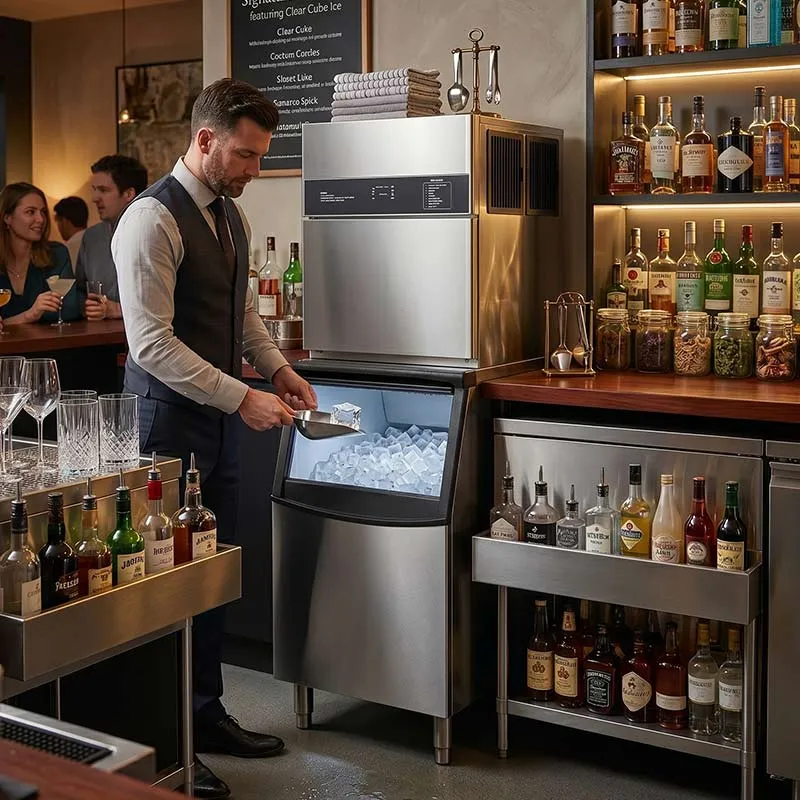
Walk into a hotel lobby bar at 6 p.m. on a Friday. The bartender reaches into the ice well, pulls out a scoop of crescent-shaped ice — half-moon curves, soft edges, each piece roughly the size of a small almond — and drops it into a glass of sparkling water. The ice fills the glass almost completely, leaving just enough room for the liquid. That’s the quiet advantage of crescent cube ice: it displaces less liquid per piece, so a drink looks fuller, tastes stronger, and stays cold longer without watering down.
That’s the kind of detail that separates a well-run bar from an average one. And it’s why crescent cube ice makers have become the standard in hotels, cafeterias, and any operation where drinks are served quickly and in volume.
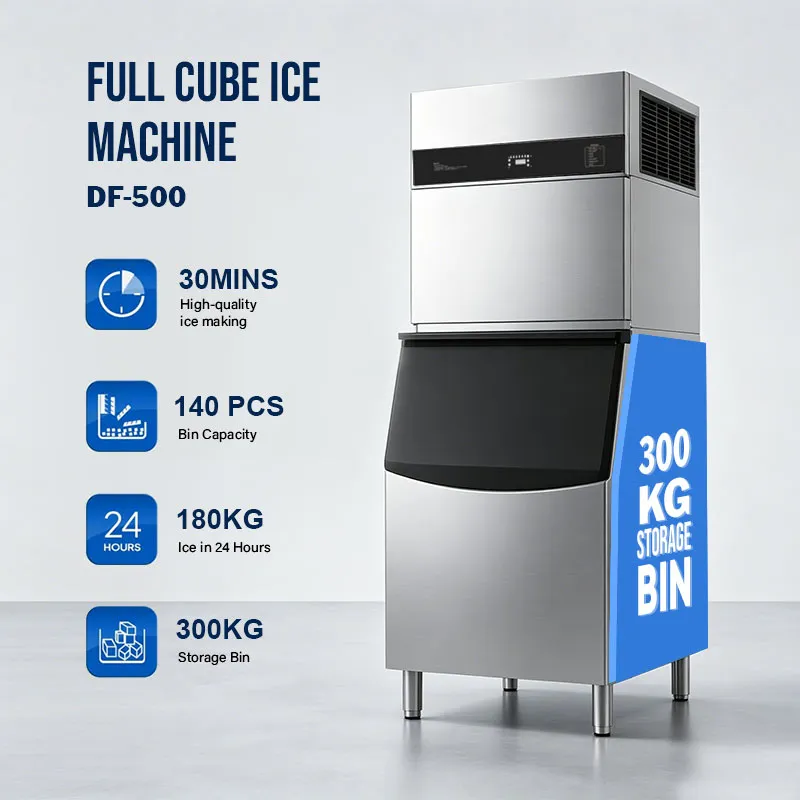
Quick Answer: The best crescent cube ice maker depends on your daily production needs and installation constraints. For smaller venues — cafés, boutique hotels, offices — a built-in bin crescent ice machine like the Naixer SE-65 produces 65 kg per day with a 36 kg internal storage bin and requires no drain line. For larger operations — full-service hotels, banquet halls, high-volume restaurants — split-type units like the Naixer SE-300, SE-500, and SE-1500 produce 300 to 700 kg per day, paired with a separate storage bin. Crescent ice is generally preferred over full cube ice in mixed drinks, sodas, and water service because its curved shape fills a glass more efficiently, but full cube ice remains the better choice for spirits served neat and bagged retail ice. For a broader comparison of ice shapes and their best applications, see our guide to commercial ice types.
In this guide, you will learn:
What Is Crescent Cube Ice — and Why It Matters for Your Drinks

Crescent cube ice is a specific shape, not a generic term. Each piece is roughly 38 millimeters long, 30 millimeters wide, and 18 millimeters thick, with a distinct half-moon curve on one side and a flatter surface on the other. The shape is produced by a horizontal evaporator grid that freezes water in curved cells, then releases the ice when each piece reaches the right thickness.
That curve isn’t cosmetic. It affects three things that matter in commercial beverage service.
First, liquid displacement. A crescent cube’s curved shape takes up more volume per piece than a flat cube of similar weight. When you fill a glass with crescent ice, you use fewer pieces to reach the top — which means more room for the actual drink. For a bar serving hundreds of drinks per shift, that adds up to meaningful savings on every beverage.
Second, melt rate. Crescent ice is denser than nugget or flake ice, so it melts more slowly. A glass of iced tea or sparkling water stays cold for twenty to thirty minutes without becoming diluted. That’s important for any venue where guests sip their drinks slowly — hotel lobbies, restaurants, and cafeterias especially.
Third, visual appeal. The distinctive half-moon shape catches light differently than a standard cube. It looks deliberate and polished in a glass, and it signals to guests that the venue pays attention to details. For hotels and upscale cafés, that visual cue matters more than most operators realize.
For a deeper look at how crescent ice compares to full cube, nugget, and flake ice across different drink applications, see our guide to commercial ice types.
Crescent Cube vs Full Cube — Which Ice Shape Is Right for Your Menu

The two most common commercial ice shapes are crescent cube and full cube. They’re not interchangeable, and the right choice depends on what you serve.
Full cube ice — the classic 22×22×22mm solid square — is the slowest-melting shape and the standard for spirits served neat or on the rocks, bagged retail ice, and any drink where dilution control matters most. Its flat faces allow it to stack tightly in a glass, but they also mean less efficient liquid displacement.
Crescent cube ice, with its curved half-moon shape, melts at a similar rate but fills a glass more efficiently. It’s the standard for carbonated drinks, iced tea, water service, and any beverage where you want the glass to look full without using an excessive amount of ice.
The table below summarizes the key differences. It’s built as responsive HTML that collapses into a stacked layout on small screens.
| Factor | Crescent Cube Ice | Full Cube Ice |
|---|---|---|
| Shape | Half-moon curve, one flat side | Solid cube, six flat faces |
| Typical Size | ~38×30×18 mm | ~22×22×22 mm |
| Melt Rate | Slow | Slowest |
| Liquid Displacement | Excellent — fills glass efficiently | Good — stacks tightly |
| Best For | Mixed drinks, sodas, water service, self-serve dispensers | Spirits neat, bagged retail ice, cocktails |
| Visual Appeal | Distinctive, polished | Classic, high clarity |
The decision rule is simple. If your menu is built around carbonated drinks, iced tea, water service, or self-serve beverage stations, crescent ice is the better fit. If your menu is built around spirits served neat, craft cocktails, or bagged retail ice, full cube ice is the better choice. Many operations — especially hotels with both a bar and a cafeteria — run both machines, each serving the area it was designed for.
Where Crescent Cube Ice Works Best — By Business Type

Crescent ice isn’t a universal solution. It’s a specific shape for specific applications. Here’s how it maps to the most common commercial settings.
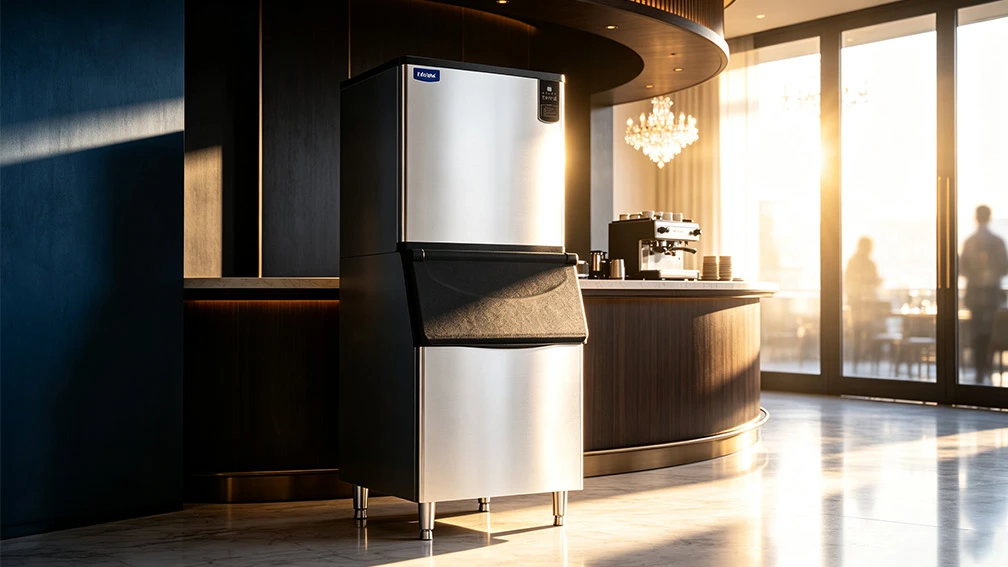
Hotels and resorts. Crescent ice is the standard for guest-floor ice stations, breakfast buffets, and lobby bars. Its curved shape prevents clumping in storage bins, so it dispenses smoothly even after sitting for hours. A guest filling a bucket at 11 p.m. doesn’t want to wrestle with a frozen block of ice — crescent ice flows freely every time. For a complete walkthrough of matching ice machines to every zone of a hotel, see our hotel ice machine guide.
Cafés and coffee shops. Iced lattes, cold brew, and fruit teas benefit from crescent ice’s slow melt and efficient glass fill. A café serving 200 cold drinks on a summer Saturday needs an ice machine that keeps up without diluting the coffee. The SE-65, with its 65 kg daily capacity and built-in 36 kg bin, is sized for most independent cafés. For more on coffee shop ice selection, see our coffee shop ice machine guide.
Restaurants and bars. Mixed drinks, sodas, and water service all benefit from crescent ice. A busy restaurant with a full bar might run a split-type SE-300 to supply both the bar and the dining room. The split-type design allows the ice-making head to be placed in a back room while the storage bin sits near the bar, so the machine runs without noise or heat in the guest-facing area.
Cafeterias and corporate campuses. Crescent ice is the right shape for self-serve beverage stations. Its non-clumping properties mean the dispenser works every time, even during a 15-minute lunch rush with hundreds of people. For campus-wide ice planning, see our corporate campus ice solutions guide.
Healthcare facilities. Patient floor ice stations, nursing stations, and cafeteria service all use crescent ice. It’s the shape that dispenses reliably, and it’s the shape that patients can chew comfortably. For healthcare-specific requirements, see our hospital ice dispenser guide.
Self-Contained vs Split Type — Which Crescent Ice Machine Fits Your Space

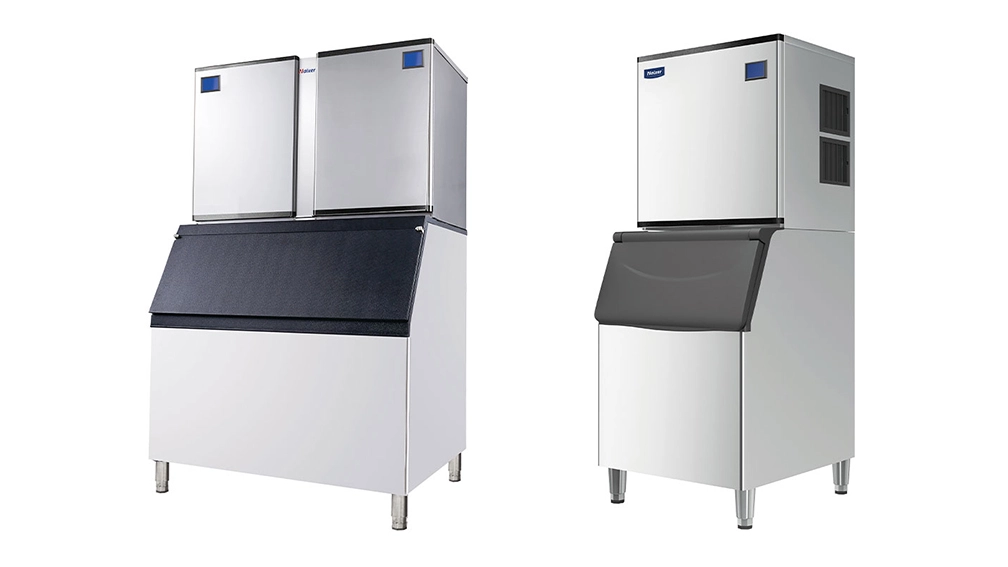
Naixer produces crescent ice machines in two architectures: built-in bin units and split-type units. The right choice depends on your available space, your daily production needs, and whether you can run a drain line to the installation location.
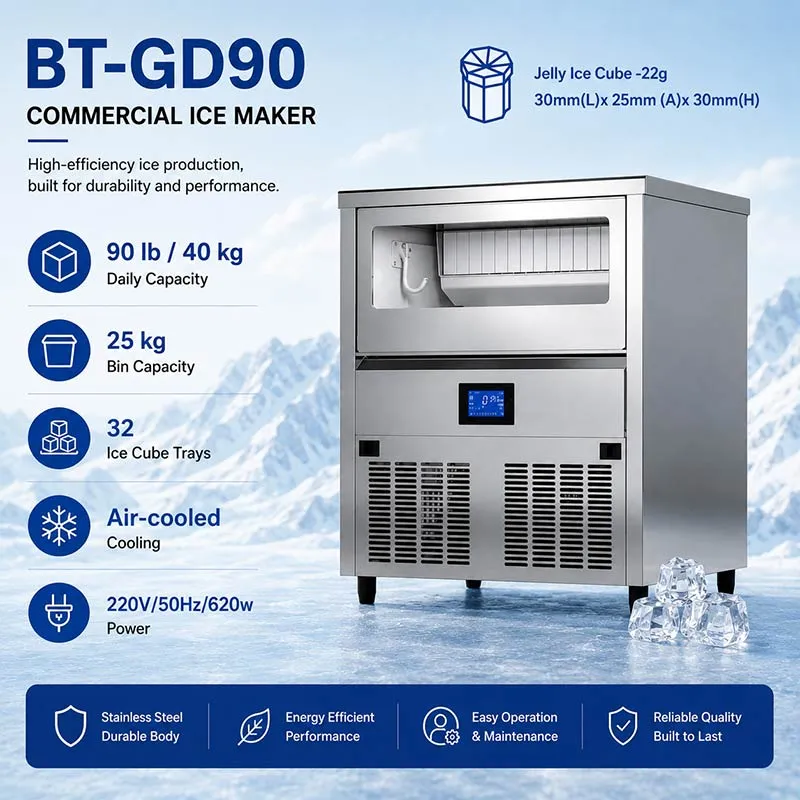
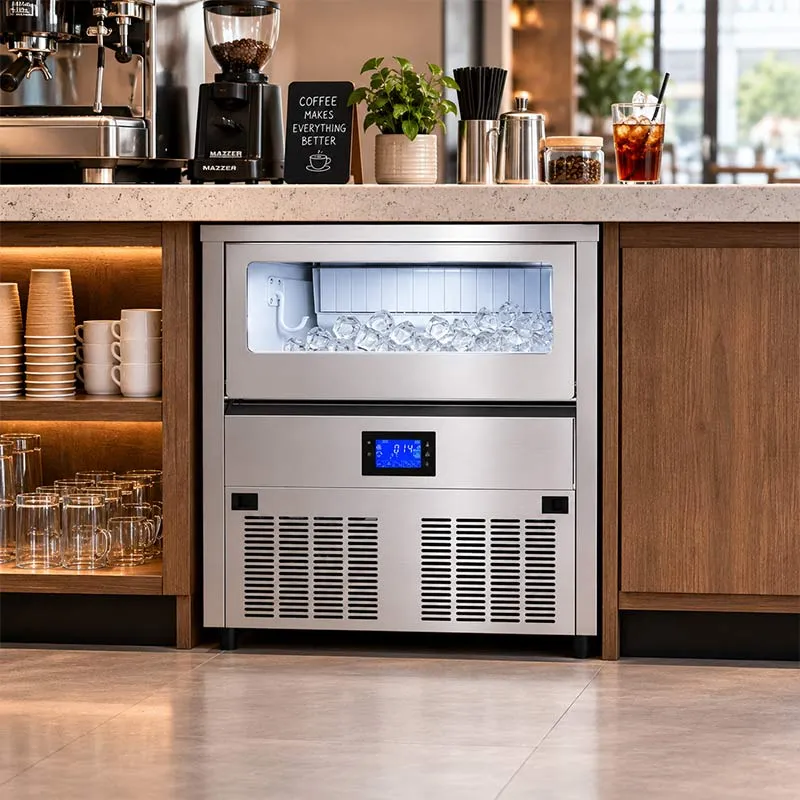
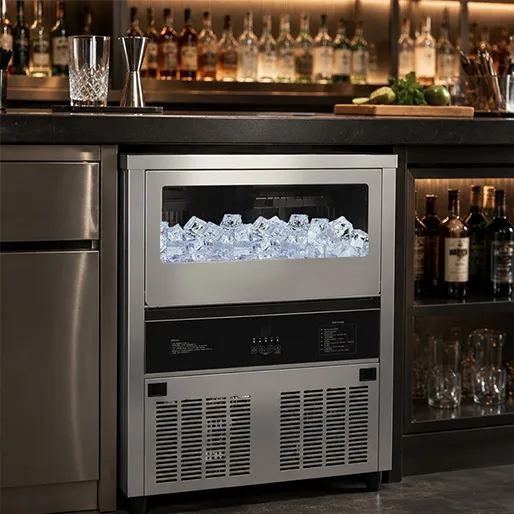
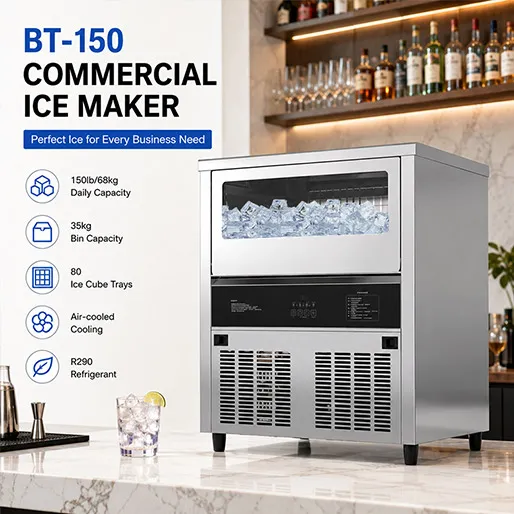
The built-in bin design integrates the ice-making head and storage bin into a single cabinet. The Naixer SE-65 is the entry point in this category: 65 kg daily production, a 36 kg internal storage bin, front-ventilated for zero-clearance installation, and — critically — no drain line required. That last detail makes the SE-65 viable in locations where running a drain would be expensive or impossible: small cafés, office breakrooms, under-counter installations, and any space where the machine needs to sit flush against a wall.
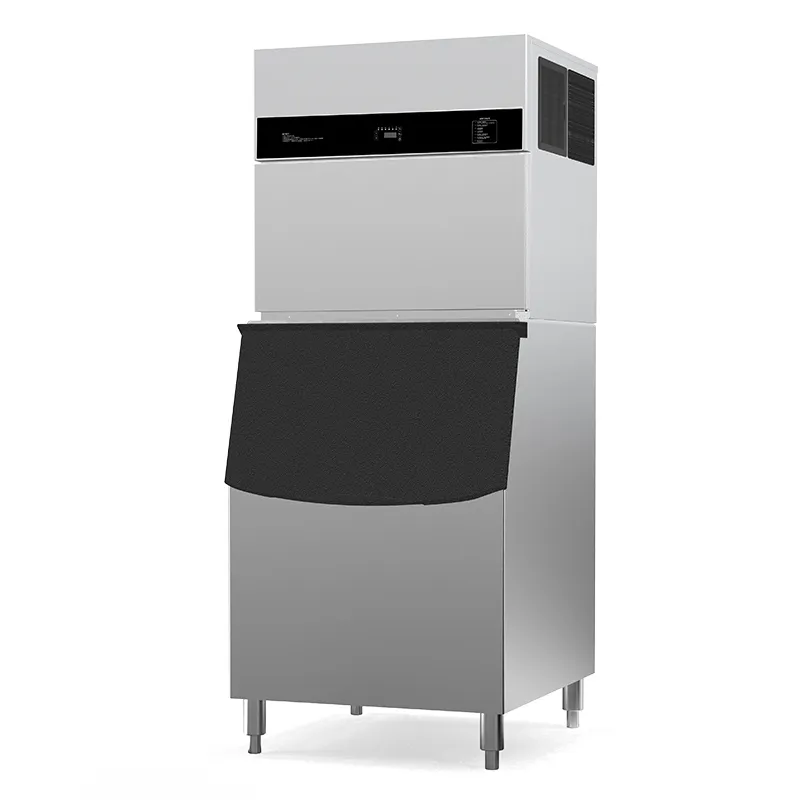
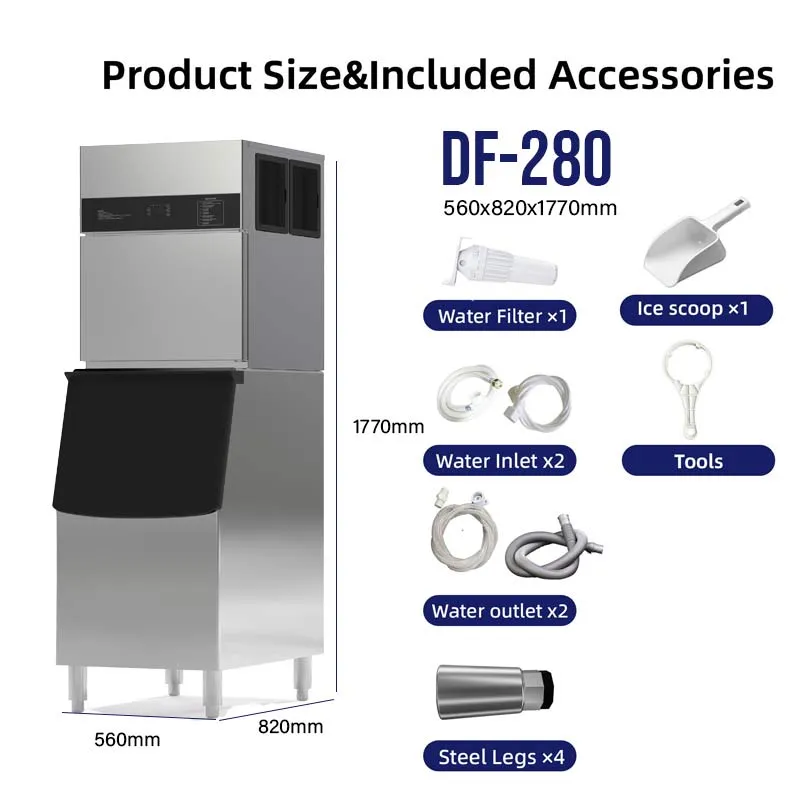
The split-type design separates the ice-making head from the storage bin. The head can be placed in a back room or utility area, while the bin sits at the point of use. This is the standard architecture for high-volume operations: hotels, banquet halls, large restaurants, and any venue where daily production exceeds what a built-in bin can hold. Naixer’s split-type crescent machines — the SE-300, SE-500, and SE-1500 — produce 300 to 700 kg per day and pair with storage bins sized to match the operation.
The table below compares the two architectures. It’s built as responsive HTML and collapses into a stacked card layout on mobile.
| Factor | Built-In Bin (SE-65) | Split Type (SE-300 / 500 / 1500) |
|---|---|---|
| Storage Bin | 36 kg integrated | Separate bin, sized to operation |
| Drain Line | Not required | Required |
| Installation | Front-ventilated, zero-clearance, under-counter or freestanding | Head in back room, bin at point of use |
| Daily Production | 65 kg | 300–700 kg |
| Best For | Cafés, small bars, offices, boutique hotels | Full-service hotels, banquet halls, high-volume restaurants |
How to Size a Crescent Cube Ice Maker for Your Operation
The sizing formula for crescent ice machines is the same as for any commercial ice machine — but the numbers depend on your business type.
Full-service restaurants should plan for 1.5 to 2 pounds of ice per customer on the busiest day of the year. Bars should calculate 3 pounds per seat. Hotels should plan for 5 pounds per room. Cafés should estimate 0.3 to 0.5 pounds per cold drink.
Always size for the busiest day, not the average, and add a 20 percent peak buffer. A hotel with 120 rooms needs roughly 600 pounds of daily ice production for guest floors alone — plus additional capacity for the lobby bar and any food service. A café selling 200 cold drinks on a summer Saturday needs roughly 96 to 120 pounds.
For a complete walkthrough of capacity planning across different foodservice operations, see our guide to choosing a commercial ice maker.
Naixer Crescent Ice Machine Lineup
Naixer’s crescent ice series covers the full range of commercial production needs, from compact built-in units to high-capacity split systems. Every model uses a nickel-plated evaporator for scale resistance, frequency conversion refrigeration for energy efficiency, and produces the same distinctive half-moon crescent shape.
| Model | Cooling | Daily Output | Storage Bin | Best For |
|---|---|---|---|---|
| SE-65 | Air-Cooled | 65 kg / 143 lb | 36 kg built-in | Cafés, small bars, offices, boutique hotels |
| SE-300 | Water-Cooled | 300 kg / 660 lb | Split type | Mid-size hotels, restaurants, cafeterias |
| SE-500 | Water-Cooled | 500 kg / 1,100 lb | Split type | Large hotels, banquet halls, high-volume restaurants |
| SE-1500 | Water-Cooled | 700 kg / 1,540 lb | Split type | Resorts, convention centers, central production |
Every model is built in Naixer’s 30,000 m² ISO9001-certified factory, with SUS304 food-grade stainless steel on all ice-contact surfaces. The 3-year full machine warranty covers core systems and key components — well beyond the 12-month coverage common on budget alternatives. For a complete breakdown of what commercial ice machines cost to buy, install, and maintain, see our restaurant ice machine cost guide.
Crescent Ice Machine Maintenance — What to Expect

Crescent ice machines are low-maintenance compared to some other ice types, but they still need regular care to keep the ice clear, the evaporator scale-free, and the machine running efficiently.
The most important task is descaling. Naixer’s nickel-plated evaporator resists scale better than uncoated surfaces, but mineral deposits still accumulate over time — especially in hard-water regions. Use a nickel-safe ice machine cleaner every three to six months, depending on water hardness and usage. Never use standard descalers, bleach, or vinegar; they will damage the evaporator coating and void the warranty.
Beyond descaling, replace the water filter every six months (or every three months in hard-water areas), brush the condenser fins quarterly, and wipe down the bin and exterior regularly. For a complete cleaning and maintenance schedule, see our ice machine cleaning guide.
Frequently Asked Questions
Q: What is the best crescent cube ice maker for a hotel?
A: It depends on the size of the property. Boutique hotels and smaller properties with under 80 rooms can use a built-in bin unit like the Naixer SE-65, which requires no drain line and fits under a counter. Larger hotels with multiple guest floors, a lobby bar, and banquet facilities need split-type machines like the SE-300 or SE-500, which produce 300 to 500 kg per day and can supply ice to multiple points of use. For a full walkthrough of hotel ice planning, see our hotel ice machine guide.
Q: Is crescent ice better than full cube ice?
A: Neither is universally better. Crescent ice fills a glass more efficiently and is the standard for mixed drinks, sodas, and water service. Full cube ice melts slightly slower and is the standard for spirits served neat and bagged retail ice. Many hotels and larger restaurants run both machines — one for each application.
Q: How much does a crescent cube ice maker cost?
A: Commercial crescent ice machines range from approximately $1,500 for compact built-in units to $8,000 or more for high-capacity split-type systems. The total cost depends on capacity, cooling method, and whether a storage bin is included. For a complete breakdown of equipment and operating costs, see our restaurant ice machine cost guide.
Q: Can I install a crescent ice machine without a drain line?
A: Yes — the Naixer SE-65 built-in bin unit is designed for installations where a drain line is not available. Its front-ventilated design and integrated bin allow it to operate without a floor drain, making it suitable for under-counter placements in cafés, offices, and other spaces where running a drain would be impractical.
Q: How does Naixer compare to Hoshizaki for crescent ice machines?
A: Both manufacturers produce commercial-grade crescent ice. Hoshizaki’s KM series is the established benchmark, sold primarily through dealer networks as modular head-and-bin systems. Naixer offers both built-in bin and split-type configurations, sells factory-direct, and provides a 3-year full machine warranty. The right choice depends on your installation constraints, capacity needs, and budget.
Q: How often should I clean my crescent ice machine?
A: Deep-clean and descale every three to six months, depending on water hardness. Replace the water filter every six months (or every three months in hard-water areas). Brush the condenser fins quarterly. Wipe down the bin and exterior weekly. For a complete schedule, see our ice machine cleaning guide.