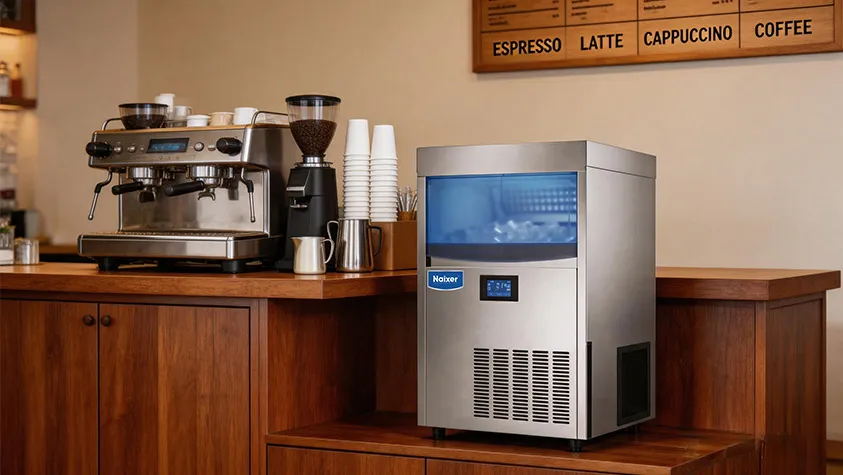
Commercial Ice Maker for Bar: The 2026 Buyer's & Sizing Guide
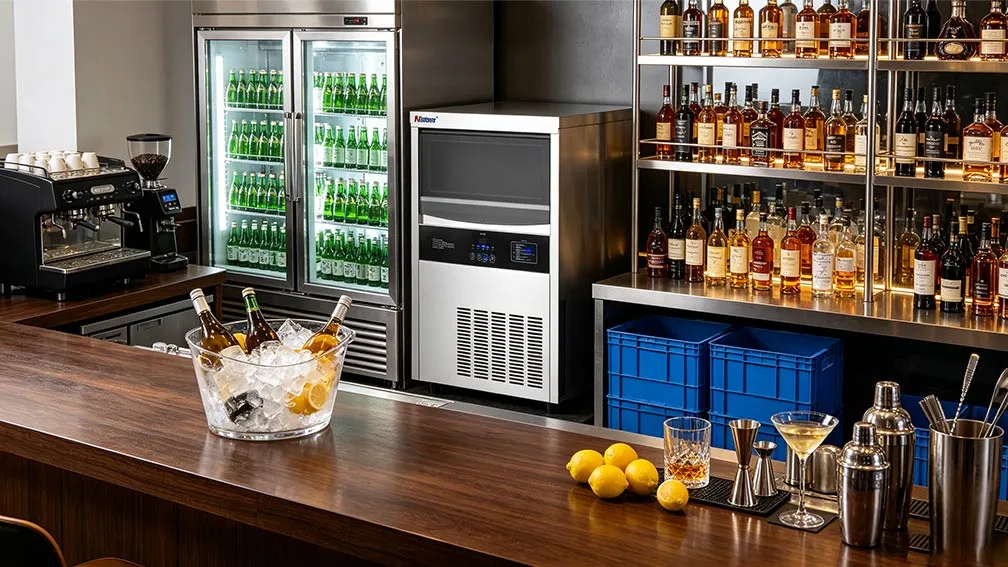
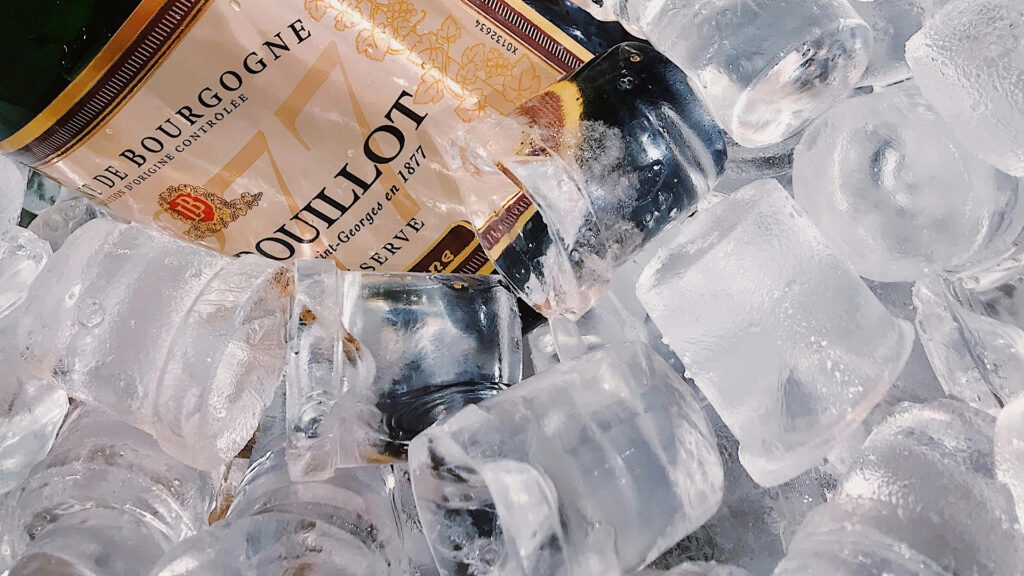
A bar that serves all three of these drinks with the same ice is compromising at least two of them. The right commercial ice maker for bar isn’t one machine that does everything passably. It’s the right set of machines — or the right single machine, matched honestly to the menu — that produces the ice each drink deserves. This guide walks through how to find that match. For a deeper dive into ice types and drink quality, the article on what type of ice is best for a bar covers the science behind every shape.
In this guide, you will learn:
Cube, Crescent, or Gourmet: Matching Your Ice to Your Menu
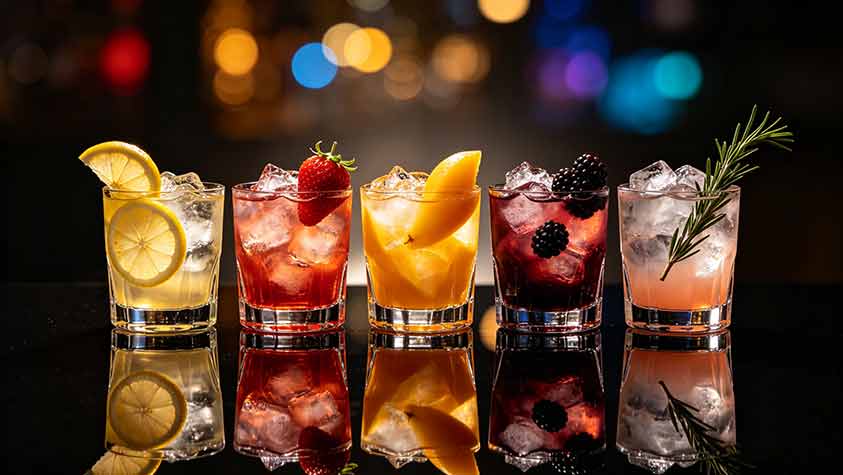
The shape of the ice in a cocktail is not decorative. It controls the rate of dilution, the speed of cooling, and the visual presentation of the drink. For a bar, choosing an ice type is a business decision that affects drink quality, bartender efficiency, and the prices you can charge.
Full Cube Ice: The Reliable Workhorse

For the majority of bars—neighborhood pubs, sports bars, high-volume nightclubs—a full cube ice machine is the right place to start. Standard 22-by-22-by-22-millimeter cubes are dense, slow-melting, and versatile. They work in shaken cocktails like Margaritas and Daiquiris, they work in highballs, and they work in soft drinks. They are the most common ice shape in commercial foodservice for a reason: they do everything well enough.
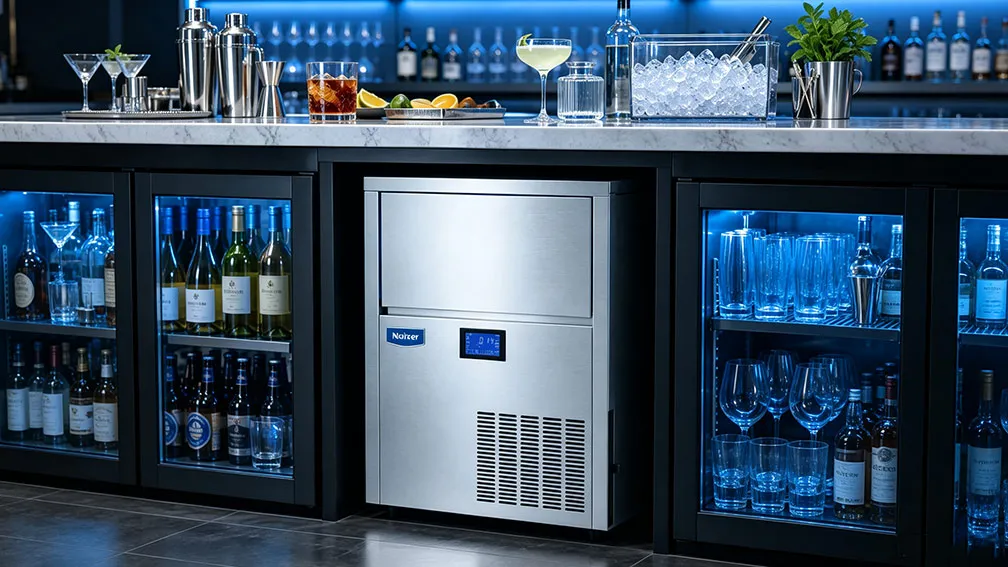
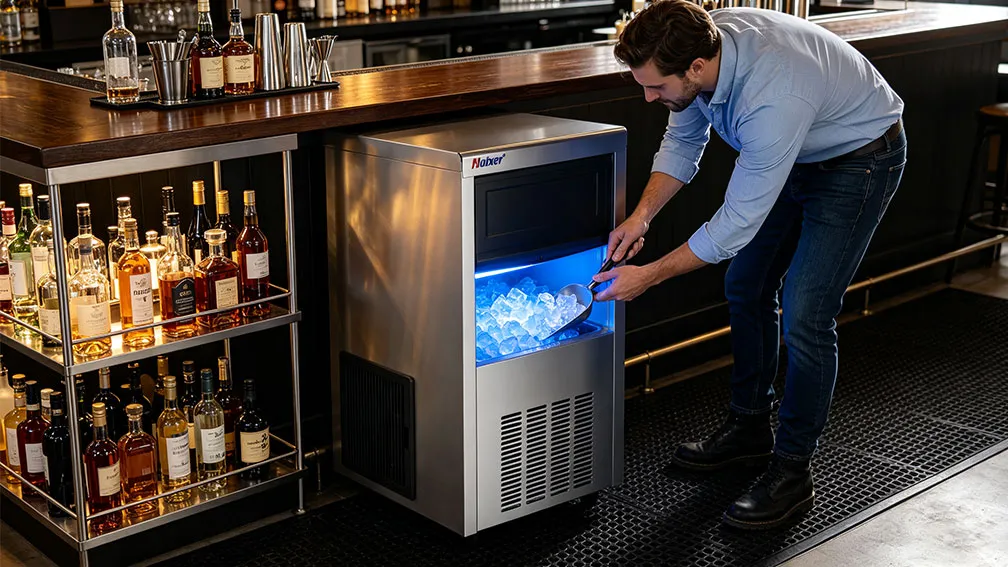
The Naixer TH-150B is a compact undercounter unit that produces 150 pounds of full cube ice per day and stores 45 kilograms on standby, fitting neatly beneath a standard bar counter. For a neighborhood bar with 40 to 60 seats, it is the machine that keeps the well stocked through a Friday night without demanding a dedicated equipment closet. For a larger operation, the Naixer BT-260 pushes undercounter production to 260 pounds per day with 51 kilograms of storage, covering the needs of a busy gastro-pub or a craft beer hall.
Crescent Ice: The Craft Cocktail Upgrade
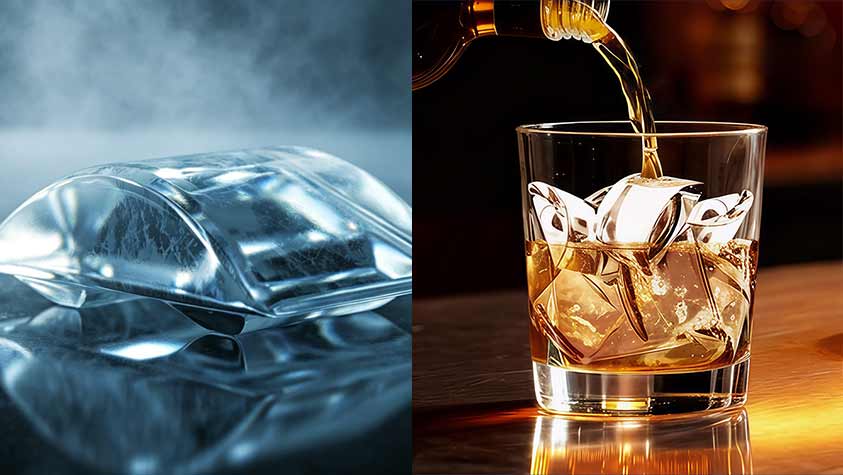
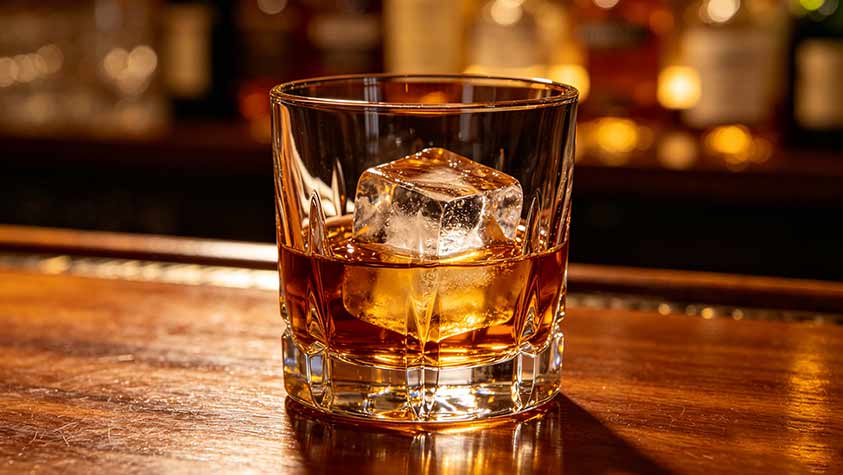
If your bar program is built around spirit-forward cocktails—Old Fashioneds, Negronis, Manhattans—crescent ice is the upgrade that directly improves the drink. Its curved half-moon surface channels hot spirits smoothly around the cube, cooling rapidly without shattering. Because crescent ice is solid all the way through, with no hollow center, it melts slower than standard cubes. The drink stays balanced for 20 minutes or more, and the bartender wastes less product because crescent ice pours without splashing.
The Naixer TH-SE150 produces 150 pounds of crescent ice per day in the same compact undercounter footprint as the TH-150B. It is purpose-built for craft cocktail bars where the quality of the ice is part of the pricing strategy. For a deeper look at how crescent ice fits into a broader bar program, the guide to the best ice machine for cocktail bar evaluates the full range of options.
Gourmet Large Cubes: The Top-Shelf Protector
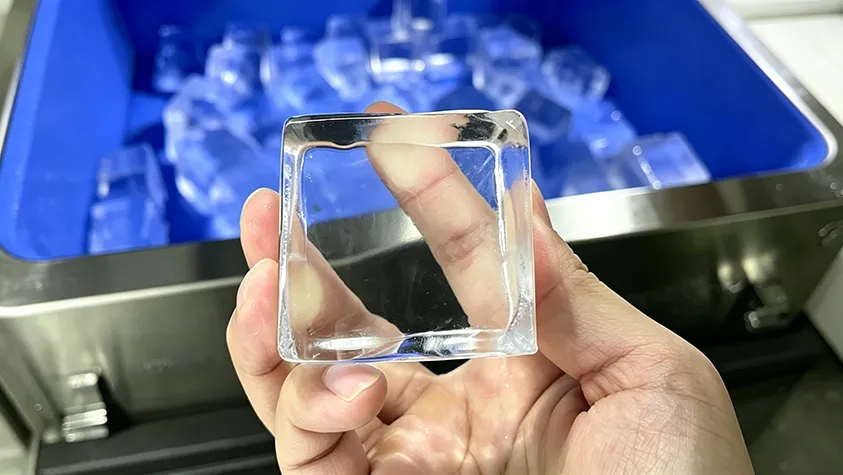
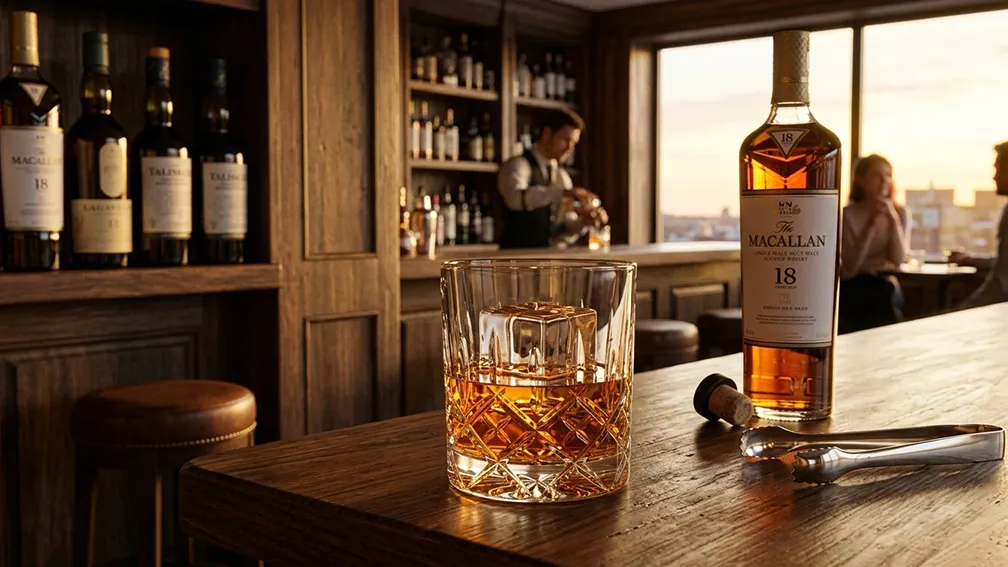
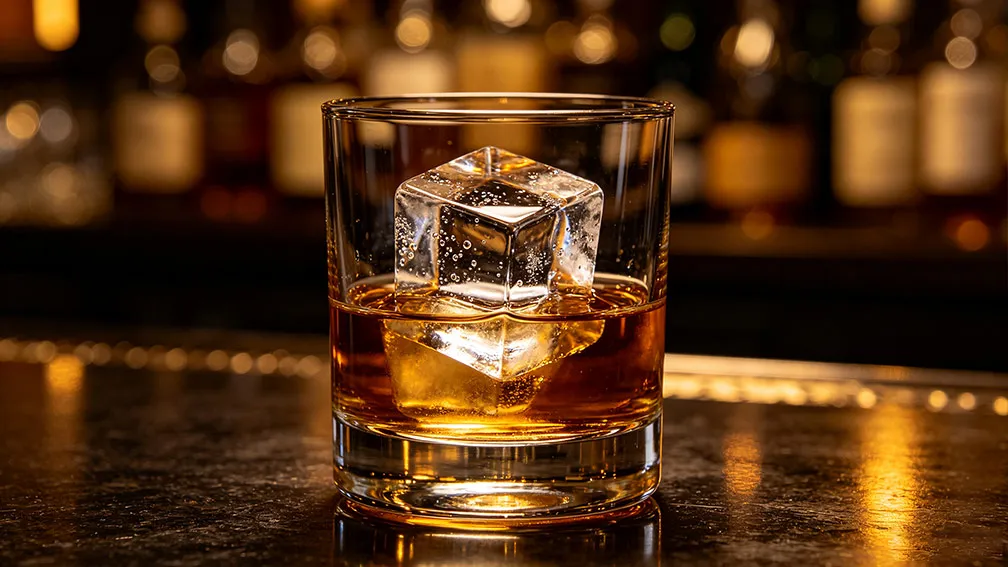
When a customer orders a $30 pour of single malt whiskey with one rock, that rock had better be perfect. Gourmet large cubes—typically 50 millimeters on each side, crystal-clear, and solid throughout—melt slower than any other commercial ice shape. A single cube can keep a whiskey cold and undiluted for 30 minutes. The visual impact alone supports premium pricing.
The Naixer TH-DF130 is a dedicated gourmet ice machine that produces 130 pounds of 50-millimeter large cubes per day and fits under a standard counter. For higher-volume whiskey bars and hotel lounges, the TH-DF280 and TH-DF500 scale that output to 280 and 500 pounds per day respectively. These machines are not for the well. They are for the top shelf—a complementary machine that works alongside a primary cube or crescent machine.
The 3-Pound Rule: Calculating Your Bar's Daily Ice Demand
Once you know your ice type, you need to know how much of it you actually use. The most common sizing mistake in a bar is buying a machine based on an average night rather than the busiest night of the week.
The industry standard for bars is 3 pounds of ice per seat per day. This accounts for the ice that goes into the glass, the ice that fills the shaker, the ice that chills the mixing glass, and the inevitable waste of a few cubes melting in the bin or being scooped onto the floor during a rush. For a 100-seat bar, the baseline demand is 300 pounds per day. A 60-seat neighborhood bar needs roughly 180 pounds. A 200-seat nightclub needs 600 pounds.
That is the baseline. The number that actually matters is your peak demand—Friday and Saturday nights, plus any seasonal surges. A bar that does 60 percent of its weekly business between Thursday and Saturday needs a machine that can handle those nights without breaking a sweat. The widely accepted practice is to add a 20 to 25 percent buffer on top of the baseline.
A 100-seat bar using the formula would calculate 300 pounds times 1.25, arriving at a target daily production of 375 pounds. That buffer is not wasted capacity. It is insurance against the night when a private party of 40 shows up unannounced or a July heat wave doubles your iced drink orders.
Storage capacity matters just as much as production. A machine that produces 500 pounds per day but only stores 50 pounds will cycle on and off constantly during peak hours and still leave your bartenders waiting. The bin should hold at least 50 to 60 percent of the machine’s daily output. For a deeper walkthrough of this calculation with examples for different bar sizes, the guide on how big of an ice machine do i need for a bar covers the math in detail.
Which Naixer Machine Fits Your Bar?

A 40-seat neighborhood bar that serves mostly beer and simple mixed drinks does not need the same ice machine as a 120-seat craft cocktail lounge with a 50-bottle whiskey list. Here is how the Naixer lineup maps to common bar profiles.
For the small neighborhood bar, the Naixer TH-80B and TH-150B are the standard workhorses. The TH-80B produces 80 pounds of cube ice per day in a unit just 425 millimeters wide—small enough to fit under the tightest bar counters. The TH-150B produces 150 pounds per day with 45 kilograms of storage, covering a 40- to 60-seat bar through a busy weekend.
For the mid-size craft cocktail bar, the Naixer TH-SE150 is the natural choice if the menu is built around spirit-forward drinks. It delivers 150 pounds of crescent ice per day, fitting under a standard counter. If the bar volume is higher—80 to 120 seats, or a venue that also runs a busy happy hour—the BT-260 pushes undercounter production to 260 pounds per day of cube ice, while the modular TH-500C produces 500 pounds per day with a 300-kilogram bin for operations that need industrial output without a complete equipment room.
For the large nightclub, music venue, or hotel lobby bar, the TH-1000C and TH-2000B move into heavy-duty territory: 1,000 and 2,000 pounds per day respectively, with large modular bins and the option of air-cooled or water-cooled configurations. These machines are built to run continuously through the longest shifts without ever running dry.
For a broader look at how to match a machine to a bar’s layout and spatial constraints, the guide on the best under counter ice machine compares compact commercial ice makers for tight spaces.
Installation, Maintenance, and a Decade of Reliability
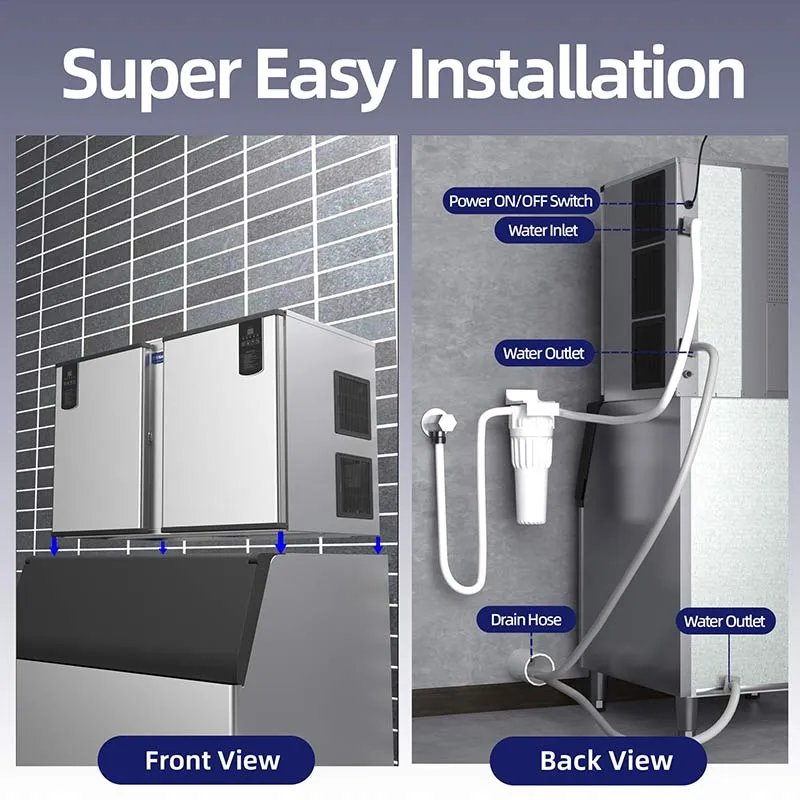
A commercial ice machine in a bar runs in a hot, humid, often cramped environment. It is expected to last 7 to 10 years. The installation and maintenance habits you establish in the first month will largely determine whether it reaches the high end of that range.
Air-cooled machines—the most common type in bar settings—need adequate ventilation. Keep at least five to ten centimeters of clearance on all sides. Avoid tucking the machine into a sealed cabinet or pushing it flush against a wall. The condenser needs airflow to reject heat, and when it does not get it, the compressor works harder, runs hotter, and fails sooner. For a more detailed comparison of cooling types, the article on the difference between air-cooled and water-cooled ice machines explains the trade-offs.
Deep clean and sanitize the machine every six months, more frequently if your bar is in a hard-water area. Naixer’s One-Touch Cleaning function automates the descaling cycle—press a button and the machine circulates the solution, drains, and rinses without disassembly. Clean the condenser coils every three months with a soft brush, following the direction of the fins. Replace the water filter on the same schedule as the deep clean. These three habits—clean the condenser, replace the filter, descale the machine—are what separate a machine that lasts a decade from one that fails in three years. For a step-by-step walkthrough, the Naixer ice machine cleaning guide covers the full process.
Every Naixer machine is built on the same engineering platform: food-grade 304 stainless steel throughout the ice-making zone, a 3-year comprehensive warranty on core systems and key components, and manufacturing in a 30,000-square-meter ISO9001-certified smart factory backed by more than 300 technical patents. Over 5,000 commercial clients worldwide run Naixer equipment daily. For a deeper understanding of what determines how long a machine lasts, the commercial ice maker lifespan guide explains the key factors.
Commercial Ice Maker for Bar — Quick Answers
What type of commercial ice maker is best for a bar?
For most bars, a cube ice machine is the standard—versatile, slow-melting, and clean-looking. Craft cocktail bars often upgrade to crescent ice for better cooling and less dilution, while whiskey bars benefit from gourmet large cube machines.
How much ice does a bar use per day?
The industry standard is 3 pounds of ice per seat per day. A 100-seat bar needs roughly 300 pounds of ice daily as a baseline, plus a 20 to 25 percent buffer for peak hours.
What size ice machine do I need for a 100-seat bar?
100 seats times 3 pounds equals 300 pounds as a baseline. With a 25 percent peak buffer, you need roughly 375 pounds per day. A Naixer TH-500C at 500 pounds per day provides comfortable headroom, while a BT-260 at 260 pounds per day may be sufficient for a bar with a simpler drink menu.
Can I put an ice machine under my bar counter?
Yes. Undercounter models like the Naixer TH-150B and TH-SE150 are specifically designed to fit beneath standard bar counters, combining the ice maker and storage bin in a single compact cabinet.
How long does a commercial bar ice machine last?
With proper maintenance—deep cleaning every six months, condenser cleaning every three months, and regular water filter changes—a commercial ice machine should last 7 to 10 years. Premium units from quality manufacturers can exceed 16 years.
How much does a commercial ice machine for a bar cost?
Prices vary by capacity, ice type, and configuration. A compact undercounter cube machine typically costs between $1,800 and $3,500. Mid-range modular systems range from $3,500 to $8,000. Large gourmet ice machines and high-capacity modular systems can reach $15,000 or more. For a complete breakdown of purchase and operating costs, the restaurant ice machine cost guide covers every line item.