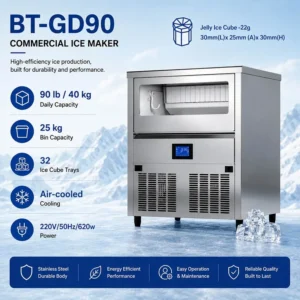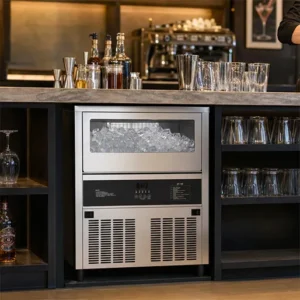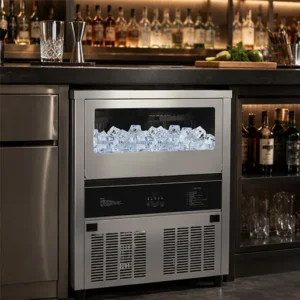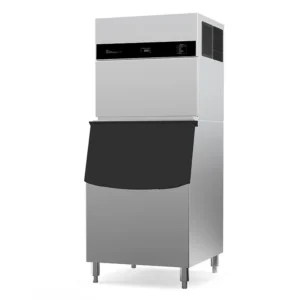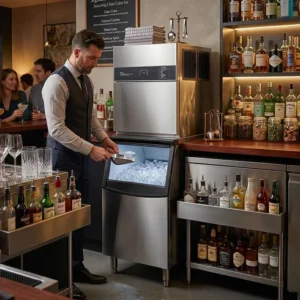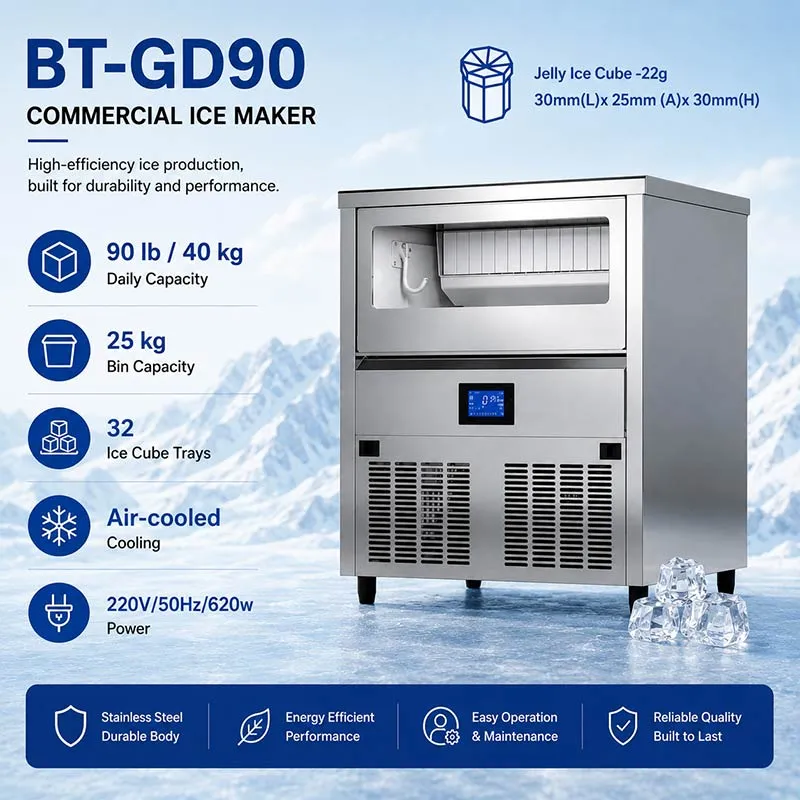

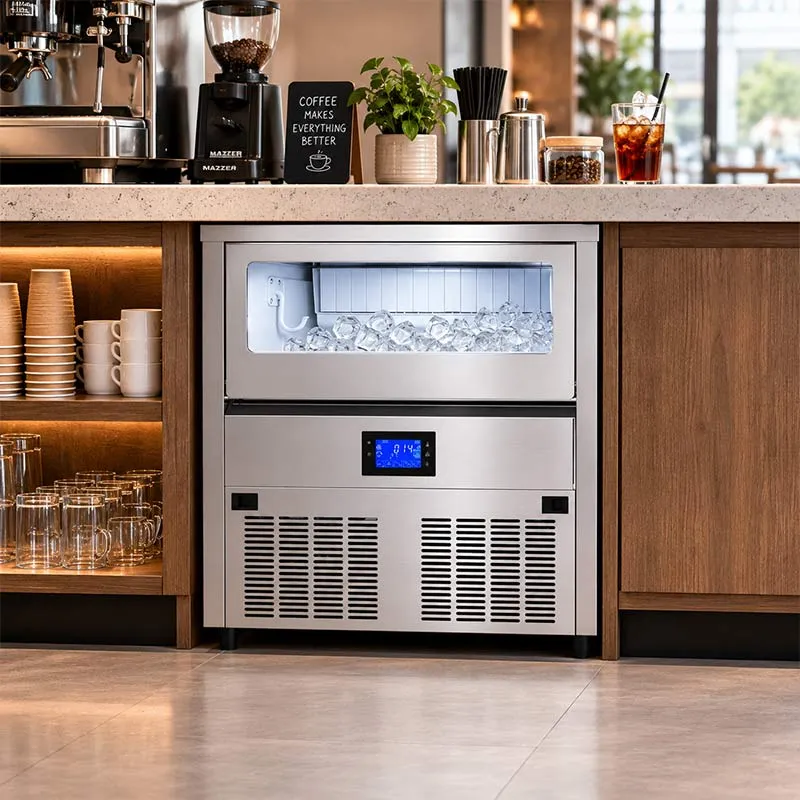




BT-GD90 is a self-contained small commercial ice machine: 90 lb (40 kg) of clear cylinder ice a day, a 25 kg insulated built-in bin, 32 trays a cycle, 620 W at 220 V / 50 Hz, R290. 680 x 600 x 750 mm - the same cabinet as the BT-GD140, so it goes under a counter instead of beside it.
BT-GD90 is a small commercial ice machine that goes under a counter: 90 lb (40 kg) of clear cylinder ice in 24 hours, a 25 kg insulated bin built in underneath, and 620 W at the wall. The cabinet is 680 × 600 × 750 mm — the same one the BT-GD140 uses. That matters more than it sounds: with the same 25 kg bin and less output, 40 kg a day buys you five and a half more hours of ice than the bigger machine does.
Why a 40 kg machine can outlast a 63 kg one — and the one case where it cannot.
At 40 kg a day the machine averages 1.67 kg an hour. A full 25 kg bin is therefore 15 hours of average draw: a whole service day, the overnight shutdown, and ice still in the bin when you open. That is the argument for a small commercial ice maker over the biggest one that fits.
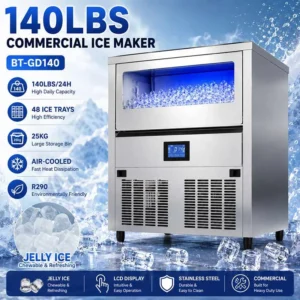
The BT-GD140 makes 63 kg from the identical cabinet and the identical 25 kg bin. That is 2.63 kg an hour, so its bin empties in 9.5 hours. Same cupboard, same bin, 5.5 fewer hours of reserve. Output you cannot store does not help you at seven in the evening.
25 kg ÷ 1.67 kg/h = 15 h of cover
A café with a two-hour lunch. 60 iced drinks at 300 g is 18 kg. Available in the window: 25 kg in the bin plus 1.67 × 2 = 3.3 kg made while you serve, so 28.3 kg against an 18 kg draw. Ten kilos of slack — comfortable, and the bin is still cold at close.
If you do not know your peak draw yet, the ice calculator turns covers and service style into kilograms, and this bar sizing guide breaks the peak down hour by hour.
A hotel breakfast room, 120 guests at 250 g, is 30 kg in two hours. Against 28.3 kg available that is short by 1.7 kg — and no amount of patience fixes it. This is the wrong machine rather than a tight one, and the honest fix is bin, not compressor: the TH-GD140 carries 40 kg and clears the same service with room to spare.
Every figure here is rated at 25 °C ambient air and 20 °C inlet water. An air-cooled cabinet in a 32 °C back bar loses output exactly when the queue is longest. Above roughly 110 covers per service, or anywhere the same bin also feeds a display or a seafood counter, this is a different class of machine.
680 × 600 × 750 mm — the same cupboard as the BT-GD140, and 145 mm lower than the TH-GD90.
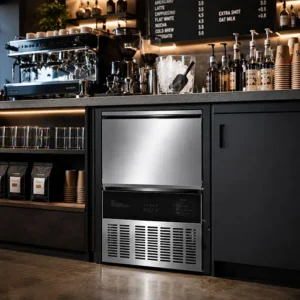
Three numbers settle the installation: 680 mm wide, 600 mm deep, 750 mm high. On an undercounter ice machine the height is the number that decides the sale, and the height is the reason this cabinet exists. The TH-GD90 makes the same 40 kg but stands 895 mm tall — 145 mm too much for a back bar with a shelf over it, or for a counter run at 900 mm.
Width is where buyers get caught. 680 mm does not drop into the 600 mm gap left by a standard base unit. It needs a 700 mm bay — the sort you get by leaving one cabinet out, not by squeezing it between two.
Depth is a clean 600 mm, so in a 600 mm counter run the front panel sits flush with the worktop edge. Convenient, until you remember the water inlet and the drain: with no rear gap, both have to come in from the side. Decide that before the counter is cut.
Air passes through the louvres on the front panel. Leave them open. A closed cupboard with a solid door will cook the condenser and cost you capacity, not just efficiency — the one thing a built in ice machine cannot survive is being treated like a cupboard.
Our installation recommendations, not nameplate figures — check them against the unit on site before the counter is cut. Identical to the BT-GD140, because it is the same cabinet.
30 × 30 × 32 mm, clear to the core — 32 trays a cycle.
Nothing changes between models here. Every cylinder ice machine in the range — 40 kg or 63 kg, tall cabinet or low — uses this same 30 × 30 × 32 mm mould. It fills solid and the piece comes out a clear octagonal cylinder with no core. That compactness is the point: roughly 4,700 mm² of surface for 22 g, against about 6,500 mm² for the same weight of 22 mm cube. Less surface per gram means slower dilution — the last inch of a whiskey tastes like the first.
Forty kilos is about 1,818 pieces a day, and 32 trays of 22 g is 704 g a cycle. Where this shape is the wrong answer is a blended drink, a display bed or a seafood counter: those want soft, fast-melting, mouldable ice. The guide to ice for whiskey and this comparison of the ice shapes coffee shops use cover which format does what, and why a solid cylinder is a poor substitute for either.
Naixer catalogue, 2026 edition, page 24 — rated at 25 °C ambient air and 20 °C inlet water. Where this table and any other listing disagree, this table is the one to quote.
| Item | Value |
|---|---|
| Output | |
| Daily capacity | 90 lb / 40 kg per 24 h at 25 °C air, 20 °C inlet water |
| Ice type | Clear solid octagonal cylinder no core |
| Ice size | 30 × 30 × 32 mm 1.18 × 1.18 × 1.26 in · 22 g per piece |
| Ice cube trays per cycle | 32 |
| Storage bin | 25 kg / 55 lb insulated, built in — no separate bin to buy |
| Cabinet | |
| Width | 680 mm 26.8 in |
| Depth | 600 mm 23.6 in |
| Height | 750 mm 29.5 in |
| Body | Stainless steel, self-contained |
| Cooling | Air-cooled front louvres — keep them clear |
| Electrical | |
| Voltage / frequency | 220 V / 50 Hz 110 V / 60 Hz only if confirmed with the factory at quotation |
| Power input | 620 W ≈ 2.8 A at 220 V |
| Refrigerant | R290 |
Capacity is a laboratory figure at 25 °C ambient air and 20 °C inlet water. A 30 °C back bar loses output exactly when the queue is longest — size on the bin and the derating, not on the 90 lb headline.
One cabinet shared with the BT-GD140; one output shared with the TH-GD90.
Swipe the table sideways — the first column stays put.
| Spec | BT-GD90 This unit | BT-GD140 | TH-GD90 | TH-GD140 |
|---|---|---|---|---|
| Daily output | 90 lb / 40 kg | 140 lb / 63 kg | 90 lb / 40 kg | 140 lb / 63 kg |
| Built-in bin | 25 kg | 25 kg | 20 kg | 40 kg |
| Width | 680 mm | 680 mm | 530 mm | 660 mm |
| Depth | 600 mm | 600 mm | 580 mm | 745 mm |
| Height | 750 mm | 750 mm | 895 mm | 1,005 mm |
| Power input | 620 W | 810 W | 470 W | 715 W |
| Ice cube trays | 32 | 48 | 32 | 48 |
| Refrigerant | R290 | R290 | R290 | R290 |
| Hours on a full bin calculated | 15.0 | 9.5 | 12.0 | 15.2 |
Against the TH-GD90 you get the same 40 kg from the same 32 trays, 145 mm lower, with 5 kg more ice on hand — for 150 W more at the wall. Against the BT-GD140 it is the same commercial undercounter ice maker in the identical cabinet and bin, with 23 kg a day less output, 16 fewer trays and 190 W less draw. Per kilogram of output this is the thirstiest of the four — 15.5 W against 11.4 on the TH-GD140 — which is what a 750 mm cabinet costs you. At 2.8 A it still runs on the same 10 A circuit as the rest.
Three settings where the volume, not the height, is the reason to buy.
Iced coffee and cold brew ordered in a two-hour burst, from a machine that sits in the counter run instead of beside it.
Café ice machines →Twenty to forty covers an evening at two or three cubes a drink never empties a 25 kg bin — the point is that the cabinet fits under the bar.
Bar and venue machines →Office and hotel pantries where the machine is fitted into a joinery run with a worktop over it, and 40 kg is already more than the floor drinks.
Office ice machines →Sizing a multi-outlet site? The food service ice machine range covers the models either side of this one, and the rest of this cabinet family sits in the cylinder ice series.
The five that come up on nearly every enquiry for this model.
Both make 90 lb (40 kg) a day from 32 trays and both use the same 22 g ice. BT-GD90 is 680 × 600 × 750 mm with a 25 kg bin and a 620 W input; TH-GD90 is 530 × 580 × 895 mm with a 20 kg bin and a 470 W input. This one is 145 mm lower and holds 5 kg more ice, at 150 W more. Under a counter take BT-GD90; where floor space is tight but the height is not, the narrow TH-GD90 is the better fit.
For a lunch rush, yes. Sixty iced drinks at 300 g is 18 kg, and the machine has 28.3 kg available in a two-hour window — 25 kg in the bin plus 3.3 kg made while you serve. It stops being enough at a breakfast service above roughly 110 covers, or wherever ice is also going into a display.
If the opening is at least 700 mm wide, 620 mm deep and 760 mm high, yes. The cabinet itself is 680 × 600 × 750 mm, so it will not go into the 600 mm gap left by a standard base unit — it needs a bay of its own. At 600 mm deep it sits flush with a 600 mm counter run, which means the water and drain have to enter from the side. The condenser breathes through the front louvres, so keep the front open.
About 15 hours of average draw — 1,136 pieces at 22 g. At 40 kg per 24 hours the machine averages 1.67 kg an hour, so a full bin covers a whole service day and the overnight shutdown. It does not cover a closed day, and it will not carry you through a busy breakfast plus lunch.
No. Each piece is solid — a clear octagonal cylinder 30 × 30 × 32 mm weighing about 22 g, which is what a solid piece that size weighs. If you have seen it described as hollow, or listed at 30 × 30 × 25 mm, those are older descriptions that have been corrected.
We use cookies to improve your experience on this website. You may choose which types of cookies to allow and change your preferences at any time. Disabling cookies may impact your experience on this website. You can learn more by viewing our Cookie Policy.
We're online and ready to help!
Tell us about your commercial ice machine requirements. We'll prepare your inquiry for WhatsApp.
Have a question about a commercial ice machine? Send us a message and continue the conversation on WhatsApp.

Sign up to receive $50 off your first order and exclusive access to our best offers.