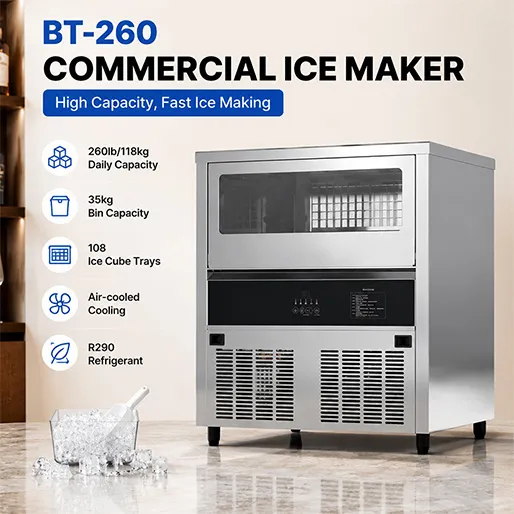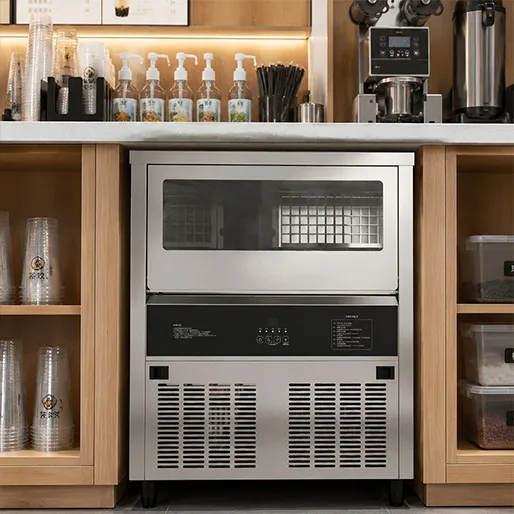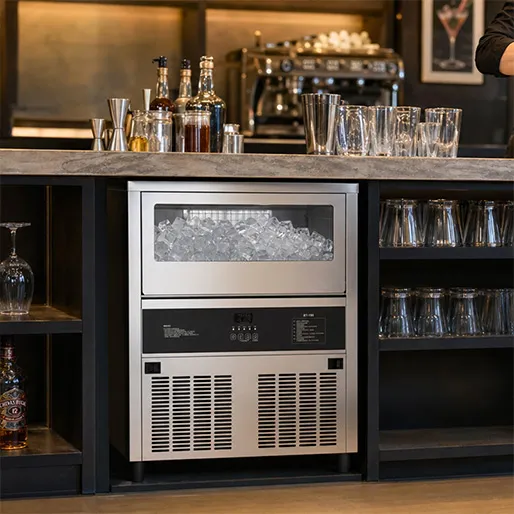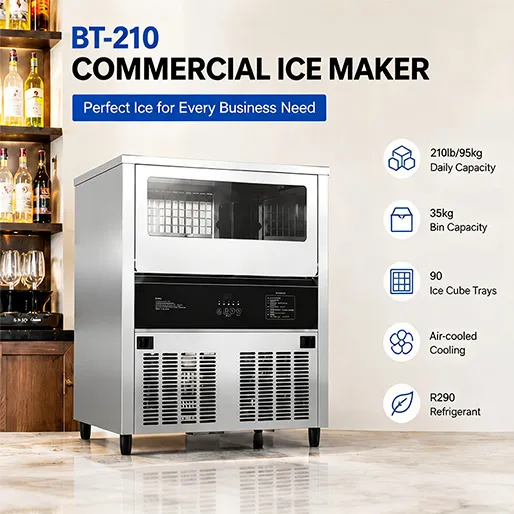
It is one of the smallest moments in a hotel stay. A guest walks down the hall in the evening, bucket in hand, presses a button, and hears the soft clatter of fresh ice. She returns to her room, pours a cold drink, and does not think about the machine again.
But if that machine were broken, noisy, or producing cloudy ice that smelled faintly of last week’s fish, the moment would be very different. She would remember it. She would mention it at the front desk. She might mention it in a review.
Ice machines are one of the few pieces of hotel equipment that guests interact with directly, yet they are expected to operate invisibly. The best ice machine for a hotel is the one that does its job so quietly and reliably that guests never think about it at all. This guide breaks down the two categories of machines that cover virtually every hotel ice need—guest floor dispensers and back-of-house modular systems—and recommends specific Naixer models for each. For a broader look at the costs involved in equipping a property, our guide to hotel ice machine costs covers the full investment picture.
In this guide, you will learn:
The Two Machines Every Hotel Needs

Before we get to specific models, it helps to understand that most hotels run two distinct types of ice machines, and they serve completely different purposes.
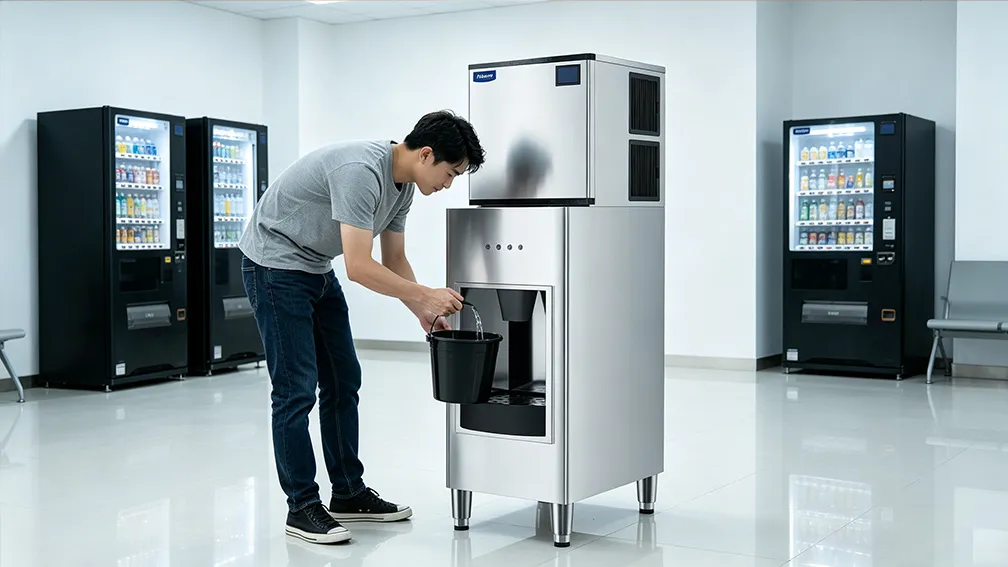
The first is the guest floor dispenser. This is the machine your guests actually touch. It combines an ice maker, a storage bin, and a dispensing mechanism into a single freestanding or wall-recessed unit. The guest presses a button or lever, and ice drops directly into the bucket. There is no scoop, no open bin, no contamination risk. These machines are designed to be sanitary, quiet, and simple enough that a tired traveler can operate them without reading instructions.
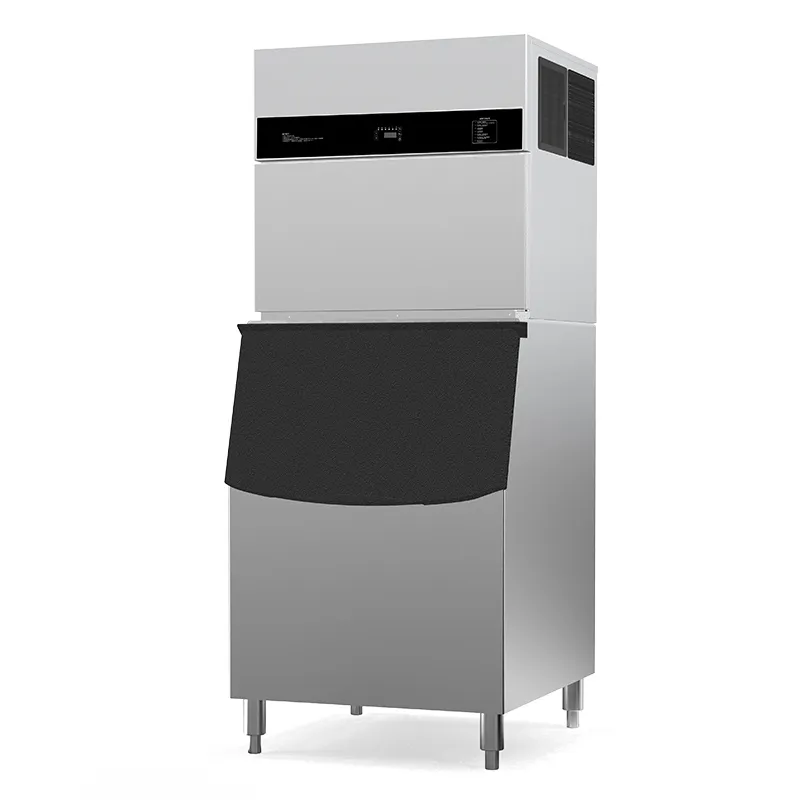
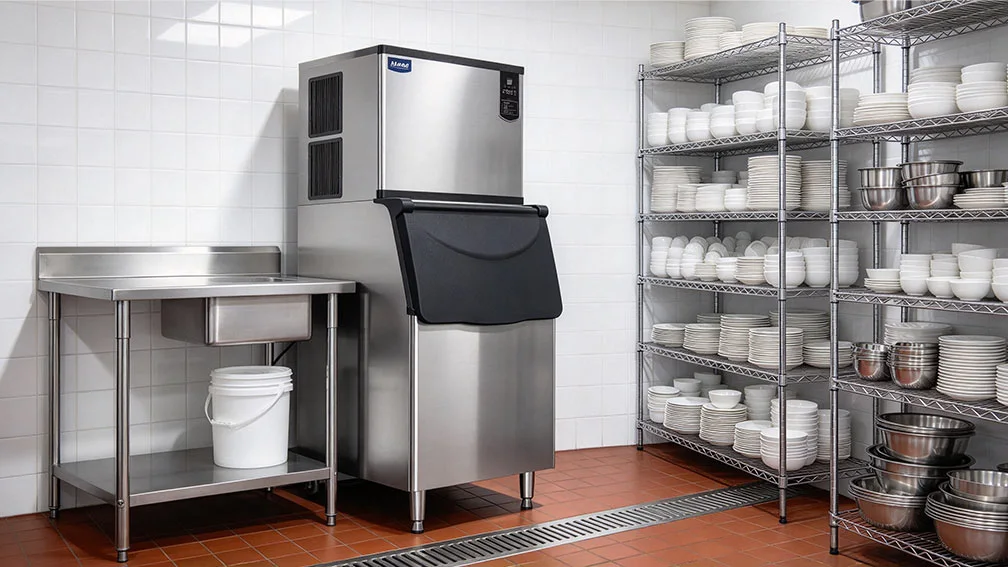
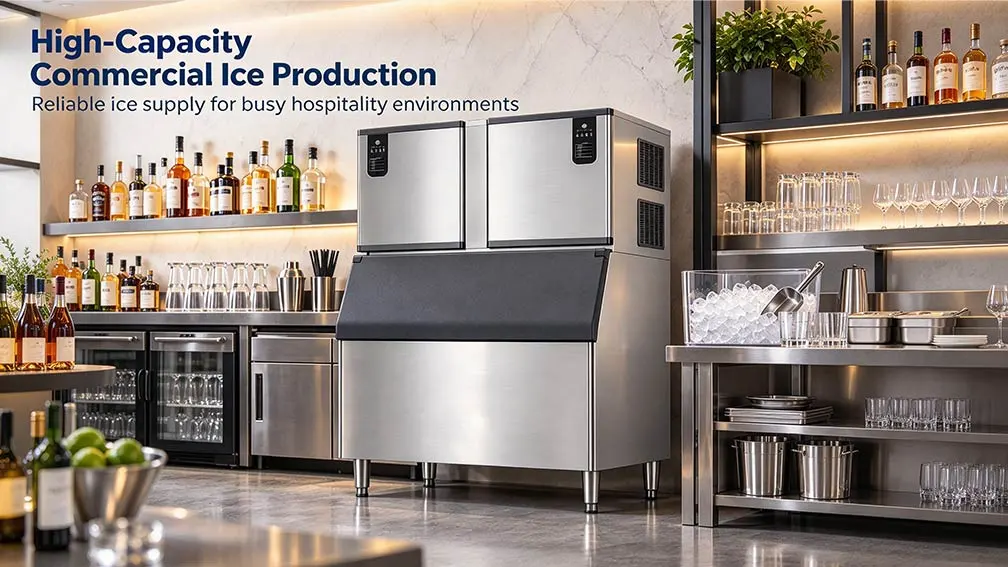
The second is the back-of-house modular ice machine. This is the workhorse that feeds the hotel kitchen, the banquet hall, the poolside bar, and the employee cafeteria. It consists of a separate ice-making head that sits on top of a large storage bin. These machines produce far more ice than a guest floor dispenser—anywhere from 500 to 2,000 pounds per day—and they are built to run continuously in hot, busy kitchen environments.
Most hotels need at least one of each. A 100-room property might have four or five dispensers spread across its guest floors, plus a modular machine in the kitchen handling restaurant and event ice. The dispensers handle guest self-service. The modular machine handles volume production. Together, they form a complete ice system.
The Best Guest Floor Dispenser: Naixer ZD-160

The ZD-160 is a self-contained hotel ice dispenser that combines ice making, storage, and push-button dispensing in a single stainless steel unit. It is designed to sit on a guest floor, in an alcove or a vending area, and serve ice to guests 24 hours a day without staff involvement.
It produces up to 160 kilograms of crystal-clear 22-by-22-millimeter full cube ice per day—roughly 350 pounds—and stores 100 kilograms, or about 220 pounds, in its insulated bin. At the industry standard of 5 pounds of ice per guest room per night, a single ZD-160 can comfortably serve approximately 70 rooms. For a 140-room hotel, two ZD-160s placed on alternating floors would cover the property’s guest ice needs with headroom to spare.
Why does the ZD-160 work so well for this application? The answer is in the dispensing mechanism. Guests press a button and ice falls directly into their bucket. They never touch a scoop. They never open a bin. They never introduce bacteria from their hands into the ice supply. This is a health code consideration as much as a guest experience one. Open ice bins with scoops are a known contamination vector. Push-button dispensers eliminate that risk entirely.
The ZD-160 is also quiet enough for a hotel corridor. It uses a front-venting airflow design that directs sound outward rather than into the wall cavity, and the compressor is mounted on vibration-dampening pads. At night, when the hallway is silent, the machine hums softly without disturbing nearby rooms.
Installation is straightforward. The unit needs a cold water line, a gravity drain, and a dedicated electrical circuit. It is a self-contained appliance—no separate bin, no complex assembly. If your property is considering adding dispensers to existing floors that were not originally plumbed for them, the installation cost will vary depending on how far the utilities need to run. For a detailed look at those variables, the hotel ice machine cost guide breaks down installation, filtration, and long-term operating expenses.
The Best Back-of-House Modular Machines: Naixer TH Series
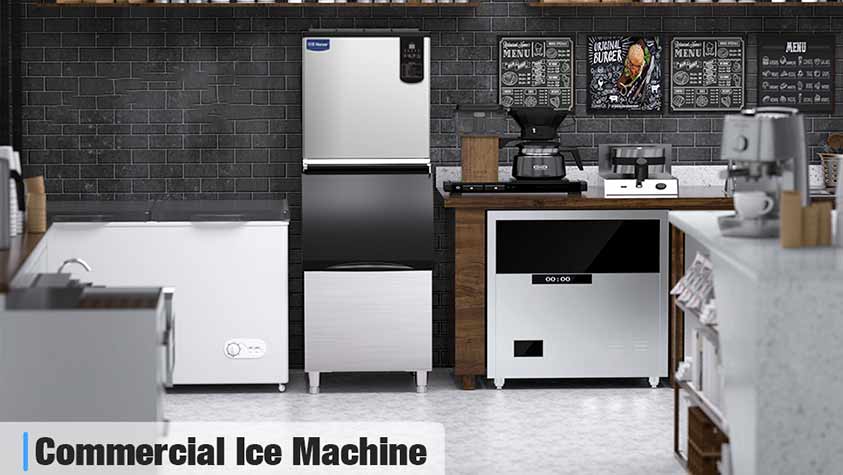
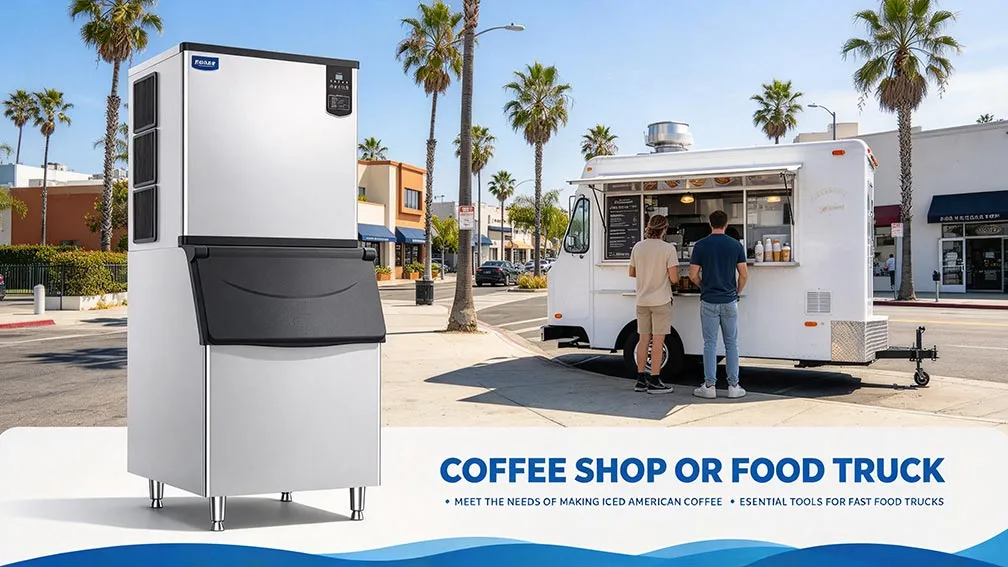
While the ZD-160 handles the guest floors, the kitchen needs a different kind of machine. A hotel restaurant might go through 400 pounds of ice during a dinner service. A banquet for 300 guests can require twice that. Room service needs ice for champagne buckets and beverage carts. The employee cafeteria uses ice all day. These volumes demand a modular cube ice machine—a system where the ice-making head sits on top of a large, separate storage bin.
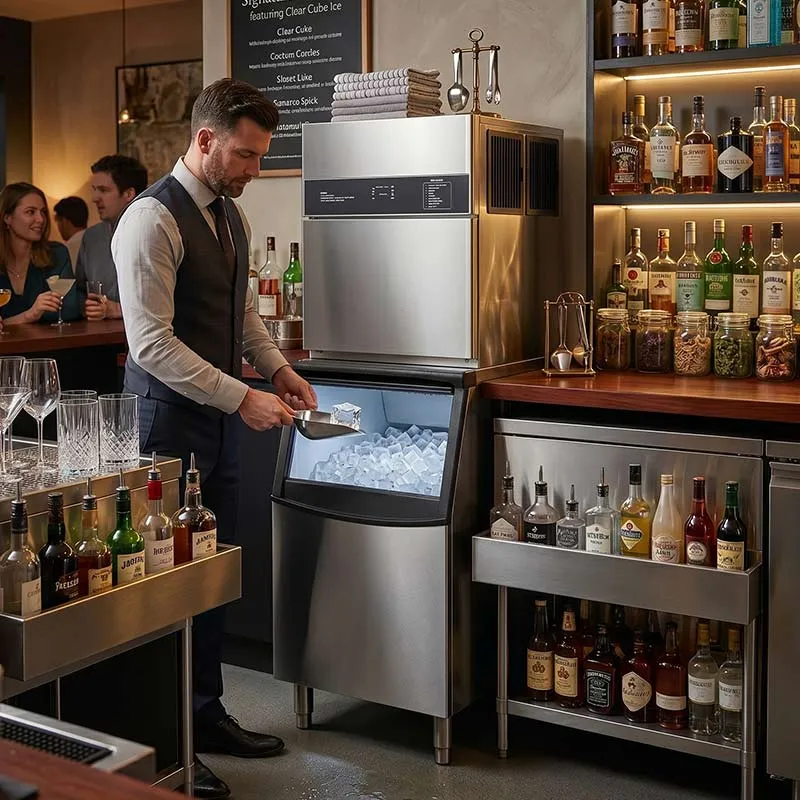
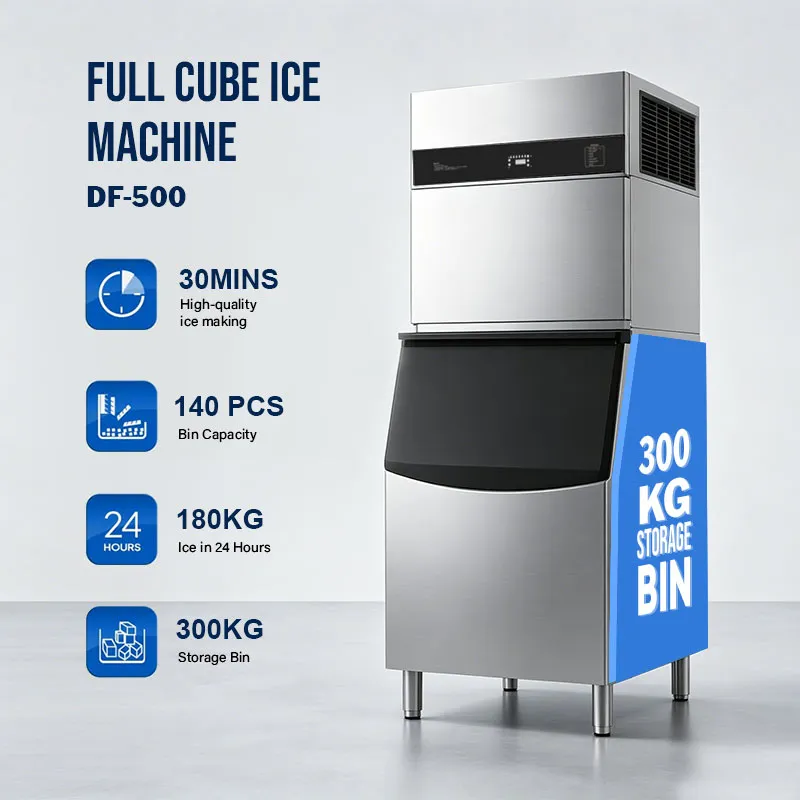
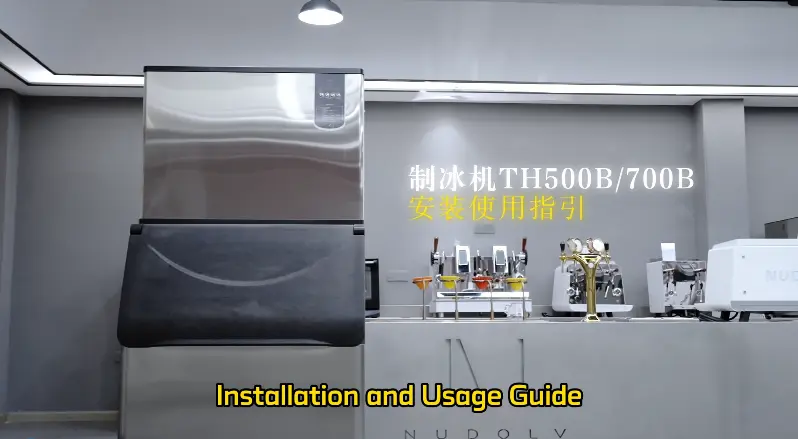
Naixer’s TH Series covers this range at three capacity levels. The TH-500C produces up to 500 pounds of 22-by-22-millimeter cube ice per day with a 300-kilogram bin. This is the right fit for a mid-size hotel with a single restaurant and a modest banquet schedule. The TH-1000C doubles that output to 1,000 pounds per day with the same 300-kilogram bin, covering larger properties with multiple dining outlets. The TH-2000B reaches 2,000 pounds per day with a 500-kilogram bin, built for convention centers, large resorts, and casino properties that run events at scale.
All three machines share the same underlying engineering. Food-grade 304 stainless steel throughout the ice-making zone—the evaporator, the water trough, the bin interior—resists corrosion and cleans easily. The machines can be configured as air-cooled or water-cooled, depending on the kitchen environment. Air-cooled is simpler and uses far less water. Water-cooled performs better in hot, poorly ventilated spaces. If you are unsure which cooling type fits your kitchen, our article on the difference between air-cooled and water-cooled ice machines explains the trade-offs.
One feature worth highlighting across the TH Series is the One-Touch Cleaning function. Press a button and the machine runs a full descaling cycle—circulating the solution, draining, and rinsing without disassembly. For a hotel with multiple machines across different floors, this feature removes the biggest barrier to consistent maintenance, which is the time and complexity of doing it manually. Consistent maintenance, in turn, is what determines whether a commercial ice machine lasts 7 years or 15. For more on that, our commercial ice maker lifespan guide covers the factors in detail.
How to Match Machines to Your Property Size

Every hotel is different, but the pattern for matching machines to property size is consistent.
A boutique hotel with fewer than 50 rooms needs one or two ZD-160s on the guest floors. If the property has a small kitchen or breakfast buffet, a TH-150B undercounter cube ice machine producing 150 pounds per day can handle back-of-house needs. The TH-150B is a compact, self-contained unit that fits under a standard counter, making it ideal for properties without a dedicated equipment room.
A mid-size hotel with 50 to 150 rooms needs a ZD-160 on every floor or every other floor, plus a modular machine in the kitchen. A 120-room property with a full-service restaurant and a lobby bar might run four ZD-160s across the guest floors, a TH-500C in the back kitchen, and a TH-DF130 gourmet large cube machine under the lobby bar counter for premium whiskey service. This setup covers guest self-service, kitchen production, and premium beverage service from a single equipment family.
A large hotel or resort with more than 150 rooms scales the same logic. The ZD-160 remains the guest-floor standard. In the back of house, the TH-1000C or TH-2000B takes over, feeding multiple restaurants, a banquet hall, and room service. Properties with a high-end steakhouse or a craft cocktail lounge often add specialty ice machines under those specific bars—a TH-DF130 for large format cubes or a TH-SE150 for crescent ice.
Across all three profiles, the equipment philosophy is the same. The ZD-160 handles guest-facing dispensing. The TH Series handles volume production in the kitchen. Together, they form a complete hotel ice system that is easy to maintain, easy to service, and backed by a single manufacturer’s warranty and support network.
Keeping Hotel Ice Machines Running for Years
Hotel ice machines run 24 hours a day in environments that are often warm, humid, and busy. The maintenance that keeps them running is not complicated, but it must be consistent.
Deep clean and sanitize every machine at least every six months. This is the manufacturer’s recommendation and the standard enforced by most health codes. In hard-water areas or high-occupancy properties, shorten the interval to every three or four months. Naixer’s One-Touch Cleaning function automates the descaling cycle, reducing a multi-hour manual job to a button press.
Replace water filters on the same six-month schedule as deep cleaning. A saturated filter stops filtering and becomes a source of contamination. Clean the condenser coils every three months with a soft brush, following the direction of the fins. Dust and grease buildup on the condenser is the leading cause of compressor failure in commercial ice machines. For a complete step-by-step walkthrough of the cleaning process, our Naixer ice machine cleaning guide covers every step in detail.
Check the ice quality weekly. If the cubes look cloudy, smell off, or are coming out misshapen or smaller than normal, the machine needs attention—possibly descaling, possibly a filter change, possibly a service call. Catching these signs early prevents a minor maintenance issue from becoming a major repair.
Hotel Ice Machines — Quick Answers
What is the best ice machine for a hotel?
For guest floors, a self-contained dispenser like the Naixer ZD-160 is the best choice—it is sanitary, quiet, and simple for guests to use. For back-of-house kitchens and banquets, a modular cube ice machine like the Naixer TH-500C, TH-1000C, or TH-2000B is the standard.
How many ice machines does a hotel need?
Most hotels place one dispenser per guest floor or every other floor, plus one or more back-of-house machines for kitchen and banquet use. A 100-room hotel typically has four to five machines in total.
How much ice does a hotel guest use per day?
The industry standard is 5 pounds per room per night for guest self-service. Additional ice is needed for any on-site restaurants, bars, and banquet facilities.
What type of ice is best for a hotel?
Cube ice is the standard for guest floor dispensers and back-of-house use—it is versatile, slow-melting, and clean-looking. Hotel bars may also benefit from gourmet large cubes for whiskey service or crescent ice for craft cocktails.
How often should a hotel ice machine be cleaned?
Every 6 months at minimum. High-occupancy properties or those in hard-water areas should clean every 3 to 4 months.
How long does a commercial hotel ice machine last?
With proper maintenance, 7 to 10 years. Premium units from quality manufacturers can exceed 15 years. Regular cleaning and water filtration are the two biggest factors.