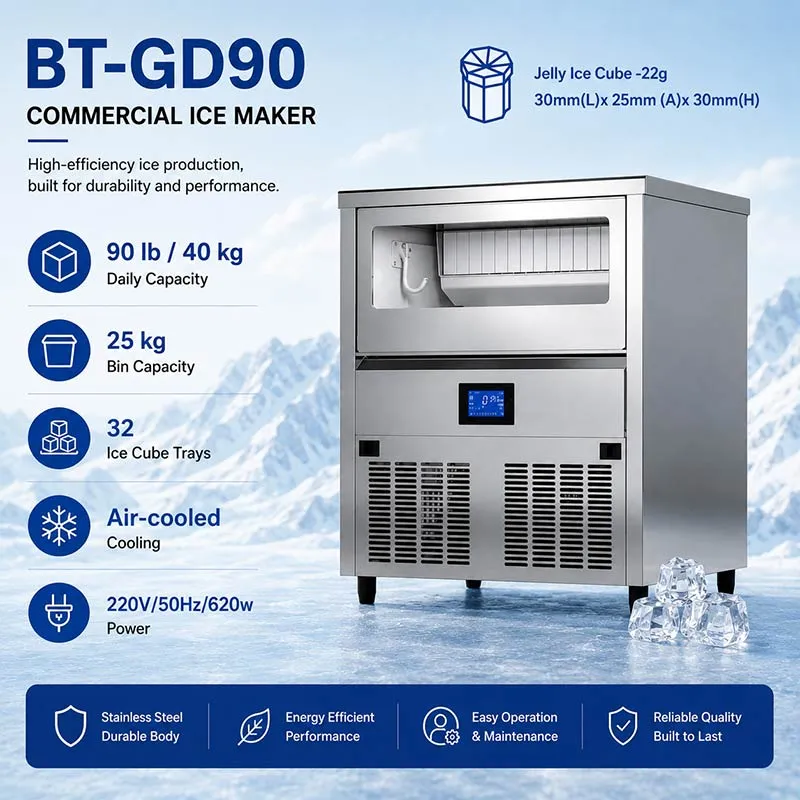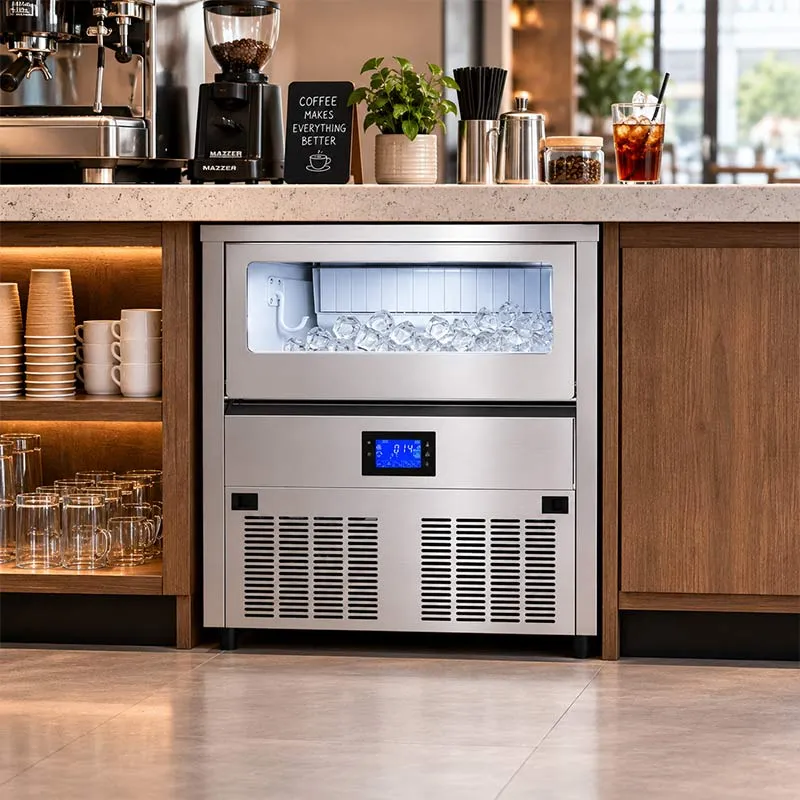
Can Ice Get Moldy? 5 Dirty Secrets About Your Ice Machine
You’ve probably never thought about moldy ice.
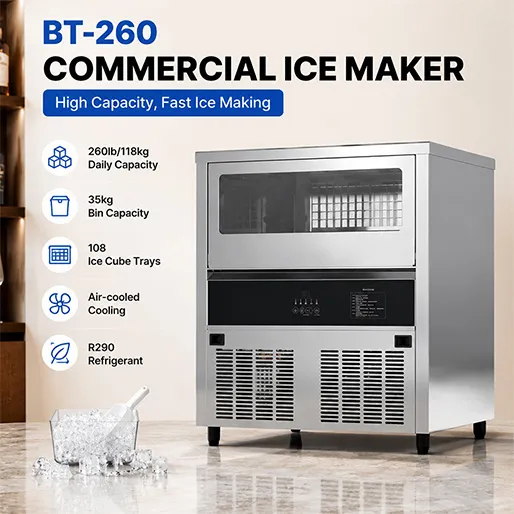
Until now, that is. If you’ve ever peeked inside a commercial ice machine — really looked, past the stainless steel door and into the dark, damp corners where cubes form and drop — you already know it’s a jungle in there. Moisture everywhere. Darkness. A steady supply of airborne yeast, sugar mist, and dust drifting in from the kitchen. If mold could design its dream home, it would look exactly like the inside of an ice machine.
So yes — ice can get moldy. And that pink, slimy film you wiped off the bin last week? That wasn’t mold. That was something else entirely. But we’ll get to that.
Before you swear off iced drinks forever, here are five dirty secrets about your ice machine — and what you can actually do about them.
Table of Contents
Your Ice Machine Is the Perfect Mold Breeding Ground
Let’s rip the band‑aid off: ice can carry mold and contaminate your drink. This happens when ice machines aren’t regularly cleaned inside. The most common place for mold to grow is the drop zone — the area where formed cubes fall from the evaporator into the storage bin. When mold and slime accumulate on that surface, every cube that passes through picks up a microscopic payload and carries it into the glass.
Why do ice machines become mold factories? They provide exactly three things all fungi need to thrive:
Constant moisture. The interior of an ice machine never fully dries. Water pools in the sump, clings to evaporator plates, and condenses on bin walls. Every surface stays damp 24/7.
Darkness. The bin door stays closed. Light — which naturally inhibits fungal growth — never reaches the interior.
Organic food sources. Airborne yeast from pizza dough and bread baking. Sugar mist from soda fountains. Flour dust. Grease particles from fryers. These all settle inside the machine and become a buffet for microorganisms.
One persistent myth: freezing temperatures kill mold and bacteria. They don‘t. The internal temperature of an ice machine slows microbial growth but won’t stop it, and it absolutely will not kill pathogens that are already established. The freezer in your kitchen won’t kill mold on bread; neither will your ice machine.
You Can’t Tell If Ice Is Contaminated Just by Looking at It
Here‘s the unsettling part: ice contaminated with mold or bacteria will look, taste, and smell exactly like clean ice. You won’t notice anything wrong until you open the machine and see the black spots or pink film yourself.
This is why contamination can persist for weeks or months without anyone knowing. By the time visible mold appears on internal surfaces, the microbial load in the ice itself may have been elevated for quite a while. The ice your customers are drinking looks crystal‑clear — and that’s exactly what makes this secret dangerous.
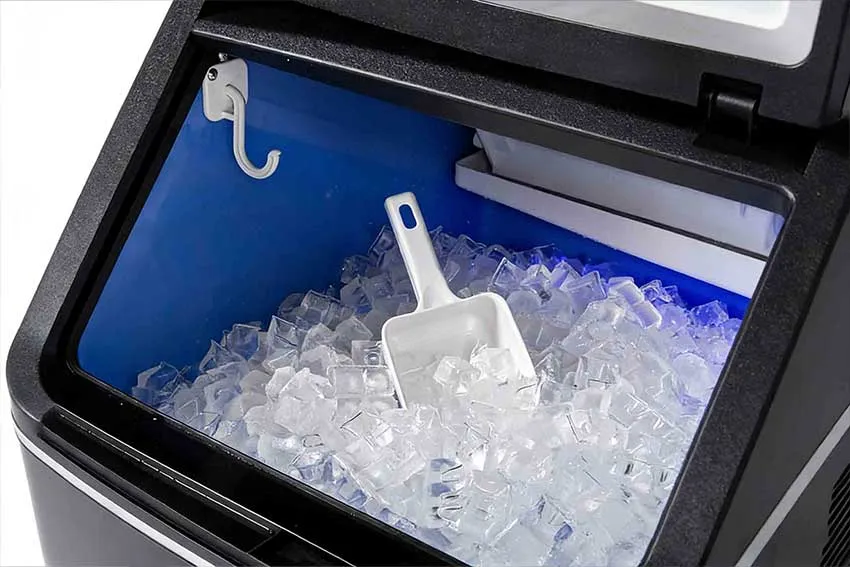
External contamination compounds the risk. Staff members who reach into the ice bin with bare hands transfer bacteria directly into the supply. An ice scoop left sitting in the bin — its handle touching the ice — becomes a bridge between surface bacteria and every drink served. Even when the machine interior is clean, cross‑contamination from poor handling defeats the purpose. The fix is simple but non‑negotiable: use a dedicated ice scoop, store it handle‑up in a sanitized container outside the bin, and wash that container daily.

Contaminated Ice Can Actually Make People Sick
For people with healthy immune systems, incidental exposure to mold spores in ice usually won‘t cause acute illness. But that’s not the whole picture. The real risk isn’t the mold itself — it‘s the pathogens that thrive in the same neglected environment.
Ice machines that aren’t properly maintained can harbor Salmonella, Listeria, E. coli, Shigella, and Norovirus — microorganisms that can survive freezing temperatures and cause gastrointestinal illness when ingested. According to a comprehensive ten‑year review of worldwide food ice hygiene published in 2024, cases of ice contamination by various microorganisms — bacteria, viruses, and fungi — have been extensively documented in the scientific literature.
Most Ice Machines Are Cleaned Far Less Often Than They Should Be
Ask any restaurant equipment technician how often ice machines actually get cleaned, and they‘ll probably give you a tired look. Many operators discover mold in their ice machines only after months or years of neglect, because ice makers are easily ignored appliances — running quietly in the corner, never demanding attention until something goes wrong.
According to industry data, commercial ice machines should be cleaned at least every six months, with more frequent cleaning — every three months — recommended for high‑volume or high‑humidity environments. Naixer’s own instruction manual aligns with this guidance, recommending deep cleaning at least once a month.
The disconnect between “should” and “actually” is where the mold wins. Kitchens skip cleanings because the process feels intimidating, because the machine seems to be working fine, or because nobody wants to read a 30‑page manual to figure out how to start a clean cycle.
That‘s exactly why Naixer ice machines include a built‑in cleaning mode that removes the friction from routine maintenance. In the shutdown state, press the Cleaning/Setting button on the touch panel once — the machine enters cleaning mode, circulating water without initiating a freeze cycle, and the digital display confirms the mode change. No disassembly, no guesswork, no manual pouring of solution into the sump unless you’re using a model without the one‑touch function.
We covered every step of this process — including how to choose nickel‑safe cleaner, how to properly descale, sanitize, and verify — in our complete Naixer cleaning guide.
Read it here: [How to Clean a Naixer Ice Machine: Step‑by‑Step Commercial Guide].
Your Mold Prevention Playbook: 6 Habits That Stop Contamination Before It Starts
You don‘t need to be a refrigeration technician to keep your ice machine mold‑free. You need a routine. Here’s one that works:
1. Activate the Naixer built‑in clean mode monthly.
In shutdown state, press the Cleaning/Setting button on the touch panel once. The machine circulates cleaning solution automatically — no manual disassembly, no guessing. This is your simplest, most effective line of defense against biofilm formation.
2. Inspect the interior with a flashlight every week.
Open the bin door and shine a light on the drop zone, water trough edges, and evaporator plate corners. Any slick or discolored area is an early warning — wipe it down immediately with a sanitizing cloth before it becomes a deep‑clean problem.
3. Deep descale quarterly with nickel‑safe cleaner.
Minerals from hard water form scale that gives biofilm a rough surface to grip onto. Nickel‑safe cleaner dissolves this scale without stripping the protective coating from Naixer evaporator plates. Standard descalers will damage that coating and void your warranty.
4. Brush the condenser fins quarterly.
Dust‑coated condenser fins not only reduce cooling efficiency — they provide a surface where airborne mold spores can settle and grow. A soft brush, used gently in the direction of the fins, clears this risk and prevents E6/E7 compressor‑overheat fault codes from appearing on your display.
5. Keep the machine away from heat, humidity, and yeast.
Never install an ice machine adjacent to ovens, fryers, or dishwashers. Ambient temperature should ideally stay under 70°F. Kitchens with high airborne yeast concentrations — pizza shops, bakeries, breweries — should double their cleaning frequency because airborne yeast settles inside the machine and accelerates biofilm growth.
6. Maintain a cleaning log — paper or digital.
Health inspectors routinely ask for written records of equipment cleaning. Document each cleaning date, the chemicals used, and who performed it. A log doesn’t just keep you compliant — it creates accountability that prevents cleanings from being skipped when things get busy.
Frequently Asked Questions
Q: Can ice get moldy in a commercial ice machine?
A: Yes, absolutely. Ice machines provide constant moisture, darkness, and organic food sources (airborne yeast, sugar, dust) — the three conditions mold needs to thrive. Freezing temperatures slow mold growth but don‘t kill it, and established mold colonies inside the machine will contaminate ice that passes through the drop zone and into the bin. Regular monthly cleaning with nickel‑safe cleaner and quarterly descaling prevent contamination from taking hold.
Q: What’s the pink slime in my ice machine?
A: Pink slime is usually biofilm — a protective bacteria colony, not mold itself. Black or green growth is the actual mold. Both are cited as critical violations by health inspectors. Biofilm forms a shield that resists standard cleaning methods once established, which is why regular cleaning before it accumulates is essential.
Q: Can mold in an ice machine make people sick?
A: For most healthy individuals, casual exposure to mold spores in ice won‘t cause illness. However, the same neglected environment that grows mold also harbors pathogens like Norovirus, Salmonella, Listeria, E. coli, and Shigella — and these can survive freezing temperatures. A 2016 norovirus outbreak traced to an ice machine affected 154 diners at a Christmas buffet. A Swiss national study found fecal bacteria including E. coli in more than a quarter of ice cubes from bars and restaurants.
Q: How often should a commercial ice machine be cleaned?
A: Industry guidance recommends deep cleaning and sanitizing at least every 6 months, with high‑volume or high‑humidity environments cleaning every 3 months. Naixer’s instruction manual recommends monthly deep cleaning. Daily wipe‑downs, weekly inspections, and quarterly descaling create a comprehensive routine that prevents mold from ever gaining a foothold.
Q: What’s a nickel‑safe ice machine cleaner and why does it matter?
A: Nickel‑safe cleaner is specifically formulated for ice machines with nickel‑plated evaporators. Standard acidic descalers will chemically strip the protective nickel coating, permanently damaging the evaporator and leading to costly replacement. Naixer user manuals explicitly require nickel‑safe cleaner for all descaling procedures. Using anything else voids the warranty.
Q: How do I clean mold out of my ice machine right now?
A: 1) Unplug the machine and discard all ice. 2) Mix nickel‑safe cleaner according to label directions. 3) For Naixer machines: press the Cleaning/Setting button while the machine is in shutdown state to activate the built‑in cleaning mode and let it circulate for 25–30 minutes. For manual models: pour the solution into the water sump and run a wash cycle. 4) Drain completely and flush with fresh water at least three times. 5) Apply a food‑grade sanitizer to all interior surfaces. 6) Reassemble, run a full ice cycle, and discard the first two batches of ice before returning the machine to service.
Q: What does the FDA Food Code say about ice machine cleanliness?
A: FDA Food Code 2022 Section 4‑601.11 requires that “Equipment, food‑contact surfaces and utensils shall be clean to sight and touch.” This means any visible mold, pink slime, or biofilm inside an ice machine is a code violation, regardless of whether the ice itself appears clean. Health inspectors can cite, fine, or close operations over ice machine contamination.