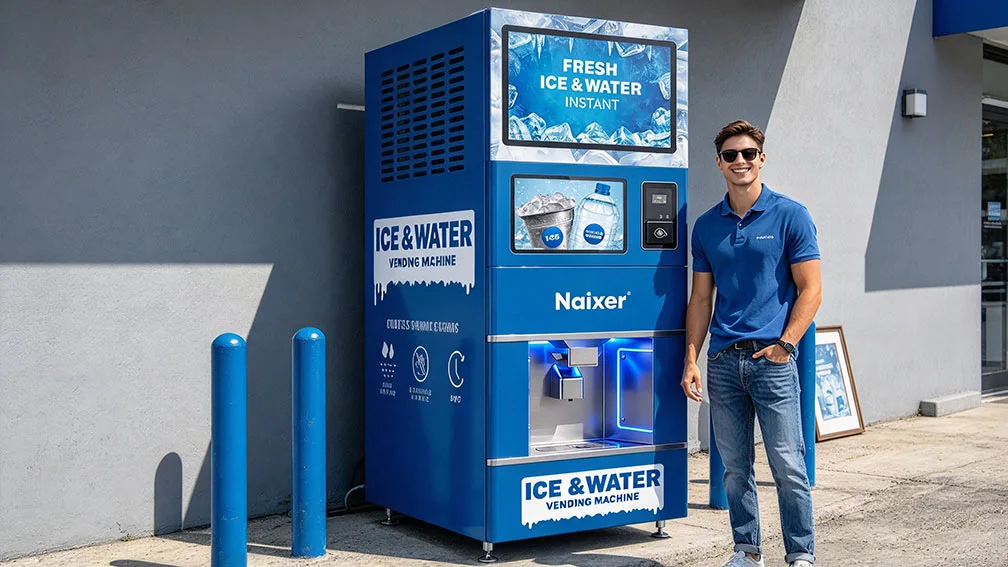
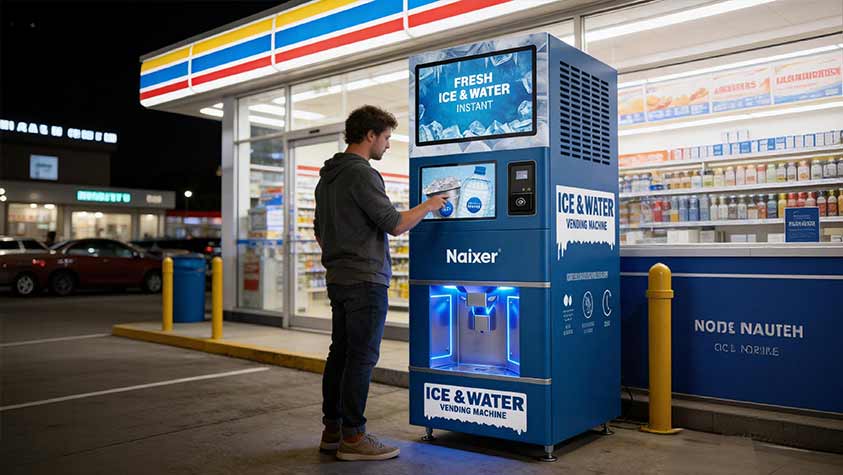
Executive Summary: Are Ice Vending Machines Profitable in 2026? Here‘s the Short Answer.
If you’re researching passive income opportunities or looking to expand your existing business, you’ve probably typed this exact question into Google: Are ice vending machines profitable? Still on the fence? Read 3 things to know before you invest first.
The short answer is yes—ice and water vending remains one of the highest-margin, lowest-labor passive income streams available in 2026. But the real answer is more nuanced. Profitability isn’t guaranteed by the machine alone. It depends on three critical factors: choosing commercial-grade equipment, securing the right location, and selecting the right ice type for your market.
The global commercial ice machine market was valued at $5.46 billion in 2025 and grew to $5.78 billion in 2026, with projections reaching $8.73 billion by 2032 at a 6.93% CAGR. Meanwhile, the freestanding ice vending machine segment alone was valued at approximately $37.08 billion in 2025 and is expected to reach $55.84 billion by 2032, growing at a 6.1% CAGR.
Key Takeaways:
✅ 84%–90% gross margins—among the highest in the entire vending industry
✅ $1,500–$4,500 potential monthly revenue per machine with dual ice and water sales
✅ 10–24 month average ROI timeline for well-placed Naixer machines
⚠️ Hidden Risk: Compressor failure during peak summer can erase up to 30% of annual profit—equipment quality is non-negotiable
How Ice Vending Stacks Up Against Traditional Vending Machines
When evaluating any business opportunity, comparison is essential. How does ice vending perform against the vending machines you see every day—soda, snacks, coffee?
The table below reveals why ice vending consistently attracts entrepreneurs seeking higher margins and lower operational complexity.
| Feature | Snack & Soda Vending | Ice & Water Vending (Naixer) |
|---|---|---|
| Gross Margin | 40%–55% | 84%–90% |
| Restocking Labor | Weekly (High) | None (On-site production) |
| Product Expiration | Weeks to Months | Infinite (Made fresh, never spoils) |
| Dual Revenue Stream | Single product only | Yes (Bagged Ice + Bulk Water) |
| Peak Season Impact | Steady year-round | High Summer Multiplier |
| Initial Investment | $2,000–$10,000 | $8,000–$10,000+ |
The investment range is higher for ice vending, but so is the return potential. Traditional vending earns you a markup on someone else’s product. Ice vending earns you manufacturing profit—you’re converting water and electricity into a premium product at the point of sale.
And not all ice vending is created equal. The type of ice you choose determines your customer base and your price ceiling—a distinction most competitors ignore.
The Real Cost to Run an Ice and Water Vending Machine
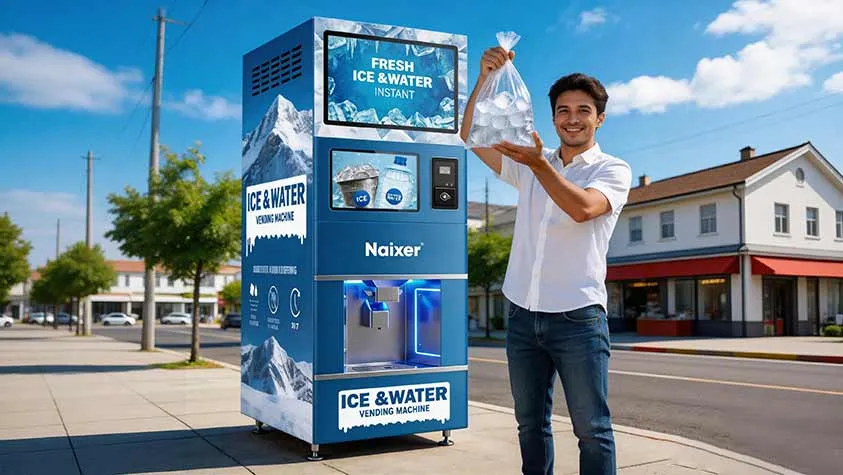
Understanding profitability requires understanding the complete cost structure. Let‘s break down both revenue streams and all associated expenses.
Revenue Stream 1: Bagged Ice
Owners typically set prices between $1.50 and $3.50 per bag, with premium locations commanding the higher end.
Profit breakdown per bag (Naixer ZD-160-A320/420A):
| Item | Cost |
|---|---|
| Selling Price | $2.50 |
| Water & Electricity | $0.20 – $0.30 |
| Ice Bag | $0.05 – $0.10 |
| Total Cost | $0.25 – $0.40 |
| Profit per Bag | $2.10 – $2.25 |
| Profit Margin | 84% – 90% |
Revenue Stream 2: Bulk Water Vending
This is the overlooked profit amplifier. Purified water sells for $0.25–$0.75 per gallon with near-zero marginal cost. In moderate foot-traffic locations, water sales alone can cover the site lease payment—making every ice sale pure margin contribution.
Monthly Revenue Projections by Traffic Level
Based on real-world data from Naixer ZD-160-A320/420A owners, here‘s what you can expect across different traffic levels:
| Traffic Level | Daily Bags Sold | Daily Water (gal) | Monthly Revenue |
|---|---|---|---|
| Low | 15–20 | 15–20 | $1,125 – $1,500 |
| Medium | 25–35 | 25–35 | $1,875 – $2,625 |
| High | 40–60 | 40–60 | $3,000 – $4,500 |
Assumptions: $2.50 per bag, $0.50 per gallon. Actual results vary by location and pricing strategy.
Hidden Costs to Budget For
Annual maintenance: $500–$1,000 (routine cleaning and occasional component replacement)
Site lease: 5%–15% of revenue, depending on location and landlord agreement
Permits and licensing: $500–$2,000 one-time setup cost
Insurance: $300–$800 annually for liability coverage
The biggest threat to ROI isn‘t any of these visible costs—it’s an invisible one: downtime during peak season. A machine that fails in July or August can lose $100–$200 per day in missed sales, quickly erasing a quarter‘s worth of profit. This is why commercial-grade reliability matters more than a lower upfront price.
The 4 Reasons Ice Vending Businesses Underperform (And How Naixer Mitigates Risk)
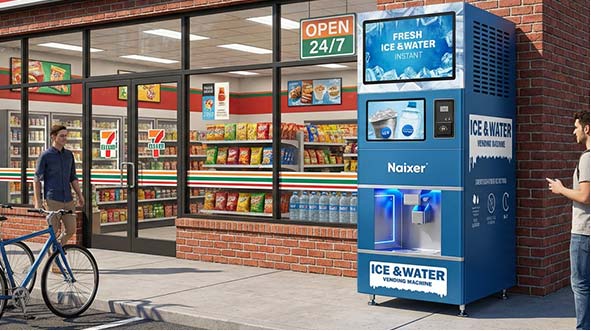
Profit projections look great on a spreadsheet. But in the real world, ice vending businesses fail for predictable reasons. Understanding these risks—and how to prevent them—is the difference between passive income and an expensive headache.
1. Poor Location Science
The problem: You can‘t just place a machine anywhere. Ice vending requires visibility, accessibility, and a customer base with genuine ice demand. A machine hidden behind a building or placed in an area where every home has a refrigerator ice maker will underperform.
The solution: Naixer provides location consulting to help operators identify high-potential sites. Industry data shows that convenience stores account for approximately 52% of outdoor ice merchandiser installations, followed by restaurants and food service at 31%. High-traffic gas stations, marinas, RV parks, and residential neighborhood entrances consistently outperform.
2. Compressor Collapse
The problem: Residential-grade parts fail under commercial heat loads. A compressor that works fine in a kitchen appliance cannot handle 24/7 outdoor operation in 95°F summer conditions. When it fails in July or August, you lose peak-season revenue that may represent 60-80% of annual sales.
The solution: Naixer equips every machine with industrial-grade R290 or R404A refrigeration systems engineered for continuous commercial duty. R290 (propane-based refrigerant) offers superior energy efficiency and environmental compliance—45% of new commercial ice machine installations now use hydrocarbon refrigerants, reducing energy consumption by up to 30% compared to older models. All systems are validated through automated test stations and sample batch burn-in testing under simulated extreme conditions.
3. Slime and Biofilm
The problem: A dirty machine kills word-of-mouth. Customers who encounter slime, odors, or cloudy ice never return—and they tell others. Sanitation isn‘t just about customer satisfaction; it’s a health compliance issue that can result in fines or forced shutdowns.
The solution: Naixer machines feature one-touch automatic cleaning cycles and food-grade 304 stainless steel construction throughout. The modular design allows for simple, quick maintenance without specialized tools—significantly reducing operational costs and downtime.
4. The Parts Desert
The problem: Waiting weeks for a replacement gasket or control board while summer slips away. Many lower-cost machines rely on slow supply chains and offer minimal post-sale support.
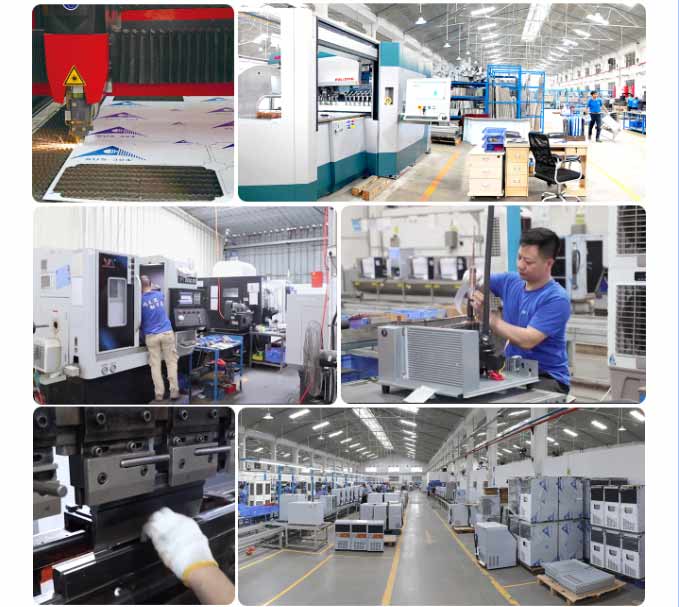
The solution: Naixer provides a comprehensive 3-year warranty on the entire machine—covering core systems and key components. With 300+ technical patents, ISO9001-certified manufacturing processes, and a global service network spanning 100+ countries, Naixer ensures fast response, minimal downtime, and proactive technical support.
Ready to Launch or Scale Your Ice Vending Business?
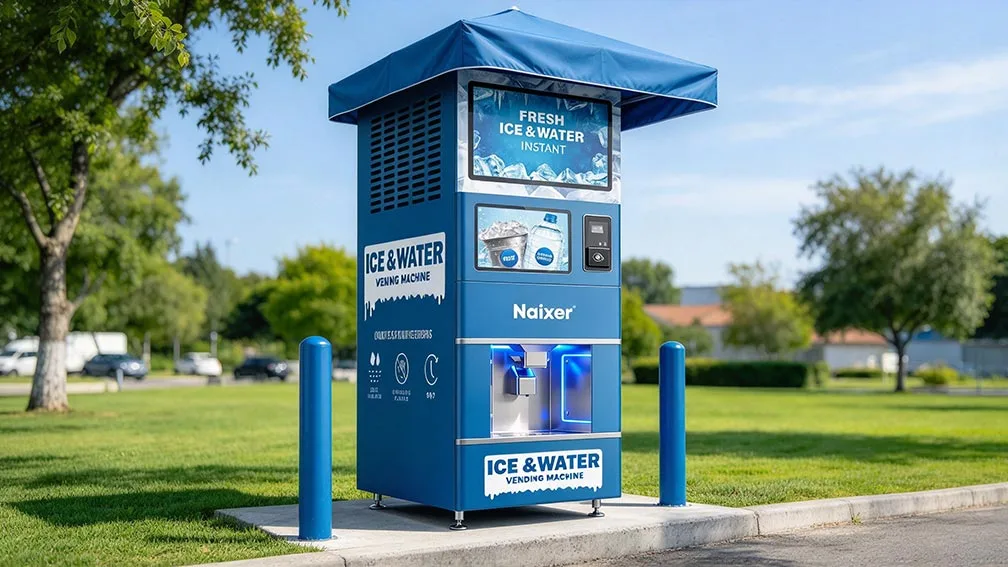
Naixer's automatic ice & water vending machines are deployed across 50+ countries — generating passive income for hotel chains, convenience stores, and independent operators worldwide. Factory direct pricing. NSF/CE certified. 24/7 unattended operation.
Ice Vending Profitability: Quick Answers to Common Questions
How much does an ice and water vending machine cost?
Automated ice vending machines typically range from $25,000 to $80,000+, depending on capacity, ice type, payment systems, and build quality. Entry-level standalone ice makers for non-vending applications start lower. The true value lies in the machine‘s durability and revenue-generating potential over a 10+ year lifespan.
How much do ice vending machines make per month?
Based on Naixer owner data, monthly revenue ranges from $1,125 to $4,500 depending on location traffic and pricing. Premium locations with nugget ice capability can exceed these ranges.
Is the ice vending market oversaturated in 2026?
No—but it is maturing. The global commercial ice machine market continues growing at 6.93% CAGR through 2032. Success now requires strategic site selection and differentiation (ice type, dual revenue streams) rather than simply placing a machine and waiting. Underserved niches—nugget ice near hospitals, flake ice near seafood markets—still offer strong opportunities.
What‘s the most profitable ice type to sell?
Nugget ice consistently commands the highest per-bag premium, selling for $3.00–$4.00 versus $2.00–$2.50 for standard cube ice. Healthcare facilities and premium beverage shops are particularly strong markets. Large cube ice for bars and craft cocktail venues also offers strong margins per unit.
How long does it take to break even?
Most Naixer owners achieve payback within 2~3 months, depending on location quality, pricing strategy, and seasonal factors. Machines placed in high-traffic areas before summer typically see faster returns.
What ongoing maintenance is required?
Plan for annual maintenance costs of $500–$1,000 covering routine cleaning, filter replacement, and occasional component service. Naixer’s 3-year comprehensive warranty and modular design significantly reduce unexpected repair costs compared to lower-quality alternatives.
Related Topics
The Verdict: Are ice vending machines profitable?
The profitability of a ice vending machine is not a myth, but it’s also not a get-rich-quick scheme. It’s a scalable business model that rewards meticulous planning, strategic investment, and excellent operational management. Success lies in choosing the right machine for the right location and controlling costs.
For entrepreneurs looking to break away from traditional low-margin snack vending, the future is in specialization and technology. Investing in innovative equipment that offers unique products—such as the specialty machines developed by Guangzhou Naixer Refrigeration Equipment Co., Ltd.—can be a powerful way to capture higher margins and build a more resilient and profitable vending business. As with any venture, thorough research, starting with a single unit, and a commitment to service are the true keys to unlocking the answer to “how profitable is a ice vending machine.”