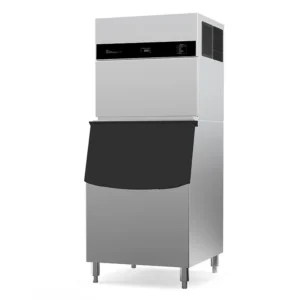
300 kg of Flake Ice per 24 Hours
The PB-300 is rated for 300 kg of daily flake ice production. This capacity can be considered by commercial operators that need a dedicated supply for routine food cooling and display applications.


The Naixer PB-300 is a compact commercial 300 kg flake ice machine designed for seafood markets, fresh food retailers, fishmongers, and food processing operations. It produces up to 300 kg of flake ice per 24 hours and has a listed 150 kg ice storage capacity. Featuring an air-cooled refrigeration system, 220V power, and a rated power of 1.5 kW, the PB-300 produces flake ice with a specified thickness range of 1.5–2.2 mm. Its 950 × 800 × 1870 mm dimensions make it a practical option for businesses with defined installation space and regular daily ice requirements.
The Naixer PB-300 is a commercial 300 kg flake ice machine designed for seafood markets, fresh food retailers, fishmongers, and food processing businesses that require a regular daily supply of flake ice.
The PB-300 has a listed daily production capacity of 300 kg per 24 hours and a 150 kg ice storage capacity. It features an air-cooled refrigeration system and produces flake ice with a specified thickness range of 1.5–2.2 mm.
With dimensions of 950 × 800 × 1870 mm and a brochure-listed electrical configuration of 220V / 1500W, the PB-300 is designed for commercial operations that need a dedicated flake ice supply without moving to a larger-capacity machine.
Watch the Naixer PB-300 product demonstration to explore the machine's appearance, structure, and commercial flake ice equipment design.
Naixer PB-300 commercial flake ice machine product demonstration.
The PB-300 combines commercial flake ice production, ice storage, and a compact machine footprint for businesses with defined daily ice requirements.
The PB-300 is rated for 300 kg of daily flake ice production. This capacity can be considered by commercial operators that need a dedicated supply for routine food cooling and display applications.
The product brochure lists a 150 kg ice storage capacity. This gives buyers a separate storage figure to consider alongside the machine's daily production capacity.
The PB-300 produces flake ice with a specified thickness range of 1.5–2.2 mm. Its thin, irregular pieces can be distributed around products in suitable cooling applications.
The product brochure identifies the PB-300 as an air-cooled flake ice machine. Ensure that the installation area allows suitable airflow around the equipment.
The listed machine dimensions help buyers check available floor space, delivery access, equipment placement, and maintenance clearance.
The PB-300 can be considered for seafood displays, fresh food handling, and selected food processing operations where the expected ice demand matches its rated capacity.
Flake ice is used in commercial cooling workflows because its thin, loose pieces can be distributed around products and across suitable display surfaces. The right machine capacity depends on daily ice consumption and peak operating demand.
Fishmongers, seafood retailers, and smaller fish markets may use flake ice for chilled product display and handling. Estimate the required ice volume based on display size, stock turnover, and replenishment frequency.
Fresh food stores and supermarket departments may use flake ice for suitable seafood, produce, and chilled display applications. Ice handling and drainage procedures should follow the site's food safety requirements.
Selected food processing businesses may need flake ice during receiving, preparation, and chilled handling. Confirm that daily production and storage capacity meet the actual process demand.
Restaurants, seafood kitchens, and other foodservice operations can consider flake ice when their workflow requires loose ice for chilled product handling rather than conventional beverage cubes.

Example of flake ice used in a fresh seafood display.
For more information about the role of flake ice in commercial operations, read What Is a Flake Ice Machine?
Daily production capacity and storage capacity describe two different parts of an ice supply arrangement. The Naixer PB-300 is rated for 300 kg of flake ice production per 24 hours, while its listed ice storage capacity is 150 kg.
The production rating represents the quantity of ice the machine is specified to make over a 24-hour period. It should not be confused with the amount of ice stored at one time.
The 150 kg figure is the storage capacity listed in the product brochure. Buyers should consider how quickly stored ice will be used during busy service periods.
Match machine production and storage to actual demand, peak operating periods, and the frequency of ice replenishment. Consider additional insulated storage if required by the application.
Review the listed technical parameters before preparing the equipment installation area or confirming your machine order.
| Product Model | PB-300 |
|---|---|
| Machine Type | Commercial Flake Ice Machine |
| Daily Ice Production | 300 kg / 24 hours |
| Ice Storage Capacity | 150 kg |
| Dimensions (W × D × H) | 950 × 800 × 1870 mm |
| Cooling Type | Air-Cooled |
| Ice Type | Flake Ice |
| Flake Ice Thickness | 1.5–2.2 mm |
| Rated Voltage | 220V |
| Rated Power | 1500W (1.5 kW) |
| Refrigerant | Confirm current production configuration with Naixer |
A suitable commercial flake ice machine should be selected according to actual daily ice demand, peak-hour consumption, storage needs, and available installation utilities.
Estimate how much ice your business uses during a normal working day. Include seafood display, food handling, processing, and other applications.
Identify when the largest quantity of ice is needed. Receiving schedules, busy market periods, and production shifts may create short-term demand peaks.
Compare expected ice consumption between replenishment periods with the PB-300's listed 150 kg storage capacity.
For a wider comparison of Naixer commercial flake ice equipment, visit the Naixer Flake Ice Machine Series .
Before installing a commercial flake ice machine, check the available floor space, power supply, water connection, drainage, and airflow around the equipment.
The product brochure lists 220V and 1500W. Confirm frequency, phase, circuit protection, grounding, and local electrical requirements with Naixer before installation.
The listed dimensions are 950 × 800 × 1870 mm. Allow additional room for delivery access, ventilation, operation, and future servicing.
Confirm the approved water source, connection arrangement, water quality, and drainage requirements using the PB-300-specific installation instructions.
Naixer's PB Series covers different daily ice production requirements. Compare rated production and storage capacities to select a model that fits your operation.
| Specification | PB-300 | PB-500 | PB-1000 |
|---|---|---|---|
| Daily Production | 300 kg/24h | 500 kg/24h | 1,000 kg/24h |
| Storage Capacity | 150 kg | 300 kg | 400 kg |
| Cooling Type | Air-Cooled | Air-Cooled | Air-Cooled |
| Flake Thickness | 1.5–2.2 mm | 1.5–2.2 mm | 1.5–2.2 mm |
| Product Page | Current Model | View PB-500 | View PB-1000 |
Learn more about commercial flake ice equipment, available production capacities, and applications for seafood and fresh food businesses.
The Naixer product brochure lists a daily ice production capacity of 300 kg per 24 hours. This is approximately 660 lb per 24 hours.
The Naixer product brochure lists an ice storage capacity of 150 kg, approximately 331 lb.
The product brochure lists a flake ice thickness range of 1.5–2.2 mm. The available information does not confirm a user-adjustable thickness function.
The PB-300 measures 950 × 800 × 1870 mm (width × depth × height).
The product brochure lists 220V and 1500W. Confirm the operating frequency, phase, and final electrical configuration with Naixer before ordering.
The product brochure lists R404A, but Naixer's current Flake Ice Series page contains a general R134A statement. Confirm the refrigerant on the current PB-300 production-unit nameplate before finalizing the purchase.
The PB-300's listed production capacity of 300 kg per 24 hours and 150 kg storage capacity make it a candidate for seafood display and handling operations. Final suitability depends on the market's daily ice demand, peak usage, and installation conditions.
The PB-300 is rated for 300 kg of ice production per 24 hours with a listed 150 kg storage capacity. The PB-500 is rated for 500 kg per 24 hours with a listed 300 kg storage capacity.
Estimate daily ice consumption, peak-hour demand, storage requirements, replenishment frequency, and installation conditions. The selected machine should match the real operating requirements of the business.

We use cookies to improve your experience on this website. You may choose which types of cookies to allow and change your preferences at any time. Disabling cookies may impact your experience on this website. You can learn more by viewing our Cookie Policy.
We're online and ready to help!
Tell us about your commercial ice machine requirements. We'll prepare your inquiry for WhatsApp.
Have a question about a commercial ice machine? Send us a message and continue the conversation on WhatsApp.

Sign up to receive $50 off your first order and exclusive access to our best offers.